
• FluTrackers.com Inc. does not provide medical advice. Information on this web site is collected from various internet resources, and the FluTrackers board of directors makes no warranty to the safety, efficacy, correctness or completeness of the information posted on this site by any author or poster. The information collated here is for instructional and/or discussion purposes only and is NOT intended to diagnose or treat any disease, illness, or other medical condition. Every individual reader or poster should seek advice from their personal physician/healthcare practitioner before considering or using any interventions that are discussed on this website. By continuing to access this website you agree to consult your personal physican before using any interventions posted on this website, and you agree to hold harmless FluTrackers.com Inc., the board of directors, the members, and all authors and posters for any effects from use of any medication, supplement, vitamin or other substance, device, intervention, etc. mentioned in posts on this website, or other internet venues referenced in posts on this website.
  • We are not asking for any donations. Do not donate to any entity who says they are raising funds for us.

France - Whooping cough 2024

Pathfinder

Editor, Senior Moderator

Upsurge in whooping cough in Europe, call for increased vigilance in France

Public Health France publishes updated pertussis surveillance data from the RENACOQ network in France, in 2022 and 2023, and reports greater circulation of the disease in the territory since the start of 2024.

Published on April 18, 2024
...
Whooping cough is a highly contagious bacterial infection whose transmission occurs mainly within the family or in communities through contact with a sick person with a cough. Even though the number of cases of whooping cough has decreased significantly since the introduction of the vaccine, the bacteria continues to circulate. Infants too young to be vaccinated and adolescents and adults who have lost vaccine protection are the most affected populations. Outside our borders, Europe is currently experiencing an upsurge in cases of whooping cough with significant epidemics in Croatia, Denmark and the United Kingdom and significant increases in Belgium, Spain and Germany. In France, since the start of 2024, around twenty grouped cases (or clusters) have been reported to Public Health France in 8 French regions versus 2 grouped cases in a single region (Ile-de-France) for throughout 2023. Given this clear increase in the number of cluster cases reported, Public Health France remains vigilant and recalls the importance of vaccination to protect people at risk of serious forms.

A resumption of the circulation of whooping cough begins in France

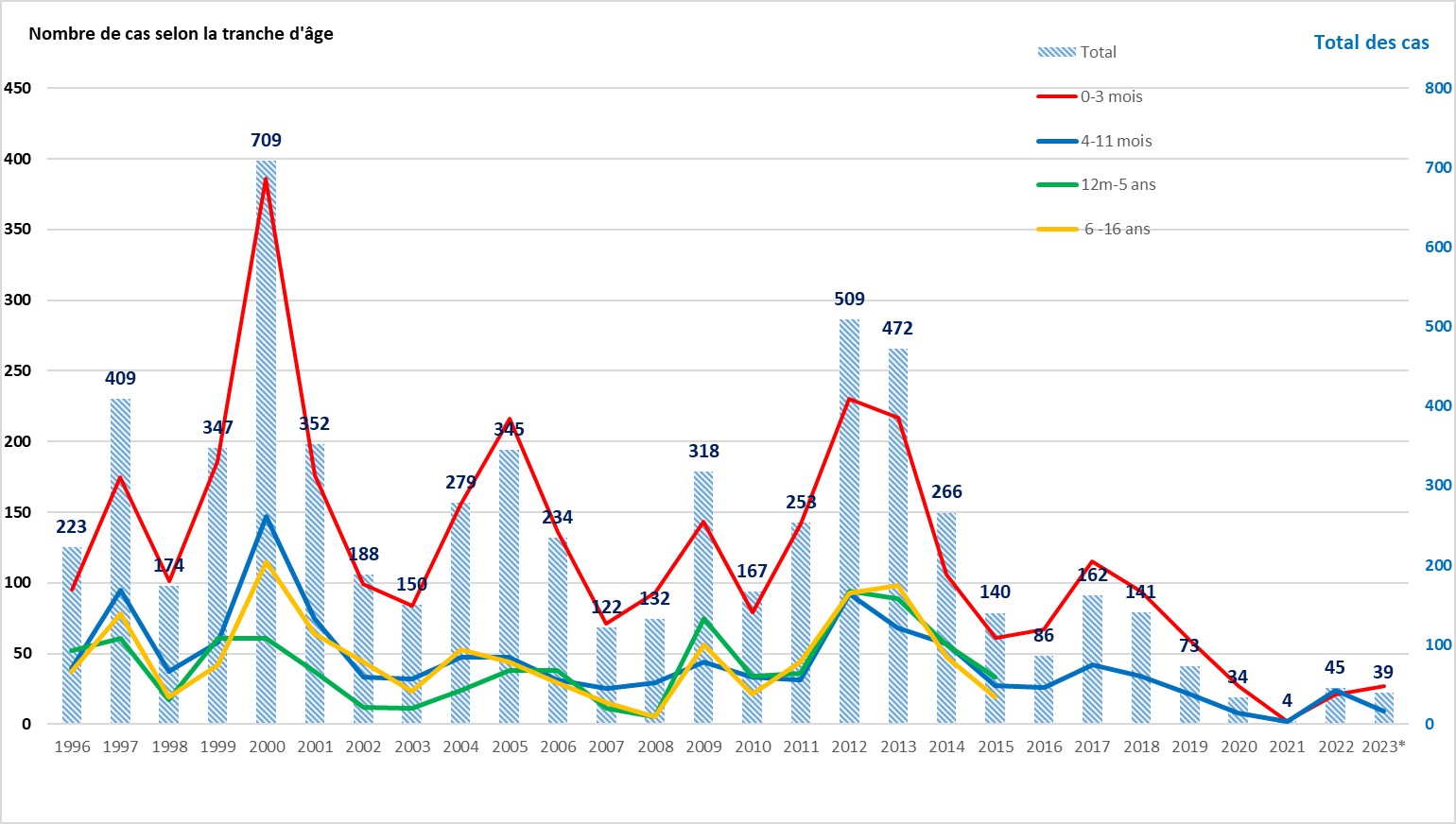
Whooping cough progresses in cycles of recrudescence every 3 to 5 years. In France, surveillance data from the RENACOQ network (the hospital pertussis surveillance network) have shown six epidemic peaks in recent years: 1997, 2000, 2005, 2009, 2012-2013 and 2017-2018. Since the last peak of whooping cough (162 cases reported), the number of cases has continued to decrease to reach 34 cases in 2022 and 4 cases in 2021 in infants under 12 months. Same observation regarding the data from the Sentinelles network (the research and monitoring network in primary care general medicine and pediatrics in mainland France) reporting 1 case per year in the general population over the same period. Even if a rebound in the disease could be expected in France in 2021-2022, the exceptional context and the health measures implemented as part of the COVID-19 epidemic have probably reduced the transmission of whooping cough.

The data published today, from the latest surveillance report, indicate a greater resumption of the circulation of whooping cough in recent months in mainland France. Thus, the RENACOQ network (monitoring hospitalized infants under 12 months since 2016) reported in 2022, 45 cases and in 2023, 39 cases (unconsolidated data). Regarding grouped cases in 2023, only 2 grouped cases were reported to Public Health France between October and December with 18 cases of whooping cough in Ile-de-France: they concerned intrafamilial grouped cases (13 cases), clusters in the community (4 cases) and a final isolated case with no link in the surroundings of the reported clusters. In the first quarter of 2024, around fifteen clusters, mainly in communities (nursery schools, primary schools, daycare centers and nursery homes) but also in families and totaling 70 cases were reported to Public Health France (data not consolidated for the current year 2024 ).

The multiplication in the number of cases compared to 2023 and the sharp increase in grouped cases indicate a resumption of community circulation of the bacteria which could intensify in the coming months. Vigilance remains essential, with the need to increase public awareness of this disease and its prevention methods. To date, the French situation is not comparable with that of our European neighbors and across the Atlantic who have reported several hundred cases per week since the last quarter of 2023.

Number of hospitalized cases of whooping cough in children under 17 years of age (1996-2015) and in infants under 12 months of age (2016-2023), RENACOQ data. (*2023 data, not consolidated)
ce15001037b2-coqueluche_donnees_2023.jpg


The importance of reporting and the measures to be taken with regard to the patient and those around them

Whooping cough is not a notifiable disease but cases must be reported to the Regional Health Agency in two specific situations:
  • as part of the reporting of nosocomial infections or
  • during the occurrence of grouped cases (from 2 cases) whether intrafamilial or in communities.
Furthermore, measures must be taken with regard to the patient and those around them, in particular for people at risk and in communities at risk (maternity wards, nurseries, health establishments, etc.) such as eviction of the patient and the implementation of antibiotic treatment for sick people, antibiotic prophylaxis for contact subjects not protected by vaccination as well as an update of the vaccination of the exposed population. It is also recommended to have at least the first case confirmed biologically and to send a sample, bacterial isolate or DNA extracted from the sample to the pertussis CNR to confirm in particular the species.
Learn more :

Vaccination, the only means of protection against whooping cough

The vaccination policy against whooping cough in France aims to reduce severe forms, hospitalizations and deaths linked to whooping cough which mainly occur in infants under 6 months of age. It is based on three complementary strategies:
  • early primary vaccination of infants as soon as they are old enough to be vaccinated, i.e. from the age of 2 months, and the administration of iterative boosters at 6 years, 11-13 years and up to as an adult (25 years old with the possibility of catching up until 39 years old);
  • vaccination of pregnant women, recommended from the second trimester of pregnancy, favoring the period between 20 and 36 weeks of amenorrhea;
  • in the absence of vaccination of the mother during pregnancy, vaccination of the mother postpartum and of people likely to be in close contact with the infant during its first 6 months of life (so-called cocooning strategy) .
People at risk of severe forms of whooping cough are, beyond infants not protected by vaccination, people suffering from a chronic respiratory disease ( asthma , chronic obstructive pulmonary disease , etc.), immunocompromised people, women. speakers. It is therefore recalled that vaccination is recommended for immunocompromised people, health professionals (including in accommodation establishments for dependent elderly people (EHPAD), people working in close and repeated contact with infants under the age of 6 months, medical and paramedical students, early childhood professionals including childminders, people who regularly babysit.
As European Vaccination Week approaches, Public Health France provides numerous tools and resources to better understand the challenges of vaccination and raise public awareness of vaccination recommendations.
  1. Find out more: European Vaccination Week

...


https://www.santepubliquefrance.fr/...ope-appel-a-une-vigilance-renforcee-en-france
 
Translation Google

Whooping cough: a very strong rebound in the disease in France

Of Jade Peychieras , AFP
Tuesday June 4, 2024 at 9:31 p.m. - Updated Wednesday June 5, 2024 at 7:24 a.m.
By France Blue

Nearly 6,000 cases of whooping cough were diagnosed in the first five months of 2024 in France. “A fairly explosive rebound”, as in several European countries, according to the Pasteur Institute.

More than 5,800 cases since the start of the year. A very strong rebound in whooping cough is confirmed in France, according to data transmitted on Tuesday by the Pasteur Institute. This respiratory infection, caused by bacteria, is very contagious and can be serious. In the first quarter, France had “ around fifteen clusters” , according to Public Health France.
“We expected a resurgence of this cyclical disease – which peaks every three to five years – knowing that the last peak dated from 2018. The Covid period delayed the recovery, now it is really coming back in force” , declared to AFP the director of the National Reference Centers Institut Pasteur (CNR), Sylvain Brisse.

It is “a fairly explosive rebound” that we are observing, he believes, pointing to “a scale not seen in France for at least 20 years” and “a still ascending phase of the epidemic”. Peaks can last for several months. “A still strong circulation would not be surprising at the time of the Olympic Games ,” also notes the expert.
32,000 cases and 19 deaths in Europe

On the European continent, more than 32,000 cases of whooping cough were recorded overall in 30 countries in the first three months of 2024 , more than in the whole of 2023 (more than 25,000), according to a report from the European Center for Disease Prevention and Control (ECDC) published on May 8.

Significant epidemics have been reported in recent months in Croatia, Denmark and the United Kingdom and significant increases in cases in Belgium, Spain and Germany. From January 2023 to the end of March 2024, 19 deaths were reported on the continent, 11 of infants and 8 of adults over 60 years old.

What is whooping cough?

Whooping cough is a respiratory infection caused by a bacteria, Bordetella pertussis. Highly contagious, it is transmitted very easily through the air, through contact with a sick person with a cough. An affected person infects around fifteen others and the incubation lasts on average 9 to 10 days.

The major symptoms of the disease are frequent and prolonged coughing fits. The disease can be serious for infants , who may experience respiratory distress with deterioration of one or more organs. Vulnerable people (chronic respiratory patients, immunocompromised people, pregnant women) are also at greater risk.

Deaths are rare , but can occur especially in very young, unvaccinated infants.

Why this outbreak?

As with other germs, scientists see this as a consequence of the cessation of barrier measures against the Covid pandemic. While a rebound could be expected in 2021-2022, the return of the disease being cyclical, the health measures linked to the pandemic have in fact probably reduced transmission.

The current increase is also potentially linked, according to Sylvain Brisse, to a possible drop in collective immunity since the last episodes of infections.

Other scientists also point to a lower level of vaccination against whooping cough in certain population categories during the period of the Covid pandemic.

The importance of vaccination

Public Health France recalls the importance of vaccination, better protection against whooping cough. The populations most affected are infants too young to be vaccinated (under two months) and adolescents and adults who have lost the protection conferred by the vaccine, often due to lack of boosters .

Vaccination, like the disease, does not provide lifelong protection against infection. Vaccination of pregnant women is particularly crucial to protect future babies, specialists insist.

As the vaccine does not fully protect against transmission, it is also possible to carry the bacteria, without symptoms , and transmit the disease. Hence the vigilance necessary if you are around toddlers.

What treatment?

Once whooping cough is diagnosed, sometimes via a PCR test, the treatment "aims to eliminate the bacteria and consists of administering antibiotics as early as possible" , recalls the World Health Organization, in order to quickly reduce contagiousness and allow the return to the community after a few days of treatment.

Hospitalization is strongly recommended for children aged 0 to 3 months , particularly for cardio-respiratory monitoring.

https://www.francebleu.fr/infos/san...s-fort-rebond-de-la-maladie-en-france-4513842
 
Translation Google
Resurgence of whooping cough in France: prevention measures are essential to avoid serious cases and deaths in infants

After a call for increased vigilance in April 2024 following the resurgence of whooping cough in Europe and France, Public Health France confirms the start of a new epidemic cycle this year.

Published on June 7, 2024

After an initial alert at the European level, Public Health France reported, last April, a resurgence of whooping cough in the territory since the start of 2024 . The latest data published on June 2, 2024 confirm the resurgence of the disease in France with already more cases reported over the first five months of the year than for 2023. This sharp increase in the number of cases and reports of grouped cases in recent weeks confirm the intensification of the community circulation of the bacteria announced for the 1st quarter of 2024. At the European level, the ECDC recorded 25,130 cases of whooping cough in 2023 compared to 32,037 cases between January 1 and March 31, 2024.

This bacterial infection due mainly to the bacterium Bordetella pertussis is very contagious, more contagious than chickenpox and as much as measles , is transmitted by air, and in particular through contact with a sick person with a cough. Transmission occurs mainly within families or communities. Infants too young to be vaccinated (under 2 months) are the most affected by serious forms, hospitalizations and also deaths.

Public Health France recalls the importance of prevention measures and vaccination to protect people at risk of serious forms and calls for increased vigilance for the coming months. Multi-source epidemiological monitoring of the epidemic and this new cycle will make it possible to determine its scale and duration, which are not predictable to date.

An intensification of the circulation of the bacteria in France

In France, the various whooping cough surveillance indicators monitored by Public Health France confirm the resurgence of the disease in the territory. While in the 1st quarter of 2024, a few regions reported clusters of cases, the entire territory is now affected with significant increases across all surveillance networks combined.

RENACOQ network (hospital whooping cough monitoring system)

Since the last cycle of whooping cough in 2017-2018, when 162 cases were reported, the number of cases has continued to decrease to reach 34 cases in 2022 and 4 cases in 2021 in infants under 12 months then a slight increase in 2022 and 2023 with 45 and 41 cases respectively. With 46 cases over the first 5 months of 2024 (unconsolidated data), the network has already recorded a number of cases higher than that of the entire year 2023. Furthermore, the data analyzed over the period 2013-2023 show that, among the 1,082 infants hospitalized in hospitals in the RENACOQ network, 85% were less than 6 months old (n=924) and 59% were less than 2 months old, so no eligible for vaccination (n=643) (figure 1).

Figure 1. Number and proportion of cases of whooping cough in hospitalized infants under 12 months of age reported to Public Health France, by year, from 2013 to May 2023, in mainland France. Source: data from the RENACOQ network.
1e736e81222d-fig1_actu_coqueluche_2013-2023_renacoq.jpg


3-Labos network (network of specialized medical biology laboratories Cerba and Eurofins-Biomnis)

Laboratory data reports an increase in the number of PCRs performed. In January 2024, 1,922 PCR tests were carried out compared to more than 15,000 in May 2024, with a number of tests which increased 5-fold between March and May 2024. The positivity rate is also on the rise with 27.5% positivity (unconsolidated data) of PCR tests in May 2024 compared to 7.6% last January. Over the first 5 months of 2024, 3Labos data already lists 6,962 positive PCRs (provisional data) compared to 518 for the whole of 2023 (figure 2).

Figure 2. Number of negative and positive PCRs for pertussis and positivity rate per month, from January 2023 to May 2024 (provisional 3-Labos data, data extraction from June 2, 2024)
fc23c0d449f4-fig2_actu_coqueluche_pcr_2023-2024_3labos.jpg


OSCOUR Network (Organization of Coordinated Emergency Surveillance)

The weekly number of visits to the emergency room for whooping cough increased sevenfold between week 11 and week 22 (figure 3). Data by age group show that the increases are mainly driven by children (under 15 years old). The number of hospitalizations for whooping cough after going to the emergency room also increased sevenfold between week 11 and week 22 (figure 4).

Figure 3. Weekly number of visits to the emergency room for whooping cough from December 2022 (week S50) to the end of May 2024 (week S22) by age group, France, Oscour data.
829a4e6a5ec7-fig3_actu_coqueluche_oscour_2022-2024.jpg

Figure 4. Weekly number of visits to the emergency room and hospitalization after visits to the emergency room for whooping cough from December 2022 (week S50) to the end of May 2024 (week S22) all ages, France (source: Oscour data)
5292061d44bc-fig4_actu_coqueluche_oscour_urg-hospi_2022-2024.jpg


SOS doctors network

The number of consultations and procedures for whooping cough increased sevenfold between week 10 and week 24 (figure 5).
Figure 5. Weekly number of SOS Doctor procedures for “whooping cough”, all ages, in France, from January 1, 2024 (week S01) to June 2, 2024 (week 24). Source: SurSAUD data.
8ef5ec7b08fc-fig5_actu_coqueluche_sos-medecins_2024.jpg


Sentinels Network

Sharp increase in the number of consultations for whooping cough observed in general medicine since the start of 2024 compared to previous years. National
Reference Center


At the microbiological level, the National Reference Center for Whooping Cough also confirms a significant increase in activity.
Concerning clustered cases, analysis of the data shows that the majority of clusters are intrafamilial or occur in communities (nursery, primary, middle and high schools) with a majority of cases who are not up to date with their vaccinations.
Cases fully vaccinated in accordance with current recommendations mainly occur in children in kindergarten or primary school just before their 6th birthday. This phenomenon is not unexpected and is linked to the duration of protection induced by acellular pertussis vaccines.


The importance of early treatment of the patient and their entourage as well as the reporting of nosocomial infections and cluster cases

Whooping cough is not a notifiable disease but cases must be reported to the Regional Health Agency in two specific situations:
  • as part of the reporting of nosocomial infections or
  • during the occurrence of grouped cases (from 2 cases) whether intrafamilial or in communities.
Measures must be taken with regard to the patient and those around them, in particular for people at risk and in communities at risk (maternity wards, nurseries, health establishments, etc.) such as eviction and placement implementation of antibiotic treatment for sick people, antibiotic prophylaxis for contact subjects not protected by vaccination as well as updating the vaccination of the exposed population. It is also recommended to have at least the first case identified biologically confirmed and to send a sample, bacterial isolate or DNA extracted from the sample to the pertussis CNR to confirm in particular the species.
Learn more:

Vaccination and wearing a mask are essential against whooping cough

The vaccination policy against whooping cough in France aims to reduce severe forms, hospitalizations and deaths linked to whooping cough which mainly occur in infants under 6 months of age. It is based on three complementary strategies:
  • compulsory vaccination with a primary vaccination with two injections two months apart, i.e. at the age of 2 months (8 weeks) and 4 months, followed by a booster at the age of 11 months , and the administration of iterative boosters at 6 years, 11-13 years and until adulthood (25 years with the possibility of catch-up up to 39 years);
  • vaccination of pregnant women, recommended from the second trimester of pregnancy, favoring the period between 20 and 36 weeks of amenorrhea;
  • in the absence of vaccination of the mother during pregnancy, vaccination of the mother postpartum and of people likely to be in close contact with the infant during its first 6 months of life (so-called cocooning strategy) .
People at risk of severe forms of whooping cough are, beyond infants not protected by vaccination, people suffering from a chronic respiratory disease (asthma, chronic obstructive pulmonary disease, etc.), immunocompromised people and women. speakers. It is therefore recalled that vaccination is recommended in:
  • immunocompromised people,
  • healthcare professionals (including in accommodation establishments for dependent elderly people (EHPAD),
  • people working in close and repeated contact with infants aged less than 6 months,
  • medical and paramedical students,
  • early childhood professionals including childminders and people who regularly babysit.
Learn more about vaccination: Whooping Cough | Vaccination Info Service (vaccination-info-service.fr)

Wearing a mask, an effective barrier

As with any epidemic of respiratory infections, it is important to emphasize that among the effective barrier measures, wearing a mask is strongly recommended. For people with symptoms of a respiratory tract infection (cold, sore throat, cough, fever), whatever the cause; wearing a mask remains mandatory, particularly in the presence of vulnerable people, in health and medico-social establishments, in enclosed spaces and on public transport. In fact, it constitutes individual protection against infection and the risk of developing a serious form, but also collective protection, making it possible to reduce the risk of spread within the population and infection of people. at risk of serious forms.
  1. See the poster on the main recommendations on wearing a mask


https://www.santepubliquefrance.fr/...-cas-graves-et-des-deces-chez-les-nourrissons


Translation Google

“A number of visits to the emergency room multiplied by seven.” The whooping cough epidemic has been raging since early 2024

Written by Martial Codet-Boisse
Published on06/13/2024 at 6:09 p.m.

The Nouvelle-Aquitaine Regional Health Agency confirms an increase in cases of whooping cough since the start of the year. Health authorities are calling for great vigilance in order to avoid serious cases as much as possible, particularly in infants. Watchwords: prevention and vaccination!

This epidemic should not be taken lightly, whooping cough is back in France. The Nouvelle-Aquitaine Regional Health Agency confirms the start of this new epidemic cycle and calls for increased vigilance.

It is difficult to obtain exhaustive figures from health authorities, because there is no mandatory declaration regarding whooping cough. However, Laurent Filleul, head of Public Health France Nouvelle-Aquitaine, confirms that: “From March 11 to May 27, the number of visits to emergency departments in France increased sevenfold.” Over the first five months of 2024, there are already more cases of whooping cough reported than for the whole of 2023...

Severe cases in infants

Whooping cough is a very contagious bacterial infection, more than chickenpox and as much as measles. Transmission occurs mainly within families, in communities. Infants under two months of age are too young to be vaccinated. Babies are therefore more likely to be affected and develop serious forms requiring hospitalization.

Forty-six cases of whooping cough in infants under one year old were recorded in French hospitals in the first five months of 2024. A number higher than that of the entire year 2023.
...
https://france3-regions.francetvinfo.fr/nouvelle-aquitaine/haute-vienne/limoges/un-nombre-de-passages-aux-urgences-multiplie-par-sept-l-epidemie-de-coqueluche-fait-rage-depuis-debut-2024-2986667.html​
 
Translation Google

Whooping cough: death of two three-month-old babies in Montpellier while a return of the disease worries the authorities


Published on06/17/2024 at 10:31
Martin Planques

The essential Whooping cough, an infection that is particularly dangerous for babies, is making a comeback in France in 2024. These days, two three-month-old infants have died from it in Montpellier.

One month after a similar death in Nice, two infants under three months died after being affected by a malignant form of whooping cough in Montpellier, as reported by Midi Libre . “These are severe forms of the disease which can affect very young children. They are often poorly protected, because the first vaccine is at the age of two months, and the booster at four months.”, explained Professor Eric Jeziorski, head of the pediatric post-emergency emergency department at Montpellier University Hospital, to our colleagues.

“Resumption of traffic” in France

A tragedy which follows the alert launched by Public Health France which, in a report published on April 18, indicated a “resumption of the circulation of whooping cough which has increased in recent months in mainland France”. The health agency thus identified "in the first quarter of 2024, around fifteen clusters, mainly in communities (nursery schools, primary schools, daycare centers and nursery homes) but also in families, totaling 70 cases were reported to Public Health France".

For the entire population, the observation is also worrying: the Pasteur Institute records more than 5,800 contaminations between January and May 2024 , or eleven times more (495) than for the whole of 2023 in France.

Call for vaccination

With a reproduction rate of 17, the number of people infected by an average sick person, this respiratory infection is extremely contagious. It causes coughing fits that can last for several weeks if they are not treated. The patients most at risk are therefore babies under six months, but also other vulnerable groups such as the elderly or pregnant women.

Vaccination against whooping cough has been compulsory in France for infants since 2018. Infants are particularly exposed because a first injection is administered at two months. Another at four months before a booster at eleven months. Since 2022, the High Authority for Health (HAS) has recommended it to pregnant women.

https://www.ladepeche.fr/2024/06/17...a-maladie-inquiete-les-autorites-12021656.php
 
Translation Google

"Many cases" of pertussis in the schools of the Academy of Lyon

Published on 06/27/2024 at 10:16 a.m.

Since the beginning of June, the number of whooping cough cases has exploded. According to the Academy of Lyon, educational establishments are affected by this bacteria.

The Regional Health Agency (ARS) and the Roanne hospital are alerting. Whooping cough is making a comeback. The bacteria is circulating in the region and the number of cases continues to increase.

In Auvergne-Rhône-Alpes, more than 100 cases were recorded in June. A situation which forced the management of the Roanne hospital to require the mask to be worn for a few days . The time for the number of contaminations to go down.

Difficult to quantify the number of cases

Schools are also affected by this epidemic. Even a few days before the summer holidays. “There actually seem to be many cases since the beginning of June,” notes the Academy of Lyon.

The institution specifies, however, that it is difficult to quantify the number of cases, because it is "not a notifiable disease."

All parents received an information letter from the departmental services for promoting student health.

Morgan Parmentier

https://www.le-pays.fr/roanne-42300...ns-les-ecoles-de-l-academie-de-lyon_14525508/
 
Translation Google
Whooping cough in France. Update as of June 28, 2024.


Published on June 28, 2024
Updated on June 28, 2024


Key points: whooping cough outbreak
  • At the European level, the ECDC recorded a much higher number of whooping cough cases between 1 January and 31 March 2024 than in 2023: 32,037 cases compared to 25,130 cases in 2023.
  • Following this first European alert, Public Health France reported, last April, a resurgence of whooping cough in the territory since the beginning of 2024, following the increase in reports of grouped cases in the first quarter.
  • In France, the various whooping cough surveillance indicators monitored by Public Health France confirm an epidemic situation established in the territory with very significant circulation of the bacteria during the first half of 2024 and which has intensified in recent weeks.
  • Strains resistant to macrolides: 3 resistant strains have been reported by the pertussis CNR since the start of the year. This is a signal considered moderate but requires close monitoring.
  • The magnitude of the peak and the duration of this epidemic cycle are not predictable. Given the high contagiousness of the disease, the epidemiological situation in France and internationally requires increased vigilance during the Olympic Games, particularly in situations of grouped cases involving people at risk of severe forms (pregnant women, unprotected infants, immunocompromised, and suffering from chronic respiratory diseases).
  • Public Health France recalls the importance of vaccination in pregnant women, recommended since April 2022, and which is the best possible protection to protect infants.

PDF 1.59 MB


https://www.santepubliquefrance.fr/...l/coqueluche-en-france.-point-au-28-juin-2024
 
Translation Google

Whooping cough epidemic: two infants die at Rouen hospital

From Gabrielle Grecourt
Wednesday, July 10, 2024 at 3:16 AM
By France Bleu Normandy (Seine-Maritime - Eure) , France Blue

An epidemic of whooping cough is currently underway in France. In Normandy, this disease has caused the death of two infants in Rouen, one a month ago, the second last week.

Two babies, barely one month old, recently died at Rouen University Hospital, the first a month ago, the second last week. They were sick with whooping cough, a bacterial infection that is particularly dangerous for babies and children. It is characterized by very severe coughing fits , sometimes with difficulty breathing.

An epidemic is currently affecting France , and Normandy is no exception. 91 patients were hospitalized in June in the region, compared to only one at the same time last year. If we zoom in on Rouen, 49 patients have tested positive since the beginning of the year, whereas usually, there are only one or two per year.
...
https://www.francebleu.fr/infos/san...deux-nourrissons-a-l-hopital-de-rouen-4928903

------------------------
Whooping cough epidemic: two babies died at Rouen University Hospital

Two one-month-old babies have died of whooping cough since the beginning of summer 2024 at Rouen University Hospital. The health facility insists on vaccinating parents and those close to newborns.

By Jeremy Chatet
Published:
July 10, 2024 at 12:09 p.m.

Two one-month-old babies died of whooping cough between June and July at the Rouen University Hospital. Information revealed by our colleagues at France Bleu and confirmed to us by the health establishment.

One new case per day

"In recent months, there have been alerts at the national level, but we have had nothing special at home ," says the Rouen University Hospital. "But for the past few weeks, we have had a new case every day." Not all cases of whooping cough result in hospitalization. Nevertheless, "this is a totally unusual situation ," acknowledges the Rouen University Hospital.

Last April, Santé Publique France issued a call for vigilance in France, after noting a greater circulation of whooping cough, a bacterial infection transmitted through the air, on French territory since the beginning of 2024.

At the Rouen University Hospital, prevention is emphasized : "When a baby starts coughing, you should take them to their doctor or to the pediatric emergency room. We also advise pregnant women to get vaccinated, as well as people who are close to babies."

https://www.paris-normandie.fr/id54...luche-au-chu-de-rouen-deux-bebes-sont-decedes
 
Translation Google
Whooping cough epidemic breaks records in France, with 17 deaths since January

Published 07/17/2024 3:59 PM
Update28 minutes ago

More than 18,000 cases of whooping cough have been recorded since the beginning of the year in France and the toll stands at 17 deaths on Wednesday, July 17, most of whom are children.
At seven months pregnant, Djala Camara, who is seven months pregnant, decided to get vaccinated against whooping cough. This action will protect her child when he is born. This year, cases of whooping cough are on the rise . The respiratory disease causes violent coughing fits that can cause the death of the infant. By getting vaccinated during pregnancy, the mother protects her baby from birth.

The peak of the epidemic may not yet have been reached

Babies are most vulnerable at birth because they must wait two months before receiving the mandatory vaccine, which will protect them for several years. Since January in France, 17 deaths related to the disease have been recorded, including 12 infants under two months old. To stop the epidemic, doctors strongly recommend getting vaccinated during pregnancy. Because if the mother is not vaccinated, drastic measures must be taken, and everyone around them vaccinated. The peak of the epidemic may not have been reached yet, so health authorities are calling for the greatest vigilance.

https://www.francetvinfo.fr/sante/s...luche-bat-des-records-en-france_6671535.html​
 
Translation Google
Whooping cough in France. Update as of July 29, 2024.


Published on July 29, 2024
Updated on July 29, 2024


Key points
  • Continuation of the whooping cough epidemic on the national territory observed since the beginning of 2024 with a very significant circulation of the bacteria which has intensified in recent months
  • As of July 24, 2024, the update of the various whooping cough surveillance indicators monitored by Public Health France shows the following trends:
    • In city medicine
      • The Sentinelles network reports a significant increase in confirmed whooping cough reports since April and intensified in June, with 225 cases between January 1 and June 30, 2024 compared to none in 2023 over the same period.
      • The number of SOS Médecins acts for a diagnosis of whooping cough increased 75-fold between week 10 and week 26.
    • At the hospital
      • The number of emergency visits for whooping cough is still very high: it increased 15-fold between week 10 and week 27 before decreasing slightly.
      • The number of hospitalizations after visits to the emergency room has been on the rise since the beginning of the year: a number multiplied by 6 between week 10 and week 29, with a very significant increase since mid-May.
      • The RENACOQ network reports for 2024 a cumulative number of 199 infants under 12 months hospitalized, of which 158 (79%) are under 6 months old. A number almost 5 times higher than the total for 2023 with 41 cases.
      • Concerning the activity of city medical biology laboratories, 3Labos data reports since the beginning of 2024 a total of 24,874 positive PCRs out of a total of 112,938 tests carried out, i.e. a positivity rate of 22%. The number of monthly PCR tests increased 35-fold between January (1,927) and June (67,730) (provisional data).
      • In terms of deaths since the beginning of 2024, a provisional total of 28 deaths has been reported, including 20 children (18 under 1 year old) and 8 adults (aged 51 to 86 years old but whooping cough was not reported as the primary cause of death). The highest number of deaths was observed in July with 9 deaths.
      • Regarding the monitoring of strain resistance to macrolides, 3 resistant strains have been characterized at the CNR since the beginning of 2024 (3/188 isolates tested, i.e. 1.6%) and since June, no additional resistance has been detected.
  • The magnitude of the peak and the duration of this epidemic cycle are not predictable and if some indicators appear to be decreasing, interpretation must be cautious because the data for July are not yet consolidated.
  • Given the very high contagiousness of the disease and the epidemiological situation in France and internationally, the need for increased vigilance during the Olympic Games remains essential, particularly in situations of grouped cases involving people at risk of serious forms.
  • Public Health France recalls the importance of vaccination for pregnant women, recommended since April 2022 to protect newborns and young infants.
  • As of July 22, 2024, the High Authority for Health (HAS) recommended that anyone in close contact with a newborn and/or infant under 6 months in a family or professional setting receive a booster against whooping cough if the last vaccine was more than 5 years ago.

PDF 0.68 MB


...
https://www.santepubliquefrance.fr/...oqueluche-en-france.-point-au-29-juillet-2024
 
Translation Google
Whooping cough in France. Update as of September 18, 2024.

Published on September 18, 2024
Updated on September 18, 2024


Key points

Continuation of the whooping cough epidemic on the national territory observed since the beginning of 2024 with a very significant circulation of the bacteria which has intensified in recent months

As of September 16, 2024, the update of the various whooping cough surveillance indicators monitored by Public Health France shows the following trends:

  • In city medicine
    • The Sentinelles network reported a significant increase in the incidence of confirmed whooping cough since April, continuing until the end of June with a stabilization in July/August. The incidence of confirmed whooping cough cases seen in general practice consultations was estimated at 134,639 cases for 2024.
    • The weekly number of SOS Médecins procedures for a diagnosis of whooping cough fluctuated over the summer months, while remaining at very high levels.
  • At the hospital
    • After 31 weeks of increases since the beginning of the year, the weekly number of emergency room visits decreased for 2 weeks and stabilized, but the levels still remain very high compared to previous years.
    • Since week 31 (end of July), the number of hospitalizations after visits to the emergency room has been falling but remains at levels much higher than those observed in previous years.
    • The RENACOQ network reports for 2024 (from January to xx) a cumulative number of 277 infants under 12 months hospitalized, including 220 (79%) aged under 6 months.
  • The activity data of city medical biology laboratories (3Labos data) report since the beginning of 2024 a total of 34,777 positive PCRs out of a total of 130,904 tests carried out, i.e. a positivity rate of 27%. Even if the number of monthly PCR tests has fallen sharply since July, the positivity rate remains stable; it was 29% in August (provisional data).
  • A provisional total of 35 deaths have been reported since early 2024, including 22 children (20 under 1 year old) and 13 adults (aged 51 to 95 years old but whooping cough was not listed as the primary cause of death).
  • Regarding the monitoring of strain resistance to macrolides, 13 resistant samples have been characterized at the CNR since the beginning of 2024 (13/272 tested or 1.8%) with 9 additional resistances detected over the last 2 months (July and August).

PDF 1.22 MB


https://www.santepubliquefrance.fr/...ueluche-en-france.-point-au-18-septembre-2024
 
Translation Google

WHOOPING COUGH: HOW TO EXPLAIN THE RESURGENCE OF THE DISEASE IN 2024 IN FRANCE?

NEWS 18.09.2024

In a work coordinated by the Pasteur Institute, scientists describe the dynamics of the 2024 whooping cough epidemic in France, the most significant in at least 25 years. The researchers also sequenced the genome of nearly 70 bacterial isolates collected during this epidemic from January to mid-2024. These analyses make it possible to put forward several hypotheses regarding the current recirculation of the disease.

Whooping cough is a particularly contagious and potentially serious or even fatal respiratory disease for the most vulnerable, such as newborns who have not yet been vaccinated. It is sometimes wrongly considered a disease of the past: however, each year, it is the cause of 40 million cases and 300,000 deaths worldwide, according to a WHO estimate. While it is true that in France, vaccination has largely reduced the number of cases, whooping cough nevertheless continues to circulate cyclically, with epidemic peaks observed every three to five years between 1997 and 2019.

Whooping cough epidemic unprecedented for at least 25 years

Since the “Covid period”, the regularity of cycles has been disrupted. While we could have expected an epidemic peak in 2022 or 2023, it has been delayed. In France, as in other European countries, the period coinciding with the Covid-19 pandemic was accompanied by a very sharp reduction in the circulation of Bordetella pertussis, the bacteria causing the majority of cases of whooping cough.

In France, since the beginning of 2024, the situation has been radically different. Between January 1 and May 31, 2024, 5,616 people infected with Bordetella pertussis were recorded. According to Public Health France (SpF), between January 1 and July 24, 2024, 28 people, mainly young children, died while carrying whooping cough.

In addition, the number of people infected and deceased since the beginning of 2024 is much higher than the numbers recorded during previous epidemic peaks: whooping cough is making a comeback in an unprecedented way.

Whooping cough bacteria different from “pre-Covid” period

How then can we explain such a strong resurgence of the disease? In a recently published study coordinated by scientists from the Pasteur Institute, conducted in collaboration with SpF and city diagnostic laboratories, several hypotheses are put forward. First of all, the lockdowns and barrier gestures linked to the “Covid period” have limited exposure to several pathogenic viruses and bacteria, including those causing whooping cough. As immunity gradually declines over time, all these measures, combined with the low amplitude of the last peaks observed, may have gradually reduced the overall immunity of the population against the disease, which is usually maintained by often asymptomatic infections acting as natural boosters in our vaccinated population. When whooping cough returned, it encountered a population that was more “naïve” than in the past, from an immunological point of view with regard to the disease.

But this may not be the only explanation. To gain more insight, scientists sequenced the genome of several bacterial isolates of Bordetella pertussis, taken from people infected in 2024. "Out of 67 cases of B. pertussis cultured and whose entire genome was sequenced, we looked for the production of vaccine antigens: we showed that 66 isolates of B. pertussis produce pertactin and 56 the FIM2 adhesin, unlike in the pre-Covid years when these two antigens were much less commonly observed." explains Sylvain Brisse, head of the Biodiversity and Epidemiology of Pathogenic Bacteria Unit and the National Reference Center for Whooping Cough and Other Bordetelloses . These two proteins produced in the vast majority of isolates analyzed are virulence factors targeted by vaccination: they play an essential role in the adhesion of the bacteria to the cells of the respiratory epithelium and in the modulation of the host response. Their current predominance, contrary to what was observed before the “Covid period”, could also explain the current very high circulation of whooping cough.

Last important result, the scientists also identified, for the first time in France since 2011, a bacterial isolate resistant to macrolides, the first-line antibiotics used against whooping cough . While this type of isolate is still very rare in France and more widely in Europe, its presence is more regularly observed in Asia and particularly in China where it is very widespread. An additional discovery that further underlines the importance of monitoring bacterial strains causing whooping cough.

Source: Resurgence of Bordetella pertussis, including one macrolide-resistant isolate, France, 2024 , Eurosurveillance, August 1, 2024

Carla Rodrigues 1,2,* , Valérie Bouchez 1,2,* , Anaïs Soares 3 , Sabine Trombert-Paolantoni 4 , Fatima Aït El Belghiti 5 , Jérémie F Cohen 6,7 , Nathalie Armatys 1,2 , Annie Landier 1,2 , Thomas Blanchot 3 , Marie Hervo 3 , REMICOQ study group 8 , Julie Toubiana 1,2,6,** , Sylvain Brisse 1,2,**

1 Pasteur Institute, Paris Cité University, Biodiversity and Epidemiology of Bacterial Pathogens, Paris, France

2 National Reference Center for Whooping Cough and other Bordetella infections, Institut Pasteur, Paris, France

3 Eurofins Biomnis Laboratory, Lyon, France

4 Cerba Laboratory, Saint Ouen l'Aumône, France

5 Public Health France, Infectious Diseases Department, The French Public Health Agency, Saint-Maurice, France

6 Department of General Pediatrics and Pediatric Infectious Diseases, University of Paris Cité, Necker-Enfants Malades Hospital, APHP, Paris, France

7 Center for Research in Epidemiology and Statistics (Inserm UMR 1153), Paris Cité University, Paris, France

8 The members of the REMICOQ study group are listed under Collaborators

* These authors contributed equally to this work and share first authorship.

** These authors co-supervised the work and share last authorship.​


https://www.pasteur.fr/fr/journal-r...ment-expliquer-resurgence-maladie-2024-france
 
Translation Google
Whooping cough: 2024 marked by a significant increase in cases

Public Health France has published its annual whooping cough surveillance data, revealing an epidemic outbreak in 2024. On this occasion, Public Health France is reiterating the importance of vaccination in the fight against whooping cough.

Published on October 13, 2025

In 2024, France and Europe experienced a significant resurgence of whooping cough , with a marked increase in the number of cases across their territories. Whooping cough evolves in epidemic cycles every 3 to 5 years, the last of which was in 2017-2018, and the circulation of the bacteria had been low after the COVID-19 pandemic. Although the arrival of a new cycle was expected, the scale and intensity of this new epidemic surprised by their speed and extent. Surveillance indicators saw a constant increase in the first quarter of 2024, reaching a peak in July-August.

Despite a notable decline in cases in the last quarter of 2024, indicating the end of the epidemic cycle for 2024, the levels of circulation of the bacteria remained high compared to previous years. In response, health authorities, including Public Health France, recommended increased vigilance and reiterated the importance of preventive measures and updating vaccinations to reduce the risk of severe disease in newborns and infants and to protect at-risk adults.


Whooping cough epidemic situation in France in 2024

In 2024, in community medicine, the Sentinelles network reported an estimated number of cases seen in general practice consultations of 162,612. After peaking in July, weekly incidences began to decline. The total number of SOS doctors' procedures for whooping cough was 9,817. These procedures increased steadily until June, then remained stable but high throughout the summer, before decreasing for all age groups and in all regions.
In hospitals, the total number of emergency department visits for whooping cough in 2024 was 7,012. After 33 consecutive weeks of increases since the beginning of the year, the weekly number of visits began to decline from mid-August. The total number of hospitalizations after emergency department visits for whooping cough in 2024 was 1,471.

The weekly number of hospitalizations has increased since the beginning of the year, then began to decrease sharply from June. By the end of the year, this number was back at levels comparable to those of the last epidemic in 2017-2018.

The RENACOQ network, which monitors pediatric forms of whooping cough seen in hospitals, reported 500 infants under 12 months of age for 2024 (provisional data), of which 74% (376 infants) were under 6 months old. This total number of cases in 2024 is higher than those reported during the last peaks in 2012 and 2017.

In mortality data, 46 deaths were reported in 2024, including 24 children (21 were under 1 year old) and 22 adults (including 15 aged 80 and over).

Regarding antibiotic resistance: The CNR identified 17 patients infected with a macrolide-resistant strain of B. pertussis (MRBP) in 2024, representing a prevalence of 1.9%.
Until the beginning of 2024, only one case of macrolide resistance had been reported in France, in 2011. These new data show that macrolide resistance appears to be increasing in France.

Internationally, only the WHO-Europe region appears to have experienced an epidemic outbreak in 2024 compared to other WHO regions, with an estimated incidence rate of 386 cases/1 million inhabitants. Neighboring European countries were also experiencing the end of the pertussis epidemic cycle at the end of 2024, with no resumption of circulation in 2025.

Since the beginning of 2025, the indicators monitored (general medicine, hospital and data from medical biology laboratories) over the first 6 months of 2025 do not seem to show a resumption of circulation of the bacteria over the spring-summer 2025 period (provisional data) even if a seasonal peak of very moderate magnitude could be observed from the data from the laboratory network.
Learn more about whooping cough surveillance


to download

Whooping cough in France. 2024 report.

Learn more


Vaccination is essential against whooping cough

Hospitalizations and deaths related to whooping cough occur primarily in infants under 6 months of age, who are the population most at risk of severe disease. In the context of the major whooping cough epidemic that raged in 2024 and to protect the youngest infants, vaccination against whooping cough for new mothers remains essential and the best possible protection.

Among women who gave birth in 2024, vaccination coverage (at least 1 dose) was estimated at 62.3% compared to 43.4% for those who gave birth in 2023, representing a coverage gain of 18.9 points.
Thus, the vaccination policy aims to reduce the risks of severe forms and is based on three complementary strategies:

  • compulsory vaccination with a primary vaccination course of two injections two months apart, i.e. at the age of 2 months (8 weeks) and 4 months, followed by a booster at the age of 11 months, and the administration of repeated boosters at 6 years, 11-13 years and up to adulthood (25 years with the possibility of catching up up to 39 years);
  • vaccination of pregnant women, recommended from the second trimester of pregnancy, favoring the period between 20 and 36 weeks of amenorrhea;
  • in the absence of vaccination of the mother during pregnancy, vaccination of the mother postpartum and of people likely to be in close contact with the infant during the first 6 months of life (so-called cocooning strategy).
Beyond infants not protected by vaccination, people at risk of severe forms of whooping cough include people suffering from chronic respiratory disease (asthma, chronic obstructive pulmonary disease, etc.), immunocompromised people, obese people, and people over 80 years of age. It is therefore recalled that vaccination is recommended for:
  • immunocompromised people,
  • healthcare professionals (including in residential establishments for dependent elderly people (EHPAD),
  • people working in close and repeated contact with infants under 6 months of age,
  • students in medical and paramedical fields,
  • early childhood professionals including childminders and people who regularly babysit.
Furthermore, for the entire population: a whooping cough booster is also recommended at the ages of 6, 11-13 years, then 25, 45, 65 years, then every 10 years from the age of 65 in association with diphtheria, tetanus and polio boosters.

Documents to download


leaflet/flyer
Whooping Cough. Pregnant Women. 5 Good Reasons to Get Vaccinated

Learn more

leaflet/flyer
Whooping Cough - Adults: 5 Good Reasons to Get Vaccinated

Learn more

Wearing a mask, an effective barrier

In addition to vaccination, it is advisable to adopt barrier gestures to prevent the spread of contagious diseases. Wearing a mask is strongly recommended. For people with symptoms of a respiratory infection (cold, sore throat, cough, fever), whatever the cause; wearing a mask remains essential, particularly in the presence of vulnerable people, in health and medico-social establishments, in enclosed spaces and on public transport. Indeed, it constitutes individual protection against infection and the risk of developing a serious form, but also collective protection, reducing the risk of spread within the population and infection of people at risk of serious forms.
  1. See the poster on the main recommendations for wearing a mask
...
https://www.santepubliquefrance.fr/...par-une-recrudescence-des-cas-tres-importante
 
Back
Top