• FluTrackers.com Inc. does not provide medical advice. Information on this web site is collected from various internet resources, and the FluTrackers board of directors makes no warranty to the safety, efficacy, correctness or completeness of the information posted on this site by any author or poster. The information collated here is for instructional and/or discussion purposes only and is NOT intended to diagnose or treat any disease, illness, or other medical condition. Every individual reader or poster should seek advice from their personal physician/healthcare practitioner before considering or using any interventions that are discussed on this website. By continuing to access this website you agree to consult your personal physican before using any interventions posted on this website, and you agree to hold harmless FluTrackers.com Inc., the board of directors, the members, and all authors and posters for any effects from use of any medication, supplement, vitamin or other substance, device, intervention, etc. mentioned in posts on this website, or other internet venues referenced in posts on this website.
  • We are not asking for any donations. Do not donate to any entity who says they are raising funds for us.

France - Vaccination against highly pathogenic avian influenza starting in October 2023, mandatory for all commercial duck farms

Translation Google

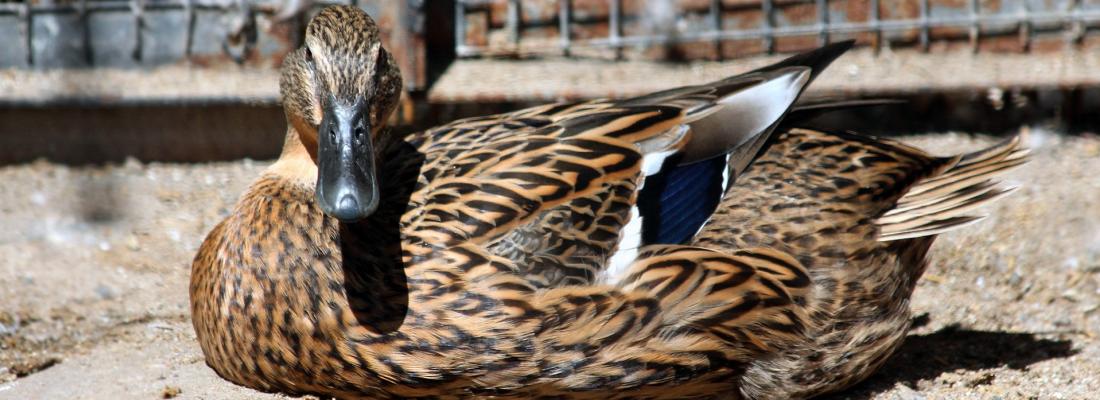
23337_215_RZ_canard_vaccination_landes.jpg

Xavier Remongin/agriculture.gouv.fr

October 2, 2024

Press Release


Highly pathogenic avian influenza: launch of the second compulsory vaccination campaign for ducks


This Tuesday, October 1st, marks the start of the second campaign to vaccinate ducks against highly pathogenic avian influenza (HPAI). The sector and the public authorities can build on the success of the previous campaign, which helped limit the number of outbreaks in 2023/24.

France is renewing the preventive vaccination strategy against highly pathogenic avian influenza (HPAI) identically, based on the vaccination of ducks in farms, deployed in 2023/24. This campaign, unprecedented at the European level, has made it possible to vaccinate 60 million ducks over the last twelve months.

This strategy has helped to limit the number of outbreaks in livestock, only ten for the 2023/24 campaign, compared to more than 400 in the previous season. A study by the Chair of Avian Biosecurity and Health at the National Veterinary School of Toulouse establishes that several hundred outbreaks have been avoided thanks to this vaccination strategy (see box below).

This vaccination campaign, the cost of which amounts to approximately one hundred million euros, will be financially supported by the State up to 70 % until the end of the year . The precise distribution of costs was co - constructed with the stakeholders in the sectors and validated on August 30. The system is operational, in line with the first vaccination campaign, which was successfully organized .

As a reminder, vaccination is mandatory for farms with more than 250 ducks (Muscovy, Mulard and Pekin) whose products (meat and foie gras) are intended for sale. The entire French territory (with the exception of Corsica) is concerned, which represents approximately 62 million ducks to be vaccinated in 2,500 farms.

"I salute the commitment of all the stakeholders who, alongside the ministry's services, have enabled the implementation of this vaccination campaign, in particular the breeders, veterinarians and their representatives as well as the teams of vaccinators, the laboratories producing vaccines and analyses and the scientific experts."

Annie Genevard, Minister of Agriculture, Food Sovereignty and Forestry The Ministry of Agriculture,

Food Sovereignty and Forestry invites all stakeholders in the sector to maintain their vigilance with regard to HPAI and to respect strict application of biosecurity measures. Surveillance, biosecurity and vaccination are, in fact, the pillars of preventing the spread of HPAI.

Several hundred outbreaks potentially avoided thanks to vaccination in 2023/24 (study)

A study by the Chair of Avian Biosecurity and Health at the National Veterinary School of Toulouse (IHAP Unit - ENVT-INRAE), published online as a pre-publication on August 29, establishes an estimate that, in the absence of vaccination, France could have experienced up to 701 outbreaks in livestock in 2023/24, which is significantly higher than the ten outbreaks actually observed.

The researchers relied on predictive modeling, based on data from outbreaks detected in livestock and wildlife in various Western European countries since 2016.

...
https://agriculture.gouv.fr/influen...-deuxieme-campagne-de-vaccination-obligatoire

 
...
Two new HPAI outbreaks have just been declared in farms this Friday, October 26 in Morbihan (56), bringing the number of HPAI outbreaks to 8 since the start of the 2024-2025 season.

The two farms are vaccinated duck farms (a fattened duck farm and a meat duck farm) located in the commune of Noyal-Muzillac , located in the Coastal Protection Zone.
...​

GO TO POST
 
...
A week after the identification of a first outbreak of avian flu in a farm in Saint Etienne d'Orthe in the Landes, a second outbreak of the disease was discovered on November 13 in the same town, also in a farm of vaccinated ducks.
...

Avian influenza - A second outbreak of the disease detected in a duck farm in Landes

Updated on 11/14/2024

Avian influenza - A second outbreak of the disease detected in a duck farm in Landes

These animals had been vaccinated against HPAI, in accordance with regulation
...​

Go to post
 
Related to the post above:

Translation Google


Avian flu: why could vaccinated ducks be infected in Landes?

By Aurélie Champagne
Published on 11/17/2024 at 8:42 a.m.

Two outbreaks were identified between November 7 and 14 in Saint-Étienne-d'Orthe. Jean-Luc Guérin, a specialist in animal infectiology, explains how these vaccinated web-footed birds could have been affected by the virus.

Nearly 12,400 ducks infected with the avian influenza virus and slaughtered in the space of a week in Saint-Étienne-d'Orthe, despite their vaccination . Enough to revive memories of the dark years experienced between 2021 and 2023 by the web-footed and poultry sectors.

However, according to Jean-Luc Guérin, professor at the National Veterinary School of Toulouse and head of the UMR IHAP (Interactions Hosts Agents Pathogènes), a research structure in animal infectiology attached to the animal health department of INRAE ​​(1), the situation is very different: "This is not an epizootic, as we have seen in the past, before the introduction of vaccination ," he emphasizes.

For several months, France, particularly the North and Brittany, has been facing "very localized, very specific introductions", at a time when the risk of exposure - that is, the risk of the virus being introduced from wild animals to livestock - is at its highest. "The outbreaks that have been observed only confirm the warnings that have been issued by scientists and health authorities for several weeks and which led to the risk level being gradually raised from moderate to high last week. This is not for nothing."

Protection failures

Because the period will be critical for several more weeks. The circulation of the virus that has been observed in recent months in seabird populations, combined with the phenomenon of migration that flies over the Landes, particularly the coast, is enough to make one feverish as Christmas approaches.

"There are a lot of poultry on farms, especially in view of the end-of-year holidays," continues the scientist. "Given the number of web-footed birds in the area, we have known from the start - and this is accepted - that despite vaccination, it is possible that we will have protection failures. This even happens when we get vaccinated against the flu ourselves. These are things that we have to accept. We have been lucky not to have any alerts since the launch of the vaccination campaign last year, but we knew that this could happen."

"Given the number of web-footed birds in the area, we have known from the start that despite vaccination, it is possible that there will be protection failures."

In the meantime, the two outbreaks detected in Saint-Étienne-d'Orthe are currently being investigated "to identify the routes of introduction and to determine whether vaccination practices may have had an impact. We must remain very cautious about this."

Critical period

For Jean-Luc Guérin, it is essential to respect biosecurity measures, to complement the effects of vaccination in this high-risk period. "They are very restrictive for farmers, I am thinking in particular of sheltering animals. But the cases that have affected these duck farms confirm that it is logical to be on alert and to increase the level of biosecurity. We must hammer home that we are in a critical period for another month and that it could remain complicated until the end of winter. And secondly, intensify surveillance: we test as many farms as possible that are linked to the outbreaks to ensure that there is no spread. We are not there yet, but that is the priority at the moment."

(1) National Research Institute for Agriculture, Food and the Environment.

https://www.sudouest.fr/sante/gripp...pu-etre-infectes-dans-les-landes-22165133.php
 
Translation Google

05086_299.jpg

Pascal Xicluna / agriculture.gouv.fr

December 13, 2024 Press Release

Highly pathogenic avian influenza: the State continues its commitment to financing the duck vaccination campaign for 2024/25


Annie Genevard, Minister of Agriculture, Food Sovereignty and Forestry, announces the continuation of the State's commitment to the 2024/25 vaccination campaign for ducks against highly pathogenic avian influenza (HPAI). Considering the need to continue the campaign deployed since October 1, 2024, the State is launching the order of the doses of vaccines necessary to cover the entire vaccination campaign, i.e. until September 30, 2025. In this context, the State will continue to cover, as has been the case since October 1, 2024, 70% of the costs generated by this campaign until September 30, 2025.

The objective is to continue to support the efforts of the sectors in this 2024/25 vaccination campaign, building on the good results obtained during the first campaign in 2023/2024. In an epidemiological context of high viral pressure linked to wildlife, the State is providing breeders with the means to prevent and limit the spread of the virus on French territory.

As of December 12, 2024, more than 71 million ducks have been vaccinated against HPAI since October 1, [SUP]2023 [/SUP](62 million during the 2023/2024 campaign and 10 million during the current 2024/2025 campaign).

Furthermore, all stakeholders in the sector must maintain strict application of biosecurity measures in order to limit the spread of this disease while the risk level has been high for several weeks. Surveillance, biosecurity and vaccination are indeed complementary pillars of HPAI prevention.

" I congratulate the commitment of an entire sector in an approach to prevent and limit the spread of the HPAI virus. The success of this approach is the result of exemplary collaboration between administration, veterinarians, laboratories and breeders. It is an inspiring example in the context of the health conference that the ministry will launch on January 30. "

Annie Genevard, Minister of Agriculture, Food Sovereignty and Forestry

...
https://agriculture.gouv.fr/influen...suit-son-engagement-dans-le-financement-de-la


Translation Google

Performance of highly pathogenic avian influenza virus surveillance in vaccinated flocks

PRESS RELEASE - A study published in the international journal Emerging Infectious Diseases (EID) by Toulouse scientists from the UMR IHAP (INRAE/ENVT) demonstrates that enhanced event-based surveillance, based on weekly samples taken from ducks found dead, is the most effective strategy for rapidly detecting the presence of the highly pathogenic avian influenza (HPAI) virus in duck farms vaccinated against HPAI. This approach is more sensitive and earlier in detecting the virus than taking samples from live ducks. It is therefore more effective in limiting the risk of silent circulation of the virus.

Published on January 06, 2025

black-duck-3077431_1920.jpg
© Pixabay

Toulouse researchers from the UMR IHAP (INRAE/ENVT – Host-Pathogen Interactions) studied the effectiveness of different surveillance strategies to detect the presence of highly pathogenic avian influenza (HPAI) viruses in duck farms vaccinated against HPAI. Using a mathematical model, they compared different surveillance strategies for the early detection of the virus, which represents a persistent threat to the poultry sector in Europe and particularly in France. They studied event-based surveillance strategies (based on an increase in mortality), reinforced event-based (based on performing diagnostic tests on ducks found dead) and programmed (based on performing diagnostic tests on a sample of live ducks). To do this, they simulated the spread of the virus in a vaccinated duck farm, and estimated the probability of virus detection as well as the detection time for each of them.

The study demonstrates that enhanced event-based surveillance, based on weekly sampling of dead ducks, offers the best sensitivity (up to 90% of infected flocks are detected) and the earliest detection of all the surveillance strategies studied . This method therefore appears to be more effective than monthly sampling of a random sample of live ducks (scheduled surveillance).

Detecting silent virus circulation is a major challenge in vaccinated flocks, as vaccination significantly reduces mortality and clinical symptoms, which are traditionally used to detect the presence of the virus. Monitoring vaccinated flocks to control the spread of the virus is therefore a real challenge. The researchers therefore stress the need to focus surveillance efforts on regular testing of dead ducks, while reducing scheduled surveillance strategies, which are less effective and more costly.

This work, carried out as part of the French HPAI vaccination campaign, offers practical recommendations for optimizing surveillance protocols and limiting the risks of epizootics. The results also highlight the importance of a judicious combination of vaccination and surveillance measures in order to preserve animal health and support the poultry sector in the face of current health challenges.

Access the article online:
https://wwwnc.cdc.gov/eid/article/31/1/24-1140_article


Sophie Planchand [SUP]1[/SUP] , Timothée Vergne [SUP]1[/SUP] , Jean-Luc Guérin [SUP]1[/SUP] , Séverine Rautureau [SUP]2[/SUP] , Guillaume Gerbier [SUP]2[/SUP] , Sébastien Lambert [SUP]1[/SUP]
[SUP]1[/SUP] IHAP, University of Toulouse, INRAE, ENVT, Toulouse, France
[SUP]2[/SUP] Ministry of Agriculture and Food Sovereignty, France
Reference
Planchard S., Vergne T., Guerin J. et al. (2025). Surveillance Strategy in Duck Flocks Vaccinated against Highly Pathogenic Avian Influenza Virus. Emerging Infectious Diseases, DOI: https://doi.org/10.3201/eid3101.241140


https://www.inrae.fr/actualites/per...aviaire-hautement-pathogene-elevages-vaccines
 
Translation Google

French bird flu vaccination campaign helps poultry production recover, producers say

February 18, 2025 at 4:12 p.m.

A bird flu vaccination campaign launched in France in 2023 has helped the country's poultry production return to levels not seen since outbreaks of the virus wiped out tens of millions of birds, producers said Tuesday.

Avian influenza (HPAI), or bird flu, is a viral disease that has ravaged poultry flocks around the world in recent years. It has also been shown to spread beyond birds, including to dairy cows and farm workers in the United States.

France is requiring vaccination of ducks, the species most susceptible to the virus, making it the first major poultry exporter in the world to launch a national vaccination campaign against bird flu.

However, some countries have imposed restrictions on French imports as a result, citing concerns that vaccinated birds could pose a risk as they may not show signs of infection, meaning it is impossible to determine whether the virus is present in a flock.

Despite these commercial concerns, Jean-Michel Schaeffer, president of Anvol, the French poultry industry group, declared that "vaccination is a success".

"Between last year and this year, all species are increasing because we avoided major health crises. This allowed farmers to return to full production," he told reporters.

In 2024, French poultry production increased by 12.1% compared to the previous year, after increasing by 2% compared to 2022. It is now 1.1% higher than the "pre-crisis level" of 2019, a year marked by a relatively low number of bird flu epidemics, Anvol said.

The comments from French poultry producers come days after the U.S. Department of Agriculture (USDA) gave Zoetis conditional approval for use of its avian flu vaccine in poultry.

The United States stockpiled poultry vaccines after major bird flu outbreaks in 2014 and 2015, but the vaccines were never used due to commercial concerns. (Reporting by Sybille de La Hamaide; Writing by Helen Popper)

https://www.zonebourse.com/cours/in...ide-la-production-de-volailles-a-se-49088015/
 
Translation Google

Avian flu: Duck vaccination will now only be 40% funded by the government

By Le Figaro with AFP
Published March 14, 2025 at 5:45 p.m.

The government will reduce its contribution to the financing of the next mandatory duck vaccination campaign from 70% to 40% , which has prevented a surge in bird flu outbreaks over the past two years, the Ministry of Agriculture confirmed on Friday, March 14. The reduction in funding will apply to the 2025-2026 campaign, according to the poultry and duck industries, which denounced in a joint press release a decision taken "without prior consultation" which poses risks to public health and the cost of which the industries, according to them, will not be able to bear.

The interprofessional organizations for poultry, foie gras, eggs, roast ducks and also game indicate that "the State has unilaterally decided to drastically reduce its financial participation from 70% to 40%, thus transferring responsibility for the purchase, transport and storage of vaccines to the sectors concerned . "

Disappointment
The interprofessional organizations claim to have been informed by the office of Minister Annie Genevard, after an "arbitration by Matignon ." They estimate the cost of an annual campaign at more than 90 million euros. "We are very, very disappointed. We are aware of the state of public finances, but it is unacceptable; we will not be able to bear the additional costs ," Guy-Marie Brochard, president of the Interprofessional Committee for Roasting Ducks (Cicar), told AFP. He requested a meeting with the minister's office.

In December, the government announced that the state would continue to be the primary funder of duck vaccinations against avian flu until September 30, 2025, at a cost of 70%. The industry was concerned about the future.

Since autumn 2023, vaccination against highly pathogenic avian influenza has been mandatory in farms with more than 250 ducks. More than 71 million animals have been vaccinated since then. From October 2023 to September 2024, 85% of the first vaccination campaign (purchase of doses, administration, monitoring, etc.) was financed by the State, which then reduced its contribution to 70% at the end of 2024. For the interprofessional organizations, the reduction in State funding could lead to "a rejection by certain breeders" , jeopardize "the success of the system" and increase the risks "for public health" .

https://www.lefigaro.fr/flash-eco/g...financee-qu-a-40-par-le-gouvernement-20250314
 
Translation Google

British market reopens: "a strong signal sent to other countries" after the embargo on foie gras

Published on 05/28/2025 at 5:25 p.m. , updated 05/29/2025 at 11:42
Interview by Marc Centene

The essentials The British market is reopening its doors to French duck, after more than a year of embargoes related to avian influenza vaccination. The foie gras industry is hoping for a lifting of restrictions on Japan, its largest market.

Marie-Pierre Pé, you are president of CIFOG*. The United Kingdom has just reopened its market to French foie gras. What does this announcement mean for the industry?

This is very good news. It marks the end of a long road, since the British market had been closed since March 7, 2024. We can regret the slowness of "diplomatic time," but that is unfortunately often the case in these types of situations. This reopening also sends a strong signal to other countries, all those that had closed their borders due to vaccination. The fact that the United Kingdom is reopening is truly very positive.

Could other embargoes be lifted soon?

Yes, we're talking about Japan in particular. Discussions are underway with our Japanese counterparts, especially this week during the WHOA (World Organization for Animal Health) congress in Paris, where bilateral meetings are planned with Japanese officials. It's worth remembering that Japan was historically our primary export market for foie gras, well before the avian influenza outbreaks. We sent over 800 tons of raw foie gras there. Japanese restaurants love our foie gras because of its very high quality. Unfortunately, this market has been disrupted by recurring avian flu outbreaks. Each time, the markets close until we regain "free" status, which takes a long time. The Japanese market has been closed as of October 1, 2023.

What about competing markets such as the United States, Poland or Hungary, which are also affected by avian influenza?

They are our competitors. But we have high hopes for the results of vaccination. France is a pioneer in this field, and the method has proven its effectiveness. We hope that other countries like the United States, Hungary, or Poland, which are also heavily affected, will adopt vaccination. If this is the case, vaccination will become the international standard. This would mean the end of market closures to countries that vaccinate. If they adopt vaccination, they will no longer be able to ban the import of our products on the pretext that they come from vaccinated animals.

You are also asking for continued co-financing of vaccination. Why?

Two months ago, the State announced a reduction in its contribution to vaccination funding. The funding is going from 70% to only 40%. For the duck industry, this means they will have to increase their contribution from 30% to 60%: double. And this only concerns the duck industry. What is important to understand is that vaccination requires very strict monitoring, mandated by a European delegated act. This monitoring almost doubles the cost of vaccination. Because if a wild avian influenza virus circulates despite vaccination, it won't necessarily be noticeable. Hence the requirement for enhanced testing. Until now, the State also funded this monitoring.

Can we hope for an easing of this surveillance?

The European Delegated Act is currently being revised. With the experience gained over the past 18 months, there is a desire to ease the requirements somewhat. And if we manage to reopen the markets as we are doing with the United Kingdom, it will give our sectors some breathing room. This is excellent news for the broiler duck sector, which has been hit hard. As for Japan, it is a priority. We know that Japanese customers are waiting for our products. In January, at the CIRA trade show in Lyon, several Japanese buyers came to request French foie gras. Vaccination has a cost, that's for sure, but it also allows us to preserve and win back our markets. If everyone adopts it, business will pick up again, and the costs will be amortized.

*CIFOG: Interprofessional Committee for Palmipeds with Foie Gras

https://www.ladepeche.fr/2025/05/28...-apres-lembargo-sur-le-foie-gras-12726748.php
-------------------------------
See also:

UK - Approval of France’s HPAI vaccination programme for commercial ducks (DEFRA, May 22, 2025)

https://flutrackers.com/forum/forum/europe/h5n1-tracking/united-kingdom-and-northern-ireland/1013907-uk-approval-of-france%E2%80%99s-hpai-vaccination-programme-for-commercial-ducks-defra-may-22-2025​
 
Translation Google

Avian flu: breeders and scientists seek solutions together in Gers

Broadcast on Sunday, September 28, 2025 at 8:31 AM
Published on Sunday, September 28, 2025 at 8:31 AM

Poultry farmers and research professors are meeting in mid-October in Mirande, Gers, at a veterinarian's office to discuss measures to protect their flocks from avian flu. The virus, which appeared in France in 2006, has still not been eradicated.

Vaccination of poultry against avian flu was introduced in France in 2023-24 , but every late summer-early autumn, it's the same problem, the virus appears in Northern Europe.

Vaccination effective but insufficient

So epidemiologists like Mathilde Paul, a lecturer and researcher at the National Veterinary School and INRAE ​​in Toulouse, fear contamination of French livestock farms: " Indeed, we have our eyes fixed on what is happening in Northern Europe. Why? Because in fact, in September, that's when the migrants will be approaching us. And so it's particularly at this time that we expect the virus to arrive in our territory. It's happened every year since 2016, so it will arrive, we know that, and we've already detected it in wild birds. The challenge for us is to know how to help breeders and the sectors to better prepare and avoid crises like the ones we've experienced ."

The vaccination started in the winter of 2023 helped a lot, the number of outbreaks in France was divided by more than 100, going from 1300 outbreaks at the peak of the epizootic disease to only 5-10; but it is not enough.

Invent protective measures based on the type of breeding

If protective measures exist, they are restrictive (overshoes, disinfection airlocks, etc.) and, above all, they are not suitable for all farms. The avian flu virus is transmitted by wild birds and human activity , via shoes, hands, car wheels. Conventional farms, whose buildings contain tens of thousands of poultry, manage to protect themselves, but not the others, deplores Mathilde Paul:

" Each farm has its own specificities and practices that expose them to viruses more or less differently. You have large farms that are very connected to each other, in which you will have movements. These farms have risk factors, but they also have factors that allow them to protect themselves, since, for example, they will practice what is called the full-empty-all approach: they will empty the buildings and carry out cleaning/disinfection that will eliminate the virus. Conversely, you have very small farms that will produce continuously. These are, for example, breeders that you will find at markets, etc. They need to sell animals every week. So in fact, they also have specificities that make certain measures more difficult for them to implement ."

An exchange between breeders and scientists

The workshop organized in Mirande in mid-October is a pilot project, it should allow exchanges between breeders and scientists to find solutions adapted to each farm, explains Mathilde Paul: " In these workshops, we have different types of farms, so we try to work with them to know what each one is able to do and what would be most suitable for their farm. For example, how do we improve hygiene, let's say, and visitor management? You have in a farm all sorts of people who will come in, come to care for the animals, catch them, bring animals in, take them out, etc. These people have a certain number of procedures to follow: changing boots, in particular, washing hands, etc. All of this is extremely difficult to implement. So the challenge here is to know what we could do better, during what period, since in practice, it is difficult for breeders to do everything perfectly, all the time. So the issue is, at what period should we, in quotes, tighten the screw and be more demanding in terms of compliance with these hygiene measures?

To this problem, the teacher-researcher points out, is added the disengagement of the state, the coverage of vaccination went from 70 to 40% and it must be added the very high cost of surveillance by veterinarians.

https://www.francebleu.fr/emissions...r-pour-proteger-tous-types-d-elevages-1506002

 
Translation Google

Avian flu: why confine poultry when ducks are vaccinated against the virus?

Mathilde Ansquer
Published onFriday, October 24, 2025 at 5:31 p.m.

Despite mandatory vaccination of ducks since autumn 2023, the risk of avian flu was raised this Wednesday from "moderate" to "high." Most poultry has therefore had to be confined.

The announcement continues to be a source of anxiety for farmers: the risk level for avian flu was raised this Wednesday in mainland France. It has risen from "moderate" to "high," which has led to the partial confinement of poultry, despite the obligation to vaccinate ducks against the virus, in effect since 2023.

The decree, published this Wednesday and which raises the level of vigilance, specifies that the decision was taken " considering the dynamics of infection by highly pathogenic avian influenza in the migration corridors crossing France, with the confirmation of cases in migratory wildlife on the national territory and the possibility of spread of the virus by these migratory birds to detained birds ."

Indeed, in just under two weeks, four outbreaks of highly pathogenic avian influenza have been confirmed in commercial poultry farms and three outbreaks in backyards. Some outbreaks involve vaccinated duck farms, notably in Rives-d'Autise in Vendée, where one flock had to be culled.

"There are always residual risks of contamination"

"For ducks, as with any vaccination, we cannot achieve total effectiveness; there are always residual risks of contamination ," explains Jean-Luc Guérin, professor at the National Veterinary School of Toulouse. Nevertheless, he emphasizes the effectiveness of this vaccine, which has been mandatory for three years: "Today, we have outbreaks, but no more major epizootic waves like we had until 2023." The Ministry of Agriculture, for its part, mentions " a complementarity of measures: sheltering and vaccination."

Among industry professionals, the vaccine's effect is also recognized. " We've dropped to around ten outbreaks per season, whereas in 2022, there were 1,300 outbreaks of avian flu in France, across all sectors ," recalls Marie Laborde, deputy director of CIFOG (Interprofessional Committee for Foie Gras Palmipeds). However, she points out that this vaccination is "not easy and expensive" for breeders. " At the start, in 2023, the State financed 85% of the cost of vaccination. The following year, it fell to 70% and this year to 40%." However, " the vaccine has been a breath of fresh air, " she assures. " After experiencing seven episodes of avian flu, breeders are not taking the risk of not vaccinating."

A possible exemption for vaccinated ducks

These vaccinated ducks can also benefit from an exemption. The Ministry of Agriculture specifies that it is possible "as an alternative to closed buildings, to shelter the animals in a suitable run" , subject to compliance with certain rules. Some breeders, however, prefer to keep their ducks indoors " as a precautionary measure ". " It's more complicated in the Southwest, where we have a lot of IGP or Label Rouge ducks with longer breeding periods. The bigger the animals get, the more complicated it is to keep them indoors," continues Marie Laborde.

However, she says she's optimistic about the future. And to the eternal question that plagues gourmands (and journalists) every year as the end-of-year holidays approach, she responds with a smile: " Yes, there will be foie gras at Christmas this year."

https://www.francebleu.fr/infos/agr...canards-sont-vaccines-contre-le-virus-9934249
 
PRESS RELEASE
La Roche-sur-Yon, November 10, 2025

Highly pathogenic avian influenza: five new outbreaks detected in Vendée duck farms
...
The current epidemiological situation regarding Highly Pathogenic Avian Influenza (HPAI) is
concerning.

The outbreaks detected in Vendee are occurring in vaccinated but older ducks, with a second injection
administered several weeks prior.


Recent trials in duck vaccination have shown that a 3-dose protocol induces a higher level of immunity
and significantly better control of transmission until the end of the production cycle than
previously observed with two doses of the same vaccine.

Therefore, to ensure the success of the vaccination campaign and given the epidemiological
situation, the Directorate General for Food (DGAL) has authorized, since November 5, 2025, the
voluntary administration of a third dose to Muscovy ducks.

...
https://www.vendee.gouv.fr/contenu/... foyers détectés en Vendée 10-11-2025.pdf​​
------------------------------------------------
Bird flu: three clearly identified areas in Vendée, two of which are considered "more worrying"
Vendée


Marius Delaunay
Published onWednesday, November 12, 2025 at 5:08 PM
Updated onWednesday, November 12, 2025 at 5:19 PM
...
Two sectors deemed "more worrying"

The first area affected by the spread of avian flu is in southern Vendée. " It has stabilized and is now under surveillance. It appears to be under control ," according to Christophe Mourrieras. What worries the authorities more are the two other areas, concentrated around Les Achards and Saint-Fulgent. According to the prefecture, duck farms are most frequently affected in both cases.
...
A new variant

Despite the arrival of the vaccine on farms, the virus is wreaking havoc. A new variant , H5N1 FR20, has emerged and seems to particularly favor ducks. " The vaccine doesn't prevent virus transmission, especially in the Vendée region, where the livestock density is very high ." Many farmers are therefore starting to administer a third dose to their poultry. The Directorate General for Food has authorized this since November 5th.

https://www.francebleu.fr/infos/agr...-en-vendee-dont-deux-plus-inquietants-6717532
 
In December 2024, France reported the detection of the FR20 genotype in two backyard flocks:

Avian influenza: France has been at high risk since November 9, 2024

Updated on
23/12/2024
...
This decision is based on the strong and persistent circulation of the virus in wild birds in Europe, particularly migratory birds, along the migration corridors crossing France. These migrations have already begun and are intensifying.

Thus, the detection of the FR20 genotype in two backyard flocks (Pas-de-Calais/Saône-et-Loire) indicates the arrival in France of infected migratory wild birds. This FR20 genotype is the one identified in Europe in wild birds, while FR9 is the genotype found in Brittany in poultry farms and, until now, in native birds (gulls).
...
https://www.finistere.gouv.fr/Actio...est-en-risque-eleve-depuis-le-9-novembre-2024
 
Translation Google

Bird flu: at the Paris Zoo, the vaccination campaign is in full swing

THE December 5, 2025 at 8:56 AM
Updated on December 5, 2025 at 8:50 AM
By AFP By Bénédicte SALVETAT REY​

Paris (France) (AFP) – A seagull is strolling calmly through the penguin enclosure at the Paris Zoological Park. This poses a potential danger to the penguins, who are vaccinated annually against avian flu to protect themselves.

On this cold December morning, the start of the seasonal peak of virus circulation in France, the park's 41 Humboldt penguins were gathered in a building adjoining their pool.

Snug in the arms of his keeper, who offers him reassuring words, Cissou is soon finished. After receiving his dose, he waddles back to his enclosure.

A dozen people are busy around his companions in black and white livery: weighing, measuring, collecting feathers, taking blood, examining feet, checking fleas and rings...

In a month, the young penguins born this year will receive their booster dose. And all vaccinated birds will undergo another blood test to check their antibody levels.

Last week, health authorities warned that the season was already shaping up to be "unfavorable", with an exceptional peak in wild animals.

Although it has never recorded any cases, contamination would be catastrophic for the zoo, located in the Bois de Vincennes where you can find barnacle geese, ring-necked parakeets, crows, magpies and songbirds.

Benefit-risk assessment

"Animals in zoos have great conservation value. These are animals that are generally threatened in their natural environment," veterinarian Sylvie Laidebeure told AFP, as she inserted a syringe into the keel (chest) of the Patagonian penguin, a species classified as "vulnerable" by the IUCN (International Union for Conservation of Nature).

To reduce the risk, French zoos are required to implement a plan to combat avian influenza.

"We assess the benefit-risk ratio of vaccination" for each species, explains Ms. Laidebeure, the animal welfare officer at the zoo. "What is the risk of the animal contracting the disease? How serious is the disease? Is it worthwhile compared to the risk that vaccination might represent?"

There can be "crises, infections at the injection site, inflammatory reactions" and "restraint is also extremely stressful for the birds," she explains.

Twenty years of hindsight

In Paris, only species that live in the open air or in aviaries with mesh large enough to allow contact with wild birds are vaccinated: hornbills, vultures, rheas, ostriches, marabou storks and cranes.

For those living in the large aviary or the tropical greenhouse, "we consider the risks to be lower and the biosecurity measures in place to be sufficient," the veterinarian continued. Footbaths are installed at the entrance to the enclosures, and the hygiene of the feeders is closely monitored to prevent contamination of the food by wild birds.

Although still a minority practice in European zoos, this vaccination has been carried out in French parks since 2006.

Well before French farms, where the vaccine - the same for all species used with an adapted dosage - was only authorized in 2023.

This twenty-year feedback process has resulted in scientific publications on the results of vaccination "following the joint work of French zoos," emphasizes Ms. Laidebeure.

"We know the limitations of the vaccine on certain species. We know that it works very well on some, and that it gives slightly lower rates or is slightly less durable over time for others," she explains.


"What's important is safety. The vaccine is safe and effective on all species. I think that helped to reassure people," before its use on farmed ducks, she believes.

https://information.tv5monde.com/fr...campagne-de-vaccination-bat-son-plein-2800132
 
Translation Google
Vaccination of ducks against avian influenza: lessons learned from the first six months

In October 2023, vaccination against avian influenza in farms with more than 250 ducks became mandatory in France, a first in Europe. Using field data collected by the DGAL (Directorate General for Food), teams from ANSES (French Agency for Food, Environmental and Occupational Health & Safety) developed a model to assess the level of protection provided by vaccination at the duck population level. This model allows for testing and optimizing the vaccination strategy.

Scientists from the Ploufragan-Plouzané-Niort laboratory of Anses and the Directorate General for Food (DGAL) published in the journal Vaccine in November 2025 the analysis of the first six months of vaccination of duck farms in France, i.e. over the period from October 2023 to March 2024. To do this, three approaches were combined: the analysis of field data collected by the Directorate General for Food, the results of experimental trials on vaccines conducted in 2022 and the modeling of the level of vaccine protection against the virus at the population level.

The challenge is to verify the level of protection achieved in the field. Indeed, " vaccination does not prevent contamination by the virus but limits clinical signs and reduces the excretion of the virus by carrier animals, slowing its spread within the farm and between farms, " ​​recalls Béatrice Grasland, head of the Avian and Rabbit Virology, Immunology and Parasitology Unit at Anses.


The vaccination protocol was generally well followed.

The first key finding is that vaccination was well-followed. Between October 1, 2023, and March 31, 2024, 51 million doses were administered, covering more than 95% of the duck flocks . Most received two doses, the first when the animals were approximately 10 days old and the second about 20 days later, in accordance with the vaccination protocol then in place.

The data collected was used to train a model assessing the protection of ducks against avian influenza. " The model showed that 40 to 45% of the duck population could be considered protected by a complete vaccination schedule at a given time , meaning that they had received all the doses necessary for optimal vaccine efficacy and that this efficacy had not yet decreased, " explains Morgane Salines, a scientist in the Epidemiology, Health and Welfare (Episabe) unit at ANSES and first author of the study.

The remaining groups of ducks had partial protection, either because their vaccination protocol was underway or because their immunity was waning. Indeed, it has been experimentally determined that vaccine protection declines in ducks older than 10 weeks. " These percentages of farms that are fully or partially protected can ensure a certain level of protection for the duck population as a whole. Good adherence to vaccination by the production chains is essential to optimize this protection , " adds Morgane Salines.


Different modeled scenarios

To compensate for the reduced protection observed in ducks older than 10 weeks, a third dose was administered to ducks intended for foie gras production, which are raised longer (up to 16 weeks) than meat ducks, but only in areas and during periods of particular risk. " Our modeling confirmed the usefulness of this third dose," explains Mathieu Andraud, a scientist in the Episabe unit, who developed the model. " Without it, the protection of the duck population would have been significantly lower in these areas. "

The model also allowed for the prospective testing of several vaccination scenarios, which have not yet been implemented . For example, given the cost of vaccination for the government and production sectors, the possibility of not vaccinating ducks year-round and stopping vaccinations during periods of lower risk for avian influenza transmission was considered. Modeling this strategy showed that it was not a sound public health option: " If the animals are not vaccinated in the summer, the time required to complete the vaccination protocol and develop immunity means that the ducks would be unprotected in the autumn or winter, when the risk associated with avian influenza is very high ," explains Mathieu Andraud.

The vaccination strategy will continue to be optimized to better protect poultry farms. These developments are supported by modeling that allows for an estimation of their impact before their deployment in real-world conditions. This was the case, for example, with the vaccination of ducklings immediately after hatching, which has been implemented gradually since 2024. Vaccination protocols aimed at improving the level of protection for ducks older than 10 weeks are also currently being studied.


The positive results of vaccination should not lead to a relaxation of the fight and surveillance.

During the winters of 2023-2024 and 2024-2025, cases of avian influenza in poultry farms decreased significantly compared to previous years. This reduction can be attributed to vaccination as well as to reduced circulation of the virus among wild birds.

Currently, avian influenza is circulating more actively in wild birds than during the winter of 2024-2025 ,” emphasizes Béatrice Grasland. “ More than forty introductions of the virus into French poultry farms from wild birds have been recorded since the beginning of the 2025-2026 season. In addition to vaccinating ducks, we must therefore not relax biosecurity measures, which prevent the introduction of the virus into farms, nor virus surveillance, to prevent the virus from circulating undetected. The objective is to ensure that the virus does not develop mutations that could eventually allow it to evade the immunity induced by vaccination.

As a reminder, avian influenza can, under certain conditions, be transmitted to humans. Reassortment between an avian influenza virus and a human influenza virus could result in a virus that is more transmissible to humans. It is precisely to avoid this risk of co-infection by the two types of virus that the French National Authority for Health (HAS) recommends each year that professionals in contact with birds be vaccinated against seasonal influenza.


​​​​​​​This news item focuses on the analysis of the first six months of monitoring of vaccination against highly pathogenic avian influenza, the results of which are compiled annually by ANSES. The data analyzed come from databases of duck flock movements declared by farmers, vaccinations recorded in the CalypsoVet database by veterinarians, and the results of experimental tests of avian influenza vaccines conducted by ANSES and the National Veterinary School of Toulouse in 2022.


Learn more

Read the article “To what extent can the duck population be protected after vaccination against highly pathogenic avian influenza? Contributions from a modeling approach and French field data”


https://www.anses.fr/fr/content/vac...iaire-les-enseignements-des-six-premiers-mois
 
Back
Top Bottom