
• FluTrackers.com Inc. does not provide medical advice. Information on this web site is collected from various internet resources, and the FluTrackers board of directors makes no warranty to the safety, efficacy, correctness or completeness of the information posted on this site by any author or poster. The information collated here is for instructional and/or discussion purposes only and is NOT intended to diagnose or treat any disease, illness, or other medical condition. Every individual reader or poster should seek advice from their personal physician/healthcare practitioner before considering or using any interventions that are discussed on this website. By continuing to access this website you agree to consult your personal physican before using any interventions posted on this website, and you agree to hold harmless FluTrackers.com Inc., the board of directors, the members, and all authors and posters for any effects from use of any medication, supplement, vitamin or other substance, device, intervention, etc. mentioned in posts on this website, or other internet venues referenced in posts on this website.
  • We are not asking for any donations. Do not donate to any entity who says they are raising funds for us.

France - Surveillance of dengue, chikungunya and Zika in metropolitan France 2025

Pathfinder

Editor, Senior Moderator
Translation Google

On the occasion of the launch of reinforced surveillance of dengue, chikungunya and Zika in metropolitan France, health authorities are reminding people of the importance of protecting themselves from mosquito bites.


Every year, May 1st marks the beginning of the enhanced period of surveillance for arboviruses, such as dengue, chikungunya, and Zika, in metropolitan France, and the implementation of vector control measures by health authorities. This system makes it possible to identify and closely monitor the circulation of these viruses in metropolitan France, and thus limit their transmission.

Published on May 15, 2025

Press contacts

Health Crisis Center - Ministry of Labor, Health, Solidarity and Families
alertes-presse@sante.gouv.fr

Public Health France
presse@santepubliquefrance.fr


The tiger mosquito is now present in 84% of metropolitan departments

Introduced into mainland France in 2004, the tiger mosquito ( Aedes albopictus ) continues its rapid expansion. As of January 1, 2025, it is present in 81 departments, or 84% of metropolitan departments. The newly colonized departments in 2024 are Marne, Haute-Marne, and Haute-Saône.
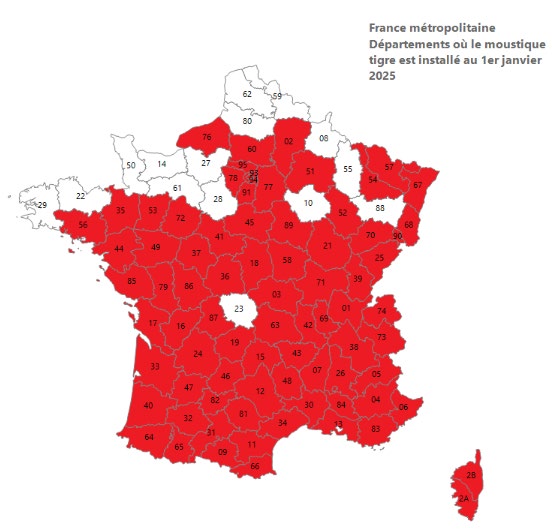
93d32b7ec145-infographie_arboviroses_20250515.jpg

Source DGS, SI-LAV, as of January 1, 2025.

This mosquito is a vector of dengue viruses , but also chikungunya and Zika .

In 2024, metropolitan France recorded a record number of dengue cases, both imported (contracted during a stay in a tropical zone) and indigenous (contracted in mainland France). Since the beginning of 2025, Public Health France has already recorded more than 1,100 imported cases of dengue fever and more than 900 imported cases of chikungunya. Beyond the risk of dengue circulation, the beginning of 2025 is indeed marked by a particularly increased risk of importation and circulation of the chikungunya virus in mainland France due to the ongoing epidemics in the territories of Réunion and Mayotte. This situation raises fears of the establishment of indigenous circulation of these diseases in the coming weeks.

All of these elements remind us of the importance of adopting the right actions to protect ourselves from bites, fight against the proliferation of mosquitoes and limit the transmission of diseases.


Health authorities, health professionals and vector control stakeholders fully mobilized

Throughout the year, government departments, national and regional health agencies, local authorities and vector control operators are fully mobilized to limit the risk of epidemics linked to mosquito-borne diseases.

Surveillance is being reinforced during the period of activity of the tiger mosquito in mainland France (from 1 May to 30 November), thanks in particular to raising awareness among health professionals about diagnosis and reporting cases from the start of the season, allowing regional health agencies to take vector control measures around infected people in order to limit the risk of local transmission.

The fight against these so-called vector-borne diseases is a public health priority for the Ministry of Health and Access to Care.


Mosquito control is everyone's business!

Combating mosquito bites means combating the transmission of potentially serious diseases. While no single measure is 100% effective, it is the sum of individual and collective measures that can reduce the transmission of these diseases.

Simple actions to prevent the proliferation of mosquitoes

To limit the risk of mosquito proliferation and establishment, everyone must ensure they combat mosquito breeding sites, which are conducive to their development. To do this, it is important to eliminate stagnant water in and around habitats (under pots, tarps, waste, gutters, etc.).

Avoiding being bitten means protecting yourself and also avoiding transmitting the disease.

There are ways of personal protection, such as wearing long, loose clothing, using repellents, and installing mosquito nets.
An infected mosquito can, a few days later, bite other people who will in turn be infected by the virus, leading to the appearance of the first indigenous cases which could cause an epidemic: it is therefore essential to protect yourself and others.


Follow the advice for people staying in risk areas

For people traveling to and returning from an area where mosquito-borne diseases are common (including Réunion, Mayotte, Martinique, Guadeloupe and Guyana, but also in many tropical countries), it is strongly recommended to:
  • Find out before departure about diseases circulating in the destination areas;
  • Protect yourself against mosquitoes during a stay in these risk areas and for up to three weeks after your return, to avoid transmitting a disease to your loved ones via mosquitoes.
Be alert for symptoms after a mosquito bite

If you experience symptoms (joint or muscle pain, headache, rash, conjunctivitis, with or without fever) after a bite, it is important to consult a doctor immediately, specifying that you have been in an area where the chikungunya, dengue or Zika viruses are circulating.

To find out more
  1. Report on the surveillance of dengue, chikungunya and Zika in mainland France in 2024
  2. In territories and countries at risk:
  3. Mosquitoes as vectors of disease | sante.gouv.fr
  4. Dengue, Chikungunya, Zika: From Prevention to Reporting | santepubliquefrance.fr
also read

Press release

Download (pdf - 168.66 KB)


https://www.santepubliquefrance.fr/...nce-metropolitaine-les-autorites-sanitaires-r

 
Translation Google

Chikungunya, dengue fever, and Zika in mainland France. Enhanced surveillance bulletin of May 21, 2025.


Published on May 21, 2025
Updated on May 21, 2025


Key points

Indigenous cases No indigenous cases have been identified in mainland France.
Imported cases Since May 1, the start of enhanced surveillance, until May 20, 2025, the following have been identified:

  • 152 imported cases of dengue fever, (n=137 in departments colonized by Aedes albopictus )
  • 225 imported cases of chikungunya (n=214 in departments colonized by Aedes albopictus )
  • 1 imported case of Zika (n=1 in departments colonized by Aedes albopictus ).

PDF 0.22 MB

https://www.santepubliquefrance.fr/...n-de-la-surveillance-renforcee-du-21-mai-2025
------------------------------------
From the PDF link above:

(Screenshots)


image.png


image.png


image.png


M
 
Chikungunya, dengue fever, and Zika in mainland France. Enhanced surveillance bulletin of May 28, 2025.


Published on May 28, 2025
Updated on May 28, 2025


Key points

Indigenous cases
  • No indigenous cases have been identified in mainland France.
Imported cases

Since May 1, the start of enhanced surveillance, until May 27, 2025, the following have been identified:
  • 237 imported cases of dengue fever (n= 210 in departments colonized by Aedes albopictus ).
  • 341 imported cases of chikungunya (n=321 in departments colonized by Aedes albopictus ). Note the identification of 6 imported cases from Madagascar, indicating the transmission of chikungunya in this country.
  • 1 imported case of Zika (n=1 in departments colonized by Aedes albopictus ).
PDF 0.23 MB

https://www.santepubliquefrance.fr/...n-de-la-surveillance-renforcee-du-28-mai-2025
------------------------------------
From the PDF link above:

Report on the enhanced surveillance of dengue, chikungunya, and Zika in mainland France from May 1 to May 27, 2025

Surveillance of dengue, chikungunya, and Zika is based on mandatory reporting.


During the period of activity of the Aedes albopictus (tiger) mosquito vector in mainland France, from May 1 to November 30, it is supplemented by a seasonal enhanced surveillance system, coordinated by Public Health France in conjunction with the Regional Health Agencies (ARS).

From January 1 to April 30, 2025, the following cases were identified through mandatory reporting (consolidated figures as of May 26, 2025):
• 1,099 imported cases of dengue fever
• 919 imported cases of chikungunya
• 5 imported cases of Zika

Chikungunya, dengue fever, and Zika Episodes of indigenous transmission

No episodes of indigenous transmission have been identified in mainland France. Imported Cases from May 1 to May 27

As part of enhanced surveillance, 341 imported cases of chikungunya, 237 cases of dengue fever, and 1 case of Zika were identified between May 1 and 27, 2025.


Table 1 – Number of confirmed or probable imported cases of chikungunya, dengue fever, and Zika, by region, mainland France (from May 1, 2025 to May 27, 2025)

image.png


Table 2 – Distribution of imported dengue cases by country or area of ​​stay (data from May 1, 2025 to May 27, 2025)

image.png


Table 3 – Distribution of imported chikungunya cases by country or area of ​​stay, data from May 1, 2025 to (May 27, 2025)

image.png

image.png


Table 4 – Distribution of imported Zika cases by country or area of ​​stay, data from May 1, 2025
to May 27, 2025)​


image.png


...
 
Translation Google
Chikungunya, dengue fever, and Zika in mainland France. Enhanced surveillance bulletin of June 4, 2025.


Published on June 4, 2025
Updated on June 4, 2025


Key points

Indigenous cases
  • No indigenous cases have been identified in mainland France.
Imported cases

Since May 1st, the start of enhanced surveillance, until June 3, 2025, the following have been identified:
  • 283 imported cases of dengue fever
  • 424 imported cases of chikungunya
  • 2 imported cases of Zika


PDF 0.86 MB


https://www.santepubliquefrance.fr/...n-de-la-surveillance-renforcee-du-4-juin-2025
-----------------------------------------------
From the PDF link above:
(screenshots)


Table 1 – Number of confirmed or probable imported cases of chikungunya, dengue fever and Zika, by region, mainland France (from 01/05/2025 to 03/06/2025)
image.png

Table 2 – Distribution of imported dengue cases by country or area of ​​stay (data from 01/05/2025 to 03/06/2025)

image.png

image.png


Translation Google
Chikungunya, dengue fever, and Zika in mainland France. Enhanced surveillance bulletin of June 11, 2025.


Published on June 11, 2025
Updated on June 11, 2025


Key points

Indigenous cases
  • No indigenous cases have been identified in mainland France.
Imported cases

Since May 1, the start of enhanced surveillance, until June 10, 2025, the following have been identified:
  • 337 imported cases of dengue fever
  • 507 imported cases of chikungunya
  • 2 imported cases of Zika
PDF 0.86 MB

https://www.santepubliquefrance.fr/...-de-la-surveillance-renforcee-du-11-juin-2025

​------------------------------------------------

From the PDF link above:
(screenshots)


Table 1 – Number of confirmed or probable imported cases of chikungunya, dengue fever and Zika, by region, mainland France (from 01/05/2025 to 10/06/2025)

image.png - Click image for larger version  Name:	image.png Views:	1 Size:	47.3 KB ID:	1014688


Table 2 – Distribution of imported dengue cases by country or area of ​​stay (data from 01/05/2025 to 10/06/2025)

image.png - Click image for larger version  Name:	image.png Views:	1 Size:	38.7 KB ID:	1014689

image.png - Click image for larger version  Name:	image.png Views:	1 Size:	24.0 KB ID:	1014690

image.png - Click image for larger version  Name:	image.png Views:	1 Size:	5.7 KB ID:	1014691


Table 3 – Distribution of imported cases of chikungunya by country or area of ​​stay, data from 01/05/2025 to 10/06/2025)

image.png - Click image for larger version  Name:	image.png Views:	1 Size:	21.0 KB ID:	1014692
​​​​
 
Translation Google
Chikungunya, dengue fever, and Zika in mainland France. Enhanced surveillance bulletin of June 17, 2025.


Published on June 18, 2025
Updated on June 18, 2025

Print Share

Key points

Indigenous cases
  • Two unrelated indigenous cases of chikungunya have been identified, one in the Var department and the other in the Hérault department. Investigations and prevention and control measures are underway.
Imported cases

Since May 1, the start of enhanced surveillance, until June 17, 2025, the following have been identified:
  • 395 imported cases of dengue fever
  • 583 imported cases of chikungunya
  • 2 imported cases of Zika
  • Download PDF 0.85 MB
https://www.santepubliquefrance.fr/...-de-la-surveillance-renforcee-du-17-juin-2025

--------------------------------------------------------
From the PDF link above:

...
Chikungunya, Dengue, and Zika

Episodes of Indigenous Transmission


Two indigenous cases of chikungunya have been confirmed by the National Reference Center for Arboviruses. These cases, reported in Occitanie and Provence-Alpes-Côte d'Azur, are the earliest ever identified for indigenous cases during the mosquito vector's active season in mainland France (onset dates of signs: May 27 and June 2).

Investigations aimed at characterizing these episodes, including their size and dynamics, with the active search for other cases, are ongoing, as are prevention and control measures (see box). Although declining, the importation pressure into mainland France of chikungunya cases who had traveled to Réunion Island may have contributed to the early emergence of indigenous transmission, especially since the strain of chikungunya virus circulating in Réunion Island is well adapted to the Aedes albopictus mosquito. Investigations are ongoing, but for at least one of the two indigenous cases, a viremic case from Réunion Island has been identified as the possible source of local transmission.

Table 1: Episodes of indigenous transmission of chikungunya in mainland France, 2025 season

image.png - Click image for larger version  Name:	image.png Views:	1 Size:	29.9 KB ID:	1014923

...​​
 
Translation Google
Chikungunya, dengue fever, and Zika in mainland France. Enhanced surveillance bulletin of June 25, 2025.


Published on June 25, 2025
Updated on June 25, 2025

Print Share

Key points

Indigenous cases
  • As of June 24, 2025, we have identified six episodes of indigenous chikungunya transmission in mainland France (n = 8 cases). These episodes are located in regions already affected by episodes of indigenous transmission in previous years: Provence-Alpes-Côte d'Azur, Corsica, Occitanie, and Auvergne-Rhône-Alpes. Investigations and prevention and control measures are ongoing.
  • Such an early start in the mosquito's active season and such a high number of episodes had never been observed before.
  • Although declining, the number of cases of chikungunya that have travelled to Réunion and the Indian Ocean remains high and contributes to the early appearance of indigenous transmission.
  • Public Health France reiterates the importance of reporting cases, which allows for rapid intervention to limit indigenous transmission, as well as the importance of protective measures against mosquito bites and the control of larval breeding sites.
Imported cases

Since May 1, the start of enhanced surveillance, until June 24, 2025, the following have been identified:
  • 454 imported cases of dengue fever
  • 645 imported cases of chikungunya
  • 1 imported case of Zika
PDF 0.42 MB

https://www.santepubliquefrance.fr/...-de-la-surveillance-renforcee-du-25-juin-2025
----------------------------------------------------------
From the PDF link above:
(screenshots)

Table 1: Episodes of indigenous chikungunya transmission in mainland France, 2025 season, as of 06/24/2025.

image.png - Click image for larger version  Name:	image.png Views:	1 Size:	75.9 KB ID:	1015208


...
Table 3 – Distribution of imported dengue cases by country or area of ​​stay (data from 01/05/2025 to 24/06/2025)

image.png - Click image for larger version  Name:	image.png Views:	1 Size:	37.5 KB ID:	1015209

image.png - Click image for larger version  Name:	image.png Views:	1 Size:	22.5 KB ID:	1015210

image.png - Click image for larger version  Name:	image.png Views:	1 Size:	18.7 KB ID:	1015211

...

 
Translation Google

Chikungunya, dengue fever, and Zika in mainland France. Enhanced surveillance bulletin of July 2, 2025.


Published on July 2, 2025
Updated on July 2, 2025

Print Share

Key points

Indigenous cases
  • As of July 1, 2025, seven episodes of indigenous chikungunya transmission have been identified in mainland France (n = 14 cases). Six of these episodes are located in regions already affected by episodes of indigenous transmission in previous years: Provence-Alpes-Côte d'Azur, Corsica, Occitanie, and Auvergne-Rhône-Alpes. For the first time, an episode of indigenous chikungunya transmission has been identified in the Grand Est region.
  • Investigations and prevention and control measures are underway.
  • The occurrence of a first episode of indigenous transmission in the Grand Est region, combined with the precocity and number of episodes already detected, confirms the significant risk of indigenous transmission of chikungunya in mainland France, including in regions that have been free of the disease until now. This is facilitated by the well-adapted nature of the strain of the virus circulating in Réunion and the Indian Ocean to the Aedes albopictus mosquito vector.
  • Public Health France reiterates the importance of reporting cases, which allows for rapid intervention to limit indigenous transmission, as well as the importance of protective measures against mosquito bites and the control of larval breeding sites.
Imported cases

Since May 1, the start of enhanced surveillance, until July 1, 2025, the following have been identified:
  • 496 imported cases of dengue fever
  • 712 imported cases of chikungunya
  • 1 imported case of Zika
PDF 0.53 MB

https://www.santepubliquefrance.fr/...e-la-surveillance-renforcee-du-2-juillet-2025

 
Translation Google
Chikungunya, dengue fever, and Zika in mainland France. Enhanced surveillance bulletin of July 9, 2025.


Published on July 9, 2025
Updated on July 9, 2025

Print Share

Key points

Indigenous cases

As of July 8, 2025, ten episodes of indigenous transmission have been identified in mainland France:
  • 9 episodes of chikungunya (1 to 12 cases per episode)
  • 1 episode of dengue fever (1 case)
They total 26 cases and are located in the PACA, Corsica, Occitanie, AuRA regions, already affected in previous years, and for the first time in Grand Est and Nouvelle Aquitaine.

A first episode of indigenous dengue transmission for this year 2025 has been identified in the Auvergne-Rhône-Alpes region.

Investigations and prevention and control measures are underway.

The number of transmission hotspots illustrates the significant risk of indigenous transmission of these viruses in mainland France. Additional cases will likely be identified, including outside the usual transmission areas.

Public Health France reiterates the importance of reporting cases, which allows for rapid intervention to limit transmission, as well as the importance of protective measures against mosquito bites and the control of mosquito breeding sites.


Imported cases

Since May 1st, the start of enhanced surveillance, until July 8, 2025, the following have been identified:
  • 552 imported cases of dengue fever
  • 761 imported cases of chikungunya
  • 1 imported case of Zika

PDF 0.59 MB


https://www.santepubliquefrance.fr/...e-la-surveillance-renforcee-du-9-juillet-2025
 
Translation Google
Chikungunya, dengue fever, and Zika in mainland France. Enhanced surveillance bulletin of July 16, 2025.


Published on July 16, 2025
Updated on July 16, 2025

Print Share

Key points

Indigenous cases

As of July 15, 2025, thirteen episodes of indigenous transmission have been identified in mainland France:
  • 12 episodes of chikungunya (1 to 13 cases per episode)
  • 1 episode of dengue fever (1 case)
They total 31 cases and are located in the Provence-Alpes-Côte d'Azur, Corsica, Occitanie, Auvergne-Rhône-Alpes regions, already affected in previous years, and for the first time in Grand Est and Nouvelle-Aquitaine.
Investigations and prevention and control measures are underway.
The number of transmission hotspots illustrates the significant risk of indigenous transmission of these viruses in mainland France. Additional cases will likely be identified, including outside the usual transmission areas.
Public Health France reiterates the importance of reporting cases, which allows for rapid intervention to limit transmission, as well as the importance of protective measures against mosquito bites and the control of mosquito breeding sites.


Imported cases

Since May 1, the start of enhanced surveillance, until July 15, 2025, the following have been identified:
  • 581 imported cases of dengue fever
  • 799 imported cases of chikungunya
  • 1 imported case of Zika

PDF 0.56 MB


https://www.santepubliquefrance.fr/...-la-surveillance-renforcee-du-16-juillet-2025
 
Translation Google
Chikungunya, dengue fever, and Zika in mainland France. Enhanced surveillance bulletin of July 23, 2025.


Published on July 23, 2025
Updated on July 23, 2025

Print Share

Key points

Indigenous cases

As of July 22, 2025, fifteen episodes of indigenous transmission have been identified in mainland France:
  • 12 episodes of chikungunya (1 to 13 cases per episode)
  • 3 episodes of dengue fever (1 to 2 cases)
They total 42 cases and are located in the Provence-Alpes-Côte d'Azur, Corsica, Occitanie, Auvergne-Rhône-Alpes regions, already affected in previous years, and for the first time in Grand Est and Nouvelle-Aquitaine.
The number of transmission hotspots illustrates the significant risk of indigenous transmission of these viruses in mainland France. Additional cases will likely be identified, including outside the usual transmission areas.
Public Health France reiterates the importance of reporting cases, which allows for rapid intervention to limit transmission, as well as the importance of protective measures against mosquito bites and the control of mosquito breeding sites.


Imported cases

Since May 1, the start of enhanced surveillance, until July 22, 2025, the following have been identified:
  • 833 imported cases of chikungunya
  • 624 imported cases of dengue fever
  • 2 imported cases of Zika

PDF 0.6 MB

https://www.santepubliquefrance.fr/...-la-surveillance-renforcee-du-23-juillet-2025

 
Translation Google
Chikungunya, dengue fever, and Zika in mainland France. Enhanced surveillance bulletin of July 30, 2025.


Published July 30, 2025
Updated July 30, 2025

Print Share

Key points

Chikungunya, dengue and Zika

Indigenous cases

As of July 29, 2025, 19 episodes of indigenous transmission have been identified in mainland France:
  • 14 episodes of chikungunya (1 to 13 cases per episode)
  • 5 episodes of dengue fever (1 to 2 cases per episode)
They total 55 cases and are located in the Provence-Alpes-Côte d'Azur, Corsica, Occitanie, Auvergne-Rhône-Alpes regions, already affected in previous years, and for the first time in Grand Est and Nouvelle-Aquitaine.
The number of transmission hotspots illustrates the significant risk of indigenous transmission of these viruses in mainland France. Other cases will likely be identified, including outside the usual transmission areas.
Public Health France reiterates the importance of reporting cases, which allows for rapid intervention to limit transmission, as well as the importance of protective measures against mosquito bites and the control of larval breeding sites.


Imported cases

Since May 1, the start of enhanced surveillance, until July 29, 2025, the following have been identified:
  • 867 imported cases of chikungunya
  • 659 imported cases of dengue fever
  • 3 imported cases of Zika
West Nile virus infections

Indigenous cases

The first indigenous case of West Nile in 2025 has been identified in mainland France. The case is located in the Provence-Alpes-Côte d'Azur region and first presented symptoms on July 15.

PDF 0.64 MB

https://www.santepubliquefrance.fr/...-la-surveillance-renforcee-du-30-juillet-2025
 
Translation Google
Chikungunya, dengue fever, and Zika in mainland France. Enhanced surveillance bulletin of August 6, 2025.


Published on August 5, 2025
Updated on August 6, 2025

Print Share

Key points

Chikungunya, dengue and Zika

Indigenous cases

As of August 5, 2025, 21 episodes of indigenous transmission have been identified in mainland France:
  • 16 episodes of chikungunya (1 to 13 cases per episode)
  • 5 episodes of dengue fever (1 to 3 cases per episode)
They total 72 cases and are located in the Provence-Alpes-Côte d'Azur, Corsica, Occitanie, Auvergne-Rhône-Alpes regions, already affected in previous years, and for the first time in Grand Est and Nouvelle-Aquitaine.
The number of transmission hotspots illustrates the significant risk of indigenous transmission of these viruses in mainland France. Other cases will likely be identified, including outside the usual transmission areas.
Public Health France reiterates the importance of reporting cases, which allows for rapid intervention to limit transmission, as well as the importance of protective measures against mosquito bites and the control of larval breeding sites.


Imported cases

Since May 1, the start of enhanced surveillance, until August 5, 2025, the following have been identified:
  • 892 imported cases of chikungunya
  • 698 imported cases of dengue fever
  • 3 imported cases of Zika
West Nile virus infections

Indigenous cases
  • Three autochthonous cases of West Nile were identified in 2025.

PDF 0.72 MB

https://www.santepubliquefrance.fr/...n-de-la-surveillance-renforcee-du-6-aout-2025

 
Translation Google
Chikungunya, dengue fever, and Zika in mainland France. Enhanced surveillance bulletin of August 12, 2025.


Published on August 13, 2025
Updated on August 13, 2025

Print Share

Key points

Chikungunya, dengue and Zika

Indigenous cases

As of August 12, 2025, 29 episodes of indigenous transmission have been identified in mainland France:
  • 23 episodes of chikungunya totaling 115 cases (1 to 23 cases per episode), 6 of these episodes are closed
  • 6 episodes of dengue fever totaling 11 cases (1 to 4 cases per episode), 1 of these episodes is closed
They are located in the Provence-Alpes-Côte d'Azur, Corsica, Occitanie, and Auvergne-Rhône-Alpes regions, which have already been affected in previous years, and for the first time in Grand Est, Nouvelle-Aquitaine, and Bourgogne-Franche-Comté. The high number of transmission hotspots illustrates the significant risk of autochthonous transmission of these viruses in mainland France. Other cases will likely be identified, including outside the usual transmission zones.
Public Health France reiterates the importance of reporting cases, which allows for rapid intervention to limit transmission, as well as the importance of protective measures against mosquito bites and the control of larval breeding sites.
Imported cases

Since May 1, the start of enhanced surveillance, until August 12, 2025, the following have been identified:
  • 914 imported cases of chikungunya
  • 746 imported cases of dengue fever
  • 4 imported cases of Zika
West Nile virus infections

Indigenous cases

As of August 12, 2025, 3 episodes of indigenous transmission have been identified in mainland France:
  • 2 episodes in Provence-Alpes-Côte d'Azur totaling 5 cases
  • 1 episode in Ile de France totaling 2 cases

PDF 0.79 MB


https://www.santepubliquefrance.fr/...-de-la-surveillance-renforcee-du-12-aout-2025
 
Translation Google
Chikungunya, dengue, Zika, and West Nile in mainland France. Enhanced surveillance bulletin of August 20, 2025.


Published on August 20, 2025
Updated on August 20, 2025

Print Share

Key points

Chikungunya, dengue and Zika

Indigenous cases

As of August 19, 2025, 34 episodes of indigenous vector transmission have been identified in mainland France:
  • 27 episodes of chikungunya totaling 154 cases (1 to 33 cases per episode), 6 of these episodes are closed
  • 7 episodes of dengue fever totaling 13 cases (1 to 4 cases per episode), 1 of these episodes is closed
They are located in the Provence-Alpes-Côte d'Azur, Corsica, Occitanie, Auvergne-Rhône-Alpes regions, already affected in previous years, and for the first time in Grand Est, Nouvelle-Aquitaine and Bourgogne-France Comté.

Imported cases
  • 932 imported cases of chikungunya
  • 775 imported cases of dengue fever
  • 6 imported cases of Zika
West Nile virus infections

Indigenous cases

As of August 19, 2025, 13 human cases of vector-borne West Nile virus infection have been identified in six departments of mainland France. The affected regions are PACA, Occitanie, Corsica, and, for the first time, Île-de-France.

PDF 0.69 MB


https://www.santepubliquefrance.fr/...-de-la-surveillance-renforcee-du-20-aout-2025
 
Translation Google

Mosquitoes: "an unprecedented situation", cases of chikungunya, dengue and West Nile are exploding in mainland France

Cases of tropical diseases linked to mosquito bites have continued to increase in France in recent days, Public Health France announced on Wednesday.

By Le Parisien with AFP
August 20 , 2025 at 9:23 p.m.

"A worrying and unprecedented situation." In recent weeks, metropolitan France has been facing a significant increase in cases of tropical diseases such as dengue fever, chikungunya, and West Nile . Transmitted by mosquito bites, the summer of 2025 is shaping up to be a historic one.

"We've already reached almost the total of the previous season before even passing this peak period," laments Rachel Bellone, a researcher in the Arbovirus and Insect Vectors unit at the Pasteur Institute.

This Wednesday, Public Health France identified "27 episodes of chikungunya , totaling 154 cases in mainland France," representing an increase of four outbreaks and forty cases compared to the previous week. This is a situation of unprecedented magnitude.

The same increase in cases of dengue fever , also transmitted by mosquito bites, has been recorded. Seven outbreaks have been identified for 13 cases, compared to six outbreaks and eleven cases last week.

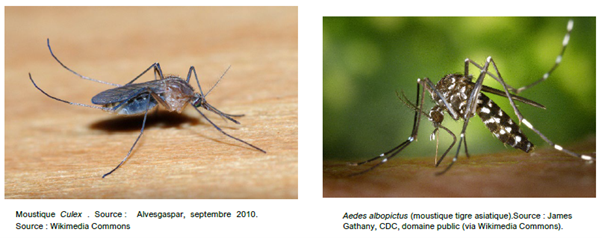
West Nile fever , which is not transmitted by the tiger mosquito but by the Culex variety, more common in metropolitan France, is also very virulent. 13 cases were recorded this summer, most of them in the Paris region.

“More and more important outbreaks”

An explosion of cases linked mainly to the widespread spread of the tiger mosquito across the entire territory, the latter being a vector of dengue and chikungunya .

A "quite worrying" situation for Rachel Bellone, compared to previous summers. "In the early years, when we had the first detections, it wasn't necessarily recurrent. So the outbreaks are becoming more and more numerous and significant," she explains.

The reason for this explosion in cases? The widespread presence of tiger mosquitoes across the country, favored by the establishment of a warm climate across the whole of France.

" The tiger mosquito arrived in the south of France in 2004 and, in 20 years, it has colonized almost the entire territory. And there are epidemics all over the world: when people travel and return to the territory, they encounter the mosquito, a competent vector, all the conditions are met for transmission," adds Rachel Bellone.

These three diseases have similar symptoms, resembling a flu-like condition with fever and muscle aches.

https://www.leparisien.fr/societe/s...ole-20-08-2025-5JQV2GYJUJBNNFZGW2RZBFRYYU.php
 
Translation Google
Chikungunya, dengue, Zika, and West Nile in mainland France. Enhanced surveillance bulletin of August 27, 2025.


Published on August 27, 2025
Updated on August 27, 2025

Print Share

Key points

Chikungunya, dengue and Zika

Indigenous cases

As of August 26, 2025, 37 episodes of indigenous vector transmission have been identified in mainland France:
  • 30 episodes of chikungunya totaling 228 cases (1 to 36 cases per episode), 7 of these episodes are closed;
  • 7 episodes of dengue fever totaling 15 cases (1 to 5 cases per episode), 4 of these episodes are closed.
They are located in the Provence-Alpes-Côte d'Azur, Corsica, Occitanie, Auvergne-Rhône-Alpes regions, already affected in previous years, and for the first time in Grand Est, Nouvelle-Aquitaine and Bourgogne-Franche Comté.

Imported cases
  • 946 imported cases of chikungunya
  • 825 imported cases of dengue fever
  • 7 imported cases of Zika
West Nile virus infections

Indigenous cases

As of August 26, 2025, 15 human cases of vector-borne West Nile virus infection have been identified in five departments of mainland France. The affected regions are PACA, Occitanie, and, for the first time, Île-de-France.

PDF 0.78 MB

https://www.santepubliquefrance.fr/...-de-la-surveillance-renforcee-du-27-aout-2025

 
Translation Google
Chikungunya, dengue, Zika, and West Nile in mainland France. Enhanced surveillance bulletin of September 2, 2025.


Published September 3, 2025
Updated September 3, 2025

Print Share

Key points

Chikungunya, dengue and Zika

Indigenous cases

As of September 2, 2025, 44 episodes of indigenous vector transmission have been identified in mainland France:
  • 34 episodes of chikungunya totaling 301 cases (1 to 47 cases per episode);
  • 10 episodes of dengue fever totaling 19 cases (1 to 5 cases per episode).
They are located in the Provence-Alpes-Côte d'Azur, Corsica, Occitanie, Auvergne-Rhône-Alpes regions, already affected in previous years, and for the first time this year in Grand Est, Nouvelle-Aquitaine and Bourgogne-Franche-Comté.

Imported cases
  • 957 imported cases of chikungunya
  • 862 imported cases of dengue fever
  • 7 imported cases of Zika
West Nile virus infections

Indigenous cases

As of September 2, 2025, 20 human cases of vector-borne West Nile virus infection have been identified in six departments of mainland France.
Twenty indigenous cases of West Nile virus infection have been identified in mainland France. The affected regions are the PACA and Occitanie regions, and, for the first time, the Île-de-France and Auvergne-Rhône-Alpes regions.


PDF 0.82 MB

https://www.santepubliquefrance.fr/...la-surveillance-renforcee-du-2-septembre-2025

 
Translation Google
Chikungunya, dengue, Zika, and West Nile in mainland France. Enhanced surveillance bulletin of September 10, 2025.


Published on September 10, 2025
Updated on September 10, 2025

Print Share


Key points

Chikungunya, dengue and Zika

Indigenous cases

As of September 8, 2025, 49 episodes of indigenous vector transmission have been identified in mainland France:
  • 38 episodes of chikungunya totaling 382 cases (1 to 71 cases per episode; 10 of these episodes are closed);
  • 11 episodes of dengue fever totaling 21 cases (1 to 5 cases per episode; 5 of these episodes are closed).
They are located in the regions of Provence-Alpes-Côte d'Azur, Corsica, Occitanie, Auvergne-Rhône-Alpes, Île de France, already affected in previous years, and for the first time this year in Grand Est, Nouvelle-Aquitaine and Bourgogne-Franche-Comté.

Imported cases
  • 966 imported cases of chikungunya
  • 894 imported cases of dengue fever
  • 7 imported cases of Zika
West Nile virus infections

Indigenous cases

As of September 8, 2025, 23 human cases of vector-borne West Nile virus infection have been identified in seven departments of mainland France.
The affected regions are Provence-Alpes-Côte d'Azur, Occitanie and, for the first time, Île-de-France and Auvergne-Rhône-Alpes.


PDF 0.79 MB


https://www.santepubliquefrance.fr/...a-surveillance-renforcee-du-10-septembre-2025
 
Translation Google
Chikungunya, dengue, Zika, and West Nile in mainland France. Enhanced surveillance bulletin of September 17, 2025.


Published on September 17, 2025
Updated on September 17, 2025

Print Share

Key points

Chikungunya, dengue and Zika

Indigenous cases

As of September 15, 2025, 65 outbreaks of indigenous vector transmission of chikungunya and dengue fever and a total of 505 cases have been identified in mainland France:
  • 479 cases of chikungunya spread across 54 outbreaks (1 to 87 cases per outbreak; 14 of these outbreaks are closed)
  • 5 isolated cases of chikungunya for which the precise place of contamination could not be identified
  • 21 cases of dengue fever spread across 11 outbreaks (1 to 5 cases per outbreak; 7 of these outbreaks are closed)
The indigenous cases are located in the Auvergne-Rhône-Alpes, Corsica, Île de France, Occitanie, Provence-Alpes-Côte d'Azur regions, already affected in previous years, and for the first time this year in Bourgogne-Franche Comté, Centre-Val de Loire, Grand Est and Nouvelle-Aquitaine. Imported cases
  • 982 imported cases of chikungunya
  • 919 imported cases of dengue fever
  • 10 imported cases of Zika
West Nile virus infections

Indigenous cases

As of September 15, 2025, 32 human cases of vector-borne West Nile virus infection have been identified in 10 departments of mainland France. The affected regions are Provence-Alpes-Côte d'Azur, Occitanie, and, for the first time, Île-de-France and Auvergne-Rhône-Alpes.


PDF 0.87 MB

https://www.santepubliquefrance.fr/...a-surveillance-renforcee-du-17-septembre-2025

-------------------------------------------------------------------------

Resurgence of cases of chikungunya and other mosquito-borne diseases: let's stay vigilant, the season is not over!

Since spring 2025, French health authorities have observed a sharp increase in arboviruses in mainland France, marked by increased circulation of chikungunya and dengue fever.

Published on September 17, 2025

Press contacts

Health Crisis Center, Ministry of Health:
alertes-presse@sante.gouv.fr

Public Health France:
presse@santepubliquefrance.fr


A significant number of people infected locally by mosquitoes carrying these viruses has been observed, including in areas previously spared.
  • 484 cases of local transmission (autochthonous cases) of chikungunya have been recorded, some for the first time in new regions.
  • 21 local transmissions of dengue fever were observed.
  • West Nile virus is also appearing for the first time in new regions, with 32 indigenous cases reported.
In this unprecedented context in mainland France, health authorities are reminding everyone of their role in protecting themselves from bites and limiting the proliferation of mosquitoes:
  • Wear long, covering clothing;
  • Use skin repellents;
  • Install mosquito nets;
  • Combat larval breeding sites by removing stagnant water inside and around habitats (under pots, tarpaulins, waste, gutters, etc.).
Procedure for travelers

With the return of summer holidays, an increase in the circulation of chikungunya in areas already affected and an extension to territories that have been relatively unaffected until now, notably the Antilles and Guyana, is possible.

To this end, people traveling to a risk area are asked to protect themselves against mosquito bites during their stay and for up to three weeks after their return, to avoid transmitting the disease to their loved ones. In addition to tropical areas (Réunion, Mayotte, South America, the Caribbean), several metropolitan regions are experiencing increased circulation of arboviruses (South, Grand Est, Bourgogne-Franche-Comté, Centre-Val de Loire, Île-de-France, Auvergne-Rhône-Alpes).

If you experience symptoms after a mosquito bite (joint or muscle pain, headache, rash, conjunctivitis, with or without fever), it is important to consult a doctor immediately, specifying, if this is the case, your stay in a risk area.

In order to limit the risk of these viruses circulating between territories, special attention is requested from travelers to the Antilles and French Guiana, territories so far less affected by chikungunya but where the mosquitoes that carry this disease are present all year round.


Reminder: the tiger mosquito is present in 84% of metropolitan France

The Aedes albopictus mosquito, capable of transmitting the chikungunya and dengue viruses, is currently present in 81 metropolitan departments, or 84% of the territory, facilitating the local spread of arboviruses.

Faced with the increased circulation of chikungunya and dengue fever and the increasingly widespread presence of the tiger mosquito in mainland France, health authorities are calling for a high level of individual and collective vigilance to be maintained.

The Culex mosquito, a vector of the West Nile virus, is also present throughout metropolitan France. To date, 32 indigenous human cases of West Nile transmitted by this mosquito have been identified in metropolitan France this year in the Provence-Alpes-Côte d'Azur and Occitanie regions and, for the first time, in the Île-de-France and Auvergne-Rhône-Alpes regions.
f18d0aa748f8-moustiques_culex_aedes_2025.png
 
Back
Top