

Pathfinder
Editor, Senior Moderator
Translation Google
Measles cases in Val-Thorens: situation update and recommendations
Health alert
February 4, 2026
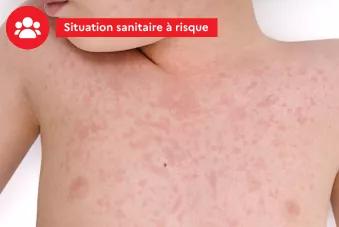
Four cases of measles were reported to the Regional Health Agency (ARS) between January 12 and February 4. All those infected had stayed in Val-Thorens during their contagious period. The ARS recommends that residents, seasonal workers, and tourists visiting the resort check their vaccination status and, if they experience any suggestive symptoms, follow preventative measures and consult a doctor.
Context
[Situation update as of 04.02]
The first case of measles was reported to the Regional Health Agency (ARS) on January 12th: the unvaccinated individual had to be hospitalized for a few days.
The second [SUP]case[/SUP] , confirmed on January 16th, was also unvaccinated. This individual was not hospitalized.
The third [SUP]case[/SUP] , confirmed on January 31, was vaccinated. He also did not require hospitalization.
The 4th [SUP]case[/SUP] was confirmed on February 4th. His vaccination status is unknown.
These are young adults who stayed in Val-Thorens during their contagious period.
The existence of these cases indicates that the measles virus is actively circulating in the area . In light of this situation, the Regional Health Agency (ARS) recommends that people visiting the resorts check their measles vaccination status and consult a doctor or healthcare professional if they experience any symptoms . The increase in the number of measles cases in Auvergne-Rhône-Alpes is part of a resurgence in France, Europe and the world (source: World Health Organization).
In Auvergne Rhône-Alpes, only one case was reported in 2022, compared to 73 in 2023 and 139 in 2024.
In 2025, 139 cases were again reported in the region, representing 16% of the cases reported nationally.
Recommendations to the public
Measles is caused by a virus that is transmitted through respiratory droplets (coughing, sneezing) or through direct contact (hugs, handshakes).
Measles is highly contagious: without preventative measures, one infected person can contaminate up to 20 people.
Complications (respiratory or neurological) can occur at any age but are more frequent in vulnerable individuals:
Symptoms usually appear 10 to 14 days after exposure to the virus: high fever (up to 39-40°C), cough, runny nose, red and watery eyes, general fatigue.
A rash with small, very red spots appears a few days after the first symptoms, initially on the face (ears, forehead, cheeks) and then gradually spreading to the entire body. It lasts about a week.
In case of symptoms:
The Measles-Mumps-Rubella (MMR) vaccination schedule requires 2 doses of vaccine.
This vaccination is mandatory for children born since January 1 [SUP],[/SUP] 2018 (first [SUP]injection[/SUP] at 12 months and second [SUP]injection[/SUP] at 16-18 months). It is recommended for all other people born after 1980.
If needed, you will find the list of measles vaccines below. You can download it by clicking on the link below: Measles - list of vaccines (pdf, 189.95 KB) 1. Parents are advised to check their child(ren)'s vaccination record in the vaccination booklet. A doctor or pharmacist should be contacted if your child:
3. People born before 1980, with no history of measles and working in the sectors mentioned below, must also check their vaccination status:
Health monitoring
Contact tracing
Measles is a notifiable disease . Healthcare professionals must therefore report cases to the Regional Health Agency (ARS) in order to implement contact tracing and thus:
For every reported case, the Regional Health Agency (ARS) also informs:
https://www.auvergne-rhone-alpes.ar...thorens-point-de-situation-et-recommandations
Measles cases in Val-Thorens: situation update and recommendations
Health alert
February 4, 2026
Four cases of measles were reported to the Regional Health Agency (ARS) between January 12 and February 4. All those infected had stayed in Val-Thorens during their contagious period. The ARS recommends that residents, seasonal workers, and tourists visiting the resort check their vaccination status and, if they experience any suggestive symptoms, follow preventative measures and consult a doctor.
Context
[Situation update as of 04.02]
The first case of measles was reported to the Regional Health Agency (ARS) on January 12th: the unvaccinated individual had to be hospitalized for a few days.
The second [SUP]case[/SUP] , confirmed on January 16th, was also unvaccinated. This individual was not hospitalized.
The third [SUP]case[/SUP] , confirmed on January 31, was vaccinated. He also did not require hospitalization.
The 4th [SUP]case[/SUP] was confirmed on February 4th. His vaccination status is unknown.
These are young adults who stayed in Val-Thorens during their contagious period.
The existence of these cases indicates that the measles virus is actively circulating in the area . In light of this situation, the Regional Health Agency (ARS) recommends that people visiting the resorts check their measles vaccination status and consult a doctor or healthcare professional if they experience any symptoms . The increase in the number of measles cases in Auvergne-Rhône-Alpes is part of a resurgence in France, Europe and the world (source: World Health Organization).
In Auvergne Rhône-Alpes, only one case was reported in 2022, compared to 73 in 2023 and 139 in 2024.
In 2025, 139 cases were again reported in the region, representing 16% of the cases reported nationally.
Recommendations to the public
Measles is caused by a virus that is transmitted through respiratory droplets (coughing, sneezing) or through direct contact (hugs, handshakes).
Measles is highly contagious: without preventative measures, one infected person can contaminate up to 20 people.
Complications (respiratory or neurological) can occur at any age but are more frequent in vulnerable individuals:
- Pregnant women who have not had measles or are not protected by vaccination ,
- Children under one year old: they are not yet protected by vaccination.
- People who are temporarily or permanently immunocompromised due to certain diseases or treatments.
Symptoms usually appear 10 to 14 days after exposure to the virus: high fever (up to 39-40°C), cough, runny nose, red and watery eyes, general fatigue.
A rash with small, very red spots appears a few days after the first symptoms, initially on the face (ears, forehead, cheeks) and then gradually spreading to the entire body. It lasts about a week.
In case of symptoms:
- Make an appointment with a doctor, telling them when you call that you have symptoms resembling measles.
- Respect barrier gestures: wearing a mask is particularly essential to avoid any transmission of the virus.
The Measles-Mumps-Rubella (MMR) vaccination schedule requires 2 doses of vaccine.
This vaccination is mandatory for children born since January 1 [SUP],[/SUP] 2018 (first [SUP]injection[/SUP] at 12 months and second [SUP]injection[/SUP] at 16-18 months). It is recommended for all other people born after 1980.
If needed, you will find the list of measles vaccines below. You can download it by clicking on the link below: Measles - list of vaccines (pdf, 189.95 KB) 1. Parents are advised to check their child(ren)'s vaccination record in the vaccination booklet. A doctor or pharmacist should be contacted if your child:
- He is not vaccinated against measles.
- Received only one dose,
- Was vaccinated before 12 months of age and has only received 2 doses: a 3rd [SUP]dose[/SUP] of vaccine is recommended.
3. People born before 1980, with no history of measles and working in the sectors mentioned below, must also check their vaccination status:
- Healthcare professionals
- Staff working in departments caring for patients at risk of severe measles (immunocompromised)
- Early childhood professionals
Health monitoring
Contact tracing
Measles is a notifiable disease . Healthcare professionals must therefore report cases to the Regional Health Agency (ARS) in order to implement contact tracing and thus:
- Identify the people who have come into contact with the sick,
- Raising their awareness of recommendations to prevent any transmission (barrier gestures, symptoms to monitor),
- Ensure they are protected by vaccination and, if not, encourage them to get vaccinated as soon as possible.
- Inform vulnerable people in the close circle of the sick person that they can benefit from preventive treatment
(pregnant women, children under one year old, immunocompromised people).
For every reported case, the Regional Health Agency (ARS) also informs:
- Healthcare professionals in the sectors concerned (emergency services, professional bodies, regional unions of healthcare professionals, territorial professional health communities )
- The prefectures and town halls of the sectors concerned,
- Places frequented by patients.
https://www.auvergne-rhone-alpes.ar...thorens-point-de-situation-et-recommandations