

Pathfinder
Editor, Senior Moderator
Translation Google
They bought rats and contracted leptospirosis: three young people had to be hospitalized in intensive care
Domestic rats are responsible for several cases of leptospirosis in Haute-Saône.
Written by Vincent Constant
Published on 15/01/2026 at 3:30 PM
Updated on 16/01/2026 at 12:28
On Thursday, January 15, the regional health agency of Bourgogne-Franche-Comté issued a warning about three confirmed cases of human leptospirosis that recently occurred. Rats purchased from a pet shop are the source of this contamination in Haute-Saône.
Three people aged between 25 and 35 nearly lost their lives after an encounter with rodents in Haute-Saône. This information was relayed to several veterinary centers in the department on January 15th.
Domestic rats carrying leptospirosis
According to data from the regional health agency (ARS), three human cases of leptospirosis have recently been identified in Haute-Saône. Investigations conducted by the ARS led to a common site of exposure: a pet shop where several domestic rats were purchased.
The health agency states: " As soon as the signal was identified, immediate management measures were implemented by the animal protection service of the Departmental Directorate for Employment, Labour, Solidarity and Population Protection (DDETSPP) : inspection of the place of purchase of the animals, steps taken with the supplier, contacting all pet shops in the area. Veterinarians in the sector were also informed. "
The three people who adopted the rodents ended up in intensive care after being diagnosed with this zoonotic disease . All three have since returned home, according to the Regional Health Agency (ARS).
Leptospirosis, a potentially fatal disease
Leptospirosis is a bacterial infection transmitted through an environment contaminated by the urine of certain animal species. Among the most common vectors are coypus, as well as wild and domestic rats. While these mammals are asymptomatic, they nevertheless contaminate their surroundings and spread bacteria that can then enter other organisms through mucous membranes or even minor wounds.
In Haute-Saône in April 2025, a resident reported losing their dog to this disease. Humans are also a prime target for these microorganisms. A fisherman in the Doubs region was infected in 2024. In humans, it takes 5 to 21 days for the first symptoms to appear. This illness typically presents as flu-like symptoms, but some cases can lead to severe forms such as neurological and kidney damage, hemorrhages, and even death.
What to do about leptospirosis?
The most frequent symptoms are fever, muscle pain or headaches occurring within a maximum of 21 days after exposure to risk (swimming in rivers, stagnant water, or direct contact with animals or their environment).
If you suspect a leptospirosis infection, it is advisable to consult a doctor promptly. Note that early treatment greatly reduces the risk of complications related to the disease.
Here is the advice from the Regional Health Agency (ARS) on how to protect yourself:
Avoid swimming in fresh water if you have any wounds, skin or mucous membrane erosion, even minor ones.
Rinse with drinking water if you come into contact with a wet environment or soil.
disinfect your wounds
Wear appropriate protective equipment for professionals exposed to rodents
getting vaccinated (for professionals), getting your animals vaccinated (dogs and farm animals).
For owners of pet rodents:
Wear gloves, a mask and protective goggles when changing the litter.
wash your hands after each handling of the animal
Do not handle the animal if you have any injuries on your hands (or protect the wounds with waterproof bandages or wear gloves).
Avoid contact with the animal while you are eating or drinking.
Avoid contact between the animal and your face.
https://france3-regions.franceinfo....etre-hospitalises-en-reanimation-3282464.html
------------------------------------------------------------------------
Leptospirosis: what do we know about this disease after three hospitalizations in France?
Leptospirosis is an infection transmitted by certain animals. Although rare, it can sometimes lead to serious complications. Vigilance and prevention remain the best ways to protect yourself.
By the editorial staff
Published: January 27, 2026 at 8:37 PM
The Regional Health Agency (ARS) of Bourgogne-Franche-Comté has issued a warning to veterinarians following the confirmation of three cases of leptospirosis in men aged 25 to 35 in Haute-Saône. The patients were hospitalized in intensive care due to the bacterial infection. In early January, a dog also died from leptospirosis in Brittany , highlighting the need for vigilance regarding this disease.
Communicable disease
Leptospirosis, little known to the general public, is a zoonosis, meaning a disease transmissible from animals to humans. In mainland France, it remains relatively rare, with 300 to 600 cases per year, but its incidence has been rising since 2014, according to Public Health France. Overseas territories are even more affected, and worldwide, more than one million cases are recorded each year.
The disease is caused by bacteria called leptospires, found in the urine of many animals, including rodents, livestock, and dogs. These bacteria survive easily in fresh water or muddy soil and enter the body through wounds or mucous membranes.
Symptoms and severe forms
After an incubation period of 5 to 14 days, leptospirosis manifests with high fever, chills, headaches, muscle aches, and red eyes. In some cases, the disease can progress to severe forms affecting the kidneys, liver, lungs, or nervous system. The most severe form, Weil's syndrome, can be fatal.
Diagnosis, treatment and prevention
Diagnosis is based on blood or urine tests. Although the illness can sometimes resolve spontaneously, antibiotic treatment is generally recommended. Severe cases require hospitalization.
Prevention involves controlling rodents, avoiding stagnant water, wearing protective equipment during risky activities, and being extra vigilant after heavy rain. For dogs, annual vaccination is essential: canine leptospirosis is a veterinary emergency, often fatal without prompt treatment.
https://www.paris-normandie.fr/id69...aladie-apres-trois-hospitalisations-en-france
-------------------------------------------------------------------------------
Leptospirosis: Transmission, symptoms, treatment, prevention, diagnosis and mandatory reporting
Article
January 15, 2026

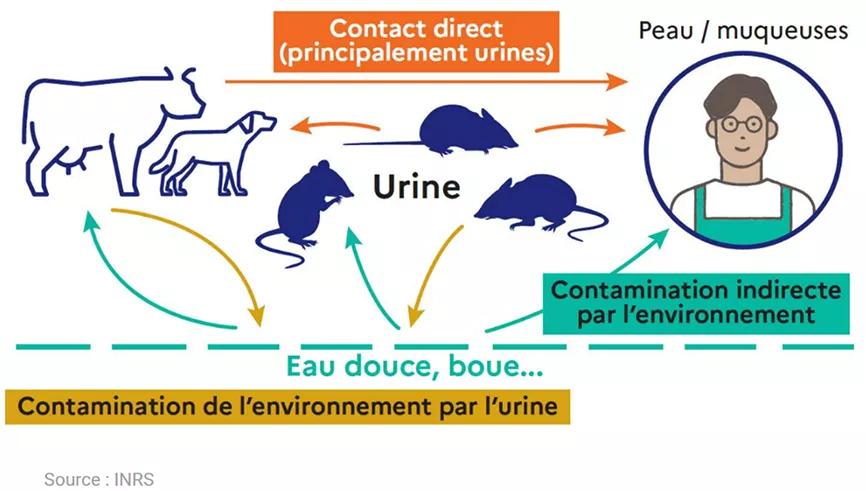
It is an infectious disease caused by bacteria of the genus Leptospira. In France, the main source of contamination is contact with fresh water polluted by the urine of wild rodents (rats, coypus), which themselves carry the bacteria.
Transmission of leptospirosis
Rodents, particularly rats, are the primary reservoir of the disease: while asymptomatic, they excrete the bacteria in their urine, thus contaminating their environment. Many animals can also contribute to transmission: livestock (pigs, cattle), pets (dogs, horses, domestic rodents), and wild animals (wild boars, hedgehogs, coypus, shrews, etc.).
Humans can be infected directly by touching contaminated urine, and exceptionally by being bitten by the animal. Most often, however, infection is indirect: through contact with contaminated water (for example, swimming in a freshwater body of water near which infected animals live) or soiled surfaces (such as the fur or bedding of an infected animal). The bacteria enter the body through wounds, even very small ones, or through mucous membranes (eyes, mouth, nose), and more rarely through the conjunctiva or by inhaling droplets.
Symptoms and treatment
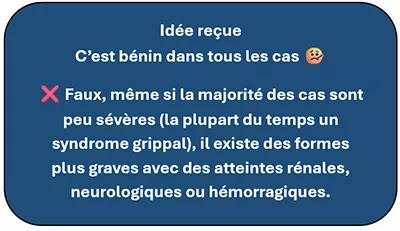
In most cases, leptospirosis manifests as flu-like symptoms: fever, headache, and muscle aches. These symptoms generally appear between 5 and 14 days (and up to 21 days) after exposure to a source of infection. There is a wide variety of clinical presentations.
In some cases, the disease can progress to more serious forms, with kidney or neurological damage, or hemorrhagic manifestations. These severe forms can be fatal.
Treatment involves the administration of antibiotics. In mild cases, oral treatment is sufficient. For severe cases, hospitalization is necessary.
Number of cases in France
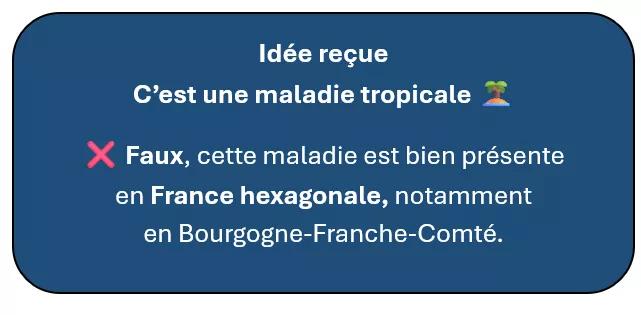
Each year, between 600 and 700 cases of leptospirosis are recorded in mainland France. In 2023, 30 cases were reported in the Bourgogne-Franche-Comté region. The most affected departments in the region were Saône-et-Loire and Jura.
Activities and sectors at risk
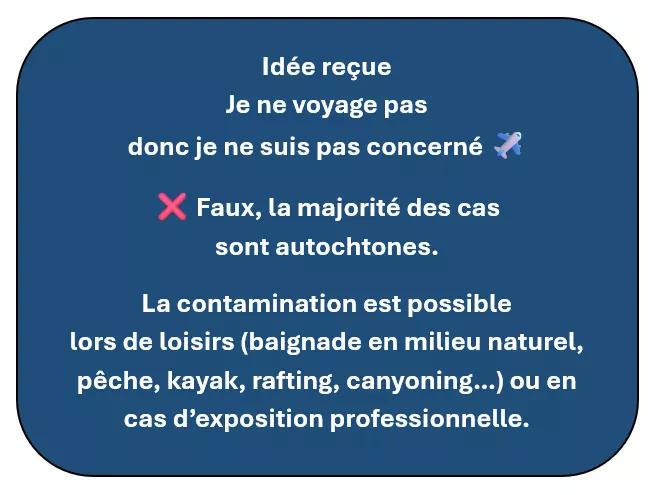
Certain professions expose people to a higher risk of leptospirosis due to frequent contact with potentially contaminated water or environments: garbage collectors, sewer workers, farmers, livestock breeders, or agents working in sanitation networks.
Freshwater recreation can expose participants to a risk of contamination, especially in the case of skin wounds.
Impact on animals
Domestic and farm animals can be infected and sometimes develop symptoms.
Dogs are at risk when they live in the countryside or are in contact with water. Most of the time, the cases are mild. Symptoms include lethargy, vomiting, and loss of appetite.
In cattle, the infection may be asymptomatic or associated with decreased milk production, fertility problems, and abortions in the last trimester of gestation. Acute forms manifest as fever, blood in the urine, and sometimes jaundice.
In pigs, leptospirosis causes reproductive and gestational disorders.
Prevention methods
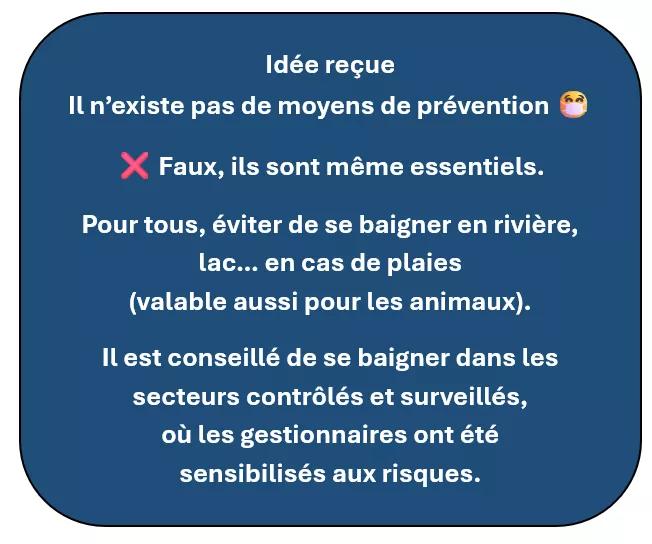
Several simple actions can reduce the risk of contamination.
It is advisable to avoid swimming in fresh water if you have any cuts or abrasions on your skin or mucous membranes, even small ones . After contact with water or soil, it is recommended to always rinse with drinking water and disinfect any wounds.
Exposed professionals must wear appropriate protective equipment : waterproof gloves, boots, safety glasses, coveralls.
On a collective scale, prevention can also involve rodent control , drainage of flooded areas, or water monitoring.
Vaccination : Vaccination is possible for people who are exposed daily . A specific vaccine for dogs is available, as well as for farm animals. ( Leptospirosis | Vaccination Information Service )
Transmission via pet rodents, particularly rats
Domestic rodents can be reservoirs of the disease: without showing any symptoms themselves, they can infect people they come into contact with. This is because the bacteria are continuously excreted in their urine throughout the animal's life.
Since neither antibiotic treatment nor the vaccine has proven effective in these animals, there is no need to carry out screening.
Avoid getting infected by taking simple steps:
Learn more: Document on the prevention of leptospirosis by domestic rodents (pdf, 284.01 KB)
What to do in case of suspicion?
If you develop a fever, muscle aches, or headaches within 21 days of an activity that could have caused exposure (swimming in a river, exposure to stagnant water, contact with animals or contaminated environments), it is important to consult a doctor promptly. They will be able to assess the situation, order any necessary tests, and start antibiotic treatment if needed.
Early intervention significantly reduces the risk of severe illness or complications. If in doubt, it is best to consult a doctor without delay.
Diagnosis
The diagnosis is confirmed by biological tests performed on blood or urine.
In the first few days of symptoms, the presence of the bacteria can be detected by PCR. From the 6th day after the onset of symptoms, a serological test can detect the presence of specific antibodies in the blood.
Information for healthcare professionals
Biological diagnosis
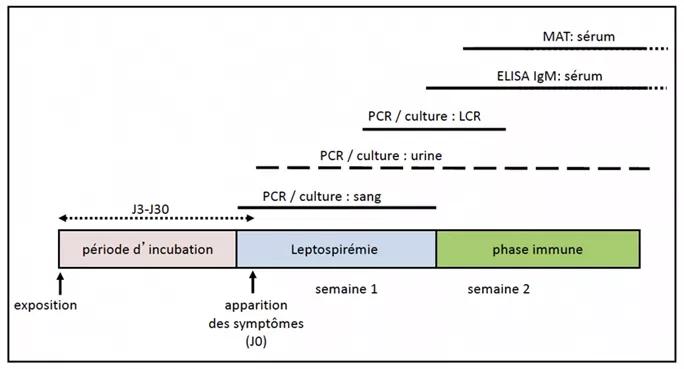
(Figure: Timeline of samples to be taken for the diagnosis of leptospirosis. Source: CNR Leptospirosis – Pasteur Institute)
PCR can remain positive in the blood up to day 10 after the onset of symptoms.
PCR testing in urine is not covered by social security.
IgM antibodies may not appear until after day 10 and can persist in the blood for several months. Interpreting serology results is often complex and generally requires a second sample 8 to 10 days after the first. If necessary, analyzing a previous serum sample may be relevant. Since serological tests are not perfectly specific, confirmation of the result by the National Reference Center (CNR) may be required ( https://www.pasteur.fr/fr/sante-publique/CNR/les-cnr/leptospirose/envoyer-un-echantillon ).
Mandatory declaration
Since August 2023, leptospirosis has been listed as a notifiable disease. This means that any doctor or laboratory that diagnoses a case is required to report it to the health authorities.
This declaration allows for the rapid detection of epidemic outbreaks and the implementation of appropriate prevention measures.
Declaration form available at the bottom of the page.
...
https://www.bourgogne-franche-comte...vention-diagnostic-et-declaration-obligatoire
They bought rats and contracted leptospirosis: three young people had to be hospitalized in intensive care
Domestic rats are responsible for several cases of leptospirosis in Haute-Saône.
Written by Vincent Constant
Published on 15/01/2026 at 3:30 PM
Updated on 16/01/2026 at 12:28
On Thursday, January 15, the regional health agency of Bourgogne-Franche-Comté issued a warning about three confirmed cases of human leptospirosis that recently occurred. Rats purchased from a pet shop are the source of this contamination in Haute-Saône.
Three people aged between 25 and 35 nearly lost their lives after an encounter with rodents in Haute-Saône. This information was relayed to several veterinary centers in the department on January 15th.
Domestic rats carrying leptospirosis
According to data from the regional health agency (ARS), three human cases of leptospirosis have recently been identified in Haute-Saône. Investigations conducted by the ARS led to a common site of exposure: a pet shop where several domestic rats were purchased.
The health agency states: " As soon as the signal was identified, immediate management measures were implemented by the animal protection service of the Departmental Directorate for Employment, Labour, Solidarity and Population Protection (DDETSPP) : inspection of the place of purchase of the animals, steps taken with the supplier, contacting all pet shops in the area. Veterinarians in the sector were also informed. "
The three people who adopted the rodents ended up in intensive care after being diagnosed with this zoonotic disease . All three have since returned home, according to the Regional Health Agency (ARS).
Leptospirosis, a potentially fatal disease
Leptospirosis is a bacterial infection transmitted through an environment contaminated by the urine of certain animal species. Among the most common vectors are coypus, as well as wild and domestic rats. While these mammals are asymptomatic, they nevertheless contaminate their surroundings and spread bacteria that can then enter other organisms through mucous membranes or even minor wounds.
In Haute-Saône in April 2025, a resident reported losing their dog to this disease. Humans are also a prime target for these microorganisms. A fisherman in the Doubs region was infected in 2024. In humans, it takes 5 to 21 days for the first symptoms to appear. This illness typically presents as flu-like symptoms, but some cases can lead to severe forms such as neurological and kidney damage, hemorrhages, and even death.
What to do about leptospirosis?
The most frequent symptoms are fever, muscle pain or headaches occurring within a maximum of 21 days after exposure to risk (swimming in rivers, stagnant water, or direct contact with animals or their environment).
If you suspect a leptospirosis infection, it is advisable to consult a doctor promptly. Note that early treatment greatly reduces the risk of complications related to the disease.
Here is the advice from the Regional Health Agency (ARS) on how to protect yourself:
Avoid swimming in fresh water if you have any wounds, skin or mucous membrane erosion, even minor ones.
Rinse with drinking water if you come into contact with a wet environment or soil.
disinfect your wounds
Wear appropriate protective equipment for professionals exposed to rodents
getting vaccinated (for professionals), getting your animals vaccinated (dogs and farm animals).
For owners of pet rodents:
Wear gloves, a mask and protective goggles when changing the litter.
wash your hands after each handling of the animal
Do not handle the animal if you have any injuries on your hands (or protect the wounds with waterproof bandages or wear gloves).
Avoid contact with the animal while you are eating or drinking.
Avoid contact between the animal and your face.
https://france3-regions.franceinfo....etre-hospitalises-en-reanimation-3282464.html
------------------------------------------------------------------------
Leptospirosis: what do we know about this disease after three hospitalizations in France?
Leptospirosis is an infection transmitted by certain animals. Although rare, it can sometimes lead to serious complications. Vigilance and prevention remain the best ways to protect yourself.
By the editorial staff
Published: January 27, 2026 at 8:37 PM
The Regional Health Agency (ARS) of Bourgogne-Franche-Comté has issued a warning to veterinarians following the confirmation of three cases of leptospirosis in men aged 25 to 35 in Haute-Saône. The patients were hospitalized in intensive care due to the bacterial infection. In early January, a dog also died from leptospirosis in Brittany , highlighting the need for vigilance regarding this disease.
Communicable disease
Leptospirosis, little known to the general public, is a zoonosis, meaning a disease transmissible from animals to humans. In mainland France, it remains relatively rare, with 300 to 600 cases per year, but its incidence has been rising since 2014, according to Public Health France. Overseas territories are even more affected, and worldwide, more than one million cases are recorded each year.
The disease is caused by bacteria called leptospires, found in the urine of many animals, including rodents, livestock, and dogs. These bacteria survive easily in fresh water or muddy soil and enter the body through wounds or mucous membranes.
Symptoms and severe forms
After an incubation period of 5 to 14 days, leptospirosis manifests with high fever, chills, headaches, muscle aches, and red eyes. In some cases, the disease can progress to severe forms affecting the kidneys, liver, lungs, or nervous system. The most severe form, Weil's syndrome, can be fatal.
Diagnosis, treatment and prevention
Diagnosis is based on blood or urine tests. Although the illness can sometimes resolve spontaneously, antibiotic treatment is generally recommended. Severe cases require hospitalization.
Prevention involves controlling rodents, avoiding stagnant water, wearing protective equipment during risky activities, and being extra vigilant after heavy rain. For dogs, annual vaccination is essential: canine leptospirosis is a veterinary emergency, often fatal without prompt treatment.
https://www.paris-normandie.fr/id69...aladie-apres-trois-hospitalisations-en-france
-------------------------------------------------------------------------------
Leptospirosis: Transmission, symptoms, treatment, prevention, diagnosis and mandatory reporting
Article
January 15, 2026
It is an infectious disease caused by bacteria of the genus Leptospira. In France, the main source of contamination is contact with fresh water polluted by the urine of wild rodents (rats, coypus), which themselves carry the bacteria.
Transmission of leptospirosis
Rodents, particularly rats, are the primary reservoir of the disease: while asymptomatic, they excrete the bacteria in their urine, thus contaminating their environment. Many animals can also contribute to transmission: livestock (pigs, cattle), pets (dogs, horses, domestic rodents), and wild animals (wild boars, hedgehogs, coypus, shrews, etc.).
Humans can be infected directly by touching contaminated urine, and exceptionally by being bitten by the animal. Most often, however, infection is indirect: through contact with contaminated water (for example, swimming in a freshwater body of water near which infected animals live) or soiled surfaces (such as the fur or bedding of an infected animal). The bacteria enter the body through wounds, even very small ones, or through mucous membranes (eyes, mouth, nose), and more rarely through the conjunctiva or by inhaling droplets.
Symptoms and treatment
In most cases, leptospirosis manifests as flu-like symptoms: fever, headache, and muscle aches. These symptoms generally appear between 5 and 14 days (and up to 21 days) after exposure to a source of infection. There is a wide variety of clinical presentations.
In some cases, the disease can progress to more serious forms, with kidney or neurological damage, or hemorrhagic manifestations. These severe forms can be fatal.
Treatment involves the administration of antibiotics. In mild cases, oral treatment is sufficient. For severe cases, hospitalization is necessary.
Number of cases in France
Each year, between 600 and 700 cases of leptospirosis are recorded in mainland France. In 2023, 30 cases were reported in the Bourgogne-Franche-Comté region. The most affected departments in the region were Saône-et-Loire and Jura.
Activities and sectors at risk
Certain professions expose people to a higher risk of leptospirosis due to frequent contact with potentially contaminated water or environments: garbage collectors, sewer workers, farmers, livestock breeders, or agents working in sanitation networks.
Freshwater recreation can expose participants to a risk of contamination, especially in the case of skin wounds.
Impact on animals
Domestic and farm animals can be infected and sometimes develop symptoms.
Dogs are at risk when they live in the countryside or are in contact with water. Most of the time, the cases are mild. Symptoms include lethargy, vomiting, and loss of appetite.
In cattle, the infection may be asymptomatic or associated with decreased milk production, fertility problems, and abortions in the last trimester of gestation. Acute forms manifest as fever, blood in the urine, and sometimes jaundice.
In pigs, leptospirosis causes reproductive and gestational disorders.
Prevention methods
Several simple actions can reduce the risk of contamination.
It is advisable to avoid swimming in fresh water if you have any cuts or abrasions on your skin or mucous membranes, even small ones . After contact with water or soil, it is recommended to always rinse with drinking water and disinfect any wounds.
Exposed professionals must wear appropriate protective equipment : waterproof gloves, boots, safety glasses, coveralls.
On a collective scale, prevention can also involve rodent control , drainage of flooded areas, or water monitoring.
Vaccination : Vaccination is possible for people who are exposed daily . A specific vaccine for dogs is available, as well as for farm animals. ( Leptospirosis | Vaccination Information Service )
Transmission via pet rodents, particularly rats
Domestic rodents can be reservoirs of the disease: without showing any symptoms themselves, they can infect people they come into contact with. This is because the bacteria are continuously excreted in their urine throughout the animal's life.
Since neither antibiotic treatment nor the vaccine has proven effective in these animals, there is no need to carry out screening.
Avoid getting infected by taking simple steps:
- Wear gloves, a mask and protective goggles when changing the litter.
- wash your hands after each handling of the animal
- Do not handle the animal if you have any injuries on your hands (or protect the wounds with waterproof bandages or wear gloves).
- Avoid contact with the animal while you are eating or drinking.
- Avoid contact between the animal and your face.
Learn more: Document on the prevention of leptospirosis by domestic rodents (pdf, 284.01 KB)
What to do in case of suspicion?
If you develop a fever, muscle aches, or headaches within 21 days of an activity that could have caused exposure (swimming in a river, exposure to stagnant water, contact with animals or contaminated environments), it is important to consult a doctor promptly. They will be able to assess the situation, order any necessary tests, and start antibiotic treatment if needed.
Early intervention significantly reduces the risk of severe illness or complications. If in doubt, it is best to consult a doctor without delay.
Diagnosis
The diagnosis is confirmed by biological tests performed on blood or urine.
In the first few days of symptoms, the presence of the bacteria can be detected by PCR. From the 6th day after the onset of symptoms, a serological test can detect the presence of specific antibodies in the blood.
Information for healthcare professionals
Biological diagnosis
(Figure: Timeline of samples to be taken for the diagnosis of leptospirosis. Source: CNR Leptospirosis – Pasteur Institute)
PCR can remain positive in the blood up to day 10 after the onset of symptoms.
PCR testing in urine is not covered by social security.
IgM antibodies may not appear until after day 10 and can persist in the blood for several months. Interpreting serology results is often complex and generally requires a second sample 8 to 10 days after the first. If necessary, analyzing a previous serum sample may be relevant. Since serological tests are not perfectly specific, confirmation of the result by the National Reference Center (CNR) may be required ( https://www.pasteur.fr/fr/sante-publique/CNR/les-cnr/leptospirose/envoyer-un-echantillon ).
Mandatory declaration
Since August 2023, leptospirosis has been listed as a notifiable disease. This means that any doctor or laboratory that diagnoses a case is required to report it to the health authorities.
This declaration allows for the rapid detection of epidemic outbreaks and the implementation of appropriate prevention measures.
Declaration form available at the bottom of the page.
...
https://www.bourgogne-franche-comte...vention-diagnostic-et-declaration-obligatoire