• FluTrackers.com Inc. does not provide medical advice. Information on this web site is collected from various internet resources, and the FluTrackers board of directors makes no warranty to the safety, efficacy, correctness or completeness of the information posted on this site by any author or poster. The information collated here is for instructional and/or discussion purposes only and is NOT intended to diagnose or treat any disease, illness, or other medical condition. Every individual reader or poster should seek advice from their personal physician/healthcare practitioner before considering or using any interventions that are discussed on this website. By continuing to access this website you agree to consult your personal physican before using any interventions posted on this website, and you agree to hold harmless FluTrackers.com Inc., the board of directors, the members, and all authors and posters for any effects from use of any medication, supplement, vitamin or other substance, device, intervention, etc. mentioned in posts on this website, or other internet venues referenced in posts on this website.
  • We are not asking for any donations. Do not donate to any entity who says they are raising funds for us.

France - Botulism outbreak in waterbirds and animals 2025-2026

Pathfinder

Editor, Senior Moderator
Translation Google

Botulism outbreak in the Brière marshes: waterbirds in danger

Environment
Published on July 21, 2025

For several weeks, the Brière marshes have been facing a serious epidemic affecting aquatic birds. The intense summer heat and falling water levels have favored the emergence of botulism, a deadly disease. Local stakeholders are mobilizing to contain the crisis.

Collective mobilization in the face of an alarming ecological crisis

The Brière marsh, a natural jewel of Loire-Atlantique, is the scene of a worrying ecological disaster. Many waterbirds, particularly ducks, are victims of suspected botulism—a neurological infection caused by Clostridium bacteria, fueled by extreme summer weather.

In order to limit losses, a carcass collection campaign was conducted on July 17 in the Regional Nature Reserve (southern sector), under the leadership of the Loire-Atlantique Hunters' Federation and the Grande Brière Waterfowl Hunters' Union. Several partners supported this action: Brière Regional Nature Park, Grande Brière Mottière Syndicate Commission, Brivet Watershed Syndicate, etc. Freezing points were deployed to facilitate the safe storage of contaminated birds.

The survivors—stilts, lapwings, spoonbills, egrets, mallards, and even a black tern—were cared for by veterinarian JM Clobert, in partnership with the regional park, and then transferred to the Nantes veterinary school for intensive care.

Further collection actions are planned this week. A crisis meeting is also scheduled for tomorrow with the Hunters' Federation, the OFB, the CSGBM, and various partners to coordinate efforts and communicate upcoming measures to the public.

https://www.labaule.fr/actualites/e...-marais-de-briere-les-oiseaux-deau-en-danger/
-------------------------------------------------
Brière: A devastating epidemic affects waterbirds

Published on 07/21/25 and updated on 07/22/25
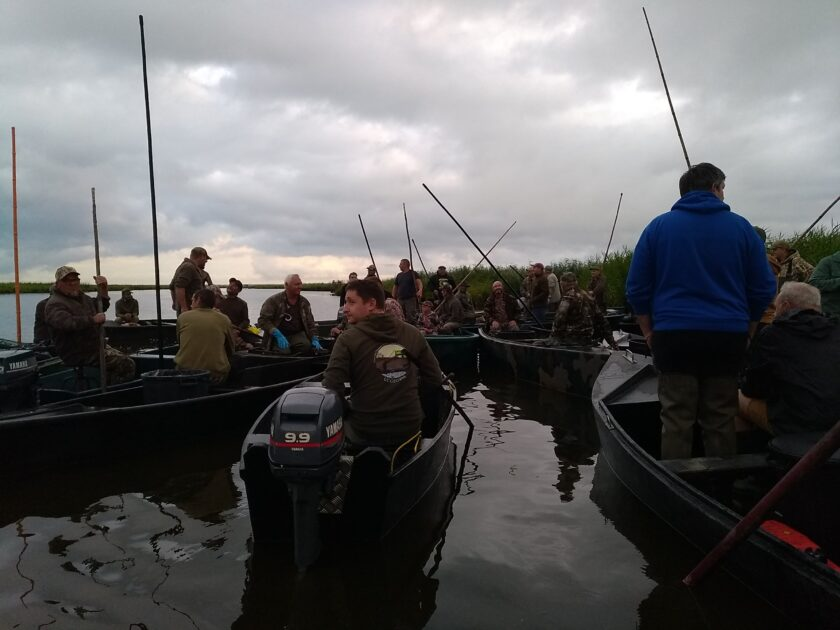
image.png - Click image for larger version  Name:	image.png Views:	1 Size:	473.5 KB ID:	1016551

For several weeks, the Brière Marsh has been hit by an alarming epidemic affecting a large number of waterbirds, particularly ducks. This worrying situation is actively mobilizing marsh users, particularly the hunting community.

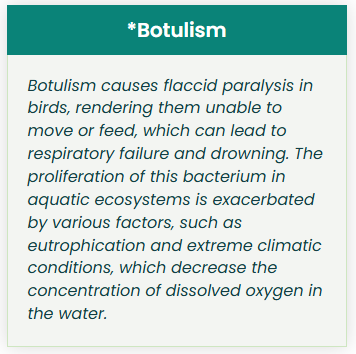
Initial investigations suggest the presence of botulism*, a neurological disease caused by bacteria of the genus Clostridium . This summer's exceptional weather conditions, marked by high temperatures that led to a drop in water levels, appear to have favored the development of this deadly disease. Laboratory analyses, conducted in collaboration with the Loire-Atlantique Hunters' Federation, should confirm these suspicions.

In the face of this crisis, it is crucial to regularly monitor bird populations and collect the carcasses of infected birds. It is within this framework that a collection operation was organized on Saturday, July 17, at the initiative of the Loire-Atlantique Hunters' Federation and the Grande Brière Waterfowl Hunters' Union, in the Brière Marshes Regional Nature Reserve (Southern Reserve). This operation benefited from the logistical support of the Brière Regional Nature Park, the Grande Brière Mottière Syndicate Commission, and the Brivet Watershed Syndicate, which set up collection points equipped with freezers.

The remaining birds (including stilts, lapwings, spoonbills, egrets, and mallards) were taken in for veterinary care by Dr. JM Clobert, in partnership with the Brière Regional Natural Park. A number of birds were transferred to the Nantes Veterinary School, including a black tern.

Further collection operations are already scheduled for this week to address this critical situation.

A coordination meeting will be held again tomorrow morning with the Loire-Atlantique Hunters' Federation (FDC44), the Grande Brière Mottière Trade Union Commission (CSGBM), the French Office for Biodiversity (OFB), and other partners. The objective of this meeting is to coordinate efforts to organize an effective response to the epidemic.

Organizational elements and concrete measures will be released tomorrow to inform the public of the actions to be taken to combat this health crisis.
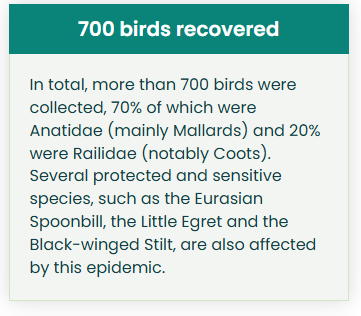
image.png - Click image for larger version  Name:	image.png Views:	1 Size:	38.4 KB ID:	1016552

image.png - Click image for larger version  Name:	image.png Views:	1 Size:	35.5 KB ID:	1016553

image.png - Click image for larger version  Name:	image.png Views:	2 Size:	40.4 KB ID:	1016554


https://www.parc-naturel-briere.com...idemie-devastatrice-affecte-les-oiseaux-deau/
----------------------------------------------
"We have collected more than 1,000 dead birds" in the Brière marsh

La Brière, France's second-largest wetland, has been hit by what appears to be a botulism crisis affecting marsh birds. On Saturday, July 19, and Monday, July 21, hunters counted and recovered 1,061 carcasses. The risk of spread is being taken seriously.

Philippe RIDOU.
Published on 07/21/2025 at 7:43 p.m.

"It's Erika at the start!" says Frédéric Richeux, president of the Brière waterfowl hunters' union, between spite and disgust . On Saturday, July 19, "we collected 717 bird carcasses. This Monday morning, we were still there and, with 20 people, we found 344 more," specifies the Briéron. A few "badly" specimens were taken into care by a veterinarian. Analyses are underway. They should confirm the hunters' suspicion: the birds are victims of botulism. A bacteria present in water that causes progressive paralysis in the animal, which ends up drowning. The first cases recorded at the end of June at the Grand-Lieu lake had alerted Frédéric Richeux. At the beginning of July, the Brière marsh was also affected.

A “titanic” task

Frédéric Richeux denounces "questionable hydraulic management. We must think in terms of the environment and not of uses." For the hunter, the water level in the marsh is too low. The July 16 reading indicates a water level of 139 cm for an official level of 150 cm. "We have a combination of ingredients: a heat episode, a near absence of rainfall, and fairly low water levels," observes Eric Provost, president of the regional natural park (PNR) . "We had the highest levels at the end of January and the lowest levels in June. The extremes predicted by the IPCC are being confirmed and we are measuring their impact," continues Eric Provost.

Ducks, herons, terns, spoonbills, lapwings, white waders: "Everything goes." The task is "titanic." In two mornings, more than 600 hectares of the southern wetland were combed. The PNR has 21,000 hectares of wetlands. The situation is urgent: the epizootic risks affecting the migratory birds expected within two to three weeks. A new collection operation is being organized and will be carried out on Saturday, July 26.

https://www.ouest-france.fr/nature/...a-briere-baf3aa04-664a-11f0-8d96-1f3c0ceaabc2
 
Translation Google

Avian botulism in Brière: nearly 1,300 carcasses collected, an otter also affected?

Representatives of the Loire-Atlantique Hunting Federation and the Brière Regional Natural Park provided an update on the botulism epidemic affecting the department on Wednesday, July 23, 2025.

Malo Richard
Published on07/23/2025 at 4:22 p.m.

Since the beginning of July, a botulism epidemic has been hitting the birds of the Brière marsh and the Grand-Lieu lake hard . We have to go back thirty years, to 1995, to find an episode of this magnitude in Loire-Atlantique. In the space of three weeks and two three-hour collection operations, nearly 1,300 bird carcasses were collected in the Brière regional nature park and 79 birds were taken into care by the veterinarian.

“Between 200 and 300 birds” collected every day in Grand-Lieu

Of the twenty or so species affected, the mallard represents nearly half. But many protected species such as spoonbills, black-winged stilts, and grey herons are likely to be significantly impacted , says Denis Dabo, director of the Loire-Atlantique Hunters' Federation. In Grand-Lieu, between 200 and 300 birds are currently being collected per day.

"A strain of botulism can be transmitted to mammals"

The outbreaks are mainly concentrated in regional nature reserves. Classified as a Natura 2000 site, the Liberge marsh in Donges is also affected. Four dead birds were collected there two days ago , says Denis Dabo, who emphasizes the proximity to the Loire estuary and therefore the need for more intensive surveillance in this area. For the moment, only the western part of the marsh has been spared.

In addition to birds, the botulism epidemic could affect other animal species. Fish and an otter were found dead for no apparent reason and will be analyzed. A strain of botulism can be transmitted to mammals , explains Denis Dabo. He is nevertheless keen to eliminate any risk of the epidemic spreading to humans and specifies that all bird flu tests have come back negative .

https://www.ouest-france.fr/pays-de...-touchee-96f6978a-67c4-11f0-bb8e-c5b2af864a8a
 
Translation Google

Posted by Soizick David, July 24, 2025 at 3:12 p.m.

Brière Regional Natural Park: an update from the Prefecture on the ongoing botulism epidemic

More than 3,000 bird carcasses were collected.


A situation update was conducted this Wednesday, July 23, by the Prefect of Loire-Atlantique, with all stakeholders concerned about the botulism outbreak that occurred in the Brière Regional Natural Park. The epidemic is also affecting the marshes of Lake Grand Lieu. Avian botulism is not transmitted to humans or mammals .

More than 3,000 bird corpses

"Climatic conditions combining high temperatures and droughts are leading to an increase in the mortality of wild birds in Loire-Atlantique, particularly on Lake Grand Lieu and the Brière marsh . To date, more than 3,000 bird carcasses have been collected," says the Loire-Atlantique Prefecture. The French Office for Biodiversity (OFB) and the Loire-Atlantique hunting federation have joined forces to carry out health surveillance of wildlife as part of the SAGIR network (a network for monitoring the health of terrestrial vertebrate wildlife created in 1986). Samples were taken and sent to laboratories for analysis. "The results obtained at Grand Lieu revealed avian botulinum toxin and the absence of highly pathogenic avian influenza," the Prefecture informs.

How is the disease transmitted?

This animal disease is transmitted by the ingestion of a botulinum toxin from a bacterium that thrives in dry conditions. It causes paralysis of the animals' skeletal muscles, which can lead to death from respiratory failure or drowning. "The challenge today is to collect deceased animals as quickly as possible to stem the spread. Avian botulism is not transmitted to humans or mammals," the Prefecture reassures. People wishing to contribute voluntarily to the collection operations are invited to contact local organizations (departmental hunters' federation, Grand-Lieu Lake National Nature Reserve, Brière Marsh Natural Park, etc.) in conjunction with the mayors of the municipalities concerned.

Several decisions taken

Following the July 23 meeting, it was decided that government services will provide additional equipment to the departmental hunting federation to speed up the collection and storage of dead animals. The OFB and the DDPP will be responsible for informing mayors and answering their questions. "A public information sheet will also be distributed to the mayors of the municipalities concerned for this purpose," the Prefecture added. The procedures for collecting carcasses by the public rendering service will be strengthened to ensure rapid and efficient disposal. Regular status updates will again be held.

https://www.saintnazairenews.fr/new...fecture-sur-l-epidemie-de-botulisme-en-cours​
 
Translation Google

"An agony": thousands of birds fall victim to botulism in Loire-Atlantique

SA with AFP
Today at 7:52 AM

In Loire-Atlantique, several birds have been affected by an epidemic of avian botulism which is affecting several areas of the region.

Fished out of a verdant marshland that has become deadly, hundreds of bird corpses are piled up in garbage cans. They were wiped out by the avian botulism epidemic that is affecting several wetlands in Loire-Atlantique, following an early summer that combined intense heat and dry spells.

"In July, we should have birds flying and singing. Now, it's silent, it's deadly," says Frédéric Richeux, president of the Grande Brière Waterfowl Hunters' Union.

"It's heartbreaking."

Wearing boots or waders, their hands carefully gloved, even though the avian strain of botulism is not transmissible to humans, some 150 volunteer hunters and fishermen crisscrossed the Brière marsh on Saturday. In small groups, they unloaded from barges, counting the birds collected before dumping the carcasses into bins.

"Whatever species we find, it's heartbreaking. This marsh, which is our corner of paradise, has been transformed into a living hell," says Frédéric Richeux.

In total, some 600 carcasses, many of them mallards, were collected in the marsh on Saturday.

As of Thursday, more than 3,000 carcasses of birds suffering from avian botulism had already been collected in Loire-Atlantique, particularly in the Brière marsh and on Lake Grand-Lieu, southwest of Nantes, according to the department's prefecture.

Threatened migratory birds

While a few cases of avian botulism are not "unusual" in summer in Loire-Atlantique, such a mortality rate has not been observed since 1995, says Eric Provost, president of the Brière regional park, which covers some 25,000 hectares of wetlands.

A "sustained" heatwave and drought at the beginning of summer were the main culprits, he explains. Considered "the most significant disease in terms of mortality for waterbirds worldwide," avian botulism can cause the loss of tens of thousands of individuals during an outbreak, according to ANSES (French Agency for Food, Environmental, and Occupational Health and Safety).

This disease is caused by a bacterium naturally present in these humid areas and which develops in high heat in stagnant water. In birds, it results in nerve damage leading to progressive paralysis.

"An agony," laments Frédéric Richeux, who is worried about seeing the disease affect migratory birds "that will arrive in the coming weeks." In an attempt to slow the spread, collections of infected birds have been increasing since mid-July. They are even "almost daily" around Lake Grand-Lieu.

Because the maggots that develop on the carcasses of birds killed by botulism carry the bacteria and are likely to contaminate the birds that eat them.

"An electroshock for this territory"

"We've been making a major collection effort for the past three weeks, but with mixed success: we're still collecting just as many. The usual outbreaks are confined to one or two areas around the lake, but this year the perimeter is very wide," laments Jean-Marc Gillier, director of the Grand-Lieu Lake National Reserve.

Frédéric Richeux is calling for "an electroshock for this region" with "real water management" starting next year. "Spring water must not be released into the sea by the millions of cubic meters as is currently the case," he insists.

The hunting officer points the finger in particular at agricultural uses that, according to him, maintain a water level too low in the marsh, for livestock and fodder. Eric Provost does not deny these "conflicts of use," but believes above all that it is a "water regulation" unsuited to an exceptional year that is at fault.

"In January, we reached practically the highest water levels known in the marsh since we began taking measurements. And now, at the end of June, we are approaching the lowest water levels," notes the president of the Brière Regional Park.

For him, "the water regulations, very clearly, are not designed for this type of year," which risks becoming more and more frequent with climate change.

https://www.bfmtv.com/environnement...dans-la-loire-atlantique_AD-202507270068.html
 
Translation Google

Botulism outbreak at Grand Lieu Lake: far fewer dead birds, but nutria contaminated

The botulism epidemic at Lake Grand Lieu appears to be subsiding, but vigilance remains essential, particularly with the contamination of coypu.

By Laurent Renon
Published on August 14, 2025 at 5:18 p.m.

The indicators of the botulism epidemic that has been raging on Lake Grand Lieu since mid-June are encouraging. "Everything is decreasing," notes Patrice Lecomte , deputy director of the Loire-Atlantique Hunters' Federation, which manages the regional reserve. "We're picking up around ten dead birds every two days. That's rather reassuring, even if we remain vigilant because some migrants are arriving and could land in contaminated areas. And with the high temperatures forecast, the phenomenon could start again."

Gadwalls, summer and winter teals, and sedge warblers are reappearing in the Grand Lieu area.

The same situation is reported by the National Society for the Protection of Nature (SNPN) , which manages the national nature reserve, "with between 5 and 10 dead birds found per day," allowing it to be said that "the epidemic is coming to an end."

Regular analyses of corpses found

On the other hand, there has been less good news in recent days. The Hunting Federation conducts regular tests on animal carcasses, and one of a dead nutria tested positive for botulinum toxin.

She sent a warning message to hunting associations.

Videos: currently on News

For your information, the nutria that die on the lake are indeed carriers of botulism. Botulism is transmissible to mammals, and the veterinary advisor in Brière tells us that if a dog eats a bird that has died of botulism, it can also die. Nutria droppings also carry the bacteria.
Federation of Hunters of Loire-Atlantique

Watch out for dogs!

The bacterium Clostridium botulinum, which causes botulism, can contaminate the soil, water, or mud around a dead bird. If ingested, its toxins can be fatal to other species.

The survey teams will also have to collect the carcasses of nutria, which could become relays for transmission of the disease.

It is advisable to be careful with dogs that walk in dirty water and could then become poisoned by ingesting it.


https://actu.fr/pays-de-la-loire/sa...s-mais-des-ragondins-contamines_63038658.html
 
image.png

/https://en.wikipedia.org/wiki/Loir-et-Cher
----------------------------------------------------------------

Translation Google


Loir-et-Cher (41)

05
Sep


Botulism cases


Following the discovery of a significant mortality outbreak on a pond in Grande Sologne, several species of waterbirds (tufted duck, swan, coot, gulls) were collected as part of the Sagir network and analyzed to try to understand the causes of this mortality. During the summer, on this same pond, a very high number of dead fish was also recorded.

The results have just reached us, and they should be taken very seriously.

In fact, a tufted duck tested positive for type E botulism, and a black-headed gull tested positive for type CD botulism.

This episode occurs concomitantly with the opening of hunting, particularly that of water birds.
Hunting on a contaminated site exposes people to danger when they have skin contact with the environment (water and sediment in particular), or when they seize a hunted animal whose integuments are soiled by spores and/or the toxin, a sick bird, or even a carcass. In this regard, it should be remembered that neither the bacteria nor the toxin have the capacity to penetrate healthy skin. Botulism occurs in the presence of a deep wound associated with the penetration of C/D or E spores into the tissues. Dogs can also be victims of botulism in these ponds where the bacteria is prevalent.

The risks of foodborne botulism are also real. The highest risk situation results from the consumption of waterfowl preparations containing botulinum toxin (raw or undercooked preparations, then improperly preserved). The risk of foodborne botulism can, however, be controlled by applying standard processing and preservation measures (hygiene measures during food preparation, heat treatment, compliance with the cold chain and/or food shelf life). These risks are the same when consuming fish containing the toxin.

In any case, if you observe a high mortality rate, immediately contact your departmental hunting federation or the OFB to carry out, if necessary, analyses within the framework of the wildlife monitoring network.

In addition, if you observe significant mortality of birds of all species and/or fish, you must put in place preventive measures.

This can begin with the temporary suspension of hunting in the contaminated area (duration at your discretion), the collection of all carcasses (with gloves), but also the information of your hunters on the importance of respecting the rules in the preparation for consumption of game birds.

https://www.chasseurducentrevaldelo...ologne-des-risques-a-considerer-avec-serieux/
---------------------------------------------------------
See also:

https://flutrackers.com/forum/forum...resence-of-avian-botulism-in-several-species​
 
image.png - Click image for larger version  Name:	image.png Views:	1 Size:	37.7 KB ID:	1019363

/https://en.wikipedia.org/wiki/Charente-Maritime
-------------------------------------------------------------------------------------
Translation Google

BFMTVCharente-Maritime

"Deaths among birds and nutria": botulism suspected in Charente-Maritime

Lilian Pouyaud
Today at 2:29 p.m.


In Nieul-sur-Mer, animals were found dead at the end of August. Health authorities are considering possible botulinum toxin poisoning, and measures have been put in place.

It's time for caution. At the end of August, health authorities noted that swans and a nutria had been found dead near a body of water in the small town of Nieul-sur-Mer, in Charente-Maritime . Since then, a sign warning passersby of the risk of botulism has been hung on the lock of the marsh in question.

There is a sign prohibiting dogs and pets from swimming in the said body of water, while passers-by are encouraged to "avoid all contact with the water and waterfowl".

Since then, the urban community has taken samples to analyze the water and clarify the nature of this contamination.

The mayor of the commune "not worried"
It would therefore be the suspicion of a probable Clostridium Botulinum bacterium which would be at the origin of the death of these animals, notes France 3. A bacterium considered to be one of the most powerful toxins in the world, botulinum toxin. If it is known for food , it is less so for its impact on animals in nature.

According to Stéphane Maisonhaute, a facilitator at the Bird Protection League, interviewed by our colleagues, botulinum toxin is present in the mud "in a completely natural way." "When water is abundant, the bacteria is sufficiently diluted to not pose a threat, but during periods of high evaporation in these watering holes, its concentration in the water can be dangerous," he explains. Thus, the phenomenon is amplified by climate change and its periods of drought.

When asked about this phenomenon, Marc Maigné, mayor of Nieul-sur-Mer, expressed confidence. According to the elected official, the botulism hypothesis has not yet been proven, and no similar animal deaths have been reported. However, the information signs remain in place as a precaution.

Lilian Pouyaud

https://www.bfmtv.com/charente-mari...sme-en-charente-maritime_AN-202509160564.html
 
Translation Google
Avian botulism in Brière: a crisis brought under control thanks to collective mobilization


Information
Published on 10/10/25


250719_sortie-botulisme_briere_m_marquet-840x630.jpg


The avian botulism outbreak that hit Brière this summer severely tested wild birds. Thanks to a rapid and coordinated response, notably between the Brière Regional Nature Park, the Loire-Atlantique Hunters' Federation, veterinarian Jean-Michel Clobert and his team, and volunteers, the spread of the disease was contained. This collaborative effort paves the way for better anticipation of potential future health crises.

At the end of June 2025, the first cases of avian botulism, which poses no danger to humans, were detected at Lake Grand-Lieu. A few days later, hunters reported the presence of dead birds in Brière. "As soon as avian botulism* reappeared, a management committee was set up in early July, bringing together the Park, the Loire-Atlantique Hunters' Federation, the Grande Brière Mottière Trade Union Commission and veterinarian Jean-Michel Clobert ," recalls Éric Provost, president of the Brière Regional Natural Park. Collection operations were organized from mid-July: up to 200 volunteers and 80 boats crisscrossed the marsh. "We were able to react quickly thanks to the hunters' knowledge of the terrain and local solidarity ," emphasizes Denis Dabo, director of the Loire-Atlantique Hunters' Federation.

Heavy but efficient logistics

The massive collection of carcasses – nearly 5,000 dead birds collected in Brière – was key to slowing the spread. Three seasonal workers recruited by the Park, a technician seconded by the City of La Baule, and a coordinating technician from the Loire-Atlantique Hunters' Federation supervised the operations. Removals were carried out weekly by a rendering service set up in collaboration with the State. At the same time, Jean-Michel Clobert, a veterinarian in Guérande, and his team took in more than 200 live birds: "We were able to save about half of them. This is not insignificant, especially considering the speed with which the bacteria acts . "

Understanding to better prevent

High temperatures, falling water levels, a total lack of rainfall, and a high density of birds have favored the development of the Clostridium botulinum bacterium . According to Denis Dabo, "an additional twenty centimeters of water might not have prevented the epizootic, but would have delayed its onset and therefore its severity ." For Jean-Michel Clobert, "this type of event and others such as drought, avian flu, West Nile fever, or tropical diseases are likely to become increasingly frequent with global warming." Hence the need to strengthen environmental monitoring and to have sensors to monitor the temperature and oxygen levels in the water. According to Éric Provost, "prevention requires appropriate water management and continuous coordination between the different stakeholders . "

Cooperation to be consolidated

Everyone emphasizes the strength of the collective. Volunteers, hunters, associations, veterinarians, and public services have tirelessly joined forces. "The effectiveness of this mobilization proves that everyone has a role to play ," insists Denis Dabo. The Park hopes to capitalize on this experience by formalizing a new protocol to better organize this capacity to deal with crises. "We must move from emergency management to a structured organization ," explains Éric Provost. Trained volunteer brigades, regular patrols in the marsh, reinforced hygiene procedures, a stockpile of medications, dedicated material resources, and a new alert system with a dedicated telephone number and email address are among the avenues under consideration.

Anticipating future crises

This ordeal has revealed the region's ability to mobilize and learn collectively. For Jean-Michel Clobert, "we must continue to involve residents and users in surveillance. Everyone can contribute, even if it's just by reporting abnormal animal deaths." The Park's president concludes: "Faced with climate change, Brière's resilience will rely on cooperation: we must help each other in our common fight for the environment. Together, we have shown that we can act effectively. It's up to us to transform this momentum into a sustainable organization . "

©M.Marquet


https://www.parc-naturel-briere.com...maitrisee-grace-a-la-mobilisation-collective/
 
Translation Google

"We are not taking any risk of contamination," patrols are being organized in the Brière marsh to limit the botulism epidemic.

Juliette Poirier
And
Myriam N'Guenor
Published on
15/08/2026 at 11:32

The Brière marshes are experiencing a new outbreak of botulism, the disease that paralyzes birds. Last year, an unprecedented mass die-off struck the Brière marshes and Lake Grandlieu in Loire-Atlantique. This year, patrols have been set up to monitor the area. The surviving animals are being treated at a veterinary clinic in Guérande.

Ducks, egrets, coots, black-headed gulls... These are just some of the species found in the Brière Regional Natural Park, all threatened by the botulism epidemic that resurfaced this summer. To avoid a repeat of the high mortality rate of summer 2025, the Brière Regional Natural Park has implemented patrols. The goal: to try to prevent rather than cure.

Daily patrols

Every morning, a barge ventures into the heart of the Brière marsh and heads towards one of the three nature reserves. This protected area is home to more than 150 species of birds. The staff on board the boat are tasked with monitoring this birdlife, which has once again fallen victim to botulism.

Within minutes, the first dead birds appeared.

Emmelyne Lebrun, ornithologist and health monitoring officer for the Brivet watershed association, joined the patrol team. "Here, we found a dead mallard duck, the species we find most often. We're not taking any risks with potential contamination from live individuals, so we're removing as many as possible."

Birds are victims of botulinum toxin produced by a bacterium that proliferates in wetlands during periods of drought.

150 bird carcasses every day

The team collects nearly 150 bird carcasses every day. The ornithologist geolocates each collection. "This allows us to see a trend and identify, for example, which species has been most impacted this year or which area has been most affected."

The monitoring agents of the Brivet Watershed Syndicate patrol the Brière Natural Park

In 2025, the Marais-de-Brière experienced an unprecedented botulism epidemic. 5,000 bird carcasses were collected. This summer, 3,000 have been counted since the beginning of June.

"We cannot accept such mortality every year, it is not possible. There is always the issue of water levels which we need to discuss again. And then we certainly need much larger teams from the start, from spring, to cover much more of the areas where we can assume it will develop, to remove the birds much further upstream," explains Eric Provost, the president of the Brière Regional Natural Park.

We need to be more numerous, we need to have more resources.
Eric Provost
President of the Brière Regional Natural Park

Charcoal detox

Hope is reborn when a found bird is still alive, but very weak. Emmelyne Lebrun takes it in her hands and observes the damage to a young bird. "It can no longer fly at all. It only manages small hops. It can no longer fly or feed itself."

All sick birds found are brought in and treated immediately by the veterinary clinic in Guérande. Jean-Michel Clobert's team, the veterinarian, has been working tirelessly since the outbreak resumed.

"They arrive slightly paralyzed. We'll probe them to administer activated charcoal. The charcoal will absorb the toxin and thus detoxify them," the doctor explains. "Then, we'll refeed them since the paralysis also affects the digestive system."

We will refeed them in order to keep them alive for 48 hours, the time needed for the toxin to be eliminated.
Dr. Jean-Michel Clobert
Veterinarian at the Guérande clinic

120 birds have already been treated. The patrols in the marsh will continue until the end of the summer.

https://france3-regions.franceinfo....-limiter-l-epidemie-de-botulisme-3401821.html
 
Back
Top