
• FluTrackers.com Inc. does not provide medical advice. Information on this web site is collected from various internet resources, and the FluTrackers board of directors makes no warranty to the safety, efficacy, correctness or completeness of the information posted on this site by any author or poster. The information collated here is for instructional and/or discussion purposes only and is NOT intended to diagnose or treat any disease, illness, or other medical condition. Every individual reader or poster should seek advice from their personal physician/healthcare practitioner before considering or using any interventions that are discussed on this website. By continuing to access this website you agree to consult your personal physican before using any interventions posted on this website, and you agree to hold harmless FluTrackers.com Inc., the board of directors, the members, and all authors and posters for any effects from use of any medication, supplement, vitamin or other substance, device, intervention, etc. mentioned in posts on this website, or other internet venues referenced in posts on this website.
  • We are not asking for any donations. Do not donate to any entity who says they are raising funds for us.

France: 2022-2026 H5N1 in wild birds

Translation Google

In the region ,Marl

Cranes at Lake Der are dying in droves: "This is the first outbreak of avian flu of this magnitude."


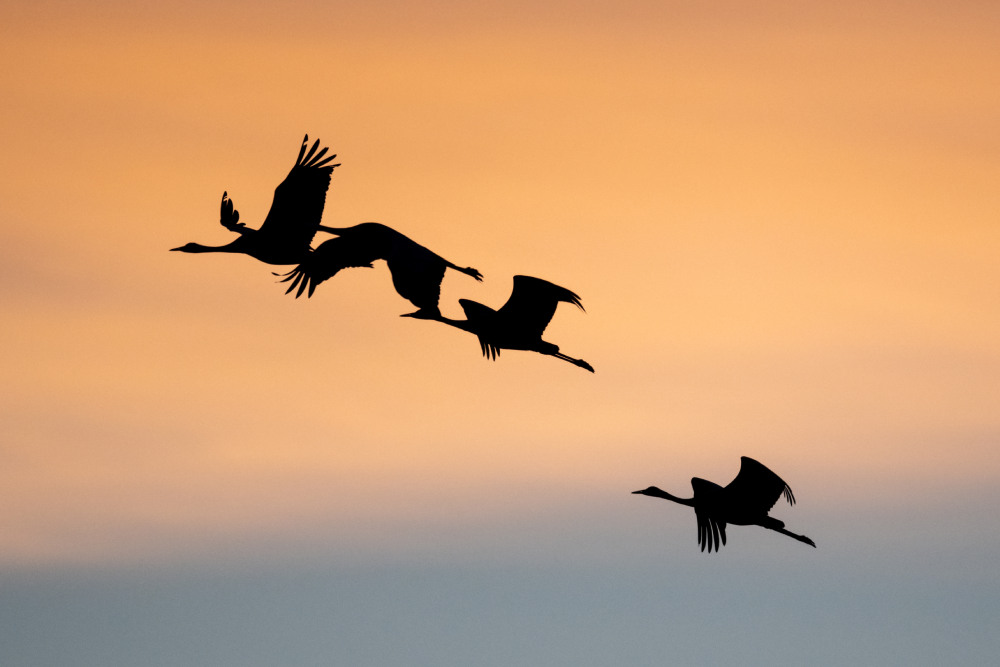
As common cranes begin their winter migration, they arrive by the thousands on the shores of Europe's largest artificial lake, in Champagne. This year, it's a massacre.

By Marie Blanchardon
October 29 , 2025 at 5:42 PM

The iconic bird of Lake Der is not having a good time. Since the beginning of October, common cranes have been arriving by the thousands at the shores of Europe's largest artificial lake . What this fascinating spectacle doesn't reveal is that they are carrying with them the avian flu virus, which is spreading across Europe . A tragedy for this natural area where these thousands of wading birds find refuge each autumn on their migration route.

At the foot of the dikes, on the roads, and in the surrounding fields, the carcasses are piling up… Every day, agents from the French Office for Biodiversity (OFB), equipped with masks and gloves, collect these lifeless cranes. Nearly 5,000 deaths have already been recorded around Lake Der. This number is likely to increase daily, as the situation is considered unprecedented in the region.

“This is the first time we’ve had to manage an avian flu outbreak of this magnitude. And only a third of the migration has taken place; we’re still expecting tens of thousands of cranes at Der. The only thing to wait for is the peak of the epidemic. We can’t provide them with care. Once they’re infected, we’re unfortunately just spectators,” laments Étienne Clément, president of the LPO Champagne Ardenne.

It is impossible to administer the vaccine to wild birds

A vaccine against avian influenza has indeed existed for two years. However, it cannot be administered to wild cranes, unlike farmed birds. While awaiting the LPO (League for the Protection of Birds), the OFB (French Office for Biodiversity) and local authorities are continuing to raise public awareness. A dedicated phone number has been set up by the OFB to provide information and report sightings of sick wading birds (0 326 738 268).

“We receive many phone calls about dying cranes, but it’s crucial not to approach them. You must not handle a dead or sick animal. Only OFB agents are authorized to do this,” reminds Étienne Clément. Local communities are starting to organize. Some are setting up carcass collection points, like Montier-en-Der and Saint-Dizier (Haute-Marne).

Once a certain number of animals are recovered, a rendering company takes over the carcasses. Beyond the health and safety aspects and best practices, a great wave of emotion sweeps across the Lac du Der region. Every autumn, thousands of ornithologists and novice tourists flock there to observe the flight of this majestic bird with its slate-gray plumage.

“It’s very special this year, we’re in a morbid atmosphere. Usually, we look forward to the crane, it’s a celebration to see them all arrive. I’m anxiously awaiting the next waves of migration. We are so powerless in the face of the spread of this virus,” confirms Étienne Clément.

For the time being, the LPO (League for the Protection of Birds) is maintaining its organized activities related to crane migration. Observations of crane take-off and landing are still available for groups and individuals. Meanwhile, the Marne prefecture has not announced any specific restrictions or prohibitions on visiting Lake Der, but indicated this Thursday, October 30th, that a first outbreak of avian influenza has been detected in a chicken farm in Droyes (Haute-Marne), less than 3 km from Lake Der. Due to the virus, 4,000 chickens have died or been culled. The Marne prefecture has established regulated protection zones encompassing about ten surrounding municipalities. Within these zones, the movement of poultry is prohibited.

Nationwide, more than 100,000 poultry have already been culled. And in Germany, more than half a million birds have been culled in an attempt to contain the spread of avian flu.

https://www.leparisien.fr/marne-51/...eur-29-10-2025-TYKKJAGPA5F6XBG3E7H3FQ6QVA.php
 
Translation Google

Mass die-off among Common Cranes.

October 30, 2025
grues_cendr%C3%A9es_toussaint.jpg


We are currently witnessing a massive mortality of Common Cranes infected with avian influenza along the entire Western European migration route. The first sick cranes in France were reported over the weekend of October 18th/19th in the northeast during a migration wave that affected 80,000 cranes. All French stopover sites are now experiencing mortality, except perhaps in the Camargue. In the wet Champagne region, counts at roosting sites have identified at least 8,700 dead cranes as of October 31st. This is a minimum; dead cranes at feeding sites are not included in the count.

The incubation period appears to be short and mortality rapid.

If you discover a dead or sick crane or other birds at risk (birds of prey, waterfowl), do not handle it, contact the departmental services of the French Office for Biodiversity:

Ardennes:sd08@ofb.gouv.fr/ 06-58-56-16-33
Dawn:sd10@ofb.gouv.fr/ 03-25-49-80-10
Marne:sd51@ofb.gouv.fr/ 03-26-70-87-08
Haute-Marne:sd52@ofb.gouv.fr/ 03-52-18-02-10

Observers who frequent wetlands and cultivated areas where cranes are stationed must be vigilant regarding the risk of virus transmission. It is important to change your field shoes before getting back into your vehicles and to clean/disinfect the soles upon returning home and before storing them. If you are going to visit several different locations consecutively, be sure to disinfect the soles between each site.

https://champagne-ardenne.lpo.fr/lp...catombe-chez-les-grues-cendrees-au-lac-du-der


image.png - Click image for larger version  Name:	image.png Views:	1 Size:	64.7 KB ID:	1022272

/https://fr.wikipedia.org/wiki/Cantal_(d%C3%A9partement)
---------------------------------------------------------------------
Translation Google

Highly Pathogenic Avian Influenza (HPAI): First Cases Detected in Wildlife in Cantal

Updated on 01/11/2025


INFLUENZA-AVIAIRE-HAUTEMENT-PATHOGENE-IAHP-PREMIERS-CAS-DETECTES-EN-FAUNE-SAUVAGE-DANS-LE-CANTAL_large.png


The first cases of highly pathogenic avian influenza (HPAI) were confirmed today, Friday, October 31, 2025, in wild birds (common cranes) in the municipalities of Sainte-Marie and Les Ternes.

Poultry farmers in these municipalities, as well as those in Neuvéglise-sur-Truyère, Espinasse, Lieutades, Tanavelle, Villedieu, Cussac and Paulhenc, have been informed of this situation, asking them to increase their vigilance and insisting on strict compliance with biosecurity measures, already in force due to the high risk level of HPAI in the metropolitan area.

In general, and in order to limit the spread of the virus which can have significant economic consequences, all professionals in the poultry sector and individuals are reminded to strictly respect safety measures (and in particular sheltering) throughout the department and to remain strictly vigilant.

It is imperative to follow these instructions:
  • Do not handle dead or dying birds.
  • to shelter poultry of all kinds,
  • Monitor the birds daily and, if necessary, report any abnormal behavior or signs of illness to a veterinarian without delay.
  • Report the presence of dead or sick wild birds to the French Office for Biodiversity (04 71 64 95 58), to the Departmental Hunting Federation (04 71 48 62 66) or to the DDETSPP (04 63 27 31 80 during working hours or 07 86 43 28 31 in the evenings and on weekends).
​...

https://www.cantal.gouv.fr/Actualit...-CAS-DETECTES-EN-FAUNE-SAUVAGE-DANS-LE-CANTAL
 
Location of Var in France
​/https://en.wikipedia.org/wiki/Var_(department)
---------------------------------------------------------------------------

image.png


Image translated by Google
image.png

​...

5:05 AM · Nov 3, 2025
 
Translation Google

Up to 10,000 dead cranes, Haute-Marne on maximum alert

Frédéric Thévenin
November 4, 2025 at 8:40 PM
Montier-En-Der

Avian flu is devastating, with 7,000 to 10,000 cranes already dead. While the migration is only a third of the way through, strict protective measures are being taken to prevent its spread. Prefect Régine Pam's stated goal is to "weather the storm." Fifty municipalities are under close surveillance.

The outbreak of avian influenza, which is killing cranes and poultry, is so severe that it warrants a press conference at the prefecture. At its head, Prefect Régine Pam speaks of a major issue, especially since the Der is a wintering area for the common crane.

The scale of the phenomenon is illustrated by a few figures: initially, five carcasses were found in the Marne River, and now, between 7,000 and 10,000 birds have been found dead. The concern is all the greater because only 36,000 cranes are present at the Der site, while more than 100,000 are expected; hence the strict measures enacted by the prefecture. Vincent Montibert, head of the French Office for Biodiversity, emphasizes: "Only a third of the migration has taken place. The migration phase continues, with birds coming from the Netherlands or Germany to cross the Loire River and reach the Landes region. If it gets colder, the migration will intensify."

For Régine Pam, "it is therefore important to anticipate the epizootic," while emphasizing that crane mortality has never been so high. The bird's gregarious nature is devastating. A few swans and a gull have also been affected.
...

https://jhm.fr/jusqua-10-000-grues-mortes-la-haute-marne-en-alerte-maximale/
 
Location of Aube in France
​/https://en.wikipedia.org/wiki/Aube

--------------------------------------------------------
Translation Google

A first case of avian flu in a common crane in the Aude region

Published on 05/11/2025.

A case of highly pathogenic avian influenza has been confirmed in a common crane in Villasavary. The government is urging vigilance and reminding the public of the precautions to take to prevent the spread of the virus.

State services confirmed on Wednesday, November 5, a case of highly pathogenic avian influenza (HPAI) in a common crane discovered in Villasavary, in the Aude department. This is, to date, the only infected wild bird recorded in the department. This confirmation comes as an HPAI epizootic has been spreading since October 18, 2025, along the common crane migration corridor from northeastern to southwestern France.

Migrations that spread the virus
The autumn migrations of these large birds, which will continue until the end of November, facilitate the spread of the virus. Other wild species may also be affected. Faced with this risk, the authorities are reminding the public of the proper precautions to take to protect wildlife and livestock.

If you find a sick or dead wild bird, it is imperative not to touch it and to immediately inform the departmental service of the French Office for Biodiversity (OFB, 04 68 24 60 49).

Since October 22nd, France has been placed at a “high” risk level for avian influenza. Biosecurity measures must therefore be strictly applied by professionals and individuals: sheltering or confining poultry and captive birds, and protecting food and water supplies to prevent any contamination from wild birds.

https://www.echo-languedoc.fr/un-premier-cas-de-grippe-aviaire-sur-une-grue-cendree-dans-laude/
---------------------------------------------------------
Location of Creuse in France
​/https://en.wikipedia.org/wiki/Creuse

-------------------------------------------------------------------------------

Bird flu: two first cases identified in Creuse, analyses underway on other birds found dead

The Creuse region is not escaping the avian flu epidemic: the first two cases were identified a few days ago on common cranes found dead in Saint-Chabrais and Saint-Pierre-Bellevue.

Published on November 5, 2025 at 10:54 AM

The prefecture of Creuse has just announced this Wednesday morning that two cases of avian influenza - or highly pathogenic avian influenza virus (HPAI) - were identified on October 31 in common cranes found dead in Saint-Chabrais and Saint-Pierre-Bellevue, in the east-central and south-western parts of the department.

This virus, which is actively circulating in Europe via migratory birds, is particularly contagious and pathogenic to birds.

Suspicion of other cases

The prefecture specifies that several suspicions concerning dead birds, particularly in the areas of Lussat (municipality where the Landes pond is located) and Soumans, are currently being analyzed.

Several preventative measures should be followed: "It is important to remember that, to prevent the spread of the virus to other birds, it is specifically requested not to approach or feed wild birds. The general public should avoid frequenting wetlands (edges of ponds, pools and rivers) where wild birds congregate, even in their absence, due to the possible presence of the virus in droppings and contaminated soil."

Any death of wild birds without an obvious cause can be reported to: the French Office for Biodiversity at 05.55.52.24.81; the Departmental Federation of Hunters at 05.55.52.17.31; the Veterinary Service of the DDETSPP at 05.55.41.72.26

https://www.lamontagne.fr/saint-cha...rs-cas-ont-ete-identifies-en-creuse_14776880/
 
image.png - Click image for larger version  Name:	image.png Views:	1 Size:	36.9 KB ID:	1022521

/https://en.wikipedia.org/wiki/Dordogne
-----------------------------------------------------------------------------------------------
Dordogne

Bird flu: three common cranes found dead in Dordogne, poultry gatherings banned

Charlotte Jousserand
Published onWednesday, November 5, 2025 at 11:20 AM

The Dordogne region is no longer spared from outbreaks of avian influenza in its wildlife . The Dordogne prefecture announced on Wednesday, November 5th, that three common cranes were found dead in the department due to avian influenza. The species is currently migrating, and the carcasses of infected common cranes have already been discovered in neighboring departments such as Gironde.

Do not touch a sick or dead bird

The first common crane found dead in the Dordogne region due to avian flu was discovered on Friday, October 31st. According to our information, the three birds were found in different locations.

The prefecture reminds the public that if you discover a sick or dead bird, "you must not touch the animal, and you must notify the departmental service of the OFB (French Office for Biodiversity) or the departmental federation of Hunters, as well as the town hall if the animal is dead" .

Poultry gatherings are prohibited.

To avoid outbreaks of contamination in farms, the Dordogne prefecture insists that poultry gatherings are now prohibited until November 20th .

Dordogne, like all French departments, has moved to a high risk of avian flu and poultry must be confined in farms and in private homes.

https://www.francebleu.fr/infos/agr...rassemblements-de-volailles-interdits-8719470
 
image.png - Click image for larger version  Name:	image.png Views:	1 Size:	119.3 KB ID:	1022563

Google map
-------------------------------------------------
Translation Google

Bird flu: Amnéville Zoo carries out mass vaccinations

Written by
Stiliana Peev
Published on
06/11/2025 at 06:05

Veterinarians at the Amnéville Zoo (Moselle) are currently vaccinating 83 species and nearly 400 birds. The vaccination campaign, which began on November 4th, will continue for two more days.

This is a risky period for migratory birds. And the presence of avian flu is a scourge for poultry farmers , but also for the Amnéville Zoo (Moselle). Every year, to protect its birds, the staff administers a dose of vaccine to most species. The vaccination campaign began on Tuesday, November 4, 2025.

Common cranes, ostriches, pelicans – 83 different species and nearly 400 birds will be vaccinated over four days at the Amnéville Zoo. Three veterinarians and a large number of zookeepers are involved.

"It is wild birds that can bring the virus from hundreds of kilometers away and contaminate our birds. At least once a year, or even twice for some species, we vaccinate 75% of our birds, the most threatened, those that live in contact with wild animals such as flamingos, pelicans, ostriches and also all show birds ," explains Alexis Maillot, veterinarian and zoological director.

Vaccination in zoos has existed for 20 years. For many birds, confinement is not possible because it harms their health and puts them at risk of contracting a disease.

450 dead common cranes at the Lachaussée pond

Less than 50 kilometers from the Amnéville Zoo, at the Lachaussée pond in the Meuse region, avian flu is decimating populations of common cranes. These birds migrate from the Baltic countries to Spain.

"Between 450 and 500 birds have been found dead in the last ten days. It is almost exclusively cranes, we cannot know why this year it is the cranes that are affected. It is a flu virus that mutates and evolves from year to year. Three years ago, it was the swans that were affected ," explains Daniel Grosjean, deputy departmental director of employment, labor, solidarity and protection of persons of the Meuse.

To store dead birds before the services arrive, a rendering container has been installed on the edge of the Lachausée pond.

"Walks are only allowed on designated paths. The goal is to prevent the disease from spreading to professional farms or backyard flocks ," explains Daniel Grosjean, who is also a veterinarian by training.

Lachausée Pond, a nature reserve

The Lachaussée pond is currently empty. This allows the birds to stop and rest before heading south to Spain. This concentration increases the rate of infection between individuals. Fabrice André, a guide and photographer, lives on the edge of the pond.

This morning again, I saw birds dying
Fabrice André, naturalist guide

"There are about 4,000 cranes that stay every year at the Lachaussée pond and in the private ponds around it. Once infected, some birds take three days to die. The virus attacks the nervous system, they get dizzy and they drown in the mud ," explains the naturalist.

Currently, the Meuse department is implementing a prefectural decree to try to limit the spread of the virus. Until November 20, 2025, aquatic activities, fishing, and waterfowl hunting are prohibited, including at Lake Madine .

https://france3-regions.franceinfo....zoo-d-amneville-vaccine-en-masse-3244867.html
 
Translation Google

HIGHLY PATHOGENIC AVIAN INFLUENZA (HPAI): NEW CASES CONFIRMED IN WILDLIFE

Updated on 07/11/2025

Since October 31, 2025, 4 cases of Highly Pathogenic Avian Influenza (HPAI) in wild fauna have been observed in the department of Cantal, in the municipalities of Sainte-Marie and Les Ternes.

By prefectoral decree, a regulated zone has been established concerning the following municipalities: [TABLE="width: 792"]
[TR]
[TD]Saint Mary[/TD]
[TD]The Ternes[/TD]
[TD]Neuvéglise-sur-Truyère[/TD]
[TD]Espinasse[/TD]
[TD]Paulhenc[/TD]
[/TR]
[TR]
[TD]Lieutades[/TD]
[TD]Tanavelle[/TD]
[TD]Villedieu[/TD]
[TD]Cussac[/TD]
[/TR]
[/TABLE]
The following measures apply within this regulated zone:

• Enhanced monitoring of wild birds;
• collection of wild bird carcasses by municipal services, in conjunction with the French Office for Biodiversity and the Departmental Hunting Federation;
• census of all bird detention sites;
• Enhanced biosecurity in livestock farming.

The public is reminded that if a sick or dead bird is found, it is imperative not to touch the animal: the departmental service of the French Office of Biodiversity or the Departmental Federation of Hunters should be notified and, if the animal is dead, the town hall should be contacted which will then proceed with the collection of the animal.

Useful contacts:
- French Office for Biodiversity: 04 71 64 95 58,
- Departmental Hunting Federation: 04 71 48 62 66,
- DDETSPP: 04 63 27 31 80 (on-call: 07 86 43 28 31),

https://www.cantal.gouv.fr/Actualit...OUVEAUX-CAS-CONFIRMES-SUR-DE-LA-FAUNE-SAUVAGE
 
Translation Google

Fishermen of Der: "Tell us why we're being sidelined..."

Pierre-Julien Prieur
November 9, 2025
November 8, 2025 at 6:47 PM
Lake Der

Around 80 fishermen from Lake Der gathered in Giffaumont on Saturday, November 8th, to try to understand why they are no longer allowed to fish. Since Monday, November 3rd, a prefectural decree has prohibited them from practicing their activity due to the avian flu epidemic.

“We’re the only ones who’ve had restrictions imposed on us, the fishermen…” On Saturday, November 8, around 80 people gathered in front of the Ufappma offices at Lac du Der, in the port of Giffaumont-Champaubert. They weren’t there to protest the ban, which they were respecting, but to try to get some answers. “We want to know why we’re being sidelined,” explained Régis Da Costa, in charge of organizing events at Ufappma , who initiated the protest.

"We've all seen people getting close to the birds during school holidays or the crane festival. Some were taking selfies less than a meter away from the cranes. And once all that's over, we get attacked."
Régis Da Costa
Member of the Ufappma of Lac du Der

Due to the avian flu epidemic, fishing was indeed prohibited by prefectural decree on Lake Der, first on the Marne side and then 24 hours later on the Haute-Marne side, to prevent fishermen from further spreading the virus and creating new outbreaks of infection.

“We were presented with a fait accompli, without any explanation. And when we started talking about this movement, things started to move,” notes Régis Da Costa. “We were told that the virus takes longer to disappear in wetlands. Fine, but then explain to me why, since yesterday (Friday, Ed.), they’ve opened the floodgates to release water into the Marne! Why do that if the water is contaminated?”

Bicycles, telescopes and hunting rifles…
The fishermen are also puzzled by the timing. "We all saw people getting close to the birds during the school holidays or the crane festival. Some were taking selfies less than a meter away from the cranes. And once all that's over, we get attacked. And it goes on until November 20th, the opening day of the Montier festival..."

On Saturday, November 8th, while fishermen were wondering about the reasons for these prefectural decrees, a group of cyclists stopped just a few meters away. Walkers equipped with binoculars strolled by, wondering about the gathering. In the distance, hunters' bullets cracked in the surrounding forests. "Hunters have guidelines in case of avian flu, to clean their equipment, their boots... Why not us? In 2022, during the last epidemic, we had hygiene instructions to follow. Why aren't we doing that again?"

"When you leave the seat empty, you pay for it."
Jean-Pierre Calabrèse, mayor of Giffaumont-Champaubert and also a fisherman, has his own theory. "The president of the FNSEA Grand Est (the regional farmers' union) asked the regional prefecture to ban everything. There was a meeting at the prefecture with all the stakeholders, except the fishermen. The hunters got some concessions because they were there. But the Marne Hunting Federation didn't show up. When you leave the seat empty, you pay the price."

But he still wanted to reassure the fishermen. "There is some good news, though. The disease is in sharp decline. We've found ten times fewer dead cranes in recent days than a week ago. I'm not saying it won't start up again with the arrival of new cranes, but the population is developing immunity."

While anglers have put their passion on hold until November 20th, they hope the ban won't be extended beyond that date. "We're enduring it, we're respecting it, but we won't give in. We're not just fishing licenses, we're human beings, and we know how to manage the aquatic environment. We're going to fight back and we're going to show our teeth!" concluded Régis Da Costa, organizer of the recent Carna'Der.

P.-JP

https://jhm.fr/pecheurs-du-der-pourquoi-on-nous-met-sur-la-touche/
 
Location of Hautes-Pyrénées in France
​/https://en.wikipedia.org/wiki/Hautes-Pyr%C3%A9n%C3%A9es
----------------------------------------------------------------
Translation Google

56 dead cranes in Puydarrieux, others elsewhere in the Hautes-Pyrénées: heightened vigilance against avian influenza

​Published on10/11/2025 at 11:05 updated at 16:18
Andy Barréjot​
...
While the majority of dead birds were concentrated around Lake Puydarrieux, cranes found dead in Tarbes, Lannemezan, and Luquet tested positive. Two meetings were organized by the state with elected officials.

For the past three weeks, avian influenza has returned to the Hautes- Pyrenees region, brought by the migration of bird colonies. The Puydarrieux lake, a bird sanctuary, is particularly affected. "As of Friday, November 7th, a total of 56 cranes have been found dead on Puydarrieux lake since October 20th. Among them, 5 cranes were tested and found to be positive for the H5N1 virus," explains Regine Morlas, Deputy Director of the DDETSPP 65 (Departmental Directorate for Employment, Labor, Solidarity and Population Protection of the Hautes-Pyrenees). "Other dead cranes found were also tested and found to be positive in Tarbes, Lustar, Lannemezan, and Luquet."​
...

https://www.ladepeche.fr/2025/11/10...accrue-face-a-linfluenza-aviaire-13043751.php
 
Location of Loir-et-Cher in France
/https://en.wikipedia.org/wiki/Loir-et-Cher
---------------------------------------------------------------------
Translation Google

CP HIGHLY PATHOGENIC AVIAN INFLUENZA in COMMON CRANES

Updated on 10/11/2025


Blois, November 10 , 2025
PRESS RELEASE

HIGHLY PATHOGENIC AVIAN INFLUENZA in COMMON CRANES

An outbreak of Highly Pathogenic Avian Influenza (HPAI) has been observed since October 18, 2025, along the migration route of common cranes in the departments stretching from northeastern to southwestern France. Common crane migrations are expected to peak in the coming weeks and continue until the end of November. Other species of wild birds may also be affected.

In the Loir-et-Cher department, a common crane in the town of Chitenay and several poultry in a backyard flock in the town of Vineuil have just been confirmed to be infected with Highly Pathogenic Avian Influenza. These events necessitate taking additional precautionary measures.

For the municipalities surrounding the location where the infected bird and the poultry were discovered, namely CELLETTES, CHAILLES, CHITENAY, CORMERAY, HUISSEAU-SUR-COSSON, LES MONTILS, MONTS-PRES-CHAMBORD, SAINT-CLAUDE-DE-DIRAY, SAINT-GERVAIS-LA-FORET, SEUR, VINEUIL and the delegated municipalities of FOUGERES SUR BIEVRE and OUCHAMPS, a prefectural decree defines additional measures aimed at reducing the risk of the spread of the highly pathogenic avian influenza virus in wild birds and the introduction of the virus into establishments holding poultry and captive birds, including:
- compliance with biosecurity measures to be observed in livestock farming and in poultry yards;

For more information on biosecurity measures, you can refer to the brochure "Poultry farmers: regulatory requirements to protect your flock from health hazards" on the website: https://agriculture.gouv.fr/tout-ce-quil-faut-savoir-sur-linfluenza-aviaire
- compliance with biosecurity measures to be observed by hunters, in particular:
- avoid all direct or indirect contact, transport, of wild birds found dead or sick,
- avoid all direct or indirect contact with domestic and captive birds for two days following the hunt.
- ensure the cleaning and disinfection of equipment,
- avoid moving between different sites (especially wetlands) during the same day;
- prohibition of movement and release of any game birds;
- Prohibition of transporting and using decoys for waterfowl hunting.

As a reminder, since France has been placed at a high level with regard to the epizootic risk of HPAI since October 22, biosecurity measures must be strictly respected throughout the department and primarily the sheltering, confinement or netting of poultry or captive birds, including backyard flocks.

The public is reminded that if a sick or dead wild bird is found, it is imperative not to touch the animal. Protective measures are essential to prevent the risk of human contamination. Dead birds must be reported to the French Office for Biodiversity (OFB) or the Departmental Federation of Hunters, who can then arrange for the animal to be collected for analysis (SAGIR network) or disposed of (municipalities via the public rendering service).

The consumption of meat, foie gras and eggs – and more generally of any food product made from poultry – presents no risk to humans .

​...

https://www.loir-et-cher.gouv.fr/Pu...E-HAUTEMENT-PATHOGENE-chez-les-GRUES-CENDREES
 
Translation Google

Welcome Local news Marl Vitry-le-François

Bird flu: new analyses on other wild birds found dead in the Marne


The carcasses of other wild birds besides common cranes have been collected around Lake Der.

These have been sent to a laboratory for analysis as the avian flu virus persists in the wet Champagne region.

Published:
November 10, 2025 at 7:45 PM

Although a low estimate of more than 10,000 common cranes affected by avian influenza in wet Champagne was announced in early November 2025 – the latest figures communicated to date by the services of the Marne prefecture – the risk of a resurgence of the virus persists in the territory as long as the crossing of the migratory birds continues.

Following the common cranes, further analyses are being conducted on cormorant carcasses found north of the Der and more broadly in the Vitry area. "We've also received reports of suspicious behavior from other wild birds, particularly swans and tits in the region, but I can't say for sure if it's avian flu. It's highly probable. However, we mustn't forget that the virus circulates every year ," laments an elected official from the Vitry region, a key player in the fight against the avian flu outbreak in the Marne department.

https://www.lunion.fr/id763425/arti...alyses-sur-dautres-oiseaux-sauvages-retrouves
 
image.png - Click image for larger version  Name:	image.png Views:	1 Size:	36.8 KB ID:	1023575

/https://en.wikipedia.org/wiki/Indre-et-Loire
-------------------------------------------------------------------------------------------
Translation Google

Civray-sur-Esves: the first case of avian flu detected in Indre-et-Loire, on the carcass of a common crane

Eva Kling
Published onTuesday, November 18, 2025 at 11:50 AM

Bird flu has arrived in Touraine. The first case was detected in the carcass of a common crane in Civray-sur-Esves, in the southern part of the department. No further measures have been announced yet.

Concern is growing as the epidemic continues to spread in France. The first case of avian influenza has been detected in Indre-et-Loire , in Civray-sur-Esves, in the southern part of the department. A common crane, a migratory bird, was found dead in the town; it was carrying the virus, which is highly contagious among poultry.

The Copelva cooperative announced the news on Facebook. The organization warned poultry farmers in the department: " It is crucial that you strictly adhere to the measures imposed by the high risk level ," namely the confinement of free-range poultry. This high risk level has been declared nationwide following the discovery of more than twenty outbreaks, particularly within poultry farms.

This confinement measure is already being implemented by poultry farmers in the Touraine region. Frédérique Alexandre, a farmer and member of the Indre-et-Loire animal health protection group , " doesn't see what more can be done ": confinement has been in place on her farm for a month, so the risks are lower. Since her poultry don't leave the building, migratory birds don't come into contact with her animals.

These measures also apply to privately owned poultry: to prevent the spread of the disease, it is essential to keep them indoors. It is also forbidden to touch bird carcasses. If you find any, you must call the town hall or the French Office for Biodiversity (OFB). Other preventative measures still in place include limiting the transport of poultry and restricting the hunting and release of game birds

https://www.francebleu.fr/infos/san...ire-sur-le-cadavre-d-une-grue-cendree-6780860
 
image.png

/https://en.wikipedia.org/wiki/Dijon
--------------------------------------------------------------------------------
Translation Google
image.png

​...

Highly pathogenic avian influenza (HPAI): discovery of an infected mallard duck on the banks of Lake Kir in Dijon

Updated on 01/12/2025

IAHP-decouverte-d-un-canard-colvert-contamine_large.jpg

Latest news (28/11/2025)

Following the confirmation of a case of HPAI (highly pathogenic H5) in a wild duck found on the banks of Lake Kir, in Dijon, residents and walkers in this area are reminded not to feed the ducks or swans and to notify the SAGIR network (link to HPAI poster attached).

It is recalled that animals of sensitive species (ducks, geese, chickens, guinea fowl, pigeons, domestic birds, etc.) kept by individuals or professional breeders must be sheltered or confined to avoid any contact with wild animals (ducks, swans, common cranes, gulls, etc.).

A highly pathogenic avian influenza outbreak was confirmed elsewhere on November 19, 2025 in a farmyard comprising about a hundred animals of susceptible species (geese, guinea fowl, chickens, ducks) in the town of Genlis in the Côte-d'Or department.


To avoid any risk of the virus spreading to other farms, regulated protection zones (ZP) and surveillance zones (ZS) are being set up within a radius of 3 and 10 km .

...

https://www.cote-dor.gouv.fr/Action...IAHP-decouverte-d-un-canard-colvert-contamine
------------------------------------------------------------------------------------------------

image.png

/https://en.wikipedia.org/wiki/Saint-Hilaire-Saint-Mesmin
------------------------------------------------------------------------------------------------
image.png

...
Highly pathogenic avian influenza in wildlife (Press release)

Updated on 01/12/2025

Influenza-aviaire-hautement-pathogene-dans-la-faune-sauvage-Communique-de-presse_large.jpg

For several weeks, an outbreak of Highly Pathogenic Avian Influenza (HPAI) has been observed in wild birds. Following the discovery of a common crane infected with HPAI in the town of Gien at the end of October, a mute swan has now been found infected in the town of Saint-Hilaire-Saint-Mesmin. This discovery underscores the importance of reiterating the precautionary measures to be taken to reduce the risk of introducing the virus into establishments housing poultry and captive birds.

Since France has been placed at a high level of risk for HPAI (Hospital-Associated Infections) since October 22nd, biosecurity measures must be strictly observed throughout the department, and in particular:
  • The sheltering, confinement or netting of captive poultry or birds, including backyard flocks, is mandatory;
  • The food and watering of captive poultry or birds must never be accessible to wild animals;
  • Any increase in mortality in farms and backyard flocks must be reported immediately to a veterinarian;
  • Vehicles intended for the transport of waterfowl over three days old must be equipped with tarpaulins or equivalents preventing any significant loss of feathers and down, whether the truck is full or empty;
  • The transport and use of decoy birds for hunting are subject to conditions;
  • Movements between farms of game birds of the Anatidae family are permitted subject to virological screening within the 15 days preceding;
  • Releasing game birds from the Anatidae family (ducks, etc.) is prohibited.

The public is also reminded that if a sick or dead wild bird is found, it is imperative not to touch the animal. Protective measures are essential to prevent the risk of human contamination. Bird carcasses must be reported to the town hall, which will arrange for their collection.
Dying birds must be reported to the French Office for Biodiversity:

​...

https://www.loiret.gouv.fr/Actions-...ne-dans-la-faune-sauvage-Communique-de-presse
 
Translation Google

Common cranes: "The epidemic is behind us"

Lionel Fontaine
December 9, 2025
December 8, 2025 at 4:50 PM

According to the League for the Protection of Birds, avian flu has caused the death of approximately 45,000 cranes. That's more than a tenth of the population that passed through Lac du Der, where the wintering season begins.

Volunteers from the League for the Protection of Birds (LPO) counted 16,560 common cranes on Lake Der on Sunday, December 7, 2025. This number is "consistent" with that observed in previous years, according to Etienne Clément, president of the LPO Champagne-Ardenne. The migration period, which began in mid-October and took them from Scandinavia to southern Europe and North Africa, is now over. They are now spending the winter in the wet Champagne region, as elsewhere. Etienne Clément indicates that "at least" 326,000 cranes passed through this migration corridor above Lake Der. Among these migratory birds, "45,000 were affected" by the avian flu epidemic. More than one in ten cranes was therefore a victim of the virus, which causes "neurological damage" and disorientation in these birds (see inset).

"Herd immunity"

“Le Der is the epicenter of the wetlands where cranes overwinter, so mortality is proportionally higher there,” explains Etienne Clément, who adds: “The epidemic is behind us . ” Indeed , “herd immunity” has taken hold on the lake; there are no longer any confirmed cases.

The highest mortality rate occurred during the Crane Festival in Giffaumont, in the second half of October. Previously active in Pomerania (Germany), the epidemic severely impacted the crane population. It also affected – though to a lesser extent – ​​cormorants, gulls, swans, and songbirds in the Dervois region, as well as "a fox in the Aube department, a fox in the Marne department, and an otter in the Southwest ." And it caused the death of 4,000 chickens on a farm in Droyes at the end of October! A sad autumn indeed.

The wintering of cranes in Champagne – lakes of Der and of the forest of Orient, ponds of La Horre and of Belval-en-Argonne – should end at the end of February 2026. Then “they will begin their return migration to the nesting sites in Northern Europe” , recalls Etienne Clément.

LF
Unprecedented and widespread mortality


Ordinarily, cranes, their eyes always alert, keep a very respectable distance from humans, around 400 meters. If, in October-November 2025, people were able to get very close to these migratory birds, which are unable to fly far, it was because they were victims of avian influenza. This disease struck the crane population with an unprecedented scale in France, and particularly in the Champagne region.

https://jhm.fr/grues-cendrees-lepidemie-est-derriere-nous/
 
image.png

Google map​
------------------------------------------------------------------------------------------------------

Translation Google

Bird flu: one of the ponds at La Glissoire closed "until further notice" as a precaution

As a precaution, the city of Avion has decided to temporarily close access to the Lac des Trois Îlets in the Parc de la Glissoire. Authorities fear an outbreak of avian flu after geese were found dead last week.

ByPhilomène Coppey-Dey
Journalist at the Lens agency
Published:
December 22, 2025 at 4:39 PM

Since last Thursday, a temporary order has prohibited access to the Lac des Trois Îlets in the Parc de la Glissoire d'Avion. The reason? Five or six geese were found dead by municipal workers. Authorities did not want to take any risks while the avian flu epidemic, also known as bird flu, is circulating in France. " The environmental police have taken charge of the situation, and we are awaiting a response from the prefecture, but we have a suspicion ," stated city officials. It should be noted that since the end of October, the risk of contamination from this disease, which affects birds and poultry, has been considered " very high " by the Ministry of Agriculture .

Awaiting results
Tests have been conducted on site, and the results should be available within a few days. In the meantime, fishing, water sports, and walks near the lake are prohibited. " It's an isolated outbreak, but as a precaution, we've decided to close the site. We're remaining vigilant while we await the results ," the city stated. For the moment, the impact of this measure remains very limited, both for walkers and anglers, as the closed pond is not one of the designated fishing areas.

https://www.lavoixdunord.fr/1658959...-de-la-glissoire-ferme-jusqu-nouvel-ordre-par

 
image.png

Aumont, Jura
/https://en.wikipedia.org/wiki/Aumont,_Jura
---------------------------------------------------------------------------------------------------------
Translation Google

PRESS RELEASE
Lons-le-Saunier, December 24, 2025

Avian Influenza:
Establishment of a regulated zone
following a case involving a group of swans in the municipality of AUMONT (39800)


The highly pathogenic avian influenza (HPAI) virus has been identified in 6 swans
found dead on December 19 near a pond in AUMONT
(39800).

This virus, which is actively circulating in Europe through migratory birds, is
particularly contagious and pathogenic for birds. It persists and remains active
primarily in droppings and stagnant water containing contaminated droppings.
Since October 22, the risk level for HPAI in poultry farms has been at its highest
level throughout the national territory, resulting in reinforced biosecurity measures
on farms, such as the confinement of poultry.

Following the detection of the HPAI virus in Aumont, the Prefect of Jura has
issued an order defining a zone where additional measures will be implemented to
prevent the risk of the highly pathogenic avian influenza virus spreading among
wild birds and being introduced into establishments housing poultry and captive
birds.
...

https://www.jura.gouv.fr/contenu/telechargement/34841/261331/file/INFLUENZA AVIAIRE.pdf​
 
Back
Top Bottom