

Pathfinder
Editor, Senior Moderator
A first: Avian influenza detected in American dolphin
Published: Sep 7, 2022 By: Sarah CareyCategory: University of Florida, UF Health, College of Veterinary Medicine
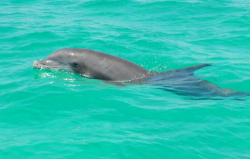
The detection of highly pathogenic avian influenza virus in a bottlenose dolphin recovered by University of Florida marine animal rescuers marks the first time the virus has been identified in a cetacean in America. (Photo courtesy of the Florida Fish and Wildlife Conservation Commission)
A bottlenose dolphin found dead in Florida’s Dixie County was infected with the highly pathogenic avian influenza virus, or HPAIV, making it the first cetacean to be found with the virus in America and only the second known case in the world.
The young male dolphin was recovered in March at Horseshoe Beach by the University of Florida’s marine animal rescue team. A collaboration between UF College of Veterinary Medicine researchers and state and federal laboratories identified the unexpected infection with HPAIV, commonly known as bird flu. The virus recovered from the dolphin belonged to clade 2.3.4.4b of the Eurasian H5 viral lineage.
Wild birds have spread H5 clade 2.3.4.4b HPAIV widely in North America and Europe this year. The virus primarily affects wild birds and domesticated poultry but only rarely infects people. Researchers suspect the dolphin likely got infected by interacting with a wild bird killed by HPAIV.
“While obviously the presence of HPAIV is a concern, the key takeaway for us is that additional caution should be taken by those handling or encountering wild dolphins during rescue events or while performing necropsies,” said Mike Walsh, D.V.M., a clinical associate professor with UF’s College of Veterinary Medicine who leads the animal rescue team and performed the dolphin’s necropsy with others.
There has been only one report of H5 clade 2.3.4.4b in people in 2022.
Richard Webby, Ph.D., directs the World Health Organization Collaborating Center for Studies on the Ecology of Influenza in Animals and Birds at St. Jude Children’s Research Hospital. The WHO Center at St. Jude, which analyzes animal flu viruses and their potential risk to human health, will analyze the dolphin tissue samples supplied by the UF team.
“The virus has some features that make further study and follow-up on mammalian cases important, but the virus does not currently contain the features we know are required for transmission between humans and likely other mammalian hosts,” Webby said. “In addition, the recent discovery of HPAIV in a porpoise in Sweden almost certainly suggests that the Florida dolphin finding isn’t a one-off, unique event.”
The UF team did not immediately suspect anything out of the ordinary when they performed a routine necropsy. Tests for common causes of deaths in dolphins turned up negative.
“However, this dolphin had inflammation of the brain and also the tissues surrounding the brain, known as the meninges,” said Robert Ossiboff, D.V.M., Ph.D., an associate professor of veterinary anatomical pathology at UF. “This finding was unusual.”
Andrew Allison, Ph.D., an assistant professor of veterinary virology at UF, studies viruses that normally circulate in wildlife populations, primarily wild birds and mammals. He knew that HPAIV was a rapidly growing concern for wild bird populations in Florida.
“Although avian flu infection had never been documented in a dolphin, the high incidence of the virus in wild birds within the state in the spring — specifically aquatic bird species such as ducks, gulls, terns and herons — suggested that encounters between dolphins and dying or dead birds near the shoreline was not out of the realm of possibility,” he said.
Wild birds that succumb to HPAIV often have neurologic signs with virus found in their brains. Since the dolphin had inflammation of the brain and meninges that could have been caused by a virus, Allison believed that the dolphin could have died from HPAIV infection.
On the basis of these initial suspicions, the UF researchers sent brain and lung samples of the dolphin to the state’s Bronson Animal Disease Diagnostic Laboratory in Kissimmee, a nationally accredited facility and a member of the National Animal Health Laboratory network, or NAHLN. This lab is approved for and routinely performs testing for animal pathogens of significant consequence that can pose severe threats to animals and humans. There, suspicions were confirmed, as the samples tested positive for avian flu. As a NAHLN laboratory, avian flu detections are sent on to the National Veterinary Diagnostic Laboratory in Ames, Iowa, for characterization by genetic sequencing to identify the specific strain of avian flu.
UF’s marine animal rescue team is a member of the National Oceanic and Atmospheric Administration Southeast Regional Stranding Network, which authorizes members to assist and investigate stranded marine mammals. The UF rescue team works closely with the stranding network, especially when investigating pathogens with unknown effects in cetaceans.
https://ufhealth.org/news/2022/first...erican-dolphin
See also:
Sweden: H5N1 in a porpoise
https://flutrackers.com/forum/forum/europe/h5n1-tracking/sweden/957776-sweden-h5n1-in-a-porpoise
Published: Sep 7, 2022 By: Sarah CareyCategory: University of Florida, UF Health, College of Veterinary Medicine

The detection of highly pathogenic avian influenza virus in a bottlenose dolphin recovered by University of Florida marine animal rescuers marks the first time the virus has been identified in a cetacean in America. (Photo courtesy of the Florida Fish and Wildlife Conservation Commission)
A bottlenose dolphin found dead in Florida’s Dixie County was infected with the highly pathogenic avian influenza virus, or HPAIV, making it the first cetacean to be found with the virus in America and only the second known case in the world.
The young male dolphin was recovered in March at Horseshoe Beach by the University of Florida’s marine animal rescue team. A collaboration between UF College of Veterinary Medicine researchers and state and federal laboratories identified the unexpected infection with HPAIV, commonly known as bird flu. The virus recovered from the dolphin belonged to clade 2.3.4.4b of the Eurasian H5 viral lineage.
Wild birds have spread H5 clade 2.3.4.4b HPAIV widely in North America and Europe this year. The virus primarily affects wild birds and domesticated poultry but only rarely infects people. Researchers suspect the dolphin likely got infected by interacting with a wild bird killed by HPAIV.
“While obviously the presence of HPAIV is a concern, the key takeaway for us is that additional caution should be taken by those handling or encountering wild dolphins during rescue events or while performing necropsies,” said Mike Walsh, D.V.M., a clinical associate professor with UF’s College of Veterinary Medicine who leads the animal rescue team and performed the dolphin’s necropsy with others.
There has been only one report of H5 clade 2.3.4.4b in people in 2022.
Richard Webby, Ph.D., directs the World Health Organization Collaborating Center for Studies on the Ecology of Influenza in Animals and Birds at St. Jude Children’s Research Hospital. The WHO Center at St. Jude, which analyzes animal flu viruses and their potential risk to human health, will analyze the dolphin tissue samples supplied by the UF team.
“The virus has some features that make further study and follow-up on mammalian cases important, but the virus does not currently contain the features we know are required for transmission between humans and likely other mammalian hosts,” Webby said. “In addition, the recent discovery of HPAIV in a porpoise in Sweden almost certainly suggests that the Florida dolphin finding isn’t a one-off, unique event.”
The UF team did not immediately suspect anything out of the ordinary when they performed a routine necropsy. Tests for common causes of deaths in dolphins turned up negative.
“However, this dolphin had inflammation of the brain and also the tissues surrounding the brain, known as the meninges,” said Robert Ossiboff, D.V.M., Ph.D., an associate professor of veterinary anatomical pathology at UF. “This finding was unusual.”
Andrew Allison, Ph.D., an assistant professor of veterinary virology at UF, studies viruses that normally circulate in wildlife populations, primarily wild birds and mammals. He knew that HPAIV was a rapidly growing concern for wild bird populations in Florida.
“Although avian flu infection had never been documented in a dolphin, the high incidence of the virus in wild birds within the state in the spring — specifically aquatic bird species such as ducks, gulls, terns and herons — suggested that encounters between dolphins and dying or dead birds near the shoreline was not out of the realm of possibility,” he said.
Wild birds that succumb to HPAIV often have neurologic signs with virus found in their brains. Since the dolphin had inflammation of the brain and meninges that could have been caused by a virus, Allison believed that the dolphin could have died from HPAIV infection.
On the basis of these initial suspicions, the UF researchers sent brain and lung samples of the dolphin to the state’s Bronson Animal Disease Diagnostic Laboratory in Kissimmee, a nationally accredited facility and a member of the National Animal Health Laboratory network, or NAHLN. This lab is approved for and routinely performs testing for animal pathogens of significant consequence that can pose severe threats to animals and humans. There, suspicions were confirmed, as the samples tested positive for avian flu. As a NAHLN laboratory, avian flu detections are sent on to the National Veterinary Diagnostic Laboratory in Ames, Iowa, for characterization by genetic sequencing to identify the specific strain of avian flu.
UF’s marine animal rescue team is a member of the National Oceanic and Atmospheric Administration Southeast Regional Stranding Network, which authorizes members to assist and investigate stranded marine mammals. The UF rescue team works closely with the stranding network, especially when investigating pathogens with unknown effects in cetaceans.
https://ufhealth.org/news/2022/first...erican-dolphin
See also:
Sweden: H5N1 in a porpoise
https://flutrackers.com/forum/forum/europe/h5n1-tracking/sweden/957776-sweden-h5n1-in-a-porpoise

 Yep, After 6 months we get to hear of it!