• FluTrackers.com Inc. does not provide medical advice. Information on this web site is collected from various internet resources, and the FluTrackers board of directors makes no warranty to the safety, efficacy, correctness or completeness of the information posted on this site by any author or poster. The information collated here is for instructional and/or discussion purposes only and is NOT intended to diagnose or treat any disease, illness, or other medical condition. Every individual reader or poster should seek advice from their personal physician/healthcare practitioner before considering or using any interventions that are discussed on this website. By continuing to access this website you agree to consult your personal physican before using any interventions posted on this website, and you agree to hold harmless FluTrackers.com Inc., the board of directors, the members, and all authors and posters for any effects from use of any medication, supplement, vitamin or other substance, device, intervention, etc. mentioned in posts on this website, or other internet venues referenced in posts on this website.
  • We are not asking for any donations. Do not donate to any entity who says they are raising funds for us.

eye makeup

gsgs

Registered User
there are fewer females with H7N9
could that be due to eye-makeup ?
H7 tends to infect the eyes, (NL,2003) although in China we have no reports about conjunctivitis yet.
With eye-makeup they would rarer touch their eyes ?!

eyebrows:
http://www.microbiologybytes.com/bl...n=Feed:+Microbiologybytes+(MicrobiologyBytes)

this research should have been done long ago
do females touch their eyes less often ?
I can't find it. Maybe there are also chemicals in eye makeup that
protect from H7-virus entry or change the mucosa of the skin
near the eyes.

Maybe someone here wants to help with the research ...
checking some thousands of Chinese from a webcam e.g.:
http://www.yangshuoren.com/webcam.html
and recoding the genders of eye-touchers

for the benefit of mankind

(raining now, too early, streets empty, try again later)

need an automatic eye-touchment detecting software


http://www.pnas.org/content/101/5/1356.long
http://www.cidrap.umn.edu/cidrap/content/influenza/h7n9/news/apr1913ageh7.html
 
Re: eye makeup

Maybe they don't touch their noses so much (not lady like). Perhaps they don't chew tobacco! What about sitting in the park playing chess? Perhaps men are more likely to sit under trees where pigeons perch! There are lots of variables but I think women touch their eyes as much as men - from my observation.

Were the health care workers potentially infected in Taiwan women? I think the nurses in the weibo blog were women. Perhaps we should be thinking about the severity rather than susceptibility. Perhaps men, especially older men, are more likely to be on blood pressure or blood thinning drugs?.. What are the stats?
 
Last edited:
Re: eye makeup

compare with H5N1. What of your factors apply to H7, but not to H5 ?

H7 causes conjunctivitis, H5 doesn't.
 
Re: eye makeup

I don't know about whether the makeup provides any protection, but I would think women with make up touch their eyes or around their eyes fairly often. They might swipe under their eyes if their eye liner was smudging, use a finger to blend their eye shadow colors in a pinch and wipe away a stray mascara mark.
 
Re: eye makeup

H7 tends to infect the eyes, (NL,2003) although in China we have no reports about conjunctivitis yet.
With eye-makeup they would rarer touch their eyes ?!

Perhaps we should think about why it caused conjunctivitis in the Netherlands and not currently. It would be more obvious to spot if everyone was walking around with conjunctivitis - thats how it has become so widespread so discreetly.

Has there been any study on flies or midges? Has there been anything written about whether the older people were in rest homes and routinely vaccinated? .... The granny in this thread didn't eat meat, didn't go near any birds yet still became ill ; http://www.flutrackers.com/forum/showthread.php?p=494831
 
Re: eye makeup

Perhaps we should think about why it caused conjunctivitis in the Netherlands and not currently. It would be more obvious to spot if everyone was walking around with conjunctivitis - thats how it has become so widespread so discreetly. .....

I had assumed that the reason it caused conjunctivitis in Netherlands was because of which particular amino acids were at the cleavage site, e.g., something that was cleaved by enzymes present in eye fluids, but not normal upper respiratory systems. However, I"m not sure.

.
 
Re: eye makeup

1. J Virol. 2013 May;87(10):5746-54. doi: 10.1128/JVI.00154-13. Epub 2013 Mar 13.Pathogenesis, Transmissibility, and Ocular Tropism of a Highly Pathogenic AvianInfluenza A (H7N3) Virus Associated with Human Conjunctivitis.Belser JA, Davis CT, Balish A, Edwards LE, Zeng H, Maines TR, Gustin KM, MartínezIL, Fasce R, Cox NJ, Katz JM, Tumpey TM.Influenza Division, National Center for Immunization and Respiratory Diseases,Centers for Disease Control and Prevention, Atlanta, Georgia, USA.H7 subtype influenza A viruses, responsible for numerous outbreaks in land-based poultry in Europe and the Americas, have caused over 100 cases of confirmed orpresumed human infection over the last decade. The emergence of a highlypathogenic avian influenza H7N3 virus in poultry throughout the state of Jalisco,Mexico, resulting in two cases of human infection, prompted us to examine thevirulence of this virus (A/Mexico/InDRE7218/2012 [MX/7218]) and related avian H7 subtype viruses in mouse and ferret models. Several high- and low-pathogenicityH7N3 and H7N9 viruses replicated efficiently in the respiratory tract of micewithout prior adaptation following intranasal inoculation, but only MX/7218 viruscaused lethal disease in this species. H7N3 and H7N9 viruses were also detectedin the mouse eye following ocular inoculation. Virus from both H7N3 and H7N9subtypes replicated efficiently in the upper and lower respiratory tracts offerrets; however, only MX/7218 virus infection caused clinical signs and symptomsand was capable of transmission to naive ferrets in a direct-contact model.Similar to other highly pathogenic H7 viruses, MX/7218 replicated to high titers in human bronchial epithelial cells, yet it downregulated numerous genes related to NF-κB-mediated signaling transduction. These findings indicate that therecently isolated North American lineage H7 subtype virus associated with humanconjunctivitis is capable of causing severe disease in mice and spreading tonaive-contact ferrets, while concurrently retaining the ability to replicatewithin ocular tissue and allowing the eye to serve as a portal of entry.PMID: 23487452 [PubMed - in process]</PRE>
 
Re: eye makeup

............These findings indicate that therecently isolated North American lineage H7 subtype virus associated with human conjunctivitis is capable of causing severe disease in mice and spreading to naive-contact ferrets, while concurrently retaining the ability to replicate within ocular tissue and allowing the eye to serve as a portal of entry.PMID: 23487452 [PubMed - in process]</PRE>

Is this saying that the North American H7 can be cleaved by eye fluids and upper respiratory fluids? But what exactly causes the eye entry - RBD configuration, cleavage enzymes, or what?

.
 
Re: eye makeup

I don't know about whether the makeup provides any protection, but I would think women with make up touch their eyes or around their eyes fairly often. They might swipe under their eyes if their eye liner was smudging, use a finger to blend their eye shadow colors in a pinch and wipe away a stray mascara mark.

Good point Lunabell - just subconscious actions.
 
Re: eye makeup

Is this saying that the North American H7 can be cleaved by eye fluids and upper respiratory fluids? But what exactly causes the eye entry - RBD configuration, cleavage enzymes, or what?

.

Yes. Current Mexican H7N3 HPAI epizootics caused some human infections (mild, self-limiting), and had some instances of backyard poultry infections too.
 
Re: eye makeup

the speculation here would be that the conjunctivitis in China
is so mild that it isn't being detected. Still the virus might enter
through the eye-mucosa or contaminated tears that reenter the eye.

It doesn't explain, the age-distribution in males, though.
Maybe the cells in the eye-mucosa or tears or eye-rubbing habits
change by age
 
Re: eye makeup

From personal experience, I always avoided rubbing my eyes when I was wearing makeup. The last thing I wanted to do was smear it on my face. When I did need to touch my eyes in some way, I always used a tissue. It would have been pretty embarrassing to extend my hand to shake that of a client and have a big smear of eye liner or shadow on my finger.

But, I wonder if older Chinese women wear makeup often?

Another thing to consider is how much, if any, contact lenses or eyeglasses provide.

Maybe touching eyes isn't a big issue. An infected person coughing into someone else's face could cause eye contamination.
 
Re: eye makeup

well, it isn't h2h, they say.


I checked the age-distribution of the 128 cases:
http://www.flutrackers.com/forum/showthread.php?p=489904

male,female
<35:6,5
-45:11,3
-55:10,8
-65:19,6
-75:22,5
-85:11,9
-95:6,0

not so supportive for the makeup-theory (?)
I'd expected the biggest male-female eye-rubbing difference
in the 15-35y group, but these have very little H7N9

hormons ?

----------edit--------------
08.04.2013 – In fact, H7 viruses have been recognized generally for their ocular tropism
although this has not been emphasized for H7N9 to date

if the virus enters through the eye, would they be able to detect that somehow
in the autopsies and tests ? Would we have heard about it already ?
 
Re: eye makeup

OK, even if we discard the eye makeup/eye rubbing theory, this will serve as a good reminder for people to keep their fingers away from their noses, eyes and mouths.

You are really thinking "outside the box" with hormones. I'd have no idea how those would prevent the flu.

There really is a significant age difference in several of these groups. I think we need to look at the actions of these age groups.

In one of the other threads, it was posted that elderly men take their pet birds in cages to the local parks. Apparently women don't do this? We should examine this further.
 
Re: eye makeup

Somewhere I read some statistics on how often men versus women washed their hands. Women washed their hands far more often then men did. Will see if I can hunt that down.

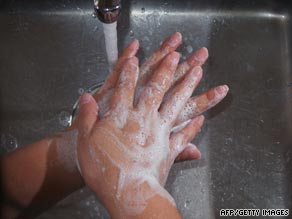
Men less likely than women to wash hands properly
http://www.cnn.com/2009/HEALTH/10/16/hand.washing.study/<!-- google_ad_section_end --><!--endclickprintinclude-->
<!--startclickprintinclude-->
  • Story Highlights<!-- google_ad_section_start -->
  • A study finds that the majority of women use soap after using the bathroom
  • Men often need to hear a disgust-invoking reminders to turn on the tap
  • Study was released on Global Handwashing Day
  • Unclean hands spread diseases from swine flu to intestinal worms<!-- google_ad_section_end -->
<!--endclickprintinclude-->

<!--startclickprintinclude-->updated 12:52 p.m. EDT, Fri October 16, 2009


corner_dg_BL.gif

corner_dg_TL.gif

<!-- google_ad_section_start --><!-- CONTENT --><!-- REAP --><!-- PURGE --><!-- KEEP --><!--startclickprintinclude--><!--startclickprintexclude--><!--endclickprintexclude-->By Claire Barthelemy
For CNN
<!--startclickprintexclude-->
text_size.gif

txt_minus.gif
txt_minus_dn_.gif

txt_plus.gif
txt_plus_dn.gif


<!--endclickprintexclude--><!--startclickprintexclude--><!--endclickprintexclude-->LONDON, England (CNN) -- Men are less likely to wash their hands properly than women, according to a new study.
<!--startclickprintexclude--><!-- PURGE: /2009/HEALTH/10/16/hand.washing.study/art.wash.afp.gi.jpg --><!-- KEEP --><!----><!--===========IMAGE============-->
art.wash.afp.gi.jpg
<!--===========/IMAGE===========--><!--===========CAPTION==========-->Swine flu is among many illnesses from pneumonia to intestinal worms that can be prevented with clean hands.<!--===========/CAPTION=========-->


corner_wire_BL.gif


<!-- /PURGE: /2009/HEALTH/10/16/hand.washing.study/art.wash.afp.gi.jpg --><!--endclickprintexclude-->While the majority of women use soap and water on their hands after using the bathroom, men often need blunt reminders to lather up, according to research on hygiene habits conducted by London School of Hygiene & Tropical Medicine.
The study, released on Global Handwashing Day, October 15, used online sensors to record how much soap was used by 250,000 people after they had used the toilet.
The results revealed a large discrepancy between the sexes: only 32 percent of men used soap compared with 64 percent of women.
Dr. Val Curtis, one of the authors of the study, thinks our activities in the toilet could explain the disparity.
"Some of the men that were included in the study were only urinating," Curtis, Director of the Hygiene Center at the London School of Hygiene and Tropical Medicine told CNN. "That's probably why they think they don't need to wash their hands even if they should."
<!--startclickprintexclude--><!-- KEEP -->
corner_wire_TL.gif

Vital Signs
tztv.vitalblurb.jpg

Each month CNN's Dr. Sanjay Gupta brings viewers health stories from around the world.

1.gif


corner_wire_BL.gif


<!--endclickprintexclude-->Participants were shown a variety of messages encouraging hand washing when they entered the study bathrooms.
While women responded to gentle reminders like "Water doesn't kill germs, soap does," men often only washed their hands after reading explicit signs like "Soap it off or eat it later," researchers observed.
"We are really puzzled about this and can't really explain it," said Curtis, who surmised that women were more likely to have internalized these messages already.
"The emotion of disgust really works to get people to change their hygiene habits," she added. The threat of social embarrassment is also a potent encouragement, researchers found.
The question, "Is the person next to you washing with soap?" turned out to be the most convincing message for both men and women. "If they think other people are watching them, then they are more likely to wash hands," Curtis concluded.
The spread of swine flu has helped increase hand washing, according to Curtis, although the positive effects are slowly wearing off. "People are not so worried about it anymore," she said.

Swine flu is among many illnesses from pneumonia to intestinal worms that can be prevented with clean hands. <!--startclickprintexclude-->Share this on:
 
Re: eye makeup

According to this article http://www.cnn.com/2012/11/14/opinion/china-challenges-one-child-brooks, it gives the 2011 ratio of men to women in China as being 51.9% male to 48.1 female (citing the United Nations Development Program as the source for those figures.)

So that doesn't help answer the question of why the high ratio of men to women who were infected. Here are the stats for the biggest groups, taken from the FT list of patients. Have we ever looked at these ratios for other types of flu?

Shanghai: 21 men, 7 women, 2 children, 2 unknown
Jiangsu: 20 men, 8 women
Zhejiang: 30 men, 17 women
 
Re: eye makeup

new CDC study:
> Because conjunctivitis in humans has been reported with other H7 viruses,
> the team inoculated the eyes of mice and ferrets. Though they didn't find
> consistent virus replication in ocular tissue in mice, they did detect nasal
> H7N9 virus titers in the animals 3 to 6 days after eye inoculation.
> They said the finding suggests that although H7N9 may not maintain
> the ocular tropism of other H7 viruses, it is capable of using the eye as
> an entry for respiratory infections.

I still have seen no explanation for the unusual age and gender
specifics of H7N9
 
Back
Top