• FluTrackers.com Inc. does not provide medical advice. Information on this web site is collected from various internet resources, and the FluTrackers board of directors makes no warranty to the safety, efficacy, correctness or completeness of the information posted on this site by any author or poster. The information collated here is for instructional and/or discussion purposes only and is NOT intended to diagnose or treat any disease, illness, or other medical condition. Every individual reader or poster should seek advice from their personal physician/healthcare practitioner before considering or using any interventions that are discussed on this website. By continuing to access this website you agree to consult your personal physican before using any interventions posted on this website, and you agree to hold harmless FluTrackers.com Inc., the board of directors, the members, and all authors and posters for any effects from use of any medication, supplement, vitamin or other substance, device, intervention, etc. mentioned in posts on this website, or other internet venues referenced in posts on this website.
  • We are not asking for any donations. Do not donate to any entity who says they are raising funds for us.

Equatorial Guinea: Marburg Virus Disease outbreak confirmed - February 10, 2023+ - approximately 40 confirmed/probable cases (35 fatal) - Outbreak en

Marburg virus disease - Equatorial Guinea

25 February 2023

Situation at a glance

On 7 February 2023, the Ministry of Health and Social Welfare of Equatorial Guinea reported the deaths of a number of individuals with suspected hemorrhagic fever.

On 12 February 2023, one sample was confirmed positive for Marburg virus by real-time polymerase chain reaction (RT-PCR), at the Institute Pasteur in Dakar, Senegal.

Investigations are ongoing to find additional cases. WHO is supporting the response by strengthening contact tracing, case management, infection prevention and control, laboratory, risk communication and community engagement.

WHO assesses the risk posed by the outbreak as high at the national level, moderate at the regional level and low at the global level.

Description of the situation

This is the first Marburg virus disease (MVD) outbreak reported in Equatorial Guinea.

On 7 February 2023, the Ministry of Health and Social Welfare of Equatorial Guinea reported at least eight deaths that occurred between 7 January and 7 February 2023, in two villages located in the district of Nsock Nsomo, eastern province of Kie-Ntem, Río Muni Region. According to the ongoing epidemiological investigation, the cases presented with fever, followed by weakness, vomiting, and blood-stained diarrhoea; two cases also presented with skin lesions and otorrhagia (bleeding from the ear).

On 9 February 2023, eight blood samples were collected from contacts and sent to the Centre Interdisciplinaire de Recherches Médicales de Franceville (CIRMF) in Gabon, where they tested negative for both Ebola and Marburg viruses by real-time polymerase chain reaction (RT-PCR).

An additional eight blood samples were collected from other contacts and sent to the Institute Pasteur in Dakar, Senegal, on 12 February 2023. One of these samples was taken from a suspected case that was confirmed positive for Marburg virus by RT-PCR. This case presented with fever, non-bloody vomiting, bloody diarrhoea, and convulsions and died on 10 February 2023 at Ebebiyin District Hospital. The case also had epidemiological links to four deceased cases from one of the villages in Nsoc-Nsomo district.

As of 21 February 2023, the cumulative number of cases is nine, including one confirmed case, four probable cases and four suspected cases. All the cases have died, one in a health facility and the other eight in the community. There are no cases among healthcare workers. Thirty-four contacts are currently under follow-up.

Epidemiology of Marburg virus disease

Marburg virus is the causative agent of Marburg virus disease (MVD), which has a case-fatality ratio of up to 88%. Marburg virus disease was initially detected in 1967 after simultaneous outbreaks in Marburg and Frankfurt in Germany, and in Belgrade, Serbia.

Rousettus aegyptiacus fruit bats are considered natural hosts for Marburg virus, from which the virus is then transmitted to people.

Marburg spreads through human-to-human transmission via direct contact (through broken skin or mucous membranes) with the blood, secretions, organs or other bodily fluids of infected people, and with surfaces and materials (e.g. bedding, clothing) contaminated with these fluids. Healthcare workers have previously been infected while treating patients with suspected or confirmed MVD. Burial ceremonies that involve direct contact with the body of the deceased can also contribute to the transmission of Marburg.

The incubation period varies from two to 21 days. Illness caused by Marburg virus begins abruptly, with high fever, severe headache and severe malaise. Severe watery diarrhoea, abdominal pain and cramping, nausea and vomiting can begin on the third day. Severe haemorrhagic manifestations appear between five and seven days from symptoms onset, and fatal cases usually have some form of bleeding, often from multiple areas. In fatal cases, death occurs most often between eight and nine days after symptom onset, usually preceded by severe blood loss and shock.

In the early course of the disease, the clinical diagnosis of MVD is difficult to distinguish from many other tropical febrile illnesses due to the similarities in the clinical symptoms. Other viral haemorrhagic fevers need to be excluded, including Ebola virus disease, as well as malaria, typhoid fever, leptospirosis, rickettsial infections, and plague. Laboratory confirmation can be made by different tests, such as antibody-capture enzyme-linked immunosorbent assay (ELISA), antigen-capture detection tests, serum neutralization test, reverse transcriptase polymerase chain reaction (RT-PCR) assay, electron microscopy, and virus isolation by cell culture.

Although no vaccines or antiviral treatments are approved to treat the virus, supportive care – rehydration with oral or intravenous fluids – and treatment of specific symptoms improve survival. A range of potential treatments are being evaluated, including blood products, immune therapies, and drug therapies.

This is the first time that Equatorial Guinea has reported an outbreak of MVD. The most recently reported outbreak of MVD was in Ghana in 2022 (three confirmed cases). Other MVD outbreaks have been previously reported in Guinea (2021), Uganda (2017, 2014, 2012, 2007), Angola (2004-2005), the Democratic Republic of the Congo (1998 and 2000), Kenya (1990, 1987, 1980) and South Africa (1975).

Public health response
  • In-depth epidemiological investigations are underway to determine the source of the outbreak.
  • National teams have been deployed to the affected districts for active case finding, contact tracing, isolating and providing medical care to cases.
  • WHO has deployed experts in epidemiology, case management, infection prevention, laboratory and risk communication to support national response efforts and ensure community engagement.
  • WHO is also facilitating the shipment of tents, materials for sample collection and analysis, and a viral haemorrhagic fever kit including personal protective equipment for 500 health workers.
  • WHO is supporting the transportation of samples to laboratories in Senegal and Gabon as plans are underway to set up laboratory facilities in-country.
WHO risk assessment


Equatorial Guinea is facing an outbreak of MVD for the first time and the country's capacity to manage the outbreak is insufficient.

Based on available information, all nine deceased cases were in contact with a relative with the same symptoms or participated in a burial of a person with symptoms compatible with MVD. At this stage it cannot be ruled out that all MVD cases have been identified, therefore there could be transmission chains that have not been tracked. To date, most of the contacts of the nine deceased cases have not been identified.

It should also be noted that with the exception of one case who died in a health facility, the other eight died in the community and their burial conditions are unknown.

Cross-border population movements are frequent, and the borders are very porous, between Ebebiyin and Nsock Nsomo districts (Equatorial Guinea), Cameroon and Gabon. This constitutes a risk of cross-border spread.

Considering the above described scenario, the risk is considered high at the national level, moderate at the regional level and low at the global level.


WHO advice


Marburg virus disease outbreak control relies on using a range of interventions, namely case management, surveillance including contact tracing, a good laboratory service, infection prevention and control including safe and dignified burials, and social mobilization. Community engagement is key to successfully controlling MVD outbreaks. Raising awareness of risk factors for Marburg infection and protective measures that individuals can take is an effective way to reduce human transmission.

Communities affected by Marburg should make efforts to ensure that the population is well informed, both about the nature of the disease itself and about necessary outbreak containment measures.

Outbreak containment measures include prompt, safe and dignified burial of the deceased cases, identifying people who may have been in contact with someone infected with Marburg and monitoring their health for 21 days, isolating and providing care to confirmed patients and maintaining good hygiene and a clean environment.

Healthcare workers caring for patients with or suspected of MVD should apply additional infection control measures in addition to standard precautions to avoid contact with patients’ blood and body fluids and with surfaces and objects contaminated.

WHO recommends that male survivors of MVD practice safer sex and hygiene for 12 months from onset of symptoms or until their semen twice tests negative for Marburg virus. Contact with body fluids should be avoided and washing with soap and water is recommended. WHO does not recommend isolation of male or female convalescent patients whose blood has tested negative for Marburg virus.

WHO advises against any restrictions on travel and/or trade to Equatorial Guinea based on available information for the current outbreak.

Further information
...


https://www.who.int/emergencies/disease-outbreak-news/item/2023-DON444
 
Death Toll in Equatorial Guinea Marburg Outbreak Rises to 11

February 28, 2023 7:47 AM
Agence France-Presse

Two more people in Equatorial Guinea have died of Marburg hemorrhagic fever, a cousin of the Ebola virus, bringing the toll of fatalities to 11, the authorities say.

"Two days ago, the monitoring system recorded eight notifications, including the deaths of two people with symptoms of the disease," Health Minister Mitoha Ondo'o Ayekaba said in a statement issued late Tuesday.

Work is underway "to strengthen assessment of the spread of the epidemic," said the statement, read on national television.

"Forty-eight contact cases have been documented, four of whom have developed symptoms, and three who have been quarantined in hospital," it added.

...
https://www.voanews.com/a/death-toll...1/6982164.html
-------------------------------------------------------

Guinean Health@GuineaSalud

📊FHM Update #GE 48 contacts, 3 with mild symptoms in hospital isolation, 1 in the community.
📈2 deceased with symptoms suggestive of FHM, without laboratory confirmation, 15 samples taken from suspected cases.
ℹ️For more information:👉http://bit.ly/41H7L22


FqAX2LnWcAEiTgf


4:15 PM · Feb 27, 2023

https://twitter.com/GuineaSalud/stat...30789278695424
 
Translation Google

Marburg virus: 48 contacts, 4 symptomatic, 3 in isolation and two deceased

Data provided by the Minister of Health and Social Welfare, Mitoha Ondó Ayecaba.


By Belgium Nvó Acaba February 28, 2023in Health

On February 13, 2023, at an official press conference, the Minister of Health and Social Welfare, Mitoha Ondó Ayecaba, announced for the first time the appearance of the Marburg virus in the province of Kie-Ntem. After the confirmation of a positive case of the 16 samples that were sent to two international laboratories; and complying with the provisions of the International Health Regulations (RSI).

This led, according to the report read yesterday Monday on the public channel TVGE, to an immediate response and activation of the National Technical Committee for Health Emergencies and, in parallel, the Political Committee for Emergencies, both with the responsibility of implementing packages of concrete measures to contain the epidemic in Kie-Ntem province and Mongomo district.

“It should be noted that at the same time we began to receive immediate support from the different partners of the United Nations agencies (WHO and UNICEF), the Cuban Medical Brigade, Africa CDC, the Red Cross, CDC Atlanta and USAID, who have been in the accompaniment technical and logistical in the affected areas", stressed the minister.

Mitoha Ondó Ayecaba has also reported that the National Emergency Political Committee, chaired by the Vice President of the Republic, summoned all the departments involved to guarantee integrity in the response, and preserve the well-being of the affected population, not only in the area public health, but also psychosocial, with food, water and personal hygiene provisions that will be distributed in the affected towns every 2 weeks, during the isolation period.

The regular supply to wholesale warehouses, the supply of gas and fuel to pumps, the supply to banks that operate in confined areas, and the necessary coordination to guarantee the commercialization of local products have been guaranteed, thanks to the establishment of a strict protocol that offers all the security guarantees to prevent any spread of the disease beyond the affected areas. All the aforementioned measures have been adopted, under the protection of the principles of “no regret policy and none behind”.

The work in the field, according to the report read by the minister, has been gaining in problem-solving capacity with the experience of the experts who have been joining the work teams, especially in the field of epidemiology; and that has allowed to expand the depth of the epidemiological investigations still in progress.

Health has had the experience of Dr. Pavlin Boris, head of epidemiological surveillance in the emergency program, as well as Dr. Pierre Formenty, head of the hemorrhagic fever program, Dr. Janet Díaz, head of the case management unit, all from WHO headquarters in Geneva. At the same time, Health relies on the vast experience of Dr. Marie Roseline Damycka Belizaire, a community medicine specialist, epidemiologist and public health expert, with 17 years of experience coordinating responses to major public health emergencies, currently responsible for emergency preparedness and RSI in the Central African Republic; Dr. Julienne Anoko, anthropologist and regional head of risk communication at WHO AFRO, as well as an important group of epidemiologists from CDC Atlanta and Africa CDC.

"These actions have resulted in the reinforcement of epidemiological surveillance, 15 samples of suspected cases have been taken in the country, and one suspected case identified in Spain, whose result was negative on the first examination, despite handling information that the The patient had no link here in Equatorial Guinea with the area in isolation, even so, we have had constant exchanges with the National Center for Microbiology of the Carlos III Health Institute, to take immediate action in accordance with the International Health Regulations. Therefore, we thank the authorities of the National Center for Microbiology of the Carlos III Institute of Spain, the fluid communication that has allowed the clarification of this case until its elimination as a possible suspicious case.

In this epidemic, a suspected case is considered to be any living or dead person who presents three (3) of the symptoms under surveillance and who is in the risk area, or contact with probable or confirmed cases who presents a single symptom, all the natural deaths that occur suddenly and unexplained in the community, and anyone with unexplained bleeding.

Currently, according to Health, there are 48 contacts of which four (4) have developed symptoms under surveillance; three (3) are in hospital isolation with a favorable evolution and one (1) in the community that has been reported between yesterday and today, in the course of evaluation for transfer to the hospital.

The alert system has been activated three days ago and has received eight (8) notifications, among which two (2) died with symptoms consistent with those of the disease, from which samples were taken, which shows the work in progress , which will allow a better dimensioning of the extent of the epidemic.

"We trust that in the next few days the confined towns that have not registered suspicious cases will be able to lift the mobility restrictions and return to normality without even lifting the restrictions placed in each district."

The National Technical Committee for Health Emergencies traveled to the Province of Kie-Ntem headed by the Minister of Health and Social Welfare, to coordinate and reinforce the epidemic management system with the creation and implementation of a Multisectoral Command Center with international organizations.

Solid integrated interventions are being carried out in the field of epidemiological surveillance, case management, infection prevention and control, risk communication and social mobilization, and health logistics.

Teams with qualified human resources have been strengthened at the level of institutional and community isolations; suits and 2 provisional treatment centers have been set up within the hospital structure itself; prevention material and medicines have been guaranteed in the quantities necessary for the response.

Structural rearrangement actions are carried out in institutional isolations with the aim of ensuring compliance with the flowchart and the epidemiological criteria established for these services; without affecting the normal operation of essential services.

A field laboratory is in the process of being implemented with the help of the CDC Atlanta, which will allow rapid analysis of the samples and be able to act more promptly, and have more elements to assess the scope of the crisis. Today, with the collaboration of CDC Africa experts, it is planned to begin in Malabo the calibration of the equipment for the analysis of samples of viral hemorrhagic fevers in one of the units of the national public health laboratory of Baney, located in the city of Sipopo.

« The cases mentioned also inform us that the MARBURG virus is not a virus from Equatorial Guinea, nor even from Africa, as certain international and sensationalist media have tried to convey . We therefore appeal to the restraint, ethics and professionalism of the media when it comes to giving media coverage to this type of crisis, as it is a disease with a high impact at the international public health level.

Our Government, together with the Health System, have acted in a balanced manner, in accordance with the parameters set forth in Annex 2 of the IHR, and at the height of the risk represented by the presence of the Marburg Virus in our country, due to the high lethality of this disease. which oscillates between 24 and 88%, the non-existence of a vaccine for immunization, and related specific treatments.

We consider it appropriate to highlight that a specific area in the country has been declared an epidemic and with only 1 confirmed case, the rest of the national territory continues in total normality, without socioeconomic limitations in daily life, or restrictions on international or national flights .

As observed in the epidemiological data offered, we have control indicators, and the necessary medical and logistical resources have been made available to the response to put an end to it as soon as possible. Insisting that it is safe to leave and travel to the country, there are therefore no epidemiological reasons currently in the rest of the country, except for areas with restricted movement, that suggest otherwise," the minister concluded.

https://ahoraeg.com/ciencia-y-salud...ntomaticos-3-en-aislamiento-y-dos-fallecidos/
 
Untitled-4.png


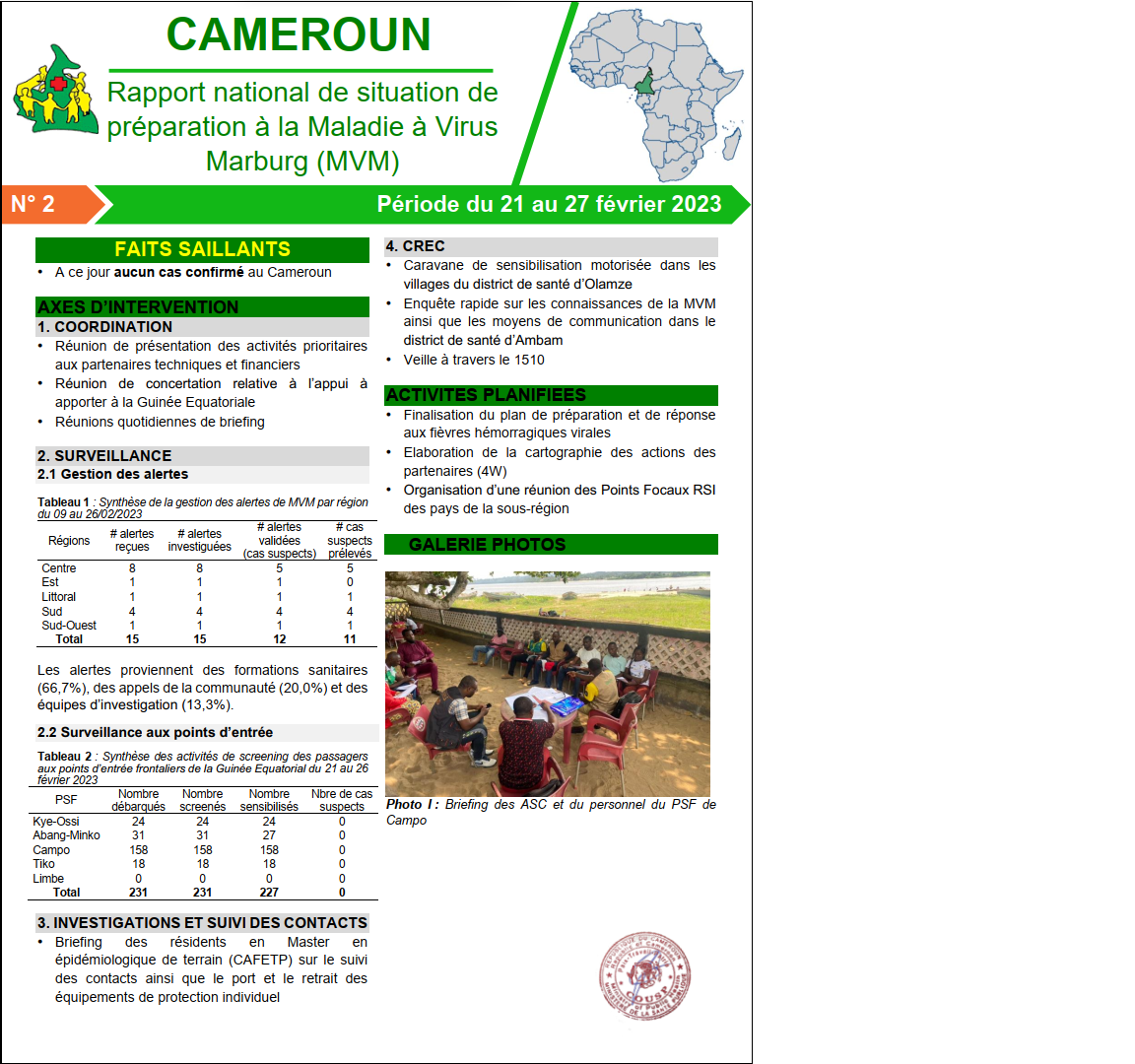
Marburg Virus Disease (MVM) Situation Report No. 2

HIGHLIGHTS

• To date no confirmed cases in Cameroon

AREAS OF INTERVENTION
1. COORDINATION
• Meeting to present priority activities to technical and financial partners
• Consultation meeting on the support to be provided to Equatorial Guinea
• Daily briefing meetings

https://www.ccousp.cm/download/rappo...us-marburgmvm/
 
Translation Google

Posted 13 hours ago

The Minister of Health denounces the manipulation of information from the French newspaper Le Figaro on the number of deaths from the Marburg virus in Equatorial Guinea

He has done so through a statement and has said that Equatorial Guinea appeals to informative prudence in the publication of information related to Marburg hemorrhagic fever


By
Amelia Santander Waiter
Royal EG MagazineHealth

The Minister of Health and Social Welfare Mitoha Ondo'o Ayekaba, through a statement, has denounced the misuse and manipulation of the official death figures related to the Marburg virus in Equatorial Guinea.

This complaint arises from the erroneous data recently published by the French newspaper Le Figaro regarding the number of deaths from this hemorrhagic fever that the Minister has considered an attempt to destabilize and create panic in the Equatoguinean population.

Mitoha Ondo'o Ayecaba has called on all the national and international media to make good use of the information and to fulfill their responsibility to report faithfully and objectively on the reality regarding the epidemiological situation in the country.

According to the second official update statement issued by the MINSABS of Equatorial Guinea on February 27, 2023, and which was read by the head of the branch, Equatorial Guinea reported a balance of 48 contacts, 3 with mild symptoms in isolation and with a favorable evolution, 1 in the community, and 2 deceased with symptoms suggestive of Marburg without laboratory confirmation and about 15 samples taken from possible suspected cases.

Data very contrary to those issued by this French outlet, which includes a total of 11 deaths in the country due to this hemorrhagic fever, while only nine have currently been recorded, according to the Equatorial Guinean Ministry of Health.

The head of the national health sector has responded by clarifying that the other two additional deaths to which the French newspaper Le Figaro alludes are unrelated to the Marburg virus, but to people who had their residence in areas considered to be the epicenter of this fever. hemorrhagic in the country.

https://realequatorialguinea.com/sa...s-por-el-virus-marburgo-en-guinea-ecuatorial/
 
U.S. Embassy Malabo 🇺🇸🇬🇶@USEmbassyEG

March 1, a team of @CDCgov established a mobile laboratory in #Ebibeyin that will allow understanding of the magnitude of the outbreak. Testing is like a camera that allows you to see the bigger picture of the outbreak so you can implement the most effective response. #USinGE #Marburg

FqM_5lVWcAM_zxZ


3:02 AM · Mar 2, 2023

-------------------------------------------------

Translation Google

Posted 5 hours ago

Equatorial Guinea already has a laboratory in Ebebiyin to process samples of hemorrhagic fevers, including Marburg

An initiative of the Ministry of Health and Social Welfare in collaboration with CDC Atlanta to strengthen the health system. This will stop depending on the results of foreign laboratories.

By
Feliciano Obiang
Royal EG MagazineHealth

The district of Ebebiyin, capital of the Province of Kie Ntem in the Continental Region of the country, already has a field laboratory that has been installed in the provincial hospital for the diagnosis of hemorrhagic fevers, including the one in Marburg. Representatives of the Ministry of Health and Social Welfare have arrived at these facilities this morning to find out their status.

The initiative to install this infrastructure comes from the Equatorial Guinea health department in collaboration with the Center for Disease Control and Prevention of Atlanta, United States.

The aim of this laboratory is not only to strengthen the national health system, but also to achieve better management of the "Marburg epidemic". The reinforcement is not only in the field of diagnosis, but also teaching, allowing the training of laboratory technicians in handling equipment, processing samples and compliance with biosafety standards for these specific processes.

This laboratory has an estimated capacity to carry out 16 daily samples and the possibility of not only diagnosing Marburg hemorrhagic fever, but also almost all hemorrhagic fevers. With these facilities, the autonomy of the diagnostic capacity of the country is achieved, something that will allow us to act more quickly and not have to depend on the results of foreign laboratories.

The Equatoguinean Government has thanked CDC Atlanta for this collaboration, which once again reaffirms the cooperation between the United States and Equatorial Guinea.

https://realequatorialguinea.com/sa...fiebres-hemorragicas-incluida-la-de-marburgo/
 
Guinean Health@GuineaSalud

The Minister of MINSABS visits the field laboratory installed in Ebebeyin with the collaboration of @Central_RCC
, to witness the simulation of sample processing, by Equatoguinean personnel trained for this purpose.


FqymyEyWAAsjGjM


FqymyE3WAAI9ev7


FqymyE0XoAASQIh

...

10:15 AM · Mar 9, 2023
 
Gabon - Anticipatory actions for Marburg risk - DREF Application (MDRGA009)

Format Situation Report Source
Posted 9 Mar 2023 Originally published 9 Mar 2023 Origin View original Attachments
Description of the Event

What is expected to happen?

In sitrep N°2 published on February 25, 2023, the authorities mentioned that since the alert of February 13, 2023, confirming a positive sample for Marburg disease, more than 163 people have crossed the land border between the 3 countries: Equatorial Guinea, Cameroon, Gabon. It should be noted that suspected cases have been detected in the two neighboring countries of Gabon. These official travel reports, therefore, remain of concern and support the additional actions undertaken by the Gabonese Red Cross (CRG) to strengthen preventive measures, the preparation of the NS and the community alert system in contribution to the mandate of the operational unit for Response to Epidemics (CORE).

On February 10, 2023, the Government of Equatorial Guinea reported the death of nine (9) people presenting the symptoms of hemorrhagic fever. On February 12, a sample of suspected cases was declared positive for Marburg disease and the WHO published confirmation of the epidemic in Equatorial Guinea on February 13, while Cameroon has continued to record suspected cases since February 9, although none have been tested positive so far.

As of 02.03.2023, triangulated information from the field reported certain contact cases of the various confirmed cases not yet traced in Equatorial Guinea.

Why your National Society is acting now and what criteria is used to launch this operation.

Authorities, health services, and health actors in the country are on alert due to this situation. This includes the Gabonese Red Cross which works in coordination with the Ministry of Health. In an official press release on February 15, 2023, the Government through the Minister of Health and Social Affairs announced the existence of a high risk of spread of the disease on Gabonese territory and created an Operational coordination unit for the response to the epidemic (CORE). The major risk for the spread of the disease in the country is the multiple entry points at the borders with Cameroon and Equatorial Guinea. There are many uncontrolled population movements between these different countries, making the risk of importing the disease very high. The Gabonese Red Cross, in its status as an auxiliary to the authorities in the humanitarian field, must support the its Government in the preventive measures put in place and the state of alert.

The WHO report of February 26, 2023, assesses the risk posed by the Marburg virus disease outbreak as regional- ly moderate. Source (https://www.who.int/emergencies/dise...em/2023-DON444). However, the risk remains and the high frequency of movements between the 3 countries creates a dynamic that is essential to monitor. At the provincial level, the level of alert declared by the Government remains the same. The mission of the CORE, which the NS is a part of, is to contribute to this mission in priority action mandated by the Government

Scope and Scale

The province of Kie-Ntem, the source of the disease, is located in the southeast of Equatorial Guinea. Gabon shares borders with Equatorial Guinea and Cameroon – both of which have recorded suspected cases. Making this area a potentially high-risk area at the sub-regional level.
  • The Province of Kie-Ntem which borders Gabon to the East already has a cumulative number of 9 reported MVD cases, all fatal, and several contacts cases, according to the official reports of the Guinean Government as of February 27, 2023.
  • The Province of WOLEU-NTEM in Gabon also shares a border with Cameroon in the North.
The junction zone between the Kie-Ntem region in Equatorial Guinea, the South region in Cameroon and the Gabonese borders are a gateway to the Woleu-Ntem province for populations from these two countries.

The entry points of the populations coming from these two neighboring countries are the MEDZENG village via the city of Oyem and the MEBOO village via the city of BITAM. The extreme porosity of the borders between Equatorial Guinea and Gabon increases the flow of populations between the two countries and is likely to accelerate the spread of the disease. The control and test posts at the border cannot cover the extent of the border and the temperature tests remain limited given the incubation time of the virus. According to Sitrep N°2, more than 163 people went Gabon - Anticipatory actions for Marburg risk back and forth between Gabon and Cameroon or Gabon and Equatorial Guinea akthough the borders were locked. This considerably increases the risk of importation of the disease in these countries in general and in the province of WOLEU NTEM which has more than 608,104 people. The overall population of this region bordering Equatorial Guinea being at immediate risk.

The mortality rate of the virus, the similarity of certain symptoms with other tropical diseases and the incubation time gives room for a considerable risk of rapid expansion in the country in the event of detection or confirmation of a case. The average fatality rate for MVD cases is around 50%, varying from 24% to 88% during the previous epidemic, depending on the viral strain and the clinical management of the cases. The incubation period ranges from 2 to 21 days and in fatal cases, death usually occurs within days 8 and 9, following massive bleeding and shock. Despite the few measures taken by the Gabonese government, the extreme porosity of the borders, and the family and friendly ties between the populations living on both sides of these borders, an exponential spread of the virus through contact cases could occur.


https://reliefweb.int/report/gabon/gabon-anticipatory-actions-marburg-risk-dref-application-mdrga009
 
WEEKLY BULLETIN ON OUTBREAKS
AND OTHER EMERGENCIES

Week 10: 27 February to 5 March 2023
Data as reported by: 17:00; 5 March 2023

...

Marburg Virus Disease Equatorial Guinea

11 Cases
11 Deaths
100% CFR


EVENT DESCRIPTION

There has been no other confirmed case of Marburg Virus
Disease (MVD) reported in Equatorial Guinea since 13
February 2023 when the outbreak was declared officially
in Kie-Ntem province, Continental Region of the country.
However, two additional suspected deaths were reported
in the past week from Mongomo District in Wele-Nzas
province.

Since the official declaration of the outbreak until 25
February 2023, a total of 11 epidemiologically linked
cases including one confirmed case have been reported;
all the reported cases died giving the case fatality ratio
(CFR) of 100%.

The alert mechanism put in place in the affected districts
was able to report and investigate eight alerts, of which,
two are suspected deaths whose samples have been
collected.

Furthermore, a total of 48 contacts have been listed so
far and are under close monitoring, among them four
became suspected cases and blood samples were
collected from them. Currently, a total of 15 samples are
waiting to be tested.

As of 28 February 2023, while investigations and final
case classification are still ongoing in the field, the
available information shows the following affected areas
so far: two districts (Ebebiyin: and Nsok-Nzomo) from
Kie-Ntem province and one district Mongomofrom WeleNzas province.

PUBLIC HEALTH ACTIONS

The national technical committee of health
emergencies under the Minister of Health and Social
welfare leadership organized a mission to Kie-Ntem
province in the past week to reinforce the outbreak
response coordination.

A field laboratory was setup at Ebebeyin district
hospital for diagnosis of hemorrhagic fever diseases
including MVD.

Sample collection continued for each identified
suspected case.

In-depth epidemiological investigations are underway
to establish the chain of transmission and determine
the source of the outbreak along with other outbreak
response activities

Readiness activities in the neighboring countries
(Gabon and Cameroon) are being reinforced.

SITUATION INTERPRETATION

Although only one confirmed case has been reported
so far for the MVD outbreak in Equatorial Guinea,
vigilance should be maintained, and response activities
intensified. With a total of 11 epidemiologically linked
deaths reported, it is ranked as the third most deadly
MVD outbreak in recent history.
The highest number of
cases and deaths reported to date for a MVD outbreak is
374 cases and 329 deaths for Angola in 2005.

https://apps.who.int/iris/bitstream/...0205032023.pdf
 
U.S. Embassy in Equatorial Guinea

Health Alert: U.S. Embassy Malabo


Home | News & Events | Health Alert: U.S. Embassy Malabo
Location: Equatorial Guinea

Event: As of the morning of March 10, there have been no new confirmed cases of Marburg virus disease (MVD) in Equatorial Guinea (EG).

The U.S. Centers for Disease Control and Prevention (CDC) team in the Kie-Ntem province continues to provide training in testing methods to medical practitioners from the EG Ministry of Health and Social Welfare (MINSABS). As testing increases in the coming days, it is possible that the number of identified existing cases will also increase. Announcements of any new confirmed cases will come directly from MINSABS, and the U.S. Embassy will share this information via alerts.

The World Health Organization (WHO) and CDC continue to support MINSABS’s contact tracing efforts to identify and monitor the health status of those who have been in contact with confirmed or suspected cases.

The Kie-Ntem province in the mainland region of EG remains under a general quarantine, and travel to and from the province is not allowed, except by medical workers.

The U.S. Embassy will continue to send out regular updates to U.S. citizens living in or traveling to EG until health officials declare an end to the crisis. These alerts will also be posted to the Embassy’s website here. More information on MVD can be found on the CDC’s website.

...
https://gq.usembassy.gov/health-alert-u-s-embassy-malabo-3/
 
Translation Google

Africa CDC: Marburg outbreak in Equatorial Guinea "is under control"

EQUATORIAL GUINEA MARBURG

Nairobi, Mar 16 (EFE).- The African Union (AU) Centers for Disease Control and Prevention (Africa CDC) assured today that the epidemic of the Marburg virus disease, similar to to that of Ebola, in Equatorial Guinea.

AGENCIES
03/16/2023 16:45

Nairobi, Mar 16 (EFE).- The African Union (AU) Centers for Disease Control and Prevention (Africa CDC) assured today that the epidemic of the Marburg virus disease, similar to to that of Ebola, in Equatorial Guinea.

"The outbreak of the Marburg disease in Equatorial Guinea is being controlled," said the acting director of Africa CDC, Ahmed Ogwell, in a telematic press conference.

Ogwell urged the population, both in Equatorial Guinea and in neighboring Gabon and Cameroon, to follow the authorities' guidelines to "contain this current outbreak."

The Kenyan epidemiologist admitted that, when the outbreak was declared last month, "there was no laboratory capacity" to analyze samples in the area affected by the epidemic and it is a "challenge" to control hemorrhagic fevers without such means.

"We had a situation here where it was a very rural community that was affected and we are working around the clock with the government of Equatorial Guinea to ensure that laboratory capacity is on the ground," he stressed.

"We are trying to avoid the problem of transporting samples over long distances. So we will get that laboratory capacity in the shortest possible time now that the Equatorial Guinean government has created the conditions for that to happen," Ogwell added.

Since last day 2, he specified, "no new cases or confirmed deaths have been reported" due to the disease.

On February 28, the Ministry of Health of Equatorial Guinea reported on its Twitter social network account the death of two other people with symptoms of the Marburg virus disease.

Equatorial Guinea declared on February 13 an outbreak of the Marburg virus disease, which, until the 21st of that month, had left at least nine accumulated cases, including one confirmed, four probable and four suspected, according to the data collected. by the World Health Organization (WHO).

These infections were detected in the province of Kié-Ntem, in the west of the continental region of Equatorial Guinea, and caused the death of those infected.

Marburg is a highly infectious viral hemorrhagic fever from the same family as the better-known Ebola virus disease.

Before the Equatorial Guinea epidemic, the most recent outbreak of this disease was detected in Ghana in 2022 (three confirmed infections) and before that there were cases in Guinea-Conakry (2021), Uganda (2017, 2014, 2012 and 2007), Angola (2004-2005), the Democratic Republic of the Congo (1998 and 2000), Kenya (1990, 1987 and 1980) and South Africa (1975).

It is as deadly as Ebola and it is estimated that in Africa it has caused the death of more than 3,500 people.

Like Ebola, this virus causes sudden bleeding and can cause death in a few days, with an incubation period of 2-21 days and a mortality rate of up to 88%.

Fruit bats are the natural hosts of this virus, which when transmitted to humans can be transmitted through direct contact with fluids such as blood, saliva, vomit or urine.

The disease, for which there is no vaccine or specific treatment, was detected in 1967 in the German city of Marburg -the origin of its name- by laboratory technicians who were infected while investigating monkeys brought from Uganda. EFE

pa/rf

https://www.lavanguardia.com/vida/2...rolando-brote-marburgo-guinea-ecuatorial.html
 
Marburg virus disease - Equatorial Guinea

22 March 2023

Situation at a glance

Since the first Disease Outbreak News on this event was published on 25 February 2023, eight additional laboratory-confirmed cases of Marburg virus disease (MVD) have been reported in Equatorial Guinea. This brings the total to nine laboratory-confirmed cases and 20 probable cases since the declaration of the outbreak in February 2023. There are seven deaths among the laboratory confirmed, and all probable cases are dead. Of the eight new confirmed cases, two were reported from the province of Kié-Ntem, four from the Litoral, and two from Centre- Sur provinces. The areas reporting cases are about 150 kilometers apart, suggesting wider transmission of the virus.

WHO has deployed experts to support national response efforts and strengthen community engagement in the response.

MVD is a highly virulent disease that causes haemorrhagic fever, and is among the viral haemorrhagic fevers that require assessment under the International Health Regulations.

WHO assesses the risk posed by the outbreak as very high at the national level, moderate at the regional level, and low at the global level.

Description of the situation

On 7 February 2023, the Ministry of Health and Social Welfare of Equatorial Guinea reported at least eight suspected MVD deaths that occurred between 7 January and 7 February 2023, in two villages located in the district of Nsok Nsomo, in the eastern province of Kié-Ntem, Río Muni Region.

On 12 February 2023, eight blood samples were collected from contacts and sent to the Institute Pasteur in Dakar, Senegal, where one of these samples was confirmed positive for Marburg virus by real-time polymerase chain reaction (RT-PCR). This case presented with fever, vomiting, blood-stained diarrhoea, convulsions, and died on 10 February 2023 in a hospital. The case also had epidemiological links to four deceased suspected cases from one of the villages in Nsok-Nsomo district.

On 13 March 2023, samples from two additional individuals from Kié-Ntem province tested positive for MVD by RT-PCR performed at a mobile laboratory at the Regional Hospital of Ebibeyin. Another sample, obtained from a resident of Litoral province in the western part of the country, epidemiologically linked to a confirmed case in Kié-Ntem, tested positive for MVD on 15 March 2023 following RT-PCR performed by the same laboratory. The two provinces (Kié-Ntem and Litoral) are located in different parts of the country, about 150 kilometers apart. On 18 and 20 March three additional laboratory confirmed positive cases were reported from Litoral province. On 20 March two more laboratory confirmed cases were reported from Centre Sur province. The wide geographic distribution of cases and uncertain epidemiological links in Centre Sur province suggests the potential for undetected community spread of the virus.

Overall, since the beginning of the outbreak and as of 21 March, a cumulative number of nine confirmed and 20 probable cases have been recorded in Equatorial Guinea.

Epidemiology of Marburg virus disease

Marburg virus and the closely related Ravn virus are the causative agents of Marburg virus disease, which has a case-fatality ratio of up to 88%. Marburg virus disease was initially detected in 1967 after simultaneous outbreaks in Marburg and Frankfurt in Germany, and in Belgrade, Serbia. Rousettus aegyptiacus fruit bats are considered natural hosts for Marburg virus, from which the virus is then transmitted to people.

Marburg spreads between people via direct contact through broken skin or mucous membranes with the blood, secretions, organs or other bodily fluids of infected people, and with surfaces and materials such as bedding, clothing contaminated with these fluids. Healthcare workers have previously been infected while treating patients with suspected or confirmed MVD. Burial ceremonies that involve direct contact with the body of the deceased can also contribute to the transmission of Marburg.

The incubation period varies from two to 21 days. Illness caused by Marburg virus begins abruptly, with high fever, severe headache, and severe malaise. Severe watery diarrhoea, abdominal pain and cramping, nausea, and vomiting can begin on the third day. Severe haemorrhagic manifestations may appear between five and seven days from symptom onset, and fatal cases usually have some form of bleeding, often from multiple areas. In fatal cases, death occurs most often between eight and nine days after symptom onset, usually preceded by severe blood loss and shock.

In the early course of the disease, the clinical diagnosis of MVD is difficult to distinguish from many other tropical febrile illnesses due to the similarities in the clinical symptoms. Other viral haemorrhagic fevers need to be excluded, including Ebola virus disease, as well as malaria, typhoid fever, leptospirosis, rickettsial infections, and plague.

Laboratory confirmation is primarily made by RT-PCR. Other tests can be used such as antibody-capture enzyme-linked immunosorbent assay (ELISA), antigen-capture detection tests, serum neutralization test, electron microscopy, and virus isolation by cell culture.

Although no vaccines or antiviral treatments are approved to treat the virus, supportive care – rehydration with oral or intravenous fluids – and treatment of specific symptoms improve survival. A range of potential treatments are being evaluated, including blood products, immune therapies, and drug therapies.

This is the first time that Equatorial Guinea has reported an outbreak of MVD. The most recently reported outbreak of MVD was in Ghana in 2022 (where there were three confirmed cases). Other MVD outbreaks have been previously reported in Guinea (2021), Uganda (2017, 2014, 2012, 2007), Angola (2004-2005), the Democratic Republic of the Congo (1998 and 2000), Kenya (1990, 1987, 1980) and South Africa (1975).

Public health response
  • In-depth epidemiological investigations are ongoing to determine the source of the outbreak.
  • National teams have been deployed to the affected districts for active case finding, contact tracing, and clinical management of suspected cases.
  • WHO has deployed experts in epidemiology, case management, infection prevention and control (IPC), laboratory, and risk communication to support national response efforts and ensure community engagement.
  • WHO has shipped materials for sample collection and analysis, and viral haemorrhagic fever kits including personal protective equipment for 500 health workers.
  • WHO is supporting the training of national responders in surveillance, case management, IPC, safe and dignified burial (SDB), and risk communication and community engagement (RCCE).
  • The Government has activated the public health emergency operation center (PHEOC) at Ebibeyin and now in Bata under the leadership of the Minister of Health and the District Chief Medical Officer.
  • WHO is supporting ongoing community engagement activities to create awareness, share prevention information, and encourage reporting of alerts.
  • Alert systems have been established with the availability of a hotline.
WHO risk assessment

Equatorial Guinea is facing an outbreak of MVD for the first time while the country's capacity to manage the outbreak needs to be strengthened.

In addition to the one confirmed case reported in the Disease Outbreak News of 25 February, eight more individuals have tested positive for MVD, indicating that exposure to the virus may be more widespread.

All three affected provinces have international borders with Cameroon and Gabon. Cross-border population movements are frequent, and the borders are very porous. Although no MVD cases have been reported outside Equatorial Guinea the risk of international spread cannot be ruled out.

Considering the above-described situation, and based on newly available information since the last update, the geographical spread of the outbreak in Equatorial Guinea and the uncertain epidemiological links for some of the confirmed cases, the risk assessment is currently being reviewed, however, it is considered very high at the national level, high at sub-regional level, moderate at the regional level and low at the global level.

WHO advice


Marburg virus disease outbreak control relies on using a range of interventions, such as prompt isolation and case management; surveillance including active case search, case investigation and contact tracing; an optimal laboratory service; infection prevention and control, including prompt safe and dignified burial; and social mobilization – community engagement is key to successfully controlling MVD outbreaks. Raising awareness of risk factors for Marburg infection and protective measures that individuals can take is an effective way to reduce human transmission.

Healthcare workers caring for patients with confirmed or suspected MVD should apply additional IPC measures beyond standard precautions to avoid contact with patients’ blood and body fluids and with contaminated surfaces and objects.

WHO recommends that male survivors of MVD practice safer sex and hygiene for 12 months from onset of symptoms, or until their semen twice tests negative for the Marburg virus. Contact with body fluids should be avoided and washing with soap and water is recommended. WHO does not recommend isolation of male or female convalescent patients whose blood has tested negative for the Marburg virus.

Based on the available information and current risk assessment, WHO advises against any travel and trade restrictions in Equatorial Guinea.

Further information

https://www.who.int/emergencies/disease-outbreak-news/item/2023-DON449
 
The large geographic spread as well as the over 90% fatality rate for reported confirmed or probable cases suggest that cases have been missed. It seems additional resources will be needed to control this outbreak.

I have updated the title of this thread.
 
Source: https://www.ctvnews.ca/health/equatorial-guinea-confirms-8-new-cases-of-marburg-virus-1.6325561

Equatorial Guinea confirms 8 new cases of Marburg virus
Cara Anna
The Associated Press
Published March 23, 2023 10:28 a.m. EDT

NAIROBI, Kenya -

Equatorial Guinea has confirmed another eight cases of the "highly virulent" Marburg virus, a deadly hemorrhagic fever with no authorized vaccine or treatment.

The World Health Organization on Thursday said that brings the country's total number of cases to nine in the outbreak declared in mid-February...
 
First emergence of Marburg virus in Equatorial Guinea, 2023

Marburg virus
Mar 23
19h ago

mmdiagne

On February 7th, 2023, an alert was given by the Ministry of Health in the district of Kie Ntem province, in eastern Equatorial Guinea. Several patients presented with symptoms suggestive of hemorrhagic fever, and a mortality cluster (n=9 deaths) was finally reported. An additional eight blood samples were collected from other contacts and sent to the regional WHO reference center for arboviruses and hemorrhagic fever viruses at the Institut Pasteur de Dakar (IPD), Senegal.

On February 12th, 2023, the samples were received by IPD team to carry out the molecular diagnostic targeting several hemorrhagic fever viruses. One of the blood samples was taken from a suspected case that was confirmed positive for Marburg virus (MARV). The diagnostic result was communicated to the stakeholders less than one day after sample reception.

An amplicon-based sequencing approach was undertaken using new designed MARV-specific primers and a close to complete whole genome was obtained with 98.1% coverage (compared to the reference genome NC_001608). A Maximum-Likelihood (ML) analysis showed that MARV in Equatorial Guinea 2023 mainly groups with the strains isolated from fruit bats Rousettus aegyptiacus in Sierra-Leone in 2017 (98.45% nt identity with isolate SLAB3960; genbank accession number: MN258361.1) and 2018 (97.41% nt identity with isolate 1000Kasbat; gb accession number: MN187403.1), as shown in figure 1.

This is the first report of MARV human infection in Equatorial Guinea. Previous reports of MARV in Guinea-Conakry and Ghana highlighted how a virus could spread over large distances through bat migration with an enzootic life cycle before a spillover event [1,2]. Some fruit bats such as R. aegyptiacus have already been identified as potential MARV reservoir hosts following previous serological or molecular studies [3,4].

Both epidemiology and phylogenetic history argue for a zoonotic transmission event from a reservoir, presumably a bat.

On March 23rd, 2023, eight new cases were reported from individuals from Kié-Ntem, Centre Sur and Litoral provinces with uncertain epidemiological links suggesting potential undetected community spread [5]. Moreover, Tanzania confirmed its first-ever MARV cases two days ago [6].

...
https://virological.org/t/first-emer...uinea-2023/924
 
Health Alert: U.S. Embassy Malabo


Home | News & Events | Health Alert: U.S. Embassy Malabo

On March 22, the World Health Organization (WHO) released updated information regarding the Marburg virus disease (MVD) outbreak in Equatorial Guinea (EG). Based on this information, the U.S. Embassy is implementing a new, temporary policy under which official travel to the mainland region – including Bata – by Embassy employees is only permitted for mission-critical needs, such as support for the MVD response.

According to the WHO update, following the testing of suspected cases that began March 10, there have now been a total of nine laboratory-confirmed cases and 20 probable cases since the declaration of the outbreak in February. There are seven deaths among the laboratory-confirmed cases, and all probable cases have also died. There has now been a total of four confirmed cases in Bata, as well as two suspected cases linked to Evinayong.

Confirmed cases have now been detected in an area spanning over 100 miles. According to the WHO, the wide geographic distribution of cases and uncertain epidemiological links in Centro Sur province suggest the potential for undetected community spread of the virus. The WHO characterizes the risk for the virus’s spread to be very high at the national level, high at the sub-regional level, moderate at the regional level, and low at the global level. The WHO is continuing to review this assessment.

This uptick in the number of confirmed cases was expected due to the start of local testing performed by EG Ministry of Health and Social Welfare (MINSABS) personnel, with the support of a U.S. Centers for Disease Control and Prevention (CDC) team that remains on the ground in mainland EG.

The Kie-Ntem province in the mainland region of EG remains under quarantine. MINSABS has not yet announced any new quarantine measures for other impacted areas.

MINSABS officials have announced that they will soon begin daily reports on case numbers and other related data, which will be posted to their website.

The U.S. Embassy will continue to send out regular updates to U.S. citizens living in or traveling to EG until health officials declare an end to the crisis. These alerts will also be posted to the Embassy’s website here. The CDC’s webpage on the MVD outbreak in EG includes updates and travel advisories, and additional information can be found in the WHO’s original health alert.

Actions to Take:
  • NEW: Defer non-essential travel to Bata and the mainland region until MINSABS and the WHO have declared an end to the health crisis.
  • Immediately report to a qualified medical professional if you experience fever, muscle soreness, weakness, abdominal pain, diarrhea, nausea, vomiting, or hemorrhaging.
  • Avoid contact with any individuals experiencing these symptoms.
  • If you believe you have had contact with a confirmed or suspected case of Marburg Virus Disease but do not have any of the symptoms, contact a healthcare provider immediately. DO NOT travel to a healthcare facility unless advised to do so by a healthcare professional.
  • Do not eat or handle bushmeat, especially monkeys and other primates. Avoid contact with animal cadavers for any reason.
  • Avoid caves or other areas where fruit bat populations reside.
  • Practice good hygiene, including regular hand washing.
  • Avoid large gatherings.
  • Do not attend wakes or funerals.
  • If you reside in the Kie-Ntem province and/or are subject to the quarantine, alert the U.S. Embassy and follow instructions given by WHO and MINSABS officials.
  • Do not attempt to cross Equatorial Guinea’s land borders with Cameroon or Gabon.
  • Monitor news programs and websites to stay abreast of new health announcements from the government.
  • Check your email regularly for additional updates from U.S. Embassy Malabo.
For Assistance and Information:

U.S. Embassy Malabo, Equatorial Guinea

+(240) 333-095-741 or +(240) 555-516-008 (after hours)

MalaboConsular@state.gov

https://gq.usembassy.gov/

State Department – Consular Affairs

888-407-4747 or 202-501-4444

Equatorial Guinea Country Information

Enroll in the Smart Traveler Enrollment Program (STEP) to receive security and health updates.

Follow us on Twitter and Facebook.

By U.S. Embassy Malabo | 23 March, 2023 | Topics: Alert


https://gq.usembassy.gov/health-alert-u-s-embassy-malabo-4/
 
Translation Google

Nguema Obiang Mangue analyzes the effects of the package of measures against the Marburg virus in the country

March 23, 2023

The members of the Political Committee for Health Emergencies led by HE Nguema Obiang Mangue, met again this Wednesday, March 22, at the People's Palace in Malabo.

The agenda has focused on analyzing the first package put into operation to deal with and contain Marburg hemorrhagic fever in Kie-Ntem and Mongomo, as well as studying mechanisms to repeal Decree number 2, dated August 25, 2022, in force on the measures against COVID-19 regarding the requirement of the PCR test to travel.

Among the measures taken and their effects, the member of the Government has focused on specific issues tending to print more control on the subject.

During this meeting, the Minister of Health and Social Welfare presented a summary report to the Political Committee, which collects data on the increase in cases in other locations on the mainland of the country, such as Evinayong and Bata, respectively.

Between the 11th and 20th of this month, 8 cases have been confirmed; of which 6 have died and one person has not been identified.

On the other hand, the Vice President of the Republic has shown his concern about the spread of the virus to other districts of the country, when measures had already been taken to stop it.

For this, in order to avoid a national crisis, the president of the committee has instructed the Ministries of National Defense and Security to restrict mobility in the quarantined areas, as well as to recommend to the Technical Committee more measures to contain this disease.

The Health report includes two active Marburg outbreaks on the African continent: the one in Equatorial Guinea, declared on February 13, and the one in Tanzania, declared on March 21 with a balance of 5 deaths.

Both due to the experience of Covid-19 and to prevent Marburg from taking more ground in the country, Nguema Obiang has authorized the intercommunication of the member ministries and the arrival of WHO experts in the work of treating the Marburg virus in the country.

https://www.pdge-guineaecuatorial.c...-medidas-contra-el-virus-marburgo-en-el-pais/

------------------------------------------------

Posted 2 days ago

Cases of the Marburg virus appear in the city of Bata

This has been indicated by the Minister of Health and Social Welfare. In view of this situation, the Technical Committee is already working to find ways to contain this virus.

By Fernando Abeso Edu Mbuy

On this Thursday, March 23, the Minister of Health and Social Welfare Mitoha Ondo Ayecaba gave an interview to the media, where he confirmed that the city of Bata has already reported cases of Marburg hemorrhagic fever.

To this end, as confirmed by Asonga Bata Television, the Technical Committee is already working on a virus containment strategy. "The areas of the towns where the virus has already been detected must be reinforced, as a consequence of some people who have moved despite being in quarantine in Ebibeyín and have brought the disease to Bata," confirmed Mitoha Ondo Ayecaba .

In this way, given the timid spread of the disease, Health expects citizens to become aware as they have been doing with the Covid-19 pandemic.


https://realequatorialguinea.com/salud/aparecen-casos-del-virus-del-marburgo-en-la-ciudad-de-bata/
 
Related to post #51

Translation Google

Marburg virus disease concerns Central Africa and WHO

Posted on March 24, 2023

The assessment of the Marburg virus disease epidemic which has been raging for more than two months in Equatorial Guinea is provisionally established at seven confirmed deaths as well as 20 "probably" caused by this haemorrhagic fever, announced on March 23 the Organization World Health Organization (WHO).

The UN agency is alarmed in a press release of a potential "large-scale epidemic" of this virus, cousin of Ebola and almost as deadly as it, which could affect in particular Gabon and Cameroon neighboring this Central African state. . For its part, in Malabo, the Equatoguinean government, limits itself to speaking only of the seven confirmed deaths among nine cases tested positive in the laboratory since the start of the epidemic, whereas it had previously mentioned 11 deaths. The authorities do not speak of “probable” cases.

The recorded cases of Marburg virus overflowed from the province of Kié-Ntem where it had caused the first known deaths on January 7, until reaching Bata, according to Malabo, the economic capital of the country.

Since the beginning of the epidemic, “ there have been a total of nine laboratory-confirmed (Marburg virus) cases and 20 probable cases. Of the nine laboratory-confirmed cases, seven people have died, and all probable cases have died ,” a WHO report on its website said on Wednesday March 22. For the 20 probable cases, the people had all the characteristic symptoms of the disease and had been in contact with confirmed cases, but the samples could not be taken from the bodies or could not be treated, explained this March 23 to AFP a WHO official.

-" Large scale "-

This expansion outside Kié-Ntem "suggests wider transmission of the virus" and requires "intensifying response efforts in order (…) to avoid a large-scale epidemic and loss of life", warns the WHO in its statement on Thursday, noting that the affected provinces “all have borders with Cameroon and Gabon”.

The epidemic is therefore now raging in three of the four mainland provinces, from the east to the Atlantic Ocean. Bata, the port opening onto the Gulf of Guinea and populated by around 250,000 inhabitants, is "affected", according to the government. The efforts of the authorities assisted by the WHO to contain the virus in Kié-Ntem were not enough.

“ Additional WHO experts (…) will be deployed in the coming days ”, promises the UN organization adding that it “is also helping Gabon and Cameroon to strengthen preparedness and response to the epidemic”. Tanzania also announced the start of a Marburg outbreak on Tuesday, with five people dead.

Uganda, which borders Tanzania, immediately asked health officials to increase their vigilance along the border. The last Marburg virus outbreak in Uganda dates back to 2017.

This virus is transmitted to humans by fruit bats and spreads among humans through direct contact with the bodily fluids of infected people, or with surfaces and materials. The fatality rate can reach 88%.

There are no approved vaccines or antiviral treatments to treat the virus. However, supportive care – oral or intravenous rehydration – and treatment of specific symptoms increase the chances of survival. A range of potential treatments, including blood products, immune therapies and drugs, as well as candidate vaccines with phase 1 data are being evaluated, according to the WHO.

© Agence France-Presse

https://afriquinfos.com/fil-afp/20230324828077/
 
Translation Google

The mortality rate of the Marburg virus in Equatorial Guinea is close to 90%

This information is confirmed by the Delegate Minister of Health and as a measure the ministry will require travelers to fill out a health control form.

By Alisol Buiyaban Bichua March 29, 2023 in Health


The situation of the Marburg virus in Equatorial Guinea is increasingly worrying. Last week the Ministry of Health revealed the updated report on the evolution of the virus in the period from February 13 to March 21. This dossier reveals, among other data, that the disease, diagnosed in the Kie-Ntem province, has spread to crowded regions of the mainland such as the city of Bata, where 4 of the 9 new confirmed positive cases have been detected. The report also reveals that since the declaration of the state of health alert and the start of the epidemic, 459 contacts have been followed up.

The Ministry of Health and Social Welfare, in order to control the boat from the continental region, has met with the representatives of the airlines and maritime companies with the Bata-Malabo, Malabo-Bata trajectory. The purpose of this call was to ask for your collaboration and inform you about the new action plan that will require passengers, especially those coming from Bata, to fill out a form in which they will enter location information so that, in the event of any suspicion , they can be located easily and on time.

«Our experience is that the fatality rate is almost close to 90%; So this disease must be prevented, controlled and managed early on. These are the measures that we want to take from here on the island so that we do not have any cases, ”Justino Obama Nve, delegate minister of Health, explained on national television.

With the new slogan "health for all, everyone's task", Health intends to involve the entire population in the surveillance task. In an interview on national television, the member of the Technical Committee for Health Emergencies, Maricamen Andeme Ela, has assured that we are in a drastic situation because we have not wanted to comply with the measures imposed since the appearance of the first case, "Marburg exists and We are seeing it and unfortunately it is taking human lives.

Obama Nve has indicated that filling out the Marburg virus control form is a civic duty for anyone, "we want to beg the population that we are going to demand that they fill out a small file, not to bother, because we do it to safeguard public health in our country".

Among other measures that the Ministry of Health has adopted to control the epidemic, it is considering the places where citizens go in search of healing, apart from hospitals and clinics, such as healers, places of worship to inform and train each of these managers. "We are providing training and information to healers because we know that many people prefer to go to a healer when they feel bad, to religious leaders, to community leaders, which we want them to use for good, alerting any suspicion that they have of a possible case of Marburg", said Andeme Ela in the interview.

https://ahoraeg.com/ciencia-y-salud...urgo-en-guinea-ecuatorial-esta-rozando-el-90/
 
WHO Director-General's opening remarks at the media briefing – 29 March 2023

29 March 2023
...
First, to the outbreaks of Marburg virus disease in Equatorial Guinea and Tanzania.

In Equatorial Guinea, WHO is on the ground with partners, supporting the Ministry of Health to respond to the outbreak.

We have deployed teams to assist with case finding, clinical care, logistics, and community engagement.

We have also helped to establish treatment units in the affected areas.

The number of officially reported cases remains at nine, with seven deaths, in three provinces.

However, these three provinces are 150 kilometres apart, suggesting wider transmission of the virus.

WHO is aware of additional cases, and we have asked the government to report these cases officially to WHO.
...
https://www.who.int/news-room/speec...emarks-at-the-media-briefing---29--march-2023
 
Back
Top