• FluTrackers.com Inc. does not provide medical advice. Information on this web site is collected from various internet resources, and the FluTrackers board of directors makes no warranty to the safety, efficacy, correctness or completeness of the information posted on this site by any author or poster. The information collated here is for instructional and/or discussion purposes only and is NOT intended to diagnose or treat any disease, illness, or other medical condition. Every individual reader or poster should seek advice from their personal physician/healthcare practitioner before considering or using any interventions that are discussed on this website. By continuing to access this website you agree to consult your personal physican before using any interventions posted on this website, and you agree to hold harmless FluTrackers.com Inc., the board of directors, the members, and all authors and posters for any effects from use of any medication, supplement, vitamin or other substance, device, intervention, etc. mentioned in posts on this website, or other internet venues referenced in posts on this website.
  • We are not asking for any donations. Do not donate to any entity who says they are raising funds for us.

Epidemiological Alert: Oropouche in the Region of the Americas (PAHO. February 2, 2024)

Pathfinder

Editor, Senior Moderator
Epidemiological Alert: Oropouche in the Region of the Americas, 2 February 2024

Format Situation Report Sources

Posted 3 Feb 2024 Originally published 2 Feb 2024 Origin View original
​​In recent months, there has been an increase in the detection of cases of Oropouche fever in certain areas of the Region of the Americas. In addition, there is a heightened prevalence of dengue circulation reported in several countries in the region. In response to this, the Pan American Health Organization / World Health Organization (PAHO/WHO) shares with Member States recommendations for the differential diagnosis of the Oropouche virus and recommends strengthening vector control and personal protection measures for the population most at risk.

Background in the Region of the Americas

In the Americas, numerous outbreaks of Oropouche virus disease (OROV) have been reported in rural and urban communities in Brazil, Ecuador, French Guiana, Panama, Peru, and Trinidad and Tobago (1). In most of these outbreaks, people of both sexes and of all ages were affected. In populations with previous contact with the virus, children and young people were most affected (1).

The circulation of the Oropouche virus is suspected to include both epidemic and jungle cycles. In the jungle cycle, primates, sloths, and perhaps birds are vertebrate hosts, although no definitive arthropod vector has been identified. In the urban epidemic cycle, humans are the amplifying host and OROV is transmitted mainly through the bite of the Culicoides paraensis mosquito that is present in the region, as well as Culex quinquefasciatus, which can also be a vector (1,2,3).

Outbreaks of Oropouche virus in the last ten years have taken place mainly in the Amazon region.

Current situation

In Brazil, on 6 January 2024, the Health Surveillance Foundation (FVS as per its acronym in Portuguese) of the state of Amazonas published an epidemiological alert regarding the detection of cases of Oropouche virus (OROV) disease in this state. The alert reported that between December 2023 and 4 January 2024, the Central Public Health Laboratory of Amazonas (Lacen-AM as per its acronym in Portuguese) analyzed 675 samples, confirming OROV virus infection by molecular detection (PCR) in 199 (29.5%). Of this total, 94.9% (189) correspond to the municipality of Manaus, 2.5% (5) to the municipality of Presidente Figueiredo, 1% (2) to Maués, 1% (2) to Tefé and 0.5% (1) to Manacapuru (4).

Between 2023 and 2024, in the state of Amazonas, 1,066 human cases with detectable results in the RT-qPCR for Oropouche virus were registered. Of these, 699 samples were from Manaus, 88 from Maués, 69 from Iranduba, 36 from Manacapuru, 32 from Presidente Figueredo, 29 from Parintins, 22 from Carauari, 21 from Itacoatiara, 17 from Rio Preto da Eva, 09 from Careiro, 08 of Borba and Coari, 06 of Novo Airão and Tefé. There is record of transmission in the municipalities of Alvares, Autazes, Barreirinha, Benjamin Constant, Beruri, Boa Vista do Ramos, Caapiranga, Canutama, Cordeiro da Várzea, Itamarati, Lábrea, Nova Olinda do Norte, Novo Aripuanã, São Paulo de Olivença, Tabatinga, and Tapauá (5).

In addition, cases of OROV reported in the states of Acre and Roraima are under investigation.

In Colombia, through a study published on 8 December 2022, conducted by the National University of Colombia, 87 cases of Oropouche virus disease occurred between 2019 and 2021 in four cities in the country: Cúcuta (3 cases), Cali (3 cases), Leticia (43 cases) and Villavicencio (38 cases) which were identified through retrospective laboratory analysis of samples from cases of acute febrile illness. The cases were confirmed using different serological, molecular and metagenomic sequencing techniques at the One Health Genomic Laboratory of the National University of Colombia Medellín Campus and their results were corroborated by the National Reference Laboratory of the National Institute of Health in 2023. Regarding the characterization of the cases, 35.6% (n=31) correspond to the 18-29 age group, 52% (n=45) are men, and 91.2% (n=80) of the cases correspond to samples collected in 2021 (6.7).

In Peru, from 2016 to 2022, 94 cases of Oropouche were reported in 6 departments of the country: Madre de Dios, Cusco, San Martín, Cajamarca, Loreto and Ayacucho. In 2022, 8 cases were reported. Of the total accumulated cases, 45% occurred in 2016, the year with the highest cumulative incidence rate of 0.14 cases per 100,000 population, with outbreaks reported in Madre de Dios, Cusco and Ayacucho (8).

https://reliefweb.int/report/world/epidemiological-alert-oropouche-region-americas-2-february-2024
 
image.png

Amapá Brazil
/https://en.wikipedia.org/wiki/Amap%C3%A1

-----------------------------------------


Translation Google

Two cases of Oropouche fever in Amapa where health monitoring is in place

Two cases of Oropouche fever have been recorded since the start of the year in the municipality of Mazagão, 600 km from Oiapoque. This led to a strengthening of health surveillance to prevent further contamination. The first reports of this virus in Guyana date from 2020.

Catherine Lama • Published on May 21, 2024 at 1:14 p.m., updated May 21, 2024 at 8:06 p.m.

Since the beginning of the year, Amapaense health services have detected 75 suspicious samples of the Oropouche virus (OROV), two of which were actually confirmed in March in Mazagão with RT-PCR. Special surveillance has been put in place by the Health Surveillance Superintendency (5SVS) to prevent the phenomenon from spreading. This virus is transmitted by the midge Culicoides paraensis, also known as sand flies. It causes symptoms similar to those of dengue such as headaches, muscle pain, fever, nausea, which complicates the diagnosis. To avoid falling victim to Oropouche fever, you must combat the proliferation of insects in stagnant water and wear protective clothing.

The village of Saül affected by the Oropouche virus in 2020

The Oropouche virus was reported for the first time in 2020 in Guyana, more precisely in the commune of Saül where 37 cases were recorded between August and September 2020. Most of these affected people were mainly men (60%) of a average age of 35 years.

As already indicated, the WHO (World Health Organization) recommends vector control measures in order to eradicate larval breeding sites and to increase individual prevention through the use of repellent products and the wearing of protective clothing.

“In the Americas, outbreaks of Oropouche virus disease have been reported in rural and urban communities in Brazil, Ecuador, Panama, Peru and Trinidad and Tobago, and now in French Guiana . ” indicates this newsletter to be found HERE…

https://la1ere.francetvinfo.fr/guya...ille-sanitaire-est-mise-en-place-1490039.html

---------------------------
See also:

WHO: Oropouche virus disease - French Guiana, France (13 October 2020)
https://flutrackers.com/forum/forum...disease-french-guiana-france-13-october-2020​
 
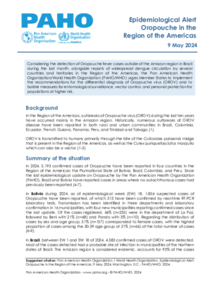
Epidemiological Alert Oropouche in the Region of the Americas - 9 May 2024
144160-2024-may-9-phe-epi-alert-oropouchefinal.png

DOWNLOAD(370.78 KB)
Considering the detection of Oropouche fever cases outside of the Amazon region in Brazil during the last month, alongside reports of widespread dengue circulation by several countries and territories in the Region of the Americas, the Pan American Health Organization/World Health Organization (PAHO/WHO) urges Member States to implement the recommendations for the differential diagnosis of Oropouche virus (OROV) and to bolster measures for entomological surveillance, vector control, and personal protection for populations at higher risk.
9 May 2024

-----------------------------------

From the PDF link above:

Epidemiological Alert
Oropouche in the
Region of the Americas
9 May 2024


Considering the detection of Oropouche fever cases outside of the Amazon region in Brazil
during the last month, alongside reports of widespread dengue circulation by several
countries and territories in the Region of the Americas, the Pan American Health
Organization/World Health Organization (PAHO/WHO) urges Member States to implement
the recommendations for the differential diagnosis of Oropouche virus (OROV) and to
bolster measures for entomological surveillance, vector control, and personal protection for
populations at higher risk.

Background

In the Region of the Americas, outbreaks of Oropouche virus (OROV) during the last ten years
have occurred mainly in the Amazon region. Historically, numerous outbreaks of OROV
disease have been reported in both rural and urban communities in Brazil, Colombia,
Ecuador, French Guiana, Panama, Peru, and Trinidad and Tobago (1).

OROV is transmitted to humans primarily through the bite of the Culicoides paraensis midge
that is present in the Region of the Americas, as well as the Culex quinquefasciatus mosquito
which can also be a vector (1-3).

Summary of the situation

In 2024, 5,193 confirmed cases of Oropouche have been reported in four countries in the
Region of the Americas: the Plurinational State of Bolivia, Brazil, Colombia, and Peru. Since
the last epidemiological update on Oropouche by the Pan American Health Organization
(PAHO), Brazil and Bolivia have reported cases in areas where no autochthonous cases had
previously been reported (4-7).


In Bolivia during 2024, as of epidemiological week (EW) 18, 1,856 suspected cases of
Oropouche have been reported, of which 313 have been confirmed by real-time RT-PCR
laboratory tests. Transmission has been identified in three departments and laboratory
confirmation in 16 municipalities, with four new municipalities reporting confirmed cases since
the last update. Of the cases registered, 66% (n=235) were in the department of La Paz,
followed by Beni with 21% (n=68) and Pando with 3% (n=10). Regarding the distribution of
cases by sex and age group, 51% (n=157) corresponded to female cases, with the highest
proportion of cases among the 30-39 age group at 21% (n=66) of the total number of cases
(6-9).

In Brazil, between EW 1 and EW 18 of 2024, 4,583 confirmed cases of OROV were detected.
Most of the cases detected had a probable site of infection in municipalities of the Northern
states of Brazil. The Amazon region is considered endemic, accounts for 93% of the cases
reported in the country: Amazonas (n=2,910), Rondônia (n=1,113), Acre (n=163), Pará (n=52),
Roraima (n=7), and Amapá (n=1). Additionally, autochthonous transmission has been
identified in three non-Amazonian states where no autochthonous cases had previously been
reported: Bahia (n=273), Espírito Santo (n=33), and Piauí (n=10). In addition, cases reported in
the states of Rio de Janeiro (n=10), Santa Catarina (n=7), and Paraná (n=1) are under
investigation to establish the probable site of infection. Regarding the distribution of cases by
sex and age group, 52% (n=2,396) correspond to male cases and the highest proportion of
cases is registered in the 20-29 years of age group with 21% (n=977) of the cases (5, 10).

In Colombia, between EW 1 and EW 18 of 2024, 38 confirmed cases of Oropouche were
detected in three departments of the country: Amazonas (n=35), Caquetá (n=1), and Meta
(n=1); in addition, one case was identified from Tabatinga, Brazil. Cases were identified
through a retrospective laboratory case-finding strategy implemented by the Colombian
National Institute of Health (INS per its acronym in Spanish) from dengue surveillance.
Regarding the distribution of cases by sex and age group, 61% (n=23) correspond to male
cases and the highest proportion of cases is registered in the 10-19 years of age group with
44% (n=17) of the cases (11).

In Peru, between EW 1 and EW 18 of 2024, 259 confirmed cases of Oropouche have been
reported in four departments, the highest number of cases reported to date in this country.
The departments where confirmed cases were reported are Loreto (n=182), Madre de Dios
(n=43), Ucayali (n=26), and Huánuco (n=8). Regarding the distribution of cases by sex and
age group, 51% (n=131) were male, with the highest proportion of cases among the 30-39
years of age group with 40% (n=104) of cases (12).

...​​
 
Rare Oropouche virus spotted in several cities for the first time, Cuba authorities say

BY NORA GÁMEZ TORRES UPDATED MAY 30, 2024 2:56 PM

Earlier this week, the Cuban Ministry of Health said it had confirmed cases of the illness in the rural town of Songo La Maya and Boniato, on the outskirts of Santiago de Cuba city.
...
The country’s top epidemiology official, Dr. Francisco Durán, said on state television that cases were also found in four municipalities in the province of Cienfuegos in central Cuba: Abreu, Rodas, Aguada, and Cumanayagua.
...

https://www.miamiherald.com/news/nation-world/world/americas/cuba/article288883620.html

----------------------------------------------
Translation Google

Information note from the Ministry of Public Health

BY MINSAP EDITORIAL · MAY 27, 2024

Sin-titulo-1-01.jpg


The Pan American Health Organization (PAHO) has issued an epidemiological update on the presence in the Region of the Americas of Oropouche Fever , a virus transmitted by vectors of the genus Culicidae (mosquitoes) and Culicoides (gnats), exposing habitual transmission of the same in communities rural and urban areas of Brazil, Colombia, Ecuador, French Guiana, Panama, Peru and Trinidad and Tobago. So far this year, the disease has been reported in the Plurinational State of Bolivia, Brazil, Colombia and Peru.

The clinical picture that manifests as a consequence of the disease is mild, preceded by an incubation period of 5 to 7 days, which is characterized by fever, headaches, muscle and joint pain, and sometimes vomiting and diarrhea are also reported. No serious or critical cases or deaths have been reported associated with the virus. There is no specific treatment, only general measures to relieve symptoms.

Through the monitoring and surveillance actions of non-specific febrile syndromes in the province of Santiago de Cuba, the presence of the Oropouche virus was identified in two Health areas of the municipalities of Santiago de Cuba (Ernesto Guevara) and Songo La Maya (Carlos J. Finlay), based on samples studied at the national reference laboratory of the Pedro Kourí Institute (IPK).

All cases have evolved favorably with improvement in symptoms between the third and fourth day after the onset of the disease.

Entomo-epidemiological actions are developed to cut the chain of transmission and achieve control of the disease in the shortest time possible.

Ministry of Public Health
Republic of Cuba


https://salud.msp.gob.cu/nota-informativa-del-ministerio-de-salud-publica-8/
 
A little-known virus on the rise in South America could overwhelm health systems
...
5 JUN 20243:05 PM ET BYSOFIA MOUTINHO

A little-known pathogen named the Oropouche virus is on the move in South America, alarming scientists and public health experts. Brazil has reported 5530 cases so far this year, compared with 836 in all of 2023. Bolivia, Colombia, and Peru have seen upticks as well. Although the virus has traditionally been endemic in the Amazon Basin, it is now sickening people far from the rainforest. In May, Cuba reported its first cases.
...
What worries us most is the expansion of a disease that was practically restricted to the Amazon, which has a very low-density population, to areas with greater population density,” says Marcus Lacerda, an infectious disease researcher at the Oswaldo Cruz Foundation (Fiocruz).
...
For the few scientists who study Oropouche fever, none of this was a big surprise. Since 2000, the virus has increasingly ventured outside its endemic region, says virologist Socorro Azevedo at the Evandro Chagas Institute, a research center for tropical diseases in the Brazilian Amazon. “What we are seeing is a chronicle of a tragedy foretold,” she says.
...
Oropouche fever is not known to have killed anyone, but a few suspected fatalities are under investigation, says Fiocruz virologist Felipe Naveca. “As the number of infected people increases, so does the chance that we will discover unexpected impacts,” says Naveca, who notes that Zika, a disease that seemed relatively innocuous at first, led to a wave of babies born with an underdeveloped brain from women infected with the virus. The Oropouche virus can also infect the brain, he points out.

Controlling Oropouche is a challenge. C. paraensis is “a neglected vector for a neglected disease,” says Joaquim Pinto Nunes Neto, an entomologist at Evandro Chagas. “No one has cared about studying how to control it.”
...

https://www.science.org/content/art...-south-america-could-overwhelm-health-systems
 
Cuba: 2024 Oropouche virus

Source: https://www.cubaheadlines.com/articles/283309


Health Alert: Dengue and Oropouche Viruses Threaten Santiago de Cuba
Sunday, June 9, 2024 by Sophia Martinez

​As the Oropouche virus continues to ravage the residents of Santiago de Cuba, claiming at least one victim, another threat has further complicated the already critical epidemiological situation in the eastern region. It has been confirmed that two serotypes of the dengue virus are circulating, potentially leading to severe forms of the disease.

The Provincial Department of Vector Surveillance and Control issued an alert on Friday regarding the presence of two variants of the dengue virus. This comes at a time when "the territory shows a high infestation of the transmitting agent," particularly in the main municipality, Palma Soriano, Contramaestre, Mella, and San Luis, where most cases of the arboviral disease are reported...

...Meanwhile, the government has yet to release figures on those diagnosed with the Oropouche virus, which has already spread to Cienfuegos and Mayabeque and could be present in other Cuban provinces.

The authorities of the regime also maintain complete silence on the deaths caused by this virus, although unofficial reports recently revealed the death of 22-year-old Santiago resident Richard Daniel Nieves Chaveco, who was hospitalized with symptoms of Oropouche.

The university student, a resident of the II Frente municipality, died three days after being admitted to the Ambrosio Grillo Hospital in Santiago de Cuba with symptoms of the virus...


Oropouche virus disease - Cuba

11 June 2024

Situation at a glance

On 27 May 2024, the Ministry of Public Health of Cuba reported outbreaks of Oropouche virus disease from two provinces, Santiago de Cuba and Cienfuegos. Oropouche virus disease is an arboviral disease caused by the Oropouche virus (OROV). It is transmitted to humans through midge (small fly) or mosquito bites. To date, there is no evidence of human-to-human Oropouche virus transmission. This is the first detection of the disease in the country, therefore, the population is likely highly susceptible and there is significant risk of additional cases being detected.

Description of the situation

On 27 May 2024, the Ministry of Public Health of Cuba reported the first ever outbreak of Oropouche virus disease. A total of 74 confirmed cases were reported from Province of Santiago de Cuba (n=54), and from Province of Cienfuegos (n=20). These cases were detected through strengthened monitoring and surveillance actions following an increase in cases with non-specific febrile illness in the provinces of Santiago de Cuba, with the municipalities of Santiago de Cuba and Songo La Maya reporting 29 and 25 cases each; and in the province of Cienfuegos where eight cases were reported from Cienfuegos, five from Rodas, five from Abreu, and one each from Aguada de Pasajeros and Cumanayagua municipalities. OROV was identified in 74 samples of the 89 samples tested at the national reference laboratory of the Pedro Kourí Institute (IPK per its acronym in Spanish).

The onset of the symptoms of the confirmed cases was reported between 2 May to 23 May with a peak of cases observed in epidemic week 21 (week ending 24 May). The most frequently reported symptoms were fever, lower back pain, headache, loss of appetite, vomiting, weakness, joint pain, and eye pain. Of the 74 confirmed cases, 36 are male, and 38 are female, and the median age is 34 years (range 6-72 years). The most represented age range is 15 to 19-years-old (12 cases).

All cases showed signs of recovery between the third and fourth day after the onset of symptoms. No severe or fatal cases have been reported as of 5 June.

Figure 1: Number of cases of Oropouche virus disease in Cuba by province


Epidemiology

Oropouche virus disease is an arboviral disease caused by the Oropouche virus (OROV), a segmented single-stranded RNA virus that is part of the genus Orthobunyavirus of the Peribunyaviridae family. The virus has been found to circulate in Central and South America and the Caribbean. OROV can be transmitted to humans primarily through the bite of the Culicoides paraensis midge, found in forested areas and around water bodies, or certain Culex quinquefasciatus mosquitos. It is suspected that viral circulation includes both epidemic and sylvatic cycles. In the sylvatic cycle, primates, sloths, and perhaps birds are the vertebrate hosts, although a definitive arthropod vector has not been identified. In the epidemic cycle, humans are the amplifying host and OROV is transmitted primarily through the bite of the Culicoides paraensis midge. To date, there is no evidence of human-to-human OROV transmission.

The disease symptoms are similar to dengue and start between four to eight days (range between three-12 days) after the infective bite. The onset is sudden, usually with fever, headache, joint stiffness, pain, chills, and sometimes persistent nausea and vomiting, for up to five to seven days. Severe clinical presentation is rare, but it may result in aseptic meningitis. Most cases recover within seven days, however, in some patients, convalescence can take weeks. There is no specific antiviral treatment or vaccine for Oropouche virus disease. Public health response

Local and national health authorities are implementing the following public health measures:

The country has established a plan to address arboviruses, which includes integrated and comprehensive actions by various entities, namely: Organization and Control of Contingency Actions; Vector Control and Entomological Surveillance; Epidemiological Surveillance; Medical Assistance; Environment and Community Participation; Research and Development; and Logistics.

The actions in the plan include:
  • Temporary working groups activated to analyze the epidemiological situation and conduct field operations.
  • Definition of criteria for suspected and confirmed cases of the disease.
  • Training all personnel of the National Public Health System on arboviruses, including OROV.
  • Strengthening human resources for medical care in health areas with transmission.
  • Reinforcement of vector control actions including focal treatment in transmission and very high-risk blocks, adulticidal treatment and increased entomological surveillance in transmission areas.
  • Intensified environmental sanitation actions.
  • An informative note was issued on the situation.
WHO risk assessment

This is the first detection of the disease in the country, therefore, the population is likely highly susceptible and there is a significant risk of additional case detection. To date, there is no evidence of human-to-human Oropouche virus transmission.

In the Region of the Americas, outbreaks of Oropouche virus disease have occurred mainly in the Amazon region over the past 10 years. The virus is endemic in many South American countries, in both rural and urban communities. Outbreaks are periodically reported in Brazil, Bolivia, Colombia, Ecuador, French Guiana, Panama, Peru, and Trinidad and Tobago.

There is a risk of the disease spreading internationally as Cuba is an international tourist destination and the putative vector is widely distributed in the Americas region. Additionally, there are currently other countries with active OROV circulation.

WHO advice

The proximity of midge vector breeding sites to human habitations is a significant risk factor for OROV infection. Prevention strategies are based on control or eradication measures against the arthropod vectors and personal protection measures. Vector control measures rely on reducing midge populations through the eradication of breeding sites, achieved by reducing the number of natural and artificial water-filled habitats that support midge larvae, thereby reducing the adult midge populations around at-risk communities. Personal protection measures rely on prevention of midge bites using mechanical barriers (mosquito nets), insect repellant devices, repellent-treated clothing and anti-mosquito repellents. Chemical insecticides such as deltamethrin and N,N-Diethyl-meta-toluamide (DEET) have been demonstrated to be effective in controlling Culicoides and Culex species.

Given its clinical presentation and considering that this is the beginning of the dengue season in the Caribbean and other vector-borne diseases in the Region of the Americas, laboratory diagnosis is essential to confirm cases, characterize an outbreak, and monitor disease trends.

Since it is an emerging and poorly identified arbovirus in the Americas, the detection of a positive sample and confirmation of a case requires the use of Annex 2 of the IHR and its consequent notification through the established channels of the International Health Regulations (IHR).

WHO advises against applying any travel or trade restrictions based on the current information available on this event.​
...

https://www.who.int/emergencies/disease-outbreak-news/item/2024-DON521
 
Source: https://www.cubaheadlines.com/articles/283973


Rising Fever Cases in San Luis, Santiago de Cuba: Up to 130 Daily
Friday, June 21, 2024 by Isabella Rojas

​The spread of Oropouche fever is worsening in Santiago de Cuba, with municipalities in the region seeing a rise in patients exhibiting symptoms of the disease. In San Luis, authorities have detected over 130 fever cases daily.

This information was confirmed by Dr. Dorequis Cervantes Martínez, Director of Hygiene and Epidemiology in the municipality, who described the health situation as "complicated" during an interview on the local radio station Radio Majaguabo.

"A few weeks ago, we began to see a significant increase in fever cases, with an average of up to 133 daily," said Cervantes Martínez. Despite these numbers, authorities are hesitant to classify these cases as confirmed Oropouche virus infections, even though the patients show symptoms of the disease. "We have had suspicions about some patients presenting symptoms suggestive of this disease, such as fever, headache, muscle pain, joint pain, and fatigue. Some patients have also experienced vomiting and diarrhea," she explained.

In addition to these complications, San Luis is also dealing with cases of dengue fever, which has symptoms similar to those of Oropouche. "Currently, we have 82 patients who have tested positive for dengue, distributed across urban areas of the municipality, including the community polyclinic, the integral clinic, and the area of Dos Caminos," noted Cervantes Martínez.​..
 
Hat tip to Lance

Oropouche: Cases of mother-to-child transmission under investigation in Brazil

18 Jul 2024
woman-mosquito-net-1200x600.jpg

Washington, DC, July 18, 2024 (PAHO) - The Pan American Health Organization (PAHO) has issued an epidemiological alert informing its Member States about the identification of possible cases of expectant mother-to-child transmission of the Oropouche virus (OROV) under investigation in Brazil. The alert calls for strengthened surveillance to monitor the potential occurrence of similar events in other countries with circulation of OROV and other arboviruses.

The OROV virus, a member of the Peribunyaviridae family, is transmitted to humans primarily through the bites of an insect commonly known as a midge, as well as by the Culex mosquito. It was first detected in Trinidad and Tobago in 1955 and, since then, sporadic outbreaks have been documented in several countries in the Americas, including Brazil, Ecuador, French Guiana, Panama and Peru. Recently, an increase in cases has been observed in the region.

Between January and mid-July 2024, nearly 7,700 confirmed cases of Oropouche have been reported in five countries in the Americas, with Brazil having the highest number (6,976), followed by Bolivia, Peru, Cuba, and Colombia. The identification of suspected mother-to-child transmission of the virus occurs against the backdrop of this increase in reported cases.
240718-mosquito-culicoides-paraensis1-800x600_0.jpg
Culicoides paraenses. (Photos: Bruna Lais Sena do Nascimento, Laboratório de Entomologia Médica/SEARB/IEC.)
In a recent case, a pregnant woman, resident of the state of Pernambuco, presented symptoms of Oropouche during the 30th week of gestation. Following laboratory confirmation of OROV infection, fetal death was subsequently reported. A second suspected case was reported in the same state, where similar symptoms in an expectant mother were observed, and resulted in a miscarriage.

"The possible vertical transmission and consequences in the fetus are still under investigation," PAHO states in the epidemiological alert. "However, this information is shared with Member States to make them aware of the situation and at the same time request that they be alert to the occurrence of similar events in their territories," it adds, with the aim of increasing understanding about this possible route of transmission and its implications.

On July 17, 2024, PAHO issued guidelines to assist countries in the detection and surveillance of Oropouche and possible cases of mother-to-child infection, congenital malformation or fetal death. The Organization is working closely with countries where cases have been confirmed to share knowledge and experience.

Symptoms of the disease include the sudden onset of fever, headache, joint stiffness, aches and pains and, in some cases, photophobia, nausea and persistent vomiting that can last five to seven days. Although severe clinical presentation is rare, it may evolve to aseptic meningitis. Full recovery can take several weeks.
240718-mosquito-culicoides-paraensis2-800x600_0.jpg
Culicoides paraensis (smaller one in the photo) and Culex quinquefasciatus (larger one in the photo)
To control Oropouche, PAHO calls on countries to implement vector prevention and control actions, including strengthening entomological surveillance, reducing populations of mosquito and other transmitting insects, and educating the population, especially pregnant women, about personal protective actions to prevent bites.

Recommended measures include protecting homes with fine mesh mosquito nets on doors and windows; wearing clothing that covers arms and legs, especially in homes where there are sick people; applying repellents containing DEET, IR3535 or icaridin; and using mosquito nets around beds or furniture where people rest.

Since the increase in the number of cases in the region, PAHO has provided technical support to affected countries to strengthen their capacity to detect and confirm OROV. This effort includes the distribution of reagents for molecular testing and a protocol that is currently available in 23 countries to facilitate early detection.
240718-mosquito-culicoides-paraensis3-800x600_0.jpg
Culicoides paraenses.
In addition, PAHO has organized various activities such as an international workshop on the molecular surveillance for emerging and re-emerging arboviruses, which brought together health experts and researchers from Bolivia, Ecuador, Guyana, Paraguay, Peru, Suriname, Venezuela, and Brazil.​

https://www.paho.org/en/news/18-7-2...child-transmission-under-investigation-brazil
 
Source: https://www.cubaheadlines.com/articles/285492


Rising Dengue and Oropouche Virus Transmission Sparks Alert in Camagüey (Cuba)
Monday, July 22, 2024 by Ernesto Alvarez

​Approximately 80 individuals have been hospitalized with the Oropouche virus, and there's a high infestation and transmission rate of dengue in various localities of Camagüey, creating a "complex" epidemiological scenario in the province. This situation has put both health authorities and the population on high alert.

The complexity of the health situation, due to the circulation of both viruses, is attributed to "the high incidence of the transmitting agents in several municipalities," acknowledged Dr. Néstor Navarro Vega, Deputy Director of Epidemiology at the Provincial Center for Hygiene, Epidemiology, and Microbiology, according to the official newspaper Adelante.

The specialist revealed that in the municipality of Santa Cruz del Sur, the infestation and spread of dengue are high, while in Esmeralda, although the incidence rate has been reduced, there is still significant transmission in its health areas. Additionally, he noted that "in Florida, there is considerable circulation of the virus in the northern area, as well as in Minas, particularly in its central and Senado localities, with an increase in febrile cases."...


Brazil records world’s first Oropouche virus deaths: ministry

Brazil records world’s first Oropouche virus deaths: ministry

​Friday, July 26th, 2024
at News | World

SAO PAULO — Brazil has recorded the world’s first Oropouche virus deaths, the country’s health ministry said Thursday, after two women died of the illness spread by infected flies and mosquitos.

The women from the state of Bahia in northeast Brazil were “under 30 years old, with no comorbidities, but who had signs and symptoms similar to a severe case of dengue,” the ministry said in a statement. ...

The Brazil health ministry said there have been 7,236 cases of Oropouche infection recorded in 2024, with the majority being reported out of the states of Amazonas and Rondonia. ...

https://themalaysianreserve.com/202...worlds-first-oropouche-virus-deaths-ministry/
 
Last edited by a moderator:
Translation Google

PRESS RELEASE

Ministry of Health confirms two deaths from oropouche in the country

Published on 07/25/2024 3:29 PM Updated on 07/25/2024 3:32 PM

The cases involve women from the interior of the state of Bahia, under 30 years of age, with no comorbidities, but who had signs and symptoms similar to severe dengue fever. To date, there have been no reports in the world's scientific literature of deaths from the disease.

The investigation of the cases was carried out by the Bahia State Health Department. One death in Santa Catarina remains under investigation and a causal relationship due to oropouche fever in one death that occurred in Maranhão was ruled out.

The Ministry of Health monitors cases and possible deaths from oropouche through the National Arbovirus Room, in constant dialogue with state and municipal health departments. Monitoring has also been carried out through technical visits, on-site investigation, active search and vector research to support the local response of states and municipalities.

The detection of cases of oropouche fever was expanded to the entire country in 2023, after the Ministry of Health made diagnostic tests available for the first time to the entire national network of Central Public Health Laboratories (Lacen). As a result, cases, which until then had been concentrated in the North region, began to be identified in other regions of the country as well.

In 2024, 7,236 cases of oropouche fever were recorded in 20 Brazilian states. Most cases were recorded in Amazonas and Rondônia.

Investigation of vertical transmission of the disease

Six cases of vertical transmission (from mother to child) of oropouche fever infection are under investigation. There are three cases in Pernambuco, one in Bahia and two in Acre. Two cases resulted in fetal death, one spontaneous abortion and three cases presented congenital anomalies, such as microcephaly. The analyses are being carried out by state health departments and specialists, with the support of the Ministry of Health, to conclude whether there is a relationship between oropouche fever and cases of malformation or abortion.

On July 11, 2024, the Ministry of Health issued a technical note to all states and municipalities recommending the intensification of health surveillance after confirmation of vertical transmission of the oropouche virus by the Evandro Chagas Institute (IEC), which identified the presence of the virus genome in a case of fetal death and antibodies in samples from four newborns.

On August 1, in Recife, a seminar on oropouche fever will be held, jointly promoted by the Pernambuco state health department and the Ministry of Health, with the participation of technicians and managers from different states, specialists and scientists.

Among the recommendations made by the Ministry of Health are to intensify surveillance during pregnancy and monitoring of babies of women who have clinical suspicion of arboviruses - dengue, zika, chikungunya and oropouche fever; and to warn about preventive measures for the population, including pregnant women, such as avoiding areas with many sand flies and mosquitoes, and opting for clothes that cover most of the body.

About the oropouche virus

The Oropouche virus was first isolated in Brazil in 1960, from a blood sample taken from a sloth captured during the construction of the Belém-Brasília highway. Since then, isolated cases and outbreaks have been reported in Brazil, mainly in the Amazon region. Cases and outbreaks have also been reported in other countries in Central and South America (Panama, Argentina, Bolivia, Ecuador, Peru and Venezuela).

The Ministry of Health advises that all suspected cases and/or cases with laboratory diagnosis of OROV infection should be investigated, aiming to describe the clinical and epidemiological characteristics, as well as identify the vector species involved in transmission.

Three research groups on oropouche fever are underway. One of them focuses on laboratory information, such as the virus lineage and genomic characteristics. Another monitors the clinical manifestations of patients and the third group investigates the disease cycle in the transmitting mosquitoes.

The disease is transmitted mainly by a “mosquito” known as a sand fly or sand fly.

Ministry of Health

https://www.gov.br/saude/pt-br/cana...de-confirma-dois-obitos-por-oropouche-no-pais

 
Source: https://www.paho.org/en/documents/epidemiological-alert-oropouche-region-americas-1-august-2024 Epidemiological Alert Oropouche in the Region of the Americas - 1 August 2024


[TABLE="class: table table-hover table-striped"]
[TR="class: document-row"]
[TD="class: views-field views-field-field-image views-align-left views-field-field-documento-1 views-field-nothing"]
148435-2024-aug-1-phe-epi-alert-oropoucheenfinal.png


Download (319.89 KB)[/TD]
[TD="class: views-field views-field-body"]Considering the increase in reported cases of Oropouche in 2024, including in areas in which no cases had been historically recorded, as well as the identification of fatal cases associated with Oropouche virus (OROV) infection and possible cases of vertical transmission of the virus and its consequences, the Pan American Health Organization / World Health Organization (PAHO / WHO) urges Member States to strengthen surveillance and implement laboratory diagnosis for the identification and characterization of cases, including fatal cases and vertical transmission potentially associated with OROV infection.[/TD]
[/TR]
[/TABLE]


Related to Shiloh's post above:

PAHO urges countries to strengthen prevention, surveillance and diagnosis of the Oropouche virus following its geographic spread and recent clinical findings


2 Aug 2024
240718-mosquito-culicoides-paraensis1-800x600.jpg

Laboratório de Entomologia Médica/SEARB/IEC - Bruna Lais Sena do Nascimento
Credit

Washington, DC, 2 August 2024 (PAHO) – The Pan American Health Organization (PAHO) has issued an epidemiological alert calling on countries to strengthen surveillance and implementation of laboratory diagnosis of the Oropouche virus (OROV). The call follows a recent increase in cases, and spread of the disease to new areas, as well as reports of the first deaths associated with the infection and possible instances of vertical transmission.

As of the end of July, in 2024, 8,078 confirmed cases of Oropouche fever were reported in the region, including two deaths. Cases were reported in five countries: Bolivia (356), Brazil (7,284, including two deaths), Colombia (74s), Cuba (74) and Peru (290).

Although the disease has historically been described as mild, the geographic spread in transmission and the detection of more severe cases underscore the need for increased surveillance and characterization of possible more severe manifestations. In July, Brazil also reported the investigation of cases of OROV transmission from pregnant women to the fetus.

Historically, Oropouche fever was primarily transmitted through the bite of an insect known as midge (Culicoides) in the Amazon region. However, factors such as climate change, deforestation and unplanned urbanization have facilitated its spread to non-Amazonian states in Brazil and to countries where, until now, there have been no reported cases, including Bolivia and Cuba.

Symptoms include sudden onset of fever, severe headache, joint and muscle pain, and, in some cases, rash, photophobia, diplopia (double vision), nausea, vomiting and diarrhea. Symptoms may last five to seven days. While most cases recover without sequelae, in a small number of instances, complete recovery may take several weeks. Rarely, severe cases with aseptic meningitis may occur.

OROV can be confirmed by molecular diagnosis. PAHO has strengthened diagnostic capacity in 26 countries in the region. However, as the clinical presentation of OROV is similar to that of other arboviral infections, combined with a lack of systematic surveillance in many countries, there is a possibility that surveillance systems underestimate the frequency of the disease.

PAHO recommends that countries in the region strengthen epidemiological surveillance and laboratory diagnosis, particularly to identify fatal and severe cases and possible cases of vertical transmission. In addition, the Organization urges countries to expand prevention campaigns and strengthen entomological surveillance and vector control actions to reduce mosquito and gnat populations.

People are also advised to take preventive measures, including the use of repellents, clothing that covers legs and arms, and fine mesh mosquito nets, and to take extra precautions during outbreaks, particularly for vulnerable groups such as pregnant women.

There are no vaccines or specific antiviral treatments for Oropouche fever. Management of the disease is symptomatic, focused on pain relief and rehydration. PAHO continues to monitor the situation and provide technical assistance to support the response of countries in the region.​

https://www.paho.org/en/news/2-8-20...on-surveillance-and-diagnosis-oropouche-virus
 
Last edited:
Threat assessment brief: Oropouche virus disease cases imported to the European Union

Risk assessment
9 Aug 2024
Cite:
Citation Link
Translate this page

In June and July 2024, 19 imported cases of Oropouche virus disease were reported for the first time in EU countries: Spain (12), Italy (5), and Germany (2).

Epidemiological situation


In June and July 2024, 19 imported cases of Oropouche virus disease were reported for the first time in EU countries: Spain (12), Italy (5), and Germany (2). Eighteen of the cases had a travel history to Cuba and one to Brazil. Oropouche virus disease is a zoonotic disease caused by the Oropouche virus (OROV). To date, outbreaks of OROV disease have been reported in several countries across South America, Central America and the Caribbean. During 2024, outbreaks have been reported in Brazil, Bolivia, Colombia, Peru, and more recently in Cuba. Oropouche virus is mainly transmitted to humans as a result of being bitten by infected midges, however some mosquitoes species can also spread the virus. The principal vector (Culicoides paraensis midge) is widely distributed across the Americas, but absent in Europe. To date, there has been a lack of evidence as to whether European midges or mosquitoes could transmit the virus. Oropouche virus disease can manifest as an acute febrile illness with headache, nausea, vomiting, muscle and joint pains, and occasionally more severe symptoms. The prognosis for recovery is good and fatal outcomes are extremely rare. There are no vaccines to prevent or specific medication to treat OROV disease. Direct, horizontal, human-to-human transmission of the virus has not been documented so far. Recently, the Brazilian Ministry of Health reported six possible cases of OROV disease being passed from mother-to-child during pregnancy. The potential risk during pregnancy and fetopathic effects of OROV infection are still under investigation and have not been confirmed.

Risk assessment


The likelihood of infection for EU/EEA citizens travelling to, or residing in epidemic areas in South and Central America is currently assessed as moderate. The likelihood of infection increases if travellers visit the more-affected municipalities of the northern states of Brazil and/or the Amazon region, and/or if personal protection measures are not taken. Given the good prognosis for recovery, the impact is assessed as low. The risk of infection for EU/EEA citizens travelling to OROV-epidemic countries in the Americas is therefore assessed as moderate.

Recent data indicate that OROV infection in pregnant women may lead to miscarriage, abortion and/or developmental problems, and deformities of the foetus. The impact of OROV infection for pregnant women, foetuses and newborns could therefore be higher than for the general population, although this is still under investigation.

The likelihood of human exposure to OROV in the EU/EEA is considered very low, despite the possible importation of further OROV disease cases, as the competent vectors commonly described in the Americas are absent from continental Europe, and to date, no secondary transmission has ever been reported. Therefore, the risk of locally-acquired OROV disease in the EU/EEA is low.

Recommendations


Personal protective measures to reduce the risk of bites in epidemic areas include the use of repellent in accordance with the instructions indicated on the product label, wearing long-sleeved shirts and long trousers and using insecticide-treated fine mesh mosquito bed nets when resting. These measures are essential to provide protection against bites in rooms that are not adequately screened (with fine-mesh screens on doors and windows) or air-conditioned, and during outdoor activities.

Symptoms of OROV disease can be similar to other arboviral infections, such as dengue, chikungunya or Zika. The early detection of travel-associated cases can be enhanced by an increasing awareness among health professionals of travellers returning from areas with active OROV transmission, and adequate laboratory diagnostic capability, recently supported by the EVD-LabNet for laboratory network members in the EU/EEA. Laboratory testing for OROV should be performed when other tests for diseases of common aetiology (e.g. dengue, chikungunya or Zika) are negative. In addition, travel medicine clinics should inform travellers to epidemic areas of the risks related to the disease and protective measures that can reduce the likelihood of infection. In addition, public health authorities should report new cases of OROV infection through Epipulse to enable a continuous assessment of the situation.

Due to the potentially high impact of congenital OROV infection, pregnant women planning to travel to epidemic countries where transmission is ongoing or has been reported should be provided with comprehensive information on the potential risk associated with OROV infection and prevention strategies. Areas affected by OROV are also classified as countries and territories with current or previous Zika virus (ZIKV) transmission, and travel advice for pregnant women related to ZIKV can also adequately address the potential risk associated with Oropouche virus disease.

Download

ROA-Salmonella-Mbandaka_COVER.png

Threat Assessment Brief - Oropouche virus disease cases imported into the European Union - EN - [PDF-294.71 KB]​


https://www.ecdc.europa.eu/en/publi...e-virus-disease-cases-imported-european-union
 
Oropouche virus disease - Region of the Americas

23 August 2024

Situation at a glance

Oropouche virus disease is a febrile disease caused by the Oropouche virus (OROV), spread primarily through the bite of an insect known as a midge (Culicoides paraensis). In 2024, the number of reported Oropouche virus disease has increased in the WHO Region of the Americas, including in areas with no previously recognized history of Oropouche virus disease. Additionally, some countries have identified fatal infections and potential vertical transmission. As of 20 July 2024, a total of 8078 confirmed Oropouche cases, including two deaths, have been reported in the Region of the Americas, across five countries: Bolivia, Brazil, Colombia, Cuba, and Peru. Brazil has also reported one fetal death and one miscarriage in the state of Pernambuco, as well as four cases of newborns with microcephaly possibly related to OROV infection. Since Oropouche virus disease is an emerging and poorly identified arbovirus in the Americas, the detection of a positive sample and confirmation of a case requires the use of Annex 2 of the International Health Regulations (IHR) and its consequent notification through the established channels of the IHR. OROV has been historically transmitted in the Amazon region. However, possible reasons for the spread beyond its historical range include climate change, deforestation and unplanned urbanization which have facilitated its spread to non-Amazonian states in Brazil and to countries where, until now, there have been no reported cases, including Bolivia and Cuba. Based on available information, WHO assesses the overall public health risk posed by this virus to be high at the regional level and low at the global level. Description of the situation


Between 1 January and 20 July 2024, there were 8078 confirmed Oropouche cases reported in the Region of the Americas, including two deaths. The cases are reported among five countries in the region: the Plurinational State of Bolivia (356 cases), Brazil[SUP]1 [/SUP](7284 cases, including two deaths), Peru (290 cases), Colombia (74 cases), and Cuba (74 cases).

Brazil has reported one fetal death and one miscarriage in the state of Pernambuco, as well as four cases of newborns with microcephaly, identified through retrospective studies in the states of Acre and Pará indicating possible cases of vertical transmission of OROV infection and their consequences.[SUP]2[/SUP] Three additional possible cases of vertical transmission are being investigated in the state of Pernambuco. Despite the evidence of vertical transmission of OROV (polymerase chain reaction [PCR] positivity on tissues from pregnancy loss reported), it cannot be concluded that OROV is the cause of the fetal deaths, and investigations are still ongoing.

As of 30 July 2024, five cases of possible vertical transmission have been identified in Brazil: four cases of stillbirth and one case of spontaneous abortion in the state of Pernambuco, as well as four cases of newborns with microcephaly in the states of Acre and Pará. The investigations are ongoing(1).

Figure 1. Number of confirmed Oropouche cases in 2024 by country and epidemiological week of symptom onset, Region of the Americas*

Oropouche epi curve


*Note: Data by epidemiological week of onset are not available for Cuba. Source: Adapted and reproduced by PAHO/WHO from the data reported by the respective countries.

The following is a summary of the situation in the countries that have reported confirmed Oropouche cases in the Americas during 2024.

The Plurinational State of Bolivia: Between 1 January and 20 July 2024, there were 356 Oropouche cases confirmed using reverse transcription polymerase chain reaction (RT-PCR). Transmission has been recorded in three departments: La Paz, with 75.3% of the cases (268 cases); Beni, with 21.3% of the cases (76 cases); and Pando, with 3.4% of the cases (12 cases). The cases are reported among 16 municipalities that are considered endemic for this disease, with the highest proportion of cases reported in the municipalities of Irupana, La Paz, with 33% of the cases, followed by La Asunta, La Paz, with 13% of the cases, and Chulumani, La Paz, and Guayaramerin, Beni, with 12% each.

Half of the cases are female (179 cases) and the age group with the highest number of cases in the 30-39 years age group, with 20% of cases (70 cases). No deaths have been recorded that could be associated with OROV infection. Additionally, between 16 March and 13 April 2024, five cases of Oropouche virus disease co-infection with dengue were reported in patients from three municipalities in the department of La Paz, who presented with positive RT-PCR results for DENV-1 serotype (one case) and DENV-2 (four cases) (2).

Brazil: Between 1 January and 27 July 2024, 7284 Oropouche cases were confirmed by RT-PCR. The Amazon region, considered endemic for Oropouche virus disease, accounted for 75.7% of the cases recorded in the country, with six states reporting cases: Amazonas (3224 cases), Rondônia (1709 cases), Acre (265 cases), Roraima (239 cases), Pará (74 cases), and Tocantins (two cases) (3). Additionally, autochthonous transmission has been documented in ten non-Amazonian states, some of which had not previously reported cases: Bahía (831 cases), Espírito Santo (420 cases), Santa Catarina (165 cases), Pernambuco (92 cases), Minas Gerais (83 cases), Rio de Janeiro (64 cases), Ceará (39 cases), Piauí (28 cases), Maranhão (19 cases), and Mato Grosso (17 cases). In addition, the probable place of infection is being investigated for several cases registered in the states of Amapá (seven cases), Paraná (three cases), Sergipe (two cases), and Paraíba (one case).

Over half of the cases (51.9%; 3779) are male and the age group with the highest number of cases is 30-39 years, with 21.2 % of cases (1541 cases) (3).

On 23 July 2024, Brazil's IHR National Focal Point (NFP) reported two fatal cases of OROV infection detected retrospectively in the state of Bahia. Both cases were in females, aged 21 and 24 years old. These two deaths would be the first fatal cases due to acute OROV infection in Brazil and in the Region of the Americas, occurring amid an active outbreak on the southern coast of Bahia. Both cases, without a history of chronic diseases, tested RT-PCR positive for OROV and serology and negative for other arboviruses. The cases showed a rapid evolution from the onset of symptoms (fever, myalgia, headache, retro-orbital pain, pain in the lower extremities, asthenia, and joint pain) to death, with severe coagulopathy and liver involvement identified as probable causes of death. Additionally, the Brazilian Ministry of Health is investigating two other fatal cases associated with OROV, in Paraná and Maranhão (4).

Colombia: Between 1 January and 20 July 2024, 74 confirmed Oropouche cases have been reported in three departments of the country: Amazonas (70 cases), Caquetá (one case), and Meta (one case); additionally, two cases were identified in travelers from from Tabatinga, Brazil. The cases were identified through a retrospective laboratory case-finding strategy implemented in 2024 by the National Institute of Health of Colombia based on dengue surveillance (38 cases) and through investigation of febrile syndrome cases (36 cases). Over half of the cases (51.4%; 38) were female and the age group with the highest number of cases was 10-19 years, with 36.5% of the cases (27 cases). No deaths have been recorded that could be associated with OROV infection.

Cuba: On 27 May 2024, the Ministry of Public Health of Cuba reported the country's first outbreak of Oropouche virus disease. A total of 74 confirmed cases were reported from the Santiago de Cuba Province (54 cases) and Cienfuegos Province (20 cases). Half of the cases (50%; 38) were female and the age group with the highest number of cases was 15-19 years, with 16% of the cases (12 cases). No deaths have been recorded that could be associated with OROV infection (5).

Peru: Between 1 January and 20 July 2024, 290 confirmed Oropouche cases have been reported in five departments, the highest number of cases reported to date in this country. The departments are: Loreto (193 cases), Madre de Dios (47 cases), Ucayali (41 cases), Huánuco (eight cases), and Tumbes (one case). Over half of the cases (52%; 150) were male, and the age group with the highest number of cases was 30-39 years, with 40% of the cases (115 cases) (6).


Epidemiology


Oropouche virus disease is an arboviral disease caused by the Oropouche virus (OROV), a segmented single-stranded RNA virus that is part of the genus Orthobunyavirus of the Peribunyaviridae family. The virus has been found to circulate in Central and South America and the Caribbean. OROV can be transmitted to humans primarily through the bite of the Culicoides paraensis midge, found in forested areas and around water bodies, or certain Culex quinquefasciatus mosquitoes. It is suspected that viral circulation includes both urban epidemic and sylvatic cycles. In the sylvatic cycle, primates, sloths, and perhaps birds are vertebrate hosts, but a definitive arthropod vector has not been identified. In the urban epidemic cycle, humans are the amplifying host and OROV is transmitted primarily through the bite of the Culicoides paraensis midge. Vertical transmission has recently been documented and is being investigated further. To date, there is no evidence of other modes of human-to-human OROV transmission.

The disease symptoms are similar to dengue and start four to eight days (range between three to 12 days) after the infective bite. The onset is sudden, usually with fever, intense headache, joint stiffness, pain, chills, and sometimes persistent nausea and vomiting, for up to seven days. Up to 60% of cases have a relapse of symptoms after the fever stops. Most cases recover within seven days, however, in some patients, convalescence can take weeks. Severe clinical presentation is rare, but it may result in aseptic meningitis during the second week of the disease.

There is no specific antiviral treatment or vaccine for Oropouche virus disease.

Public health response
  • Regional level: Epidemiological alerts and updates have been issued to alert Member States and recommend actions to be implemented. Information has also been disseminated through regional and national webinars for health personnel.
  • Algorithms for laboratory testing have been developed and disseminated. Training on molecular testing (RT-PCR) and characterization (whole genome sequencing) has been provided through workshops or remote assistance, and critical reagents have been distributed. As a result of regional and national efforts, molecular testing capacity is available in 23 of the 33 countries in Latin America and the Caribbean. The Pan American Health Organization (PAHO; the WHO Regional Office for the Americas) is working to expand these capacities as necessary.
  • The available clinical information has been reviewed to recommend interim case definitions (suspected, probable, and confirmed, vertical transmission).
  • A virtual collaboration space has been created at the regional level to develop epidemiological analytics of the disease.
  • Generic research protocols for the characterization of pregnancy outcomes in infants from OROV-exposed pregnant individuals have been drafted and shared.
  • PAHO/WHO experts are providing support in countries that are experiencing outbreaks.
Brazilian local and national health authorities have implemented the following public health measures:
  • Entomo-epidemiological actions have been developed to identify the main vector species and the landscape where they are breeding, to cut the chains of transmission and achieve control of the disease in the shortest time possible.
  • Surveillance is being maintained in all Federative Units of the country. The Ministry of Health monitors cases and possible deaths from Oropouche through the National Arbovirus Room, in constant dialogue with Federative Units.
  • Monitoring has also been carried out through technical visits, on-site research, active search and research of vectors, supporting the local response of states and municipalities.
  • Three research groups are working on OROV fever. One is focused on laboratory information, such as the lineage of the virus and genomic characteristics. Another is monitoring the clinical manifestations of patients, and the third is investigating the disease cycle in the mosquitoes that transmit it.
WHO risk assessment


In the Region of the Americas, outbreaks of Oropouche virus disease have occurred mainly in the Amazon region during the last ten years. With geographical limitations, OROV causing persistent endemicity and periodic outbreaks are reported in in both rural and urban communities in Brazil, the Plurinational State of Bolivia, Cuba, Colombia, Ecuador, French Guiana, Panama, Peru, and Trinidad and Tobago (7).

The ongoing outbreak highlights the need to strengthen epidemiological and entomological surveillance and to reinforce preventive measures in the population. This is crucial due to the potential expansion of the virus's transmission area and the growing understanding of the disease spectrum, including possible new transmission routes, and possible new vectors that could affect both the general population and vulnerable groups, such as pregnant women, their fetuses, and newborns.

Based on available information, WHO assesses the overall public health risk posed by this virus to be high at the regional level and low at the global level.

WHO advice


The proximity of midge vector breeding sites to human habitations is a significant risk factor for OROV infection. Prevention strategies are based on control measures against the arthropod vectors and on personal protection measures. Vector control measures rely on reducing midge populations through the control of breeding sites, achieved by reducing the number of natural and artificial water-filled habitats that support midge larvae, thereby reducing the adult midge populations around at-risk communities. Personal protection measures rely on the prevention of midge bites using mechanical barriers (mosquito nets), insect repellant devices, repellent-treated clothing and mosquito repellents. Chemical insecticides such as deltamethrin and N,N-Diethyl-meta-toluamide (DEET) have been demonstrated to be effective in providing protection against bites from Culicoides and Culex species.

Given its clinical presentation and considering that this is the ongoing season for dengue in Central America and the Caribbean and for other vector-borne diseases in the Region of the Americas, laboratory diagnosis is essential to confirm cases, characterize the outbreak, and monitor disease trends.

Since it is an emerging and poorly identified arbovirus in the Americas, the detection of a positive sample and confirmation of a case requires the use of Annex 2 of the IHR and its consequent notification through the established channels of the IHR.

WHO advises against applying any travel or trade restrictions based on the current information available on this event.​

...

https://www.who.int/emergencies/disease-outbreak-news/item/2024-DON530
 
Back
Top