

Michael Coston
Editor, Senior Moderator
EID Journal: Two H9N2 Studies Of Note
#13,722
Despite relatively few documented human infections (seeFluTrackers List) - and having a reputation for causing generally less severe human illness than its avian H5 & H7 cousins - LPAI H9N2 is still regarded as having some pandemic potential because:
Volume 25, Number 1—January 2019
Dispatch
Avian Influenza A(H9N2) Virus in Poultry Worker, Pakistan, 2015
Muzaffar Ali, Tahir Yaqub, Nadia Mukhtar, Muhammad Imran, Aamir Ghafoor, Muhammad Furqan Shahid, Muhammad Naeem, Munir Iqbal, Gavin J.D. Smith , and Yvonne C.F. Su
Abstract
Avian influenza A(H9N2) virus isolated from a poultry worker in Pakistan in 2015 was closely related to viruses detected in poultry farms. Observed mutations in the hemagglutinin related to receptor-binding affinity and antigenicity could affect cross-reactivity with prepandemic H9N2 vaccine strains. (SNIP)
The second study is considerably more complex, and finds a growing array of H9N2 genotypes in Pakistan, some with improved binding avidity to both avian and human receptor cells, and infers an increased zoonotic risk.
Volume 25, Number 1—January 2019
Research
Even when we are looking at other novel influenza subtypes, highly promiscuous H9N2 can often be found playing a supporting role in the background, usually by lending genes via reassortment. A few examples include:
http://afludiary.blogspot.com/2018/1...s-of-note.html

#13,722
Despite relatively few documented human infections (seeFluTrackers List) - and having a reputation for causing generally less severe human illness than its avian H5 & H7 cousins - LPAI H9N2 is still regarded as having some pandemic potential because:
- H9N2 has become widespread - even ubiquitous - among poultry across Europe and the Middle East
- Serological studies suggest human infection is more common than standard surveillance would have us believe
- H9N2 reassorts easily with other viruses, and its internal genes are often found inside many HPAI viruses (including H5N1, H5N6, and H7N9) - (see The Lancet's Poultry carrying H9N2 act as incubators for novel human avian influenza viruses)
- H9N2 viruses continue to accrue evolutionary changes, which include mammalian adaptations, and increased binding to human receptor cells (see PLoS Path: Genetics, Receptor Binding, and Transmissibility Of Avian H9N2).
The January 2019 (Volume 25, Number 1) edition of the CDC's EID Journal has two studies on this intriguing long-shot in the pandemic sweepstakes, both of which suggest that H9N2 continues to evolve away from current (pre-pandemic and poultry) vaccines and is potentially on a path towards better adaptation to human hosts.
Due to their lengths, I've only included some snippets from each. Follow the links to read them in their entirety (bolding of text mine) Volume 25, Number 1—January 2019
Dispatch
Avian Influenza A(H9N2) Virus in Poultry Worker, Pakistan, 2015
Muzaffar Ali, Tahir Yaqub, Nadia Mukhtar, Muhammad Imran, Aamir Ghafoor, Muhammad Furqan Shahid, Muhammad Naeem, Munir Iqbal, Gavin J.D. Smith
, and Yvonne C.F. Su Abstract
Avian influenza A(H9N2) virus isolated from a poultry worker in Pakistan in 2015 was closely related to viruses detected in poultry farms. Observed mutations in the hemagglutinin related to receptor-binding affinity and antigenicity could affect cross-reactivity with prepandemic H9N2 vaccine strains.
Conclusions
Our detection and isolation of H9N2 virus from a poultry worker in Pakistan highlights the potential for cross-species transmission of H9 viruses in the country. The World Health Organization considers avian H9N2 viruses a consistent pandemic threat because they are widespread in poultry and cause sporadic infection in humans.
Our detection and isolation of H9N2 virus from a poultry worker in Pakistan highlights the potential for cross-species transmission of H9 viruses in the country. The World Health Organization considers avian H9N2 viruses a consistent pandemic threat because they are widespread in poultry and cause sporadic infection in humans.
H9N2 viruses have been central to the generation of other viruses of pandemic concern and have contributed the internal genes to both H5 and H7 viruses in China (15). Although the subtype is relatively well studied in China, investigation in other countries is generally limited in scope. Within Pakistan, H9N2 viruses in chickens have circulated endemically for at least a decade, yet systematic surveillance is lacking.
Our results show continued diversification of H9N2 viruses in Pakistan; viruses isolated during 2015–2016 formed a distinct clade to earlier viruses from Afghanistan, Iran, and Pakistan isolated during 2008–2014. Dating analysis further estimated the tMRCA of the 2015–2016 Pakistan viruses as late 2010, indicating at least 5 years of unsampled virus diversity that circulated in poultry. We also observed mutations in HA related to changes in receptor-binding affinity and antigenicity that could affect cross-reactivity with the World Health Organization–recommended prepandemic H9N2 vaccine strains. None of the 3 G1 candidate vaccine viruses are closely related to strains from Pakistan.
Phylogenetic relationships indicate H9N2 virus transmission across South Asia and the Middle East, where the persistence and circulation of AIV are poorly understood. Increased surveillance in wild bird populations, poultry farms and markets, and occupationally exposed workers are needed in these regions to identify the emergence of antigenic variants and to maintain up-to-date H9 vaccine candidates.
(Continue . . .)Our results show continued diversification of H9N2 viruses in Pakistan; viruses isolated during 2015–2016 formed a distinct clade to earlier viruses from Afghanistan, Iran, and Pakistan isolated during 2008–2014. Dating analysis further estimated the tMRCA of the 2015–2016 Pakistan viruses as late 2010, indicating at least 5 years of unsampled virus diversity that circulated in poultry. We also observed mutations in HA related to changes in receptor-binding affinity and antigenicity that could affect cross-reactivity with the World Health Organization–recommended prepandemic H9N2 vaccine strains. None of the 3 G1 candidate vaccine viruses are closely related to strains from Pakistan.
Phylogenetic relationships indicate H9N2 virus transmission across South Asia and the Middle East, where the persistence and circulation of AIV are poorly understood. Increased surveillance in wild bird populations, poultry farms and markets, and occupationally exposed workers are needed in these regions to identify the emergence of antigenic variants and to maintain up-to-date H9 vaccine candidates.
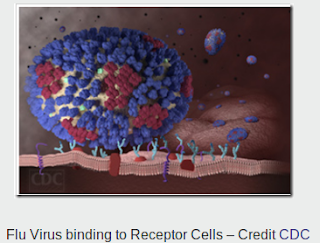
The second study is considerably more complex, and finds a growing array of H9N2 genotypes in Pakistan, some with improved binding avidity to both avian and human receptor cells, and infers an increased zoonotic risk.
Volume 25, Number 1—January 2019
Research
Joshua E. Sealy, Tahir Yaqub, Thomas P. Peacock1, Pengxiang Chang, Burcu Ermetal, Anabel Clements, Jean-Remy Sadeyen, Arslan Mehboob2, Holly Shelton, Juliet E. Bryant, Rod S. Daniels, John W. McCauley, Munir Iqbal , and Jean-Remy Royal Veterinary CollegeLondonUKSadeyen
, and Jean-Remy Royal Veterinary CollegeLondonUKSadeyen Abstract
We characterized 55 influenza A(H9N2) viruses isolated in Pakistan during 2014–2016 and found that the hemagglutinin gene is of the G1 lineage and that internal genes have differentiated into a variety of novel genotypes.
We characterized 55 influenza A(H9N2) viruses isolated in Pakistan during 2014–2016 and found that the hemagglutinin gene is of the G1 lineage and that internal genes have differentiated into a variety of novel genotypes.
Some isolates had up to 4-fold reduction in hemagglutination inhibition titers compared with older viruses. Viruses with hemagglutinin A180T/V substitutions conveyed this antigenic diversity and also caused up to 3,500-fold greater binding to avian-like and >20-fold greater binding to human-like sialic acid receptor analogs.
This enhanced binding avidity led to reduced virus replication in primary and continuous cell culture.
We confirmed that altered receptor-binding avidity of H9N2 viruses, including enhanced binding to human-like receptors, results in antigenic variation in avian influenza viruses.
Consequently, current vaccine formulations might not induce adequate protective immunity in poultry, and emergence of isolates with marked avidity for human-like receptors increases the zoonotic risk.
(SNIP)
In conclusion, we have assessed the pathogenic and zoonotic risks posed by enzootic influenza A(H9N2) viruses in Pakistan by characterizing field isolates. Because of circulation of viruses with potential to escape vaccine-induced immunity, regular updating of vaccines to match circulating strains and protect poultry is needed in Pakistan. Furthermore, isolation of viruses from the G1 lineage with enhanced human receptor-binding avidity warrants continued surveillance for poultry and persons working with or near poultry.
(Continue . . . )Even when we are looking at other novel influenza subtypes, highly promiscuous H9N2 can often be found playing a supporting role in the background, usually by lending genes via reassortment. A few examples include:
Reassortment After Co-infection Of Chickens With H4N6 and H9N2 influenza Viruses
A Canine H3N2 Virus With PA Gene From Avian H9N2 - Korea
PNAS: Reassortment Of H1N1 And H9N2 Avian viruses.
Whether on its own, or as a viral co-conspirator, the continued evolution of H9N2 remains a pandemic threat worth keeping our eye on.A Canine H3N2 Virus With PA Gene From Avian H9N2 - Korea
PNAS: Reassortment Of H1N1 And H9N2 Avian viruses.
http://afludiary.blogspot.com/2018/1...s-of-note.html