

sharon sanders
Editor-in-Chief & President
hat tip Michael Coston
ECDC: Epidemiological Update On MERS-CoV
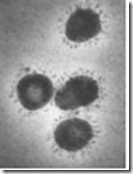
Coronavirus ? Credit CDC PHIL
# 8709
In the wake of the news this week that KSA has `found? scores of previously unannounced MERS cases (Saudi MOH: Review Finds 113 Additional MERS Cases), the ECDC has released a new epidemiological update.
While the case numbers, and apparent fatality rate, have increased with this announcement, the ECDC feels this new information does not change the ECDC risk assessment of 31 May 2014, which states (in part):
ECDC: Epidemiological Update On MERS-CoV
Coronavirus ? Credit CDC PHIL
# 8709
In the wake of the news this week that KSA has `found? scores of previously unannounced MERS cases (Saudi MOH: Review Finds 113 Additional MERS Cases), the ECDC has released a new epidemiological update.
As usual, the ECDC has produced an information-dense, graphic rich, report that gives us a great overview of the situation ? at least based on the information that is being made available by the affected countries.
Currently, the risk of human infections and sustainable human-to-human transmission in Europe remains low. However, the number of human MERS cases reported from the Arabian Peninsula has increased rapidly in the past few months. Specifically, several healthcare associated clusters in Saudi Arabia and UAE have been reported which have been responsible for large numbers of cases. Given the current increase in nosocomial infections and travel associated cases of MERS in the Arabian Peninsula, and the large number of people travelling between the Arabian peninsula and Europe, it is likely that more cases will be imported and detected in the EU/EEA. Continued vigilance in assessing patients with travel history to the affected region is warranted.
Follow the link below to access the full epidemiological report, including all five graphs and charts.
Epidemiological update: Middle East respiratory syndrome coronavirus (MERS-CoV)
05 Jun 2014
Since April 2012 and as of 4 June 2014, 815 cases of MERS-CoV infection have been reported by local health authorities worldwide, including 313 deaths.
On 3 June 2014, the Ministry of Health of Saudi Arabia updated the MERS case count with 113 previously unreported cases representing a 20% increase in the cumulative number of cases. The number of cases is 688 of which 353 have recovered, 282 have died and 53 are receiving care. These new cases have been retrospectively identified during a review of the data. Ninety-two of the 113 cases reported on 3 June were fatal, increasing the number of deaths from MERS-CoV in Saudi Arabia by 48% from 190 to 282, and raising the case-fatality ratio (CFR) from 33% to 41%. The retrospectively identified newly reported cases date back to May 2013. Information about age, gender, residence, probable place of infection, whether the case is sporadic/primary or part of a cluster of secondary transmission, health care associated transmission or not, and whether the case is a healthcare worker, is missing for these retrospectively reported cases. In addition, it is unclear whether these cases are meeting the WHO case definition for confirmed cases.
The MOH also announced new measures to improve the capacity and efficiency of Saudi laboratories and testing facilities.
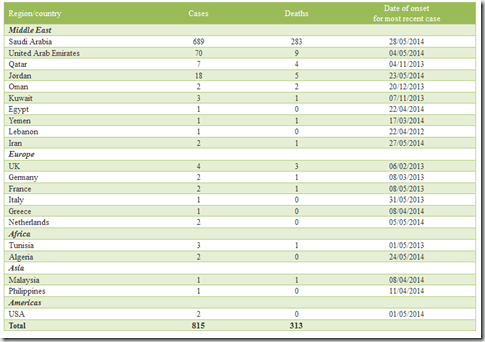
On 27 May 2014, the Iranian health authorities reported two cases involving two middle-aged sisters, without travel history, but with contact with a person, who had influenza-like illness symptoms after travel to Saudi Arabia. One of the sisters has died.
On 31 May 2014 the Algerian health authorities reported two cases in middle aged men, who both had recent travel history to Saudi Arabia for performing Umrah. ECDC continues to monitor information on the situation on MERS-CoV worldwide. In earlier Rapid Risk Assessments, ECDC concluded that the risk of importation of MERS-CoV to the EU was expected to continue and the risk of secondary transmission in the EU remains low. The conclusions of the assessment provided in the ECDC rapid risk assessment (RRA) remains valid.
Conclusions
The cases and fatalities reported in batch by Saudi Arabia on 3 June improves the completeness of data but does not significantly change the epidemiological pattern of the outbreak. The new cases have resulted in an increase in the case-fatality ratio, indicating that the observed trend of falling CFR over time can to some extent be explained by incompleteness of data and failure to report outcomes for already notified cases. The new information does not change the ECDC risk assessment of 31 May 2014.
Posted by Michael Coston at <a class="timestamp-link" href="http://afludiary.blogspot.ca/2014/06/ecdc-epidemiological-update-on-mers-cov.html" rel="bookmark" title="permanent link"><abbr class="published" itemprop="datePublished" title="2014-06-05T06:53:00-04:00">6:53 AM</abbr>05 Jun 2014
Since April 2012 and as of 4 June 2014, 815 cases of MERS-CoV infection have been reported by local health authorities worldwide, including 313 deaths.
On 3 June 2014, the Ministry of Health of Saudi Arabia updated the MERS case count with 113 previously unreported cases representing a 20% increase in the cumulative number of cases. The number of cases is 688 of which 353 have recovered, 282 have died and 53 are receiving care. These new cases have been retrospectively identified during a review of the data. Ninety-two of the 113 cases reported on 3 June were fatal, increasing the number of deaths from MERS-CoV in Saudi Arabia by 48% from 190 to 282, and raising the case-fatality ratio (CFR) from 33% to 41%. The retrospectively identified newly reported cases date back to May 2013. Information about age, gender, residence, probable place of infection, whether the case is sporadic/primary or part of a cluster of secondary transmission, health care associated transmission or not, and whether the case is a healthcare worker, is missing for these retrospectively reported cases. In addition, it is unclear whether these cases are meeting the WHO case definition for confirmed cases.
The MOH also announced new measures to improve the capacity and efficiency of Saudi laboratories and testing facilities.
On 27 May 2014, the Iranian health authorities reported two cases involving two middle-aged sisters, without travel history, but with contact with a person, who had influenza-like illness symptoms after travel to Saudi Arabia. One of the sisters has died.
On 31 May 2014 the Algerian health authorities reported two cases in middle aged men, who both had recent travel history to Saudi Arabia for performing Umrah. ECDC continues to monitor information on the situation on MERS-CoV worldwide. In earlier Rapid Risk Assessments, ECDC concluded that the risk of importation of MERS-CoV to the EU was expected to continue and the risk of secondary transmission in the EU remains low. The conclusions of the assessment provided in the ECDC rapid risk assessment (RRA) remains valid.
Conclusions
The cases and fatalities reported in batch by Saudi Arabia on 3 June improves the completeness of data but does not significantly change the epidemiological pattern of the outbreak. The new cases have resulted in an increase in the case-fatality ratio, indicating that the observed trend of falling CFR over time can to some extent be explained by incompleteness of data and failure to report outcomes for already notified cases. The new information does not change the ECDC risk assessment of 31 May 2014.