

Michael Coston
Editor, Senior Moderator
Dutch Convalescent Plasma Study For COVID-19 Halted For Redesign
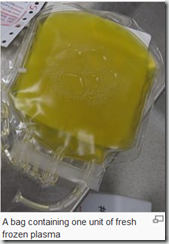
Credit Wikipedia
#15,349
While there is currently no specific drug treatment for COVID-19, there are currently a number of investigational drugs and therapies under review. One that is heavily touted is convalescent serum therapy, using blood products collected from recovered cases.
It's not a new idea; human and animal serum therapy was used extensively during the first half of the 20th century to treat a variety of infectious diseases, including anthrax, scarlet fever, measles, tularemia, diphtheria, rabies and pandemic influenza.
The idea behind it is pretty simple.
Blood is collected from those who been infected, and have recovered, and through a process called plasmapheresis, the blood cells are removed from the blood plasma. This is done by passing the blood through a special filter, or by using a centrifuge. The remaining blood plasma will contain antibodies that could then be injected into severely ill patients.
Donors must be checked for a variety of blood borne diseases (i.e. hepatitis B, hepatitis C, Syphilis, and HIV), and then the plasma is usually heated to inactivate other possible pathogens.
Convalescent plasma could, theoretically, be used as either a treatment for someone already infected, or as a temporary prophylactic, to prevent infection.
Over the past decade we've seen some promising results (see 2011's CID Journal: Convalescent Plasma Therapy For Severe H1N1, 2015's Int J Infect Dis: Convalescent Plasma Treatment Of An H7N9 Patient In China), and even some early media reports on Convalescent Plasma treatment of COVID-19 in China.
But we've also seen some high profile failures, such as last year's Lancet: Clinical Trial On Use of Convalescent Plasma To Treat Severe Influenza, which disappointingly found that `High-titre anti-influenza plasma conferred no significant benefit over non-immune plasma' and 2016's NEJM: Evaluation of Convalescent Plasma for Ebola Virus Disease in Guinea, which reported no statistically significant improvement in survival over the control group.
Yesterday Marion Koopmans, a world renown virologist and head of the Erasmus MC Department of Viroscience - and who also happens to be one of the researchers conducting a clinical trial (see NCT04342182 Convalescent Plasma as Therapy for Covid-19 Severe SARS-CoV-2 Disease (CONCOVID Study) (ConCoVid-19)) - posted the following on her twitter account:

It seems that by the time most of the study group had become sick enough to be hospitalized, they had already developed antibodies against SARS-CoV-2, meaning that giving convalescent serum was redundant and/or too late to have much effect.
Once again, COVID's (relatively) long incubation period, followed by a slow ramp up in symptoms (often taking a week or longer to reach serious levels), complicates matters, as patients are often hospitalized more than two weeks following infection.
This doesn't negate the use of convalescent plasma for treating COVID-19, but it does suggest it may need to be given relatively early in the illness to patients at higher risk. As a result, the Dutch study has been halted.
More details are available from the following pre-print posted on MedRxiv.org
Methods The Convalescent-plasma-for-COVID (ConCOVID) study was a randomized trial comparing convalescent plasma with standard of care therapy in patients hospitalized for COVID-19 in the Netherlands. Patients were randomized 1:1 and received 300ml of plasma with anti-SARS-CoV-2 neutralizing antibody titers of at least 1:80. The primary endpoint was day-60 mortality and key secondary endpoints were hospital stay and WHO 8-point disease severity scale improvement on day 15.
Results The trial was halted prematurely after 86 patients were enrolled. Although symptomatic for only 10 days (IQR 6-15) at the time of inclusion, 53 of 66 patients tested had anti-SARS-CoV-2 antibodies at baseline. A SARS-CoV-2 plaque reduction neutralization test showed neutralizing antibodies in 44 of the 56 (79%) patients tested with median titers comparable to the 115 donors (1:160 vs 1:160, p=0.40). These observations caused concerns about the potential benefit of convalescent plasma in the study population and after discussion with the data safety monitoring board, the study was discontinued. No difference in mortality (p=0.95), hospital stay (p=0.68) or day-15 disease severity (p=0.58) was observed between plasma treated patients and patients on standard of care.
Conclusion Most COVID-19 patients already have high neutralizing antibody titers at hospital admission. Screening for antibodies and prioritizing convalescent plasma to risk groups with recent symptom onset will be key to identify patients that may benefit from convalescent plasma. Clinicaltrials.gov: NCT04342182
There are other convalescent plasma studies underway for COVID-19, both here in the United States, and around the globe. So far, we've heard very little about their efficacy.
While other studies might yield different results, this early signal from Erasmus MC suggests the usefulness of convalescent plasma therapy may be limited in the treatment of severe COVID-19 disease.
For more on Convalescent plasma therapy, you may wish to revisit:
American Red Cross Seeking Plasma Donations From Recovered COVID-19 Patients
China To Try Convalescent Plasma Therapy (Again) Against Coronavirus
The Lancet: Clinical Trial On Use of Convalescent Plasma To Treat Severe Influenza
NEJM: Evaluation of Convalescent Plasma for Ebola Virus Disease in Guinea
EID Journal: Feasibility of Using Convalescent Plasma Immunotherapy for MERS-CoV Infection, Saudi Arabia
https://afludiary.blogspot.com/2020/...study-for.html
Credit Wikipedia
#15,349
While there is currently no specific drug treatment for COVID-19, there are currently a number of investigational drugs and therapies under review. One that is heavily touted is convalescent serum therapy, using blood products collected from recovered cases.
It's not a new idea; human and animal serum therapy was used extensively during the first half of the 20th century to treat a variety of infectious diseases, including anthrax, scarlet fever, measles, tularemia, diphtheria, rabies and pandemic influenza.
The idea behind it is pretty simple.
Blood is collected from those who been infected, and have recovered, and through a process called plasmapheresis, the blood cells are removed from the blood plasma. This is done by passing the blood through a special filter, or by using a centrifuge. The remaining blood plasma will contain antibodies that could then be injected into severely ill patients.
Donors must be checked for a variety of blood borne diseases (i.e. hepatitis B, hepatitis C, Syphilis, and HIV), and then the plasma is usually heated to inactivate other possible pathogens.
Convalescent plasma could, theoretically, be used as either a treatment for someone already infected, or as a temporary prophylactic, to prevent infection.
Over the past decade we've seen some promising results (see 2011's CID Journal: Convalescent Plasma Therapy For Severe H1N1, 2015's Int J Infect Dis: Convalescent Plasma Treatment Of An H7N9 Patient In China), and even some early media reports on Convalescent Plasma treatment of COVID-19 in China.
But we've also seen some high profile failures, such as last year's Lancet: Clinical Trial On Use of Convalescent Plasma To Treat Severe Influenza, which disappointingly found that `High-titre anti-influenza plasma conferred no significant benefit over non-immune plasma' and 2016's NEJM: Evaluation of Convalescent Plasma for Ebola Virus Disease in Guinea, which reported no statistically significant improvement in survival over the control group.
Yesterday Marion Koopmans, a world renown virologist and head of the Erasmus MC Department of Viroscience - and who also happens to be one of the researchers conducting a clinical trial (see NCT04342182 Convalescent Plasma as Therapy for Covid-19 Severe SARS-CoV-2 Disease (CONCOVID Study) (ConCoVid-19)) - posted the following on her twitter account:
It seems that by the time most of the study group had become sick enough to be hospitalized, they had already developed antibodies against SARS-CoV-2, meaning that giving convalescent serum was redundant and/or too late to have much effect.
Once again, COVID's (relatively) long incubation period, followed by a slow ramp up in symptoms (often taking a week or longer to reach serious levels), complicates matters, as patients are often hospitalized more than two weeks following infection.
This doesn't negate the use of convalescent plasma for treating COVID-19, but it does suggest it may need to be given relatively early in the illness to patients at higher risk. As a result, the Dutch study has been halted.
More details are available from the following pre-print posted on MedRxiv.org
Arvind Gharbharan, Carlijn C.E. Jordans, Corine GeurtsvanKessel, Jan G. den Hollander, Faiz Karim, Femke P.N. Mollema, Janneke E. Stalenhoef, Anton Dofferhoff, Inge Ludwig, Ad Koster, Robert-Jan Hassing, Jeannet C. Bos, Geert R. van Pottelberge, Imro N. Vlasveld, Heidi S.M. Ammerlaan, Elena Segarceanu, Jelle Miedema, Menno van der Eerden, Grigorios Papageorgiou, Peter te Broekhorst, Francis H. Swaneveld, Peter D. Katsikis, Yvonne Mueller, View ORCID ProfileNisreen M.A. Okba, Marion P.G. Koopmans, View ORCID ProfileBart L. Haagmans, Casper Rokx, View ORCID ProfileBart Rijnders
doi: https://doi.org/10.1101/2020.07.01.20139857
This article is a preprint and has not been certified by peer review [what does this mean?]. It reports new medical research that has yet to be evaluated and so should not be used to guide clinical practice.
Preview PDF
Abstract
Background After recovery from COVID-19, most patients have anti-SARS-CoV-2 neutralizing antibodies. Their convalescent plasma could be an inexpensive and widely available treatment for COVID-19.
This article is a preprint and has not been certified by peer review [what does this mean?]. It reports new medical research that has yet to be evaluated and so should not be used to guide clinical practice.
Preview PDF
Abstract
Background After recovery from COVID-19, most patients have anti-SARS-CoV-2 neutralizing antibodies. Their convalescent plasma could be an inexpensive and widely available treatment for COVID-19.
Methods The Convalescent-plasma-for-COVID (ConCOVID) study was a randomized trial comparing convalescent plasma with standard of care therapy in patients hospitalized for COVID-19 in the Netherlands. Patients were randomized 1:1 and received 300ml of plasma with anti-SARS-CoV-2 neutralizing antibody titers of at least 1:80. The primary endpoint was day-60 mortality and key secondary endpoints were hospital stay and WHO 8-point disease severity scale improvement on day 15.
Results The trial was halted prematurely after 86 patients were enrolled. Although symptomatic for only 10 days (IQR 6-15) at the time of inclusion, 53 of 66 patients tested had anti-SARS-CoV-2 antibodies at baseline. A SARS-CoV-2 plaque reduction neutralization test showed neutralizing antibodies in 44 of the 56 (79%) patients tested with median titers comparable to the 115 donors (1:160 vs 1:160, p=0.40). These observations caused concerns about the potential benefit of convalescent plasma in the study population and after discussion with the data safety monitoring board, the study was discontinued. No difference in mortality (p=0.95), hospital stay (p=0.68) or day-15 disease severity (p=0.58) was observed between plasma treated patients and patients on standard of care.
Conclusion Most COVID-19 patients already have high neutralizing antibody titers at hospital admission. Screening for antibodies and prioritizing convalescent plasma to risk groups with recent symptom onset will be key to identify patients that may benefit from convalescent plasma. Clinicaltrials.gov: NCT04342182
There are other convalescent plasma studies underway for COVID-19, both here in the United States, and around the globe. So far, we've heard very little about their efficacy.
While other studies might yield different results, this early signal from Erasmus MC suggests the usefulness of convalescent plasma therapy may be limited in the treatment of severe COVID-19 disease.
For more on Convalescent plasma therapy, you may wish to revisit:
American Red Cross Seeking Plasma Donations From Recovered COVID-19 Patients
China To Try Convalescent Plasma Therapy (Again) Against Coronavirus
The Lancet: Clinical Trial On Use of Convalescent Plasma To Treat Severe Influenza
NEJM: Evaluation of Convalescent Plasma for Ebola Virus Disease in Guinea
EID Journal: Feasibility of Using Convalescent Plasma Immunotherapy for MERS-CoV Infection, Saudi Arabia
https://afludiary.blogspot.com/2020/...study-for.html
