• FluTrackers.com Inc. does not provide medical advice. Information on this web site is collected from various internet resources, and the FluTrackers board of directors makes no warranty to the safety, efficacy, correctness or completeness of the information posted on this site by any author or poster. The information collated here is for instructional and/or discussion purposes only and is NOT intended to diagnose or treat any disease, illness, or other medical condition. Every individual reader or poster should seek advice from their personal physician/healthcare practitioner before considering or using any interventions that are discussed on this website. By continuing to access this website you agree to consult your personal physican before using any interventions posted on this website, and you agree to hold harmless FluTrackers.com Inc., the board of directors, the members, and all authors and posters for any effects from use of any medication, supplement, vitamin or other substance, device, intervention, etc. mentioned in posts on this website, or other internet venues referenced in posts on this website.
  • We are not asking for any donations. Do not donate to any entity who says they are raising funds for us.

DRC humanitarian crisis 'world's most neglected', says UN

Pathfinder

Editor, Senior Moderator
Translation Google

DRC humanitarian crisis 'world's most neglected', says UN

Published on Thu, 25/05/2023 - 05:16 | Edited on Thu, 05/25/2023 - 05:19

The Deputy Special Representative of the Secretary General of the United Nations in the DRC and Resident Coordinator and Humanitarian Coordinator in the Democratic Republic of Congo, Bruno Lemarquis affirmed Tuesday May 23 in Geneva that the crisis in the DRC is the humanitarian crisis "the most neglected in the world ".

As more than 6.3 million people are displaced inside the Democratic Republic of Congo, the humanitarian needs in this country are increasing exponentially, warned this senior UN official, noting that it is a question of a “ very acute and very complex ” humanitarian crisis.

“ According to the Norwegian Refugee Council, this is the most neglected humanitarian crisis in the world ,” he added. In this regard, he recalls that the current situation is mainly due to conflicts, but also to epidemics and disasters. " It is aggravated by many factors, including the lack of state presence in some areas and the lack of infrastructure ."

More than 6.3 million internally displaced

These are all factors that lead to significant population movements. For example, since the beginning of 2023, more than 200,000 people have been newly displaced in Ituri province, bringing the total to more than 1.6 million displaced people.

Women make up nearly half of the displaced population in the province.

According to a situation report by the UN Office for the Coordination of Humanitarian Affairs (OCHA), more than 80% of the displacements are due to attacks and armed clashes.

At the same time, over the past 18 months, nearly 829,000 people have returned to their homes, 36% of them to Irumu territory.

A total of 6.3 million people are internally displaced, “ the highest number in Africa ”.

“ Since March 2022, the situation has really worsened, especially with the resurgence of the so-called M23 movement. Humanitarian needs, which were already very high, have increased further. They have skyrocketed with additional population displacements. In particular, the resurgence of the M23 has had direct consequences with more than a million additional displaced people, mainly in North Kivu and especially around the city of Goma”, argued Mr. Lemarquis .

A call for funds financed up to 20%

On another level, a latest OCHA report took stock of the floods caused by heavy rains in the territory of Kalehe in South Kivu. Two weeks after the heavy rains that caused flooding and mudslides in villages in Kalehe territory (Bushushu and Nyamukubi health areas), the active search for bodies under the rubble continues.

As of May 17, at least 428 people have been killed (402 found dead under the rubble and 26 others have succumbed to their injuries in health facilities). The disaster affected thousands of people, many of whom remain missing.

According to OCHA, about 3,000 houses were affected, including about 1,200 completely destroyed. In the aftermath of the disaster, survivors found refuge in hospitals, schools, churches and other public spaces. Some were taken in by host families while others would have settled in spontaneous sites.

A new deal that risks aggravating an already worrying humanitarian situation. “ This year, there are particularly virulent measles outbreaks with high numbers. And also disasters - two weeks ago there were deadly floods which led to landslides. It is one of the most catastrophic events, one of the most significant natural disasters that the DRC has ever known. So far, more than 400 people have been killed in South Kivu, but 6,000 people are still missing ,” Lemarquis concluded.

In terms of funding, this year's needs amount to 2.25 billion dollars, but so far only 20% of this amount has been collected.

With UN Info.


https://www.radiookapi.net/2023/05/...-rdc-est-la-plus-negligee-au-monde-selon-lonu
 
WEEKLY BULLETIN ON OUTBREAKS
AND OTHER EMERGENCIES

Week 22: 22-28 May 2023
Data as reported by: 17:00; 28 May 2023

...
Democratic Republic of the Congo

Complex humanitarian Situation


EVENT DESCRIPTION

The Democratic Republic of the Congo (DRC) is
experiencing recurrent armed conflicts with huge
humanitarian consequences that have lasted for
decades. The situation has further deteriorated due to
the scale and multiplication of armed conflicts for the
last two decades. In addition to manmade crises due
to armed conflicts, DRC is also experiencing natural
disasters and remains at risk for many natural hazards,
including volcanic eruptions, earthquakes, floods, and
droughts.

From January to May 2023, nearly 677 000 people have
been displaced bringing the total to more than 6.29
million displaced people in the country. The main causes
of displacement are armed attacks and clashes, followed
by inter-community conflicts and natural disasters with
respectively 87% (5.3 million), 9.4% (594 000) and 3%
(187 000) of displaced people.

Although humanitarian events have been reported
almost everywhere on the national territory over the past
three decades, the eastern side of the country (Ituri,
North Kivu, South Kivu, and Tanganyika provinces) is
severely affected due to a relatively high frequency of
the reported humanitarian situations in that part of the
country.

In Ituri province, approximately 3 535 internally displaced
persons (IDPs) were registered around Biakato in
Mandima health zone, Mambassa territory between 28
April and 2 May 2023 following two incursions by alleged
elements of the Allied Democratic Forces which resulted
in several people killed.

About 14 088 IDPs from around ten villages in Rwampara
and Bambu health zones have been received since 28
April 2023 in Kunda health area and in Mwanga health
area in Rwampara health zone, Irumu territory. According
to the local authorities, this population fled clashes
opposing two rival community military groups. About 30
people were killed and more than thousands of houses
burned following the violent clashes.

On 3 May 2023, unidentified armed people killed 16
civilians during an armed attack in the Aforwoth locality of
the Yilo health area; the Yilo health center was looted and
burned in December 2022 by unidentified armed people.
For North Kivu province, on 18 April 2023, at least nine
civilians were killed in the villages of Katerrain, Tapis
Rouge and Mambume Mbume in Oicha health zone, Beni
territory and about 15 others are missing. This armed
attack came less than two weeks after another attack
that killed 26 civilians in the Musandaba village. Since
the beginning of this year the ongoing violence in Oicha
health zone has already recorded more than 50 civilian
deaths. In Lubero and Musienene health zones, Lubero
territory, at least five civilians have been killed and more
than 24 000 displaced following fighting between armed
groups that occurred since mid-April 2023. It is reported
that nearly 90 000 displaced people who have returned to
Rwanguba and Rutshuru health zones in Rutshuru territory
since October 2022, are in urgent need of humanitarian
assistance.

In South Kivu province, heavy rains that occurred between
2 and 5 May 2023 caused the overflow of Chishova,
Kabushungu, Lukungula, Lwano and Nyamukubi rivers
with floods and landslides leading to extensive damages
with fatalities, injuries, and infrastructural losses.
According to the latest estimates regarding human toll
as of 26 May 2023, at least 443 people were killed, 206
injured, 2 536 people missing, 6 221 people affected
and 34 556 people in need of humanitarian assistance in
relation to this event.

The affected area is also hosting 107 700 displaced
people, mainly from North Kivu fleeing armed conflict. The
immediate needs include supplies to ensure dignified and
safe burials, medical care for the affected and injured,
food aid for all affected, and shelter for people who have
lost their homes as well as safe drinking water.

PUBLIC HEALTH ACTIONS

At least 227 humanitarian partners including (157, 69%) national NGOs, are operational in the country
implementing about 421 humanitarian projects. These projects target at least 1.5 million people affected by the
ongoing humanitarian crisis.

For the Kalehe disaster response in Sud-Kivu province, WHO and partners continue to support the government
efforts on the management of the disaster’s consequences through direct live saving assistance to the affected
population and local capacity strengthening of the vital damaged infrastructures including health facilities.

SITUATION INTERPRETATION

One of major challenges for response to the complex humanitarian crisis in DRC is the reduction of humanitarian
access. This reduction affects not only the affected populations but mostly humanitarian actors who are supposed
to bring relief to the affected population. Humanitarian partners operating in the country have reported at least 217
incidents affecting humanitarian access between January and March. National and international NGOs are the most
affected due to their large operational capacity involving numerous movements in the field. This year there was at least
one humanitarian actor that suspended its operations due to insecurity. This reduction of humanitarian access makes
the ongoing humanitarian crises more complex increasing the number of avoidable fatalities among the affected
populations due to lack of access to the humanitarian services.
...

https://apps.who.int/iris/bitstream/handle/10665/368482/OEW22-2228052023.pdf​
 
Massive needs everywhere as displacement reaches unprecedented levels in DRC

Project Update 20 December 2023

In eastern Democratic Republic of Congo (DRC) the humanitarian crisis has reached dramatic heights in 2023, with massive levels of violence and displacement.

In North Kivu, armed clashes linked to the resurgence of the M23 armed group have forced up to one million people to flee their homes.

Often overshadowed, the provinces of Ituri and South Kivu are similarly wracked by relentless violence, causing grave repercussions for many people. While the humanitarian situation is catastrophic, aid remains desperately limited, and people’s needs continue to be overwhelmingly unmet.

In a grim milestone, the UN announced in late October that the DRC has nearly seven million people who have been displaced, with around five million concentrated in the eastern part of the country – a record.

In North Kivu, violence between armed groups – the M23 prominent among them – has triggered constant and massive people movements across Rutshuru, Nyiragongo, and Masisi territories. The escalation of the conflict since October this year has only further increased the humanitarian disaster.

"The current situation in the province is just catastrophic" says Germain Lubango Kabemba, MSF country representative in Goma. "Wherever you look now, the urgency to act is there.”

...
https://www.msf.org/drc-massive-needs-everywhere-displacement-reaches-unprecedented-levels
 
Translation Google

Ituri: MSF calls for protection of patients, medical establishments and civilians following attack on Drodro hospital

Bunia, March 8, 2024 – In a new escalation of violence in the Ituri province of the Democratic Republic of Congo, armed men attacked the town of Drodro on the night of March 6 to 7, killing a patient in his bed, looting the general hospital and stealing medical equipment, according to the international medical organization Médecins Sans Frontières (MSF), whose teams work at Drodro hospital. The attackers also looted another nearby medical facility.

“What happened is simply horrible,” says Stéphanie Giandonato, MSF program manager in the DRC. “We condemn the killing of a defenseless patient in the strongest possible terms and urge all parties to the conflict to respect and protect patients , medical personnel, health facilities, civilians and humanitarian workers. »

The rise in violence in and around Drodro has caused mass flight in the area, with thousands seeking refuge at the Rho IDP camp, located about 10 km northeast of Drodro. The camp, initially designed to accommodate a maximum of 30,000 people, now houses more than double that number.

“The consequences for the population are disastrous,” says Boubacar Mballo, MSF project coordinator in Drodro. “The Drodro hospital is no longer functional, leaving patients without medical care. Furthermore, increasing insecurity has effectively isolated the area, leading to a total disruption of much-needed food and water supplies to the overflowing Rho camp.”

Since yesterday's attack in Drodro, MSF has temporarily evacuated its staff from the town, but MSF teams continue to provide basic health care, stabilization care for critical cases, sexual health care and reproductive health, mental health support and water and sanitation services to people sheltered in the Rho camp.

However, MSF fears that as insecurity worsens and supplies run out, this will no longer be viable. “We are concerned that the population's access to basic necessities such as drinking water, food and medical care is threatened , ” says Boubacar Mballo. “Therefore, we once again urge the obligation of all parties to the conflict to respect and protect the civilian population and medical missions in all circumstances. »

https://www.msf.org/fr/rdcongo/itur...nts-des-établissements-médicaux-et-des-civils
 
Translation Google

DRC: hundreds of war wounded and high risk of epidemic in the camps

MARCH 12, 2024

In the North Kivu province of the Democratic Republic of Congo, fighting between the M23 and the Congolese army and their allies further intensified at the end of January. The clashes reached the border with South Kivu, causing new population displacements. Since March 2022, more than 1.6 million people have been forced to abandon their homes, in a region already devastated by 30 years of conflict.

Abdou Musengetsi, deputy medical coordinator of Médecins Sans Frontières (MSF), describes the current situation and the medical needs of the populations.

What are the direct consequences of this new outbreak of violence in North Kivu?

In recent weeks, violent clashes in the territory of Masisi, North Kivu, have caused a new exodus around Sake then towards Goma, the provincial capital. In the space of 10 days, nearly 250,000 people fled the fighting. They took refuge with host families, established new sites or joined existing ones, mainly to the west of Goma.

At these sites, families crowd into makeshift shelters that offer little or no protection from the rain. Every day, people tell us they struggle to have enough food and clean water. Hundreds of people are forced to share a single toilet and have nowhere to wash. A woman who recently arrived in Goma told us that she had fled with nothing but her children and the clothes she was wearing, forced to flee several times as the fighting got closer. Today, she lives completely destitute, with no possibility of returning home due to the insecurity there.

At the same time, war wounded flocked to hospitals and health centers supported by MSF in Masisi territory. Over the past two months, teams at Mweso hospital, managed by the Ministry of Health and supported by MSF, have treated 146 war-wounded people, mainly for gunshot wounds or explosions. But access to the main MSF structures in the north, west and south of Goma has become almost impossible due to insecurity and fighting near the roads, making it extremely difficult to transport vital supplies to these areas. This situation has seriously hampered humanitarian and medical access for the hundreds of thousands of people present in Masisi territory.

How is the South Kivu province also affected?

The fighting on the border of North Kivu and South Kivu caused the flight of tens of thousands of people, mainly towards the south, towards the town of Minova, which was already hosting many displaced people. People are sheltering where they can, in schools and in dozens of different sites.

Some health structures that we support in South Kivu have been overwhelmed by a growing number of patients suffering from illnesses linked to the deterioration of their living conditions. We are also seeing an increase in cases of sexual violence and war injuries. Minova hospital has received more than 167 injured patients since February 2, including several women and children. In a single day, March 7, healthcare workers received 40 injured people. In addition, seven people had already died when they arrived at the hospital. Patients are forced to share beds and staff work around the clock with limited resources. The shots are very close, the front line is only five kilometers away.

What are your main concerns?

The fighting has forced thousands of people to settle in overcrowded and unsanitary sites. In terms of health, we therefore fear an explosion of diseases linked to poor hygiene conditions, in particular cholera. If we add to this the lack of access to drinking water, we obtain an explosive cocktail for the spread of cholera. We have already been facing this in some sites for several months, and the new influx of people risks exacerbating the existing epidemic.
...

https://www.msf.fr/actualites/rdc-d...erre-et-fort-risque-d-epidemie-dans-les-camps
 
Translation Google

Ituri: MSF suspends its activities at Drodro hospital

HUMANITARIAN
march 20, 2024

It is now official: the humanitarian medical non-governmental organization Médecin sans frontières is suspending its activities at the Drodro general reference hospital, located in the territory of Djugu in Ituri, a province in the north-east of the Democratic Republic of Congo.

Announcement made this Wednesday, March 20, 2024 in Bunia, capital of the province. On the night of March 6 to 7, an attack by the CODECO militia targeted this hospital, leaving one person dead (a patient) alongside looting.

An attack, considered a war crime, which motivates the MSF to close its activities there.

“ Healthcare structures are protected spaces and must not be the subject of attacks ,” recalls Gérard Uparpiu, coordinator of the Drodro project, in comments collected by buniaactualite.cd

More than 114,000 people are affected by this suspension. The general hospital remained closed for almost two weeks after this attack. Faced with these constraints, this organization calls on the parties to the conflict to ensure the protection of civil rights and the medical mission, to guarantee access to care in complete safety, to guarantee humanitarian access and the security of humanitarian organizations.

MSF has been in Ituri for more than 20 years. In Drodro, this NGO supports the hospital with pediatric care in complicated cases, a nutritional unit, injury cases, logistical offers, water supply, electricity maintenance, a laboratory unit with inputs and staff , etc.

It is therefore a real danger that awaits the population with the suspension of its activities in an area where respect for international humanitarian law is struggling to be a reality. The consequences may be visible on the population receiving this care.

However, MSF is maintaining its interventions in the Rhoo camp and its support to the Blukwa Mbi health center in the same Djugu territory.

Verite Johnson

https://buniaactualite.cd/ituri-le-msf-suspend-ses-activites-a-lhopital-de-drodro/
 
DR Congo: Conflict escalation linked to deadly Mpox threat

image1170x530cropped.jpg

© WFP/Benjamin Anguandia
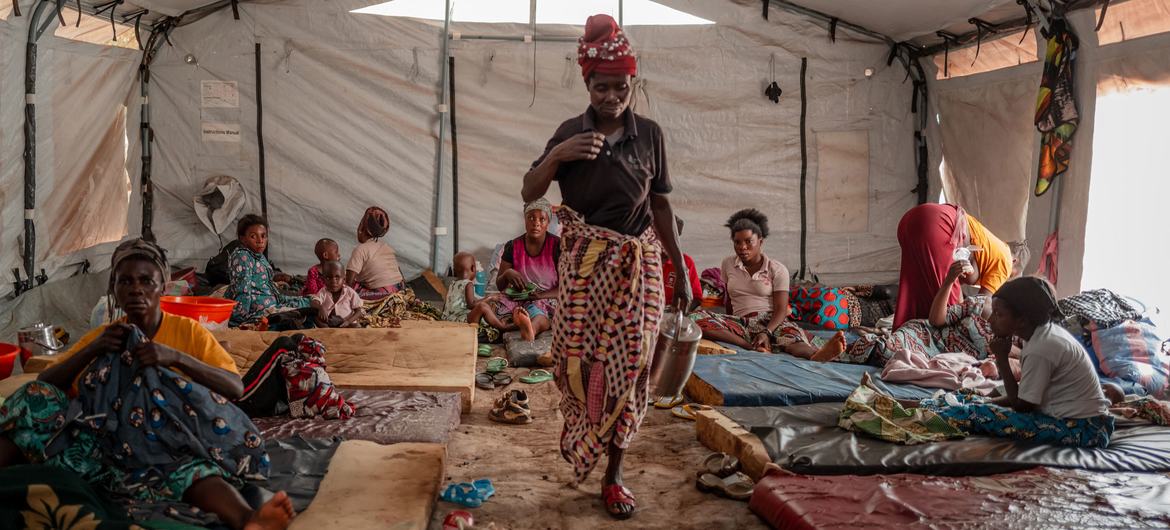
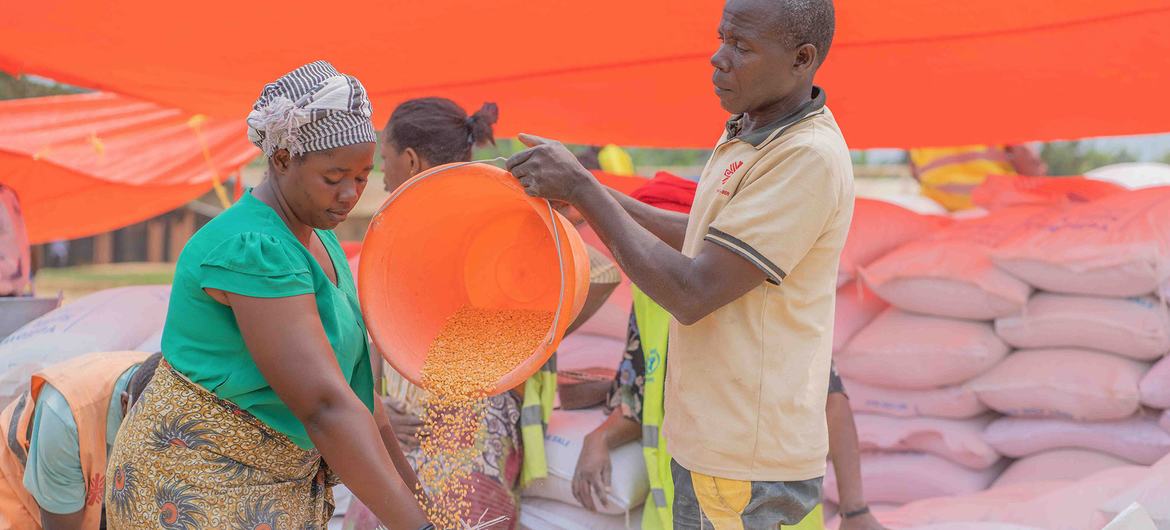
Food assistance is distributed to displaced people in the eastern DR Congo.

12 July 2024 Peace and Security

At least 25 million people have been caught up in the humanitarian crisis in the Democratic Republic of the Congo (DRC) where a neglected health emergency continues to unfold at an alarming rate, the UN health agency said on Friday.

For decades, conflict in the mineral-rich eastern DRC has triggered alarming levels of violence, mass displacement, widespread disease, gender-based violence and severe mental trauma, explained Dr Adelheid Marschang, Senior Emergency Officer at the World Health Organization (WHO).

‘Chronic and acute shock’

Today, the vast central African nation now has the “highest number of people in need of humanitarian aid in the entire world, with 25.4 million affected” and many in “chronic and acute shock”, she told journalists in Geneva.

A staggering 7.4 million people have been displaced, including 2.8 million in North Kivu alone.

The number of people forcibly uprooted has increased since the separatist M23 movement launched a major offensive in 2022, prompting national and regional military responses that have struggled to restrain the militia's advance.

Left with nothing

The resulting mass displacement has overwhelmed water and sanitation systems and brought an additional burden to the population’s scarce resources, the WHO official warned.

“About 40 per cent of the population, that is 40.8 million people, face serious food shortages, with 15.7 million facing severe food insecurity and as a result, a higher risk of malnutrition and infectious diseases,” Dr Marschang said. “If immediate action is not taken to address basic needs in DRC, over one million children will suffer from acute malnutrition.”

Mpox one of many health threats

Outbreaks of cholera, measles, meningitis, Mpox and plague have all been reported, exacerbated by severe flooding and landslides.

Specifically on Mpox – which remains a global health threat with 26 countries reporting cases to WHO this month – Dr Marschang said that DRC has seen 20,000 cases and more than 1,000 deaths from the virus since the start of 2023.

Over 11,000 cases, including 443 deaths, have been reported so far this year, “again affecting mostly children”, she noted.

Mpox spreads through close contact, causing flu-like symptoms and skin rash. Scientists raised the alarm last month about the spread of a dangerous new strain of Mpox in South Kivu and fear it will spread in overcrowded camps in and around Goma.

Military activity around those camps has made it difficult for health authorities to contain the virus if security is not granted, the UN health agency explained.

Rights crisis neglected

Earlier this week, the Special Representative of the Secretary-General, Bintou Keita, told the UN Security Council that the DRC faces one of the most severe and neglected humanitarian crises of our times.

Dr Marschang echoed that observation, explaining that the Humanitarian Response Plan for 2024 aims to assist 8.7 million people and requires $2.6 billion for all UN and partner agencies.

“The underfunding is severe,” she stressed, as “16 per cent of the Humanitarian Response plan is currently funded. For WHO, we are looking for something like $30 million to address the situation until the end of the year.”
...
The deterioration of the security situation has accompanied the full withdrawal from South Kivu of the UN Stabilization Mission in DRC (MONUSCO), ending the first phase of disengagement from DRC following a request to close the mission from the Government in Kinshasa.

MONUSCO’s operations began winding down in January after two decades of operations, but its Head, Bintou Keita, told the UN Security Council on Monday there should not be a rush to further disengagement since this process has thrown up unexpected challenges. She explained the rebel activity from the M23 carries a “very real risk of provoking a wider regional conflict”.

Violent insecurity in DRC has reached alarming levels, UN human rights chief Volker Türk has warned, “with an absence of State authority over large swathes of territory has also cleared the way for brutal levels of violence and attacks”.​

https://news.un.org/en/story/2024/07/1152031
 
DR Congo faces catastrophic health, humanitarian crisis

July 13, 2024 10:27 AM
By Lisa Schlein

GENEVA — The World Health Organization warns that millions of people in the Democratic Republic of Congo are facing a health and humanitarian crisis because of escalating conflict and violence, mainly in the eastern part of the country in recent months.

The agency said the surge in violence by armed groups, principally Rwandan-backed M23 Tutsi-led rebels, an accusation denied by the Rwandan government, is leading to “mass displacement, widespread disease, gender-based violence and severe mental trauma.”

Dr. Adelheid Marschang, a WHO senior emergency officer, told journalists in Geneva Friday, “The DRC now has the highest number of people in need of humanitarian aid in the entire world, with 25.4 million affected.”

She said the DRC “remains one of the most underfunded crises,” which hampers the ability of people to receive the relief supplies and care needed to protect them from infectious diseases, hunger, and sexual and gender-based violence.

The United Nations’ $2.6 billion Humanitarian Response Plan, which aims to assist 8.7 million people in the DRC in 2024, is only 16% funded. Marschang said the WHO has received just $6.3 million of the $30 million it requires, at a minimum, until the end of the year “as the situation is expected to get worse.”

“Mass movements of people overwhelm water and sanitation systems and bring an additional burden on the population’s scarce resources,” she said. “As a result, people are facing outbreaks of cholera, measles, meningitis, mpox and plague, all exacerbated by severe flooding and landslides affecting some parts of the country.” ...

Marschang said 1 million children out of 6.9 million are malnourished and at risk of becoming severely acutely malnourished if they do not receive specialized therapeutic treatment. ...

https://www.voanews.com/a/dr-congo-faces-catastrophic-health-humanitarian-crisis/7696676.html

 
Translation Google

DRC: Six humanitarians killed and 11 others kidnapped in 6 months, deplores Bruno Lemarquis

Published on Mon, 08/19/2024 - 20:35 | Modified on Mon, 08/19/2024 - 20:35

Six humanitarian workers were killed and eleven others kidnapped between January and June, the humanitarian coordinator in the DRC, Bruno Lemarquis, said on Monday, August 19.

He provided these figures on the sidelines of World Humanitarian Day.

According to Bruno Lemarquis, more than 200 incidents directly targeted humanitarian workers on the ground during this same period.

He also condemned the escalation of attacks against civilian populations and humanitarian actors in the DRC.

"Between January and July 2024, more than 630 civilians were tragically killed in the territories of Mambasa and Irumu (Ituri), and in the territories of Beni and Lubero (North Kivu), recalled the humanitarian coordinator in the DRC.

Armed attacks have caused tens of thousands of new displacements and the temporary suspension of humanitarian assistance in certain areas of North Kivu.

Bruno Lemarquis also sounded the alarm so that the voices of those who are suffering are listened to and heard and that concrete measures are taken to put an end to this cycle of unbearable violence that has lasted for decades and to protect the most vulnerable.
...
https://www.radiookapi.net/2024/08/...humanitaires-tues-et-11-autres-kidnappes-en-6

---------------------------------

Beni: Mbilinga health center closes its doors following violence by armed groups

Published on Wed, 08/21/2024 - 2:40 PM | Modified on Wed, 08/21/2024 - 2:40 PM

The Mbilinga health centre in the Beni territory of North Kivu, vital for thousands of people, has been forced to close its doors following violence by armed groups.

The destitute population of this locality is forced to travel several kilometers to access the most basic care.

Local civil society, through its president Maombi Kahongya, calls on the authorities to restore security in the area.

“The Mbilinga entity is in a critical situation. Health workers have moved to areas deemed safer. The population is now going through an ordeal because, to get treatment, they have to travel long distances. For example, from Mbilinga to Vurondo, they have to travel at least 7 kilometers. From Mbilinga to Kahamba, it is at least 8 kilometers, and from Mbilinga to Butuhe, at least 15 kilometers. It is in these localities that we can find other health facilities ,” explains Maombi Kahongya.

This situation, he adds, plunges the population into great difficulty in accessing care.

"This is why we call on the authorities to fulfill their mission, that of ensuring the security of the population and its property, because this area has already recorded several deaths due to the exactions of armed groups ," pleads Mr. Maombi.

https://www.radiookapi.net/2024/08/...nte-de-mbilinga-ferme-ses-portes-la-suite-des

 
Translation Google

Kwilu: more than 62,000 new displaced people in distress in the health zones of Bagata and Kikongo

Wednesday, August 21, 2024 - 3:02 p.m.

The humanitarian situation is getting worse in the health zones of Bagata and Kikongo in the province of Kwilu. More than 62,000 internally displaced persons fled the Fakwilu and Kisia groups between May and July, following incursions by Mobondo militiamen in this part of the Wamba-Fatundu sector.

We are mainly talking about women, children and the elderly who do not have access to health care and do not benefit from any food support.

According to the recent report of the multi-sectoral rapid assessment mission carried out by local humanitarian organizations and Ocha, 34,018 displaced persons are reported in the Bagata health zone. This is precisely in the villages of Beno, Manzasay, Sampiere, Siem-siem and the chief town of Bagata. There are 4,740 men, 14,776 women, 9,569 girls and 5,934 boys.

In this area, more than 5,200 people will be on the streets at the start of the school year, occupying five classrooms in Manzasay.

The report states that the Kikongo health zone received a total of 27,151 displaced persons, including 3,434 men, 10,954 women, 7,457 girls and 5,306 boys. They live mainly in the villages of Fambondo, Fampanda, Fasila, Fatobo Fatundu and Missay.

All these people have not had access to drinking water, health care or food support since last May. The focal point of the NGO Cause rural who was part of the team, reveals that the situation requires urgent humanitarian aid.

"They don't have access to health care, they don't have access to food. They eat only once a day. And the average is $0.18. There is food insecurity in the health zones of Kikongo and Bagata. These displaced people are suffering so much. There are cases of severe and acute malnutrition. The hospitals in the health zones are closed due to lack of equipment and health professionals. Young girls are now living survival sex. There are elderly people and children who are in difficulty," said Brunel Ndombe, focal point of the NGO Cause rural.

The security situation deteriorated again in the Wamba sector in May and July. Mobondo militiamen, active in the border area between the territories of Bagata and Kenge, harass travelers and take some hostage, also attacking residents.

Jonathan Mesa in Bandundu

https://actualite.cd/2024/08/21/kwi...detresse-dans-les-zones-de-sante-de-bagata-et
 
Conflict and Mpox: A deadly combination threatening the Democratic Republic of Congo

Date: 18.09.24
CARE International

The Democratic Republic of Congo (DRC) is currently facing a severe Mpox outbreak, a situation disproportionately affecting women and girls displaced by conflict. With over 15,000 cases and 700 deaths reported, the DRC has become the epicenter of the global outbreak. Among the over 6 million people displaced by conflict across the country, women—who make up 51% of this population—are particularly vulnerable. In addition to enduring the hardships of displacement, these women often shoulder the primary responsibility for caring for sick family members, which heightens their risk of contracting the disease.

"Women fleeing violence now face infection which is fast spreading in overcrowded camps where soap, clean water, and proper healthcare are scarce,” said Sidibe Kadidia, CARE DRC Country Director. “Underage girls who have been forced to engage in sex work to provide for their families are at high risk of being infected and transmitting the disease. Women and girls taking care of infected family members, especially babies, are highly exposed. On top of it all, stigma and lack of accurate information about Mpox are all too common, often meaning people only seek treatment when the symptoms are already severe and highly infectious."
...

https://www.care-international.org/...tly facing a,epicenter of the global outbreak.
 
Translation Google

DRC: 7 humanitarians killed in 268 security incidents in 2024

Thursday, September 26, 2024 - 12:59

At least 268 security incidents targeting humanitarian workers have been recorded by OCHA since the beginning of 2024, said Bruno Lemarquis, humanitarian coordinator, during a press conference on September 24.

Lemarquis stressed that the DRC is one of the most dangerous countries for humanitarians, victims of rights violations and deadly violence.

“In 2024, 268 security incidents targeted humanitarian actors, an increase of 39% compared to 2023, and 7 of our humanitarian colleagues lost their lives since the beginning of the year,” he said.

Regarding the humanitarian situation in eastern DRC, Lemarquis added that more than 61,000 survivors of gender-based violence were treated in the first half of 2024.

The clashes between the FARDC and the M23 in North Kivu, as well as the violence in other provinces such as South Kivu and Tanganyika, have led to massive displacement of the population. More than 6.4 million displaced people have been recorded in several regions of the DRC, making this crisis the largest in terms of internally displaced populations in the world.

"Around Goma, the situation remains very critical, with up to 750,000 displaced people living in precarious conditions, marked by epidemics and sexual violence," added the humanitarian coordinator.

In 2024, the international community has earmarked USD 2.6 billion in funding to respond to the crisis, but only 37% of this amount has been reached.

The coordinator also recalled the tragic death of a humanitarian at a Wazalendo barrier in Kalehe, and stressed that 211 schools are occupied by displaced people, thus depriving thousands of children of their education.

Justin Mwamba

https://actualite.cd/2024/09/26/rdc-7-humanitaires-tues-dans-268-incidents-de-securite-en-2024
 
UNHCR gravely concerned by worsening violence and humanitarian crisis in eastern DR Congo

Format News and Press Release Source
Posted 24 Jan 2025 Originally published 24 Jan 2025 Origin View original A displacement site near the provincial capital of Goma. Many families have fled to the city to escape escalating violence in DRC's North Kivu province. © UNHCR/Blaise Sanyila

UNHCR is gravely concerned about the safety and security of civilians and internally displaced people (IDPs) in the eastern Democratic Republic of the Congo (DRC), as conflict further intensifies across South and North Kivu Provinces. The number of people displaced has now surged to more than 400,000 this year alone, almost double the number reported just last week.

Since our last update on 17 January, bombs have fallen on IDP sites. On 20 January, explosions at Kitalaga site in South Kivu killed two children, while on 21 January, five makeshift shelters were destroyed in Nzuolo and yesterday, Bushagara site was heavily impacted, causing panic and new waves of forced displacement.

Violence has also escalated in South Kivu’s Minova and Kalehe territories, displacing an additional 178,000 people as intense clashes led to non-state armed groups taking control of the town of Minova and the locality of Kalungu. At least 80 per cent of the population fled towards the city of Goma. UNHCR colleagues are monitoring cross-border movements and stand ready to respond to any potential outflow of asylum-seekers.

Meanwhile, fighting intensified in the North Kivu town of Saké, approximately 25 kilometres from Goma, culminating in non-state armed groups seizing control. Heavy bombardments caused families from at least nine displacement sites on the periphery of Goma to flee into the city to seek safety and shelter. Many spent last night sleeping on the streets and in green spaces across the city.

Persistent clashes between belligerents in these areas continue to deteriorate the protection environment for civilians in South and North Kivu Provinces which are already home to 4.6 million internally displaced people. Human rights violations, including looting, injuries, murders, kidnappings and arbitrary arrests of displaced people mistaken for rebels have escalated. Hospitals are nearing capacity with injured civilians. Vulnerable women, children, and the elderly are living in overcrowded and precarious conditions with limited access to food, water, and essential services.

Humanitarian access to address these urgent needs is significantly restricted. All roads to Minova, including for humanitarian aid, are closed. Indiscriminate shelling has forced the temporary suspension of life-saving activities in several areas in North Kivu.

UNHCR echoes the Secretary General’s call to uphold human rights and international humanitarian law, and to ensure immediate and unrestricted access to populations in need of humanitarian assistance. UNHCR also urges all parties to prioritize the protection of civilians, respect the civilian nature of IDP sites and refrain from using explosives and heavy weapons in overcrowded civilian environments.

It is vital, and long overdue, for peace to take root in the Democratic Republic of the Congo for the benefit of its people and the region.

https://reliefweb.int/report/democr...ence-and-humanitarian-crisis-eastern-dr-congo
 
DRC: Over 1.5 Million Children Need Protection as Goma Faces Heavy Fighting, Save the Children

Media Contact:
Diana Oberoi +1 (202) 286-1421(O)

GOMA (January 27, 2025) – Children caught in heavy fighting in the town of Goma in the eastern Democratic Republic of Congo (DRC) must be protected, with Save the Children concerned for their safety amid the worst escalation of violence in the country in more than a decade.

About 3 million people live in Goma, including 1 million displaced people. Save the Children estimates over half of those – or over 1.5 million - are children[1].

Large parts of Goma have been without water and electricity since Friday, and parents have no food or clean water for their children. People are trying to flee but have nowhere to go.
...
Save the Children's office in Goma was hit by an explosion today, and the house of a Save the Children employee was struck with bullets. While no staff were injured in these attacks, staff, along with other members of the community, remain at risk as intense fighting continues.
...
https://www.savethechildren.org/us/...drc-over-1.5-million-children-need-protection
-------------------------------------

Translation Google

Goma: Hospitals overwhelmed by wounded, some medicines out of stock

Published on Tue, 01/28/2025 - 1:31 PM | Modified on Tue, 01/28/2025 - 1:31 PM

The health and humanitarian situation has been catastrophic in the city of Goma in North Kivu for several days.

Hospitals and other health facilities are overwhelmed by wounded following clashes in and around Goma between the Rwandan-backed M23 and the FARDC.

At the CBKA Virunga general reference hospital, for example, Doctor Grâce Amzati, contacted Tuesday, January 28 by Radio Okapi, said he had recorded to date more than 400 injured and around twenty dead, including soldiers and civilians, including children.

"Since this morning, we have just received 109 injured people, and we have just counted five deaths. We are overwhelmed by the injured, the hospital capacity is so insufficient. We are overwhelmed. We are four doctors, but we are supported by our trainee doctors and nurses. We are lacking certain emergency supplies, such as injectable paracetamol, adrenaline for resuscitation and so many other hospital supplies," says Dr. Michael Bolingo.

He is appealing for help from the authorities and humanitarians in view of the seriousness of the situation.

"We continue to count the victims. At the moment it is difficult to give you an exact figure, these are provisional figures. We do not even have electricity, our generator has broken down, our morgue also has a small capacity. So it will be difficult for us to keep all these dead ," he added.

https://www.radiookapi.net/2025/01/...ordes-par-des-blesses-certains-medicaments-en
 
Translation Google

SOS for Goma hospitals running out of supplies

Published on Wed, 01/29/2025 - 2:47 PM | Modified on Wed, 01/29/2025 - 2:48 PM

Hospitals and other health facilities in the city of Goma in North Kivu are overwhelmed by the wounded and dead, victims of the fighting between the M23, supported by Rwanda, and the FARDC. At the CBCA/Virunga general reference hospital , Dr. Michael Bolingo, contacted this Wednesday, January 29 morning by Radio Okapi, claims to have recorded between Tuesday and this Wednesday more than 140 wounded and about thirty deaths.

" After four days in the hospital, we were just relieved this morning at the hospital by our fellow doctors because there was already a little lull. The toll from yesterday to today, I left the hospital leaving 146 injured and we recorded 31 dead. So, during the night, because we had an electricity problem, it was resolved with a generator. We tried to save some lives ," testified Dr. Michael Bolingo.

He asks the authorities and humanitarians to take advantage of this lull to supply hospitals, most of which are running out of supplies:

"In all this time, whether from the side of the patients or the healthcare staff, we have not yet received any help from the Government or from partners. So when leaving the hospital, we can see that there are a lot of bodies, for example on the Virunga road towards the Singers roundabout, I counted at least three bodies. In our hospital, the morgue has a capacity of eight rooms. Today, I left, leaving 31 dead. We should transfer some patients to our hospitals, particularly the Heal Africa hospital, but the problem is that there is no way to get the ambulance to circulate."

https://www.radiookapi.net/2025/01/...our-les-hopitaux-de-goma-en-rupture-dintrants
 
Translation Google

DRC: Humanitarian access is severely limited on several axes of Kivu, warns the UN


image1170x530cropped.jpg


© WFP/Moses Sawasawa

A woman walks the streets with children in Goma, eastern Democratic Republic of Congo.


January 29, 2025 Peace and security

While a "precarious lull" is slightly observed after two days of intense fighting in the city of Goma, many aid agencies have expressed alarm at the deterioration of the humanitarian situation in the Democratic Republic of Congo where humanitarian access is "severely limited on several axes" of South Kivu and North Kivu.

According to the UN Office for the Coordination of Humanitarian Affairs ( OCHA ), Goma airport has remained closed since 26 January, and most access routes to the city of Goma, including the RN2, have been cut off. The border at the Grande Barrière with the city of Gisenyi has been inaccessible since the morning of 28 January.

The United Nations continues to call for the establishment of humanitarian corridors, the reopening of Goma airport and border crossing points, to allow voluntary population movements seeking refuge in places free from conflict. “Due to the fighting, humanitarian activities are severely limited. Only health and water, hygiene and sanitation interventions continue,” notes OCHA.
image1170x530cropped.jpg

© WFP/Moses Sawasawa

In Goma, in eastern DRC, residents are fleeing the advance of armed groups.

Negotiations for the establishment of a humanitarian corridor in South Kivu

In South Kivu, the access routes to Minova have been blocked since January 18, 2025. Insecurity on the various front lines thus impacts the Minova-Bunyakiri, Kalehe-Idjwi, and Minova-Kalehe-Bukavu axes.

"About twenty humanitarian partners, based in Minova, are ready to resume their operations as soon as the situation allows. Negotiations are underway for the establishment of a humanitarian corridor that would ensure the delivery of emergency assistance," notes OCHA in its latest situation report.

M23 rebels tighten grip on Goma. The capture of the largest city in eastern DRC is a new chapter in a serious escalation that has lasted for years and left hundreds dead and millions displaced.

In Kinshasa, the capital of the DRC, protesters denouncing the inaction of the international community attacked several embassies, including those of Belgium, France, Kenya, South Africa, the United States and Uganda.

On the ground, more than half of the populations of the displaced persons sites of Kanyaruchinya, Bushagara, Rusayo 1 and Rusayo 2 have left these areas. Some displaced persons have headed to Goma or other neighbouring localities, others have found refuge with host communities, in schools and other collective infrastructures.


Medical evacuation becomes a challenge

In South Kivu, humanitarian actors estimated that nearly 20,000 households, or more than 117,000 people, were newly welcomed in the Kalehe health zone in Kalehe territory between January 20 and 27.

Regarding the fate of the wounded, health structures are saturated and are organizing to care for the seriously injured, despite the power and water cuts in Goma. "Medical evacuation is becoming a challenge, in a context of persistent violence, with ambulances being targeted."

As of 28 January, the International Committee of the Red Cross ( ICRC ) recorded more than 256 wounded at Ndosho hospital. The ICRC reports that it has treated more than 600 wounded since the beginning of January, nearly half of whom are civilians. Many of them are women and children.

At the same time, the NGO Médecins Sans Frontières announced that it had received around sixty wounded people at the Kyeshero hospital in the city of Goma.


WHO has provided more than 25 tonnes of medicines and equipment

In South Kivu, "the number of wounded exceeds the capacity of hospitals and health centers in Kalehe and Minova. The most serious cases have been referred to the Bukavu General Reference Hospital. Nearly 400 people with gunshot wounds have been treated by Médecins Sans Frontières (MSF) over the last three weeks in Minova, Numbi and Masisi.

According to humanitarian agencies, this situation is the result of the use of artillery in densely populated areas – particularly in large urban centres such as the city of Goma or displaced persons camps – as well as the intensity of devastating fighting for the trapped populations.
"With the influx of wounded from the fighting in recent days, of course the hospitals that were already at maximum capacity are now overwhelmed, it's a truth," said in an interview with UN Info, Boureima Hama Sambo, Representative of the World Health Organization ( WHO ) in the DRC, noting that his agency provided last weekend, more than 25 tons of medicines and equipment as well as more than 25 tents to support the health districts.


WHO reassures on the specter of Ebola spread from a laboratory in Goma

While the International Committee of the Red Cross said on Tuesday that it was "very concerned" about the risk of the Ebola virus leaking from the Goma laboratory, the UN World Health Agency is providing reassurance about the situation at the National Institute for Biomedical Research in Goma.

If this lab keeps samples, the WHO emphasizes that these highly pathogenic germs with epidemic potential are very well preserved. For the WHO, there is no concern since the Goma laboratory is kept in conditions that meet the criteria of vigilance and international rigor.

"We were in Goma only last week. We visited the laboratory whose samples are preserved according to international standards. On this, there is no concern since the Goma laboratory is really kept in conditions that meet the criteria of vigilance and international rigor," added Dr. Sambo.
image1170x530cropped.jpg

© WHO/Guerchom Ndebo

Patients are treated for MPOX in eastern DRC in August 2024.

Tracing of MPOX cases

More broadly, the WHO is concerned about the deterioration of the humanitarian situation in the Kivus, which was already "an acute health emergency". For Dr. Sambo, the increase in clashes has worsened a situation that was already very precarious in a region where diseases such as Mpox, cholera and measles are rife.

Especially since with the current situation, the WHO fears that Mpox patients who were in isolation in the displacement sites could now mix with the general population. "So this will facilitate, accentuate the spread of the disease," observed Dr. Sambo, specifying that more than 20,000 suspected cases of monkeypox have been reported in North and South Kivu since 2024, including more than 6,000 in the last six weeks.

North and South Kivu also recorded more than 21,600 cases and 59 deaths from cholera, and more than 11,700 cases and 115 deaths from measles last year.


UNICEF needs $22 million

Faced with the rapidly deteriorating humanitarian situation in eastern DRC, the United Nations Children's Fund ( UNICEF ) has launched an appeal for $22 million to provide emergency assistance to 282,000 children.

The money will help with protection, health, nutrition, water and sanitation, and education.

“Civilians, exhausted by the traumatic events, are suffering from hunger, thirst and are exhausted. Families deprived of access to water, electricity and the Internet, are taking refuge wherever they can to escape the violence,” said Jean Francois Basse, UNICEF Acting Representative in the DRC.

The main risks for children are currently related to health and protection. The precarious living conditions in the camps, characterized by promiscuity and unsanitary conditions, expose children to a high risk of diseases such as cholera, measles and COPD. Fear of clashes and the saturation of health structures means that many parents are reluctant to take their children to hospital.

UNICEF has received reports of an alarming increase in the number of children separated from their families or unaccompanied, putting them at increased risk of abduction, forced recruitment and sexual violence.


https://news.un.org/fr/story/2025/01/1152581
 
OCHA DRC
@UNOCHA_DRC


THREAD🧵

Violence and looting of humanitarian warehouses in #Goma have impacted both the ability of aid workers to respond and have obviously put them at risk.
...
Since the escalation of fighting in early January, our humanitarian partners have recorded more than 2,000 injuries caused by weapons and explosive shrapnel.

Humanitarian workers are treating injuries where possible.
...
Water and electricity supplies remain cut off in #Goma since 26 January. We call for the swift resumption of these services, as well as for the protection of humanitarian warehouses and the facilitation of medical evacuations for people who have been injured.
...
The airport in #Goma unfortunately remains closed, which means that flows of humanitarian cargo and rotations of humanitarian personnel have been suspended.
...
We once again call on all parties to respect international humanitarian law and to end the violence targeting civilians that we have seen.

3:55 AM · Jan 30, 2025
-----------------------------------

WFP DRC
@WFPDRC

🚨Food is running out. Water is scarce. Hospitals are overwhelmed. The next 24 hours are critical.
@WFP is ready to resume food assistance as soon as it’s safe. But we need humanitarian access now.

image.png

5:05 AM · Jan 30, 2025​
 
Press briefing notes Office of the High Commissioner for Human Rights DRC: Deepening human rights crisis amid reports of further M23 advances


31 January 2025
From
Spokesperson for the UN High Commissioner for Human Rights Jeremy Laurence
Location
Geneva Related

The human rights crisis in eastern Democratic Republic of the Congo continues to deepen, as hostilities between the armed forces and the Rwandan-backed M23 armed group expand towards South Kivu following the M23’s takeover of Goma. Reports indicate that M23 has progressed further south towards Bukavu.

Since the start of the crisis, bombs have struck at least two IDP (internally displaced person) sites, causing civilian casualties. We have also documented summary executions of at least 12 people by M23 between 26 and 28 January.

Our Office has also documented cases of conflict-related sexual violence by the army and allied Wazalendo fighters in Kalehe territory. We are verifying reports that 52 women were raped by Congolese troops in South Kivu, including alleged reports of gangrape.

In other areas under M23 control in South Kivu, such as Minova, M23 has occupied schools and hospitals, forced IDPs out of camps and subjected the civilian population to forced conscription and forced labour.

Additionally, DRC officials report that at least 165 women were raped by male inmates during the prison break by more than 4,000 inmates from Goma’s Muzenze prison on 27 January, as M23 began its assault on the town.

Conflict-related sexual violence has been an appalling feature of armed conflict in eastern DRC for decades. High Commissioner Volker Türk is particularly concerned that this latest escalation risks deepening the risk of conflict-related sexual violence much further. The current widespread proliferation of weapons in Goma is exacerbating the already significant risks of serious violations and abuses.

We continue to receive urgent requests from civilians for protection and are working with UN colleagues and other partners to ensure their safety.

As M23 reportedly advances towards Bukavu, the capital of South Kivu, the High Commissioner calls for an end to the violence and for all parties to uphold their obligations under international human rights law and international humanitarian law. It is crucial that there are investigations into the commission of violations, with a view to bringing the perpetrators to justice and ensuring comprehensive accountability.


https://www.ohchr.org/en/press-brie...ghts-crisis-amid-reports-further-m23-advances
 
WEEKLY BULLETIN ON OUTBREAKS
AND OTHER EMERGENCIES

Week 05: 27 January to 02 February 2025
Data as reported by: 17:00; 02 February 2025

...

Eastern Democratic Republic of the Congo​

Complex Humanitarian Crisis


EVENT DESCRIPTION

On 27 January 2025, the Mouvement du 23 Mars
(M23) armed group took control of Goma, North Kivu,
following intense clashes with the Congolese army.
Reports indicate widespread looting of shops, offices,
and humanitarian warehouses, as well as violations
of International Humanitarian Law, including sexual
assaults by armed groups. Explosions and gunfire
persisted in several parts of the city, and multiple lifeless
bodies seen littering the streets. The capture of Goma
also triggered violent protests in Kinshasa, leading to
attacks on embassies and international institutions.
The crisis in Goma has severely disrupted essential
services. Since 26 January 2025, water and electricity
have been cut off, while internet access was lost on 27
January 2025, leaving only mobile networks operational.
The closure of Goma Airport since 26 January 2025 has
halted air evacuations and humanitarian flights, further
paralyzing humanitarian assistance. Medical services
are overwhelmed, with hospitals struggling to treat the
injured amid critical shortages of medicine and medical
supplies. Between 6 and 25 January 2025, at least 43 500
people arrived at displacement sites in Goma, however,
many Internally Displaced Persons (IDP) sites, including
those at Kanyaruchinya, Bushagara, and Rusayo 1 and
2, have emptied due to renewed violence. On 26 January
2025, shelling killed 12 people and injured around 10
others in Rusayo 1 and 2, destroying water, sanitation,
and shelter facilities.

The human impact of the crisis is devastating. Between
26 and 31 January 2025, 2 958 injured individuals were
recorded in healthcare facilities, while many remain
stranded in their homes, awaiting medical assistance.
Morgues have exceeded capacity, with hundreds of
bodies awaiting burial, raising serious public health
concerns. With response activities halted due to
insecurity, there is an increased risk of disease spread.
Of the 143 confirmed mpox cases admitted across
three health zones in Goma, 128 patients have escaped
from the treatment centers, many of which were looted
and rendered inoperable. The risk of cholera has also
increased, with North Kivu being the second most
affected province after Haut-Lomami, recording 499
cases with 47 deaths between 1 and 19 January 2025.

This escalation has further worsened the already severe
humanitarian crisis in eastern DRC.
Before the recent
upsurge in fighting, Goma and its surroundings in North
Kivu hosted 700 000 displaced people, many living in
overcrowded and under-resourced sites. Since October
2024, over 480 000 additional people have been
displaced in North Kivu, alongside 178 000 in South
Kivu, further straining humanitarian resources. Hospitals
are operating beyond capacity, and critical health
supplies are running dangerously low. Reports of forced
recruitment and forced labour in South Kivu underscore
the growing vulnerability of civilians.

The ongoing conflict has severely restricted
humanitarian access. Many aid operations remain
suspended due to insecurity. Roads leading to Minova,
Bunyakiri, and Idjwi in South Kivu remain blocked, and
Goma’s key supply routes are inaccessible


PUBLIC HEALTH ACTIONS

On 26 January 2025, the Emergency Relief Coordinator
allocated US$17 million through the Central Emergency
Response Fund (CERF) to support affected populations.
An assessment of response capacities is ongoing in
coordination with humanitarian partners.

The Health Cluster response strategy prioritizes
integrated health assistance for displaced people,
including emergency mobile clinics and flexible response
measures adapted to the volatile situation.

International organizations are preparing to scale up
aid efforts despite severe resource shortages. On 28
January 2025, they raised concerns over the ongoing
fighting in Goma, which has forced the suspension of
most humanitarian operations. They are calling for the
establishment of humanitarian corridors to facilitate safe
aid deliveries and civilian movement.

SITUATION INTERPRETATION

The upsurge in violence due to the armed conflict in
Goma and other parts of Eastern DRC has further
exacerbated an already dire humanitarian crisis.
Clashes and mass displacements have severely
strained essential resources, disrupting access to food,
water, healthcare, and shelter, while insecurity continues
to impede humanitarian operations. If humanitarian
access is not urgently restored and the fighting further
escalates, the crisis risks spiraling into a large-scale
disaster, driving uncontrolled displacement, worsening
health conditions, and heightened regional instability.
Immediate international intervention and increased
funding are essential to avert a total humanitarian
collapse.​

https://www.afro.who.int/countries/...ergencies-week-05-27-january-02-february-2025
 
Translation Google

Health crisis in eastern DRC: 4,260 injured reported in hospitals

February 13, 2025

Kinshasa, February 13, 2025 (ACP).- Four thousand two hundred and sixty ( 4,260) injured following the Rwandan aggression have been reported in the health facilities of the two eastern provinces of the Democratic Republic of Congo, announced the Minister of Health, during a press briefing Thursday in Kinshasa.

"We have recorded 4,260 wounded in the health facilities of the provinces of North Kivu and South Kivu and we have recorded 3,000 deaths, including 458 buried in just 5 days, as well as 939 bodies still present in the morgues," declared Dr. Roger Samuel Kamba, Minister of Health.

" Some measures have been taken by the State to help the population in the East. There needs to be a reorientation of the budget in each sector to prioritize and help improve the situation in the East of the country," he added.

"We will mobilize civil society so that everyone can participate effectively so that we have sufficient results. Beyond material resources, there are companies that mobilize fuel and other equipment. There is also the blood campaign to help our compatriots," he said.

For Dr. Kamba, with the destruction of health infrastructure, it is necessary to make medicines and supplies available for the proper care of patients during this period of war.

Faced with this situation, the World Health Organization (WHO) managed to negotiate with the Rwandan authorities for the transport of medical equipment via Nairobi, Rwanda to arrive in Goma.

2,900 bags of blood collected

Furthermore, Dr. Kamba said that 2,900 bags of blood were collected during the blood donation campaign in favor of the Armed Forces of the DRC and the Wazalendos, launched on January 31.

" Through the Blood Transfusion Center, we have already started the packaging of 2,900 blood bags. The assigned objective is 5,000 bags. The campaign will continue and I think the press will help us ," he said.

He said the Ministry of Health has the means to ship these blood bags and is preparing trauma kits to be sent for patient care.

The minister further specified that the major challenges consist of negotiating how to send doctors and nurses to these provinces for the care of the wounded, including surgical care.

" The doctors present on site are exhausted and a replacement is imperative with the sending of surgeons because the city has recorded many gunshot wounds ," he lamented.

Destruction of Mpox processing centers

The Minister of Health also deplored the destruction of Mpox (monkey pox) treatment centres in the provinces of North Kivu and South Kivu and the difficult access to certain health zones such as Nyaragongo.

" As of January 24, we registered approximately 143 Mpox patients in the care center and they all fled unfortunately. We were only able to recover 43 patients. This situation exposes the population to contamination ," he said.

Dr Kamba clarified that these figures are still provisional and minimal, since they only concern medical facilities accessible to date, adding that the government is also closely monitoring the health situation in neighboring countries, including the threat of Ebola in Uganda and Marburg in Rwanda.

Regarding cholera, the Minister of Health indicated that 92 cases were recorded last week in these provinces. This press briefing, focused on the response to the health and humanitarian crisis, aimed in particular to raise awareness of the increased epidemiological risks of Mpox, Ebola and Cholera as well as the impact of mass displacement. ACP/CL

https://acp.cd/sante/crise-sanitaire-dans-lest-de-la-rdc-4-260-blesses-notifies-dans-des-hopitaux/

 
Back
Top