• FluTrackers.com Inc. does not provide medical advice. Information on this web site is collected from various internet resources, and the FluTrackers board of directors makes no warranty to the safety, efficacy, correctness or completeness of the information posted on this site by any author or poster. The information collated here is for instructional and/or discussion purposes only and is NOT intended to diagnose or treat any disease, illness, or other medical condition. Every individual reader or poster should seek advice from their personal physician/healthcare practitioner before considering or using any interventions that are discussed on this website. By continuing to access this website you agree to consult your personal physican before using any interventions posted on this website, and you agree to hold harmless FluTrackers.com Inc., the board of directors, the members, and all authors and posters for any effects from use of any medication, supplement, vitamin or other substance, device, intervention, etc. mentioned in posts on this website, or other internet venues referenced in posts on this website.
  • We are not asking for any donations. Do not donate to any entity who says they are raising funds for us.

DRC - Ebola outbreak in North Kivu and Ituri: July 30, 2018+

Translation Google
[TABLE="class: templateContainer, border: 0, cellpadding: 0, cellspacing: 0, width: 600"]
[TR]
[TD] [TABLE="class: mcnImageBlock, border: 0, cellpadding: 0, cellspacing: 0, width: 100%"]
[TR]
[TD="class: mcnImageBlockInner"] [TABLE="class: mcnImageContentContainer, align: left, border: 0, cellpadding: 0, cellspacing: 0, width: 100%"]
[TR]
[TD="class: mcnImageContent"]
17347356-dd33-47d4-bf0b-d3ef85029537.png
[/TD]
[/TR]
[/TABLE]
[/TD]
[/TR]
[/TABLE]
[TABLE="class: mcnBoxedTextBlock, border: 0, cellpadding: 0, cellspacing: 0, width: 100%"]
[TR]
[TD="class: mcnBoxedTextBlockInner"] [TABLE="class: mcnBoxedTextContentContainer, align: left, border: 0, cellpadding: 0, cellspacing: 0, width: 100%"]
[TR]
[TD] [TABLE="class: mcnTextContentContainer, border: 0, cellspacing: 0, width: 100%"]
[TR]
[TD="class: mcnTextContent"]DIRECTORATE GENERAL FOR DISEASE CONTROL[/TD]
[/TR]
[/TABLE]
[/TD]
[/TR]
[/TABLE]
[/TD]
[/TR]
[/TABLE]
[/TD]
[/TR]
[TR]
[TD] [TABLE="class: mcnBoxedTextBlock, border: 0, cellpadding: 0, cellspacing: 0, width: 100%"]
[TR]
[TD="class: mcnBoxedTextBlockInner"] [TABLE="class: mcnBoxedTextContentContainer, align: left, border: 0, cellpadding: 0, cellspacing: 0, width: 100%"]
[TR]
[TD] [TABLE="class: mcnTextContentContainer, border: 0, cellspacing: 0, width: 100%"]
[TR]
[TD="class: mcnTextContent"] EPIDEMIOLOGICAL SITUATION
Monday 6 August 2018


The epidemiological situation of the Ebola Virus Disease dated August 5, 2018 :
  • A total of 43 cases of haemorrhagic fever were reported in the region, of which 16 confirmed and 27 probable.
  • 31 suspected cases are under investigation .
  • 3 new confirmed cases in Mabalako
  • 4 new confirmed cases in Mabalako
  • Decrease in probable cases in Mandima: After investigation, of the 5 probable cases reported in the previous bulletin, 3 people are still alive and have been classified in the category of alerts to be investigated.
98b3fd80-2ca4-4b7b-bd01-be1e801a0a1c.png


Remarks:
  • To avoid that the total number of cases varies (up or down) daily, the suspect cases have been placed in a separate category. Thus, suspect cases with positive laboratory tests will be added to the confirmed category, while negative ones (non-cases) will be removed from the table.
  • The category of probable cases includes all reported deaths for which it was not possible to obtain biological samples for laboratory confirmation. The investigations will determine whether these deaths are related to the epidemic or not.
[/TD]
[/TR]
[/TABLE]
[/TD]
[/TR]
[/TABLE]
[/TD]
[/TR]
[/TABLE]
[TABLE="class: mcnBoxedTextBlock, border: 0, cellpadding: 0, cellspacing: 0, width: 100%"]
[TR]
[TD="class: mcnBoxedTextBlockInner"] [TABLE="class: mcnBoxedTextContentContainer, align: left, border: 0, cellpadding: 0, cellspacing: 0, width: 100%"]
[TR]
[TD] [TABLE="class: mcnTextContentContainer, border: 0, cellspacing: 0, width: 100%"]
[TR]
[TD="class: mcnTextContent"]
News of the response
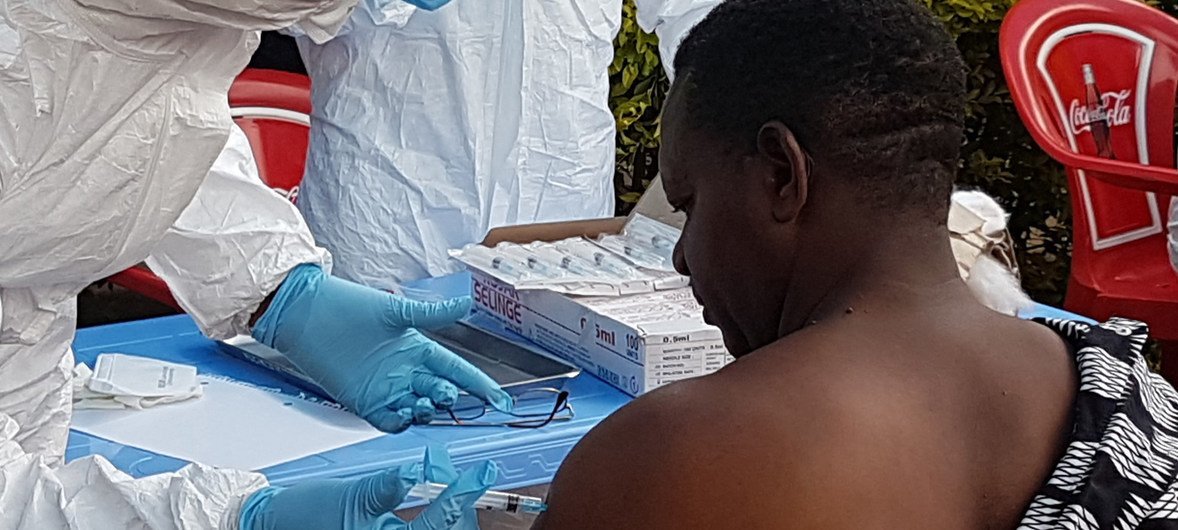
  • The cold chain for vaccination arrived in Beni this Sunday, August 6, 2018. Twelve teams of vaccinators will be deployed in the various affected areas. Vaccination should be ready by the end of the week. The Ministry of Health and WHO will apply the same strategy for belt vaccination, which is a targeted vaccination targeting primary care providers, people who have been in contact with confirmed cases of Ebola, and contacts with them. contact.
  • Contact tracking activities started in Beni. In all health zones under surveillance, 966 contacts have already been registered.
  • Probable case investigations are ongoing to determine if they are related to the current outbreak.
  • The national coordination of the Ebola response, the provincial government and the partners organized information and sensitization sessions for the administrative authorities and leaders of the Beni territory, as well as community leaders and the population of Butembo.
[/TD]
[/TR]
[/TABLE]
[/TD]
[/TR]
[/TABLE]
[/TD]
[/TR]
[/TABLE]
[/TD]
[/TR]
[/TABLE]

...
https://us13.campaign-archive.com/?u=89e5755d2cca4840b1af93176&id=a5ce962671
 
Translation Google

Ebola case in Ituri: Abdallah Pene Mbaka contradicts his vice-governor

8/7/2018,
PROVINCES

The medical director of the Mandima Health Zone in Mambasa territory in Ituri, told local press last Thursday that the Makeke village on the border with Mangina in North Kivu, epicenter of the Ebola outbreak, had registered 6 confirmed cases including 4 deaths.

A situation that had prompted the vice-governor Pacific Keta Upar, assuming the interim of its owner, to convene an extended security meeting to humanitarians.

Information that has just been contradicted by the governor of Ituri province, Jefferson Abdallah Pene Mbaka, upon his return after a long stay in Kinshasa.

Abdallah Pene Mbaka: "Ebola has not arrived here yet"

Meanwhile, the news of this new Ebola outbreak had already circulated on social networks and spread like wildfire reporting the presence of this epidemic in Mambasa territory and in Bunia city, creating panic in the head of the population. This may have prompted Governor Abdallah Pene Mbaka to convene the local press for an update.

"This is false and archifal, the Ebola outbreak has not yet arrived at home, these are just rumors. It is the inhabitants of Makeke who were contaminated in Mangina in North Kivu, dead and buried there. All the information that has come to me from different health facilities in the province tells me that there are no cases reported at this stage, no Ebola virus at home, "said the governor of Ituri to the press.

The provincial authority also specified that when an outbreak is declared in a province, only the governor has the monopoly to bring this information to public opinion.

"I am the only person in the province to officially declare the existence of any epidemic. Whether it is the head of provincial division of health, even the provincial minister of health, even less the heads of health facilities do not have this competence, "he said, before calling on his constituents to observe the measures. of hygiene contained in the communiqu? signed since last week by the vice-governor of the Pacific province Keta Upar.

Among these measures are the regular washing of the hands, the ban on the consumption of meat found dead animals but also do not touch the dead patients of the Ebola epidemic.

LM (Corresponding to Bunia)
MEDIA CONGO PRESS / mediacongo.net

https://www.mediacongo.net/article-...pene_mbaka_contredit_son_vice_gouverneur.html
 
[h=1]WHO Warns There May Be No Vaccine Option for New Ebola Outbreak[/h] GENEVA/GOMA (Reuters) - It may be impossible to use a vaccine to tackle Democratic Republic of Congo's new Ebola outbreak that has caused four confirmed cases, including two health workers, a senior World Health Organization (WHO) official said on Thursday.
Officials have not confirmed the particular strain of Ebola causing the outbreak, which may have killed 20 people, but WHO's emergency response chief Peter Salama said it could be the Zaire, Sudan or Bundibugyo strain.
If it is the Zaire strain, the Merck vaccine used in the last Ebola outbreak may be an option, otherwise the situation will be much more complex "and we may not have any vaccine options," he told Reuters at WHO's headquarters in Geneva.
"The majority of the cases occurred in the second half of July . . . When the provincial medical teams have looked back . . . they have noted cases that could be consistent with Ebola that began even in May but it?s far too early to say," Salama said.

...

https://www.medscape.com/viewarticle/900156?src=soc_fb_180806_mscpedt_news_mdscp_ebola&faf=1
 
Translation Google
[TABLE="class: templateContainer, border: 0, cellpadding: 0, cellspacing: 0, width: 600"]
[TR]
[TD] [TABLE="class: mcnImageBlock, border: 0, cellpadding: 0, cellspacing: 0, width: 100%"]
[TR]
[TD="class: mcnImageBlockInner"] [TABLE="class: mcnImageContentContainer, align: left, border: 0, cellpadding: 0, cellspacing: 0, width: 100%"]
[TR]
[TD="class: mcnImageContent"]
17347356-dd33-47d4-bf0b-d3ef85029537.png
[/TD]
[/TR]
[/TABLE]
[/TD]
[/TR]
[/TABLE]
[TABLE="class: mcnBoxedTextBlock, border: 0, cellpadding: 0, cellspacing: 0, width: 100%"]
[TR]
[TD="class: mcnBoxedTextBlockInner"] [TABLE="class: mcnBoxedTextContentContainer, align: left, border: 0, cellpadding: 0, cellspacing: 0, width: 100%"]
[TR]
[TD] [TABLE="class: mcnTextContentContainer, border: 0, cellspacing: 0, width: 100%"]
[TR]
[TD="class: mcnTextContent"]DIRECTORATE GENERAL FOR DISEASE CONTROL[/TD]
[/TR]
[/TABLE]
[/TD]
[/TR]
[/TABLE]
[/TD]
[/TR]
[/TABLE]
[/TD]
[/TR]
[TR]
[TD] [TABLE="class: mcnBoxedTextBlock, border: 0, cellpadding: 0, cellspacing: 0, width: 100%"]
[TR]
[TD="class: mcnBoxedTextBlockInner"] [TABLE="class: mcnBoxedTextContentContainer, align: left, border: 0, cellpadding: 0, cellspacing: 0, width: 100%"]
[TR]
[TD] [TABLE="class: mcnTextContentContainer, border: 0, cellspacing: 0, width: 100%"]
[TR]
[TD="class: mcnTextContent"] EPIDEMIOLOGICAL SITUATION IN NORTH KIVU PROVINCE
Tuesday, August 7, 2018


The epidemiological situation of the Ebola Virus Disease dated August 6, 2018 :
  • A total of 43 cases of haemorrhagic fever were reported in the region, of which 16 confirmed and 27 probable.
  • 46 suspected cases are under investigation .
  • 2 deaths of confirmed cases, 1 in Beni and 1 in Mabalako

471f64f2-a2a4-415f-98df-cddd78ee1645.png


Remarks:
  • To avoid that the total number of cases varies (up or down) daily, the suspect cases have been placed in a separate category. Thus, suspect cases with positive laboratory tests will be added to the confirmed category, while negative ones (non-cases) will be removed from the table.
  • The category of probable cases includes all reported deaths for which it was not possible to obtain biological samples for laboratory confirmation. The investigations will determine whether these deaths are related to the epidemic or not.
[/TD]
[/TR]
[/TABLE]
[/TD]
[/TR]
[/TABLE]
[/TD]
[/TR]
[/TABLE]
[TABLE="class: mcnBoxedTextBlock, border: 0, cellpadding: 0, cellspacing: 0, width: 100%"]
[TR]
[TD="class: mcnBoxedTextBlockInner"] [TABLE="class: mcnBoxedTextContentContainer, align: left, border: 0, cellpadding: 0, cellspacing: 0, width: 100%"]
[TR]
[TD] [TABLE="class: mcnTextContentContainer, border: 0, cellspacing: 0, width: 100%"]
[TR]
[TD="class: mcnTextContent"]
News of the response
  • Since the declaration of the new Ebola virus epidemic in North Kivu Province on Wednesday, August 1, 2018, the National Institute of Biomedical Research (INRB) has carried out the complete sequencing of the genome of the virus responsible for determining it was linked to the virus that caused the previous epidemic, which occurred a few months earlier in the Equator Province. Although the two viruses that caused this year's epidemics belong to the Ebola Zaire species, the sequencing results confirmed that the strains of the viruses are completely different.. This information is important because, on the one hand, it means that the current epidemic in the territory of Beni is a distinct epidemic, unrelated to the previous one in Ecuador, and on the other hand, that the vaccine rVSV-ZEBOV can be used as a response strategy.
  • The first teams of vaccinators will arrive in Beni this Wednesday, August 8, 2018. They will begin by vaccinating primary care providers before vaccinating contacts and contacts contacts.
[/TD]
[/TR]
[/TABLE]
[/TD]
[/TR]
[/TABLE]
[/TD]
[/TR]
[/TABLE]
[/TD]
[/TR]
[/TABLE]
...
https://us13.campaign-archive.com/?u=89e5755d2cca4840b1af93176&id=2caaec594a
 
Translation Google
[TABLE="class: templateContainer, border: 0, cellpadding: 0, cellspacing: 0, width: 600"]
[TR]
[TD] [TABLE="class: mcnImageBlock, border: 0, cellpadding: 0, cellspacing: 0, width: 100%"]
[TR]
[TD="class: mcnImageBlockInner"] [TABLE="class: mcnImageContentContainer, align: left, border: 0, cellpadding: 0, cellspacing: 0, width: 100%"]
[TR]
[TD="class: mcnImageContent"]
17347356-dd33-47d4-bf0b-d3ef85029537.png
[/TD]
[/TR]
[/TABLE]
[/TD]
[/TR]
[/TABLE]
[TABLE="class: mcnBoxedTextBlock, border: 0, cellpadding: 0, cellspacing: 0, width: 100%"]
[TR]
[TD="class: mcnBoxedTextBlockInner"] [TABLE="class: mcnBoxedTextContentContainer, align: left, border: 0, cellpadding: 0, cellspacing: 0, width: 100%"]
[TR]
[TD] [TABLE="class: mcnTextContentContainer, border: 0, cellspacing: 0, width: 100%"]
[TR]
[TD="class: mcnTextContent"]DIRECTORATE GENERAL FOR DISEASE CONTROL[/TD]
[/TR]
[/TABLE]
[/TD]
[/TR]
[/TABLE]
[/TD]
[/TR]
[/TABLE]
[/TD]
[/TR]
[TR]
[TD] [TABLE="class: mcnBoxedTextBlock, border: 0, cellpadding: 0, cellspacing: 0, width: 100%"]
[TR]
[TD="class: mcnBoxedTextBlockInner"] [TABLE="class: mcnBoxedTextContentContainer, align: left, border: 0, cellpadding: 0, cellspacing: 0, width: 100%"]
[TR]
[TD] [TABLE="class: mcnTextContentContainer, border: 0, cellspacing: 0, width: 100%"]
[TR]
[TD="class: mcnTextContent"] EPIDEMIOLOGICAL SITUATION IN THE PROVINCE OF NORTH KIVU
Wednesday 8 August 2018


The epidemiological situation of the Ebola Virus Disease dated August 7, 2018 :
  • A total of 44 cases of haemorrhagic fever were reported in the region, of which 17 confirmed and 27 probable.
  • 47 suspected cases are under investigation .
  • 1 new case confirmed to Beni.

f943a265-a9d0-4ee8-9e93-8c958ffbb75c.png


Remarks:
  • To avoid that the total number of cases varies (up or down) daily, the suspect cases have been placed in a separate category. Thus, suspect cases with positive laboratory tests will be added to the confirmed category, while negative ones (non-cases) will be removed from the table.
  • The category of probable cases includes all reported deaths for which it was not possible to obtain biological samples for laboratory confirmation. The investigations will determine whether these deaths are related to the epidemic or not.
[/TD]
[/TR]
[/TABLE]
[/TD]
[/TR]
[/TABLE]
[/TD]
[/TR]
[/TABLE]
[TABLE="class: mcnBoxedTextBlock, border: 0, cellpadding: 0, cellspacing: 0, width: 100%"]
[TR]
[TD="class: mcnBoxedTextBlockInner"] [TABLE="class: mcnBoxedTextContentContainer, align: left, border: 0, cellpadding: 0, cellspacing: 0, width: 100%"]
[TR]
[TD] [TABLE="class: mcnTextContentContainer, border: 0, cellspacing: 0, width: 100%"]
[TR]
[TD="class: mcnTextContent"]
News of the response
  • Exactly one week after the declaration of the epidemic, vaccination could begin in North Kivu. On Wednesday, August 8, 2018, the Minister of Health, Dr. Oly Ilunga Kalenga, visited the health area of ​​Mangina, the epicenter of the epidemic, located about 30 km from the city of Beni, in the province of North Kivu, to launch vaccination activities.
  • The provincial Minister of Health and the provincial coordinator of the Expanded Program on Immunization (EPI) were the first two volunteers to be vaccinated. For the provincial Minister of Health, Dr. Martial Kambumbu Kayenga, this symbolic gesture was very important to reassure the inhabitants of this locality who had come in large numbers to attend the launching ceremony.
  • On the list of people to be vaccinated today were front-line health professionals from the Mangina Reference Health Center who had been in contact with confirmed cases and identified first contacts.
  • Immunization activities were initiated by Congolese EPI vaccinators who had been trained by Guinean vaccinators during the previous outbreak in Equateur Province. However, several teams of Guinean experts will return to the Democratic Republic of Congo to provide support to local experts.
  • This is the second vaccination in response to an Ebola outbreak in the Democratic Republic of Congo this year. The first belt vaccination campaign took place in Equateur province from May to June 2018. A total of 3,481 people were vaccinated and none of them developed the Ebola virus.
[/TD]
[/TR]
[/TABLE]
[/TD]
[/TR]
[/TABLE]
[/TD]
[/TR]
[/TABLE]
[TABLE="class: mcnImageGroupBlock, border: 0, cellpadding: 0, cellspacing: 0"]
[TR]
[TD="class: mcnImageGroupBlockInner"] [TABLE="class: mcnImageGroupContentContainer, align: left, border: 0, cellpadding: 0, cellspacing: 0"]
[TR]
[TD="class: mcnImageGroupContent"]
b3aac8dd-da2f-48f8-b25f-3ab1790b78b3.jpg
[/TD]
[/TR]
[/TABLE]
[/TD]
[/TR]
[TR]
[TD="class: mcnImageGroupBlockInner"] [TABLE="class: mcnImageGroupContentContainer, align: left, border: 0, cellpadding: 0, cellspacing: 0"]
[TR]
[TD="class: mcnImageGroupContent"]
a629c510-23e5-4159-be4c-b3ffced247e4.jpg
[/TD]
[/TR]
[/TABLE]
[TABLE="class: mcnImageGroupContentContainer, align: right, border: 0, cellpadding: 0, cellspacing: 0"]
[TR]
[TD="class: mcnImageGroupContent"]
c62d904e-5d6d-4e32-a578-725eccfdbb47.jpg
[/TD]
[/TR]
[/TABLE]
[/TD]
[/TR]
[/TABLE]
[TABLE="class: mcnBoxedTextBlock, border: 0, cellpadding: 0, cellspacing: 0, width: 100%"]
[TR]
[TD="class: mcnBoxedTextBlockInner"] [TABLE="class: mcnBoxedTextContentContainer, align: left, border: 0, cellpadding: 0, cellspacing: 0, width: 100%"]
[TR]
[TD] [TABLE="class: mcnTextContentContainer, border: 0, cellspacing: 0, width: 100%"]
[TR]
[TD="class: mcnTextContent"] 5 QUESTIONS ABOUT THE VACCINE AGAINST EBOLA

1. Does the vaccine contain the Ebola virus?
NO, the vaccine works by replacing a gene from a harmless virus known as VSV (Vesicular Stomatitis Virus) with a gene encoding an Ebola virus surface protein. The vaccine does not contain live Ebola virus and therefore it can not cause the disease.

2. What method will be used to administer the vaccine? Who will receive the vaccine?
Belt vaccination is the recommended management strategy. The at-risk individuals selected to receive the vaccine in the Democratic Republic of Congo are:
(i) Health professionals who are directly exposed to the confirmed case of Ebola in the affected health areas;
(ii) People who have been in contact with confirmed cases of Ebola;
(iii) Contacts of these contacts.
After receiving the vaccine, all these people will be followed up for a specified period of up to 3 months.

3. Who authorized the use of the Ebola vaccine in the Democratic Republic of Congo?
In the Democratic Republic of Congo, the use of the Ebola vaccine has been authorized by the Department of Pharmacy and Drug and the Ethics Committee of the School of Public Health from the University of Kinshasa. The vaccination protocol had been sent to the Ethics Committee for review by the Ministry of Health and WHO. The Ethics Committee estimated in a decision of 7 August 2018 that all conditions were met to use the Ebola vaccine as part of the response to the current outbreak.

4. Do you have to be vaccinated if you are identified as a confirmed case of Ebola?
NO, participation in compassionate use of the Ebola vaccine is completely free and voluntary. Each eligible person may decide to participate or not and may withdraw at any time. Their consent must be informed. Their rights will be respected. Regardless of whether the eligible person chooses to participate or not, it will have no impact on their access to health services.

5. What are the possible side effects?
Like any other vaccine introduced into the body, the Ebola vaccine can cause some minor side effects. These side effects include mild fever or cold symptoms, joint pain and sores in the arm. In the previous ring vaccination in Sierra Leone, no serious adverse events were reported. However, a follow-up of the vaccinated persons is necessary to ensure that they are well. As a follow-up, they will receive a home visit to check their health six times - days 3, 14, 21, 42, 63 and 84 after vaccination.
[/TD]
[/TR]
[/TABLE]
[/TD]
[/TR]
[/TABLE]
[/TD]
[/TR]
[/TABLE]
[/TD]
[/TR]
[/TABLE]

...
https://us13.campaign-archive.com/?u=89e5755d2cca4840b1af93176&id=0a5fa496b9

----------------------------------------------------------------------------------------------------------------------------------
[TABLE="class: templateContainer, border: 0, cellpadding: 0, cellspacing: 0, width: 600"]
[TR]
[TD] [TABLE="class: mcnImageGroupBlock, border: 0, cellpadding: 0, cellspacing: 0"]
[TR]
[TD="class: mcnImageGroupBlockInner"] [TABLE="class: mcnImageGroupContentContainer, align: left, border: 0, cellpadding: 0, cellspacing: 0"]
[TR]
[TD="class: mcnImageGroupContent"]
8298ace1-0aae-4978-9fca-4a44378a5eb1.jpg
[/TD]
[/TR]
[/TABLE]
[TABLE="class: mcnImageGroupContentContainer, align: right, border: 0, cellpadding: 0, cellspacing: 0"]
[TR]
[TD="class: mcnImageGroupContent"]
b14695dc-05b8-42a1-914d-83d49c442e64.png
[/TD]
[/TR]
[/TABLE]
[/TD]
[/TR]
[/TABLE]
[/TD]
[/TR]
[TR]
[TD] [TABLE="class: mcnBoxedTextBlock, border: 0, cellpadding: 0, cellspacing: 0, width: 100%"]
[TR]
[TD="class: mcnBoxedTextBlockInner"] [TABLE="class: mcnBoxedTextContentContainer, align: left, border: 0, cellpadding: 0, cellspacing: 0, width: 100%"]
[TR]
[TD] [TABLE="class: mcnTextContentContainer, border: 0, cellspacing: 0, width: 100%"]
[TR]
[TD="class: mcnTextContent"]
JOINT PRESS RELEASE - AUGUST 8, 2018

[h=1]Ebola vaccination begins in North Kivu[/h]

MANGINA / GENEVA, August 8, 2018 - The Ministry of Health of the Democratic Republic of Congo (DRC) today announced the start of vaccination among high-risk populations in North Kivu province.

The current vaccination began just one week after the announcement of a second Ebola outbreak in the country. To date, 44 cases have been registered, of which 17 cases are confirmed.

Work with the communities had already begun several days ago to prepare for the vaccination of affected populations in the Mangina health area, 30 kilometers from the city of Beni.

The provincial Minister of Health and the provincial coordinator of the Expanded Program of Immunization were the first two people to be vaccinated to reassure the population. Then, it was the front-line health professionals at the Mangina Reference Health Center who had been in contact with the confirmed cases who had been vaccinated.

"Vaccination is an important component in the fight against Ebola. This is why vaccines have been rapidly and prioritized to protect health workers and the public, "said Dr. Oly Ilunga, the health minister of the Democratic Republic of Congo.

A total of 3,220 doses of the rVSV-ZEBOV vaccine are currently available in the country. An agreement between the Gavi Alliance and Merck (which developed the vaccine) provides for additional doses of the vaccine, used as an experiment, to be available.

"Once again, the Democratic Republic of Congo has demonstrated strong leadership in the rapid response to this epidemic," said Dr. Tedros, the Director-General of the World Health Organization. "The Ebola virus disease is aggressive. We must respond with force. Introducing immunization so quickly is one of the main tools at the beginning of the response. "

WHO provided logistical support to establish the cold chain conditions and equipment needed to carry out the vaccination. In addition, WHO facilitates consultations on protocols to be put in place as well as discussions with the vaccine manufacturer and national authorities. Finally, WHO is contributing to the deployment of Guinea's vaccination expert teams to work alongside Congolese vaccinators who have already started immunization activities.

"We are proud of the solidarity shown at the regional level in the immunization efforts and we are confident that the African Region will once again demonstrate the strong capabilities it has in responding to this outbreak," he said. Dr. Matshidiso Moeti, WHO Regional Director for Africa.

###

[/TD]
[/TR]
[/TABLE]
[/TD]
[/TR]
[/TABLE]
[/TD]
[/TR]
[/TABLE]
[/TD]
[/TR]
[/TABLE]

...
https://us13.campaign-archive.com/?u=89e5755d2cca4840b1af93176&id=b28b3a9763
 
Source: http://www.who.int/csr/don/9-august-2018-ebola-drc/en/
[h=1]Ebola virus disease ? Democratic Republic of the Congo[/h] Disease outbreak news
9 August 2018

On 1 August 2018, the Ministry of Health of the Democratic Republic of the Congo declared a new outbreak of Ebola virus disease in North Kivu Province, in the eastern part of the country. North Kivu is among the most populated provinces in the country, shares borders with Uganda and Rwanda, and experiences conflict and insecurity, with over one million internally displaced people and migration of refugees to neighbouring countries.
The Ministry of Health, WHO and partners are continuing to strengthen activities across all key response pillars. As of 7 August 2018, 44 Ebola virus disease cases (17 confirmed and 27 probable), including 36 deaths, have been reported in North Kivu and Ituri provinces. This includes sporadic, antecedent deaths in affected communities since May 2018, which were identified from clinical records and tentatively classified as probable cases pending further investigations. Two healthcare workers (one confirmed and one probable) have been affected, of which one has died. Confirmed or probable cases are localised to five health zones in North Kivu, and one neighbouring health zone in Ituri Province. The majority of cases (13 confirmed, 21 probable) have been reported from Mabalako Health Zone (Figure 1). An additional 47 suspected cases are currently pending laboratory testing to confirm or exclude Ebola virus disease.
On 6 August 2018, the Institut National de Recherche Biom?dicale (INRB) confirmed by genetic sequencing that this latest outbreak is caused by the Zaire ebolavirus species, and is not related to the recent outbreak in ?quateur Province.
For more information, see:
[h=4]Figure 1: Confirmed and probable Ebola virus disease cases by health zone in North Kivu and Ituri provinces, Democratic Republic of the Congo, 7 August 2018[/h]
figure1_20180809.PNG


[h=3]Public health response[/h] The Ministry of Health has initiated response mechanisms in North Kivu and Ituri provinces with support from WHO and partners. Priorities include the establishment and strengthening of surveillance, contact tracing, laboratory capacity, infection prevention and control (IPC), clinical management, vaccination, risk communication and community engagement, safe and dignified burials, response coordination, cross-border surveillance, and preparedness activities in neighbouring provinces and countries.
  • On 2 August 2018, the Minister of Health of the Democratic Republic of the Congo, the WHO Representative and representatives of several partner agencies visited Mabalako Health Zone (the epicentre of the outbreak) and Beni to assess and support the local response.
  • The Ministry of Health and WHO have deployed Rapid Response Teams to the affected health zones to initiate response activities. As of 7 August, WHO has deployed 30 technical and logistics specialists to support response activities. Global Outbreak Alert and Response Network (GOARN) partner institutions continue to support the WHO response to Ebola virus disease in the Democratic Republic of the Congo, as well as ongoing readiness and preparedness activities in non-affected provinces of the Democratic Republic of the Congo and in nine bordering countries.
  • On 8 August, the vaccination of frontline health care workers started, followed by the vaccination of community contacts and their contacts. There are currently 3220 doses of rVSV-ZEBOV Ebola vaccine available in Kinshasa. A clinical team with therapeutics arrived on 7 August.
  • Ebola treatment centres have been established in Mangina and Beni, with the support of international partners. The deployment of experienced clinicians to support partners in caring for patients is in process.
  • On 3 August 2018, two GeneXpert machines were set up in Beni to facilitate the timely diagnosis of suspected cases. The establishment of additional laboratory capacity elsewhere is being explored, including additional GeneXpert machines in Mangina, Goma and other areas as needed. The INRB is working to deploy additional diagnostic capacities in Mangina, including conventional polymerase chain reaction (PCR), serology, haematology and biochemistry.
  • The International Federation of Red Cross and Red Crescent Societies is supporting the Democratic Republic of the Congo Red Cross to establish systems to ensure safe and dignified burials throughout the affected zones. Currently, two teams are operating from Beni and are covering the affected areas.
  • The WHO Regional Emergency Director for Africa has informed neighbouring countries (Rwanda, Uganda, Burundi, and South Sudan) of the outbreak and emphasized the need for heightened surveillance and preparedness actions in the respective countries, particularly along the border with North Kivu.
  • Thirty-two key points of entry have been identified in which to strengthen capacity to rapidly detect and respond to potential new Ebola virus disease cases and to engage communities along border areas to improve knowledge of Ebola virus disease and its prevention.
  • Activities to sensitize communities to the outbreak began in affected communities through the Social Mobilization Commission, and in neighbouring Uganda and Rwanda. WHO and partners have held a series of briefings with community and neighbourhood leaders, teachers, religious leaders, journalists, and community groups to raise awareness about Ebola, including information on the current outbreak and preventive measures.
  • As of 8 August, three charter cargo planes from Mbandaka arrived in Beni with a total of 23 tonnes of supplies. A further charter is scheduled to depart Dubai with 20 000 sets of viral haemorrhagic fever Personal Protective Equipment (PPE) and 50 000 sets of standard PPE.
[h=3]WHO risk assessment[/h] This latest outbreak of Ebola virus disease is affecting north eastern provinces of the Democratic Republic of the Congo, which are in close proximity to Uganda. Potential risk factors for transmission of Ebola virus disease at national and regional levels include the transportation links between the affected areas, the rest of the country, and neighbouring countries; the internal displacement of populations; and displacement of Congolese refugees to neighbouring countries. The country is concurrently experiencing several epidemics and a long-term humanitarian crisis. Additionally, the security situation in North Kivu may hinder the implementation of response activities. Based on this context, the public health risk is considered high at the national and regional levels and low globally.
[h=3]WHO advice[/h] As investigations continue to establish the full extent of this outbreak, it is important for neighbouring provinces and countries to enhance surveillance and preparedness activities. WHO will continue to work with neighbouring countries and partners to ensure health authorities are alerted and are prepared to respond.
WHO advises against any restriction of travel and trade to the Democratic Republic of the Congo based on the currently available information. WHO continues to monitor travel and trade measures in relation to this event.
For more information, see:
 
[FONT=&quot]Dr. Robert R. RedfieldVerifiedaccount @ CDCDirector [/FONT]
[FONT=&quot]@ CDCDirector[/FONT]

[FONT=&quot]Tests shows the # Ebola virus species of DRC current outbreak is ebolavirus Zaire genetically different purpose than The One That Caused an outbreak Earlier this year in Reviews another DRC province. Genetic testing of viruses may be important.[/FONT]

[FONT=&quot]10:50 AM - 10 Aug 2018[/FONT]
 
[h=1]Congo's latest outbreak more challenging than ever, WHO says[/h] BENI, Congo (AP) ? The World Health Organization's director-general says instability, high population density and large displacement in Congo's east mean the response to the nation's tenth Ebola virus outbreak must be stronger than ever before.
Dr. Tedros Adhanom Ghebreyesus spoke in Beni city, where an Ebola response center has been established. He joined Congo's health minister, Dr. Oly Ilunga Kalenga, in overseeing vaccinations that began this week.
On Saturday they will visit Mangina village, where the outbreak was declared Aug. 1.
The Ministry of Health says 44 cases have been reported, with 17 of them confirmed as Ebola, including 10 deaths.

WHO says more than 3,000 doses of the Ebola vaccine are available in Congo.
The country's east is home to dozens of rebel groups fighting for control over the mineral-rich region.

https://www.tbo.com/ap/world/congos...says-ap_world382d17bc04f2475587174a1d8c5ededc
 
Translation Google
[TABLE="class: templateContainer, border: 0, cellpadding: 0, cellspacing: 0, width: 600"]
[TR]
[TD] [TABLE="class: mcnImageBlock, border: 0, cellpadding: 0, cellspacing: 0, width: 100%"]
[TR]
[TD="class: mcnImageBlockInner"] [TABLE="class: mcnImageContentContainer, align: left, border: 0, cellpadding: 0, cellspacing: 0, width: 100%"]
[TR]
[TD="class: mcnImageContent"]
17347356-dd33-47d4-bf0b-d3ef85029537.png
[/TD]
[/TR]
[/TABLE]
[/TD]
[/TR]
[/TABLE]
[TABLE="class: mcnBoxedTextBlock, border: 0, cellpadding: 0, cellspacing: 0, width: 100%"]
[TR]
[TD="class: mcnBoxedTextBlockInner"] [TABLE="class: mcnBoxedTextContentContainer, align: left, border: 0, cellpadding: 0, cellspacing: 0, width: 100%"]
[TR]
[TD] [TABLE="class: mcnTextContentContainer, border: 0, cellspacing: 0, width: 100%"]
[TR]
[TD="class: mcnTextContent"]DIRECTORATE GENERAL FOR DISEASE CONTROL[/TD]
[/TR]
[/TABLE]
[/TD]
[/TR]
[/TABLE]
[/TD]
[/TR]
[/TABLE]
[/TD]
[/TR]
[TR]
[TD] [TABLE="class: mcnBoxedTextBlock, border: 0, cellpadding: 0, cellspacing: 0, width: 100%"]
[TR]
[TD="class: mcnBoxedTextBlockInner"] [TABLE="class: mcnBoxedTextContentContainer, align: left, border: 0, cellpadding: 0, cellspacing: 0, width: 100%"]
[TR]
[TD] [TABLE="class: mcnTextContentContainer, border: 0, cellspacing: 0, width: 100%"]
[TR]
[TD="class: mcnTextContent"] EPIDEMIOLOGICAL SITUATION IN THE PROVINCE OF NORTH KIVU
Friday, August 10, 2018


The epidemiological situation of the Ebola Virus Disease dated August 9, 2018 :
  • A total of 48 cases of haemorrhagic fever were reported in the region, of which 21 were confirmed and 27 were probable.
  • 51 suspected cases are under investigation .
  • 4 new confirmed cases in Mabalako.
  • 2 deaths of confirmed cases, including 1 in Beni and 1 in Mabalako.

5557291a-929d-4029-9a8c-baafa8852dd9.png


Remarks:
  • To avoid that the total number of cases varies (up or down) daily, the suspect cases have been placed in a separate category. Thus, suspect cases with positive laboratory tests will be added to the confirmed category, while negative ones (non-cases) will be removed from the table.
  • The category of probable cases includes all reported deaths for which it was not possible to obtain biological samples for laboratory confirmation. The investigations will determine whether these deaths are related to the epidemic or not.
[/TD]
[/TR]
[/TABLE]
[/TD]
[/TR]
[/TABLE]
[/TD]
[/TR]
[/TABLE]
[TABLE="class: mcnBoxedTextBlock, border: 0, cellpadding: 0, cellspacing: 0, width: 100%"]
[TR]
[TD="class: mcnBoxedTextBlockInner"] [TABLE="class: mcnBoxedTextContentContainer, align: left, border: 0, cellpadding: 0, cellspacing: 0, width: 100%"]
[TR]
[TD] [TABLE="class: mcnTextContentContainer, border: 0, cellspacing: 0, width: 100%"]
[TR]
[TD="class: mcnTextContent"]
News of the response
  • The Minister of Health, Dr. Oly Ilunga Kalenga, and the Director General of WHO, Dr. Tedros Adhanom, went to Beni this Friday, August 10, 2018. They were accompanied by Dr. Matshidiso R. Moeti, Regional Director of the WHO for Africa, and Peter Salama, Director of WHO's Emergency Management Program. In Beni, distinguished guests were able to attend the launch of the vaccination and interact with the health workers participating in the response. They also visited the new headquarters of the provincial coordination of Beni which is now in the new base of MONUSCO.
  • The Medical Unit of Rapid Intervention (UMIR) of the Armed Forces of the Democratic Republic of Congo (FARDC) arrived in Beni since Thursday, August 9, 2018. Their role is to take charge of awareness and prevention in military camps as well as to ensure the security of the surveillance teams when they make their investigations and follow the contacts in unsecured areas.
[/TD]
[/TR]
[/TABLE]
[/TD]
[/TR]
[/TABLE]
[/TD]
[/TR]
[/TABLE]
[TABLE="class: mcnImageBlock, border: 0, cellpadding: 0, cellspacing: 0, width: 100%"]
[TR]
[TD="class: mcnImageBlockInner"] [TABLE="class: mcnImageContentContainer, align: left, border: 0, cellpadding: 0, cellspacing: 0, width: 100%"]
[TR]
[TD="class: mcnImageContent"]
beb47684-dbcc-4ce5-9654-016efee90b61.jpg
[/TD]
[/TR]
[/TABLE]
[/TD]
[/TR]
[/TABLE]
[/TD]
[/TR]
[/TABLE]
...
https://us13.campaign-archive.com/?u=89e5755d2cca4840b1af93176&id=3500c0ba85
 
Translation Google
[TABLE="class: templateContainer, border: 0, cellpadding: 0, cellspacing: 0, width: 600"]
[TR]
[TD] [TABLE="class: mcnImageBlock, border: 0, cellpadding: 0, cellspacing: 0, width: 100%"]
[TR]
[TD="class: mcnImageBlockInner"] [TABLE="class: mcnImageContentContainer, align: left, border: 0, cellpadding: 0, cellspacing: 0, width: 100%"]
[TR]
[TD="class: mcnImageContent"]
17347356-dd33-47d4-bf0b-d3ef85029537.png
[/TD]
[/TR]
[/TABLE]
[/TD]
[/TR]
[/TABLE]
[TABLE="class: mcnBoxedTextBlock, border: 0, cellpadding: 0, cellspacing: 0, width: 100%"]
[TR]
[TD="class: mcnBoxedTextBlockInner"] [TABLE="class: mcnBoxedTextContentContainer, align: left, border: 0, cellpadding: 0, cellspacing: 0, width: 100%"]
[TR]
[TD] [TABLE="class: mcnTextContentContainer, border: 0, cellspacing: 0, width: 100%"]
[TR]
[TD="class: mcnTextContent"]DIRECTORATE GENERAL FOR DISEASE CONTROL[/TD]
[/TR]
[/TABLE]
[/TD]
[/TR]
[/TABLE]
[/TD]
[/TR]
[/TABLE]
[/TD]
[/TR]
[TR]
[TD] [TABLE="class: mcnBoxedTextBlock, border: 0, cellpadding: 0, cellspacing: 0, width: 100%"]
[TR]
[TD="class: mcnBoxedTextBlockInner"] [TABLE="class: mcnBoxedTextContentContainer, align: left, border: 0, cellpadding: 0, cellspacing: 0, width: 100%"]
[TR]
[TD] [TABLE="class: mcnTextContentContainer, border: 0, cellspacing: 0, width: 100%"]
[TR]
[TD="class: mcnTextContent"] EPIDEMIOLOGICAL SITUATION IN NORTH KIVU PROVINCE
Sunday 12 August 2018


The epidemiological situation of the Ebola Virus Disease dated August 12, 2018 :
  • A total of 52 cases of haemorrhagic fever were reported in the region, 25 confirmed and 27 probable.
  • 48 suspected cases are under investigation .
  • 3 new confirmed cases, including 1 in Beni and 2 in Mangina (including a health staff from the Mangina Reference Health Center)
  • 1 death of a confirmed case in Mabalako
  • Alerts had been reported in the Idjwi Health Zone in South Kivu Province. The samples taken were analyzed at the Goma mobile laboratory and the tests were negative.

100fc7a5-6f27-47b4-8575-7c77cfdb8859.png


Remarks:
  • To avoid that the total number of cases varies (up or down) daily, the suspect cases have been placed in a separate category. Thus, suspect cases with positive laboratory tests will be added to the confirmed category, while negative ones (non-cases) will be removed from the table.
  • The category of probable cases includes all reported deaths for which it was not possible to obtain biological samples for laboratory confirmation. The investigations will determine whether these deaths are related to the epidemic or not.
[/TD]
[/TR]
[/TABLE]
[/TD]
[/TR]
[/TABLE]
[/TD]
[/TR]
[/TABLE]
[/TD]
[/TR]
[/TABLE]
...
https://us13.campaign-archive.com/?u=89e5755d2cca4840b1af93176&id=144926c9c0
 
Translation Google [TABLE="class: templateContainer, border: 0, cellpadding: 0, cellspacing: 0, width: 600"]
[TR]
[TD] [TABLE="class: mcnImageBlock, border: 0, cellpadding: 0, cellspacing: 0, width: 100%"]
[TR]
[TD="class: mcnImageBlockInner"] [TABLE="class: mcnImageContentContainer, align: left, border: 0, cellpadding: 0, cellspacing: 0, width: 100%"]
[TR]
[TD="class: mcnImageContent"]
17347356-dd33-47d4-bf0b-d3ef85029537.png
[/TD]
[/TR]
[/TABLE]
[/TD]
[/TR]
[/TABLE]
[TABLE="class: mcnBoxedTextBlock, border: 0, cellpadding: 0, cellspacing: 0, width: 100%"]
[TR]
[TD="class: mcnBoxedTextBlockInner"] [TABLE="class: mcnBoxedTextContentContainer, align: left, border: 0, cellpadding: 0, cellspacing: 0, width: 100%"]
[TR]
[TD] [TABLE="class: mcnTextContentContainer, border: 0, cellspacing: 0, width: 100%"]
[TR]
[TD="class: mcnTextContent"]DIRECTORATE GENERAL FOR DISEASE CONTROL[/TD]
[/TR]
[/TABLE]
[/TD]
[/TR]
[/TABLE]
[/TD]
[/TR]
[/TABLE]
[/TD]
[/TR]
[TR]
[TD] [TABLE="class: mcnBoxedTextBlock, border: 0, cellpadding: 0, cellspacing: 0, width: 100%"]
[TR]
[TD="class: mcnBoxedTextBlockInner"] [TABLE="class: mcnBoxedTextContentContainer, align: left, border: 0, cellpadding: 0, cellspacing: 0, width: 100%"]
[TR]
[TD] [TABLE="class: mcnTextContentContainer, border: 0, cellspacing: 0, width: 100%"]
[TR]
[TD="class: mcnTextContent"] EPIDEMIOLOGICAL SITUATION IN THE PROVINCE OF NORTH KIVU
Monday 13 August 2018


The epidemiological situation of the Ebola Virus Disease dated August 12, 2018 :
  • A total of 57 cases of haemorrhagic fever were reported in the region, of which 30 confirmed and 27 probable.
  • 58 suspected cases are under investigation .
  • 5 new confirmed cases, including 1 in Mandima (Ituri) and 4 in Mabalako (all health care providers from the Mangina Reference Health Center)
  • 2 deaths of confirmed cases, including 1 in Mabalako and the confirmed case in Mandima (Ituri)

a9a09f1e-044c-4be8-98ff-0ba44125bb17.png


Remarks:
  • To avoid that the total number of cases varies (up or down) daily, the suspect cases have been placed in a separate category. Thus, suspect cases with positive laboratory tests will be added to the confirmed category, while negative ones (non-cases) will be removed from the table.
  • The category of probable cases includes all reported deaths for which it was not possible to obtain biological samples for laboratory confirmation. The investigations will determine whether these deaths are related to the epidemic or not.
[/TD]
[/TR]
[/TABLE]
[/TD]
[/TR]
[/TABLE]
[/TD]
[/TR]
[/TABLE]
[TABLE="class: mcnBoxedTextBlock, border: 0, cellpadding: 0, cellspacing: 0, width: 100%"]
[TR]
[TD="class: mcnBoxedTextBlockInner"] [TABLE="class: mcnBoxedTextContentContainer, align: left, border: 0, cellpadding: 0, cellspacing: 0, width: 100%"]
[TR]
[TD] [TABLE="class: mcnTextContentContainer, border: 0, cellspacing: 0, width: 100%"]
[TR]
[TD="class: mcnTextContent"]
News of the response
  • The first patient discharged cured of Ebola Treatment Center (CTE) of Beni is a girl of 13 years old. Psychosocial experts from the Ministry of Health visited family members to prepare them psychologically and facilitate their psychosocial reintegration.
  • The CTE management teams in Beni and Mangina have started using the therapeutic molecule Mab 114 as part of the treatment of patients with Ebola Virus Disease. The Mab 114, which stems from the research done by Professor Jean-Jacques Muyembe on the serum of a survivor of the Ebola epidemic in Kikwit in 1995, has become the first therapeutic molecule against the virus to be used in the part of an active Ebola outbreak in the Democratic Republic of Congo.
    During the previous epidemic in the Province of Ecuador last May, a joint scientific committee and an ethics committee had approved the use of five experimental therapeutic molecules, namely Mab 114, ZMapp, Remdesivir, Favipiravir and Regn3450 - 3471 - 3479. However, because of the rapid mastery of the previous epidemic, none of the molecules could be administered and they remained in the laboratories of the National Institute of Biomedical Research (INRB) in Kinshasa.
    When the tenth epidemic broke out in North Kivu province in July, the INRB asked the companies producing each of these molecules to give their authorization for their use again and an amended protocol of administration before submit the request for approval to the Ethics Committee. To date, all molecules have already arrived at Beni, with the exception of ZMapp, which requires storage at -20 degrees Celsius. The ethics committee has already approved the amended protocol of administration provided by the producers of MAB 114. The other four complete files have just been submitted to the Ethics Committee and the National Regulatory Authority for approval.
  • The death in the Mandima Health Zone, Ituri Province, is a man who was admitted to the Mangina Reference Health Center in North Kivu Province for heart problems. After being treated, he returned to his village in the Mandima Health Zone, about 400 meters from CSR Mangina, where he died. The samples taken were positive.
[/TD]
[/TR]
[/TABLE]
[/TD]
[/TR]
[/TABLE]
[/TD]
[/TR]
[/TABLE]
[/TD]
[/TR]
[/TABLE]

...
https://us13.campaign-archive.com/?u=89e5755d2cca4840b1af93176&id=ee37814de8
 
Ebola in DR Congo: conflict zones could constitute ‘hiding places’ for the deadly virus – WHO chief

image1170x530cropped.jpg


WHO-Eugene Kabambi
On 8 August 2018, the vaccination of frontline health care workers started, followed by the vaccination of community contacts and their contacts, in Mangina, North Kivu, the epicenter of the 10th Ebola epidemic to hit the Democratic Republic of the Congo. There are currently 3220 doses of rVSV-ZEBOV Ebola vaccine available in Kinshasa.

[FONT=&quot]14 August 2018

Health

Following a two-day mission in the Democratic Republic of Congo, the Head of the World Health Organization (WHO) on Tuesday repeated his call for warring parties in conflict-riven North Kivu to stop fighting, and allow health teams access to areas affected by the recent Ebola outbreak in the region.


Speaking at a press briefing in Geneva, WHO Director-General Tedros Adhenom Ghebreyesus, stated that his visit to Beni and Mangina - epicentre of the outbreak which started about a week ago - left him “more worried” than he had been over containing the outbreak on the western side of the country, which officially ended late last month.
[/FONT]
We are asking the international community to help in ensuring access into the inaccessible areas - Tedros Adhernom Ghebreyesus, WHO Chief
“What makes the outbreak in Eastern DRC or Northern Kivu more dangerous, is that there is a security challenge. There is active conflict in that area,” he stressed, noting that since January, the area had seen more than 120 violent incidents, including killings and kidnappings of civilians.

Referring to the areas where armed groups are operating, he said they could be “hiding places” for the virus. “We have difficulty accessing those areas, and people in those areas will have difficulty moving to places where they can get the support they need,” he explained.

“We are asking the international community to help in ensuring access into the inaccessible areas,” Mr. Tedros pleaded. “We also call on the warring parties for a cessation of hostilities because the virus is dangerous to all, it doesn’t choose between this group or that group,” he stressed.

According to WHO and the Ministry of Health, the number of cases so far stands at 57 confirmed or suspected cases, with 41 deaths, already surpassing the previous Ebola outbreak in the country’s Equateur Province, with 53 cases and 29 deaths. In addition, WHO reports that the number of women infected in Kivu so far is much higher than the number of men infected.
image350x235cropped.jpg

MONUSCO/Alain Coulibaly

In addition to the lack of access, the head of WHO cited several factors that complicate the operational environment for Ebola responders, including the high population density in North Kivu, which was not an issue in Equateur Province; as wells as large-scale population movements within the region and across borders with neighbouring countries which continue. Some one million people have been internally-displaced so far by fighting.

Mr. Tedros also reported that seven health workers have been infected to date, explaining that this presents additional challenges for the response.

Mr. Tedros assured that, although all these factors render this outbreak “more difficult to manage,” WHO is continuing to provide support to the Ministry of Health and “doing all we can to be more aggressive than the virus”. Case-finding efforts have led to the identification of over 600 potential virus carriers so far; vaccinations and treatment programmes are underway, and awareness-raising has been stepped up within affected communities, through radio broadcasts and other community-wide communication.

In his statement, Dr. Ghebreyesus commended the partnership and joint efforts by the Government of DRC, WHO, the UN stabilization mission in-country (MONUSCO), UN Children’s Fund (UNICEF) and various international non-profit organisations in order to defeat the virus.
Thanking donors for their efforts and support in helping defeat the previous outbreak in the Equateur Province, he concluded by calling on the international community to “speed up the financing” to respond to this new crisis.

 
Translation Google [TABLE="class: templateContainer, border: 0, cellpadding: 0, cellspacing: 0, width: 600"]
[TR]
[TD] [TABLE="class: mcnImageBlock, border: 0, cellpadding: 0, cellspacing: 0, width: 100%"]
[TR]
[TD="class: mcnImageBlockInner"] [TABLE="class: mcnImageContentContainer, align: left, border: 0, cellpadding: 0, cellspacing: 0, width: 100%"]
[TR]
[TD="class: mcnImageContent"]
17347356-dd33-47d4-bf0b-d3ef85029537.png
[/TD]
[/TR]
[/TABLE]
[/TD]
[/TR]
[/TABLE]
[TABLE="class: mcnBoxedTextBlock, border: 0, cellpadding: 0, cellspacing: 0, width: 100%"]
[TR]
[TD="class: mcnBoxedTextBlockInner"] [TABLE="class: mcnBoxedTextContentContainer, align: left, border: 0, cellpadding: 0, cellspacing: 0, width: 100%"]
[TR]
[TD] [TABLE="class: mcnTextContentContainer, border: 0, cellspacing: 0, width: 100%"]
[TR]
[TD="class: mcnTextContent"]DIRECTORATE GENERAL FOR DISEASE CONTROL[/TD]
[/TR]
[/TABLE]
[/TD]
[/TR]
[/TABLE]
[/TD]
[/TR]
[/TABLE]
[/TD]
[/TR]
[TR]
[TD] [TABLE="class: mcnBoxedTextBlock, border: 0, cellpadding: 0, cellspacing: 0, width: 100%"]
[TR]
[TD="class: mcnBoxedTextBlockInner"] [TABLE="class: mcnBoxedTextContentContainer, align: left, border: 0, cellpadding: 0, cellspacing: 0, width: 100%"]
[TR]
[TD] [TABLE="class: mcnTextContentContainer, border: 0, cellspacing: 0, width: 100%"]
[TR]
[TD="class: mcnTextContent"] EPIDEMIOLOGICAL SITUATION IN NORTH KIVU PROVINCE
Tuesday 14 August 2018


The epidemiological situation of the Ebola Virus Disease dated August 13, 2018 :
  • A total of 66 cases of haemorrhagic fever were reported in the region, 39 confirmed and 27 probable.
  • 36 suspected cases are under investigation .
  • 9 new confirmed cases, including 6 in Mandima and 3 in Mabalako
  • 1 case death confirmed in Mandima

ee331613-eb29-4f92-a7dc-1256687b0314.png


Remarks:
  • To avoid that the total number of cases varies (up or down) daily, the suspect cases have been placed in a separate category. Thus, suspect cases with positive laboratory tests will be added to the confirmed category, while negative ones (non-cases) will be removed from the table.
  • The category of probable cases includes all reported deaths for which it was not possible to obtain biological samples for laboratory confirmation. The investigations will determine whether these deaths are related to the epidemic or not.
[/TD]
[/TR]
[/TABLE]
[/TD]
[/TR]
[/TABLE]
[/TD]
[/TR]
[/TABLE]
[TABLE="class: mcnBoxedTextBlock, border: 0, cellpadding: 0, cellspacing: 0, width: 100%"]
[TR]
[TD="class: mcnBoxedTextBlockInner"] [TABLE="class: mcnBoxedTextContentContainer, align: left, border: 0, cellpadding: 0, cellspacing: 0, width: 100%"]
[TR]
[TD] [TABLE="class: mcnTextContentContainer, border: 0, cellspacing: 0, width: 100%"]
[TR]
[TD="class: mcnTextContent"]
News of the response

Supported
  • The Mangina Ebola Treatment Center (CTE) is operational and all patients who were in the temporary CTE are now being treated in the new CTE.
Provincial collaboration
  • After the notification of the positive case in the health zone of Mandima, in the Ituri Province, a delegation of coordination of the response, led by Dr. Ndjoloko Tambwe Bathe, Director General of the General Direction of Fight against the Disease (DGLM), traveled to Mambasa to meet the Governor of Ituri Province. During this visit, the delegation made a plea for the involvement of the authorities in the preparation and response in the province.
  • A delegation from the Province of South Kivu, composed of the Provincial Minister of Health, the Chief Medical Officer of the Provincial Health Division and the WHO Focal Point, spent three days in Goma to better coordinate preparedness and response activities. in the two neighboring provinces. The health authorities of the North Kivu Province notably presented to their counterparts the procedures for collecting samples, managing and investigating alerts.
[/TD]
[/TR]
[/TABLE]
[/TD]
[/TR]
[/TABLE]
[/TD]
[/TR]
[/TABLE]
[/TD]
[/TR]
[/TABLE]

...
https://us13.campaign-archive.com/?u=89e5755d2cca4840b1af93176&id=db91643b40
 
Translation Google
[TABLE="class: templateContainer, border: 0, cellpadding: 0, cellspacing: 0, width: 600"]
[TR]
[TD] [TABLE="class: mcnTextBlock, border: 0, cellpadding: 0, cellspacing: 0, width: 100%"]
[TR]
[TD="class: mcnTextBlockInner"] [TABLE="class: mcnTextContentContainer, align: left, border: 0, cellpadding: 0, cellspacing: 0, width: 100%"]
[TR]
[TD="class: mcnTextContent"]View this email in your browser[/TD]
[/TR]
[/TABLE]
[/TD]
[/TR]
[/TABLE]
[/TD]
[/TR]
[TR]
[TD] [TABLE="class: mcnImageBlock, border: 0, cellpadding: 0, cellspacing: 0, width: 100%"]
[TR]
[TD="class: mcnImageBlockInner"] [TABLE="class: mcnImageContentContainer, align: left, border: 0, cellpadding: 0, cellspacing: 0, width: 100%"]
[TR]
[TD="class: mcnImageContent"]
17347356-dd33-47d4-bf0b-d3ef85029537.png
[/TD]
[/TR]
[/TABLE]
[/TD]
[/TR]
[/TABLE]
[TABLE="class: mcnBoxedTextBlock, border: 0, cellpadding: 0, cellspacing: 0, width: 100%"]
[TR]
[TD="class: mcnBoxedTextBlockInner"] [TABLE="class: mcnBoxedTextContentContainer, align: left, border: 0, cellpadding: 0, cellspacing: 0, width: 100%"]
[TR]
[TD] [TABLE="class: mcnTextContentContainer, border: 0, cellspacing: 0, width: 100%"]
[TR]
[TD="class: mcnTextContent"]DIRECTORATE GENERAL FOR DISEASE CONTROL[/TD]
[/TR]
[/TABLE]
[/TD]
[/TR]
[/TABLE]
[/TD]
[/TR]
[/TABLE]
[/TD]
[/TR]
[TR]
[TD] [TABLE="class: mcnBoxedTextBlock, border: 0, cellpadding: 0, cellspacing: 0, width: 100%"]
[TR]
[TD="class: mcnBoxedTextBlockInner"] [TABLE="class: mcnBoxedTextContentContainer, align: left, border: 0, cellpadding: 0, cellspacing: 0, width: 100%"]
[TR]
[TD] [TABLE="class: mcnTextContentContainer, border: 0, cellspacing: 0, width: 100%"]
[TR]
[TD="class: mcnTextContent"] EPIDEMIOLOGICAL SITUATION IN THE PROVINCE OF NORTH KIVU
Wednesday, August 15, 2018


The epidemiological situation of the Ebola Virus Disease dated 14 August 2018 :
  • A total of 73 cases of haemorrhagic fever were reported in the region, 46 confirmed and 27 probable.
  • 40 suspected cases are under investigation .
  • 7 new confirmed cases in Mabalako, including 1 care provider from the Mangina Reference Health Center. All of these new confirmed cases are probable and known case contacts.
  • 1 confirmed case death in Mabalako.

459e8c78-b876-49f4-9a49-44c57ec51af6.png


Remarks:
  • To avoid that the total number of cases varies (up or down) daily, the suspect cases have been placed in a separate category. Thus, suspect cases with positive laboratory tests will be added to the confirmed category, while negative ones (non-cases) will be removed from the table.
  • The category of probable cases includes all reported deaths for which it was not possible to obtain biological samples for laboratory confirmation. The investigations will determine whether these deaths are related to the epidemic or not.
[/TD]
[/TR]
[/TABLE]
[/TD]
[/TR]
[/TABLE]
[/TD]
[/TR]
[/TABLE]
[TABLE="class: mcnBoxedTextBlock, border: 0, cellpadding: 0, cellspacing: 0, width: 100%"]
[TR]
[TD="class: mcnBoxedTextBlockInner"] [TABLE="class: mcnBoxedTextContentContainer, align: left, border: 0, cellpadding: 0, cellspacing: 0, width: 100%"]
[TR]
[TD] [TABLE="class: mcnTextContentContainer, border: 0, cellspacing: 0, width: 100%"]
[TR]
[TD="class: mcnTextContent"]
News of the response

Supported
  • The work of the Ebola Treatment Center (ETC) in Beni has been completed and the transfer of patients will begin.
Vaccination
  • Belt vaccination of identified contacts of confirmed cases reported in Mandima Health Zone, Ituri Province, started on Wednesday, August 15, 2018.
[/TD]
[/TR]
[/TABLE]
[/TD]
[/TR]
[/TABLE]
[/TD]
[/TR]
[/TABLE]
[/TD]
[/TR]
[/TABLE]
...
https://us13.campaign-archive.com/?u=89e5755d2cca4840b1af93176&id=f3c4687d55
 
Source: http://www.who.int/csr/don/14-august-2018-ebola-drc/en/

[h=1]Ebola virus disease in the Democratic Republic of the Congo ? Operational readiness and preparedness in neighbouring countries[/h] Disease outbreak news
14 August 2018

Following the declaration on 1 August 2018 of a new Ebola virus disease (EVD) outbreak in North Kivu, Democratic Republic of the Congo, WHO conducted a formal rapid risk assessment, which determined that the public health risk for this outbreak is high at the regional level. This assessment took into consideration that, with eight million inhabitants, North Kivu is one of the most densely populated provinces in the country. North Kivu borders four other provinces (Ituri, South Kivu, Maniema and Tshopo), as well as Uganda and Rwanda. Moreover, the province has been experiencing intense insecurity and a deteriorating humanitarian crisis, with over one million internally displaced people and high rates of cross border movement to and from neighbouring countries.
On 5 May 2018, during the previous EVD outbreak in ?quateur Province, Democratic Republic of the Congo, the WHO Regional Office for Africa identified nine neighbouring countries (Angola, Burundi, Central African Republic, Republic of the Congo, Rwanda, South Sudan, Tanzania, Zambia and Uganda), where Preparation Support Teams were deployed to assess countries? readiness using the WHO standardized checklist, and to provide technical support to countries to develop and initiate national contingency plans in collaboration with partners.
Currently for the EVD outbreak in North Kivu, the WHO Regional Office for Africa has prioritized four of the nine countries (Burundi, Rwanda, South Sudan and Uganda) neighbouring the Democratic Republic of the Congo to enhance operational readiness and preparedness (Figure 1). These four countries were prioritised based on their capacity to manage EVD and viral haemorrhagic fever (VHF) outbreaks, and their proximity to the areas currently reporting EVD cases. In addition, Kinshasa, Mai-Ndombe, Tshuapa, Tshopo, South Kivu, Ituri, Bas-U?l?, Sankuru and Maniema provinces were prioritized for readiness activities. This update will primarily focus on the four of the nine priority countries.
[h=3]Figure 1: Countries identified for enhanced operational readiness and preparedness activities[/h]
mapdonprep.png


WHO is deploying Preparedness Support Teams to these and other neighbouring countries, as was done during the previous EVD outbreak in ?quateur Province. These missions aim to assess countries? readiness using a WHO checklist and to provide technical support to countries to develop and implement national contingency plans in collaboration with partners. The operational and preparedness activities will focus on the following thematic areas:
[h=5]Coordination:[/h]
  • WHO has established a network of health and non-health partners that are supporting countries to implement and scale up preparedness and readiness activities.
  • The Global Outbreak Alert and Response Network (GOARN) continues to support these activities. Experts in laboratory, case management, surveillance, clinical management, infection prevention and control (IPC), and risk communication have been requested and are being deployed systematically.
  • The United States Centre for Disease Control (CDC) has deployed experts to Geneva to support WHO Headquarters team working on the response. The United Nations Children Fund (UNICEF) and International Federation of Red Cross (IFRC) are deploying senior coordinators to liaise with the WHO Headquarters team in Geneva.
  • WHO is working with experts from Emergency Medical Teams to support training and strengthen case management readiness.
  • Five teams from the Stop Transmission of Polio Program were repurposed to provide support in Uganda.
  • Burundi has established an EVD coordination committee and commissioned seven sub-committees for monitoring EVD activities based on the standardized WHO checklist.
  • In Rwanda, an Ebola partners? coordination forum was established to support preparedness activities.
[h=5]Surveillance:[/h]
  • All targeted countries have implemented heightened surveillance and are readily detecting and investigating alert and suspected VHF cases.
  • The national electronic Early Warning Alert and Response (EWAR) system in Rwanda continues to be used to detect suspected VHF cases.
[h=5]Rapid response teams (RRTs):[/h]
  • In July 2018, joint RRTs in Uganda was trained incoordination, surveillance, risk communication and potential case investigations. Several teams from this training were deployed on 2 August 2018 to four high-risk areas in Uganda: Kabarole (Fort Portal), Kasese, Ntoroko and Bundibugyo.
  • By 10 August, RRTs were in place in all four priority countries: Uganda, South Sudan, Rwanda and Burundi. Plans are being developed for a multidisciplinary rapid response training in Rwanda.
[h=5]Points of entry (POEs):[/h]
  • The Ministry of Health (MoH) of the Democratic Republic of the Congo is strengthening surveillance capacities in 18 international POEs in North Kivu. Similar efforts will also be made at POEs in other vulnerable provinces. More than 30 additional points of internal connection for travellers, migrants and displaced people were identified; similar surveillance activities are ongoing at these points, including hand hygiene, traveller screening, management of alerts, and risk communication. The MoH will also enhance surveillance activities at refugee transit centers and other congregation sites.
  • Points of entry screening have been identified and implemented in the following neighbouring countries: Burundi, Central African Republic, Rwanda, South Sudan, Uganda and Zambia.
[h=5]Laboratory:[/h]
  • An initial 25 rapid diagnostic tests (RDTs) were sent to Rwanda. A further 50 RDTs and additional resources will be sent to strengthen laboratory capacity.
  • Of the four prioritized countries, only Uganda has the laboratory capacity to test for EVD and other VHFs by polymerase chain reaction (PCR). The remaining three countries have the capacity to test using RDTs and have mechanisms in place to send samples to a WHO reference laboratory. However, two laboratory experts from CDC will be arriving in Rwanda on 15 August 2018 to support the MoH for laboratory activities and preparedness.
  • In South Sudan, WHO has trained 20 medical laboratory staff on biosafety and EVD diagnostic testing and has also provided probes for EVD testing using GeneXpert.
[h=5]Case management and IPC[/h]
  • Expert networks of case management and IPC specialists have been alerted to the request for assistance for operational readiness and preparedness in non-Ebola affected provinces of the Democratic Republic of the Congo and surrounding countries.
  • Posters for how to identify EVD symptoms are available at health care facilities in English (Uganda and Rwanda), and French (Rwanda and Burundi).
  • The WHO Emerging Diseases Clinical Assessment and Response Network (EDCARN) member IMAI-IMCI alliance hosted a clinical training for health care workers in Uganda earlier this year.
  • All four prioritized countries have identified health facilities that will be used to for the isolation and treatment of suspected cases.
[h=5]Risk communication:[/h]
  • As of June 2018, 32 risk communicators were trained in Uganda; additional risk communication activities have been initiated.
  • Risk communication messages in Rwanda have been disseminated through national radio and television broadcasts.
  • Training on risk communication for both EVD and Rift Valley fever (RVF) are planned in South Sudan.
  • The United Nations Children?s Fund (UNICEF), the Red Cross and the International Committee of the Red Cross have invested in risk communication, community mobilization and IPC in the Republic of the Congo and the Central African Republic.
[h=5]Logistics[/h]
  • Uganda has been equipped with five VHF kits, 25 RDTs, chlorine, personal protective equipment (PPE) kits and 58 digital infrared thermometers have been prepositioned in high-risk districts.
  • PPE kits, thermoflash and RDTs have been prepositioned in all surrounding countries in preparation for suspected cases.
  • The World Food Programme (WFP) has provided support with logistics, transportation and food in the Republic of the Congo and Central African Republic.
[h=3]WHO Regional Strategic Plan for EVD Operational Readiness and Preparedness[/h] The aforementioned activities are in addition to the operational readiness and preparedness activities already underway in response to the previous outbreak in ?quateur Province. Early this year, WHO and partners, in collaboration with country ministries of health, developed a nine-month (June 2018 ? February 2019) Strategic Plan[SUP]1[/SUP] , which aims to align activities and ensure that the countries bordering the Democratic Republic of the Congo are prepared and operationally ready to implement timely and effective risk mitigation, detection and response measures should suspected EVD cases be detected. The findings of the WHO Preparedness Support Team missions helped to identify key challenges and priorities as well as informed the development of the national EVD contingency plans.
Under the leadership of the Ministries of Health, preparedness activities are already being implemented in the nine countries with technical and financial support provided by national budgets, WHO and partners. In response to the specific risks posed by the current outbreak, Burundi, Rwanda, South Sudan and Uganda will be reclassified as Priority 1 countries under a revised plan which is being finalized.
[h=3]WHO advice[/h] As the MoH, WHO and partners strengthen response activities to control the outbreak in the Democratic Republic of the Congo, it is important for neighbouring provinces and countries to continue to enhance operational readiness and preparedness activities.
WHO continues to advise against any restriction of travel to, and trade with, the Democratic Republic of the Congo based on the currently available information. WHO continues to monitor and verify, if necessary, travel and trade measures in relation to this event.
For more information, see:
 
Translation Google [TABLE="class: templateContainer, border: 0, cellpadding: 0, cellspacing: 0, width: 600"]
[TR]
[TD] [TABLE="class: mcnImageBlock, border: 0, cellpadding: 0, cellspacing: 0, width: 100%"]
[TR]
[TD="class: mcnImageBlockInner"] [TABLE="class: mcnImageContentContainer, align: left, border: 0, cellpadding: 0, cellspacing: 0, width: 100%"]
[TR]
[TD="class: mcnImageContent"]
17347356-dd33-47d4-bf0b-d3ef85029537.png
[/TD]
[/TR]
[/TABLE]
[/TD]
[/TR]
[/TABLE]
[TABLE="class: mcnBoxedTextBlock, border: 0, cellpadding: 0, cellspacing: 0, width: 100%"]
[TR]
[TD="class: mcnBoxedTextBlockInner"] [TABLE="class: mcnBoxedTextContentContainer, align: left, border: 0, cellpadding: 0, cellspacing: 0, width: 100%"]
[TR]
[TD] [TABLE="class: mcnTextContentContainer, border: 0, cellspacing: 0, width: 100%"]
[TR]
[TD="class: mcnTextContent"]DIRECTORATE GENERAL FOR DISEASE CONTROL[/TD]
[/TR]
[/TABLE]
[/TD]
[/TR]
[/TABLE]
[/TD]
[/TR]
[/TABLE]
[/TD]
[/TR]
[TR]
[TD] [TABLE="class: mcnBoxedTextBlock, border: 0, cellpadding: 0, cellspacing: 0, width: 100%"]
[TR]
[TD="class: mcnBoxedTextBlockInner"] [TABLE="class: mcnBoxedTextContentContainer, align: left, border: 0, cellpadding: 0, cellspacing: 0, width: 100%"]
[TR]
[TD] [TABLE="class: mcnTextContentContainer, border: 0, cellspacing: 0, width: 100%"]
[TR]
[TD="class: mcnTextContent"] EPIDEMIOLOGICAL SITUATION IN NORTH KIVU PROVINCE
Thursday, August 16, 2018


The epidemiological situation of the Ebola Virus Disease dated August 15, 2018 :
  • A total of 78 cases of haemorrhagic fever were reported in the region, 51 confirmed and 27 probable.
  • 24 suspected cases are under investigation .
  • 5 new confirmed cases in Mabalako, including 1 health staff from the Mangina Reference Health Center. All of these new confirmed cases are probable and known case contacts.
  • 2 deaths of confirmed cases in Beni.
* An analysis of the databases revealed that the death of the confirmed case in Mandima had been counted twice. Thus, there are 3 deaths in Mandima (and not 4), including 1 of a confirmed case and 2 probable cases.


1bfa77e9-a5ce-4147-8b4b-55b75cb2037d.png


Remarks:
  • To avoid that the total number of cases varies (up or down) daily, the suspect cases have been placed in a separate category. Thus, suspect cases with positive laboratory tests will be added to the confirmed category, while negative ones (non-cases) will be removed from the table.
  • The category of probable cases includes all reported deaths for which it was not possible to obtain biological samples for laboratory confirmation. The investigations will determine whether these deaths are related to the epidemic or not.
[/TD]
[/TR]
[/TABLE]
[/TD]
[/TR]
[/TABLE]
[/TD]
[/TR]
[/TABLE]
[TABLE="class: mcnBoxedTextBlock, border: 0, cellpadding: 0, cellspacing: 0, width: 100%"]
[TR]
[TD="class: mcnBoxedTextBlockInner"] [TABLE="class: mcnBoxedTextContentContainer, align: left, border: 0, cellpadding: 0, cellspacing: 0, width: 100%"]
[TR]
[TD] [TABLE="class: mcnTextContentContainer, border: 0, cellspacing: 0, width: 100%"]
[TR]
[TD="class: mcnTextContent"]
News of the response

Global health security
  • On Wednesday, August 15, 2015, the Minister of Health, Dr. Oly Ilunga Kalenga, received in audience Ms. Jennifer Haskell, Charg? d'Affaires of the Embassy of the United States in the DRC, Dr. Robert Redfield Jr, Director of the Centers for Disease Control and Prevention (CDC), and Dr. Raimi Ewetola, Country Director of the CDC in the Democratic Republic of Congo. Because of its size and central position in Africa, the DRC has an important role to play in global health security. Discussions focused on bilateral cooperation between the Ministry of Health and the CDC, CDC training programs for field epidemiologists, and future perspectives for strengthening collaboration.
  • The day after this first interview, the Minister of Health led the American delegation to the heart of the response, in Beni in North Kivu Province. After a presentation of the epidemiological situation through coordination, the guests went to the Beni General Referral Hospital where they visited the new Ebola Treatment Center.
Provincial collaboration
  • After the meeting with the coordination in Beni, the Minister of Health separated from his hosts in order to go to Bunia, capital of the Ituri Province, where a first confirmed case of Ebola was notified August 12th. He was welcomed by a provincial government delegation including the Governor, the Deputy Governor, the Provincial Minister of Health and the Provincial Minister of the Interior. Since the declaration of the epidemic in North Kivu Province, the provincial government of Ituri had set up crisis coordination and strengthened prevention and surveillance measures given the proximity between the epicenter of the epidemic in Mangina and the Mandima Health Zone in Ituri Province. Indeed, the health zones of Mangina and Mandima are separated by less than 400 meters and population movements are very frequent. Many farmers live with their families in Mangina but work in fields in Mandima. The Minister of Health congratulated the provincial government for its proactivity that has already saved several lives.

Vaccination
  • Since vaccination began on August 8, 2018, 316 people have been vaccinated , including 176 in Mabalako, 100 in Beni and 40 in Mandima.
[/TD]
[/TR]
[/TABLE]
[/TD]
[/TR]
[/TABLE]
[/TD]
[/TR]
[/TABLE]
[/TD]
[/TR]
[/TABLE]

...
https://us13.campaign-archive.com/?u=89e5755d2cca4840b1af93176&id=051b0b8bd8
 
Source: http://www.who.int/csr/don/17-august-2018-ebola-drc/en/
[h=1]Ebola virus disease ? Democratic Republic of the Congo[/h] Disease outbreak news
17 August 2018

On 1 August 2018, the Ministry of Health (MoH) of the Democratic Republic of the Congo declared a new outbreak of Ebola virus disease (EVD) in the town of Mangina, Mabalako Health Zone, North Kivu Province. Confirmed cases have since between reported from Beni and Mandima health zones, Ituri Province; however, all confirmed exposures and transmission events to date have been linked back to the outbreak epi-centre, Mangina. North Kivu and Ituri are among the most populated provinces in the country, share borders with Uganda and Rwanda, and experience conflict and insecurity, with over one million internally displaced people and migration of refugees to neighbouring countries.
As of 15 August 2018, 78 EVD cases (51 confirmed and 27 probable), including 44 deaths, have been reported.[SUP]1[/SUP] Since the DON published on 9 August, 34 new confirmed cases have been reported: seven from Ituri Province (Mandima Health Zone) and 27 from North Kivu Province (one in Beni and 26 in Mabalako health zones). The 78 confirmed or probable cases reside in five health zones in North Kivu and one health zone in Ituri. The majority of cases (39 confirmed and 21 probable) have been reported from Mangina in Mabalako Health Zone (Figure 1). As of 15 August, 24 suspected cases are currently pending laboratory testing to confirm or exclude EVD.
Eight new confirmed cases among health care workers have been reported, bringing the total number of infected health care workers to 10 (nine confirmed and one probable deceased case). These health care workers were likely exposed in clinics, not Ebola treatment centres (ETCs), many of which may have been infected before the declaration of the outbreak. WHO and partners are working to increase awareness of Ebola among health care and other frontline workers, and to strengthen infection prevention and control (IPC) measures.
The MoH, WHO and partners continue to systematically monitor and rapidly investigate all alerts in other provinces and in neighbouring countries. Since the last DON was published, alerts in several provinces of the Democratic Republic of Congo as well as in Uganda, Rwanda, and the Central African Republic were investigated; EVD was ruled out for all.
For more information, see:
[h=4]Figure 1. Confirmed and probable Ebola virus disease cases by health zone in North Kivu and Ituri provinces, Democratic Republic of the Congo, 15 August 2018[/h]
figure1_20180817.png


[h=3]Public health response[/h] The MoH rapidly initiated response mechanisms in North Kivu and Ituri provinces with support from WHO and partners. Priorities include the establishment and strengthening of surveillance, contact tracing, laboratory capacity, IPC, clinical management, vaccination, risk communication and community engagement, safe and dignified burials, response coordination, cross-border surveillance, and preparedness activities in neighbouring provinces and countries.
  • During a two-day mission to the outbreak epi-centre, the WHO Director-General (DG), WHO Regional Director (RD) for Africa and WHO Deputy Director-General (DDG), Emergency Preparedness and Response, together with the Minister of Health, observed the launch of Ebola vaccination activities, visited the Emergency Operations Centre (EOC), met with partners and staff to discuss the challenges ahead, and assessed response measures and needs.
  • The WHO DG and the RD then visited Uganda where they were briefed by the WHO Representative on the country?s EVD preparedness. The DG and RD later met the Uganda Prime Minister, the Minister of Foreign Affairs, the Minister of Health, and the Minister of State for Primary Health Care to discuss EVD preparedness and WHO support.
  • The MoH has activated a multi-partner incident management system and an EOC to coordinate the response, with the main centre in Beni and the field coordination centre in Mangina. WHO has established an incident management team with personnel from the WHO Country Office, Regional Office for Africa and headquarters who are collaborating closely to ensure a comprehensive and effective response to the outbreak.
  • On 8 August, the MoH, with support from WHO and partners, launched the Ebola ring vaccination activities for high-risk populations. In the first days, health care and other frontline workers were vaccinated. As of 15 August, a total of five rings have been defined around 13 recently confirmed cases. Within these initial rings, more than 500 contacts and their contacts consented and received rVSV-ZEBOV Ebola vaccine thus far. Teams are continuing to identify and vaccinate all eligible contacts to help interrupt transmission of the virus.
  • The MoH and WHO continue to strengthen surveillance in the affected and surrounding areas. As of 15 August, nearly 1600 contacts, including more than 120 health workers, in North Kivu and Ituri provinces have been registered and are being followed up on daily basis.
  • As of 15 August, WHO has deployed over 100 technical and logistics specialists to support response activities. Global Outbreak Alert and Response Network (GOARN) partner institutions continue to support the response as well as ongoing readiness and preparedness activities in non-affected provinces of the Democratic Republic of the Congo and in bordering countries. For more information about operational readiness and preparedness activities, please see the DON published on 14 August.
  • In addition to the mobile laboratory established in Beni on 3 August, local testing with Xpert Ebola has since been established in hospital facilities in Beni, Goma, and Mangina to facilitate the timely diagnosis of suspected cases.
  • The Alliance for International Medical Action (ALIMA) and M?decins Sans Fronti?res (MSF) have established 60-bed ETCs in Beni and Mangina, respectively. The partners are preparing the ETCs to provide therapeutics under the monitored emergency use of unregistered and experimental interventions (MEURI) protocol in collaboration with MoH and Institut National de Recherche Biom?dicale (INRB). WHO is providing technical expertise support on site and assisting with the creation of a data safety management board.
  • The MoH team, with support from UNICEF, are training 90 psychosocial agents to provide psychosocial care to patients and other affected people.
  • Knowledge, Attitude and Practice (KAP) surveys were conducted in Beni and Mabalako health zones to assess the levels of EVD awareness in the communities. Findings from the survey will be used to improve the risk communication, social mobilization and community engagement strategy.
  • Two planes with supplies of cold chain equipment, isolation units and vehicles arrived in Beni on 11 and 12 August.
[h=3]WHO risk assessment[/h] This latest outbreak of EVD is affecting north-eastern provinces of the Democratic Republic of the Congo which border Uganda. Potential risk factors for transmission of EVD at the national and regional levels include the transportation links between the affected areas, the rest of the country, and neighbouring countries; the internal displacement of populations; and displacement of Congolese refugees to neighbouring countries. The country is concurrently experiencing several epidemics and a long-term humanitarian crisis. Additionally, the security situation in North Kivu and Ituri may hinder the implementation of response activities. Based on this context, the public health risk was assessed to be high at the national and regional levels, and low globally.
[h=3]WHO advice[/h] The Strategic Advisory Group of Experts (SAGE) working group on Ebola vaccines and the SAGE members have reviewed the epidemiological situation and the evidence available with regard to the different candidate Ebola vaccines and the impact of different interventions. While ring vaccination remains the preferred strategy (as stated in the April 2017 SAGE report, a geographic targeted approach was proposed as an exceptional alternative if the ring vaccination around a laboratory-confirmed case of Ebola proves unfeasible. The following interim recommendation was agreed upon: ?Should an Ebola disease outbreak occur before the candidate vaccine is licensed, SAGE recommended that the rVSV-ZEBOV Ebola vaccine be promptly deployed under the Expanded Access framework, with informed consent and in compliance with Good Clinical Practice. If the outbreak is caused by an Ebola virus species other than Zaire, consideration should be given to the use of other candidate vaccines that target the putative viral species?.
For more information, see:
As investigations continue to establish the full extent of this outbreak and the risk of national and regional spread remains high, it is important for neighbouring provinces and countries to enhance surveillance and preparedness activities. WHO will continue to work with neighbouring countries and partners to ensure health authorities are alerted and are operationally ready to respond.
WHO advises against any restriction of travel and trade to the Democratic Republic of the Congo based on the currently available information. WHO continues to closely monitor and, if necessary, verify travel and trade measures in relation to this event.
For more information, see:


[SUP]1[/SUP]The number of cases is subject to change due to ongoing reclassification, retrospective investigation, and the availability of laboratory results.


AddThis Sharing Buttons Share to Print
Share to Email

Share to Facebook
Share to Twitter
Share to Google+
Share to More


[h=3]Related links[/h]
 
Translation Google [TABLE="class: templateContainer, border: 0, cellpadding: 0, cellspacing: 0, width: 600"]
[TR]
[TD] [TABLE="class: mcnImageBlock, border: 0, cellpadding: 0, cellspacing: 0, width: 100%"]
[TR]
[TD="class: mcnImageBlockInner"] [TABLE="class: mcnImageContentContainer, align: left, border: 0, cellpadding: 0, cellspacing: 0, width: 100%"]
[TR]
[TD="class: mcnImageContent"]
17347356-dd33-47d4-bf0b-d3ef85029537.png
[/TD]
[/TR]
[/TABLE]
[/TD]
[/TR]
[/TABLE]
[TABLE="class: mcnBoxedTextBlock, border: 0, cellpadding: 0, cellspacing: 0, width: 100%"]
[TR]
[TD="class: mcnBoxedTextBlockInner"] [TABLE="class: mcnBoxedTextContentContainer, align: left, border: 0, cellpadding: 0, cellspacing: 0, width: 100%"]
[TR]
[TD] [TABLE="class: mcnTextContentContainer, border: 0, cellspacing: 0, width: 100%"]
[TR]
[TD="class: mcnTextContent"]DIRECTORATE GENERAL FOR DISEASE CONTROL[/TD]
[/TR]
[/TABLE]
[/TD]
[/TR]
[/TABLE]
[/TD]
[/TR]
[/TABLE]
[/TD]
[/TR]
[TR]
[TD] [TABLE="class: mcnBoxedTextBlock, border: 0, cellpadding: 0, cellspacing: 0, width: 100%"]
[TR]
[TD="class: mcnBoxedTextBlockInner"] [TABLE="class: mcnBoxedTextContentContainer, align: left, border: 0, cellpadding: 0, cellspacing: 0, width: 100%"]
[TR]
[TD] [TABLE="class: mcnTextContentContainer, border: 0, cellspacing: 0, width: 100%"]
[TR]
[TD="class: mcnTextContent"] EPIDEMIOLOGICAL SITUATION IN THE PROVINCE OF NORTH KIVU
Friday 17 August 2018


The epidemiological situation of the Ebola Virus Disease dated August 16, 2018 :
  • A total of 87 cases of haemorrhagic fever have been reported in the region, 60 confirmed and 27 probable.
  • 21 suspected cases are under investigation .
  • 9 new confirmed cases in Mabalako, including 2 care providers from the Mangina Reference Health Center. All of these new confirmed cases are probable and known case contacts.
  • 4 deaths from confirmed cases in Mabalako.
* An analysis of the databases revealed that a non-case discharged from the Beni Ebola treatment center had been registered as a death. Thus, there are 3 deaths of confirmed cases in Beni, not 4.


a8aaf162-b37a-47c1-8610-3bfab5308e53.png


Remarks:
  • To avoid that the total number of cases varies (up or down) daily, the suspect cases have been placed in a separate category. Thus, suspect cases with positive laboratory tests will be added to the confirmed category, while negative ones (non-cases) will be removed from the table.
  • The category of probable cases includes all reported deaths for which it was not possible to obtain biological samples for laboratory confirmation. The investigations will determine whether these deaths are related to the epidemic or not.
[/TD]
[/TR]
[/TABLE]
[/TD]
[/TR]
[/TABLE]
[/TD]
[/TR]
[/TABLE]
[TABLE="class: mcnBoxedTextBlock, border: 0, cellpadding: 0, cellspacing: 0, width: 100%"]
[TR]
[TD="class: mcnBoxedTextBlockInner"] [TABLE="class: mcnBoxedTextContentContainer, align: left, border: 0, cellpadding: 0, cellspacing: 0, width: 100%"]
[TR]
[TD] [TABLE="class: mcnTextContentContainer, border: 0, cellspacing: 0, width: 100%"]
[TR]
[TD="class: mcnTextContent"]
News of the response

Acceleration of the response to the epicenter of the epidemic
  • On Friday, August 17, 2018, the Minister of Health, Dr. Oly Ilunga Kalenga, visited the teams deployed in Mangina (Mabalako Health Zone). In particular, he spoke with the additional surveillance teams sent in reinforcements who arrived since yesterday on site. With 2,157 contacts already registered, they have a huge amount of work to do to follow up on these contacts, to continue the investigations and the active search for cases, as well as to prepare the ground for the vaccination teams. The Minister then visited the new Mangina CTE which has a capacity of 50 beds. However, due to the rapid increase in confirmed cases, the coordination is considering the construction of a second CTE in Mangina.
[/TD]
[/TR]
[/TABLE]
[/TD]
[/TR]
[/TABLE]
[/TD]
[/TR]
[/TABLE]
[TABLE="class: mcnImageCardBlock, border: 0, cellpadding: 0, cellspacing: 0"]
[TR]
[TD="class: mcnImageCardBlockInner"] [TABLE="class: mcnImageCardBottomContent, align: left, border: 0, cellpadding: 0, cellspacing: 0"]
[TR]
[TD="class: mcnImageCardBottomImageContent, align: left"]
e2995015-299f-4389-ac59-887f6b437cf7.jpg
[/TD]
[/TR]
[TR]
[TD="class: mcnTextContent, width: 546"]A CTE care provider in Mangina puts on personal protective equipment[/TD]
[/TR]
[/TABLE]
[/TD]
[/TR]
[/TABLE]
[/TD]
[/TR]
[/TABLE]


...
https://us13.campaign-archive.com/?u=89e5755d2cca4840b1af93176&id=c765ecaea9
 
Translation Google
[TABLE="class: templateContainer, border: 0, cellpadding: 0, cellspacing: 0, width: 600"]
[TR]
[TD] [TABLE="class: mcnImageBlock, border: 0, cellpadding: 0, cellspacing: 0, width: 100%"]
[TR]
[TD="class: mcnImageBlockInner"] [TABLE="class: mcnImageContentContainer, align: left, border: 0, cellpadding: 0, cellspacing: 0, width: 100%"]
[TR]
[TD="class: mcnImageContent"]
17347356-dd33-47d4-bf0b-d3ef85029537.png
[/TD]
[/TR]
[/TABLE]
[/TD]
[/TR]
[/TABLE]
[TABLE="class: mcnBoxedTextBlock, border: 0, cellpadding: 0, cellspacing: 0, width: 100%"]
[TR]
[TD="class: mcnBoxedTextBlockInner"] [TABLE="class: mcnBoxedTextContentContainer, align: left, border: 0, cellpadding: 0, cellspacing: 0, width: 100%"]
[TR]
[TD] [TABLE="class: mcnTextContentContainer, border: 0, cellspacing: 0, width: 100%"]
[TR]
[TD="class: mcnTextContent"]DIRECTORATE GENERAL FOR DISEASE CONTROL[/TD]
[/TR]
[/TABLE]
[/TD]
[/TR]
[/TABLE]
[/TD]
[/TR]
[/TABLE]
[/TD]
[/TR]
[TR]
[TD] [TABLE="class: mcnBoxedTextBlock, border: 0, cellpadding: 0, cellspacing: 0, width: 100%"]
[TR]
[TD="class: mcnBoxedTextBlockInner"] [TABLE="class: mcnBoxedTextContentContainer, align: left, border: 0, cellpadding: 0, cellspacing: 0, width: 100%"]
[TR]
[TD] [TABLE="class: mcnTextContentContainer, border: 0, cellspacing: 0, width: 100%"]
[TR]
[TD="class: mcnTextContent"] EPIDEMIOLOGICAL SITUATION IN THE PROVINCE OF NORTH KIVU
Saturday 18 August 2018


The epidemiological situation of the Ebola Virus Disease dated August 17, 2018 :
  • A total of 90 cases of haemorrhagic fever were reported in the region, 63 confirmed and 27 probable.
  • 25 suspected cases are under investigation .
  • 3 new confirmed cases in Mabalako, including 1 care provider from the Mangina Reference Health Center. All of these new confirmed cases are probable and known case contacts.
  • 2 deaths of confirmed cases in Mabalako.

a552af8b-f03e-4755-b431-3628552138b9.png


Remarks:
  • To avoid that the total number of cases varies (up or down) daily, the suspect cases have been placed in a separate category. Thus, suspect cases with positive laboratory tests will be added to the confirmed category, while negative ones (non-cases) will be removed from the table.
  • The category of probable cases includes all reported deaths for which it was not possible to obtain biological samples for laboratory confirmation. The investigations will determine whether these deaths are related to the epidemic or not.
[/TD]
[/TR]
[/TABLE]
[/TD]
[/TR]
[/TABLE]
[/TD]
[/TR]
[/TABLE]
[/TD]
[/TR]
[/TABLE]

...
https://us13.campaign-archive.com/?u=89e5755d2cca4840b1af93176&id=a31174d27f
 
Back
Top