• FluTrackers.com Inc. does not provide medical advice. Information on this web site is collected from various internet resources, and the FluTrackers board of directors makes no warranty to the safety, efficacy, correctness or completeness of the information posted on this site by any author or poster. The information collated here is for instructional and/or discussion purposes only and is NOT intended to diagnose or treat any disease, illness, or other medical condition. Every individual reader or poster should seek advice from their personal physician/healthcare practitioner before considering or using any interventions that are discussed on this website. By continuing to access this website you agree to consult your personal physican before using any interventions posted on this website, and you agree to hold harmless FluTrackers.com Inc., the board of directors, the members, and all authors and posters for any effects from use of any medication, supplement, vitamin or other substance, device, intervention, etc. mentioned in posts on this website, or other internet venues referenced in posts on this website.
  • We are not asking for any donations. Do not donate to any entity who says they are raising funds for us.

DRC – 17th Ebola Outbreak (Bundibugyo virus) - Concerns over reliability of Government reported cumulative cases and deaths - May 2026+

1790363912883.webp

Ebola disease caused by Bundibugyo virus - Democratic Republic of the Congo​

25 September 2026

Situation at a glance

Since the last Disease Outbreak News was published on 11 September 2026, the Bundibugyo virus outbreak in the Democratic Republic of the Congo has expanded further, with two additional health zones affected. These include Bulu health zone in a new province, Sud Ubangi, located on the north-west part of the country and Dungu health zone in Haut-Uélé province, bordering South Sudan. This brings the total number of affected health zones to 63 across seven provinces out of 26 provinces of the country: Bas-Uélé, Haut-Uélé, Ituri, North Kivu, South Kivu, Sud Ubangi and Tshopo. This latest geographic expansion increases the risk of cross-border transmission. As of 23 September 2026, the Democratic Republic of the Congo has reported 7890 confirmed cases, including 3799 deaths, resulting in a crude case fatality ratio (CFR) of 48.1%. At the national level, the number of new cases reported each day remains high. However, the situation varies across the country, with some provinces and health zones experiencing much higher levels of transmission than others. The continuously high CFR, and especially the continuous high rate of deaths occurring in communities, highlights the seriousness of the disease and the persistent challenges in timely case detection and access to early and adequate patient care. These delays can contribute to preventable illness and deaths among people in affected and newly affected areas, while also allowing transmission to continue within households, communities, and healthcare settings.

Description of the situation​

Since the previous Disease Outbreak News was published on 11 September 2026, an additional 1133 confirmed cases, including 532 confirmed deaths, have been reported in the Democratic Republic of the Congo. The seven-day moving average shows a resurgence in early September followed by a decline over the most recent reporting days. However, the aggregate national trend conceals substantial variation in transmission intensity across affected provinces and health zones.

As of 23 September, the Democratic Republic of the Congo has reported a total of 7890 confirmed cases, including 3799 deaths (CFR 48.1%). A total of 1966 patients have recovered to date.

Confirmed cases have been reported from 63 health zones across seven provinces, with 48 health zones from six provinces reporting at least one case in the last 21 days. Ituri remains the most affected province, with 28 of its 36 health zones reporting cases, followed by North Kivu (16/34), Tshopo (7/23), Haut-Uélé (7/13), Bas-Uélé (3/11), South Kivu (1/34), and Sud Ubangi (1/16). No new cases have been reported from South Kivu province since 29 May 2026. Dungu Health Zone in Haut-Uélé province and Bulu in Sud Ubangi are the most recently affected areas. As of 23 September, 70 new confirmed cases had been reported in the preceding 24 hours from 26 health zones located in Ituri, North Kivu, Haut-Uélé, Bas Uélé and Tshopo provinces.

Figure 1. Distribution of cumulative confirmed cases of Bundibugyo virus disease in the Democratic Republic of the Congo, as of 23 September

DRC map
Ituri continues to be the epicentre of the outbreak, accounting for 6032 confirmed cases since the start of the outbreak, including 868 new confirmed cases reported in the previous 21 days, as of 23 September. North Kivu is the second most affected province, with a cumulative number of 1480 confirmed cases, including 567 reported in the last 21 days, as of 23 September. North Kivu province continues to report the highest CFR (59.7%) observed in this outbreak; and investigations are ongoing to better understand the factors contributing to this elevated mortality rate.

In Ituri, case incidence continues to decline gradually from the peak observed in mid-August, although transmission remains at elevated levels. North Kivu, in contrast, has experienced a substantial increase in incidence, reaching its highest reported level in mid-September, followed by a decline in recent reporting days. Haut-Uélé continues to demonstrate sustained transmission, albeit at levels below the peak recorded in late August, while Tshopo is showing renewed transmission activity following a period of low incidence. In Bas-Uélé, transmission remains sporadic, whereas no recent evidence of transmission has been reported in Sud-Kivu. Sud Ubangi is the seventh province to report a confirmed case of BVD, with one case that was reported on 10 September (Figure 2).

The number of individuals requiring follow-up as contact has also risen considerably with the expansion of the outbreak. As of 23 September, 83.4% of identified contacts were successfully monitored during the previous 24 hours with 26 980 contacts seen out of 32 342 requiring follow up. The large volume of contacts under surveillance highlights the extent of potential exposure within affected communities and the substantial demands placed on response operations.

The response is being implemented in a challenging humanitarian environment, where conflict, insecurity, displacement, and limited access to basic services continue to affect outbreak control. These constraints continue to hamper surveillance, case finding, contact tracing, infection prevention and control, and timely access to appropriate care, thereby limiting the overall effectiveness of response activities.

Figure 2: Number of confirmed Bundibugyo virus disease cases in the Democratic Republic of the Congo, by date of notification, as of 23 September 2026

DRC map
Figure 3: Number of deaths among confirmed Bundibugyo virus disease cases in the Democratic Republic of the Congo by date of notification, as of 23 September 2026.
EVD deaths

Epidemiology​

Bundibugyo virus disease (BVD) is a severe Ebola disease caused by the Bundibugyo virus, one of the Orthoebolavirus species. It is a zoonotic disease, with fruit bats suspected to be the natural reservoir.
Human infection is thought to occur through close contact with the blood or secretions of infected wildlife, such as bats or non-human primates, and it subsequently spreads from person-to-person through direct contact with the blood, secretions, organs, or other bodily fluids of infected individuals or contaminated surfaces and materials. Transmission is particularly amplified in health-care settings when IPC measures are inadequate and during unsafe burial practices involving direct contact with deceased individuals.
The incubation period for BVD ranges from two to 21 days, and infected individuals are not infectious until symptom onset. Early symptoms such as fever, fatigue, muscle pain, headache, and sore throat are non-specific, which complicates clinical diagnosis and can delay detection. These symptoms then progress to gastrointestinal symptoms, organ dysfunction, and, in some cases, haemorrhagic manifestations.
The historical CFR from the past two BVD outbreaks, reported in Uganda and in the Democratic Republic of the Congo in 2007 and 2012, were 30% and 50%, respectively.
Differentiating BVD from other endemic febrile illnesses such as malaria is challenging without laboratory confirmation using polymerase chain reaction (PCR) or antigen- or antibody-based assays. Outbreak control relies on rapid case identification, isolation and care, contact tracing, safe burials and strong community engagement, as no approved vaccines or specific treatments currently exist for BVD.
Since first detected in May 2026, this BVD outbreak has rapidly evolved into a large and geographically expanding epidemic in the Democratic Republic of the Congo, with sustained transmission, high mortality and an increasing risk of further international spread. The current outbreak is the second documented Bundibugyo virus disease outbreak in the country, after the 2012 outbreak, and the largest Ebola disease outbreak ever recorded in the Democratic Republic of the Congo irrespective of Ebola virus species. The population at greatest risk of exposure is concentrated in communities living in and moving through the health areas with active transmission.

Public health response​

For detailed information about the ongoing public health response actions by the Ministry of Health, WHO and partners please refer to the latest situation reports published by the WHO Regional Office for Africa: Ongoing outbreak in the Democratic Republic of the Congo | WHO | Regional Office for Africa

Health authorities in the Democratic Republic of the Congo, in collaboration with WHO and partners, are continuing to implement and coordinate extensive public health measures, including disease surveillance, laboratory testing, infection prevention and control, clinical care, community engagement, research, logistics and support for response interventions and essential health services, engaging donors and mobilizing additional resources to address critical funding gaps and sustain response operations across affected and at-risk areas. A substantial scale-up is ongoing across all response pillars to get ahead of the outbreak.

WHO risk assessment​

On 14 August 2026, WHO reassessed the risk of the outbreak of BVD, incorporating newly available information on the evolving situation. The risk for countries sharing land borders with the Democratic Republic of the Congo was separated from the risk for other countries in the African Region.

The risk in the Democratic Republic of the Congo was assessed as very high, the risk for countries sharing land borders with the Democratic Republic of the Congo was assessed as high, and the risks for the rest of the African region and at the global level was again assessed as low.
For further information, please see WHO Rapid Risk Assessment-Ebola disease caused by Bundibugyo virus, Democratic Republic of the Congo v4

WHO advice​

Based on the currently available information, WHO advises against any restriction of travel to, or trade with, affected countries. WHO continues to closely monitor and, where necessary, verify travel and trade measures in relation to this event.

The updated Temporary Recommendations issued to States Parties on 24 August 2026 underscore the importance of coordinated outbreak control, strengthened cross‑border collaboration, and sustained surveillance and preparedness to prevent further regional spread and ensure an effective public health response. Rapid recognition of cases, testing and optimized supportive care can reduce mortality, and improve community perceptions and acceptance of health care within the response.

...
 
Translation Google
1790621941194.webp

Ebola in the DRC: Insecurity in Kigonze disperses displaced people and complicates the response​

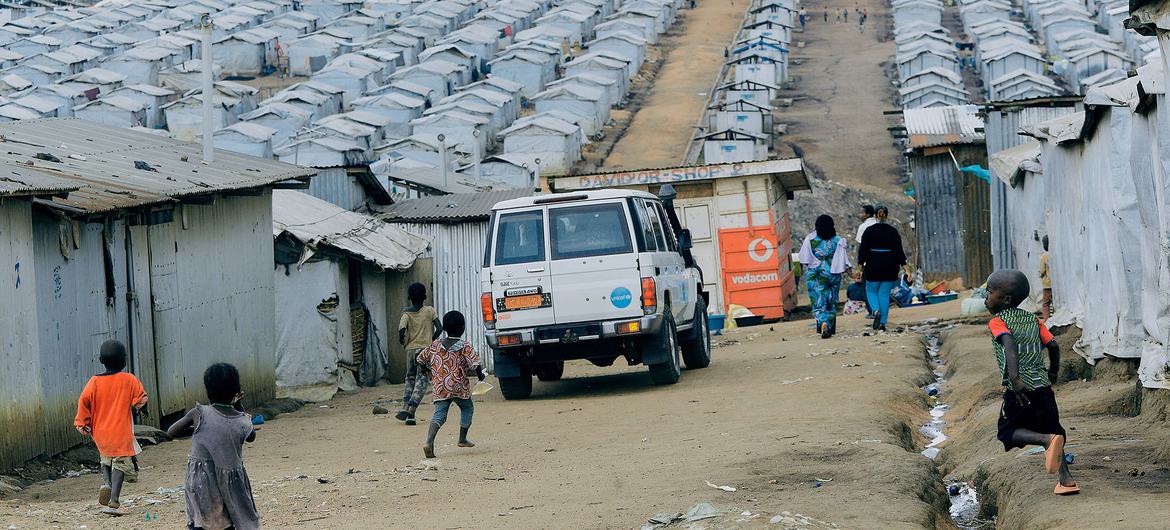
Children play on a dirt path in a large camp for displaced people, with rows of makeshift shelters in the background, and a white aid vehicle in the center.


© UNICEF/Prince WamwamiThe Kigonze displaced persons site in Bunia, the capital of Ituri province, in the northeast of the Democratic Republic of Congo (DRC).

September 28, 2026 Humanitarian aid

In Ituri, in eastern Democratic Republic of Congo (DRC), many families have fled the Kigonze displacement site after several security incidents. The UN fears that their dispersal and the difficulties faced by humanitarian workers in accessing the site will complicate Ebola outbreak monitoring, even though the site is covered by the response mechanism.

Since September 20, several incidents have been reported at the Kigonze site in Bunia, which hosts nearly 19,000 displaced people. According to media reports, soldiers entered the site searching for weapons and individuals suspected of belonging to an armed group. Gunfire was reportedly heard.

"The security situation at the Kigonze displacement site has deteriorated and many families have left the site to seek refuge with host families," said the UN Humanitarian Coordinator in the DRC, Damien Mama.

1790622117334.webp

© OCHA/Ramatoulaye Moussa MazA boy and his sister, who survived an Ebola virus infection, visit a clinic in Kigonze, Ituri province, Democratic Republic of Congo.

The dispersal of displaced persons complicates surveillance​

This series of events has made access more difficult for humanitarian agencies. They are now struggling to assess needs, distribute essential aid, and maintain protection services.

The humanitarian official stressed the importance of preserving the civilian character of the site. "Families who have already lost everything must be able to find safety and dignity where they have come seeking refuge," Mr. Mama argued, calling for any decision concerning their future to be "voluntary, safe, and dignified."

The dispersal of families also raises a health issue, as the Kigonze site is also among the sites covered by the response to the ongoing Ebola epidemic.

For the UN, the unorganized departures of thousands of displaced people, combined with difficulties in accessing the site, risk complicating epidemiological surveillance, including contact tracing, as well as the continuity of services and epidemic control operations.

Insecurity is hindering the response​

"Our priority is therefore to gain access to the site as quickly as possible, in order to assist those in need," insisted the Humanitarian Coordinator.
In Ituri, conflict and violence have displaced more than 1.1 million people, including over 373,000 living in displacement camps. Mr. Mama calls for the protection of civilians and for ensuring safe and unimpeded humanitarian access.

In its latest report, the World Health Organization ( WHO ) emphasizes that the Ebola epidemic is spreading "in a challenging humanitarian context, where conflict, insecurity, population displacement, and limited access to basic services continue to hinder efforts to control the outbreak." These obstacles particularly complicate case detection, contact tracing, and rapid access to care.

1790622212255.webp

WHO A research-based vaccination program has been launched in Ituri, Democratic Republic of Congo, for health professionals and other frontline personnel at increased risk of Ebola virus infection.

Ebola exceeds 8,000 cases​

These latest security developments come as the number of confirmed Ebola cases has surpassed 8,000 for the first time since the start of the ongoing epidemic, according to data from health authorities published on Monday.

The latest situation report indicates 8,067 cases and over 3,900 deaths. The case fatality rate stands at 48.4%.

In Ituri, which remains the epicenter of the epidemic, the incidence of cases continues to decline gradually from the peak observed in mid-August, although transmission remains at high levels. North Kivu, on the other hand, has seen a substantial increase in incidence, reaching its highest level ever recorded in mid-September, followed by a decline in the last few days of reporting.

This epidemic, caused by the Bundibugyo strain of the Ebola virus, has become the largest and deadliest in the history of Congo after surpassing that of 2018-2020.

In terms of cases and deaths, it is surpassed only by the epidemic that struck West Africa from 2014 to 2016. In two years, this epidemic infected more than 28,600 people and caused more than 11,000 deaths in Guinea, Liberia and Sierra Leone.

 
1790626204030.webp

Watsa
Google map
---------------------------------------------------------------------------
Translation Google
Ebola in Haut-Uélé: the disease now affects eight out of 13 health zones

September 28, 2026

Isiro, September 28, 2026 (ACP).– The Ebola virus disease has spread to an eighth of the thirteen (13) health zones in Haut-Uélé, in the Northeast of the Democratic Republic of Congo (DRC), following the contamination of the Watsa health zone reported on Monday, during a meeting of the response coordination.

“ Since the beginning of the epidemic, the province had six (6) affected health zones out of the thirteen (13) that make up Haut-Uélé. Subsequently, a seventh was added and, today, an eighth health zone has just been added: it is that of Watsa,” said Dr. Fabrice Kadima, provincial coordinator of the response against the Ebola epidemic in Haut-Uélé.

“ Among the two most recently affected health zones, the first is Dungu. A case was recorded there, originating from Tchomia, in Ituri province. It involves a six-year-old child who came with his parents. This health zone is considered contaminated because there are contacts that we are monitoring, and because it is an imported case. The same scenario applies to the Watsa health zone, the 8th affected in Haut-Uélé, whose imported case comes from Mahagi, also in Ituri province ,” he added.


The coordinator clarified that the new confirmed cases in these seventh and eighth health zones do not stem from local contacts who developed the disease in Haut-Uélé, but rather come from the neighbouring province of Ituri.

Speaking about the evolution of the response, Dr. Kadima stressed that the epidemiological curve is stabilizing, describing the trend as positive.

ACP/Ano/ Lov/ Kand


1790688290056.webp

Ebola disease: Border measures for travellers entering Canada​

Update: Government of Canada extends existing temporary border measures for another 60 days in response to the Ebola disease outbreak in the Democratic Republic of the Congo. These measures will last until November 27, 2026, at 11:59 pm EDT.

On this page​

Ebola border measures​

Due to an Ebola outbreak, Canada has introduced border measures affecting people who have visited or live in:

  • Uganda
  • South Sudan
  • the Democratic Republic of the Congo
Even if you're only transiting through these countries, Canada's border measures still apply to you. There are no exemptions for transiting through these countries or for refuelling.

These measures will last until November 27, 2026, at 11:59 pm EST.

Suspension of immigration documents of foreign nationals from affected countries​

If you're a foreign national of one of the affected countries, you won't be allowed to travel to Canada during this suspension period, even if you have an approved:

  • temporary resident visa
  • permanent resident visa
  • electronic travel authorization (eTA)
Learn more:

Foreign nationals from other countries​

If you're a foreign national who has been in the Democratic Republic of the Congo within the past 21 days, you'll be prohibited from:

  • entering Canada
  • boarding a flight to Canada
  • transiting through Canada
If you've been in Uganda or South Sudan within the past 21 days, you'll:

  • be allowed to travel to Canada
  • have to quarantine for 21 days upon arrival, unless you're exempt

Others who are eligible to enter Canada​

You're allowed to enter Canada if you've been in the Democratic Republic of the Congo, Uganda or South Sudan in the past 21 days and are:

  • a Canadian citizen
  • a permanent resident or
  • registered under the Indian Act
You'll have to quarantine for 21 days upon arrival, unless you're exempt.

Exemptions to border measures​

Some travellers may be exempt from these measures.

Transit through Canada​

You're exempt from the health assessment and quarantine requirements if you're transiting through Canada to another country and:

  • remain in the designated international departures area and
  • are not cleared by a border services officer to enter Canada

Exemption to entry prohibition of foreign nationals​

If you're a foreign national who has been in the Democratic Republic of the Congo within the past 21 days, you're exempt if you:

  • are a crew member (such as on a plane, ship or train) who is:
    • actively performing their duties or
    • entering Canada only to become a crew member
  • are registered as an Indian under the Indian Act
  • hold a passport with a valid diplomatic, consular, official or special representative acceptance issued by the Department of Foreign Affairs, Trade and Development
  • hold a temporary resident visa and are coming to Canada to work in an official role for a foreign embassy, consulate, international organization, or special representative's office
    • this also includes immediate family members if they qualify for accreditation from the Department of Foreign Affairs, Trade and Development
  • are attending a meeting in Canada hosted by an international organization and are entitled to diplomatic privileges and immunities under Canadian law
  • are a member of a visiting force entering Canada to perform your duties
You do not need an exemption letter if you meet 1 of the above exemption categories.

You may be exempt and must apply for an exemption letter from the Government of Canada if you're:

  • entering Canada to:
    • provide medical care
    • transport or collect essential medical equipment, supplies or means of treatment
    • deliver, install, maintain or repair medically necessary equipment or devices
  • a person who should enter Canada as a matter of national interest and who doesn't pose a risk to public health

Exemption letter​

Email us before your departure date to apply for an exemption letter if:

  • you're a foreign national who has been in the Democratic Republic of the Congo within the past 21 days and
  • you believe you qualify for an exemption that requires a letter to enter Canada
We'll send you an application form and instructions. To receive an application form, email us at ebola.bordermeasures-ebola.mesuresfrontalieres@phac-aspc.gc.ca.

You must present this letter:

  • to an airline to board a flight to Canada
  • at the border upon entry to Canada

Travellers exempt from quarantine measures​

Travellers who are allowed to enter Canada may be exempt from having to quarantine for 21 days once they arrive in Canada if they meet the criteria below. Your exemption will be determined upon arrival in Canada.

If you're exempt, you'll still have to monitor for symptoms and follow all the instructions from a quarantine officer for the duration of your stay.

You may be exempt from quarantine measures if you:

  • are a crew member (such as on a plane, ship or train) who is:
    • actively performing their duties or
    • entering Canada only to become a crew member
  • hold a passport with a valid diplomatic, consular, official or special representative acceptance issued by the Department of Foreign Affairs, Trade and Development
  • have a temporary resident visa and are coming to Canada to work in an official role for a foreign embassy, consulate, international organization, or special representative's office
    • this also includes immediate family members if they qualify for accreditation from the Department of Foreign Affairs, Trade and Development
  • are attending a meeting in Canada hosted by an international organization and are entitled to diplomatic privileges and immunities under Canadian law
  • are a member of the Canadian Forces entering Canada to perform your duties
  • are a member of a visiting force entering Canada to perform your duties
  • are entering Canada to:
    • provide medical care
    • transport or collect essential medical equipment, supplies or means of treatment
    • deliver, install, maintain or repair medically necessary equipment or devices
  • should enter Canada as a matter of national interest and don't pose a risk to public health

Before you arrive​

You must have a suitable quarantine plan before your arrival to Canada if you:

  • are eligible to come to Canada and
  • have been in the Democratic Republic of the Congo, Uganda or South Sudan in the past 21 days
A suitable quarantine plan includes having a place where you:

  • can stay, without leaving, for 21 days that begins on the day you enter Canada
  • are able to avoid direct contact with other people in your place of quarantine
  • have access to basic necessities of life, such as food, water and medications (for example, use contactless delivery)
  • have access to local health care services
If you're a higher risk individual such as a health care or humanitarian worker, you must quarantine at a location within 3 hours or 250 km of a provincial test-and-hold centre by ground transportation.

If you don't have a place where you can quarantine safely, you'll be provided with one if you're a:

  • Canadian citizen
  • permanent resident
  • person registered under the Indian Act
If you're a foreign national who is eligible to enter Canada, you must arrange for a suitable place of quarantine for 21 days. You may be asked to show proof of paid bookings for accommodations to a screening or quarantine officer upon your arrival in Canada. If you're unable to financially sustain your 21-day quarantine, you may be denied entry.

Arriving in Canada​

If you're eligible to enter Canada, you'll receive a health assessment when you arrive. You're eligible if you:

  • have been in the Democratic Republic of the Congo, Uganda or South Sudan in the past 21 days and are a:
    • Canadian citizen
    • permanent resident
    • person registered under the Indian Act
  • have been in Uganda or South Sudan in the past 21 days and are a foreign national
If you don't have symptoms of Ebola disease, you'll have to quarantine for 21 days starting on the day you enter Canada. You must go directly to your place of quarantine and follow instructions from a quarantine officer.

You will also receive a kit that includes a:

  • digital thermometer
  • handout with instructions and a daily health record
This kit will help you complete your daily health checks during your 21-day quarantine period.

If you have symptoms of Ebola disease, you'll:

  • receive an immediate medical examination at a medical centre or other suitable place for a medical examination, and
  • be placed in isolation and receive care:
    • for 21 days or
    • until a quarantine officer determines you no longer pose a public health risk

After your arrival​

While in quarantine, you must follow your quarantine plan by:

  • providing the address and contact information of your quarantine location to the designated official
  • reporting your arrival at your place of quarantine within 48 hours of arriving in Canada
  • staying at your quarantine location for 21 days from the date you entered Canada
  • monitoring daily for symptoms of Ebola disease and reporting on your health to a government official
  • washing your hands and cleaning spaces such as washrooms regularly
While staying at your quarantine location:

  • avoid direct contact with other people in your household
  • avoid all contact with people outside your household
    • you're permitted to go outside for fresh air or well-being (including on a balcony, porch, in a backyard, or for a walk), but can't have direct contact with others
  • make sure you can access heat as well as food, water and medications without direct contact with other people
    • consider using food delivery services
  • make sure you have access to local health care services
  • you can't have visitors
If you need to change your quarantine location, contact a quarantine officer first. They must approve any changes to your quarantine location.

Contact a quarantine officer

If you have symptoms of Ebola disease and you're in isolation or treatment at a health care facility, you'll have to remain there:

  • until a quarantine officer determines it's safe for you to leave
Learn more:

Daily temperature check and reporting​

Take your temperature with the thermometer provided in your kit:

  • twice a day (once in the morning and once in the evening)
  • at any time if you begin feeling sick
Do not share your thermometer with anyone else.

To use your thermometer:

  • wash your hands with soap and water before use
  • put the thermometer under your tongue for 10 seconds or until you hear a beep
  • clean the thermometer after use and do not submerge in water
Write the following details in your daily health record for the next 21 days:

  • your temperature
  • the date and time
  • any symptoms you develop
  • any medications you took
    • call your public health authority before taking over-the-counter medication to reduce fever or pain, such as acetaminophen or ibuprofen
A government official will call you during your quarantine. Give them the details of your daily health record as requested.

If you develop symptoms or have a medical emergency:

  • isolate from others, make sure they don't come into contact with your bodily fluids, and
  • contact your local public health authority immediately
How to isolate from others

Example daily health record
DateMorningEveningMedications taken todayOther Ebola symptoms
Time (AM)Temperature readingTime (PM)Temperature reading
Day 1no datano datano datano datano datano datano data

Financial support during quarantine​

You may be eligible for employment insurance (EI) sickness benefits if:

  • you're unable to work while in quarantine and
  • you don't have access to paid leave through your employer or private insurance
You will need a medical certificate to support your claim for EI sickness benefits. We can provide one that has been signed by a quarantine officer (registered nurse).

Email us to request a certificate. The email address and instructions to request a medical certificate are included in the information kit that you received on arrival.

You can apply for benefits before requesting or receiving this certificate. You may be asked to submit your medical certificate to support your claim. If not, keep it for 6 years in case Service Canada asks you to submit it later.

Learn more:

Penalties and fines​

Failure to comply with these and other related measures are offences under the Quarantine Act. The maximum penalties are a fine of up to $1,000,000, imprisonment for up to 3 years, or both.

Privacy notice​

Why we collect your personal information​

We collect your personal information as outlined in the:

  • Quarantine Act
  • Minimizing the Risk of Exposure to Ebola Disease in Canada Order 2026
This information helps us:

  • confirm that you have to quarantine
  • prevent the introduction and spread of infectious diseases
We'll handle your information as outlined in the Privacy Act. We may use it for:

  • monitoring
  • public health follow-up
  • enforcement and verifying compliance with the Quarantine Act
  • issuing you a medical certificate to support your EI claim if you make one
If you don't provide the requested information:

  • we may not be able to issue a medical certificate and you may not be able to access EI sickness benefits
  • you may no longer be entitled to the EI benefits you already receive and may have to repay them

Sharing your personal information​

In order to prevent disease spread, we may share your personal information with:

  • provincial, territorial and municipal governments
  • other Government of Canada departments
  • operators responsible for a vehicle, like a plane or ship
  • international health organizations
  • law enforcement partners
  • contractors

Your rights​

You have the right to access and request corrections or that a note be added to your personal record under the Privacy Act. This could be because of:

  • an unresolved dispute
  • the accuracy of the information
You also have the right to file complaints with the Privacy Commissioner of Canada if you believe your information has been mishandled.

More information about our quarantine program data holdings can be found in these Personal information banks on Info Source:

  • Quarantine Program PHAC PPU 071
  • Pandemic Border Measures PHAC PPU 074
Contact us for privacy-related questions

Learn more:

Contact us​

Should you have any questions, phone us at 1-844-280-5020.

Hours of service are Monday to Friday, 8 am to 8 pm (Eastern time).

Page details​

Give feedback about this page​


Did you find what you were looking for?

Date modified:

2026-09-28

 
Back
Top Bottom