

Install the app
How to install the app on iOS
Follow along with the video below to see how to install our site as a web app on your home screen.
Note: This feature may not be available in some browsers.
-
FluTrackers.com Inc. does not provide medical advice. Information on this web site is collected from various internet resources, and the FluTrackers board of directors makes no warranty to the safety, efficacy, correctness or completeness of the information posted on this site by any author or poster. The information collated here is for instructional and/or discussion purposes only and is NOT intended to diagnose or treat any disease, illness, or other medical condition. Every individual reader or poster should seek advice from their personal physician/healthcare practitioner before considering or using any interventions that are discussed on this website. By continuing to access this website you agree to consult your personal physican before using any interventions posted on this website, and you agree to hold harmless FluTrackers.com Inc., the board of directors, the members, and all authors and posters for any effects from use of any medication, supplement, vitamin or other substance, device, intervention, etc. mentioned in posts on this website, or other internet venues referenced in posts on this website.
-
We are not asking for any donations. Do not donate to any entity who says they are raising funds for us.
You are using an out of date browser. It may not display this or other websites correctly.
You should upgrade or use an alternative browser.
You should upgrade or use an alternative browser.
DRC – 17th Ebola Outbreak (Bundibugyo virus) - Concerns over reliability of Government reported cumulative cases and deaths - May 2026+
- Thread starter Michael Coston
- Start date
Pathfinder
Editor, Senior Moderator
The MSF article that triggered this response from the Ministry of Health:
Translated from French by Google
Ebola in the DRC: the response is insufficient given the gravity of the situation, warns MSF
June 15, 2026 - updated June 16, 2026
Ebola in the DRC: MSF warns of dangerous shortcomings
One month after the official declaration of an Ebola virus disease outbreak in the Democratic Republic of Congo (DRC), Doctors Without Borders (MSF) observes that the virus is spreading faster than the deployment of humanitarian aid. Despite a recent intensification of the response, serious shortcomings in diagnosis, surveillance, and contact tracing are jeopardizing efforts to contain the crisis.
An epidemic that is progressing faster than the medical response
Congolese health authorities officially report more than 650 confirmed cases and over 130 deaths . However, this figure likely only reflects part of the reality on the ground. Furthermore, the epidemic is taking on a regional dimension: health authorities in neighboring Uganda have already reported 19 confirmed cases .
The virus is spreading mainly in three provinces in eastern DRC: Ituri , North Kivu and South Kivu . The epicenter is in Ituri, which accounts for nearly 95% of the recorded cases.
“No one knows the true extent of the epidemic in the DRC , nor precisely which areas the virus is circulating in,” worries Kate White, MSF’s emergency medical coordinator in the DRC. “What we do know, however, is that most treatment centers in Ituri are overwhelmed, that a large number of patients arrive at us already in an advanced stage of the disease, and that the majority have never been identified or traced as contacts before seeking care.”
The three major weaknesses that are hindering control of the virus
The response, led by the Congolese Ministry of Health with the support of international partners, is hampered by an environment marked by decades of armed conflict and population displacement. Three major obstacles are facilitating the spread of the disease:
Critical access to testing and excessively long laboratory wait times
Although hundreds of mobile tests specifically designed to detect the Bundibugyo virus have arrived in the east of the country, diagnosis remains the weak link . Insecurity is blocking access to testing in several areas. In North Kivu, a single laboratory centralizes blood analyses. Lacking an automated delivery system, health facilities sometimes have to wait nearly a week for results .
The mistrust of local populations
In the affected areas, the sudden arrival of outside medical teams generates fear and suspicion.
"Setting up activities and explaining the disease is not enough to build trust — you also have to listen to the concerns of the population, and fully include them in shaping the response ," stresses Frédéric Lai Manantsoa, MSF emergency coordinator in DRC.
The neglect of routine healthcare
For the local population, Ebola exacerbates an already critical health situation. For MSF, the exclusive focus on the epidemic endangers the rest of the population.
"Pregnant women still need maternal care, children need vaccinations, and patients need treatment for malaria and cholera ," emphasizes Kate White. Maintaining routine medical care is vital and also allows for strengthened community surveillance of Ebola.
MSF's call: adjust the response to the scale of the crisis
Alongside direct care, MSF deploys mobile teams to isolated areas to verify alerts and isolate suspected cases. But the window of opportunity is closing.
“ This epidemic can still be controlled , but the longer we wait, the more our room for maneuver shrinks ,” concludes Frédéric Lai Manantsoa. “It is urgent to strengthen diagnosis, surveillance, access to care, and community engagement. We call on the authorities and all stakeholders to do everything possible to facilitate the movement of healthcare personnel and supplies.”
In response to this humanitarian emergency, MSF is currently deploying 600 health professionals and has transported hundreds of tons of equipment from Kinshasa and internationally.
https://www.msf.fr/actualites/ebola-en-rdc-msf-s-inquiete-des-lacunes-dans-la-riposte-medicale
Translated from French by Google
Ebola in the DRC: the response is insufficient given the gravity of the situation, warns MSF
June 15, 2026 - updated June 16, 2026
Ebola in the DRC: MSF warns of dangerous shortcomings
One month after the official declaration of an Ebola virus disease outbreak in the Democratic Republic of Congo (DRC), Doctors Without Borders (MSF) observes that the virus is spreading faster than the deployment of humanitarian aid. Despite a recent intensification of the response, serious shortcomings in diagnosis, surveillance, and contact tracing are jeopardizing efforts to contain the crisis.
An epidemic that is progressing faster than the medical response
Congolese health authorities officially report more than 650 confirmed cases and over 130 deaths . However, this figure likely only reflects part of the reality on the ground. Furthermore, the epidemic is taking on a regional dimension: health authorities in neighboring Uganda have already reported 19 confirmed cases .
The virus is spreading mainly in three provinces in eastern DRC: Ituri , North Kivu and South Kivu . The epicenter is in Ituri, which accounts for nearly 95% of the recorded cases.
“No one knows the true extent of the epidemic in the DRC , nor precisely which areas the virus is circulating in,” worries Kate White, MSF’s emergency medical coordinator in the DRC. “What we do know, however, is that most treatment centers in Ituri are overwhelmed, that a large number of patients arrive at us already in an advanced stage of the disease, and that the majority have never been identified or traced as contacts before seeking care.”
The three major weaknesses that are hindering control of the virus
The response, led by the Congolese Ministry of Health with the support of international partners, is hampered by an environment marked by decades of armed conflict and population displacement. Three major obstacles are facilitating the spread of the disease:
Critical access to testing and excessively long laboratory wait times
Although hundreds of mobile tests specifically designed to detect the Bundibugyo virus have arrived in the east of the country, diagnosis remains the weak link . Insecurity is blocking access to testing in several areas. In North Kivu, a single laboratory centralizes blood analyses. Lacking an automated delivery system, health facilities sometimes have to wait nearly a week for results .
The mistrust of local populations
In the affected areas, the sudden arrival of outside medical teams generates fear and suspicion.
"Setting up activities and explaining the disease is not enough to build trust — you also have to listen to the concerns of the population, and fully include them in shaping the response ," stresses Frédéric Lai Manantsoa, MSF emergency coordinator in DRC.
The neglect of routine healthcare
For the local population, Ebola exacerbates an already critical health situation. For MSF, the exclusive focus on the epidemic endangers the rest of the population.
"Pregnant women still need maternal care, children need vaccinations, and patients need treatment for malaria and cholera ," emphasizes Kate White. Maintaining routine medical care is vital and also allows for strengthened community surveillance of Ebola.
MSF's call: adjust the response to the scale of the crisis
Alongside direct care, MSF deploys mobile teams to isolated areas to verify alerts and isolate suspected cases. But the window of opportunity is closing.
“ This epidemic can still be controlled , but the longer we wait, the more our room for maneuver shrinks ,” concludes Frédéric Lai Manantsoa. “It is urgent to strengthen diagnosis, surveillance, access to care, and community engagement. We call on the authorities and all stakeholders to do everything possible to facilitate the movement of healthcare personnel and supplies.”
In response to this humanitarian emergency, MSF is currently deploying 600 health professionals and has transported hundreds of tons of equipment from Kinshasa and internationally.
https://www.msf.fr/actualites/ebola-en-rdc-msf-s-inquiete-des-lacunes-dans-la-riposte-medicale
Pathfinder
Editor, Senior Moderator
Translation Google
On the front lines of trust: a day with Julienne Aniko, our community engagement officer against Ebola in the DRC
June 17, 2026
Long before the first field teams depart for the affected communities in the Democratic Republic of Congo, Julienne Anoko, in charge of risk communication and community engagement (CREC) at WHO, is already consulting the night's updates: alerts, suspected cases, rumors, security concerns and signs of resistance.
The day begins at 5:30 a.m. By 6:30 a.m., Julienne is already preparing the messages that will determine whether a family reports symptoms, whether a household agrees to disinfection, or whether a community accepts a dignified and safe burial. "My typical day starts early with preparation and coordination," she explains.
At 7:30 a.m., Julienne attends the WHO morning meeting, where the various pillars of the Ebola response come together: surveillance, infection prevention and control, laboratory teams, coordination, protection against sexual exploitation and abuse, psychosocial support, human resources, and case management. Her role is to bring the voices of the communities into the room—by sharing information from the field, such as misinformation, resistance, or concerns—and to adapt mobilization strategies to the latest data on the epidemic. This ensures that the messages are both accurate and relevant to the realities of the communities.
During an Ebola outbreak, a technically correct message is not always enough. It must also be trustworthy.
“My role is essentially to serve as a bridge between communities and response teams,” she says, “ensuring that interventions are not only technically sound, but also socially accepted and trustworthy.”
By mid-morning, the work shifts from the coordination rooms to the health zones and family compounds. Before entering an affected community, the first concern is security. In high-risk areas, she requests authorization from the WHO security teams. Only then can the visit take place, usually accompanied by the health zone doctor, a community health worker, and a local leader.
This order is important. Julienne does not arrive as a stranger bearing instructions, but through people whom the community already knows.
Upon arrival, the community health worker or local leader introduces her and explains the purpose of the visit. She observes carefully: how people greet each other, who speaks first, whether the family is grieving, and whether prayers are said before the discussion begins.
If a family has lost someone, she asks for the person's name and uses it during the conversation.
In this job, empathy is not a secondary skill. It is operational.
“When I arrive in a community, I always let the community health worker or leader introduce me,” she explains. “I demonstrate empathy at all times and actively listen to the family.”
Julienne's day is based on two-way communication. From 8:30 a.m. until mid-afternoon, her work may include community dialogues, meetings with youth groups, home visits, support for contact tracers, or support for burial teams when families are fearful or reluctant.
Sometimes she trains national counterparts and partners in risk communication and community engagement. Sometimes she receives urgent calls from teams facing unexpected resistance.
Some days, she goes to the Ebola treatment center to help families accept the painful need for dignified and safe burials.
Fears are rarely simple. In this epidemic, she explains, some communities initially believed the disease was caused by poisoning, witchcraft, or mystical forces. Some thought Ebola was a fabrication. Others suspected foreign interests, particularly Western countries or mining companies, of using the disease to control local resources. One rumor spoke of a "magic coffin" traveling through communities and attacking people.
Behind this rumor lay a reality marked by successive losses. According to Julienne, a woman from the Mongbwalu health zone in Ituri died in Uganda, and her body was repatriated in a damaged coffin.
The family changed the coffin and burned the old one. Soon after, family members began to fall ill and die. In the community's perception, these deaths were linked to the coffin.
It took two weeks of intensive social mobilization for attitudes to begin to change. People started to accept that Ebola was real and that practical measures—washing hands, reporting symptoms early, and avoiding unsafe burials—could protect families.
One particular case continues to influence Julienne's approach today, although it dates back to a previous Ebola outbreak in North Kivu in 2019.
A woman who was nine months pregnant had died. According to local custom, the fetus was to be removed from the mother's body and buried separately. But for the Ebola response team, this procedure posed significant biosecurity risks. The family refused the proposed safe burial and asked to have the body returned to the village to perform the ritual themselves.
Their fear was very real: they believed that if the custom was not respected, other pregnant women in the community could die under the wrath of the ancestors.
Julienne spent three days negotiating between the family and the response team. Drawing on her knowledge of the socio-cultural context and her experience as an anthropologist, she helped identify an alternative ritual that allowed the family and the community to honor their beliefs without exposing others to the risk of infection.
The family agreed. The WHO supported the ritual, and a dignified and safe burial was carried out. Afterwards, the response team and the community participated together in the ritual.
For Julienne, the lesson of North Kivu remains essential to the current response: communities do not abandon deeply held beliefs simply because interveners arrive with technical instructions. Trust is built when public health measures are explained, negotiated, and adapted in a way that protects life while respecting mourning, culture, and dignity.
Such work requires more than public health messages. It demands a translation between different systems of meaning: biomedical risk, ancestral obligations, mourning, dignity, fear, and survival.
To explain how an Ebola treatment center works, contact tracing, or safe burial procedures, Julienne always starts by gathering information from the technical teams.
What care is provided? Is it free? What food is provided? Do the doctors speak local languages? Can families visit patients? What does contact tracing involve? When does it end?
She then prepares answers to the most likely questions, sometimes even before they are asked. The goal is to show that their concerns have already been heard.
"The family understands that I share their concerns, and they trust me," she explains. "Most of the time, they ask for my phone number to continue asking questions."
The emotional burden is heavy. The most difficult moments occur when she offers her condolences and the families begin to cry. The deaths of pregnant women, babies, and children are particularly distressing.
"A pregnant woman should not lose her life giving life," she said. "It is not natural for parents to bury their children."
Yet she tries not to cry in front of the families. “I think they’re suffering more than I am,” she says. “I’m simply supporting them in their grief.” There are also times when a single conversation can change the course of the response.
On June 5, Julienne visited a family whose daughter had died on May 28, classified as a probable case of Ebola. While awaiting lab results, the team needed the family to agree to the disinfection of their home, the investigation, identification, and contact tracing. The family refused, demanding proof of lab results first.
She listened for over an hour. Then she explained why early prevention measures were important. Psychological support was offered.
Finally, the family agreed to disinfection and psychosocial support. When the results confirmed the infection, they returned with a psychologist.
The family then accepted all public health measures and designated a member as the focal point for contact tracing and early symptom detection.
At 3:30 p.m., the fieldwork gives way to documentation. Julienne compiles community feedback, rumors, concerns, and behavioral trends to guide the next day's priorities. From 5:00 p.m. to 7:30 p.m., a national strategic coordination meeting reviews the dynamics of the response and plans risk communication and community engagement interventions.
The day doesn't end there. Between 8 p.m. and 10:30 p.m., she writes the daily report, compiling updates from the three affected provinces for the WHO's surveillance and data management teams.
The pace is relentless: listening, explaining, negotiating, documenting, coordinating, starting all over again. But when asked what remains after a long day, she doesn't first mention fatigue. "What remains is the feeling of a job well done," says Julienne. "What remains is that I am useful and that I am contributing to saving lives."
During an Ebola outbreak, some vital actions take place in laboratories, ambulances, and treatment centers. Others unfold on a doorstep, where a frightened family decides whether or not to open their door.
For Julienne, that's where the day begins—and it's there, before dawn, that it will begin again.
https://www.afro.who.int/fr/countri...c-julienne-aniko-notre-chargee-de-lengagement
Pathfinder
Editor, Senior Moderator
SitRep N°33/MVB_16/06/2026
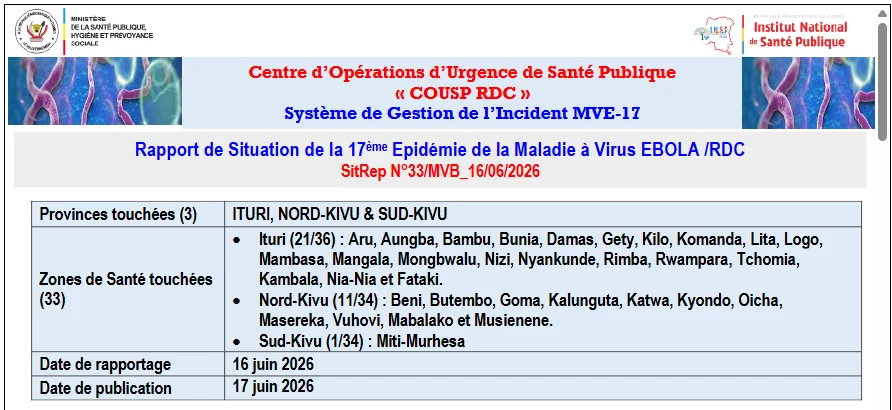
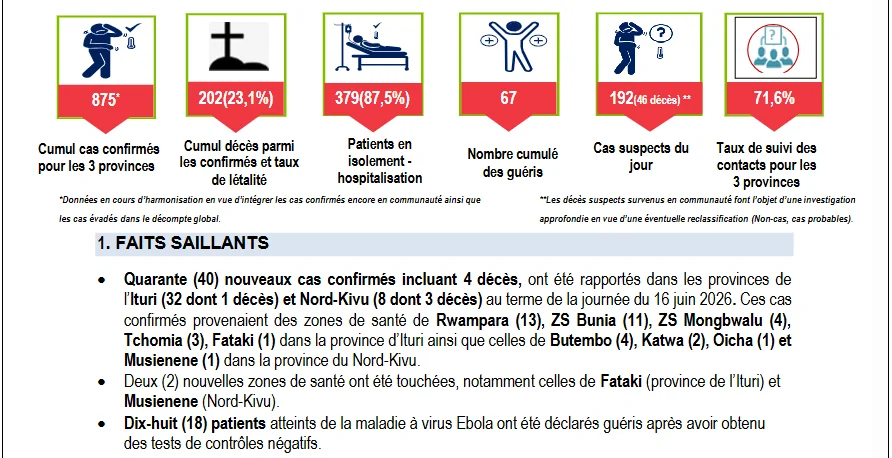
...
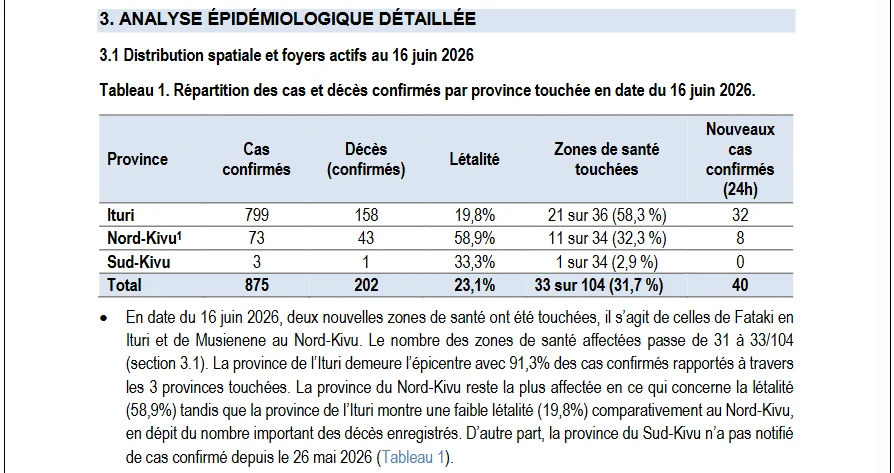
...
https://insp.cd/sitrep-n33-mvb_16-06-2026/
- juin 18, 2026
- Posted by insp.cd
...
...
https://insp.cd/sitrep-n33-mvb_16-06-2026/
Pathfinder
Editor, Senior Moderator
Pathfinder
Editor, Senior Moderator
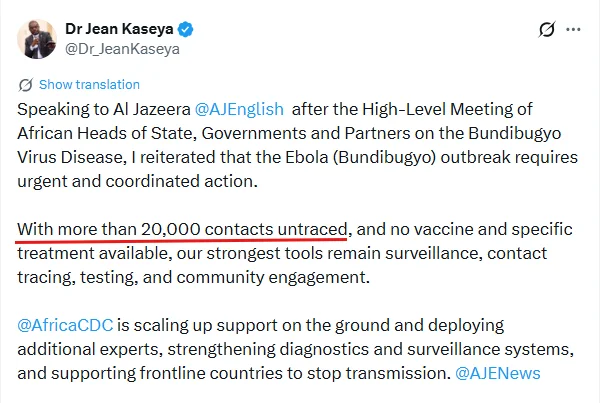
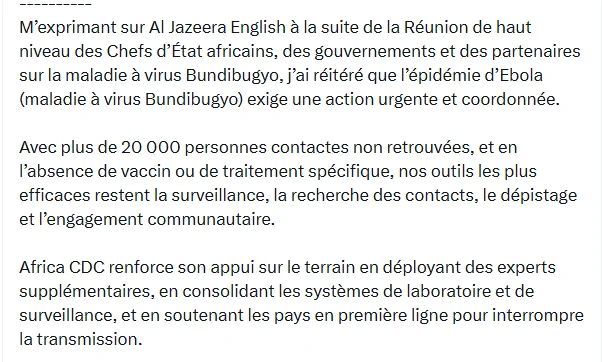
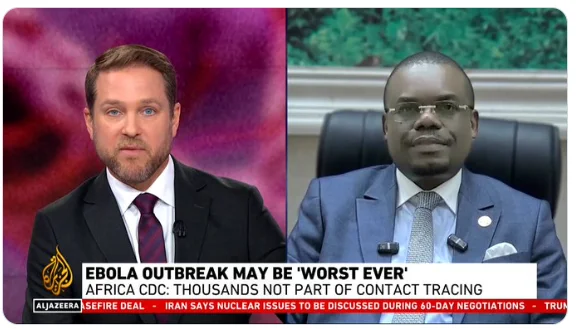
Watch the full interview | Suivre l'integralité de l'interview: https://lnkd.in/gTy-XtkN
Last edited7:25 AM · Jun 18, 2026
Watch the full interview | Suivre l'integralité de l'interview: https://lnkd.in/gTy-XtkN
Last edited7:25 AM · Jun 18, 2026
Pathfinder
Editor, Senior Moderator
Images translated by Google
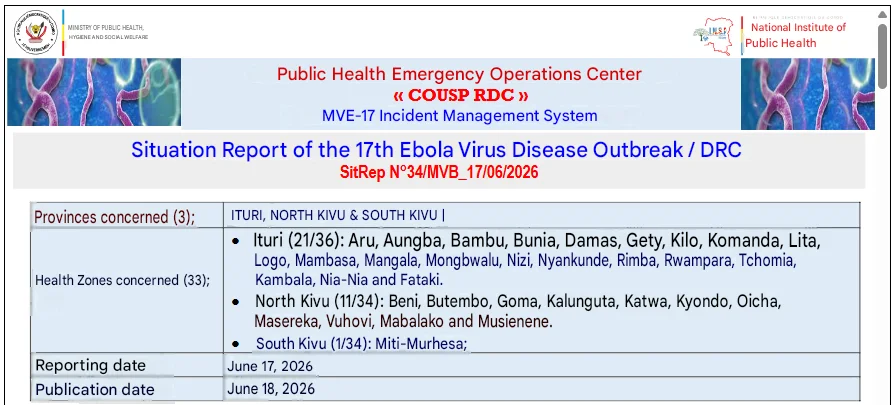
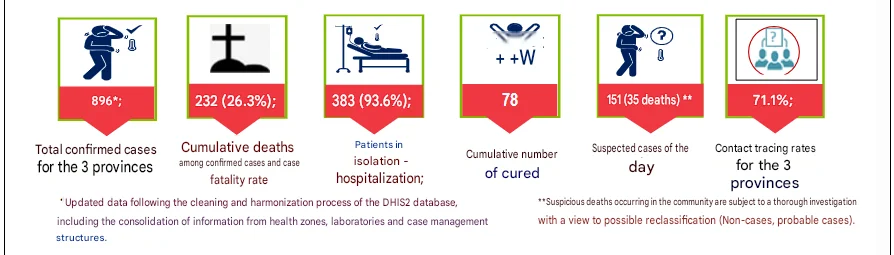
SitRep N°34/MVB_17/06/2026
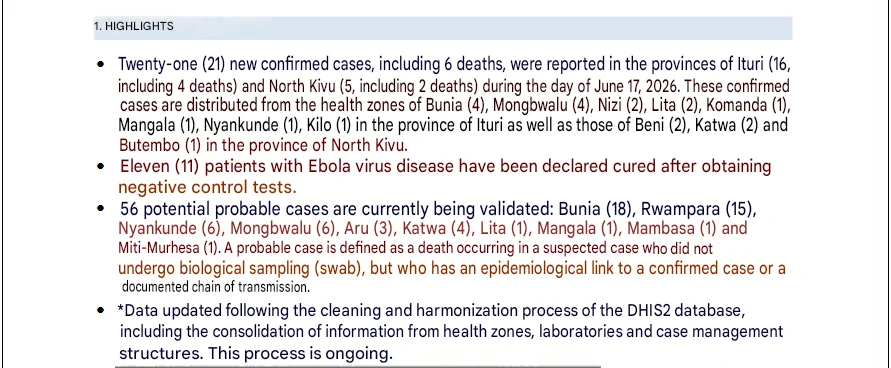
...
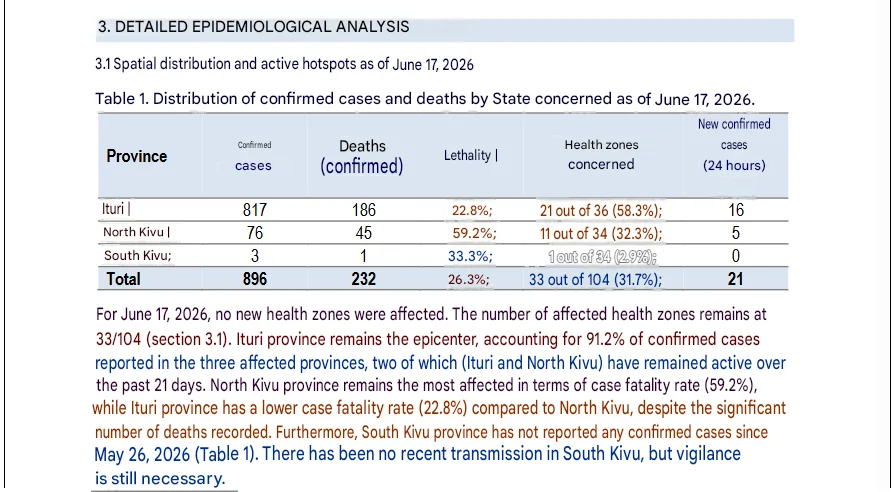
...
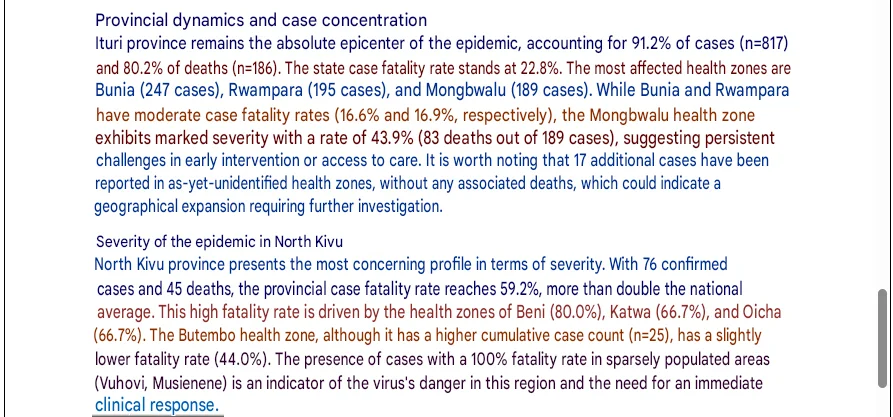
...
https://insp.cd/sitrep-n34-mvb_17-06-2026/
SitRep N°34/MVB_17/06/2026
- June 18, 2026
- Posted by insp.cd
...
...
...
https://insp.cd/sitrep-n34-mvb_17-06-2026/
Pathfinder
Editor, Senior Moderator
Ebola disease caused by Bundibugyo virus, Democratic Republic of the Congo & Uganda
19 June 2026
Situation at a glance
The Bundibugyo virus disease (BVD) outbreak in the Democratic Republic of the Congo continues to evolve rapidly, with sustained transmission and increasing numbers of reported cases. As of 17 June, a cumulative of 896 confirmed cases, including 232 deaths, have been reported from the Democratic Republic of the Congo. As of 18 June, Uganda has reported 19 confirmed cases including two deaths, as well as one probable case who has died. In Uganda, the outbreak remains epidemiologically linked to transmission originating in the Democratic Republic of the Congo, with evidence of both imported infections and secondary transmission among contacts and healthcare workers. Uganda has not reported any new cases since 5 June 2026. National authorities in the two affected countries, in collaboration with WHO and partners, are implementing an extensive set of response measures. A regional preparedness and prioritization framework continues to guide readiness activities across the African Region.
Description of the situation
Since the last Disease Outbreak News was published on 13 June 2026, the number of confirmed cases and deaths have increased rapidly in the Democratic Republic of the Congo. In total, 915 confirmed cases; 896 from the Democratic Republic of the Congo and 19 from Uganda; and 234 deaths including two from Uganda, have been reported. At least 88 patients have recovered from the disease; 78 patients from the Democratic Republic of the Congo and 10 patients from Uganda.
Figure 1. Distribution of confirmed cases of Bundibugyo virus disease in the Democratic Republic of the Congo, as of 17 June; and Uganda, as of 18 June
Democratic Republic of the Congo
Since 13 June when the last Disease Outbreak News was published, an additional 220 confirmed cases, including 96 confirmed deaths, have been reported from the Democratic Republic of the Congo. The increase is in part due to the scale up of testing and diagnostic capacities, enabling testing of the backlog of previously collected samples. As of 17 June 2026, a total of 896 confirmed cases including 232 deaths (case fatality ratio [CFR] 26%) have been reported from the Democratic Republic of Congo. The reported CFR is likely an underestimation, as many deaths that occurred before the outbreak declaration remain under investigation. So far, 78 patients have recovered. Cases have been reported from 33 health zones (HZ) from Ituri (21/36 HZ), North Kivu (11/35 HZ) and South Kivu provinces (1/34 HZ)[1].
The outbreak remains concentrated in Ituri Province, which accounts for 91.1% (817) of the confirmed cases with a CFR of 22.7% (186/817). The highest number of confirmed cases in Ituri Province are reported from Bunia (247 cases), Rwampara (195 cases), Mongbwalu (189 cases), and Nyankunde (68 cases) health zones. So far, the epicentre of the outbreak remains Ituri, with new confirmed cases reported from an additional four health zones as of 17 June. However, the identification of cases in some of these newly reporting health zones may reflect previously undetected transmission rather than recent introduction of the virus. Epidemiological investigations indicate that transmission had likely been occurring in some of these areas for several weeks before the first cases were confirmed and reported. Of the total confirmed cases, 17 are awaiting distribution by health zone.
As of 17 June, 6367 contacts have been identified and are under follow-up across Ituri (4659), North Kivu (1628), and South Kivu (80) provinces. Of these, 4525 contacts have been followed up, corresponding to follow-up rates of 70.8% in Ituri, 70.5% in North Kivu, and 100% in South Kivu.
The outbreak is unfolding in a complex humanitarian and conflict-affected environment, characterized by highly mobile and often displaced populations, often lacking access to basic services, including food, clean water, shelter, healthcare and protection which poses an increased risk to the populations living in overcrowded internally displaced camps. These dynamics, combined with increasing security-related incidents affecting health facilities, have posed additional operational challenges in affected provinces, such as constrained access for response teams, disrupted surveillance and response activities, and heightened risk of undetected transmission. These conditions underscore the need for response efforts to be led by local leaders and anchored in communities.
Figure 2: Number of confirmed cases (n = 896), in the Democratic Republic of the Congo, by date of reporting as of 17 June 2026

Figure 3: Number of deaths among confirmed cases (n = 232), in the Democratic Republic of the Congo, by date of reporting as of 17 June 2026

NB: Newly reported confirmed cases/deaths may be part of the backlog of samples and therefore not necessarily newly acquired infections.
Uganda
The last confirmed case was reportedly identified on 5 June 2026. As of 18 June 2026, a cumulative of 19 confirmed cases including two deaths in imported cases (reported on 15 May and 5 June), and one probable case who has died, have been reported. Of the confirmed cases, 14 cases are imported and five are secondary transmission among contacts and health workers following cases imported from the Democratic Republic of the Congo. The cases have been reported from two districts, Kampala and Wakiso, both part of the Kampala Metropolitan Area. To date, there has been no documented community transmission in Uganda. Exposure risks are associated with healthcare settings and cross-border movements. Following case reclassification, the number of affected healthcare workers was revised from five to four. In total 10 recoveries have been reported to date.
Of the 826 contacts listed as of 18 June, a total of 122 contacts are under active follow up and 694 contacts have completed their 21-day follow-up period.
Figure 4: Number of confirmed cases (n = 19), in Uganda by date of reporting as of 18 June 2026

Epidemiology
Bundibugyo virus disease (BVD) is a severe and often fatal form of Ebola disease caused by the Bundibugyo virus, one of the Orthoebolavirus species. It is a zoonotic disease, with fruit bats suspected to be the natural reservoir. Human infection is thought to occur through close contact with the blood or secretions of infected wildlife, such as bats or non-human primates, and it subsequently spreads from person to person through direct contact with the blood, secretions, organs, or other bodily fluids of infected individuals or contaminated surfaces or items. Transmission is particularly amplified in health-care settings when infection prevention and control (IPC) measures are inadequate, and during unsafe burial practices involving direct contact with the deceased.
The incubation period for BVD ranges from two to 21 days, and individuals are not infectious until symptom onset. Early symptoms such as fever, fatigue, muscle pain, headache, and sore throat, are non-specific, which complicates clinical diagnosis and can delay detection. These symptoms then progress to gastrointestinal symptoms, organ dysfunction, and in some cases haemorrhagic manifestations. CFRs in the past two BVD outbreaks, reported in Uganda and in the Democratic Republic of the Congo in 2007 and 2012 were 30% and 50%, respectively.
Differentiating BVD from other endemic febrile illnesses such as malaria is challenging without laboratory confirmation using PCR or antigen/antibody-based assays. Outbreak control relies on rapid case identification, isolation and care, contact tracing, safe burials, and strong community engagement, as no approved vaccines or specific treatments currently exist for BVD.
Public health response
Health authorities in the Democratic Republic of the Congo and Uganda, in collaboration with WHO and partners, are implementing extensive public health measures including implementing the continental response plan, engaging donors and mobilizing additional resources to address critical funding gaps and sustain response operations across affected and at-risk areas.
For further information about public health response actions by the respective Ministry of Health, WHO, and partners, please refer to the latest situation reports published by the WHO Regional Office for Africa Ebola Bundibugyo Virus Disease Outbreak Democratic Republic of the Congo | Uganda Weekly External Situation Report 5, Data as of 14 June 2026 | WHO | Regional Office for Africa
WHO risk assessment
On 6 June 2026, WHO reassessed the risk of the outbreak of BVD to incorporate newly available information and align with the WHO Temporary Recommendations. The risk for countries sharing land borders with countries with documented Bundibugyo virus (BVDV) detection, currently the Democratic Republic of the Congo and Uganda, has been separated out from the risk for other countries in the African Region.
The risk in the Democratic Republic of the Congo remains assessed as very high due to ongoing transmission and the continued expansion of the outbreak into new health zones, increasing the potential for further national and regional spread.
The risk in Uganda is still assessed as high due to confirmed cross-border spread through imported cases and ongoing epidemiological links along the eastern Democratic Republic of the Congo–western Uganda corridor, historically affected by Ebola outbreaks, including Bundibugyo and Sudan virus disease outbreaks.
The risk for countries with land borders adjoining countries with documented BDBV detection is assessed as high due to sustained population mobility linked to cross-border trade and mining activities, variation in capacities and experience of BVD response, and variable levels of readiness.
The risk for the rest of the Africa region and at the global level is assessed as low.
For further information, please see the WHO Rapid Risk Assessment – Ebola disease caused by Bundibugyo virus, Democratic Republic of the Congo, Uganda and countries with land borders adjoining countries with documented BDBV detection v3.
WHO advice
WHO advises against any restriction of travel to, or trade with, the Democratic Republic of the Congo or Uganda based on the currently available information. WHO continues to closely monitor and, where necessary, verify travel and trade measures in relation to this event.
For further information on the considerations for implementing border health and international travel-related temporary recommendations, please see the relevant technical note issued on 26 May 2026.
The Temporary Recommendations issued to State Parties on 22 May 2026 underscore the importance of coordinated outbreak control, enhanced cross‑border collaboration, and sustained surveillance and preparedness to prevent further regional spread and ensure an effective public health response.
WHO has convened several technical advisory groups, including the Strategic Advisory Group of Experts on Immunization (SAGE) to assess candidate vaccines and therapeutics for BVD. Key recommendations made are available in the news release published on 28 May 2026.
Regular Information products on the outbreak of BVD in the Democratic Republic of the Congo and Uganda
https://www.who.int/emergencies/disease-outbreak-news/item/2026-DON608
19 June 2026
Situation at a glance
The Bundibugyo virus disease (BVD) outbreak in the Democratic Republic of the Congo continues to evolve rapidly, with sustained transmission and increasing numbers of reported cases. As of 17 June, a cumulative of 896 confirmed cases, including 232 deaths, have been reported from the Democratic Republic of the Congo. As of 18 June, Uganda has reported 19 confirmed cases including two deaths, as well as one probable case who has died. In Uganda, the outbreak remains epidemiologically linked to transmission originating in the Democratic Republic of the Congo, with evidence of both imported infections and secondary transmission among contacts and healthcare workers. Uganda has not reported any new cases since 5 June 2026. National authorities in the two affected countries, in collaboration with WHO and partners, are implementing an extensive set of response measures. A regional preparedness and prioritization framework continues to guide readiness activities across the African Region.
Description of the situation
Since the last Disease Outbreak News was published on 13 June 2026, the number of confirmed cases and deaths have increased rapidly in the Democratic Republic of the Congo. In total, 915 confirmed cases; 896 from the Democratic Republic of the Congo and 19 from Uganda; and 234 deaths including two from Uganda, have been reported. At least 88 patients have recovered from the disease; 78 patients from the Democratic Republic of the Congo and 10 patients from Uganda.
Figure 1. Distribution of confirmed cases of Bundibugyo virus disease in the Democratic Republic of the Congo, as of 17 June; and Uganda, as of 18 June
Democratic Republic of the Congo
Since 13 June when the last Disease Outbreak News was published, an additional 220 confirmed cases, including 96 confirmed deaths, have been reported from the Democratic Republic of the Congo. The increase is in part due to the scale up of testing and diagnostic capacities, enabling testing of the backlog of previously collected samples. As of 17 June 2026, a total of 896 confirmed cases including 232 deaths (case fatality ratio [CFR] 26%) have been reported from the Democratic Republic of Congo. The reported CFR is likely an underestimation, as many deaths that occurred before the outbreak declaration remain under investigation. So far, 78 patients have recovered. Cases have been reported from 33 health zones (HZ) from Ituri (21/36 HZ), North Kivu (11/35 HZ) and South Kivu provinces (1/34 HZ)[1].
The outbreak remains concentrated in Ituri Province, which accounts for 91.1% (817) of the confirmed cases with a CFR of 22.7% (186/817). The highest number of confirmed cases in Ituri Province are reported from Bunia (247 cases), Rwampara (195 cases), Mongbwalu (189 cases), and Nyankunde (68 cases) health zones. So far, the epicentre of the outbreak remains Ituri, with new confirmed cases reported from an additional four health zones as of 17 June. However, the identification of cases in some of these newly reporting health zones may reflect previously undetected transmission rather than recent introduction of the virus. Epidemiological investigations indicate that transmission had likely been occurring in some of these areas for several weeks before the first cases were confirmed and reported. Of the total confirmed cases, 17 are awaiting distribution by health zone.
As of 17 June, 6367 contacts have been identified and are under follow-up across Ituri (4659), North Kivu (1628), and South Kivu (80) provinces. Of these, 4525 contacts have been followed up, corresponding to follow-up rates of 70.8% in Ituri, 70.5% in North Kivu, and 100% in South Kivu.
The outbreak is unfolding in a complex humanitarian and conflict-affected environment, characterized by highly mobile and often displaced populations, often lacking access to basic services, including food, clean water, shelter, healthcare and protection which poses an increased risk to the populations living in overcrowded internally displaced camps. These dynamics, combined with increasing security-related incidents affecting health facilities, have posed additional operational challenges in affected provinces, such as constrained access for response teams, disrupted surveillance and response activities, and heightened risk of undetected transmission. These conditions underscore the need for response efforts to be led by local leaders and anchored in communities.
Figure 2: Number of confirmed cases (n = 896), in the Democratic Republic of the Congo, by date of reporting as of 17 June 2026
Figure 3: Number of deaths among confirmed cases (n = 232), in the Democratic Republic of the Congo, by date of reporting as of 17 June 2026
NB: Newly reported confirmed cases/deaths may be part of the backlog of samples and therefore not necessarily newly acquired infections.
Uganda
The last confirmed case was reportedly identified on 5 June 2026. As of 18 June 2026, a cumulative of 19 confirmed cases including two deaths in imported cases (reported on 15 May and 5 June), and one probable case who has died, have been reported. Of the confirmed cases, 14 cases are imported and five are secondary transmission among contacts and health workers following cases imported from the Democratic Republic of the Congo. The cases have been reported from two districts, Kampala and Wakiso, both part of the Kampala Metropolitan Area. To date, there has been no documented community transmission in Uganda. Exposure risks are associated with healthcare settings and cross-border movements. Following case reclassification, the number of affected healthcare workers was revised from five to four. In total 10 recoveries have been reported to date.
Of the 826 contacts listed as of 18 June, a total of 122 contacts are under active follow up and 694 contacts have completed their 21-day follow-up period.
Figure 4: Number of confirmed cases (n = 19), in Uganda by date of reporting as of 18 June 2026
Epidemiology
Bundibugyo virus disease (BVD) is a severe and often fatal form of Ebola disease caused by the Bundibugyo virus, one of the Orthoebolavirus species. It is a zoonotic disease, with fruit bats suspected to be the natural reservoir. Human infection is thought to occur through close contact with the blood or secretions of infected wildlife, such as bats or non-human primates, and it subsequently spreads from person to person through direct contact with the blood, secretions, organs, or other bodily fluids of infected individuals or contaminated surfaces or items. Transmission is particularly amplified in health-care settings when infection prevention and control (IPC) measures are inadequate, and during unsafe burial practices involving direct contact with the deceased.
The incubation period for BVD ranges from two to 21 days, and individuals are not infectious until symptom onset. Early symptoms such as fever, fatigue, muscle pain, headache, and sore throat, are non-specific, which complicates clinical diagnosis and can delay detection. These symptoms then progress to gastrointestinal symptoms, organ dysfunction, and in some cases haemorrhagic manifestations. CFRs in the past two BVD outbreaks, reported in Uganda and in the Democratic Republic of the Congo in 2007 and 2012 were 30% and 50%, respectively.
Differentiating BVD from other endemic febrile illnesses such as malaria is challenging without laboratory confirmation using PCR or antigen/antibody-based assays. Outbreak control relies on rapid case identification, isolation and care, contact tracing, safe burials, and strong community engagement, as no approved vaccines or specific treatments currently exist for BVD.
Public health response
Health authorities in the Democratic Republic of the Congo and Uganda, in collaboration with WHO and partners, are implementing extensive public health measures including implementing the continental response plan, engaging donors and mobilizing additional resources to address critical funding gaps and sustain response operations across affected and at-risk areas.
For further information about public health response actions by the respective Ministry of Health, WHO, and partners, please refer to the latest situation reports published by the WHO Regional Office for Africa Ebola Bundibugyo Virus Disease Outbreak Democratic Republic of the Congo | Uganda Weekly External Situation Report 5, Data as of 14 June 2026 | WHO | Regional Office for Africa
WHO risk assessment
On 6 June 2026, WHO reassessed the risk of the outbreak of BVD to incorporate newly available information and align with the WHO Temporary Recommendations. The risk for countries sharing land borders with countries with documented Bundibugyo virus (BVDV) detection, currently the Democratic Republic of the Congo and Uganda, has been separated out from the risk for other countries in the African Region.
The risk in the Democratic Republic of the Congo remains assessed as very high due to ongoing transmission and the continued expansion of the outbreak into new health zones, increasing the potential for further national and regional spread.
The risk in Uganda is still assessed as high due to confirmed cross-border spread through imported cases and ongoing epidemiological links along the eastern Democratic Republic of the Congo–western Uganda corridor, historically affected by Ebola outbreaks, including Bundibugyo and Sudan virus disease outbreaks.
The risk for countries with land borders adjoining countries with documented BDBV detection is assessed as high due to sustained population mobility linked to cross-border trade and mining activities, variation in capacities and experience of BVD response, and variable levels of readiness.
The risk for the rest of the Africa region and at the global level is assessed as low.
For further information, please see the WHO Rapid Risk Assessment – Ebola disease caused by Bundibugyo virus, Democratic Republic of the Congo, Uganda and countries with land borders adjoining countries with documented BDBV detection v3.
WHO advice
WHO advises against any restriction of travel to, or trade with, the Democratic Republic of the Congo or Uganda based on the currently available information. WHO continues to closely monitor and, where necessary, verify travel and trade measures in relation to this event.
For further information on the considerations for implementing border health and international travel-related temporary recommendations, please see the relevant technical note issued on 26 May 2026.
The Temporary Recommendations issued to State Parties on 22 May 2026 underscore the importance of coordinated outbreak control, enhanced cross‑border collaboration, and sustained surveillance and preparedness to prevent further regional spread and ensure an effective public health response.
WHO has convened several technical advisory groups, including the Strategic Advisory Group of Experts on Immunization (SAGE) to assess candidate vaccines and therapeutics for BVD. Key recommendations made are available in the news release published on 28 May 2026.
Regular Information products on the outbreak of BVD in the Democratic Republic of the Congo and Uganda
- Daily update: Epidemiological update on BVD outbreak in Democratic Republic of the Congo and Uganda
- Published every Tuesday: Weekly External Situation Report on Ebola Bundibugyo Virus Disease Outbreak, Democratic Republic of the Congo | Uganda
- Published every Thursday:Disease Outbreak News | All Hazards Public Health Events, Ebola disease caused by Bundibugyo virus, Democratic Republic of the Congo
https://www.who.int/emergencies/disease-outbreak-news/item/2026-DON608
Pathfinder
Editor, Senior Moderator
UN Geneva Press Briefing
19 juin 2026 UN Geneva Press Briefing
...
Ebola outbreak in the Democratic Republic of the Congo (DRC)
Dr. Marie-Roseline Belizaire, Incident Manager/Emergency Director at the World Health Organization (WHO), speaking from Bunia, DRC, stated that one month after the outbreak had been declared, the situation remained serious and continued to evolve. Cases continued to be reported across multiple areas, underscoring the need to sustain and accelerate response efforts. So far, there were 896 confirmed cases, and 232 deaths reported from 33 health zones in three provinces in the DRC. Over the past several weeks, Dr. Belizaire had visited affected communities, treatment facilities and operational hubs, where she observed the extraordinary commitment of frontline responders. She had also met people who had survived Ebola and had reunited with their families.
WHO was supporting Government and working alongside partners across all pillars of the response. More than 115 WHO experts had been deployed across affected provinces and health zones to support different response pillars. More than 110 metric tons of emergency supplies had been delivered to support frontline operations. Diagnostic and treatment capacities continued to expand, helping improve access to care and reduce delays in case confirmation. Daily coordination mechanisms were helping ensure that resources, expertise and support were directed where they are needed most.
WHO’s focus was to ensure that affected communities received timely, quality care and that response services reached people as quickly as possible. Dr. Belizaire stressed that operational requirements continued to increase, reinforcing the need for sustained financing and support. Access constraints continued to limit operations in some high-risk areas. While contact tracing was improving, it remained below the level required in some locations to rapidly interrupt transmission. Community deaths continued to be reported, indicating that some chains of transmission were still occurring outside the reach of response activities. Dr. Belizaire concluded by saying that the outbreak remained serious, but she had also seen a response growing stronger every day, and we knew what worked to stop Ebola transmission.
Noemi Dalmonte, Deputy Country Representative of the United Nations Population Fund (UNFPA) in the DRC, speaking from Kinshasa, said that this outbreak was also a maternal health and protection emergency for women and girls. Women and girls in these communities had already faced significant risks before Ebola emerged, now they had further intensified. Women were the primary carers for sick family members. Many frontline health workers, especially midwives and nurses, were women, working in maternity wards and health facilities, where the risk of exposure was very real.
Death rates among pregnant women infected with Ebola had been as high as 90 percent, and perinatal mortality (the period just before or after birth) had reached 100 percent in some settings. Pregnant women also delayed antenatal care, avoided health facilities or give birth at home, even when complications arose. They could die not from Ebola itself, but because the care that would have saved them was no longer accessible, trusted or safe.
UNFPA was part of the broader Ebola response, with the focus on pregnancy, childbirth,gender-based violence and community trust. UNFPA was supporting infection prevention and control in maternity settings by training health workers, strengthening handwashing and waste-management systems, and procuring personal protective equipment for high-fluid delivery procedures. UNFPA currently had 153 midwives deployed in eastern DRC to help maintain safe childbirth, emergency obstetric care and postnatal care, with further deployments planned. Trust was essential, where UNFPA’s long-term relationship with local actors was invaluable.
Ms. Dalmonte stressed that women and girls could not be forgotten in this Ebola response. If maternity services broke down, women would die. If health workers were not protected, services would collapse. If communities lost trust, people would delay care or avoid health facilities. If protection services were disrupted, survivors would be left without support. UNFPA was urgently appealing for USD 17.1 million to sustain life-saving sexual and reproductive health services, gender-based violence prevention and response, protection from sexual exploitation and abuse, and risk communication and community engagement in the DRC. The appeal was only 10 percent funded as of today.
Dr. Allen Maina, Chief Public Health at the United Nations Refugee Agency (UNHCR), informed that more than two million forcibly displaced people, including over 320,000 refugees, lived in areas at risk in the DRC, where fighting continued alongside the spread of Ebola disease. Fears were growing about population movements into and out of affected areas, and their potential impact on transmission, reinforcing the need to align public health with protection interventions. For example, said Dr. Maina, on 7 June, UNHCR had monitored the arrival of some 2,250 people from Mbau, 20km from Beni, one of the outbreak’s epicentres, after movements of armed groups had triggered panic and led them to flee to Oicha, North Kivu, an Ebola-affected zone already hosting more than 14,300 displaced people.
For refugees and internally displaced people already facing trauma and insecurity and a lack of adequate humanitarian assistance, the outbreak was fueling fear and misinformation, eroding trust in response teams and delaying access to life‑saving care. On 3 June, this distrust had led some internally displaced people to temporarily block access to response teams following two Ebola‑related deaths at the Kpangba site in Ituri Province, only 25km from Bunia – illustrating how mistrust could directly hinder life‑saving interventions. Dr. Maina stressed that the risk was regional. Eastern DRC sat in an interconnected region where trade, family ties and refugee movements linked Uganda, Rwanda, Burundi, Tanzania and South Sudan. UNHCR was reinforcing preparedness in those countries, working with governments, the World Health Organization and partners to strengthen surveillance, screening, infection prevention, communication and water, sanitation and hygiene support in refugee-hosting areas and border corridors.
Zoe Brennan, for the International Organization for Migration (IOM), stated that the Ebola outbreak in eastern DRC was unfolding across one of the most active cross-border movement corridors in Africa, where thousands of people moved every day in search of safety, work, health care and connection with their families. Understanding human mobility patterns was one of our strongest tools for stopping disease spread. IOM had now surpassed one million health screenings at borders and along key cross border routes and travel corridors across affected and at-risk countries. This included support at over 110 points of entry. This figure was significant not only because of its scale, but because it reflected the enormous effort required to stay ahead of a disease. In Ituri Province alone, more than 16,000 people crossed porous borders every day. Across the wider region, countless others travelled along routes that connect communities, markets, health facilities and displacement sites. These movements were essential for daily life and would not simply stop.
Ms. Brennan informed that today IOM was announcing a scale up of our operations in DRC and Uganda. Against a backdrop of insecurity and population displacement, IOM was strengthening health surveillance at border crossings and other strategic points along mobility routes. Preparedness measures were being reinforced across neighbouring countries, recognizing that disease containment required regional action and regional solidarity. What was at stake extended beyond the current outbreak. This was about protecting communities, preserving trust, and strengthening the systems that help countries detect, prevent and respond to future health threats. The faster we acted, the greater our chances of containing this outbreak and safeguarding the health and well-being of communities across the region, said Ms. Brennan.
Kit Leung, Senior Migration Health Advisor at the International Organization for Migration (IOM), responding to questions, said that IOM had established 110 points for screening. Forty of them were positioned among main movement routes. Ms. Leung mentioned a security incident on 13 June, in which an IOM vehicle had been damaged by people leaving a funeral. Building trust with communities was of critical importance, she reiterated. All movement should be safe and visible.
Answering numerous questions from the media, Dr. Belizaire, for WHO, said that 90 percent of cases did not have hemorrhagic symptoms, so many people stayed at home self-medicating or were going to see traditional healers. The body of a person deceased from Ebola was more infectious than when the person was alive, she explained. At the start of the outbreak, health care workers had been the first to be infected. Seventy-five healthcare workers had been affected by Ebola as of today, of whom 17 had died. The commitment by many healthcare workers was impressive, while some had stopped because of sheer fear for their own lives. WHO was helping with psychosocial support and by providing protective equipment. Dr. Belizaire stressed that, while Ebola’s outbreak continued, other diseases were also still there and should not be forgotten, especially malaria. China had deployed a medical team, and Uganda was going to do the same.
Noemi Dalmonte, for UNFPA, answering a question, said that important part of the work involved communities and fighting negative social norms. UNFPA provided psychosocial support to medical staff, who were under immense stress. Dr. Maina, for UNHCR, emphasized the importance of continuing other essential services, including for malaria.
...
https://www.ungeneva.org/fr/news-media/press-briefing/2026/06/un-geneva-press-briefing-3
19 juin 2026 UN Geneva Press Briefing
...
Ebola outbreak in the Democratic Republic of the Congo (DRC)
Dr. Marie-Roseline Belizaire, Incident Manager/Emergency Director at the World Health Organization (WHO), speaking from Bunia, DRC, stated that one month after the outbreak had been declared, the situation remained serious and continued to evolve. Cases continued to be reported across multiple areas, underscoring the need to sustain and accelerate response efforts. So far, there were 896 confirmed cases, and 232 deaths reported from 33 health zones in three provinces in the DRC. Over the past several weeks, Dr. Belizaire had visited affected communities, treatment facilities and operational hubs, where she observed the extraordinary commitment of frontline responders. She had also met people who had survived Ebola and had reunited with their families.
WHO was supporting Government and working alongside partners across all pillars of the response. More than 115 WHO experts had been deployed across affected provinces and health zones to support different response pillars. More than 110 metric tons of emergency supplies had been delivered to support frontline operations. Diagnostic and treatment capacities continued to expand, helping improve access to care and reduce delays in case confirmation. Daily coordination mechanisms were helping ensure that resources, expertise and support were directed where they are needed most.
WHO’s focus was to ensure that affected communities received timely, quality care and that response services reached people as quickly as possible. Dr. Belizaire stressed that operational requirements continued to increase, reinforcing the need for sustained financing and support. Access constraints continued to limit operations in some high-risk areas. While contact tracing was improving, it remained below the level required in some locations to rapidly interrupt transmission. Community deaths continued to be reported, indicating that some chains of transmission were still occurring outside the reach of response activities. Dr. Belizaire concluded by saying that the outbreak remained serious, but she had also seen a response growing stronger every day, and we knew what worked to stop Ebola transmission.
Noemi Dalmonte, Deputy Country Representative of the United Nations Population Fund (UNFPA) in the DRC, speaking from Kinshasa, said that this outbreak was also a maternal health and protection emergency for women and girls. Women and girls in these communities had already faced significant risks before Ebola emerged, now they had further intensified. Women were the primary carers for sick family members. Many frontline health workers, especially midwives and nurses, were women, working in maternity wards and health facilities, where the risk of exposure was very real.
Death rates among pregnant women infected with Ebola had been as high as 90 percent, and perinatal mortality (the period just before or after birth) had reached 100 percent in some settings. Pregnant women also delayed antenatal care, avoided health facilities or give birth at home, even when complications arose. They could die not from Ebola itself, but because the care that would have saved them was no longer accessible, trusted or safe.
UNFPA was part of the broader Ebola response, with the focus on pregnancy, childbirth,gender-based violence and community trust. UNFPA was supporting infection prevention and control in maternity settings by training health workers, strengthening handwashing and waste-management systems, and procuring personal protective equipment for high-fluid delivery procedures. UNFPA currently had 153 midwives deployed in eastern DRC to help maintain safe childbirth, emergency obstetric care and postnatal care, with further deployments planned. Trust was essential, where UNFPA’s long-term relationship with local actors was invaluable.
Ms. Dalmonte stressed that women and girls could not be forgotten in this Ebola response. If maternity services broke down, women would die. If health workers were not protected, services would collapse. If communities lost trust, people would delay care or avoid health facilities. If protection services were disrupted, survivors would be left without support. UNFPA was urgently appealing for USD 17.1 million to sustain life-saving sexual and reproductive health services, gender-based violence prevention and response, protection from sexual exploitation and abuse, and risk communication and community engagement in the DRC. The appeal was only 10 percent funded as of today.
Dr. Allen Maina, Chief Public Health at the United Nations Refugee Agency (UNHCR), informed that more than two million forcibly displaced people, including over 320,000 refugees, lived in areas at risk in the DRC, where fighting continued alongside the spread of Ebola disease. Fears were growing about population movements into and out of affected areas, and their potential impact on transmission, reinforcing the need to align public health with protection interventions. For example, said Dr. Maina, on 7 June, UNHCR had monitored the arrival of some 2,250 people from Mbau, 20km from Beni, one of the outbreak’s epicentres, after movements of armed groups had triggered panic and led them to flee to Oicha, North Kivu, an Ebola-affected zone already hosting more than 14,300 displaced people.
For refugees and internally displaced people already facing trauma and insecurity and a lack of adequate humanitarian assistance, the outbreak was fueling fear and misinformation, eroding trust in response teams and delaying access to life‑saving care. On 3 June, this distrust had led some internally displaced people to temporarily block access to response teams following two Ebola‑related deaths at the Kpangba site in Ituri Province, only 25km from Bunia – illustrating how mistrust could directly hinder life‑saving interventions. Dr. Maina stressed that the risk was regional. Eastern DRC sat in an interconnected region where trade, family ties and refugee movements linked Uganda, Rwanda, Burundi, Tanzania and South Sudan. UNHCR was reinforcing preparedness in those countries, working with governments, the World Health Organization and partners to strengthen surveillance, screening, infection prevention, communication and water, sanitation and hygiene support in refugee-hosting areas and border corridors.
Zoe Brennan, for the International Organization for Migration (IOM), stated that the Ebola outbreak in eastern DRC was unfolding across one of the most active cross-border movement corridors in Africa, where thousands of people moved every day in search of safety, work, health care and connection with their families. Understanding human mobility patterns was one of our strongest tools for stopping disease spread. IOM had now surpassed one million health screenings at borders and along key cross border routes and travel corridors across affected and at-risk countries. This included support at over 110 points of entry. This figure was significant not only because of its scale, but because it reflected the enormous effort required to stay ahead of a disease. In Ituri Province alone, more than 16,000 people crossed porous borders every day. Across the wider region, countless others travelled along routes that connect communities, markets, health facilities and displacement sites. These movements were essential for daily life and would not simply stop.
Ms. Brennan informed that today IOM was announcing a scale up of our operations in DRC and Uganda. Against a backdrop of insecurity and population displacement, IOM was strengthening health surveillance at border crossings and other strategic points along mobility routes. Preparedness measures were being reinforced across neighbouring countries, recognizing that disease containment required regional action and regional solidarity. What was at stake extended beyond the current outbreak. This was about protecting communities, preserving trust, and strengthening the systems that help countries detect, prevent and respond to future health threats. The faster we acted, the greater our chances of containing this outbreak and safeguarding the health and well-being of communities across the region, said Ms. Brennan.
Kit Leung, Senior Migration Health Advisor at the International Organization for Migration (IOM), responding to questions, said that IOM had established 110 points for screening. Forty of them were positioned among main movement routes. Ms. Leung mentioned a security incident on 13 June, in which an IOM vehicle had been damaged by people leaving a funeral. Building trust with communities was of critical importance, she reiterated. All movement should be safe and visible.
Answering numerous questions from the media, Dr. Belizaire, for WHO, said that 90 percent of cases did not have hemorrhagic symptoms, so many people stayed at home self-medicating or were going to see traditional healers. The body of a person deceased from Ebola was more infectious than when the person was alive, she explained. At the start of the outbreak, health care workers had been the first to be infected. Seventy-five healthcare workers had been affected by Ebola as of today, of whom 17 had died. The commitment by many healthcare workers was impressive, while some had stopped because of sheer fear for their own lives. WHO was helping with psychosocial support and by providing protective equipment. Dr. Belizaire stressed that, while Ebola’s outbreak continued, other diseases were also still there and should not be forgotten, especially malaria. China had deployed a medical team, and Uganda was going to do the same.
Noemi Dalmonte, for UNFPA, answering a question, said that important part of the work involved communities and fighting negative social norms. UNFPA provided psychosocial support to medical staff, who were under immense stress. Dr. Maina, for UNHCR, emphasized the importance of continuing other essential services, including for malaria.
...
https://www.ungeneva.org/fr/news-media/press-briefing/2026/06/un-geneva-press-briefing-3
Pathfinder
Editor, Senior Moderator
Images translated by Google
SitRep N°35/MVB_18/06/2026
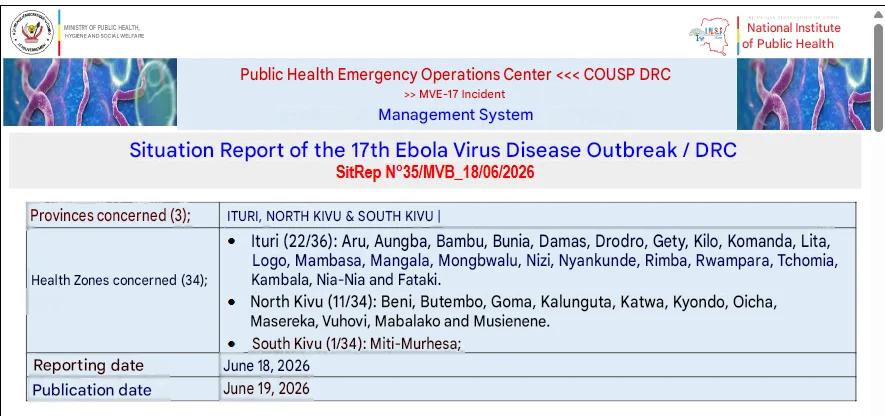
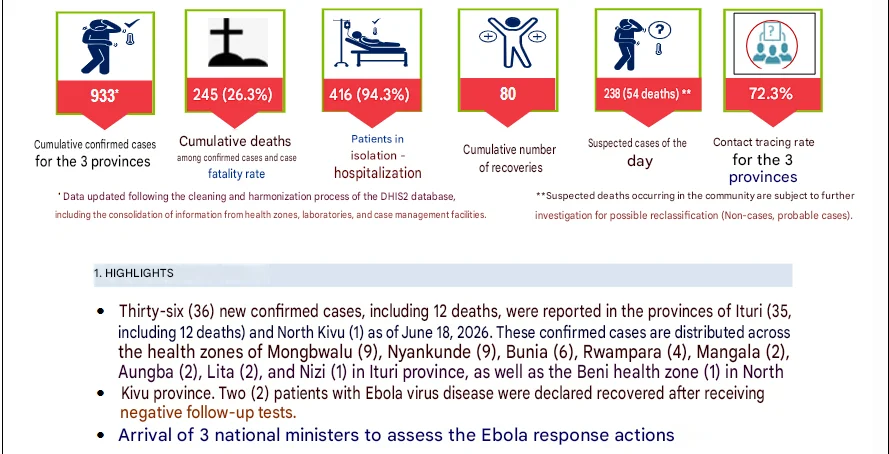
...
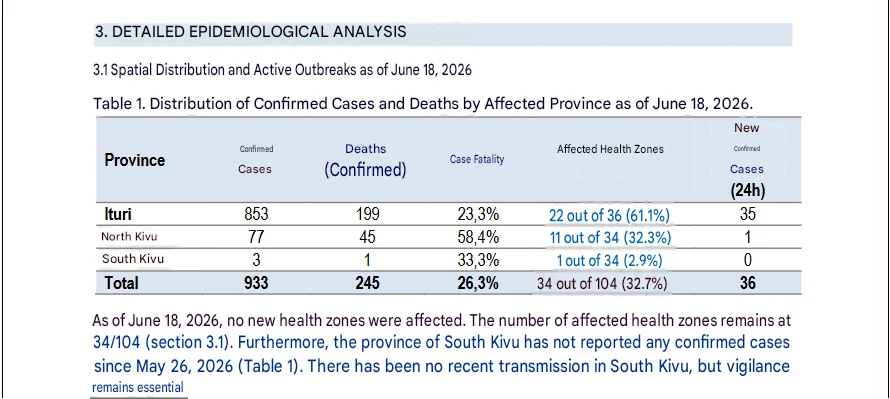
...
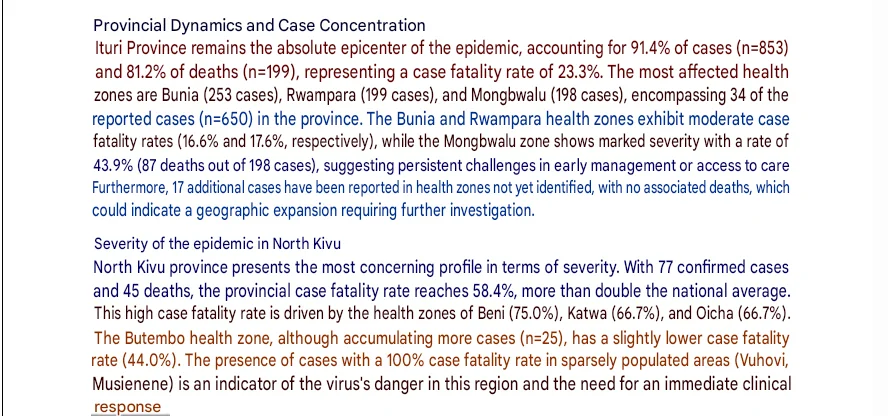
...
https://insp.cd/sitrep-n35-mvb_18-06-2026/
SitRep N°35/MVB_18/06/2026
- June 20, 2026
- Posted by insp.cd
...
...
...
https://insp.cd/sitrep-n35-mvb_18-06-2026/
Pathfinder
Editor, Senior Moderator
Images translated by Google
SitRep N°36/MVB_19/06/2026
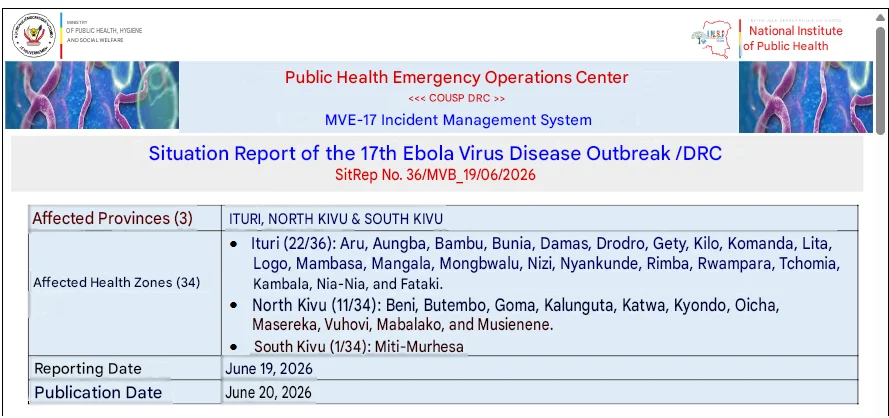
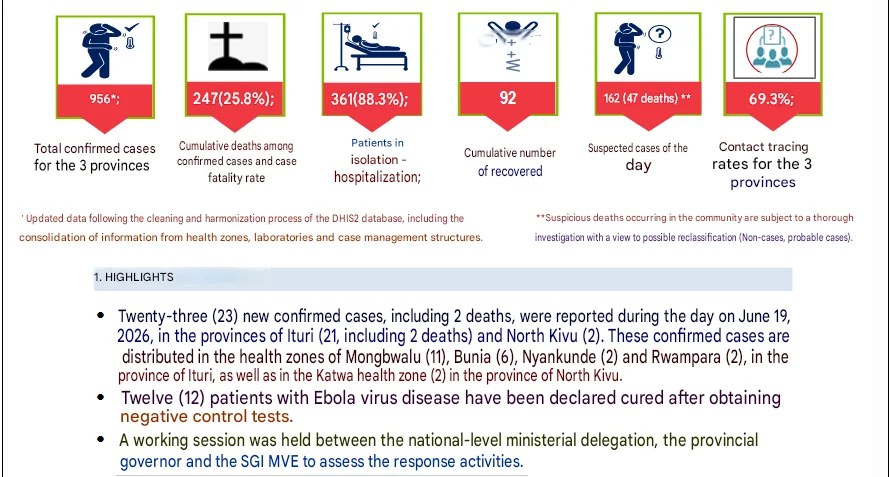
...
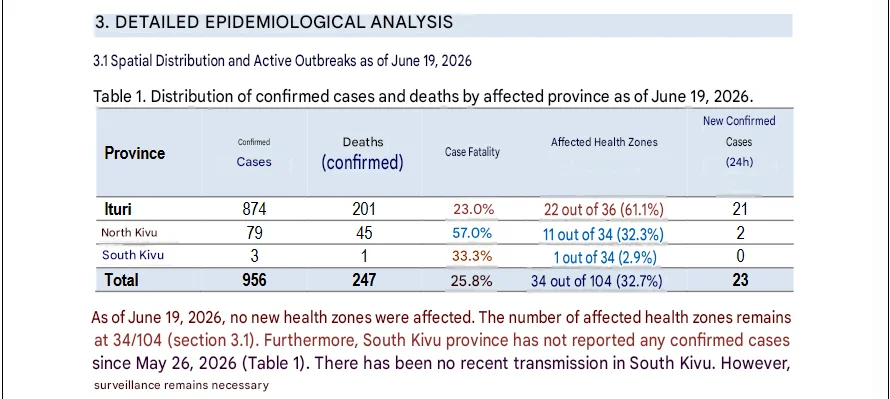
...

...
https://insp.cd/sitrep-n36-mvb_19-06-2026/
SitRep N°36/MVB_19/06/2026
- juin 20, 2026
- Posted by insp.cd
...
...
...
https://insp.cd/sitrep-n36-mvb_19-06-2026/
Pathfinder
Editor, Senior Moderator
Pathfinder
Editor, Senior Moderator
Translation Google
The Ebola response is showing encouraging signs in Mongbwalu
Published on Mon, 22/06/2026 - 06:55 | Modified on Mon, 22/06/2026 - 06:55
In Mongbwalu, the epicenter of the Ebola virus disease in Ituri, awareness efforts are beginning to produce tangible results. After several weeks marked by mistrust and resistance from a segment of the population, more and more residents are now voluntarily going to the hospital as soon as the first symptoms appear.
Just two to three weeks ago, health teams were recording an average of 15 community deaths per day. Today, the situation is improving.
According to the medical director of the Mongbwalu General Referral Hospital, Dr. Richard Lokudu, this figure has now fallen to about 4 daily deaths; proof that patients are seeking medical attention more quickly.
This improvement is also reflected in admissions to the treatment center. While it previously received 3 to 4 confirmed cases per day, it now receives nearly 10 daily. On average, 20 suspected cases are admitted each day, of which nearly 60% are confirmed positive for Ebola. Currently, about thirty confirmed patients are being treated.
Dr. Richard Lokudu attributes these advances to intensive awareness campaigns conducted on the ground, as well as to measures recently announced by the Minister of Health, including free healthcare and the availability of medicines.
“ We ask the public to trust the hospital. Care is free, medication is available, and the level of care has significantly improved. If you have symptoms, do not stay home, but come for a consultation quickly ,” he said.
For medical teams, this development is encouraging. It helps reduce deaths at home and contributes to slowing the spread of the epidemic.
https://www.radiookapi.net/2026/06/...ola-montre-des-signes-encourageants-mongbwalu
The Ebola response is showing encouraging signs in Mongbwalu
Published on Mon, 22/06/2026 - 06:55 | Modified on Mon, 22/06/2026 - 06:55
In Mongbwalu, the epicenter of the Ebola virus disease in Ituri, awareness efforts are beginning to produce tangible results. After several weeks marked by mistrust and resistance from a segment of the population, more and more residents are now voluntarily going to the hospital as soon as the first symptoms appear.
Just two to three weeks ago, health teams were recording an average of 15 community deaths per day. Today, the situation is improving.
According to the medical director of the Mongbwalu General Referral Hospital, Dr. Richard Lokudu, this figure has now fallen to about 4 daily deaths; proof that patients are seeking medical attention more quickly.
This improvement is also reflected in admissions to the treatment center. While it previously received 3 to 4 confirmed cases per day, it now receives nearly 10 daily. On average, 20 suspected cases are admitted each day, of which nearly 60% are confirmed positive for Ebola. Currently, about thirty confirmed patients are being treated.
Dr. Richard Lokudu attributes these advances to intensive awareness campaigns conducted on the ground, as well as to measures recently announced by the Minister of Health, including free healthcare and the availability of medicines.
“ We ask the public to trust the hospital. Care is free, medication is available, and the level of care has significantly improved. If you have symptoms, do not stay home, but come for a consultation quickly ,” he said.
For medical teams, this development is encouraging. It helps reduce deaths at home and contributes to slowing the spread of the epidemic.
https://www.radiookapi.net/2026/06/...ola-montre-des-signes-encourageants-mongbwalu
Pathfinder
Editor, Senior Moderator
Translation Google
Ebola in the DRC: a thousand cases, a record for the Bundibugyo strain, the response faces multiple challenges
In eastern Democratic Republic of Congo (DRC), there are now more than 1,000 confirmed cases and over 250 deaths of Ebola Bundibugyo. Here's an overview of an epidemic that, in five weeks, has become the largest known outbreak of this strain of the virus.
Published on:22/06/2026 - 14:34
Modified on:22/06/2026 - 14:36
By : Patient Ligodi
The Ebola Bundibugyo epidemic affecting Ituri, North Kivu, and South Kivu in eastern DRC surpassed 1,000 confirmed cases over the weekend of June 20-21, 2026. This is already the largest epidemic ever recorded for this strain of the virus, first identified in 2007.
And on the ground, the challenges are multiplying: transporting the sick, contamination of healthcare staff, saturated treatment centers.
Health Minister Roger Kamba also points to another problem: patients often arriving too late at healthcare facilities.
The response team, however, claims to be preparing for a further rise in cases, as the peak of the epidemic has not yet been reached.
Funding, security around funerals and possible cross-vaccine protection also remain central concerns.
A new milestone for a rare strain
According to the latest situation report from the National Institute of Public Health (INSP), dated June 20, 2026, 1,003 cases have now been confirmed and 254 deaths recorded, representing an overall case fatality rate of 25.3%, spread across three provinces: Ituri (916 cases), North Kivu (84 cases), and South Kivu (3 cases). Ituri accounts for 91.3% of the cases and 80.7% of the deaths of the epidemic, which has now affected 34 of the country's 104 health zones.
This figure only makes sense in light of the history of the virus in question. Bundibugyo is a distinct species from the Zaire strain, responsible for the vast majority of the 17 epidemics recorded in the DRC since 1976. Before this, Bundibugyo had only caused two documented outbreaks: in Uganda in 2007, with 131 cases and 42 deaths, and in Isiro, in the northeast of the DRC, in 2012, of a more limited scale.
In a report published in early June, researchers from the US Centers for Disease Control and Prevention (US CDC) are unequivocal: the current epidemic is already the largest ever recorded for this strain, both in terms of the number of cases and the number of deaths.
The lethality varies greatly depending on the area.
The Bundibugyo virus is generally considered less lethal, on average, than the Zaire strain, responsible for the major Ebola epidemic in West Africa between 2014 and 2016, which caused more than 11,000 deaths. However, the figures for this epidemic do not consistently support this idea. According to the National Institute of Public Health (INSP), the case fatality rate reached 41.4% in Mongbwalu, Ituri (91 deaths out of 220 cases), compared to 16.6% in Rwampara and 16.0% in Bunia. And in North Kivu, it exceeded 57%, driven by the areas of Beni (70.6%), Katwa (60.7%), and Oicha (66.7%).
According to the INSP, this disparity reflects persistent challenges in early intervention and access to care, rather than a difference in the virulence of the virus itself.
Health Minister Roger Kamba himself highlighted this factor. Patients, he explained, often arrive late, during what he called the " wet phase " of the illness. Earlier intervention, he argued, would save more lives. Hence the urgent need, he added, to resolve the transportation and ambulance problems that delay access to care.
Patient transport: a bottleneck
The lack of ambulances is explicitly among the challenges listed by the INSP, with a gap estimated at 20 isolation facilities.
On the ground, ambulances ordered have arrived in the DRC but remain blocked by a long queue at customs, according to the institute.
While awaiting their arrival, seven ambulances had been mobilized in Bunia. An ambulance and a jeep had also arrived last Sunday in Mongbwalu, the second most affected health zone in terms of confirmed cases.
Healthcare workers, on the front line
The human cost is also weighing heavily on medical teams. According to the INSP, 78 healthcare workers have been infected since the start of the epidemic, and 18 have died, representing a case fatality rate of 23.1% among healthcare workers, higher than the national average.
The institute attributes this high risk to insufficient personal protective equipment and chlorine available in the field. A few weeks earlier, the Provincial Health Division had reported 14 deaths among frontline workers: three doctors and eleven nurses. The correlation between these two figures remains unclear; they do not necessarily cover the same period or the same categories of personnel.
Contact tracing remains below target: 58% according to the latest report, compared to a target of 95%. Meanwhile, Ebola treatment centers (ETCs) in Ituri are showing an occupancy rate of 89.3%, indicating strained capacity.
A response that anticipates a further increase
Despite these obstacles, the teams managing the response say they are preparing for what comes next rather than giving in to alarmism. The peak of the epidemic has not yet been reached, nor has the plateau that is expected to follow, according to health authorities.
Thus, nine Ebola treatment centers are already operational in Ituri province. Others are under construction, and a project for a center with 200 to 300 beds is being studied to anticipate a possible new increase in cases.
A weekly curve of confirmed cases, established from the response management system (DHIS2), seems to indicate a slowdown after a peak reached in epidemiological week 23. This trend, however, remains to be confirmed with caution: the last weeks of an epidemic curve are almost always underestimated at the time of their publication, due to the delay between the occurrence of a case and its notification in the system.
To support the mobilized teams, Minister Kamba announced a doubling of the bonus for service providers involved in the response. On the community level, 1,200 community health workers have been trained and 1,000 are already deployed in the field, working alongside nurses in health areas and zones. According to the Minister, their numbers will continue to grow.
Beyond Ebola, these relays must primarily support long-term epidemiological surveillance, a mechanism that was already planned in the country's health development program.
Funding: Between Mobilization and Calls for Accountability
The response budget is estimated at $519 million. The Congolese government has already contributed $50 million, compared to $2.5 million during the 2018-2019 epidemic, a comparison highlighted by Minister Kamba. He reiterated the principle of " one plan, one budget, one coordination ," calling on all financial partners to report on the use of the funds received.
Security, an obstacle that is not limited to armed groups
Several incidents marred the response. Minister Kamba mentioned attacks by some young people from the community during funerals, which led the police to deploy officers near certain cemeteries. Two Red Cross volunteers were injured in the head during one of these incidents and evacuated to Kinshasa due to the severity of their injuries. " Insecurity isn't just about armed groups ," the minister emphasized. The National Institute of Public Health (INSP) also confirmed that access to certain areas remains limited by the presence of armed groups—notably the community militia Cooperative for the Development of Congo (CODECO) and the jihadists of the Allied Democratic Forces (ADF)—while describing the security situation in Bunia and its surroundings as " calm but unpredictable ."
The question of immunity to other strains of Ebola
From a scientific standpoint, one question remains: do people vaccinated against the Zaire strain during previous epidemics benefit from some form of protection against Bundibugyo? Professor Jean-Jacques Muyembe—co-discoverer of Ebola and Director General of the National Institute of Biomedical Research of the DRG—indicated that some cross-protection with the Ervebo vaccine, developed by Merck against the Zaire strain, is conceivable, but that further studies are needed to confirm it. Minister Kamba mentioned a possible cross-protection rate of up to 40%, while specifying that studies are ongoing.
The warning from the US CDC
In its modeling report published in early June, the US CDC tested several scenarios based on the percentage of patients in isolation. If only 20% of those infected are isolated, up to 65% of the simulations exceed 20,000 cumulative cases by the end of August. If this percentage reaches 70%, the risk drops sharply: only 1% of the simulations exceed this threshold.
The CDC therefore warns: without a sustained effort to quickly isolate the sick, this epidemic could, in the coming months, approach the scale of that in West Africa between 2014 and 2016.
However, the researchers point out the limitations of their own model: the actual number of deaths at the calibration date remains uncertain, and several factors, such as changes in population behavior, are not taken into account.
https://www.rfi.fr/fr/afrique/20260...yo-la-riposte-fait-face-à-des-défis-multiples
Ebola in the DRC: a thousand cases, a record for the Bundibugyo strain, the response faces multiple challenges
In eastern Democratic Republic of Congo (DRC), there are now more than 1,000 confirmed cases and over 250 deaths of Ebola Bundibugyo. Here's an overview of an epidemic that, in five weeks, has become the largest known outbreak of this strain of the virus.
Published on:22/06/2026 - 14:34
Modified on:22/06/2026 - 14:36
By : Patient Ligodi
The Ebola Bundibugyo epidemic affecting Ituri, North Kivu, and South Kivu in eastern DRC surpassed 1,000 confirmed cases over the weekend of June 20-21, 2026. This is already the largest epidemic ever recorded for this strain of the virus, first identified in 2007.
And on the ground, the challenges are multiplying: transporting the sick, contamination of healthcare staff, saturated treatment centers.
Health Minister Roger Kamba also points to another problem: patients often arriving too late at healthcare facilities.
The response team, however, claims to be preparing for a further rise in cases, as the peak of the epidemic has not yet been reached.
Funding, security around funerals and possible cross-vaccine protection also remain central concerns.
A new milestone for a rare strain
According to the latest situation report from the National Institute of Public Health (INSP), dated June 20, 2026, 1,003 cases have now been confirmed and 254 deaths recorded, representing an overall case fatality rate of 25.3%, spread across three provinces: Ituri (916 cases), North Kivu (84 cases), and South Kivu (3 cases). Ituri accounts for 91.3% of the cases and 80.7% of the deaths of the epidemic, which has now affected 34 of the country's 104 health zones.
This figure only makes sense in light of the history of the virus in question. Bundibugyo is a distinct species from the Zaire strain, responsible for the vast majority of the 17 epidemics recorded in the DRC since 1976. Before this, Bundibugyo had only caused two documented outbreaks: in Uganda in 2007, with 131 cases and 42 deaths, and in Isiro, in the northeast of the DRC, in 2012, of a more limited scale.
In a report published in early June, researchers from the US Centers for Disease Control and Prevention (US CDC) are unequivocal: the current epidemic is already the largest ever recorded for this strain, both in terms of the number of cases and the number of deaths.
The lethality varies greatly depending on the area.
The Bundibugyo virus is generally considered less lethal, on average, than the Zaire strain, responsible for the major Ebola epidemic in West Africa between 2014 and 2016, which caused more than 11,000 deaths. However, the figures for this epidemic do not consistently support this idea. According to the National Institute of Public Health (INSP), the case fatality rate reached 41.4% in Mongbwalu, Ituri (91 deaths out of 220 cases), compared to 16.6% in Rwampara and 16.0% in Bunia. And in North Kivu, it exceeded 57%, driven by the areas of Beni (70.6%), Katwa (60.7%), and Oicha (66.7%).
According to the INSP, this disparity reflects persistent challenges in early intervention and access to care, rather than a difference in the virulence of the virus itself.
Health Minister Roger Kamba himself highlighted this factor. Patients, he explained, often arrive late, during what he called the " wet phase " of the illness. Earlier intervention, he argued, would save more lives. Hence the urgent need, he added, to resolve the transportation and ambulance problems that delay access to care.
Patient transport: a bottleneck
The lack of ambulances is explicitly among the challenges listed by the INSP, with a gap estimated at 20 isolation facilities.
On the ground, ambulances ordered have arrived in the DRC but remain blocked by a long queue at customs, according to the institute.
While awaiting their arrival, seven ambulances had been mobilized in Bunia. An ambulance and a jeep had also arrived last Sunday in Mongbwalu, the second most affected health zone in terms of confirmed cases.
Healthcare workers, on the front line
The human cost is also weighing heavily on medical teams. According to the INSP, 78 healthcare workers have been infected since the start of the epidemic, and 18 have died, representing a case fatality rate of 23.1% among healthcare workers, higher than the national average.
The institute attributes this high risk to insufficient personal protective equipment and chlorine available in the field. A few weeks earlier, the Provincial Health Division had reported 14 deaths among frontline workers: three doctors and eleven nurses. The correlation between these two figures remains unclear; they do not necessarily cover the same period or the same categories of personnel.
Contact tracing remains below target: 58% according to the latest report, compared to a target of 95%. Meanwhile, Ebola treatment centers (ETCs) in Ituri are showing an occupancy rate of 89.3%, indicating strained capacity.
A response that anticipates a further increase
Despite these obstacles, the teams managing the response say they are preparing for what comes next rather than giving in to alarmism. The peak of the epidemic has not yet been reached, nor has the plateau that is expected to follow, according to health authorities.
Thus, nine Ebola treatment centers are already operational in Ituri province. Others are under construction, and a project for a center with 200 to 300 beds is being studied to anticipate a possible new increase in cases.
A weekly curve of confirmed cases, established from the response management system (DHIS2), seems to indicate a slowdown after a peak reached in epidemiological week 23. This trend, however, remains to be confirmed with caution: the last weeks of an epidemic curve are almost always underestimated at the time of their publication, due to the delay between the occurrence of a case and its notification in the system.
To support the mobilized teams, Minister Kamba announced a doubling of the bonus for service providers involved in the response. On the community level, 1,200 community health workers have been trained and 1,000 are already deployed in the field, working alongside nurses in health areas and zones. According to the Minister, their numbers will continue to grow.
Beyond Ebola, these relays must primarily support long-term epidemiological surveillance, a mechanism that was already planned in the country's health development program.
Funding: Between Mobilization and Calls for Accountability
The response budget is estimated at $519 million. The Congolese government has already contributed $50 million, compared to $2.5 million during the 2018-2019 epidemic, a comparison highlighted by Minister Kamba. He reiterated the principle of " one plan, one budget, one coordination ," calling on all financial partners to report on the use of the funds received.
Security, an obstacle that is not limited to armed groups
Several incidents marred the response. Minister Kamba mentioned attacks by some young people from the community during funerals, which led the police to deploy officers near certain cemeteries. Two Red Cross volunteers were injured in the head during one of these incidents and evacuated to Kinshasa due to the severity of their injuries. " Insecurity isn't just about armed groups ," the minister emphasized. The National Institute of Public Health (INSP) also confirmed that access to certain areas remains limited by the presence of armed groups—notably the community militia Cooperative for the Development of Congo (CODECO) and the jihadists of the Allied Democratic Forces (ADF)—while describing the security situation in Bunia and its surroundings as " calm but unpredictable ."
The question of immunity to other strains of Ebola
From a scientific standpoint, one question remains: do people vaccinated against the Zaire strain during previous epidemics benefit from some form of protection against Bundibugyo? Professor Jean-Jacques Muyembe—co-discoverer of Ebola and Director General of the National Institute of Biomedical Research of the DRG—indicated that some cross-protection with the Ervebo vaccine, developed by Merck against the Zaire strain, is conceivable, but that further studies are needed to confirm it. Minister Kamba mentioned a possible cross-protection rate of up to 40%, while specifying that studies are ongoing.
The warning from the US CDC
In its modeling report published in early June, the US CDC tested several scenarios based on the percentage of patients in isolation. If only 20% of those infected are isolated, up to 65% of the simulations exceed 20,000 cumulative cases by the end of August. If this percentage reaches 70%, the risk drops sharply: only 1% of the simulations exceed this threshold.
The CDC therefore warns: without a sustained effort to quickly isolate the sick, this epidemic could, in the coming months, approach the scale of that in West Africa between 2014 and 2016.
However, the researchers point out the limitations of their own model: the actual number of deaths at the calibration date remains uncertain, and several factors, such as changes in population behavior, are not taken into account.
https://www.rfi.fr/fr/afrique/20260...yo-la-riposte-fait-face-à-des-défis-multiples
Pathfinder
Editor, Senior Moderator
Related to post #244
Images translated by Google
SitRep N°37/MVB_20/06/2026
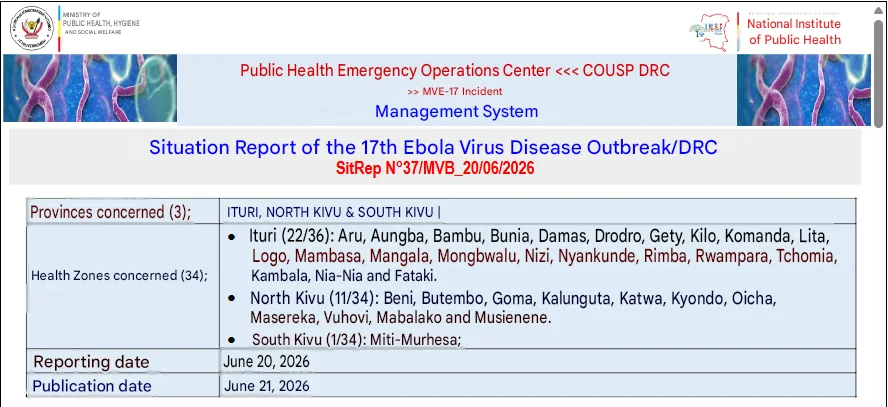
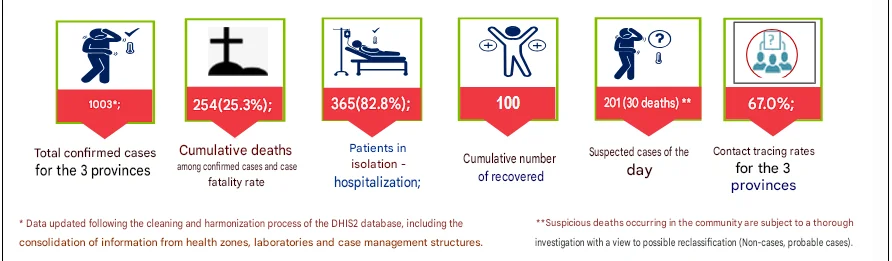
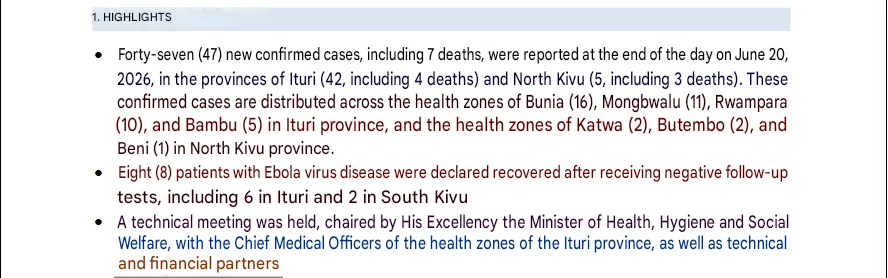
...
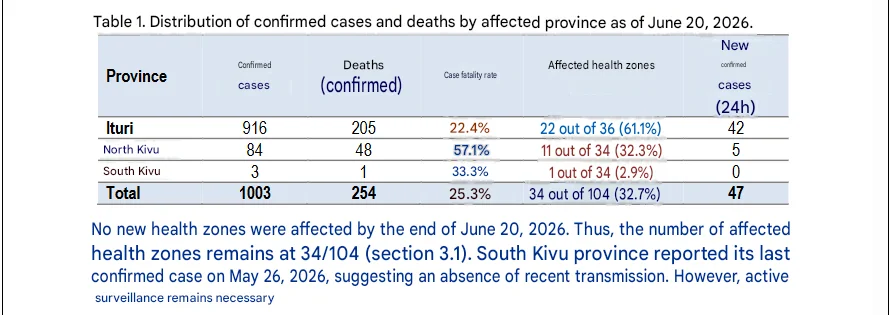
...

...
https://insp.cd/sitrep-n37-mvb_20-06-2026/
Images translated by Google
SitRep N°37/MVB_20/06/2026
- June 22, 2026
- Posted by insp.cd
...
...
...
https://insp.cd/sitrep-n37-mvb_20-06-2026/
Pathfinder
Editor, Senior Moderator
Two cases of Ebola confirmed at the Kigonze displacement site in Bunia; response teams are strengthening surveillance
Published on Mon, 22/06/2026 - 18:30 | Modified on Mon, 22/06/2026 - 18:30
Two confirmed cases of Ebola virus disease have been recorded at the Kigonze displacement site in the Mudzi Pela neighborhood of Bunia, Ituri province. This confirmation was made on Monday, June 22, by the Ebola response team after analyzing samples taken in a context marked by a series of deaths reported in recent weeks at this camp, which hosts more than 17,000 displaced people.
According to site officials, who were informed by the response team, these two cases are among about ten deaths recorded on June 16 and 17. Since then, new deaths have been reported almost daily within the camp.
On the morning of Monday, June 22, one person died before their body could be transferred to Lopa. The previous day, three other displaced people had lost their lives, while two deaths had already been recorded last Saturday.
The site manager reports that at least thirty displaced people have died since May from an illness whose origin has not yet been fully determined. Several patients, however, presented symptoms consistent with Ebola, including vomiting and diarrhea.
Samples have been taken by the response teams and analyses are continuing in order to confirm or rule out other cases among the recorded deaths.
Researching contacts and raising community awareness
Faced with the risk of the disease spreading in this densely populated camp, health teams have strengthened surveillance operations, reports the site manager.
Response teams are currently identifying and monitoring individuals who have been in contact with those infected in order to break the chains of transmission. Training sessions are also being organized for community health workers tasked with raising awareness among displaced people about preventive measures.
Despite their efforts, health authorities are facing several obstacles. Some residents continue to question the very existence of the disease and do not always respect the recommended preventative measures.
The handling of the bodies of deceased persons, a high-risk practice in the context of Ebola, remains a particular source of concern for medical teams.
Response officials also highlighted the inadequacy of the sanitation facilities available at the Kigonze site. The camp notably lacks handwashing stations, health screening equipment, and suitable spaces for treating the sick.
To strengthen the response, an isolation center should be set up soon to accommodate suspected and confirmed cases.
Ituri, main focus of the epidemic
Thirty-three days after the official declaration of the epidemic, the Democratic Republic of Congo has recorded 896 confirmed cases of Ebola, including 232 deaths, representing a case fatality rate of 26%, the Minister of Health stated on June 19.
A total of 78 people have been declared recovered. The epidemic has now spread to 33 health zones across the country, including 20 in Ituri. The province alone accounts for nearly 91% of the cases recorded in the affected areas.
https://www.radiookapi.net/2026/06/...dans-le-site-de-deplaces-de-kigonze-bunia-les
Published on Mon, 22/06/2026 - 18:30 | Modified on Mon, 22/06/2026 - 18:30
Two confirmed cases of Ebola virus disease have been recorded at the Kigonze displacement site in the Mudzi Pela neighborhood of Bunia, Ituri province. This confirmation was made on Monday, June 22, by the Ebola response team after analyzing samples taken in a context marked by a series of deaths reported in recent weeks at this camp, which hosts more than 17,000 displaced people.
According to site officials, who were informed by the response team, these two cases are among about ten deaths recorded on June 16 and 17. Since then, new deaths have been reported almost daily within the camp.
On the morning of Monday, June 22, one person died before their body could be transferred to Lopa. The previous day, three other displaced people had lost their lives, while two deaths had already been recorded last Saturday.
The site manager reports that at least thirty displaced people have died since May from an illness whose origin has not yet been fully determined. Several patients, however, presented symptoms consistent with Ebola, including vomiting and diarrhea.
Samples have been taken by the response teams and analyses are continuing in order to confirm or rule out other cases among the recorded deaths.
Researching contacts and raising community awareness
Faced with the risk of the disease spreading in this densely populated camp, health teams have strengthened surveillance operations, reports the site manager.
Response teams are currently identifying and monitoring individuals who have been in contact with those infected in order to break the chains of transmission. Training sessions are also being organized for community health workers tasked with raising awareness among displaced people about preventive measures.
Despite their efforts, health authorities are facing several obstacles. Some residents continue to question the very existence of the disease and do not always respect the recommended preventative measures.
The handling of the bodies of deceased persons, a high-risk practice in the context of Ebola, remains a particular source of concern for medical teams.
Response officials also highlighted the inadequacy of the sanitation facilities available at the Kigonze site. The camp notably lacks handwashing stations, health screening equipment, and suitable spaces for treating the sick.
To strengthen the response, an isolation center should be set up soon to accommodate suspected and confirmed cases.
Ituri, main focus of the epidemic
Thirty-three days after the official declaration of the epidemic, the Democratic Republic of Congo has recorded 896 confirmed cases of Ebola, including 232 deaths, representing a case fatality rate of 26%, the Minister of Health stated on June 19.
A total of 78 people have been declared recovered. The epidemic has now spread to 33 health zones across the country, including 20 in Ituri. The province alone accounts for nearly 91% of the cases recorded in the affected areas.
https://www.radiookapi.net/2026/06/...dans-le-site-de-deplaces-de-kigonze-bunia-les
Pathfinder
Editor, Senior Moderator
Images translated by Google
SitRep N°38/MVB_21/06/2026
...
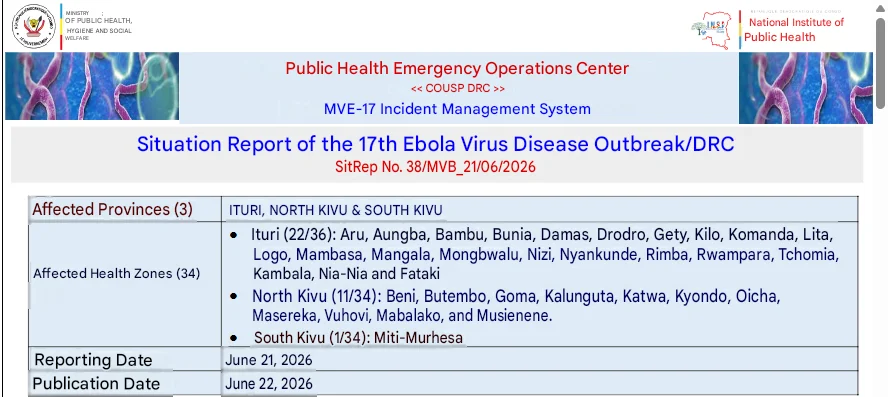
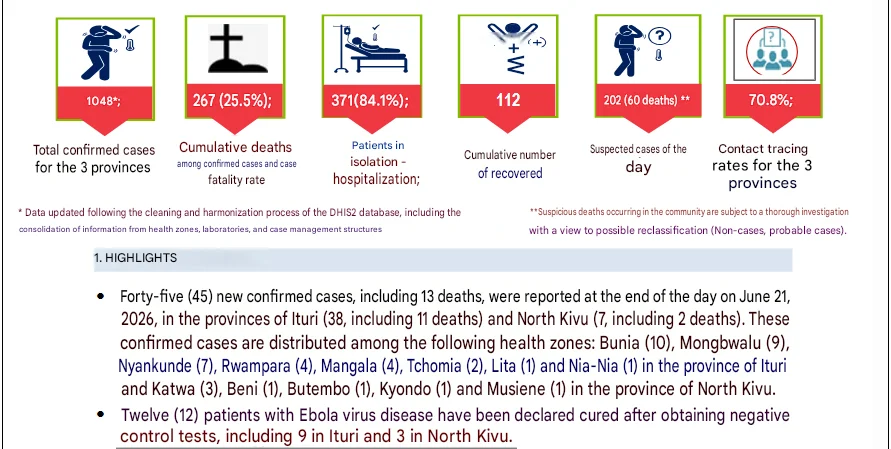
,,,
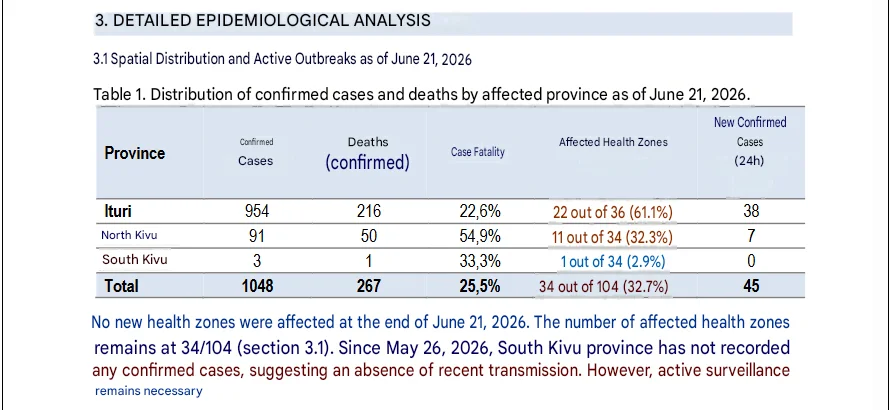
...
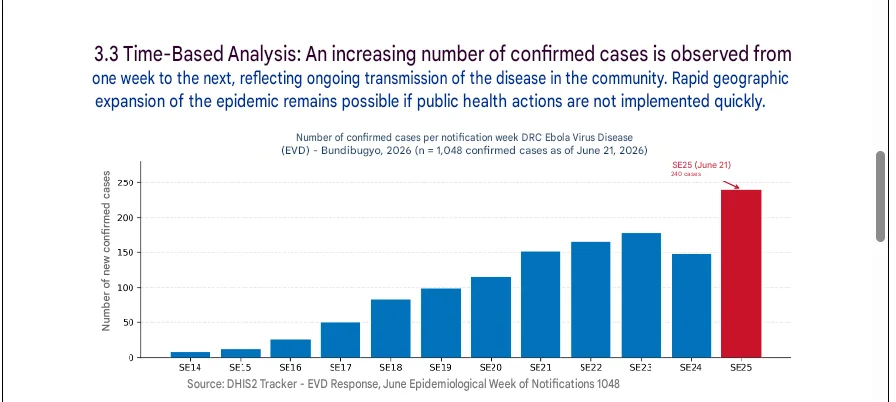
...

...
https://insp.cd/sitrep-n38-mvb_21-06-2026/
SitRep N°38/MVB_21/06/2026
- juin 22, 2026
- Posted by insp.cd
...
,,,
...
...
...
https://insp.cd/sitrep-n38-mvb_21-06-2026/
Pathfinder
Editor, Senior Moderator
WHO Director-General's opening remarks at the media briefing – 24 June 2026
24 June 2026
Good afternoon to those in the room, and good morning, good afternoon and good evening to those online, wherever you are in the world.
We begin with the Ebola outbreak in the Democratic Republic of the Congo.
It’s encouraging to see that since the outbreak was first reported five weeks ago, the response has scaled up significantly, under the leadership of the government.
In the past five weeks, the number of treatment beds has increased from less than 10 to over 500 in 19 health centres.
With support from WHO and the Africa CDC, laboratory capacity has increased from 30 tests a day at the central laboratory in Kinshasa to over 2000 tests a day in nine labs across three provinces.
More communities are becoming aware of the risks of Ebola, and asking for the tools and support to protect themselves.
And more than 100 people have now recovered. With early detection and supportive care, many can survive this disease.
But we could save many more lives with therapeutics.
Preparations are now complete for a trial of two therapeutics that is expected to start in DRC next week.
The trial will evaluate whether two antivirals, MBP134 and remdesivir, can help to reduce mortality in patients with Bundibugyo virus disease, alone or in combination.
We thank the United States and Gilead Sciences for donating doses for the trial. Together with our partners we will announce more information next week.
WHO and our partners are working closely with the communities to inform and involve them in the trial.
We are also working to ensure the communities have access to the therapeutics should they prove safe and efficacious.
The trial will be conducted by a consortium of partners including DRC’s National Institute for Biomedical Research, ALIMA, Oxford University and WHO.
Despite the good progress we have made, we still face major challenges, and the outbreak is continuing to outpace the response.
There are now 1094 confirmed cases, with 277 deaths.
The outbreak is continuing to move fast.
Political advocacy and action are essential to create the conditions for increased humanitarian access and a scaled-up response, because the outbreak is happening in a complex situation.
In neighbouring Uganda, a new case was reported last Sunday, the first in two weeks.
This brings the total in Uganda to 20 confirmed cases, with two confirmed deaths.
All cases in Uganda are linked to the outbreak in DRC.
Today, France reported that a health worker with the NGO ALIMA, who returned to the country after caring for an Ebola patient in DRC, tested positive for the virus, and is now being monitored and receiving care.
This case is a reminder of the risks faced by frontline responders.
Almost 80 health workers have been infected, highlighting the risks they face and the importance of strengthening infection prevention and control.
WHO advises countries to support the safe deployment of personnel responding to this outbreak.
This includes ensuring that organizations deploying staff provide clear information on risks, how to reduce and manage the risk of exposure, and that countries are prepared to facilitate evacuation if needed.
Still, the risk to the rest of the world remains low.
Under the government’s leadership, the coordinated response to the outbreak is starting to take hold.
But continued scale up is needed.
Contact tracing is still not at the level needed;
Capacity at treatment and isolation centres is insufficient;
Safe and dignified burials remain a major challenge;
The health system is under pressure;
Border closures continue to hinder the response;
Multiple security incidents have been reported;
The affected area is in the grip of a decades-long humanitarian crisis;
And financial support is still insufficient.
Earlier this month, WHO and the Africa CDC announced a joint Continental Preparedness and Response Plan that reflects the funding needs of partners, with an ask of 518 million U.S. dollars.
Next week, the first financial reporting on pledges and commitments to the plan are expected to be available, providing a clear understanding of gaps and needs.
===
https://www.who.int/news-room/speec...-remarks-at-the-media-briefing---24-june-2026
WHO Director-General's opening remarks at the media briefing – 24 June 2026
24 June 2026
Good afternoon to those in the room, and good morning, good afternoon and good evening to those online, wherever you are in the world.
We begin with the Ebola outbreak in the Democratic Republic of the Congo.
It’s encouraging to see that since the outbreak was first reported five weeks ago, the response has scaled up significantly, under the leadership of the government.
In the past five weeks, the number of treatment beds has increased from less than 10 to over 500 in 19 health centres.
With support from WHO and the Africa CDC, laboratory capacity has increased from 30 tests a day at the central laboratory in Kinshasa to over 2000 tests a day in nine labs across three provinces.
More communities are becoming aware of the risks of Ebola, and asking for the tools and support to protect themselves.
And more than 100 people have now recovered. With early detection and supportive care, many can survive this disease.
But we could save many more lives with therapeutics.
Preparations are now complete for a trial of two therapeutics that is expected to start in DRC next week.
The trial will evaluate whether two antivirals, MBP134 and remdesivir, can help to reduce mortality in patients with Bundibugyo virus disease, alone or in combination.
We thank the United States and Gilead Sciences for donating doses for the trial. Together with our partners we will announce more information next week.
WHO and our partners are working closely with the communities to inform and involve them in the trial.
We are also working to ensure the communities have access to the therapeutics should they prove safe and efficacious.
The trial will be conducted by a consortium of partners including DRC’s National Institute for Biomedical Research, ALIMA, Oxford University and WHO.
Despite the good progress we have made, we still face major challenges, and the outbreak is continuing to outpace the response.
There are now 1094 confirmed cases, with 277 deaths.
The outbreak is continuing to move fast.
Political advocacy and action are essential to create the conditions for increased humanitarian access and a scaled-up response, because the outbreak is happening in a complex situation.
In neighbouring Uganda, a new case was reported last Sunday, the first in two weeks.
This brings the total in Uganda to 20 confirmed cases, with two confirmed deaths.
All cases in Uganda are linked to the outbreak in DRC.
Today, France reported that a health worker with the NGO ALIMA, who returned to the country after caring for an Ebola patient in DRC, tested positive for the virus, and is now being monitored and receiving care.
This case is a reminder of the risks faced by frontline responders.
Almost 80 health workers have been infected, highlighting the risks they face and the importance of strengthening infection prevention and control.
WHO advises countries to support the safe deployment of personnel responding to this outbreak.
This includes ensuring that organizations deploying staff provide clear information on risks, how to reduce and manage the risk of exposure, and that countries are prepared to facilitate evacuation if needed.
Still, the risk to the rest of the world remains low.
Under the government’s leadership, the coordinated response to the outbreak is starting to take hold.
But continued scale up is needed.
Contact tracing is still not at the level needed;
Capacity at treatment and isolation centres is insufficient;
Safe and dignified burials remain a major challenge;
The health system is under pressure;
Border closures continue to hinder the response;
Multiple security incidents have been reported;
The affected area is in the grip of a decades-long humanitarian crisis;
And financial support is still insufficient.
Earlier this month, WHO and the Africa CDC announced a joint Continental Preparedness and Response Plan that reflects the funding needs of partners, with an ask of 518 million U.S. dollars.
Next week, the first financial reporting on pledges and commitments to the plan are expected to be available, providing a clear understanding of gaps and needs.
===
https://www.who.int/news-room/speec...-remarks-at-the-media-briefing---24-june-2026
Pathfinder
Editor, Senior Moderator
Images translated by Google
SitRep N°040/MVB_23/06/2026
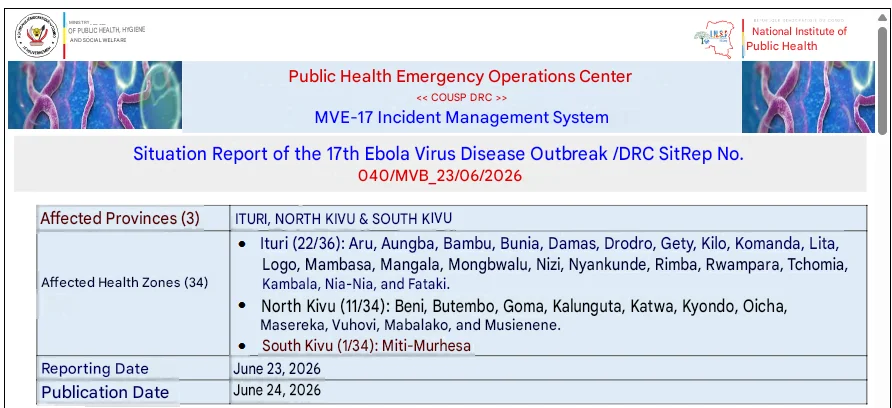
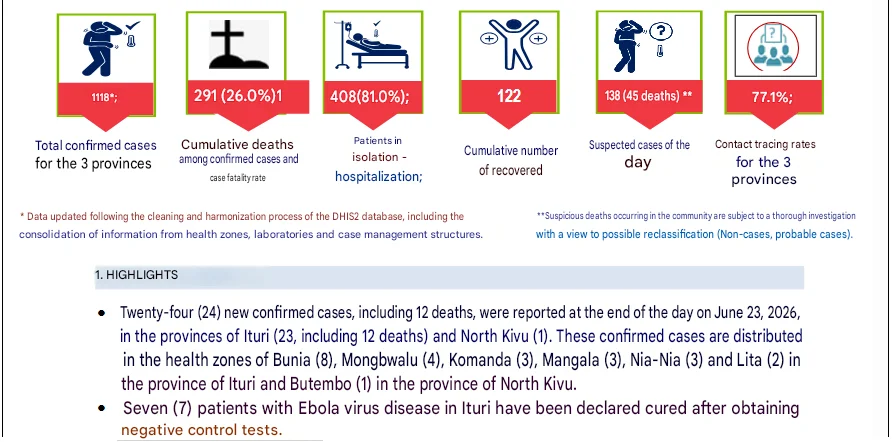
...
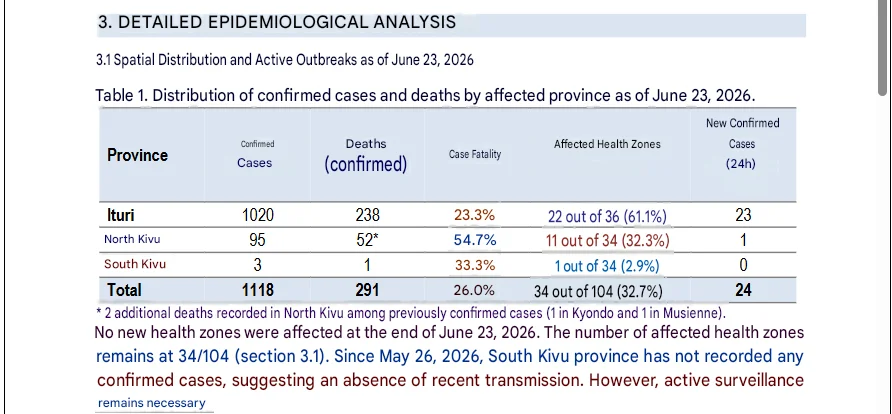
...
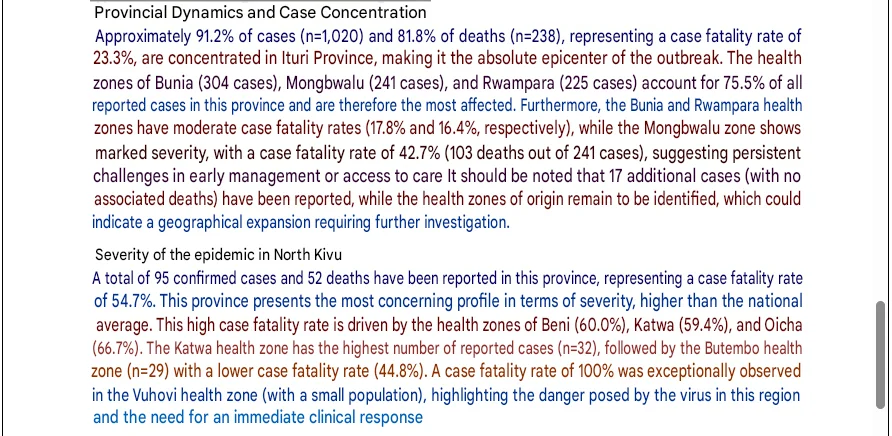
...

...
https://insp.cd/sitrep-n040-mvb_23-06-2026/
SitRep N°040/MVB_23/06/2026
- June 25, 2026
- Posted by insp.cd
...
...
...
...
https://insp.cd/sitrep-n040-mvb_23-06-2026/