

Install the app
How to install the app on iOS
Follow along with the video below to see how to install our site as a web app on your home screen.
Note: This feature may not be available in some browsers.
-
FluTrackers.com Inc. does not provide medical advice. Information on this web site is collected from various internet resources, and the FluTrackers board of directors makes no warranty to the safety, efficacy, correctness or completeness of the information posted on this site by any author or poster. The information collated here is for instructional and/or discussion purposes only and is NOT intended to diagnose or treat any disease, illness, or other medical condition. Every individual reader or poster should seek advice from their personal physician/healthcare practitioner before considering or using any interventions that are discussed on this website. By continuing to access this website you agree to consult your personal physican before using any interventions posted on this website, and you agree to hold harmless FluTrackers.com Inc., the board of directors, the members, and all authors and posters for any effects from use of any medication, supplement, vitamin or other substance, device, intervention, etc. mentioned in posts on this website, or other internet venues referenced in posts on this website.
-
We are not asking for any donations. Do not donate to any entity who says they are raising funds for us.
You are using an out of date browser. It may not display this or other websites correctly.
You should upgrade or use an alternative browser.
You should upgrade or use an alternative browser.
DRC – 17th Ebola Outbreak (Bundibugyo virus) - Concerns over reliability of Government reported cumulative cases and deaths - May 2026+
- Thread starter Michael Coston
- Start date
Pathfinder
Editor, Senior Moderator
Error in today’s official DRC Ebola bulletin
The health zone distribution table has an error in the Suspected Deaths (Décès suspects) column. The total is shown as 119, but the actual sum from all zones is 220.
Ituri Province:
Aru (1) + Bambu (2) + Bunia (48) + Kilo (2) + Mongbwalu (88) + Nizi (2) + Nyankunde (8) + Rwampala (69) + Samples with no file (Échantillons sans fiche)
(0) = 220
Nord-Kivu and Sud-Kivu zones are all 0.
The health zone distribution table has an error in the Suspected Deaths (Décès suspects) column. The total is shown as 119, but the actual sum from all zones is 220.
Ituri Province:
Aru (1) + Bambu (2) + Bunia (48) + Kilo (2) + Mongbwalu (88) + Nizi (2) + Nyankunde (8) + Rwampala (69) + Samples with no file (Échantillons sans fiche)
(0) = 220
Nord-Kivu and Sud-Kivu zones are all 0.
Pathfinder
Editor, Senior Moderator
:tiphat: AD.nl
@ADnl
Translated from Dutch
The patient who was admitted to Radboudumc on Friday with a suspected Ebola virus infection is not infected with it after all.
Radboud University Medical Center:
Translation Google
(screenshots)
...
...
https://www.radboudumc.nl/nieuws/2026/patient-met-lage-verdenking-op-ebola-opgenomen-in-hliu
Pathfinder
Editor, Senior Moderator
Asymptomatic American Medical Missionary Evacuated from DRC Releases Statement from Prague Hospital

Serge FOR IMMEDIATE RELEASE
Contact:
Holly McAfee
Director of Communications, Serge
news@serge.org
101 West Avenue, Suite 305
Jenkintown, PA 19046
www.serge.org
______________________________________
Asymptomatic American Medical Missionary Evacuated from DRC Releases Statement from Prague Hospital
Prague, Czech Republic — May 24, 2026 — Serge, an international Christian missions organization, confirmed today that American medical missionary, 46-year-old Dr. Patrick LaRochelle, continues to remain asymptomatic in a Prague hospital. Over the last 72 hours, Dr. LaRochelle has isolated in a BioBox chamber after high-risk exposure to Ebola. He is an Internal Medicine and Pediatrics physician who teaches and mentors medical students, provides specialty consultations, and facilitates quality medical care at Centre Medical Evangelique (CME) Bunia Hospital in Bunia, DRC.
Today, Dr. LaRochelle shared a written update with Serge leadership:
It is hard to be separated from my family, friends, and colleagues in Congo. I’m thankful to the Czech people for allowing me to come and be monitored here, and to the many people who worked night and day to get me and the Staffords to care. I want to thank God that my teammate Peter Stafford is recovering from Ebola—and that his wife Rebekah, his children, and I have remained free of the infection thus far. Standing helpless as Peter worsened prior to his medical evacuation, I had a glimpse of the reality that my Congolese friends and colleagues are living constantly, and for which a medical evacuation is not an option.
I can say that I have seen the commitment of the Congolese doctors leading the response. And I’ve seen the context in which they are working: an outbreak already out of control by the time it was recognized, a region in a constant state of conflict between multiple rebel groups since 2017, a province 1000 miles away from the capital, and a health system under-resourced both in diagnostic and treatment capacity. The challenges are overwhelming, and it’s easy for me to lose hope. But what gives me hope is my colleagues who are fighting for the lives of every patient, risking so much to follow their call to heal the sick, and then many hundreds and thousands—both Congolese and expatriate—who are mobilizing to come fight Ebola with them. We are encouraged by their lives and are honored to know them and serve alongside them. We are amazed to see them not flinch or draw back in the face of so much danger and chaos.”
Patrick remains in contact with Congolese colleagues who have sent updates from the regions most affected by the outbreak.
Out of respect for the family’s privacy, Serge requests that media outlets refrain from contacting family members directly or publishing images of the Stafford and LaRochelle children.
Additional updates will be provided as verified information becomes available.
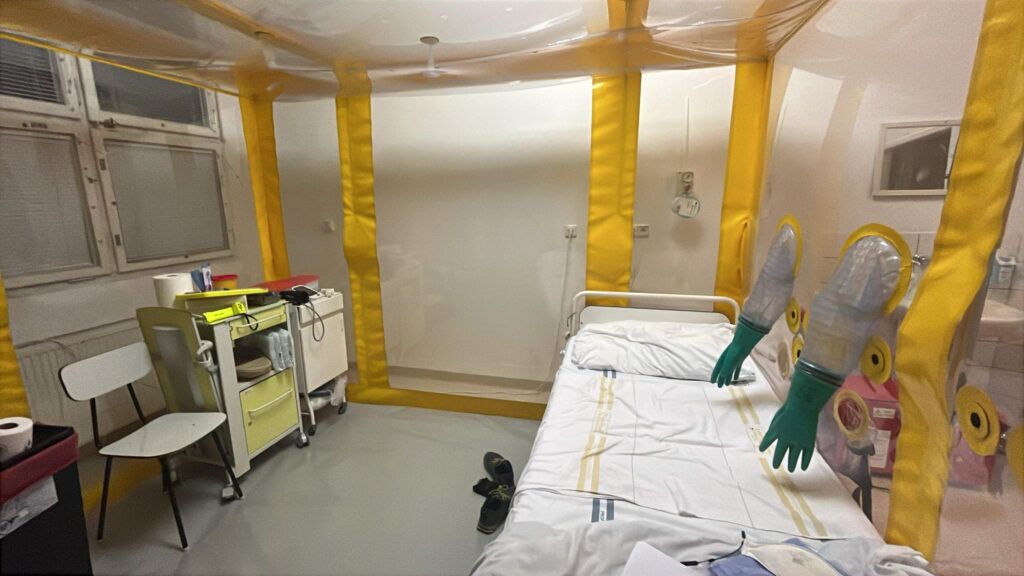
Patrick’s bio box isolation chamber
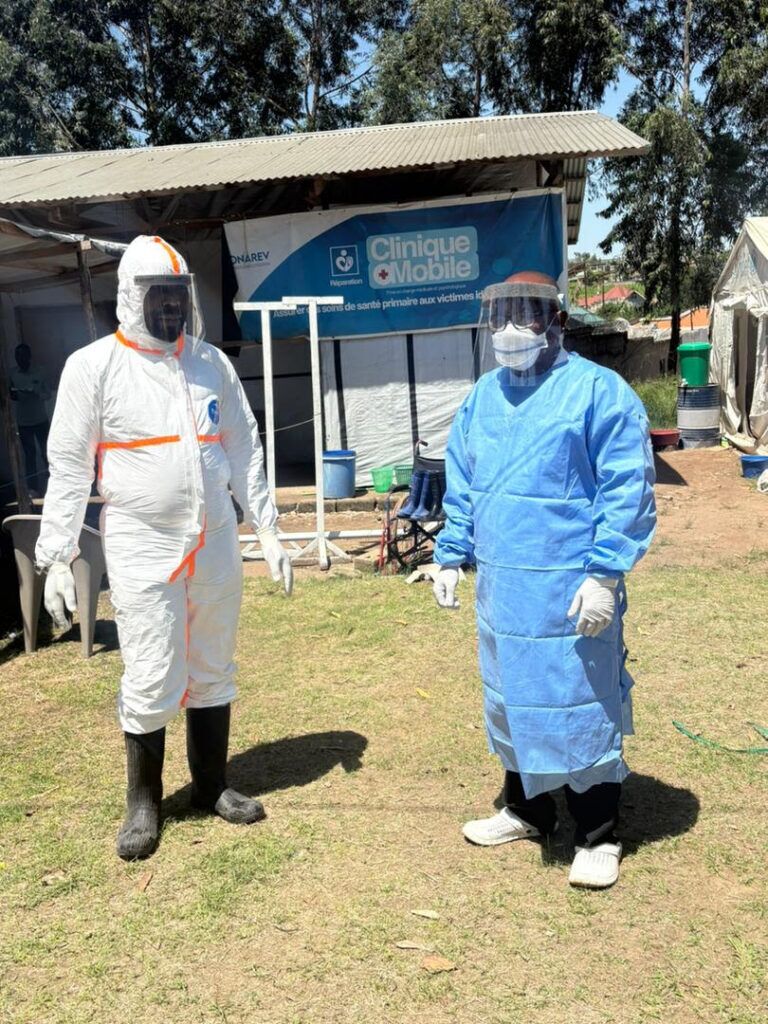
Colleagues of the LaRochelles preparing to see an Ebola patient
...
https://serge.org/blog/american-med...ve-for-ebola-in-democratic-republic-of-congo/
Serge FOR IMMEDIATE RELEASE
Contact:
Holly McAfee
Director of Communications, Serge
news@serge.org
101 West Avenue, Suite 305
Jenkintown, PA 19046
www.serge.org
______________________________________
Asymptomatic American Medical Missionary Evacuated from DRC Releases Statement from Prague Hospital
Prague, Czech Republic — May 24, 2026 — Serge, an international Christian missions organization, confirmed today that American medical missionary, 46-year-old Dr. Patrick LaRochelle, continues to remain asymptomatic in a Prague hospital. Over the last 72 hours, Dr. LaRochelle has isolated in a BioBox chamber after high-risk exposure to Ebola. He is an Internal Medicine and Pediatrics physician who teaches and mentors medical students, provides specialty consultations, and facilitates quality medical care at Centre Medical Evangelique (CME) Bunia Hospital in Bunia, DRC.
Today, Dr. LaRochelle shared a written update with Serge leadership:
It is hard to be separated from my family, friends, and colleagues in Congo. I’m thankful to the Czech people for allowing me to come and be monitored here, and to the many people who worked night and day to get me and the Staffords to care. I want to thank God that my teammate Peter Stafford is recovering from Ebola—and that his wife Rebekah, his children, and I have remained free of the infection thus far. Standing helpless as Peter worsened prior to his medical evacuation, I had a glimpse of the reality that my Congolese friends and colleagues are living constantly, and for which a medical evacuation is not an option.
I can say that I have seen the commitment of the Congolese doctors leading the response. And I’ve seen the context in which they are working: an outbreak already out of control by the time it was recognized, a region in a constant state of conflict between multiple rebel groups since 2017, a province 1000 miles away from the capital, and a health system under-resourced both in diagnostic and treatment capacity. The challenges are overwhelming, and it’s easy for me to lose hope. But what gives me hope is my colleagues who are fighting for the lives of every patient, risking so much to follow their call to heal the sick, and then many hundreds and thousands—both Congolese and expatriate—who are mobilizing to come fight Ebola with them. We are encouraged by their lives and are honored to know them and serve alongside them. We are amazed to see them not flinch or draw back in the face of so much danger and chaos.”
Patrick remains in contact with Congolese colleagues who have sent updates from the regions most affected by the outbreak.
- Dr. D, a medical director, shared that he’s going to the camp more often than normal to model to his staff that continuing to care well for this community and maintaining their trust is the most important way to love them and mitigate the spread of this disease.
- Nurse T had no masks, gloves, or gowns. The LaRochelles were able to supply those with the help of their network, and Nurse T is continuing to care for this community of 8,000 displaced people at one of the epicenters of the epidemic. He is courageously leading people toward safe practices.
Out of respect for the family’s privacy, Serge requests that media outlets refrain from contacting family members directly or publishing images of the Stafford and LaRochelle children.
Additional updates will be provided as verified information becomes available.
Patrick’s bio box isolation chamber
Colleagues of the LaRochelles preparing to see an Ebola patient
...
https://serge.org/blog/american-med...ve-for-ebola-in-democratic-republic-of-congo/
Pathfinder
Editor, Senior Moderator
As surveillance efforts have been scaled up in the #DRC [HASHTAG="c783"]Ebola[/HASHTAG] response, more than 900 suspected cases have been identified so far, including 101 confirmed cases.
In Ituri province, the epicentre of the outbreak, nearly 5 million people live amid ongoing conflict. Today, 1 in 4 people are in need of humanitarian assistance, and 1 in 5 are internally displaced.
The violence is forcing people to flee, including health and humanitarian workers. This is severely impeding efforts to scale up Ebola contact tracing and identify infections early enough to provide supportive care. Ongoing insecurity and fear are also fueling mistrust within communities.
@WHO
and humanitarian health partners maintain a presence across Ituri, including in some of the hardest-to-reach and most insecure areas. Communities are facing not only the threat of Ebola, but also a wide range of diseases.
Our Health Cluster partners are supporting the delivery of:
* maternal, reproductive, newborn, child, and adolescent healthcare
* treatment of severe acute malnutrition with complications
* mental health services, wound care, and support for survivors of sexual violence
* medical supplies
* routine immunization
* community health services
Delivering a comprehensive package of healthcare services is essential - not only to meet urgent health needs, but also to build the trust that is critical for an effective Ebola response.
3:58 PM · May 24, 2026
Pathfinder
Editor, Senior Moderator
Translation Google
Ebola in Ituri: The military governor raises the alarm about an epidemic that is hitting a province already at war
Monday, May 25, 2026 - 2:17 PM
The military governor of Ituri, Johnny Luboya Nkashama, painted an alarming picture at the Africa CDC ministerial briefing on May 25, 2026, describing a province doubly besieged: by armed groups on one side, and by the Ebola epidemic on the other.
Across the province's 61 displacement sites, nearly 970,000 people live in overcrowded and malnourished conditions that exacerbate their vulnerability to disease.
The governor identified four major challenges: the deployment of personnel and equipment, hampered by the closure of airports, which were expected to reopen soon; the securing of treatment centers after the attacks recorded in Mongbwalu and Rwampara; communication with fragile and distrustful communities; and the strengthening of the capacity of intervention teams.
Recalling that Ituri had already experienced an Ebola epidemic in 2019, he emphasized the difference in context: the war there now makes every lost day irreversible. He welcomed President Tshisekedi's release of $20 million, while calling on the international community to mobilize immediately to avert what he described as a looming catastrophe.
https://actualite.cd/2026/05/25/ebo...tire-la-sonnette-dalarme-sur-une-epidemie-qui
Ebola in Ituri: The military governor raises the alarm about an epidemic that is hitting a province already at war
Monday, May 25, 2026 - 2:17 PM
The military governor of Ituri, Johnny Luboya Nkashama, painted an alarming picture at the Africa CDC ministerial briefing on May 25, 2026, describing a province doubly besieged: by armed groups on one side, and by the Ebola epidemic on the other.
Across the province's 61 displacement sites, nearly 970,000 people live in overcrowded and malnourished conditions that exacerbate their vulnerability to disease.
The governor identified four major challenges: the deployment of personnel and equipment, hampered by the closure of airports, which were expected to reopen soon; the securing of treatment centers after the attacks recorded in Mongbwalu and Rwampara; communication with fragile and distrustful communities; and the strengthening of the capacity of intervention teams.
Recalling that Ituri had already experienced an Ebola epidemic in 2019, he emphasized the difference in context: the war there now makes every lost day irreversible. He welcomed President Tshisekedi's release of $20 million, while calling on the international community to mobilize immediately to avert what he described as a looming catastrophe.
https://actualite.cd/2026/05/25/ebo...tire-la-sonnette-dalarme-sur-une-epidemie-qui
Pathfinder
Editor, Senior Moderator
Translation Google
Burundi
Southern Region/Port of Rumonge: Panic of Ebola virus contamination
Those working at the port of Rumonge have been gripped by panic since the announcement of the Ebola virus outbreak in the Democratic Republic of Congo. Medical teams and technical equipment are slow to be deployed. The chief medical officer of the Rumonge health district acknowledges the danger faced by the personnel assigned to monitor the disease.
By Félix Nzorubonanya
25/05/2026
.
The buildings constructed at the port of Rumonge in recent years for Ebola virus disease control and surveillance have been destroyed by rising waters in Lake Tanganyika. This complicates the work of monitoring the disease, according to Dr. Alexis Nkurunziza, chief medical officer of the Rumonge health district.
He explains that two nurses are assigned to take the temperature of everyone entering or leaving. He believes these nurses are at risk of infection because temperature checks and traveler screening should be done in a suitable location, which is not currently the case.
A well-founded fear
BA, a trader at the port of Rumonge, emphasizes his deep fear that those who work there are highly exposed to the disease. And with good reason: the port is a major entry point for people arriving from the Democratic Republic of Congo.
Furthermore, following the statement by the Burundian Ministry of Public Health on the disease, he observes that nothing is being done to strengthen its control and surveillance.
He laments that many people are not taking precautions against this terrible disease, continuing to behave as if nothing is wrong.
No equipment or technical teams are on site, even though the majority of those passing through the port of Rumonge come from areas where the healthcare system is underdeveloped. Healthcare facilities there are insufficient or nonexistent.
Little information is circulating.
MN, a woman who runs a restaurant in the port of Rumonge, regrets that the preventative measures against the Ebola virus are not known by people who work at this port.
She points out that buckets of water for washing hands are not readily available in some places; the port has only one tap where water flows, while hundreds of people spend all day there.
Latrines have been destroyed by the rising waters of Lake Tanganyika, with all the resulting consequences for the health of the population.
She suggests that awareness sessions be conducted with people who embark or disembark from boats, as well as with people who carry out activities on them, to inform them of the attitudes and behaviors to follow in the face of this disease.
She notes that cross-border movements have intensified in recent months, increasing the risk of infection due to close contact.
The municipal risk management platform is on alert
Augustin Minani, the municipal administrator of Rumonge, reports that the risk and disaster management platform is on alert to monitor the population's behavior in the face of the disease on a daily basis.
He asks anyone who sees symptoms of this disease to alert health facilities or administrative authorities to evacuate suspects to the nearest health facility.
The administrator is asking the population to observe hygiene measures, to refrain from eating meat from dead wild animals, and not to touch a corpse without any protection.
https://www.iwacu-burundi.org/regio...-panique-de-contamination-par-le-virus-ebola/
Burundi
Southern Region/Port of Rumonge: Panic of Ebola virus contamination
Those working at the port of Rumonge have been gripped by panic since the announcement of the Ebola virus outbreak in the Democratic Republic of Congo. Medical teams and technical equipment are slow to be deployed. The chief medical officer of the Rumonge health district acknowledges the danger faced by the personnel assigned to monitor the disease.
By Félix Nzorubonanya
25/05/2026
.
The buildings constructed at the port of Rumonge in recent years for Ebola virus disease control and surveillance have been destroyed by rising waters in Lake Tanganyika. This complicates the work of monitoring the disease, according to Dr. Alexis Nkurunziza, chief medical officer of the Rumonge health district.
He explains that two nurses are assigned to take the temperature of everyone entering or leaving. He believes these nurses are at risk of infection because temperature checks and traveler screening should be done in a suitable location, which is not currently the case.
A well-founded fear
BA, a trader at the port of Rumonge, emphasizes his deep fear that those who work there are highly exposed to the disease. And with good reason: the port is a major entry point for people arriving from the Democratic Republic of Congo.
Furthermore, following the statement by the Burundian Ministry of Public Health on the disease, he observes that nothing is being done to strengthen its control and surveillance.
He laments that many people are not taking precautions against this terrible disease, continuing to behave as if nothing is wrong.
No equipment or technical teams are on site, even though the majority of those passing through the port of Rumonge come from areas where the healthcare system is underdeveloped. Healthcare facilities there are insufficient or nonexistent.
Little information is circulating.
MN, a woman who runs a restaurant in the port of Rumonge, regrets that the preventative measures against the Ebola virus are not known by people who work at this port.
She points out that buckets of water for washing hands are not readily available in some places; the port has only one tap where water flows, while hundreds of people spend all day there.
Latrines have been destroyed by the rising waters of Lake Tanganyika, with all the resulting consequences for the health of the population.
She suggests that awareness sessions be conducted with people who embark or disembark from boats, as well as with people who carry out activities on them, to inform them of the attitudes and behaviors to follow in the face of this disease.
She notes that cross-border movements have intensified in recent months, increasing the risk of infection due to close contact.
The municipal risk management platform is on alert
Augustin Minani, the municipal administrator of Rumonge, reports that the risk and disaster management platform is on alert to monitor the population's behavior in the face of the disease on a daily basis.
He asks anyone who sees symptoms of this disease to alert health facilities or administrative authorities to evacuate suspects to the nearest health facility.
The administrator is asking the population to observe hygiene measures, to refrain from eating meat from dead wild animals, and not to touch a corpse without any protection.
https://www.iwacu-burundi.org/regio...-panique-de-contamination-par-le-virus-ebola/

Treyfish
Moderator
:tiphat: Tedros Adhanom Ghebreyesus
@DrTedros
·
6m
#Ebola Bundibugyo virus update: - So far, 101 cases have been confirmed in the #DRC, including 10 confirmed deaths. But we know the epidemic in the DRC is much larger. There are now more than 900 suspected cases and 220 suspected deaths. - #Uganda has reported two additional confirmed cases among healthcare workers, bringing the total number of confirmed cases to sevenu, including one confirmed death. We are continuing to scale up the response with our partners, and we expect more cases to be identified in the coming days and weeks. The sooner we can trace people with infections and identify their contacts, the sooner we can provide the care they need and bring this outbreak under control.
@DrTedros
·
6m
#Ebola Bundibugyo virus update: - So far, 101 cases have been confirmed in the #DRC, including 10 confirmed deaths. But we know the epidemic in the DRC is much larger. There are now more than 900 suspected cases and 220 suspected deaths. - #Uganda has reported two additional confirmed cases among healthcare workers, bringing the total number of confirmed cases to sevenu, including one confirmed death. We are continuing to scale up the response with our partners, and we expect more cases to be identified in the coming days and weeks. The sooner we can trace people with infections and identify their contacts, the sooner we can provide the care they need and bring this outbreak under control.
Pathfinder
Editor, Senior Moderator
Calm returns to Mungwalu after tensions surrounding an Ebola-related death
Published on Mon, 25/05/2026 - 13:17 | Modified on Mon, 25/05/2026 - 13:28
Calm returned to Mungwalu, a rural commune located about 85 kilometers north of Bunia in the Djugu territory of Ituri province, on Monday morning, May 25, after a Sunday marked by high tensions and clashes around the local general referral hospital, the epicenter of the Ebola outbreak in the region. The incidents stemmed from the death of a well-known religious leader in the area, who succumbed to the Ebola virus. A group of young people, skeptical of the disease's existence, attempted to forcibly retrieve the deceased's body.
According to local sources, more than a hundred protesters stormed the Mungwalu hospital on Sunday at midday. Their aim was to oppose the health protocols related to the handling of the bodies of Ebola victims.
Faced with this tense situation, security forces intervened to disperse the demonstrators. Warning shots were fired to contain the youths, who were throwing projectiles at the Ebola treatment center facilities.
These clashes caused a temporary paralysis of socio-economic activities in the town, plunging residents and shopkeepers into anxiety.
A call for awareness and respect for preventative measures.
Faced with persistent mistrust among the population, several community leaders condemned these acts, believing that they compromise the fight against the epidemic.
Provincial deputy Jean-Pierre Bikilisende has launched an appeal for collective responsibility:
“We must respect medical guidelines. Don’t follow everything you read on social media. There are malicious people spreading false information claiming that Ebola doesn’t exist. That’s false, because even among medical staff, there are victims . ”
A context already marked by acts of vandalism
These events come just days after another serious incident. On Friday night, isolation tents for Ebola patients were set on fire at Mungwalu Hospital.
Taking advantage of this situation, thirteen Ebola patients escaped and remain at large. This escape poses a serious threat to the spread of the disease in the community.
These incidents illustrate the major challenges faced by health teams in the fight against Ebola in Ituri: insecurity, misinformation and community resistance.
Despite the apparent return to calm, the situation in Mungwalu remains fragile. Health authorities and local leaders are intensifying awareness efforts to restore confidence and encourage adherence to preventive measures.
https://www.radiookapi.net/2026/05/...apres-des-tensions-autour-dun-deces-lie-ebola
Published on Mon, 25/05/2026 - 13:17 | Modified on Mon, 25/05/2026 - 13:28
Calm returned to Mungwalu, a rural commune located about 85 kilometers north of Bunia in the Djugu territory of Ituri province, on Monday morning, May 25, after a Sunday marked by high tensions and clashes around the local general referral hospital, the epicenter of the Ebola outbreak in the region. The incidents stemmed from the death of a well-known religious leader in the area, who succumbed to the Ebola virus. A group of young people, skeptical of the disease's existence, attempted to forcibly retrieve the deceased's body.
According to local sources, more than a hundred protesters stormed the Mungwalu hospital on Sunday at midday. Their aim was to oppose the health protocols related to the handling of the bodies of Ebola victims.
Faced with this tense situation, security forces intervened to disperse the demonstrators. Warning shots were fired to contain the youths, who were throwing projectiles at the Ebola treatment center facilities.
These clashes caused a temporary paralysis of socio-economic activities in the town, plunging residents and shopkeepers into anxiety.
A call for awareness and respect for preventative measures.
Faced with persistent mistrust among the population, several community leaders condemned these acts, believing that they compromise the fight against the epidemic.
Provincial deputy Jean-Pierre Bikilisende has launched an appeal for collective responsibility:
“We must respect medical guidelines. Don’t follow everything you read on social media. There are malicious people spreading false information claiming that Ebola doesn’t exist. That’s false, because even among medical staff, there are victims . ”
A context already marked by acts of vandalism
These events come just days after another serious incident. On Friday night, isolation tents for Ebola patients were set on fire at Mungwalu Hospital.
Taking advantage of this situation, thirteen Ebola patients escaped and remain at large. This escape poses a serious threat to the spread of the disease in the community.
These incidents illustrate the major challenges faced by health teams in the fight against Ebola in Ituri: insecurity, misinformation and community resistance.
Despite the apparent return to calm, the situation in Mungwalu remains fragile. Health authorities and local leaders are intensifying awareness efforts to restore confidence and encourage adherence to preventive measures.
https://www.radiookapi.net/2026/05/...apres-des-tensions-autour-dun-deces-lie-ebola
Pathfinder
Editor, Senior Moderator
Pathfinder
Editor, Senior Moderator
Press Release
IRC Watchlist Flash Alert: Ebola outbreak in eastern DRC spreading faster than response
Rapidly escalating outbreak could become the deadliest on record without urgent international action
- The outbreak is spreading faster than the response, with over 900 suspected cases and at least 223 deaths already reported across DRC and Uganda, including in major transport hubs like Goma and Kampala.
- Conflict is fueling the crisis and increasing the risk of regional spillover.
- Aid cuts mean eastern DRC has a weaker health system now than it did before the 2018-2020 outbreak that killed more than 2,000 people.
- The IRC calls for urgent international funding and coordination to contain the outbreak.
Madiha Raza
International Rescue Committee
madiha.raza@rescue.org
IRC Global Communications
communications@rescue.org
Kinshasa, Democratic Republic of Congo,, May 26, 2026 — The International Rescue Committee (IRC) today warned that the rapidly escalating Ebola outbreak in eastern Democratic Republic of the Congo (DRC) could become the deadliest outbreak on record without urgent international action.
A new IRC Watchlist Flash Alert identifies three warning signs that this outbreak could be particularly difficult to contain: the outbreak is spreading faster than the response; conflict and displacement are accelerating the risk of regional spread; and severe global aid cuts have weakened frontline health systems and outbreak preparedness across eastern DRC.
“The warning signs are flashing red,” said Bob Kitchen, Vice President of Emergencies for the IRC. “Eastern DRC is confronting this outbreak more fragile and less prepared than during the 2018-2020 outbreak that killed more than 2,000 people- and with fewer resources to fight it. Increased conflict and cuts to global aid funding have dismantled defenses at exactly the wrong moment. The lesson from every previous outbreak is clear: delays cost lives. The risks are growing and the resources are shrinking; that is the brutal arithmetic facing global aid today.”
The alert warns that the outbreak has already expanded beyond Ituri province, the epicenter of the crisis, into North Kivu, South Kivu and neighboring Uganda. Cases have now been reported in major population centers including the capitals of Ituri (Bunia) and North Kivu (Goma) and Kampala, Uganda significantly increasing the risk of onward transmission across the region. The outbreak is caused by the Bundibugyo strain of Ebola, for which there are currently no approved vaccines or targeted treatments. At the same time, years of violence, mass displacement and cuts to global health funding have left eastern DRC less prepared to contain a major outbreak than during previous Ebola epidemics.
This outbreak can still be contained, but only if governments, donors, UN agencies and humanitarian organizations urgently work together alongside the Africa CDC to support frontline responders and affected communities. The IRC is calling for five urgent steps before the outbreak can no longer be contained:
- Establish a UN coordinator, through OCHA and WHO, to partner with the Africa CDC to lead the regional response. This complicated and international response requires a senior expert, embedded within the existing UN structure.
- Remove all barriers to resourcing an effective response. Restrictions on importing PPE must be relaxed instantly. Accreditation must be expedited for specialist NGOs with experience responding to Ebola. IRC is urging all parties to ensure safe humanitarian access and the rapid delivery of critical medical supplies, while emphasizing that community trust and engagement will be essential to containing the outbreak.
- Surge funding immediately to strengthen frontline healthcare, surveillance and treatment centers.
- Center the response around women and girls, who currently make up two thirds of suspected cases.
- Invest in the DRC’s healthcare system long term. Years of underfunding and the withdrawal of donor support have left eastern DRC without the tools needed to catch a disease like Ebola before it takes hold.
The IRC’s Emergency Watchlist is an annual global report identifying the countries most at risk of worsening humanitarian crises in the year ahead. Drawing on data analysis and field expertise from IRC teams operating in crisis affected communities worldwide, the Watchlist highlights where conflict, climate shocks, displacement, economic instability and political fragility are likely to drive humanitarian need. Watchlist Flash Alerts are rapid analyses published in response to fast-moving crises or major developments that risk significantly worsening humanitarian conditions and require urgent international attention.
...
https://www.rescue.org/press-releas...utbreak-eastern-drc-spreading-faster-response
Treyfish
Moderator
:tiphat:
Stanis Bujakera Tshiamala
@StanysBujakera
·
53m
Translated from French
#Ebola: Washington boosts its aid to 32 million dollars and deploys 50 treatment clinics in #DRC and #Uganda The U.S. State Department released on May 23, 2026, a detailed report on its commitment to combating the Ebola outbreak, raising the total bilateral aid to 32 million dollars, directed to key partners including UNICEF, IOM, WFP, and the International Medical Corps.
A first shipment of 50 tons of medical supplies has already been delivered to the affected areas in the DRC, and an additional 100 tons are en route.
Washington has also announced an emergency funding of 50 million dollars through OCHA to accelerate the construction of up to 50 treatment clinics in the affected regions.
A disaster response team was deployed to the DRC and Uganda in less than four days after the confirmation of the first case—the fastest deployment ever conducted by the United States in an Ebola response—while entry restrictions to U.S. territory remain in effect for any person who has stayed in the DRC, Uganda, or South Sudan in the 21 days preceding their arrival.
Stanis Bujakera Tshiamala
@StanysBujakera
·
53m
Translated from French
#Ebola: Washington boosts its aid to 32 million dollars and deploys 50 treatment clinics in #DRC and #Uganda The U.S. State Department released on May 23, 2026, a detailed report on its commitment to combating the Ebola outbreak, raising the total bilateral aid to 32 million dollars, directed to key partners including UNICEF, IOM, WFP, and the International Medical Corps.
A first shipment of 50 tons of medical supplies has already been delivered to the affected areas in the DRC, and an additional 100 tons are en route.
Washington has also announced an emergency funding of 50 million dollars through OCHA to accelerate the construction of up to 50 treatment clinics in the affected regions.
A disaster response team was deployed to the DRC and Uganda in less than four days after the confirmation of the first case—the fastest deployment ever conducted by the United States in an Ebola response—while entry restrictions to U.S. territory remain in effect for any person who has stayed in the DRC, Uganda, or South Sudan in the 21 days preceding their arrival.
Pathfinder
Editor, Senior Moderator
Government of Canada introduces temporary border measures in response to the Ebola disease outbreak
From: Public Health Agency of Canada
News release
May 26, 2026 | Ottawa, Ontario | Public Health Agency of Canada
In response to the Ebola disease outbreak in the Democratic Republic of the Congo, and increasing risks in Uganda and South Sudan, the Government of Canada is taking decisive action by introducing temporary border measures to reduce the risk of the virus entering and spreading within Canada.
The Government of Canada intends to suspend immigration documents for residents of countries that have a high or very high risk of outbreak of Ebola disease for the next 90 days beginning May 27, 23:59 EDT. At this time, this includes the Democratic Republic of the Congo, Uganda and South Sudan. This will mean that even those with a previously approved temporary resident visa, electronic travel authorization (eTA) or permanent resident visa will not be allowed to travel to Canada while their immigration document is suspended. During this time, we also intend to temporarily pause making decisions on applications for these documents from residents of these countries.
The government intends to implement an additional measure effective May 30 at 23:59 pm EDT until August 29, 2026, whereby Canadian citizens, permanent residents, persons registered under the Indian Act, and foreign nationals, who have been in these areas within the previous 21 days and do not have symptoms, will have to quarantine for 21 days. If they do not have a place where they can quarantine safely, they will be provided with an appropriate location. Travellers who have symptoms will be isolated at a hospital for further assessment. These measures are being implemented under the Quarantine Act.
Those who are already in Canada are not impacted by these measures, and may continue to stay here for their authorized period of stay. As per standard procedure, these travellers were already screened upon their arrival by a Canada Border Services Agency Border Services Officers. Canadian citizens and permanent residents could still return to Canada and would undergo screening at ports of entry upon their arrival.
While the risk to people in Canada remains low, the Government of Canada is taking a precautionary approach given the severity of Ebola disease and the evolving international situation, including the FIFA World Cup. There has never been a case of Ebola disease imported into Canada and there are currently no cases of Ebola disease in North America.
The Government of Canada continues to monitor the situation closely and will adjust these measures as needed based on available evidence, including the epidemiological situation in Canada and internationally.
Travellers are reminded that border measures may change with little notice and are encouraged to check the latest information before travelling at travel.gc.ca.
Quotes
"The health and safety of people in Canada is our top priority. These temporary border measures will help reduce the risk of Ebola disease entering the country while ensuring that travellers are managed based on their level of risk. We will continue to take action guided by science and evidence to protect Canadians."
The Honourable Marjorie Michel
Minister of Health
"Canadians can be assured that their health and safety is our top priority. The measures we plan to introduce are necessary to protect Canadians and reinforce the integrity of our border against this threat to public health. We will continue to take proactive and decisive action in response to the emerging Ebola outbreak."
The Honourable Lena Metlege Diab
Minister of Immigration, Refugees and Citizenship
...
https://www.canada.ca/en/public-hea...n-response-to-the-ebola-disease-outbreak.html

sharon sanders
Editor-in-Chief & President
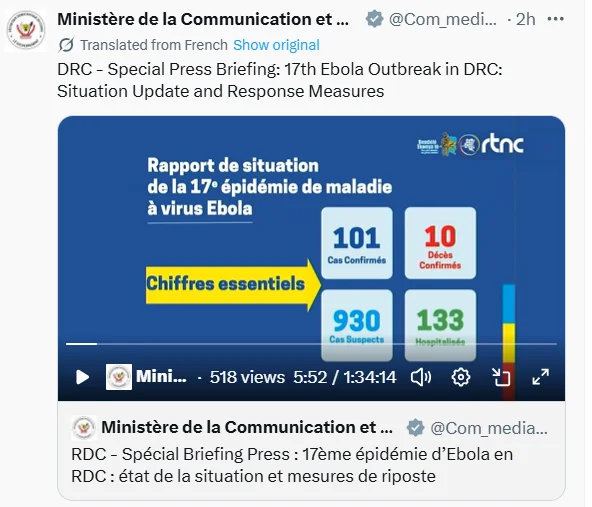
This graphic was shown at tonight's press conference:
sharon sanders
Editor-in-Chief & President
- As of May 26, the DRC and Uganda Ministries of Health report the following:
- A new confirmed case in Sud-Kivu Province; previously, cases had been confirmed in Ituri and Nord-Kivu provinces only.
- DRC: A total of 906 suspected cases, 105 confirmed cases, 223 suspected deaths, and 10 confirmed deaths.
- Uganda: A total of 7 confirmed cases and 1 confirmed death; 5 cases have clear links to the first 2 confirmed cases.
- This is a rapidly evolving situation, and case counts are subject to change.
https://www.cdc.gov/ebola/situation-summary/index.html
Pathfinder
Editor, Senior Moderator
sharon sanders
Editor-in-Chief & President
So: Total cumulative confirmed + suspected cases = 1,198
Suspected deaths = 238
Suspected deaths = 238
sharon sanders
Editor-in-Chief & President
About INSP:
Created in the Democratic Republic of Congo and governed by Law No. 08/009 of July 7, 2008, containing general provisions applicable to public establishments, by Law No. 18/035 of December 13, 2018, the National Institute of Public Health, "INSP" for short, is a public establishment of a scientific and technical nature, endowed with legal personality and enjoying management autonomy.
Having its head office and administrative headquarters in Kinshasa, it can be transferred to another location in the Democratic Republic of Congo by decree of the Prime Minister, on the proposal of the supervising Minister, at the request of the Board of Directors.
https://insp.cd/a-propos/
Created in the Democratic Republic of Congo and governed by Law No. 08/009 of July 7, 2008, containing general provisions applicable to public establishments, by Law No. 18/035 of December 13, 2018, the National Institute of Public Health, "INSP" for short, is a public establishment of a scientific and technical nature, endowed with legal personality and enjoying management autonomy.
Having its head office and administrative headquarters in Kinshasa, it can be transferred to another location in the Democratic Republic of Congo by decree of the Prime Minister, on the proposal of the supervising Minister, at the request of the Board of Directors.
https://insp.cd/a-propos/
Pathfinder
Editor, Senior Moderator
/https://en.wikipedia.org/wiki/Oicha
----------------------------------------------------------------------------------------
Translation Google
Beni: First case of Ebola confirmed in the Oïcha health zone
Wednesday, May 27, 2026 - 09:26
A case of Ebola virus disease (EVD) has been officially confirmed in the Oïcha health zone, the main town of the territory in Beni territory, North Kivu. Dr. Kasereka Nzala Esaïe, medical director of the Oïcha General Referral Hospital and representative of the zone's chief medical officer, provided the information from the Ministry of Health's epidemiological report. He stated that a response was immediately implemented in response to this health threat, without providing detailed information on the identity and travel history of the confirmed case. Two suspected cases are also under surveillance.
“The results of the first batch sent to the INRB are available. Unfortunately, we found a positive case in the Oïcha health zone. A confirmed positive case carrying the disease. We must now be vigilant. Let's not panic, but let's respect the preventative measures issued and promoted by the authorities. We will continue to decontaminate the places frequented by the confirmed patient. There are cases under observation, and we already have an operational transit center where two cases are under observation,” he stated.
He adds: “Certainly, there are contact cases and the zonal coordination team is working to list them. After listing them, we will monitor these contact cases for 21 days. Contact cases are people who have been in contact with a confirmed positive case.”
This is the very first case recorded in Oïcha since the start of the 17th wave of the epidemic, officially declared in the DRC on May 15. The epicenter of the disease is in Ituri, in the Mongbwalu health zone (Djugu territory). The spread of the virus is worrying health authorities.
...
Dieubon Mughenze, in Beni
https://actualite.cd/index.php/2026...-debola-confirme-dans-la-zone-de-sante-doicha
Pathfinder
Editor, Senior Moderator
CFR - 19.87%
Cases: 1,198
Deaths: 238
238 ÷ 1,198 × 100 = 19.87%
Cases: 1,198
Deaths: 238
238 ÷ 1,198 × 100 = 19.87%