• FluTrackers.com Inc. does not provide medical advice. Information on this web site is collected from various internet resources, and the FluTrackers board of directors makes no warranty to the safety, efficacy, correctness or completeness of the information posted on this site by any author or poster. The information collated here is for instructional and/or discussion purposes only and is NOT intended to diagnose or treat any disease, illness, or other medical condition. Every individual reader or poster should seek advice from their personal physician/healthcare practitioner before considering or using any interventions that are discussed on this website. By continuing to access this website you agree to consult your personal physican before using any interventions posted on this website, and you agree to hold harmless FluTrackers.com Inc., the board of directors, the members, and all authors and posters for any effects from use of any medication, supplement, vitamin or other substance, device, intervention, etc. mentioned in posts on this website, or other internet venues referenced in posts on this website.
  • We are not asking for any donations. Do not donate to any entity who says they are raising funds for us.

DR Congo - Ebola outbreak confirmed May 2018 (May - July 25, 2018)

WHO prepares for worst case Ebola scenario, hopes to deploy vaccine

The WHO is preparing for the worst case scenario in an Ebola outbreak in a remote area of Congo, including spread to a major town.
WHO Deputy Director-General of Emergency Preparedness and Response, Peter Salama, on Friday told a regular UN briefing in Geneva that he hoped the Democratic Republic of Congo would give the green light within days for the deployment of an experimental vaccine, but warned that the drug was complicated to use and was not a magic bullet.
He said the WHO had alerted the nine neighbouring countries but currently regarded the risk of regional spread as ?moderate?.
The vaccine is called ?rVSV-ZEBOV?.

..


https://www.premiumtimesng.com/news/...y-vaccine.html


[FONT=&quot]Tedros Adhanom GhebreyesusVerified account @DrTedros 6h6 hours ago More[/FONT]

[FONT=&quot]Yesterday I spoke by phone with the Minister of Health of the Democratic Republic of the Congo @OlyIlunga to discuss the #Ebola response in #DRC. We agreed to ship vaccines as quickly as possible so they can be used to save lives.[/FONT]
 
[h=1]Ebola outbreak: WHO puts 10 countries on 'high alert'[/h] The World Health Organization (WHO) on Friday said 10 countries, including the Democratic Republic of Congo (DRC) and its neighbors, have been put on high alert after local authorities declared an Ebola outbreak earlier this week.
"We are very concerned, and we are planning for all scenarios, including the worst-case scenario," said WHO emergency response chief Peter Salama in Geneva. Up to 18 people are suspected of dying from infection so far.

Salama said that WHO officials are most worried about the spread of Ebola in Congo-Brazzaville and the Central African Republic, since they are both connected to the outbreak area through river systems.
'Highly complex'
He noted that the latest outbreak has occurred in a remote area near Bikoro. But if the virus spreads to Mbandaka, the capital of DRC's Equateur province home to more than one million inhabitants, it could have devastating consequences, he added.
"This is a highly complex, sophisticated operation in one of the most difficult terrains on earth," Salama said. "If we see a town of that size infected with Ebola, then we are going to have a major urban outbreak."

http://www.dw.com/en/ebola-outbreak-who-puts-10-countries-on-high-alert/a-43746378
 
WHO and partners working with national health authorities to contain new Ebola outbreak in the Democratic Republic of the Congo

11 May 2018 News Release

Geneva/Brazzaville/Kinshasa


The World Health Organization (WHO) and a broad range of partners are in the Democratic Republic of the Congo (DRC) working with the Government to contain an outbreak of Ebola virus disease (EVD) in Bikoro health zone, Equateur Province. The outbreak was declared three days ago. WHO Director-General Dr Tedros Adhanom Ghebreyesus will travel to the DRC over the week-end to take stock of the situation and direct the continuing response in support of the national health authorities.

As of 11 May, 34 Ebola cases have been reported in the area in the past five weeks, including 2 confirmed, 18 probable (deceased) and 14 suspected cases. Five samples were collected from 5 patients and two have been confirmed by the laboratory. Bikoro health zone is 250 km from Mbandaka, capital of Equateur Province in an area of the country that is that is very hard to reach.

?WHO staff were in the team that first identified the outbreak. I myself am on my way to the DRC to assess the needs first-hand,? said Dr Tedros. ?I?m in contact with the Minister of Health and have assured him that we?re ready to do all that?s needed to stop the spread of Ebola quickly. We are working with our partners to send more staff, equipment and supplies to the area.?

A multidisciplinary team including WHO experts, along with staff from the Provincial Division of Health and M?decins Sans Fronti?res (MSF), arrived in Bikoro on 10 May. This first group of responders is now gathering more data to understand the extent and drivers of the epidemic. The team will also set up an active case search and contact tracing, establish Ebola treatment units to care for patients, set up mobile labs, and engage the community on safe practices. WHO will also work with national authorities in planning further public health measures such as vaccination campaigns.

?WHO is supporting the Government of the Democratic Republic of the Congo in coordinating this response; this is the country?s ninth Ebola outbreak and there is considerable expertise in-country,? said Dr Matshidiso Moeti, WHO Regional Director for Africa. ?However, any country facing such a threat may require international assistance. WHO and its partners including MSF, World Food Programme (WFP), UNICEF, International Federation of Red Cross and Red Crescent Societies (IFRC) and the Congolese Red Cross, UNOCHA and MONUSCO , US Centers for Disease Control and Prevention (US-CDC), the International Organization for Migration (IOM), are all stepping up their support.?

The response plan to the outbreak includes surveillance, case investigation, and contact tracing; community engagement and social mobilization; case management and infection prevention and control; safe and dignified burials; research response including the use of ring vaccination and antivirals; and coordination and operations support.

?It is too early to judge the extent of this outbreak,? said Dr Peter Salama, WHO Deputy Director-General for Emergency Preparedness and Response. ?However, early signs including the infection of 3 health workers, the geographical extent of the outbreak, the proximity to transport routes and population centres, and the number of suspected cases indicate that stopping this outbreak will be a serious challenge. This will be tough and it will be costly. We need to be prepared for all scenarios.?

In its latest Disease Outbreak News, WHO lists the risks to surrounding countries as moderate. WHO has however, already alerted those countries and is working with them on border surveillance and preparedness for potential outbreaks. WHO does not at this time advise any restrictions on travel and trade to the Democratic Republic of the Congo.
ENDS

Note to editors:

Current operations:
The first multidisciplinary team comprised of experts from WHO, M?decins Sans Fronti?res and the Provincial Division of Health arrived in Bikoro on 9 May to strengthen coordination and investigations. More deployments of epidemiologists, logisticians, clinicians, infection prevention and control experts, risk communications experts and vaccination support teams should arrive in Bikoro on Saturday.

WHO is working with Government and key partners ? including M?decins Sans Fronti?res, World Food Programme, the International Federation of the Red Cross, UNICEF and US-CDC ? to strengthen coordination of the EVD response at the national level and in the affected Bikoro health zone and is calling on its development partners to ensure a strong, comprehensive and rapid response to support the DRC Government to prevent and control the spreading of the disease.

Two mobile labs are planned to be deployed on 12 May.

Current bed capacity includes 15 beds in Bikoro. MSF is currently establishing isolation on site and has also deployed four mobile isolation units (5 beds each).

WHO is coordinating a major flight plan with UNHAS/WFP to deploy experts, equipment and materials to the field and is working closely with other health partners to prevent further geographical spread, improve surveillance data and reduce deaths by improving treatment of Ebola patients in Bikoro and the epicentre of Ikoko-Impenge. The cost of the air bridge for 3 months is estimated at US$ 2.4 million.

A logistician is expected to arrive in Bikoro this afternoon/evening to arrange accommodation/staff logistics. Additional information on access, transportation, and logistics requirements will be communicated tomorrow.
WHO is in the process of sending (Saturday) medical supplies to Bikoro to support the Ebola response, including:

  • Personal Protective Equipment kits (PPE)
  • Interagency Emergency Health Kit (IEHK)
  • boxes for transportation
  • body bags
WHO is helping with surveillance of cases by setting up community-based data collection to complement information provided by health facilities.

WHO has alerted neighbouring countries and is supporting the Central African Republic and Republic of Congo to strengthen surveillance in case of cross-border spread of the outbreak.

Funding requirements
WHO released US$ 1 million from its Contingency Fund for Emergencies to kick start the rapid response. Based on current assessment and response needs the estimated budget for the international response is US$ 18 million for a 3-month operation. Wellcome Trust and UK Department for International Development (DFID) announced a commitment of up to ?3 million to support a rapid response to the outbreak.
 
Translation Google [TABLE="class: templateContainer, border: 0, cellpadding: 0, cellspacing: 0, width: 600"]
[TR]
[TD] [TABLE="class: mcnImageBlock, border: 0, cellpadding: 0, cellspacing: 0, width: 100%"]
[TR]
[TD="class: mcnImageBlockInner"] [TABLE="class: mcnImageContentContainer, align: left, border: 0, cellpadding: 0, cellspacing: 0, width: 100%"]
[TR]
[TD="class: mcnImageContent"]
17347356-dd33-47d4-bf0b-d3ef85029537.png
[/TD]
[/TR]
[/TABLE]
[/TD]
[/TR]
[/TABLE]
[TABLE="class: mcnBoxedTextBlock, border: 0, cellpadding: 0, cellspacing: 0, width: 100%"]
[TR]
[TD="class: mcnBoxedTextBlockInner"] [TABLE="class: mcnBoxedTextContentContainer, align: left, border: 0, cellpadding: 0, cellspacing: 0, width: 100%"]
[TR]
[TD] [TABLE="class: mcnTextContentContainer, border: 0, cellspacing: 0, width: 100%"]
[TR]
[TD="class: mcnTextContent"]ECHOS EBOLA RDC 2018[/TD]
[/TR]
[/TABLE]
[/TD]
[/TR]
[/TABLE]
[/TD]
[/TR]
[/TABLE]
[/TD]
[/TR]
[TR]
[TD] [TABLE="class: mcnBoxedTextBlock, border: 0, cellpadding: 0, cellspacing: 0, width: 100%"]
[TR]
[TD="class: mcnBoxedTextBlockInner"] [TABLE="class: mcnBoxedTextContentContainer, align: left, border: 0, cellpadding: 0, cellspacing: 0, width: 100%"]
[TR]
[TD] [TABLE="class: mcnTextContentContainer, border: 0, cellspacing: 0, width: 100%"]
[TR]
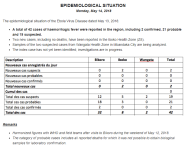
[TD="class: mcnTextContent"]EPIDEMIOLOGICAL SITUATION
Friday, May 11, 2018
The epidemiological situation of the Ebola Virus Disease of this Friday, May 11, 2018:​
  • 2 new suspected cases of haemorrhagic fever : 1 in the Bikoro Health Zone and 1 in the Iboko Health Zone
  • 3 alerts in Mbandaka ( negative tests ) : Experts from the Ministry of Health were alerted to the presence of 3 sick people. They went to the scene to investigate further. Rapid diagnostic tests for Ebola have been shown to be negative.
1b378cd6-ee4b-420a-af17-1b831f5197a8.png

As a reminder, the figures given above relate exclusively to the active cases since the declaration of the epidemic on May 8, 2018 and do not include the 21 historical suspected cases reported before the declaration that were not the subject of laboratory analysis.​
[/TD]
[/TR]
[/TABLE]
[/TD]
[/TR]
[/TABLE]
[/TD]
[/TR]
[/TABLE]
[TABLE="class: mcnBoxedTextBlock, border: 0, cellpadding: 0, cellspacing: 0, width: 100%"]
[TR]
[TD="class: mcnBoxedTextBlockInner"] [TABLE="class: mcnBoxedTextContentContainer, align: left, border: 0, cellpadding: 0, cellspacing: 0, width: 100%"]
[TR]
[TD] [TABLE="class: mcnTextContentContainer, border: 0, cellspacing: 0, width: 100%"]
[TR]
[TD="class: mcnTextContent"]
News from the Ebola response
  • At the request of the Ministry of Health, WHO has confirmed the availability of doses of the Ebola vaccine corresponding to the serotype identified for this epidemic. This vaccine has proven its effectiveness. The vaccine will be administered exclusively to exposed health professionals and those who have been in contact with confirmed Ebola cases. As soon as the two Ebola cases were confirmed in the laboratory on the night of May 7, 2018, the Minister of Health, Dr. Oly Ilunga Kalenga, considered that vaccination should be part of the means of response to the new epidemic. because of the density of the population and its high mobility in the region. For this reason, he has been in direct contact with Dr Tedros Adhanom, Director General of WHO, to ask him to make vaccines available to the Democratic Republic of Congo. As a reminder, during the Ebola outbreak in Likati last year, the vaccine could not be deployed because the logistic and epidemiological conditions were not met.
  • This Saturday, May 12, 2018, the Minister of Health will lead to the epicenter of the outbreak a delegation composed of members of the National Coordinating Committee (CNC).
  • The mobile laboratories of the National Institute of Biomedical Research (INRB) will be deployed in Mbandaka and Bikoro this Saturday, May 12, 2018.
[/TD]
[/TR]
[/TABLE]
[/TD]
[/TR]
[/TABLE]
[/TD]
[/TR]
[/TABLE]
[TABLE="class: mcnBoxedTextBlock, border: 0, cellpadding: 0, cellspacing: 0, width: 100%"]
[TR]
[TD="class: mcnBoxedTextBlockInner"] [TABLE="class: mcnBoxedTextContentContainer, align: left, border: 0, cellpadding: 0, cellspacing: 0, width: 100%"]
[TR]
[TD] [TABLE="class: mcnTextContentContainer, border: 0, cellspacing: 0, width: 100%"]
[TR]
[TD="class: mcnTextContent"] HISTORY OF EBOLA EPIDEMICS IN THE DEMOCRATIC REPUBLIC OF CONGO
18a928de-50f1-4530-a0d9-d2e60896369d.jpeg
[/TD]
[/TR]
[/TABLE]
[/TD]
[/TR]
[/TABLE]
[/TD]
[/TR]
[/TABLE]
[/TD]
[/TR]
[/TABLE]

...
https://us13.campaign-archive.com/?u=89e5755d2cca4840b1af93176&id=9d97d7d517
 
[h=1]Democratic Republic of Congo: Ebola Virus Disease - External Situation Report 1, 11 May 2018[/h] REPORT

from World Health Organization Published on 11 May 2018


application-pdf.png
Download PDF (2.35 MB)


1. Situation update
Grade 2
Cases 34
Deaths 18
CFR 52.9 %
On 8 May 2018, the Ministry of Health (MOH) of the Democratic Republic of the Congo declared an outbreak of Ebola virus disease in Bikoro Health Zone, Equateur Province. This is the ninth outbreak of Ebola virus disease over the last four decades in the Democratic Republic of Congo, with the most recent occurring in May 2017.
On 3 May 2018, the Provincial Health Division of Equateur reported 21 cases of fever with haemorrhagic signs including 17 community deaths in the Ikoko-Impenge Health Area in this region. A team from the Ministry of Health, supported by WHO and M?decins Sans Fronti?res (MSF) visited the Ikoko-Impenge Health Area on 5 May 2018 and detected five active cases, two of whom were admitted to Bikoro General Hospital and three who were admitted in the health centre in Ikoko-Impenge. Samples were taken from each of the five active cases and sent for analysis at the Institute National de Recherche Biom?dicale, Kinshasa on 6 May 2018. Of these, two tested positive for Ebola virus, Zaire ebolavirus species, by reverse transcription polymerase chain reaction (RT-PCR) on 7 May 2018 and the outbreak was officially declared on 8 May 2018.
As of 11 May 2018, there are a total of 34 cases, with 18 deaths (case fatality rate 52.9%), among which two cases are confirmed, 14 suspected and 18 probable. Three health workers have been affected, with two suspected cases and a probable case who died. So far, 75 contacts are being monitored by the field teams.
The province of Equateur covers an area of 130 442 km2 and has an estimated population of 2 543 936 people, it has 16 health zones and 284 health centers. However, the affected health area of Bikoro covers 1,075 km2 and has a population of 163, 065 inhabitants. It has three hospitals and 19 health centers, most of which have limited functionality. Medical supplies are provided by international agencies, but stockouts of medical supplies are common. The village of Ikoko-Impenge is located 45 km from the central office of the Bikoro area and is not accessible by road, and falls outside the telephone network. However, there is an airstrip 8 km from Bikoro.


https://reliefweb.int/report/democr...-congo-ebola-virus-disease-external-situation
 
[h=1]WHO reports new Ebola case in DR Congo, vaccine this week[/h] The head of the World Health Organization said Sunday there has been another reported case of Ebola in the Democratic Republic of Congo and that an experimental vaccine to fight the disease is expected to become available in the country this week.


Doctor Tedros Adhanom Ghebreyesus, on a two-visit to DR Congo, said the suspected new case was in Bikoro, at the centre of the latest Ebola outbreak in the country's northwest, where so far 18 people have died.
It brings to 35 the number of reported cases, including two confirmed, according to the WHO tally.
The WHO is planning to begin a vaccination campaign in the area, near the border with the Republic of Congo, using an available stockpile of an experimental vaccine.
"The vaccines are going to arrive on Wednesday or Thursday. We have enough of them," said Tedros, without specifying the number of doses.
After meeting with DR Congo President Joseph Kabila in Kinshasa, the WHO chief praised "the government's very strong leadership" in responding to the health crisis and its "good coordination" with partners such as Unicef and Doctors without Borders (MSF).

https://medicalxpress.com/news/2018-05-ebola-case-dr-congo-vaccine.html
 
Ebola virus disease – Democratic Republic of the Congo

Disease outbreak news

14 May 2018


Since the publication of the first Disease Outbreak News on the Ebola outbreak in Equateur province, Democratic Republic of the Congo on 10 May 2018, an additional seven suspected cases have been notified by the country’s Ministry of Health. Importantly, since the last update, cases have been reviewed and reclassified, and some discarded.
From 4 April through 13 May 2018, a total of 39 Ebola virus disease cases have been reported, including 19 deaths (case fatality rate = 49%) and three health care workers. Cases were reported from the Bikoro health zone (n=29; two confirmed, 20 probable and 7 suspected cases), Iboko health zone (n=8; three probable and five suspected cases) and Wangata health zone (n=2; two probable cases). To date, 393 contacts have been identified and are being followed-up. Wangata health zone is adjacent to the provincial port city of Mbandaka (population 1.2 million). Response teams on the ground are in the process of verifying information on reported cases. Case numbers will be revised as further information becomes available.

Public health response
  • The Ministry of Health in the Democratic Republic of the Congo is coordinating the response.
  • WHO is working with the Ministry of Health and MSF to conduct ring vaccination using the investigational recombinant vesicular stomatitis virus–Zaire Ebola virus (rVSV-ZEBOV).
  • In Bikoro, Iboko, and Mbandaka health zones, the Ministry of Health along with WHO and partners are engaged in strengthening surveillance for new cases, carrying out contact tracing, case management, and community engagement, ensuring safe and dignified burials, and coordinating the response.
  • WHO is deploying 50 public health experts to support the Ministry of Health with response activities.
  • An air bridge for supplies and personnel will be established by the United Nations Humanitarian Air Service (UNHAS) starting 13 May with daily flights scheduled from Kinshasa to Mbandaka and Mbandaka to Bikoro.
  • WHO has released $1 million US dollars from the contingency fund for emergencies, the United Nations has released $2 million US dollars from the Central Emergency Response Funds, and the Welcome Trust has provided 2 million pounds sterling for critical research needs.
  • The WHO Director General, Deputy Director General for Emergency Preparedness and Response together with the WHO Regional Director for Africa will be in Kinshasa on 13 May to review operations and discuss further support to the Ministry of Health.
WHO risk assessment

Information about the extent of the outbreak is still limited and investigations are ongoing. The cases are being reported from remote locations that are difficult to access. However, the proximity of the affected area to the Congo River, which links to the Republic of the Congo and the Central African Republic, increases the risk of cases occurring in neighboring countries. Currently, WHO considers the public health risk to be high at the national level, moderate at the regional level, and low at the international level. As further information becomes available, the risk assessment will be reviewed.
At present, this event does not meet the criteria of a public heath event of international concern as defined in the IHR (2005) 1, and does not warrant the convening of an Emergency Committee under the IHR (2005).

WHO advice

WHO advises against any restriction of travel and trade to Democratic Republic of the Congo based on the currently available information. WHO continues to monitor travel and trade measures in relation to this event, and currently there are no restrictions of the international traffic in place.
For more information on Ebola virus disease, please see the link below:

1 “Public health emergency of international concern” means an extraordinary event which is determined, as provided in these Regulations: (i) to constitute a public health risk to other States through the international spread of disease and (ii) to potentially require a coordinated international response”. International Health Regulations (2005).
 
Outbreaks and Emergencies Bulletin, Week 19: 5 May - 11 May 2018


Ebola virus disease Democratic Republic of the Congo
39
Cases
19
Deaths
48.7%
CFR

EVENT DESCRIPTION

On 8 May 2018, the Ministry of Health of the Democratic Republic of
the Congo notified WHO of an outbreak of Ebola virus disease in Bikoro
Health Zone, in the north-western Equateur Province. The event was
initially reported by the provincial health authority on 3 May 2018 when
a cluster of 21 cases of an undiagnosed illness, involving 17 community
deaths, occurred in Ikoko-Impenge health area. The event reportedly
occurred between early-April and early-May 2018, with the initial casepatients
presenting with fever, vomiting, abdominal pain, conjunctivitis,
and diarrhoea, which were not responsive to antibiotics or antimalarial. A
few of the case-patients reportedly had bleeding diathesis.

On 5 May 2018, the national rapid response team (RRT) obtained five
blood specimens from the initial case-patients (admitted in two local
health facilities). The specimens were received at the Institute National
de Recherche Biom?dicale (INRB) in Kinshasa on 6 May 2018. Test
results released by the INRB on 7 May 2018 showed that two of the
five specimens were positive for Zaire Ebolavirus species by reverse
transcription polymerase chain reaction (RT-PCR). Accordingly, the
Ministry of Health formally declared an outbreak of Ebola virus disease
on 8 May 2018.

As of 13 May 2018, a total of 39 suspected cases of Ebola virus disease,
including 19 deaths (case fatality rate 48.7%), have been reported. Two
probable cases (positive on rapid diagnostic test) were reported on 13
May 2018. Of the 34 suspected cases, two were confirmed, 18 have been
classified as probable and 12 remains suspected cases. Three healthcare
workers have been affected, one of them died. The outbreak has been localised to three health areas, namely Bikoro (29 cases), Iboko (8 cases) and Wangata (2 cases).

As of 13 May 2018, a total of 362 contacts have been listed and are being followed up. Further investigations to describe and characterize the outbreak are ongoing.


PUBLIC HEALTH ACTIONS

On 8 May 2018, the Minister of Health of the Democratic Republic of the Congo held a press conference to formally declare the outbreak of Ebola virus disease,
done in collaboration with the WHO Representative.
On 8 May 2018, the three levels of WHO (Headquarter (HQ), Regional Office for Africa (AFRO) and Country Office in the Democratic Republic of the Congo) issued
a joint News Release to announce the outbreak of Ebola virus disease to the global community.
The WHO Director General, Deputy Director General for emergencies and the Regional Director for WHO African Region, accompanied by senior staff, visited
the Democratic Republic of Congo from 12-13 May 2018 to assess the situation and direct the continuing response, in support of the national health authorities.
The Ministry of Health has reactivated coordination structures at the national, provincial and local levels, with involvement of all partners. At the national level,
daily coordination meetings are ongoing, chaired by the Minister of Health and attended by all humanitarian partners. Additionally, a health cluster meeting took
place 10 May 2018 to mobilize partners to respond to the outbreak.
WHO is in full response mode in support of the national authorities, working with key partners, including MSF, World Food Programme (WFP), UNICEF,
International Federation of Red Cross and Red Crescent Societies (IFRC) and the Congolese Red Cross, UNOCHA and MONUSCO , US Centers for Disease Control
and Prevention (US-CDC), the International Organization for Migration (IOM), and others.
WHO has established its Incident Management System of fully dedicated staff and resources across the three levels of the organization to support response to
the outbreak. Arrangements for immediate deployment of technical experts, including epidemiologists, clinicians, infection prevention and control experts, risk
communications specialists, logisticians, and vaccination support teams have been finalised. An advance team, including the Incident Manager, has arrived incountry
on 9 May 2018.
WHO released US$ 1 million from its Contingency Fund for Emergencies to support response activities for the next three months, with the goal of containing the
outbreak promptly.
On 9 May 2018, the Ministry of Health, in conjunction with WHO and M?decins Sans Fronti?res (MSF), deployed additional teams of technical experts to the
affected health zone to support outbreak investigations and local response. More deployments will be effected in the coming days.
Surveillance, case management, risk communication, and psychosocial support have all been initiated and are being strengthened. Infection prevention and
control and water, sanitation and hygiene (WASH) activities are ongoing with the start of safe water supply installation at Bikoro General Hospital and supervision
of waste management activities at the local market.

SITUATION INTERPRETATION

The Democratic Republic of the Congo has confirmed a new outbreak of Ebola virus disease, coming just about a year since the last outbreak was declared on 11 May
2017. This is the ninth outbreak of Ebola virus disease in the country since the virus was discovered in 1976 (in the same country).
The Ministry of Health and other national authorities, WHO and partners have mounted a response to the outbreak. The objective of the response is to rapidly contain
the current outbreak in the localized affected area. To achieve this, rapid scaling up of the proven containment measures is paramount. It is critical to ensure adequate
presence of qualified and experienced staff on the ground, as well as the necessary logistics. Given the known logistical challenges on the ground (in terms of access,
communication and accommodation), adequate logistical preparation and support is crucial. Alongside, there is a need to mobilize adequate financial resources to
facilitate the response, thus the need to quickly finalize the national response plan, to be used as a tool for resource mobilization.

http://apps.who.int/iris/bitstream/h...-511042018.pdf

http://www.afro.who.int/publications...ay-11-may-2018

 
Frequently asked questions on Ebola virus disease vaccine

14 May 2018

1. Is there a vaccine for Ebola virus disease

An experimental Ebola vaccine has shown to be highly protective against the Ebola virus. This product, called rVSV-ZEBOV. It was studied in several trials that involved more than 16,000 volunteers in Europe, Africa and the United States and has been judged safe for use in humans based on available results. In Guinea, the vaccine was tested in 7,500 adults in 2015 and found safe and protective against Ebola infection. This trial was conducted by WHO, with the Guinean Ministry of Health, Doctors Without Borders and the Norwegian Institute of Public Health, in collaboration with other international partners.

The Ebola vaccine, that has the technical name rVSVΔG-ZEBOV- GP, was developed by the Public Health Agency of Canada, licensed to NewLink Genetics, who in turn licensed it to Merck & Co. The vaccine works by replacing a gene from a harmless virus known as vesicular stomatitis virus (VSV) with a gene encoding an Ebola virus surface protein. The vaccine does not contain any live Ebola virus.

2. Is now the right time to use the candidate vaccine in DRC?
  • The current outbreak is due to the Ebola Zaire. Strategic Advisory Group of Experts on Immunization (SAGE) recommended in 2017 that should an Ebola disease outbreak occur before the candidate vaccine is licensed, the rVSVΔG-ZEBOV- GP vaccine be promptly deployed under the Expanded Access framework, with informed consent and in compliance with Good Clinical Practice.
  • Given the location and access challenges in the area, getting the vaccination teams to the affected area will be challenging but the Ministry of Health, MSF, WHO and partners are working together to address the logistics constraints.
  • WHO has a small stockpile of rVSV-ZEBOV. Merck has provided this yet to be licensed vaccines and pledged to allow access to more.
3. Who authorized the use of this vaccine in DRC?

The protocol was reviewed and approved by the national regulatory authorities and the national ethics committee.

4. How will the candidate vaccine be administered and who will receive it?

Ring vaccination, is the recommended delivery strategy. This will be adapted to the social and geographic conditions of the outbreak areas and include people at risk including but not limited to: (i) contacts and contacts of contacts; (ii) local and international health-care and front-line workers in the affected areas and (iii) health-care and front-line workers in areas at risk of expansion of the outbreak. They constitute the “ring” for the vaccination. With their agreement and consent, the individuals in the ring will be considered for the vaccination. After receiving the candidate vaccine, they will be followed up for a set period of time.

5. Is participation in the ring vaccination voluntary?

Yes. Participation in this ‘expanded access’ or compassionate use of the Ebola vaccine is entirely free and voluntary. Each eligible person makes their own decision whether to participate or not and can withdraw at any time. Their rights will be respected. Disregard of whether the eligible person chooses to participate or not, it will not have an impact on their access to health services.

6. What will happen to people who will be included in the ring vaccination?

The team from the Ministry of Health, MSF and WHO will determine who is eligible to be vaccinated, depending on their level of risk and health condition. The following people will be considered for vaccination: (i) contacts and contacts of contacts, (ii) local and international health-care and front-line workers in the affected areas and (iii) health-care and front-line workers in areas at risk of expansion of the outbreak will receive an injection of the candidate vaccine in the arm. As a follow up, they will be visited in their homes to check their health six times – on days 3, 14, 21, 42, 63 and 84 after vaccination.

It is very important that the persons vaccinated continue to protect themselves from Ebola virus infection by not touching a patient's bodily fluids (blood, vomit, saliva, urine, feces), avoid being in direct physical contact with a patient's body (alive or dead), touching the sheets, clothes that may have been contaminated, practice hand hygiene and other preventive measures.

7. Can the vaccine cause side effects?

The vaccine can produce some side effects. People who are vaccinated may have a mild fever or cold like symptoms, malaise that can last 1-3 days. Among those vaccinated, one in five felt temporary swelling at the point of injection into the skin. Some people will have a mild and transient fever 1 to 2 weeks after the injection or some small blisters may appear. It is possible to have joint pain in the feet, hands or knees. Very rarely, vaccines can cause a serious allergic reaction immediately after the vaccine has been administered. This can cause breathing difficulties and weakness.

8. Can a person vaccinated be infected with Ebola by the vaccine?

The vaccine cannot cause the disease because there is no Ebola virus in the vaccine. The vaccine is manufactured according to international standards for vaccines. If a person receiving the vaccine has been infected with the Ebola virus before he/she is vaccinated, they could develop Ebola virus disease after they receive the vaccine. For those infected before the vaccination, the vaccine cannot provide protection. If they develop any symptom of illness, they should immediately contact the vaccination team.

http://www.who.int/ebola/drc-2018/faq-vaccine/en/
 
Trying to find these places on a map is tricky. From what I can gather at this link (http://www.fbrsanterdc.cd/data/entity/5015.html), Ikoko-Impenge is located at 0?43'53"N 18?25'20"E with Wangata 50 miles to the South along the Congo River and Bikoro another 75 miles to the South on the shores of Tumba Lake, which is connected to the Congo River. The "Bikoro Health Zone" seems to be North of Mbandaka. None of this geography fits exactly with what the WHO has stated so I am wondering if something is lost in translation.

Although this region has poor roads, the river is used extensively for transport. If there are confirmed cases in all three of these locations along a 100 mile section of the Congo river then there is nothing to say that this hasn't spread to Bangui to the North and Kinshasa to the South. Bangui has an airport handling 10,000 passengers per month and has 60,000 refugees camped out. Kinshasa airport can handle a million passengers per year.

From everything I have read, there are 2 confirmed cases from 1 location at this time but there is a lot of noise to filter about suspected cases, the remoteness of the area, and vaccines. Concrete answers will take time but there is danger in overconfidence
 
h/t Ian M Mackay
ebola.png

News from the Ebola response

Vaccination
The 4,000 doses of the experimental Ebola vaccine ordered by the Ministry of Health are ready to leave Geneva. The vaccines will be sent to the Democratic Republic of Congo as soon as the logistics of the cold chain will be fully set up to ensure the storage conditions of the vaccine at -70 ? C from Geneva to Bikoro. The first components of the cold chain arrived in Kinshasa this Sunday, May 13, 2018.

In order to contain the spread of the Ebola virus as quickly as possible, the government will use the approach of vaccination in circle (' ring vaccination') which aims to vaccinate all people who have been in contact with a confirmed case of Ebola, as well as all their contacts. So far, 382 contacts have been identified. Teams of epidemiologists from the Ministry of Health in the field continue their investigations to identify and locate all additional contacts. This contact list is essential as it will allow us to plan the vaccination campaign and target the people to be vaccinated first.

Working session with the United Nations System
The Minister of Health, Dr. Oly Ilunga Kalenga, received this Monday, May 14, 2018 Ms. Kim Bolduc, Deputy Special Representative of the UN Secretary-General in the Democratic Republic of Congo, who led a delegation of the United Nations System composed of MONUSCO and WHO. During the working session with senior officials of the Ministry of Health, the Deputy Special Representative recalled the commitment of the United Nations system to support the government's response plan to contain the Ebola epidemic which is now their first priority .

WHO delegation visits Mbandaka and Bikoro
This Sunday, May 13, 2018, the Minister of Health, together with the Director General of the WHO, Dr. Tedros Adhenom, went to Bikoro in the province of Ecuador to assess the implementation of the device. Ebola response in the Democratic Republic of Congo. He was accompanied by Dr Peter Salama, Director of the WHO Emergency Management Program, and Dr Matshidiso R. Moeti, WHO Regional Director for Africa. He congratulated the Government of the Democratic Republic of Congo for its leadership and responsiveness in managing the Ebola outbreak. The WHO delegation was particularly impressed by the speed with which the first teams and the first batches of equipment were deployed in Bikoro, a remote health area about 150 km from Mbandaka.
https://us13.campaign-archive.com/?u...&id=cb3fcb9bd6
 
[h=1]Democratic Republic of Congo: Ebola Virus Disease - External Situation Report 2, 15 May 2018[/h] REPORT

from World Health Organization Published on 15 May 2018 ?View Original


application-pdf.png
Download PDF (4.31 MB)


1. Situation update
Grade 2
Cases 41
Deaths 20
CFR 48.8%
On 8 May 2018, the Ministry of Health (MoH) of the Democratic Republic of the Congo declared an outbreak of Ebola virus disease (EVD) in Bikoro Health Zone, Equateur Province. This is the ninth outbreak of Ebola virus disease over the last four decades in the country, with the most recent one occurring in May 2017.
Context
On 3 May 2018, the Provincial Health Division of Equateur reported 21 cases of fever with haemorrhagic signs including 17 community deaths in the Ikoko-Impenge Health Area in this region. A team from the Ministry of Health, supported by WHO and M?decins Sans Fronti?res (MSF) visited the Ikoko-Impenge Health Area on 5 May 2018 and detected five (5) active cases, two of whom were admitted to Bikoro General Hospital and three who were admitted in the health centre in Ikoko-Impenge. Samples were taken from each of the five active cases and sent for analysis at the Institute National de Recherche Biom?dicale (INRB), Kinshasa on 6 May 2018. Of these, two tested positive for Ebola virus, Zaire ebolavirus species, by reverse transcription polymerase chain reaction (RT-PCR) on 7 May 2018 and the outbreak was officially declared on 8 May 2018.
The index case has not yet been identified and investigations are underway.
Update
Since the last situation report, an additional Health Zone in Equateur Province reported EVD cases ? Wangata Health Zone in the city of Mbandaka ? with a total of three (3) affected Health Zones as of 14 May 2018.
Waganta Health Zone reported two probable cases on 11 May 2018 with both cases testing positive by Rapid Diagnostic Testing (RDT) ? both their samples are awaiting PCR confirmation from INRB in Kinshasa. As of 13 May, there is a cumulative total of 41 cases, including 20 deaths (case fatality rate = 48.8%) and three healthcare workers from Bikoro (n=2) and Iboko (n=1). Of the 41 cases reported, two cases are confirmed, 17 are suspected and 22 are probable . A total of 432 contacts are being monitored in the health zones of Bikoro (n=274), Iboko (n=115) and Mbandaka (n=43) as of 14 May 2018.
With regards to case distribution, Bikoro Health Zone reported the highest number of cases (n=31), followed by Iboko (n=8) and Mbandaka (n=2) Health Zones. In the Bikoro Health Zone, 50% of the cases were reported from the Ikoko-Impenge health area, followed by Bikoro health area (35.3%), the health facility (14%) and the Moleti health area (7%). In the Iboko Health Zone, most cases were reported from the Mpangi health area (80%) with the remaining one case being reported from Itipo health area. In the Waganta Health Zone in Mbandaka city, the two cases were both from the Bongozo health area. They are the previously mentioned probable cases (RDT positive and awaiting PCR confirmation) and are brothers who had recently stayed in Bikoro for funerals.
https://reliefweb.int/report/democr...ongo-ebola-virus-disease-external-situation-0

 
>>>Waganta Health Zone reported two probable cases on 11 May 2018 with both cases testing positive by Rapid Diagnostic Testing (RDT)

So we have 2 confirmed by the rapid test, waiting for confirmation by the gold standard test, in a city of 1.2 million with riverboat connections to 10's of millions of people. Mbandaka is a war torn city lacking running water or electricity in many areas. The UN's 4000 experimental vaccine doses won't offer much of an advantage against community spread but may help caregivers. The US hasn't stepped up to the plate.
 
Translation Google [TABLE="class: templateContainer, border: 0, cellpadding: 0, cellspacing: 0, width: 600"]
[TR]
[TD] [TABLE="class: mcnImageBlock, border: 0, cellpadding: 0, cellspacing: 0, width: 100%"]
[TR]
[TD="class: mcnImageBlockInner"] [TABLE="class: mcnImageContentContainer, align: left, border: 0, cellpadding: 0, cellspacing: 0, width: 100%"]
[TR]
[TD="class: mcnImageContent"]
17347356-dd33-47d4-bf0b-d3ef85029537.png
[/TD]
[/TR]
[/TABLE]
[/TD]
[/TR]
[/TABLE]
[TABLE="class: mcnBoxedTextBlock, border: 0, cellpadding: 0, cellspacing: 0, width: 100%"]
[TR]
[TD="class: mcnBoxedTextBlockInner"] [TABLE="class: mcnBoxedTextContentContainer, align: left, border: 0, cellpadding: 0, cellspacing: 0, width: 100%"]
[TR]
[TD] [TABLE="class: mcnTextContentContainer, border: 0, cellspacing: 0, width: 100%"]
[TR]
[TD="class: mcnTextContent"]EBOLA ALERT RDC 2018[/TD]
[/TR]
[/TABLE]
[/TD]
[/TR]
[/TABLE]
[/TD]
[/TR]
[/TABLE]
[/TD]
[/TR]
[TR]
[TD] [TABLE="class: mcnBoxedTextBlock, border: 0, cellpadding: 0, cellspacing: 0, width: 100%"]
[TR]
[TD="class: mcnBoxedTextBlockInner"] [TABLE="class: mcnBoxedTextContentContainer, align: left, border: 0, cellpadding: 0, cellspacing: 0, width: 100%"]
[TR]
[TD] [TABLE="class: mcnTextContentContainer, border: 0, cellspacing: 0, width: 100%"]
[TR]
[TD="class: mcnTextContent"]
Special Communication from His Excellency the Minister of Health on May 16, 2018 on the evolution of the Ebola epidemic in the Democratic Republic of Congo


Dear countrymen,

On May 8, we declared that our country was facing a new epidemic of Ebola that is a national and international public health emergency.

From the outset, we considered that this epidemic was high risk because of the following particularities:
  • Contamination of health professionals,
  • The attainment of two health zones, namely Bikoro and Iboko,
  • The proximity to the densely populated city of Mbandaka, which is a crossroads in the province of Ecuador and to neighboring provinces.
That is why, during the crisis meeting held in the margins of the Council of Ministers, His Excellency Joseph Kabila Kabange, President of the Republic and Head of State, demanded that the response be fast and efficient because every life counts.

This weekend, two suspected cases of haemorrhagic fever were reported in the health zone of Wangata, one of the health zones of the city of Mbandaka. After analysis, one of the two samples was positive for Ebola virus disease.

As a result, we are entering a new phase of the Ebola outbreak that is now affecting three health zones, including an urban health zone. Since the announcement of the alert in Mbandaka, our epidemiologists are working in the field with community relays to identify people who have been in contact with suspected cases. It is based on the list of contacts that we will be able to trigger, for the first time in the history of our country, a new component of the response, namely vaccination.

This morning we received 5,400 doses of Ebola vaccine. It is a vaccine whose effectiveness was established during the last epidemic in West Africa. The vaccination campaign will be targeted at exposed health professionals, people who have been in contact with confirmed cases and contacts of these contacts.

In addition, we will intensify the monitoring and tracing of the population at all air, sea and road access routes. Other cities in the province of Ecuador as well as cities upstream and downstream of Mbandaka on the river are also under health surveillance.

Dear compatriots,

Ensuring the health and safety of the population is our priority. The Government of the Republic led by His Excellency the Prime Minister Bruno TSHIBALA NZENZHE, has implemented all means to contain this epidemic as quickly as possible with the decisive support of our partners.

In all the affected health zones, the government has decreed free healthcare because the financial barrier can not in any way constitute a barrier to access to health care, especially during epidemics.

The emergency operations center of the Ministry of Health in Kinshasa monitors in real time the evolution of the epidemiological situation and the tracing of cases and their contacts. A relay of this center of emergency operations will be installed in the coming days in Mbandaka.

With the support of the partners, a considerable logistics arsenal has been put in place to deploy all the equipment and human resources required for the response in the field. An airlift is now operational between Kinshasa, Mbandaka, Bikoro and Iboko.

Dear compatriots,

We are all affected by this epidemic. We sympathize with the pain endured by the families affected by this tragedy.

In the interest of the Nation and within the framework of international health security, I recommend to everyone to respect the instructions of personal and public hygiene and to adopt responsible behaviors.

As citizens, we all have a duty and a responsibility to get involved in this fight by spreading responsible messages and changing our behaviors, even those affecting our deepest values ​​and traditions.

Thus, to break the chain of transmission, the health authorities recommend to avoid touching the sick and to immediately prevent the nearest health services. And most importantly, in case of death, absolutely avoid touching and washing the deceased. This gesture may shock but it can save your life and that of the entire community.

Let's be ready for this new fight against the Ebola virus.
Let's stay welded.
Let's be responsible.
And, together, let life triumph.

Thank you

Dr. Oly Ilunga Kalenga
Minister of Health


[/TD]
[/TR]
[/TABLE]
[/TD]
[/TR]
[/TABLE]
[/TD]
[/TR]
[/TABLE]
[TABLE="class: mcnBoxedTextBlock, border: 0, cellpadding: 0, cellspacing: 0, width: 100%"]
[TR]
[TD="class: mcnBoxedTextBlockInner"] [TABLE="class: mcnBoxedTextContentContainer, align: left, border: 0, cellpadding: 0, cellspacing: 0, width: 100%"]
[TR]
[TD] [TABLE="class: mcnTextContentContainer, border: 0, cellspacing: 0, width: 100%"]
[TR]
[TD="class: mcnTextContent"]EPIDEMIOLOGICAL SITUATION
Wednesday, May 16, 2018

The epidemiological situation of the Ebola Virus Disease dated May 15, 2018 :
  • A total of 44 EVD cases recorded since the beginning of the epidemic including 23 deaths: 21 suspected cases, 20 probable cases and 3 confirmed cases
  • Two (2) new suspected cases were registered on 15/05/2018; one (1) in Wangata Health Zone (ZS) and one (1) in Bikoro Health Zone.
  • Two samples from the Wangata Health Zone were tested: one (1) was positive and one (1) was negative.
  • Two (2) deaths in the Bikoro Health Zone, including one (1) confirmed case.
  • A death in the health zone of Iboko.
98b44db3-99a8-49cb-8fd9-bc59601e4536.png


Remarks
  • Harmonized figures with WHO and field teams after visits to Bikoro.
  • The category of probable cases includes all reported deaths for which it was not possible to obtain biological samples for laboratory confirmation.
[/TD]
[/TR]
[/TABLE]
[/TD]
[/TR]
[/TABLE]
[/TD]
[/TR]
[/TABLE]
[/TD]
[/TR]
[/TABLE]

https://us13.campaign-archive.com/?u=89e5755d2cca4840b1af93176&id=a902d8be0b
 
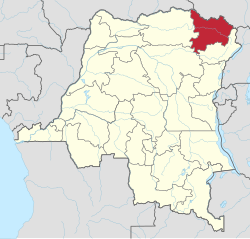
250px-Democratic_Republic_of_the_Congo_%2826_provinces%29_-_Haut-Uele.svg.png

https://en.wikipedia.org/wiki/Haut-Uele

Translation Google

Haut-Uele: a suspected case of Ebola reported in Faradje

Posted on Wed, 16/05/2018 - 17:33 | Modified on Wed, 16/05/2018 - 17:33

A suspected case of Ebola haemorrhagic fever has been reported in Esesenge, a locality 35 km from Faradje in Haut-Uele province.

The inhabitants of Faradje live in panic, fearing the outbreak of the epidemic in the region. The head physician of the provincial division of this entity, Marcel Lola, calls the population to calm, saying it is only a suspect case, not yet confirmed.

According to him, samples taken from patients with the support of the WHO were sent to the National Institute of Biological Research (INRB) in Kinshasa for analysis.

"People are in turmoil because we are in an epidemic context of Ebola. So, it will not be necessary that people are panicked, it is not the same thing. Let's be vigilant while waiting for lab results, "advises Dr. Lola.

According to him, twenty people who were in contact with the suspect case reported are under increased surveillance of the field team. He says none of the people under surveillance are showing signs of Ebola fever.

https://www.radiookapi.net/2018/05/...ut-uele-un-cas-suspect-debola-signale-faradje
 
Flooding and cholera outbreaks have dogged DRC since the beginning of the year. There could be some link to the flooding leading to increased contact with the host for Ebola. The Faradje case, if confirmed, could be unrelated to the outbreak in ?quateur Province. Ebola cases would have been more difficult to detect alongside the 189 cholera deaths in weeks 1-12 of 2018 if the outbreak proves to have started at the beginning of the year. At this point there is a lot that we don't know but other than the 2014-16 outbreak in West Africa, we haven't seen Ebola in urban areas with 1 million+ inhabitants.
 
>>>Waganta Health Zone reported two probable cases on 11 May 2018 with both cases testing positive by Rapid Diagnostic Testing (RDT)

So we have 2 confirmed by the rapid test, waiting for confirmation by the gold standard test, in a city of 1.2 million with riverboat connections to 10's of millions of people. Mbandaka is a war torn city lacking running water or electricity in many areas. The UN's 4000 experimental vaccine doses won't offer much of an advantage against community spread but may help caregivers. The US hasn't stepped up to the plate.

[FONT=&quot]WHO African RegionVerified account @WHOAFRO 3h3 hours ago More


[/FONT]

[FONT=&quot] WHO concerned as one #Ebola case confirmed in urban area of Democratic Republic of the Congo. The new case has been confirmed in Wangata, one of the three health zones of Mbandaka, a city of nearly 1.2 million people in Equateur Province in northwestern #DRC.

[/FONT]
 
[h=1]Ebola crisis meeting called ? WHO poised to declare 'international EMERGENCY'[/h] Democratic Republic of Congo this week reported 39 suspected, probable or confirmed cases of the disease since April 4.
There have been 20 deaths since this date, the World Health Organisation said, marking a rise from the 32 suspected and 18 confirmed dead last week.
Now WHO has called for an emergency meeting tomorrow in a frantic bid to get to grips with the outbreak.
Spokesman Christian Lindmeier said it will consider declaring a "public health emergency of international concern".
This would trigger more international involvement, he added.

https://www.dailystar.co.uk/news/wo...mergency-meeting-democratic-republic-of-congo
 
Emergency meeting called as Ebola moves to Congolese city – UN health agency

image1170x530cropped.jpg


UNICEF/Naftalin
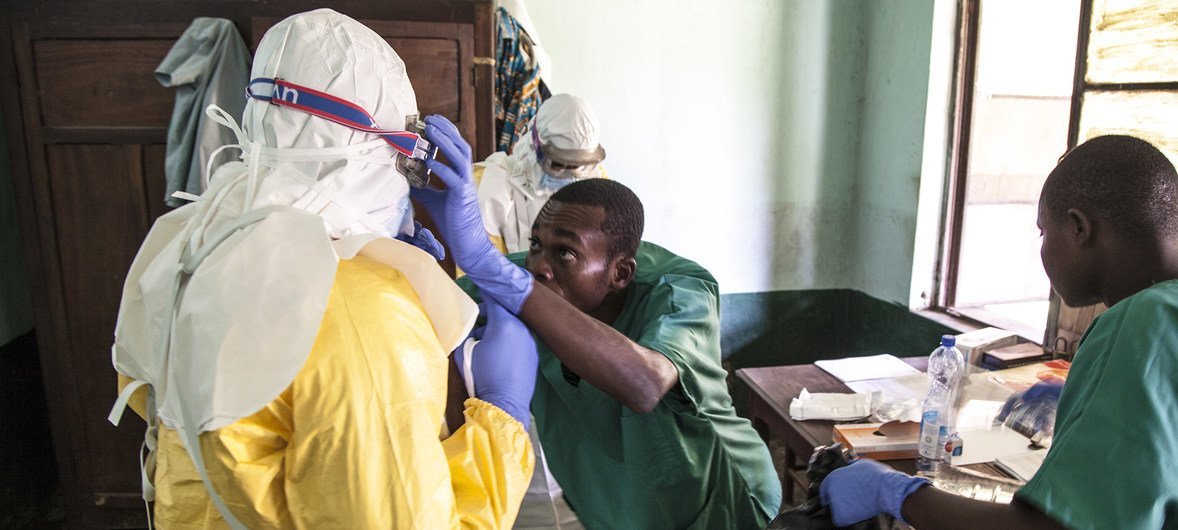
Health workers prepare to treat suspected Ebola patients in Bikoro Hospital in the Democratic Republic of the Congo.


[FONT=&quot]17 May 2018
Health

The World Health Organization (WHO) is convening an emergency meeting on Friday to “consider the international risks” of the latest outbreak of the deadly disease Ebola, which has now moved to an urban area of the Democratic Republic of the Congo (DRC).

One new case of Ebola virus disease has been confirmed in Mbandaka, a city with a population of about 1.2 million, WHO confirmed on Thursday, raising fears that despite a rapid response by authorities, the outbreak has not been contained.

So far, 23 have reportedly died. Until Thursday, the more than 40 confirmed cases were all located in the area around Bikoro, close to the Congo River, and around 150 kilometres (about 95 miles) from the provincial capital Mbandaka, which is a busy port city.

“This is a concerning development, but we now have better tools than ever before to combat Ebola,” said Tedros Adhanom Ghebreyesus, the Director-General of WHO.

“WHO and our partners are taking decisive action to stop further spread of the virus,” he added.

“The arrival of Ebola in an urban area is very concerning and WHO and partners are working together to rapidly scale up the search for all contacts of the confirmed case in the Mbandaka area,” WHO Regional Director for Africa, Matshidiso Moeti, said in a statement.
[/FONT]
This is a concerning development, but we now have better tools than ever before to combat Ebola – WHO Director-General Tedros
The meeting of the Emergency Committee will decide whether to declare an official public health emergency, which would trigger more international involvement and free up more resources to deal with the outbreak.

Apart from WHO and other UN agencies, the International Federation of Red Cross and Red Crescent Societies (IFRC), M?decins Sans Fronti?res (MSF), as other humanitarian organizations, have teams on the ground, working to contain the outbreak.

Response scaled up

The UN health agency is deploying around 30 experts to conduct surveillance in Mbandaka and is working with the DRC’s Ministry of Health advising communities on prevention, treatment and reporting of new cases.

WHO-partner, MSF, has also deployed its teams and is working with UN agencies to strengthen health capacity to treat Ebola patients.
Isolation zones have been set up in Mbandaka’s main hospital, and in Bikoro. Special Ebola treatment centers are also being established in Mbandaka and Bikoro, which will have capacity to treat 20 patients each.

In the next few days, MSF plans delivery of several tons of supplies, including medical kits; protection and disinfection kits; logistic and hygiene kits; and palliative drugs to Mbandaka.

Ninth outbreak in the country

This is the ninth outbreak, since the discovery of the Ebola virus in the country in 1976.

The virus is endemic to DRC, and causes an acute, serious illness, which is often fatal if untreated. The virus is transmitted to human through contact with wild animals and can then be passed from person to person. Ebola is fatal in about 50 per cent of cases.

An outbreak in West Africa that began in 2014 left more than 11,000 dead across six countries, and was not declared officially over by WHO until the beginning of 2016.

First symptoms generally include the sudden onset of fever, fatigue, muscle pain, headache and sore throat. This is followed by vomiting, diarrhoea.

https://news.un.org/en/story/2018/05/1009972
 
Back
Top