• FluTrackers.com Inc. does not provide medical advice. Information on this web site is collected from various internet resources, and the FluTrackers board of directors makes no warranty to the safety, efficacy, correctness or completeness of the information posted on this site by any author or poster. The information collated here is for instructional and/or discussion purposes only and is NOT intended to diagnose or treat any disease, illness, or other medical condition. Every individual reader or poster should seek advice from their personal physician/healthcare practitioner before considering or using any interventions that are discussed on this website. By continuing to access this website you agree to consult your personal physican before using any interventions posted on this website, and you agree to hold harmless FluTrackers.com Inc., the board of directors, the members, and all authors and posters for any effects from use of any medication, supplement, vitamin or other substance, device, intervention, etc. mentioned in posts on this website, or other internet venues referenced in posts on this website.
  • We are not asking for any donations. Do not donate to any entity who says they are raising funds for us.

Discussion thread: USA - Texas: H1N1pdm09 December 17, 2013+

Re: Discussion thread: USA - Texas: Unknown ILI flu type illness December 17, 2013

Re: Discussion thread: USA - Texas: Unknown ILI flu type illness December 17, 2013

The 1918 virus continued to cause problems until at least 1933.

It would not be surprising if there has been some antigenic drift or similar modifications to pH1N1, and its a nasty virus. This might just be the new 'normal' for the flu season hereafter, and especially when it is the predominant strain.
 
Re: Discussion thread: USA - Texas: Unknown ILI flu type illness December 17, 2013

Re: Discussion thread: USA - Texas: Unknown ILI flu type illness December 17, 2013

Europe hopes for H1 this season ... better than H3
usually one of them "kills" the other - well, last season there were both
 
Re: Discussion thread: USA - Texas: Unknown ILI flu type illness December 17, 2013

Re: Discussion thread: USA - Texas: Unknown ILI flu type illness December 17, 2013

Flu deaths go unreported
By Lora Hines
December 23, 2013

Even with three recently confirmed deaths, the number of flu-related fatalities in the Houston region this season will remain unknown.

Texas is among many states that only monitor children's flu deaths, following the federal mandate. Health experts say flu is so widespread that it would be impractical and expensive to try to test and report every suspected case or death.


"What would be gained by it?" asked Catherine Troisi, an epidemiologist and assistant professor at the University of Texas School of Public Health in Houston. "People do die from flu-like symptoms because of bacterial infections and underlying conditions. A lot of it isn't diagnosed."

Typically, only small percentage of people seek treatment and testing isn't always performed, so the numbers wouldn't accurately represent the extent of disease, they said.
...
The Centers for Disease Control and Prevention in Atlanta estimates between 3,300 and 49,000 people die annually from flu-like symptoms. State officials estimate Texans make up between 8 and 10 percent of that total.
...
http://www.houstonchronicle.com/news/health/article/Flu-deaths-go-unreported-5086975.php?cmpid=btfpm
 
Re: Discussion thread: USA - Texas: Unknown ILI flu type illness December 17, 2013

Re: Discussion thread: USA - Texas: Unknown ILI flu type illness December 17, 2013

Questions I would love to have answered, but really don't see how they can be: What percentage, if any, of the people who are getting sick from H1N1 have had it before? Did they have it in 2009? If so, are they getting mild cases? Of the people getting H1N1; did any of them receive the vaccine, either this year or in past years?

These questions are not necessarily for the people who are currenty hospitalized with H1N1, but instead for the entire population of patients who are coming down with H1N1.

Perhaps in a few months we will know more...
 
Re: Discussion thread: USA - Texas: Unknown ILI flu type illness December 17, 2013

Re: Discussion thread: USA - Texas: Unknown ILI flu type illness December 17, 2013

> What percentage, sick from H1N1 have had it before? Did they have it in 2009? If so, are they
> getting mild cases?

this is sometimes tested for institutions, nursing homes,schools,military.
It was tested in 1918-1920 (e.g. Vaughn survey in Boston)
You can also compare ILI in cities, whether those who got much
in 2009 get fewer in 2013.
My guesstimate would be that you are maybe 20% less likely to get it in
2013 if you had it in 2009. For being less severe my estimate would be higher,
probability of being hospitalized 40% down if you had it before.
Just my feeling from numbers that I saw.

For the vaccine see Australia, France, US-military, the effectivity studies.
In average vaccination reduces your chance to attend a doctor for ILI
by ~20% for that season, from 5% to 4% or such. (my estimate)
So a 1% reduction.
 
Re: Discussion thread: USA - Texas: Unknown ILI flu type illness December 17, 2013

Re: Discussion thread: USA - Texas: Unknown ILI flu type illness December 17, 2013

Questions I would love to have answered, but really don't see how they can be: What percentage, if any, of the people who are getting sick from H1N1 have had it before? Did they have it in 2009? If so, are they getting mild cases? Of the people getting H1N1; did any of them receive the vaccine, either this year or in past years?

These questions are not necessarily for the people who are currenty hospitalized with H1N1, but instead for the entire population of patients who are coming down with H1N1.

Perhaps in a few months we will know more...

I want to know this too.

Also, if the genetics has changed slightly to make H1N1pdm13-14 a bit more virulent than 2010-2012 (inclusive), then is the current H1N1pdm09 component in the flu shot effective at all?
 
Re: Discussion thread: USA - Texas: Unknown ILI flu type illness December 17, 2013

Re: Discussion thread: USA - Texas: Unknown ILI flu type illness December 17, 2013

All things suggested so far in this thread mean that:

a) H1pdm09 suffered a major genetic constellation change;

b) H1pdm09 drifted away with multiple antigenic site changes.

The b) is less likely since H1 (both old seasonal and new strain from 2009 pandemic) have circulated so widely into population that the antibodies repertoires have to be very large and would ecompass several antigenic forms.

It would be interesting to see how other respiratory pathogens are circulating into communities affected and what kind of genetic changes in H1 possibly made it more aggressive.

The co-circulation of other subtypes cannot be entirely excluded since H3N2v is also present in US swine stock.

Among the great number of unsubtyped A viruses some may be variants but we cannot know until labs will process some of these samples and P.R. cooked well the news.

Abs against H1, H3 & N1, other than vs M1, surely present in US population, seem to exclude major antigenic drifts.
 
Re: Discussion thread: USA - Texas: Unknown ILI flu type illness December 17, 2013

Re: Discussion thread: USA - Texas: Unknown ILI flu type illness December 17, 2013

Texas HA 225 Receptor Binding Variance Potential

An examination of the potential for Receptor Binding Site (RBS) Polymorphisms in the Texas High-CFR cases, including detailed near-term and mid-term genetic probabilities and projections
 
Re: Discussion thread: USA - Texas: Unknown ILI flu type illness December 17, 2013

Re: Discussion thread: USA - Texas: Unknown ILI flu type illness December 17, 2013

pH1N1 Child Vaccine Escape
CDC Early 2013


<div style="text-align: center;">
<hr style="width: 30%;" />41 Cases over 43 Sequences<hr style="width: 30%;" /></div>
Introduction

In the 30 days covering 2013-02-28 to 2013-03-29, the <span style="color: #783f04;"><b>United States CDC</b></span> released a total of 43 <b><span style="color: #632423; font-family: "Trebuchet MS";">pH1N1</span></b> sequences at <strong>GISAID </strong>on 41 human cases<strong> </strong>sampled from October 2012 to February 2013. Geographic surveillance includes <b>America,</b> <b>Africa, Asia </b>and<b> Russia. </b>Although <b><span style="color: #632423; font-family: "Trebuchet MS";">pH1N1</span></b> in most locales during the 2012-2013 season was the <b><span style="color: #783f04;">minority</span></b> serotype, the sequences in this Analytic Report describe a high level of human-infective diversity and an ease of avian genetic acquisition, including multiple instances demonstrating concentrated transport of <b><span style="color: #660000;">High-CFR</span></b> <b><span style="color: #632423; font-family: "Trebuchet MS";">pH1N1 </span><span style="color: #783f04;">Upsilon</span></b> polymorphisms onto single sequences.

. . .

Read the Open-Access, Full-Text
Investigational Analytic
including Genetic Details​
 
Re: Discussion thread: USA - Texas: Unknown ILI flu type illness December 17, 2013

Re: Discussion thread: USA - Texas: Unknown ILI flu type illness December 17, 2013

71 Fatalities in Texas
by
2014-01-05 *


  • pH1N1 Dominant Texas Fatality by County [Excel]
  • pH1N1 Dominant Texas Fatality by County [html/css]
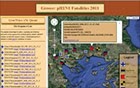
  • Distribution of pH1N1 Influenza Fatalities in Texas [map by Al]


* 2014-01-05 Updated Stats from Jim Oliveros
 
Re: Discussion thread: USA - Texas: Unknown ILI flu type illness December 17, 2013

Re: Discussion thread: USA - Texas: Unknown ILI flu type illness December 17, 2013

pH1N1 Child Vaccine Escape
CDC Early 2013


<div style="text-align: center;">
<hr style="width: 30%;" />41 Cases over 43 Sequences<hr style="width: 30%;" /></div>
Introduction

In the 30 days covering 2013-02-28 to 2013-03-29, the <span style="color: #783f04;"><b>United States CDC</b></span> released a total of 43 <b><span style="color: #632423; font-family: "Trebuchet MS";">pH1N1</span></b> sequences at <strong>GISAID </strong>on 41 human cases<strong> </strong>sampled from October 2012 to February 2013. Geographic surveillance includes <b>America,</b> <b>Africa, Asia </b>and<b> Russia. </b>Although <b><span style="color: #632423; font-family: "Trebuchet MS";">pH1N1</span></b> in most locales during the 2012-2013 season was the <b><span style="color: #783f04;">minority</span></b> serotype, the sequences in this Analytic Report describe a high level of human-infective diversity and an ease of avian genetic acquisition, including multiple instances demonstrating concentrated transport of <b><span style="color: #660000;">High-CFR</span></b> <b><span style="color: #632423; font-family: "Trebuchet MS";">pH1N1 </span><span style="color: #783f04;">Upsilon</span></b> polymorphisms onto single sequences.

. . .

Read the Open-Access, Full-Text
Investigational Analytic
including Genetic Details​
 
Re: Discussion thread: USA - Texas: Unknown ILI flu type illness December 17, 2013

Re: Discussion thread: USA - Texas: Unknown ILI flu type illness December 17, 2013

pH1N1 Drug Resistant Low Reactor
CDC Fall 2013


<div style="text-align: center;">
<hr style="width: 30%;" />46 Cases over 49 Sequences<hr style="width: 30%;" /></div>
Introduction

In the 32 days covering 2013-10-17 to 2013-11-19, the <span style="color: #783f04;"><b>United States CDC</b></span> released a total of 49 <b><span style="color: #632423; font-family: "Trebuchet MS";">pH1N1</span></b> sequences at <strong>GISAID </strong>on 46 human cases<strong> </strong>sampled from February 2013 to October 2013. Geographic surveillance includes <b>America,</b> <b>Africa, Asia, Brazil, Ecuador, Paraguay </b>and<b> Peru. </b>

The sequences in this Analytic Report describe a high level of genetic activity at the <b><span style="color: #274e13;">Hemagglutinin</span></b> <b><span style="color: #660000;">antigenic area</span></b> between <b><span style="color: blue;">aa155</span></b> and <b><span style="color: blue;">aa158</span></b> with <b>5</b> amino variations and <b>4</b> silent revisions.   <b><span style="color: #274e13;">HA</span></b> <b><span style="color: blue;">225G</span></b> is present in <b><span style="color: #660000;">quasi-species</span></b> on <b>2</b> American samples and as dominant form in <b>2</b> tropical countries. The <b>Dominican Republic</b> <b><span style="color: #274e13;">HA</span></b> <b><span style="color: blue;">225G</span></b> <b><span style="color: #660000;">Low Reactor</span></b> appears on a <b><span style="color: #7f6000;">TamiFlu Resistant</span></b> strain.  <b><span style="color: #7f6000;">Drug Resistance</span></b> is also found in <b>2</b> US sequences and <b>1</b> South American case.
. . .

Read the Open-Access, Full-Text
Investigational Analytic
including Genetic Details​
 
Back
Top Bottom