
Install the app
How to install the app on iOS
Follow along with the video below to see how to install our site as a web app on your home screen.
Note: This feature may not be available in some browsers.
-
FluTrackers.com Inc. does not provide medical advice. Information on this web site is collected from various internet resources, and the FluTrackers board of directors makes no warranty to the safety, efficacy, correctness or completeness of the information posted on this site by any author or poster. The information collated here is for instructional and/or discussion purposes only and is NOT intended to diagnose or treat any disease, illness, or other medical condition. Every individual reader or poster should seek advice from their personal physician/healthcare practitioner before considering or using any interventions that are discussed on this website. By continuing to access this website you agree to consult your personal physican before using any interventions posted on this website, and you agree to hold harmless FluTrackers.com Inc., the board of directors, the members, and all authors and posters for any effects from use of any medication, supplement, vitamin or other substance, device, intervention, etc. mentioned in posts on this website, or other internet venues referenced in posts on this website.
-
We are not asking for any donations. Do not donate to any entity who says they are raising funds for us.
You are using an out of date browser. It may not display this or other websites correctly.
You should upgrade or use an alternative browser.
You should upgrade or use an alternative browser.
Discussion: Congenital birth defects and the Zika virus
- Thread starter Laidback Al
- Start date

Pathfinder
Editor, Senior Moderator
FEB 11, 2016 @ 06:15 AM
There Is No Longer Doubt: Zika Causes Microencephaly
Tara Haelle , CONTRIBUTOR New findings published yesterday leave little doubt about whether infection with the Zika virus during pregnancy can actually cause a serious birth condition in which a newborn has an abnormally small head (microcephaly) and abnormally small brain (microencephaly). Though researchers havestrongly suspected the link, most have been urging caution in confirming it.
But a case report in the New England Journal of Medicine and a four-case series in the CDC?s Morbidity and Mortality Weekly Report appear to offer that confirmation with the Zika virus found in the brains of five newborns or fetuses whose mothers had been infected during pregnancy. In addition to the previous evidence of Zika virus present in two cases of amniotic fluid and the virus found in the blood and tissue of a newborn with microcephaly who died almost immediately, these findings show that the virus is vertically transmitted ?from the mother to the infant ? and that it migrates to the brain.
...
?There appears to be clear evidence that this virus is a neurotropic virus?a virus infecting the neural tissue?and these findings are just more evidence of the fact that the Zika virus is causing microcephaly,? Osterholm said. ?For many of us, there hasn?t been a question for some time,? he added.
...
?None of this surprising,? Osterholm said. ?What has been unfortunate is this debate for the last month of whether the link is proven or unproven. We had clear evidence for public health officials to take action a month ago.?
...
http://www.forbes.com/sites/tarahae...oubt-zika-causes-microencephaly/#1e56f7e520e6
There Is No Longer Doubt: Zika Causes Microencephaly
Tara Haelle , CONTRIBUTOR New findings published yesterday leave little doubt about whether infection with the Zika virus during pregnancy can actually cause a serious birth condition in which a newborn has an abnormally small head (microcephaly) and abnormally small brain (microencephaly). Though researchers havestrongly suspected the link, most have been urging caution in confirming it.
But a case report in the New England Journal of Medicine and a four-case series in the CDC?s Morbidity and Mortality Weekly Report appear to offer that confirmation with the Zika virus found in the brains of five newborns or fetuses whose mothers had been infected during pregnancy. In addition to the previous evidence of Zika virus present in two cases of amniotic fluid and the virus found in the blood and tissue of a newborn with microcephaly who died almost immediately, these findings show that the virus is vertically transmitted ?from the mother to the infant ? and that it migrates to the brain.
...
?There appears to be clear evidence that this virus is a neurotropic virus?a virus infecting the neural tissue?and these findings are just more evidence of the fact that the Zika virus is causing microcephaly,? Osterholm said. ?For many of us, there hasn?t been a question for some time,? he added.
...
?None of this surprising,? Osterholm said. ?What has been unfortunate is this debate for the last month of whether the link is proven or unproven. We had clear evidence for public health officials to take action a month ago.?
...
http://www.forbes.com/sites/tarahae...oubt-zika-causes-microencephaly/#1e56f7e520e6
Laidback Al
Well-known member
Yes, a causal link between the Zika virus and microcephaly and in utero fetuses appears to be confirmed in at least individual six cases.
Besides avoiding mosquito bites and perhaps avoiding pregnancy, what other actions or recommendations could public health officials make? Assuming that the alarming rates of microcephaly reported in the media result from Zika virus infections, what actions does Dr. Osterholm propose to help the unfortunate children with this anomaly who managed to survive?
And from the same Forbes article
?None of this surprising,? Osterholm said. ?What has been unfortunate is this debate for the last month of whether the link is proven or unproven. We had clear evidence for public health officials to take action a month ago.?
Besides avoiding mosquito bites and perhaps avoiding pregnancy, what other actions or recommendations could public health officials make? Assuming that the alarming rates of microcephaly reported in the media result from Zika virus infections, what actions does Dr. Osterholm propose to help the unfortunate children with this anomaly who managed to survive?
And from the same Forbes article
http://www.forbes.com/sites/tarahae...uses-microencephaly/#2715e4857a0b7ffd83520e62. . . It?s unclear whether these findings would necessarily change much in terms of policy measures, especially since the link was already so strongly suspected. It also does not mean that every pregnant woman who becomes infected with Zika will definitely give birth to a baby with serious problems. In Slate, Melinda Wenner Moyer offers a reality check for those in freak-out mode: The actual threat of microcephaly from cases of Zika in pregnancy may not be high. We don?t have good data on the risk yet. . .

Emily
Editor, Senior Moderator
Finding Zika in the nervous system of affected fetuses and babies dose not prove causation of brain damage.
http://www.nature.com/news/proving-z...llenge-1.19330
I think it is more complicated than Zika if it is involved in the brain damage at all - a previous infection of the mother may have sidetracked her immune defenses, or the fetus was assaulted with an additional teratogen. The cases are too rare and confined to a small region relative to Zika spread for the virus to be the sole factor, if it is anything more than an opportunist.
http://www.who.int/bulletin/online_first/16-170639.pdf
http://www.nature.com/news/proving-z...llenge-1.19330
.?There?s a lot of basic work and research that we need to do,? says Anthony Fauci, director of the US National Institute of Allergy and Infectious Diseases in Bethesda, Maryland.?There?s a lot of basic work and research that we need to do.?It?s plausible, for instance, that Zika crosses from mother to baby through the placenta, as do some related viruses, such as West Nile virus. But these other viruses don?t often cause infant brain damage, so it?s not clear why ? or how ? Zika might, says David Morens, a senior adviser to Fauci.
I think it is more complicated than Zika if it is involved in the brain damage at all - a previous infection of the mother may have sidetracked her immune defenses, or the fetus was assaulted with an additional teratogen. The cases are too rare and confined to a small region relative to Zika spread for the virus to be the sole factor, if it is anything more than an opportunist.
http://www.who.int/bulletin/online_first/16-170639.pdf
Soares de Ara?jo JS, Regis CT, Gomes RGS, Tavares TR, Rocha dos Santos C,
Assun??o PM, et al. Microcephaly in northeast Brazil: a review of 16 208 births
between 2012 and 2015 [Submitted]. Bull World Health Organ E-pub: 4 Feb 2016. doi:
http://dx.doi.org/10.2471/BLT.16.170639
...
...However, the temporal fluctuation was documented since late 2012, before the allegedly
entry of the ZIKV in Brazil, in mid-2014...
...
These observations highlight the need to review the situation carefully. Many questions
need to be answered prior to concluding what problem we are facing, how it came about
and which consequences it is likely to bring to the Brazilian population in years to
come.
...
Many other potential factors need to be considered as the cause of the outbreak. Among
them figures the possibility of boosting effects from associated infections, perhaps even
viral infections, such as DENV and CHIKV, both carried by the same Aedes aegypti
vector. Also to be considered is teratogens exposure, such as vaccines or drugs used in
early pregnancy.(1,2) Further, malnutrition, which has previously been associated to
microcephaly, could have an intensifying effect when coupled with other aetiological
factors. Indeed, most of the reported cases have occurred in low-income families...
Last edited:
Pathfinder
Editor, Senior Moderator
One tweet that shows how the Zika virus caught scientists flat-footed
Updated by Brad Plumer on February 12, 2016, 12:00 p.m. ET
...
Thomas Frieden, the director of the Centers for Disease Control and Prevention, pointed out on Twitter today that the entire research literature on Zika up until now could basically fit into a shoebox:
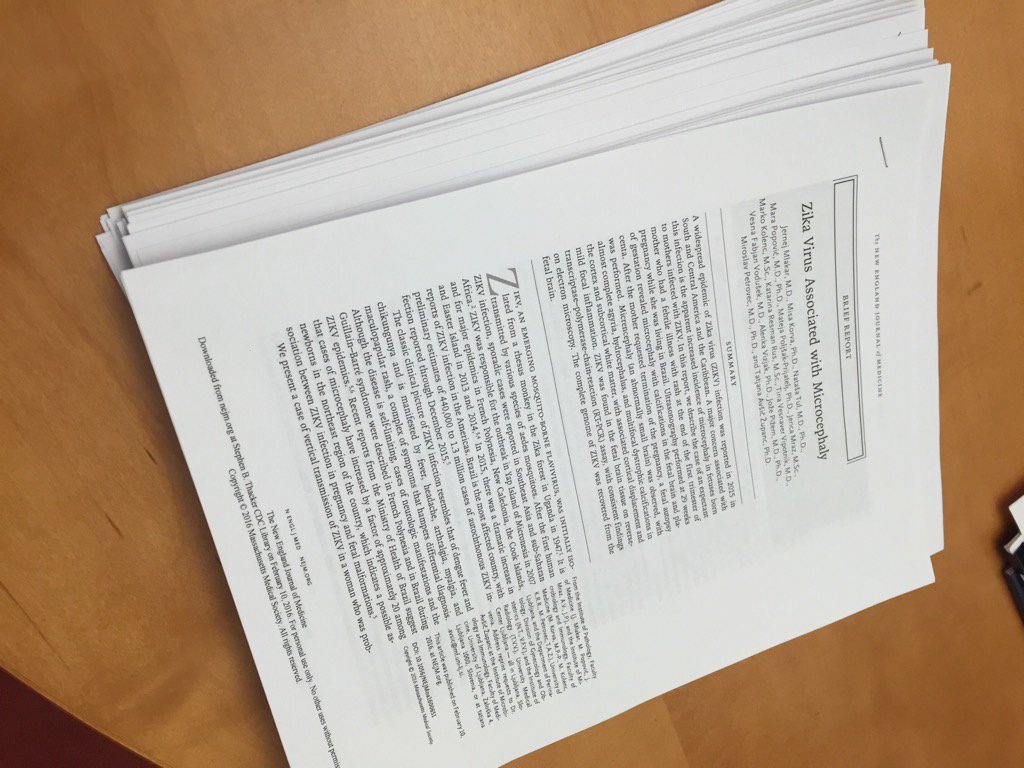
 Dr. Tom Frieden @DrFriedenCDC 3h3 hours ago
Entire world literature on Zika. 50 years of neglect.
That's it. That's everything we know right now. A small stack of papers.
To put this in context, a search on the PubMed database reveals 14,000-plus hits for "dengue fever," another mosquito-borne disease afflicting the region. For "West Nile virus," you get 5,962 hits. For "Zika virus," just 146.
...
http://www.vox.com/2016/2/12/1097882...stions-science
Updated by Brad Plumer on February 12, 2016, 12:00 p.m. ET
...
Thomas Frieden, the director of the Centers for Disease Control and Prevention, pointed out on Twitter today that the entire research literature on Zika up until now could basically fit into a shoebox:
Dr. Tom Frieden @DrFriedenCDC 3h3 hours agoEntire world literature on Zika. 50 years of neglect.
That's it. That's everything we know right now. A small stack of papers.
To put this in context, a search on the PubMed database reveals 14,000-plus hits for "dengue fever," another mosquito-borne disease afflicting the region. For "West Nile virus," you get 5,962 hits. For "Zika virus," just 146.
...
http://www.vox.com/2016/2/12/1097882...stions-science
Pathfinder
Editor, Senior Moderator
"After a review of the evidence, the Committee advised that the recent cluster of microcephaly cases and other neurological disorders reported in Brazil, following a similar cluster in French Polynesia in 2014, constitutes an ?extraordinary event? and a public health threat to other parts of the world."
http://www.who.int/mediacentre/news/statements/2016/emergency-committee-zika-microcephaly/en/

sharon sanders
Editor-in-Chief & President
Thanks Pathfinder. Apparently there is a conspiracy theory that the Zika virus/microcephaly/GB connection is a fake to cover up an environmental cause - like a larvicide.
I have no idea what is going on. A local environmental cause is a lot easier to fix than a virus spread widely by mosquitoes.
As everyone knows FluTrackers takes no advertisements, corporate money, government money so we do not have any particular bias. We run FluTrackers very inexpensively so we do not need to rely on any fundraising to stay online. We follow the facts where ever they lead.
In the next few months there should be an increase in microcephaly and GB in countries where Zika virus has spread if the mosquito hypothesis is to hold.
I have no idea what is going on. A local environmental cause is a lot easier to fix than a virus spread widely by mosquitoes.
As everyone knows FluTrackers takes no advertisements, corporate money, government money so we do not have any particular bias. We run FluTrackers very inexpensively so we do not need to rely on any fundraising to stay online. We follow the facts where ever they lead.
In the next few months there should be an increase in microcephaly and GB in countries where Zika virus has spread if the mosquito hypothesis is to hold.

Gert van der Hoek
In Memoriam - Editor, Senior Moderator
Some quick results via Google and PubMed
- Pyriproxyfen is an EDC, (endocrine disrupting compound), or a hormone disruptor.
- used for dogs and cats (fleas) and in tropical countries for mosquito control, often mixed with other compounds. Also in French Polynesia
- Some dogs show skin problems.
- In Brazil in some regions pyriproxyfen is added to drinking water for humans
- In Vietnam they did not add it to drinking water, but they treated nets with it, the nets were used to cover the water basins. It worked.
- it affects the female reproduction organs of insects and cut worms: less eggs and eggs which have shrinked, or not fully developed
- it affects male sperm quality in crustaceans.
- estrogenic activities were found in human cells in vitro (link)
- there could be a link between pyriproxyfen and histamine. Histamine problems are associated with among other things: microcephaly.
No research found regarding (adverse) effects of Pyriproxyfen in drinking water .
So: like with Zika, we are stumbling in the dark?
- Pyriproxyfen is an EDC, (endocrine disrupting compound), or a hormone disruptor.
- used for dogs and cats (fleas) and in tropical countries for mosquito control, often mixed with other compounds. Also in French Polynesia
- Some dogs show skin problems.
- In Brazil in some regions pyriproxyfen is added to drinking water for humans
- In Vietnam they did not add it to drinking water, but they treated nets with it, the nets were used to cover the water basins. It worked.
- it affects the female reproduction organs of insects and cut worms: less eggs and eggs which have shrinked, or not fully developed
- it affects male sperm quality in crustaceans.
- estrogenic activities were found in human cells in vitro (link)
- there could be a link between pyriproxyfen and histamine. Histamine problems are associated with among other things: microcephaly.
No research found regarding (adverse) effects of Pyriproxyfen in drinking water .
So: like with Zika, we are stumbling in the dark?
Last edited:
sharon sanders
Editor-in-Chief & President
I think we are stumbling in the dark but at least on this site, with our set of experts, we are open to where the facts lead us and not driven by money
Pathfinder
Editor, Senior Moderator
WHO SPECIFICATIONS AND EVALUATIONS
FOR PUBLIC HEALTH PESTICIDES
PYRIPROXYFEN
...
Hazard summary
Pyriproxyfen was evaluated by the FAO/WHO JMPR in 1999 and 2001. The 1999
JMPR established an ADI of 0-0.1 mg/kg bw, on the basis of a 1-year study in dogs
and a safety factor of 100 and concluded that it was not necessary to establish an
acute reference dose because of low acute toxicity of pyriproxyfen. The 2001 JMPR
assessed the safety of pyriproxyfen as a mosquito larvicide in potable water and
concluded that intake at the target concentration for control would not present
unacceptable risks.
The WHO hazard classification of pyriproxyfen is: U, unlikely to present acute hazard
in normal use (WHO 2002).
http://www.who.int/whopes/quality/en/pyriproxyfen_eval_specs_WHO_jul2006.pdf
--------------------------------------------------------------------------------------------------------------------------------------------
Pyriproxyfen in Drinking-water:
Use for Vector Control in Drinking-water Sources and Containers
Background document for development of
WHO Guidelines for Drinking-water Quality
...
World Health Organization 2008
...
WHO has assessed pyriproxyfen for use as a mosquito larvicide in drinking-water in
containers, particularly to control dengue fever. The recommended dosage of
pyriproxyfen in potable water in containers should not exceed 0.01 mg/l under the
WHO Pesticides Evaluation Scheme (WHO, 2006a,b).
...
5. CONCLUSIONS
It is not considered appropriate to set a formal guideline value for pyriproxyfen used
for vector control in drinking-water. The ADI determined by JMPR in 1999 was 0?
0.1 mg/kg of body weight. Young animals do not appear to be significantly more
sensitive than adults. The maximum dosage in drinking-water of 0.01 mg/l would be
equivalent to less than 1% of the ADI allocated to drinking-water for a 60-kg adult
drinking 2 litres of water per day. For a 10-kg child drinking 1 litre of water, the
exposure would be 0.01 mg, compared with an exposure of 1 mg at the ADI. For a 5-
kg bottle-fed infant drinking 0.75 litre per day, the exposure would be 0.0075 mg,
compared with an exposure of 0.5 mg at the ADI. Exposure from food is considered
to be relatively low. In addition, the low solubility and the high log Kow of
pyriproxyfen indicate that it is unlikely to remain in solution at the maximum
recommended applied dose, and the actual levels of exposure are likely to be even
lower than those calculated.
National authorities should note that this document refers only to the active ingredient
and does not consider the additives in different formulations.
6. RECOMMENDATIONS
In setting local guidelines or standards, health authorities should take into
consideration the potential for higher rates of water consumption in the area or region
under consideration. However, exceeding the ADI will not necessarily result in
adverse effects.
The diseases spread by vectors are significant causes of morbidity and mortality. It is
therefore important to achieve an appropriate balance between the intake of the
pesticide from drinking-water and the control of disease-carrying insects. Better than
establishing guideline values are the formulation and implementation of a
comprehensive management plan for household water storage and peridomestic waste
management that does not rely exclusively on larviciding by insecticides, but also
includes other environmental management measures and social behavioural changes.
http://www.who.int/water_sanitation...es/chemicals/pyriproxyfen-background.pdf?ua=1
----------------------------------------------------------------------------------------------------
More links here:
Chemical hazards in drinking-water: Pyriproxyfen
http://www.who.int/water_sanitation_health/dwq/chemicals/pyriproxyfen/en/
FOR PUBLIC HEALTH PESTICIDES
PYRIPROXYFEN
...
Hazard summary
Pyriproxyfen was evaluated by the FAO/WHO JMPR in 1999 and 2001. The 1999
JMPR established an ADI of 0-0.1 mg/kg bw, on the basis of a 1-year study in dogs
and a safety factor of 100 and concluded that it was not necessary to establish an
acute reference dose because of low acute toxicity of pyriproxyfen. The 2001 JMPR
assessed the safety of pyriproxyfen as a mosquito larvicide in potable water and
concluded that intake at the target concentration for control would not present
unacceptable risks.
The WHO hazard classification of pyriproxyfen is: U, unlikely to present acute hazard
in normal use (WHO 2002).
http://www.who.int/whopes/quality/en/pyriproxyfen_eval_specs_WHO_jul2006.pdf
--------------------------------------------------------------------------------------------------------------------------------------------
Pyriproxyfen in Drinking-water:
Use for Vector Control in Drinking-water Sources and Containers
Background document for development of
WHO Guidelines for Drinking-water Quality
...
World Health Organization 2008
...
WHO has assessed pyriproxyfen for use as a mosquito larvicide in drinking-water in
containers, particularly to control dengue fever. The recommended dosage of
pyriproxyfen in potable water in containers should not exceed 0.01 mg/l under the
WHO Pesticides Evaluation Scheme (WHO, 2006a,b).
...
5. CONCLUSIONS
It is not considered appropriate to set a formal guideline value for pyriproxyfen used
for vector control in drinking-water. The ADI determined by JMPR in 1999 was 0?
0.1 mg/kg of body weight. Young animals do not appear to be significantly more
sensitive than adults. The maximum dosage in drinking-water of 0.01 mg/l would be
equivalent to less than 1% of the ADI allocated to drinking-water for a 60-kg adult
drinking 2 litres of water per day. For a 10-kg child drinking 1 litre of water, the
exposure would be 0.01 mg, compared with an exposure of 1 mg at the ADI. For a 5-
kg bottle-fed infant drinking 0.75 litre per day, the exposure would be 0.0075 mg,
compared with an exposure of 0.5 mg at the ADI. Exposure from food is considered
to be relatively low. In addition, the low solubility and the high log Kow of
pyriproxyfen indicate that it is unlikely to remain in solution at the maximum
recommended applied dose, and the actual levels of exposure are likely to be even
lower than those calculated.
National authorities should note that this document refers only to the active ingredient
and does not consider the additives in different formulations.
6. RECOMMENDATIONS
In setting local guidelines or standards, health authorities should take into
consideration the potential for higher rates of water consumption in the area or region
under consideration. However, exceeding the ADI will not necessarily result in
adverse effects.
The diseases spread by vectors are significant causes of morbidity and mortality. It is
therefore important to achieve an appropriate balance between the intake of the
pesticide from drinking-water and the control of disease-carrying insects. Better than
establishing guideline values are the formulation and implementation of a
comprehensive management plan for household water storage and peridomestic waste
management that does not rely exclusively on larviciding by insecticides, but also
includes other environmental management measures and social behavioural changes.
http://www.who.int/water_sanitation...es/chemicals/pyriproxyfen-background.pdf?ua=1
----------------------------------------------------------------------------------------------------
More links here:
Chemical hazards in drinking-water: Pyriproxyfen
http://www.who.int/water_sanitation_health/dwq/chemicals/pyriproxyfen/en/
Gert van der Hoek
In Memoriam - Editor, Senior Moderator
Too bad I could not find any of the references mentioned in the WHO document in PubMed. Only study in PubMed regarding P in drinking water is from Vietnam: they decided not to add it in drinking water?
Emily
Editor, Senior Moderator
Most certainly Zika was not hyped to cover up environmental problems. The possible link is what has shined a spotlight on an underlying environmental problem in Brazil. The virus associated cases are a small subset of the overall cases that will now hopefully be investigated. Remember that two things can be happening at once.
Household exposure to pesticides and bladder exstrophy in a newborn baby boy: a case report and review of the literature
http://naosite.lb.nagasaki-u.ac.jp/dspace/handle/10069/4661
I challenge anyone to produce evidence that pyriproxyfen was rigorously tested like this, including for teratogenicity in primates in an environment simulating all the complexities of co-exposures humans in Brazil experience. They will be testing Zika virus in primates soon. Beagles don't translate.
Household exposure to pesticides and bladder exstrophy in a newborn baby boy: a case report and review of the literature
Household exposure to pesticides and bladder exstrophy in a
newborn baby boy: a case report and review of the literature
Marlene Martin1, Kristina Rodriguez1, Miguel S?nchez-Sauco1,
Gerardo Zambudio-Carmona2 and Juan Antonio Ortega-Garc?a1*
Addresses: 1Pediatric Environmental Health Specialty Unit and 2Pediatric Surgery and Urology, Hospital University Virgen de la Arrixaca,
Carretera Madrid-Cartagena 30120 El Palmar, Murcia, Spain
Email: MM - marlenemartin@gmail.com; KR - kmrodriguez06@gmail.com; GCZ - gzambudio@uropediatria.com; JAOG* - ortega@pehsu.org
* Corresponding author
Published: 30 March 2009 Received: 1 July 2008
Accepted: 22 January 2009
Journal of Medical Case Reports 2009, 3:6626 doi: 10.1186/1752-1947-3-6626
This article is available from: http://jmedicalcasereports.com/jmedicalcasereports/article/view/3/3/6626
? 2009 Martin et al; licensee Cases Network Ltd.
This is an Open Access article distributed under the terms of the Creative Commons Attribution License (http://creativecommons.org/licenses/by/3.0),
which permits unrestricted use, distribution, and reproduction in any medium, provided the original work is properly cited.
Abstract
Introduction: Bladder exstrophy is a rare urogenital abnormality. Other urogenital malformations
have been associated with exposure to hormonal pesticide disruptors during critical developmental
periods. This is the first report in the literature to associate household exposure to pesticides with
bladder exstrophy.
Case presentation: We describe the pediatric environmental history of a newborn baby boy with
isolated bladder exstrophy. In this case the pediatric environmental history includes the
constitutional, genealogical, genetic and environmental factors related to bladder exstrophy, which
revealed a cockroach infestation in the parents? home and the daily use of bug spray to kill them. The
mother used one bottle of spray every 2 days (1000cc) and more in the summer, when the problem
was worse. During gestational weeks 0-12, the mother intensively used a domestic pesticide
consisting of a mixture of pyrethroids (cyfenothrin 0.5%, and tetramethrin 0.31%) and pyriproxyfen
(0.01%). She described repeated episodes of mild to moderate poisoning that are associated with the
use of household pesticides. The mother is a housewife and the father works as a fumigator of fruit
fields and he reported gastrointestinal symptoms associated with the use of occupational pesticides.
However, he did not believe he carried traces of these products into the home and his wife washed
his work clothes separately. The pyrethroids and pyriproxyfen were detected in a urine sample
obtained from the child 4 months after he was born. No other risk factors were identified.
Conclusions: A detailed and carefully conducted pediatric environmental history, which includes
information about home pesticide use, should be carried out for all children with bladder exstrophy.
Domestic exposure to pesticides during critical developmental periods may have deleterious effects
for the fetus.
...
It is difficult to attribute a cause to a condition when so
many factors remain unknown. Despite the apparent lack
of conclusive evidence, we should err on the side of
caution and apply our scientific knowledge to protect
current and future generations. It is important to give
specific pest control recommendations to eliminate or
diminish the pesticides used at home. In addition, we
must remember to look for alternatives to ionizing
radiation during pregnancy and only conduct radiologic
examinations during the first postmenstrual week in any
woman of childbearing age. The PEH not only helps
register the RFs involved but also to improve the home
environment and quality of life.
http://naosite.lb.nagasaki-u.ac.jp/dspace/handle/10069/4661
熱帯医学 Tropical medicine 35(4). p331-334, 1994
...
Furthermore, I should like to point out that careful studies are necessary to confirm
non-toxicity or non-teratogenicity in humans of drinking water containing pyriproxyfen
when it is used for a long period of time.
I challenge anyone to produce evidence that pyriproxyfen was rigorously tested like this, including for teratogenicity in primates in an environment simulating all the complexities of co-exposures humans in Brazil experience. They will be testing Zika virus in primates soon. Beagles don't translate.
Gert van der Hoek
In Memoriam - Editor, Senior Moderator
Great find Emily. One more thing: I read somewhere - no link - that a combination of insecticides can multiply the estrogenic effects of pyriproxyfen.
sharon sanders
Editor-in-Chief & President
Ian Mackay interviewed an expert at the University of Queensland on the larvicide controversy:
"....The potential human health consequences of discouraging the use of pyriproxyfen in drinking water storage and other mosquito-reduction programs is catastrophic with potential deaths and serious disease from otherwise avoidable malaria, dengue and other mosquito-borne diseases numbered in at least the hundreds of thousands. If these reports and suggestions are motivated by anything other than ignorance and poor scholarship they are deserving of the most strident condemnation.
Journalists covering this story would do well to research the background of those making and reporting the claims as the underlying story and potential public health consequences may be far more newsworthy than the current headlines"
http://virologydownunder.blogspot.com.au/2016/02/debugging-recent-claim-that.html
"....The potential human health consequences of discouraging the use of pyriproxyfen in drinking water storage and other mosquito-reduction programs is catastrophic with potential deaths and serious disease from otherwise avoidable malaria, dengue and other mosquito-borne diseases numbered in at least the hundreds of thousands. If these reports and suggestions are motivated by anything other than ignorance and poor scholarship they are deserving of the most strident condemnation.
Journalists covering this story would do well to research the background of those making and reporting the claims as the underlying story and potential public health consequences may be far more newsworthy than the current headlines"
http://virologydownunder.blogspot.com.au/2016/02/debugging-recent-claim-that.html
Pathfinder
Editor, Senior Moderator
Translation Google
Microcephaly: the fragile hypothesis of pesticides
Argentine and Brazilian researchers reported on mid February their suspicions about the involvement of an industrial insecticide, pyriproxyph?ne in the development of microcephaly attributed to Zika virus. For now, this remains very fragile: indeed, in French Polynesia, where an upsurge of cases of microcephaly is also recorded, the pyriproxyph?ne has never been used, according to the health center and public safety of Papeete .
Writing Allodocteurs.fr
Updated 02.16.2016 | 10:06, published on 16.2.2016 | 10:06
The larvicide suspected by South American researchers [1] to be the cause of microcephaly in fetuses has not been used in Polynesia, also affected by these defects, said to AFP on February 15, the center hygiene and public health of Papeete.
The French Polynesia has sprayed insecticide during epidemics of Zika. But it was deltamethrin, not pyriproxyph?ne.
"Deltamethrin is used since decades in La Reunion, Martinique, Guadeloupe and New Caledonia in the fight against the mosquito, without ever being connected to any anomaly on man" told AFP Glenda Melix , head of the Center for Hygiene and Public Safety (PSCC) in French Polynesia. She noted that the CHSP used deltamethrin sprays to fight against the adult mosquito larvicides and two others - temephos and the BTI [2] - were used in stagnant water. [3]
Glenda Melix ensures that these products have also been used against other viruses transmitted by mosquitoes such as dengue and chikungunya. However, increase in the number of microcephaly were found in Polynesia only after the outbreak of Zika.
Zika has affected at least 60% of the Polynesian population during the epidemic of 2013 to 2014, according to local health authorities. It brought about forty-two Guillain-Barr?, which generates a more or less reversible paralysis. It is believed to be linked to eighteen cases of fetal malformations, of which ten to twelve microcephaly, against one to two cases per year in normal times.
...
http://www.francetvinfo.fr/sante/ma...fragile-hypothese-des-pesticides_1317309.html
Microcephaly: the fragile hypothesis of pesticides
Argentine and Brazilian researchers reported on mid February their suspicions about the involvement of an industrial insecticide, pyriproxyph?ne in the development of microcephaly attributed to Zika virus. For now, this remains very fragile: indeed, in French Polynesia, where an upsurge of cases of microcephaly is also recorded, the pyriproxyph?ne has never been used, according to the health center and public safety of Papeete .
Writing Allodocteurs.fr
Updated 02.16.2016 | 10:06, published on 16.2.2016 | 10:06
The larvicide suspected by South American researchers [1] to be the cause of microcephaly in fetuses has not been used in Polynesia, also affected by these defects, said to AFP on February 15, the center hygiene and public health of Papeete.
The French Polynesia has sprayed insecticide during epidemics of Zika. But it was deltamethrin, not pyriproxyph?ne.
"Deltamethrin is used since decades in La Reunion, Martinique, Guadeloupe and New Caledonia in the fight against the mosquito, without ever being connected to any anomaly on man" told AFP Glenda Melix , head of the Center for Hygiene and Public Safety (PSCC) in French Polynesia. She noted that the CHSP used deltamethrin sprays to fight against the adult mosquito larvicides and two others - temephos and the BTI [2] - were used in stagnant water. [3]
Glenda Melix ensures that these products have also been used against other viruses transmitted by mosquitoes such as dengue and chikungunya. However, increase in the number of microcephaly were found in Polynesia only after the outbreak of Zika.
Zika has affected at least 60% of the Polynesian population during the epidemic of 2013 to 2014, according to local health authorities. It brought about forty-two Guillain-Barr?, which generates a more or less reversible paralysis. It is believed to be linked to eighteen cases of fetal malformations, of which ten to twelve microcephaly, against one to two cases per year in normal times.
...
http://www.francetvinfo.fr/sante/ma...fragile-hypothese-des-pesticides_1317309.html
Emily
Editor, Senior Moderator
However, increase in the number of microcephaly were found in Polynesia only after the outbreak of Zika.
I think those were found from retrospective analysis after Brazil reported their cases, so the increase could reflect more intensive searching and reporting and not a real increase. I think if FP had the cluster of severe cases they saw in Brazil, they would have been noticed in real-time. Doctors can't help but notice something like that.
Emily
Editor, Senior Moderator
Ian Mackay interviewed an expert at the University of Queensland on the larvicide controversy:
"....The potential human health consequences of discouraging the use of pyriproxyfen in drinking water storage and other mosquito-reduction programs is catastrophic with potential deaths and serious disease from otherwise avoidable malaria, dengue and other mosquito-borne diseases numbered in at least the hundreds of thousands. If these reports and suggestions are motivated by anything other than ignorance and poor scholarship they are deserving of the most strident condemnation.
Journalists covering this story would do well to research the background of those making and reporting the claims as the underlying story and potential public health consequences may be far more newsworthy than the current headlines"
http://virologydownunder.blogspot.com.au/2016/02/debugging-recent-claim-that.html
I think this is the goup:
http://www.reduas.com.ar/congreso-nacional-de-medicos-de-pueblos-fumigados/
Machine translation:
Directors Dr. Medardo Avila Vazquez, a pediatrician and neonatologist, UNC professor of Medicine and Coordinator of the Universidatia Network Environment and Health / Me'dicos fumigated Peoples
Li. Miryam Gorban, Lic. In Nutrition, Professor of Public Lecture on Food Sovereignty of the Fac. Of Medicine UBA.
They look respectable to me.
Now a cautionary tale for good people warning them about getting involved with the chemical industry. I know people who worked with the doctor featured in the story below and they were absolutely shocked by this:
http://articles.chicagotribune.com/...1_1_flame-retardants-heimbach-medical-license
Doctor who testified for chemical-industry front group gives up his license
May 21, 2014| By Sam Roe and Patricia Callahan | Tribune reporters
As one of the nation?s top burn surgeons, Dr. David Heimbach was a perfect choice to enlist as a star witness. His dramatic testimony about babies burned to death in furniture fires helped convince lawmakers they shouldn?t scale back use of flame retardants.
But the stories weren?t true, and the organization backing him turned out to be a chemical industry front group.
This week, facing disciplinary charges in the state of Washington, Heimbach surrendered his medical license.
State officials had alleged that Heimbach, whose activities were exposed in a 2012 Tribune investigation, fabricated testimony and falsely presented himself as an unbiased burn expert when, in fact, he had been paid $240,000 for his help.
Heimbach and manufacturers have defended flame retardants, which are added to furniture cushions, despite research that shows they don?t provide any meaningful protection from home fires.
Heimbach?s decision to surrender his license, made public Wednesday, represents a stunning fall. For 25 years, Heimbach was head of the burn center at Harborview Medical Center in Seattle and was a longtime surgery professor at the University of Washington. He once received an award from the Dalai Lama for his care of burn victims around the world.
But he could not withstand the most serious charge against him: telling lawmakers false stories of babies who suffered fatal burns while on cushioning that lacked flame retardants. The infants, as he described them, did not exist....
If the chemical industry could use someone like this and toss him away like a used kleenex, think what they could do to the average person.
Emily
Editor, Senior Moderator
https://translate.google.com/transl...-utiliza-o-larvicida-pyriproxifen&prev=search
Sumaia Villela - Correspondent Agency Brazil
- 02/15/2016 17:15 publication
- Recife location
Faced with the controversy over the pyriproxifen larvicide, the city of Recife said today (15) who has never used the substance to combat the Aedes aegypti mosquito, which transmits dengue, chikungunya fever and Zika virus. The use of pyriproxifen was suspended by the Rio Grande do Sul government on Saturday (13), on the grounds that the substance may be related to the occurrence of microcephaly in babies.
The Ministry of Health and the manufacturer of larvicide have spoken in defense of the product, which is distributed by the Brazilian government for vector disease control, including the Aedes aegypti.
The Recife has the largest number of child births notifications with suspected microcephaly across the country. 258 residents are babies in Recife recorded by the health service. Of this total, 40 were confirmed in 26 cases the malformation was discarded. The rest is under investigation.
Until 2001, the Recife wore Temefos larvicide and, from 2002, began to employ a biological substitute the basis of Bacillus thuringiensis israelensis (BTI).
According to Secretary of Health of Recife, Jailson Correa, after which it became possible to buy larvicides for bidding, as of 2009, the city opted to use its own resources and continue buying organic produce and no longer use provided by Ministry of Health, which is currently the pyriproxifen.
"The management and the city of Recife at the time assessed that, considering that Recife is a city bathed in rivers, it would be appropriate to maintain a biological larvicide that have less environmental impact," he explains.
According to Correa, the application of BTI is part of the routine actions of the city government agents. The product is placed in the population water reservoirs or possible Aedes aegypti breeding sites that are difficult to be eliminated. After application, the substance has 40 days of action.
[h=3]Know more[/h]
- RS suspends use of larvicide pyriproxyfen in combating Aedes
- Microcephaly: Ministry of Health defends security larvicide
Unlike the capital, several municipalities of Pernambuco use pyriproxifen, which led the State Department of Health to also manifest on the subject. In a statement, the agency said that "there are cases of microcephaly in places that do not use pyriproxifen larvicide for years, as in many places where its use is often no records of cases."
The department argues that the use of pyriproxifen is approved by the World Health Organization (WHO) and there are no epidemiological studies showing an association with the product "microcephaly or any mutagenic effect, genotoxic, carcinogenic, teratogenic or neurotoxic."
Today, more than 7700 soldiers sent to Pernambuco to strengthen the fight against Aedes aegypti are already on the street making visits to homes and businesses and applying larvicides in potential insect breeding sites. Since December, the work of environmental surveillance agents had already been reinforced by members of the armed forces.
Misunderstanding
The suspension of pyriproxifen in Rio Grande do Sul was enacted based on a technical note of Public Health Brazilian Association (Abrasco), that, in assessing the state government, the product relates to the occurrence of microcephaly. However, the organization says that there was a misunderstanding and that never associated the use of pyriproxifen the malformation.
"There's been a misunderstanding. In our technical note not put this relationship in question, that is, did not say that the larvicide is associated with microcephaly, "said the Agency Brazil the coordinator of the Group Health and Environment Abrasco, Marcelo Firpo.
According to Firpo, which criticizes the entity is the use of chemicals as the main strategy to fight Aedes aegypti. For Abrasco the problem of focus is different: "The most affected populations are precisely the poorest, structural problems of sanitation, access to clean water. We consider a health nonsense, nonsense poison placing larvicide in drinking water. "
According to Firpo, expand investments in sanitation and distribute safe equipment for water storage are some of the solutions needed to avoid breeding proliferation of Aedes aegypti and other vectors of disease.
* Updated at 17:50 Matter to include the placement of Abrasco
Edition: Luana Louren?o
sharon sanders
Editor-in-Chief & President
Please watch:
US - Video - The Zika Virus: Coordination of a Multi-Agency Response - Congressional Hearing - February 24, 2016
As this situation directly affects me and my family we taking a cautionary approach to this situation. I wish I knew more about the clinical progression of Zika virus and the relationship to Guilin-Barre syndrome, and birth defects in developing fetuses. I have a million questions. We are following all of the CDC and WHO precautionary guidance.
I think we do not know what we do not know. We, as a society, are very ill prepared for this situation. Each of us needs to evaluate the available data and make the best decision for our families. I think the state of Florida is doing a great job so far. They update the situation on their website every single day. They are in constant contact with the CDC and have ordered test kits and other materials.
All of us know that mosquitoes carry disease. This is nothing new. Those of us who live in the Southeast US know what a daily pain those small bugs are. Now we are being put to the test on this knowledge. Simply - lessen the chance to be bitten by a mosquito. We have a forum devoted to this topic here.
As to the possible sexual transmission of Zika...well we already know that many diseases are transmitted sexually. Some of these disease can kill you if not treated. Prevention of sexually transmitted diseases is an important part of public health. FluTrackers has advocated free condom distribution for years. Condoms are not 100% effective but they help greatly if used properly.
If anyone has any questions about Zika please contact your medical practitioner. There is no vaccine for Zika and no vaccine will be widely available for years. So forget about that.
And as always - use at least 2 sources for your news. There are a lot of people and companies out there who will use this ZIka situation to make money. Be very cautious in believing "stuff" on the internet.
US - Video - The Zika Virus: Coordination of a Multi-Agency Response - Congressional Hearing - February 24, 2016
As this situation directly affects me and my family we taking a cautionary approach to this situation. I wish I knew more about the clinical progression of Zika virus and the relationship to Guilin-Barre syndrome, and birth defects in developing fetuses. I have a million questions. We are following all of the CDC and WHO precautionary guidance.
I think we do not know what we do not know. We, as a society, are very ill prepared for this situation. Each of us needs to evaluate the available data and make the best decision for our families. I think the state of Florida is doing a great job so far. They update the situation on their website every single day. They are in constant contact with the CDC and have ordered test kits and other materials.
All of us know that mosquitoes carry disease. This is nothing new. Those of us who live in the Southeast US know what a daily pain those small bugs are. Now we are being put to the test on this knowledge. Simply - lessen the chance to be bitten by a mosquito. We have a forum devoted to this topic here.
As to the possible sexual transmission of Zika...well we already know that many diseases are transmitted sexually. Some of these disease can kill you if not treated. Prevention of sexually transmitted diseases is an important part of public health. FluTrackers has advocated free condom distribution for years. Condoms are not 100% effective but they help greatly if used properly.
If anyone has any questions about Zika please contact your medical practitioner. There is no vaccine for Zika and no vaccine will be widely available for years. So forget about that.
And as always - use at least 2 sources for your news. There are a lot of people and companies out there who will use this ZIka situation to make money. Be very cautious in believing "stuff" on the internet.