• FluTrackers.com Inc. does not provide medical advice. Information on this web site is collected from various internet resources, and the FluTrackers board of directors makes no warranty to the safety, efficacy, correctness or completeness of the information posted on this site by any author or poster. The information collated here is for instructional and/or discussion purposes only and is NOT intended to diagnose or treat any disease, illness, or other medical condition. Every individual reader or poster should seek advice from their personal physician/healthcare practitioner before considering or using any interventions that are discussed on this website. By continuing to access this website you agree to consult your personal physican before using any interventions posted on this website, and you agree to hold harmless FluTrackers.com Inc., the board of directors, the members, and all authors and posters for any effects from use of any medication, supplement, vitamin or other substance, device, intervention, etc. mentioned in posts on this website, or other internet venues referenced in posts on this website.
  • We are not asking for any donations. Do not donate to any entity who says they are raising funds for us.

Cytokine Storm & Vitamin D relationship?

Re: Cytokine Storm & Vitamin D relationship?

Are there indicators of vit D deficiency in the NEJM article about Mexican cases? (I can't find it.)

Is there a socio-economic gradient to these cases?

The CIDRAP report talks about antibiotic treatment for pneumonia - is a side-effect of antibiotics a sudden depletion of vit D?

J.
 
Re: Cytokine Storm & Vitamin D relationship?

Are there indicators of vit D deficiency in the NEJM article about Mexican cases? (I can't find it.).....

One study that might be possible, is to find current novel H1N1 cases that had recent Vit D tests (probably very few) and gather information on the progression of their illness.

.
 
Re: Cytokine Storm & Vitamin D relationship?

this article and discussion about the down-side of high Vitamin D levels makes specific reference to cytokine responses.
----------------------------------------------------------------------------------
Vitamin D may exacerbate autoimmune disease
Date:4/8/2009

Deficiency in vitamin D has been widely regarded as contributing to autoimmune disease, but a review appearing in Autoimmunity Reviews explains that low levels of vitamin D in patients with autoimmune disease may be a result rather than a cause of disease and that supplementing with vitamin D may actually exacerbate autoimmune disease.

Authored by a team of researchers at the California-based non-profit Autoimmunity Research Foundation, the paper goes on to point out that molecular biologists have long known that the form of vitamin D derived from food and supplements, 25-hydroxyvitamin D (25-D), is a secosteroid rather than a vitamin. Like corticosteroid medications, vitamin D may provide short-term relief by lowering inflammation but may exacerbate disease symptoms over the long-term.

The insights are based on molecular research showing that 25-D inactivates rather than activates its native receptor - the Vitamin D nuclear receptor or VDR. Once associated solely with calcium metabolism, the VDR is now known to transcribe at least 913 genes and largely control the innate immune response by expressing the bulk of the body's antimicrobial peptides, natural antimicrobials that target bacteria.

Written under the guidance of professor Trevor Marshall of Murdoch University, Western Australia, the paper contends that 25-D's actions must be considered in light of recent research on the Human Microbiome. Such research shows that bacteria are far more pervasive than previously thought 90% of cells in the body are estimated to be non-human increasing the likelihood that autoimmune diseases are caused by persistent pathogens, many of which have yet to be named or have their DNA characterized.

Marshall and team explain that by deactivating the VDR and subsequently the immune response, 25-D lowers the inflammation caused by many of these bacteria but allows them to spread more easily in the long-run. They outline how long-term harm caused by high levels of 25-D has been missed because the bacteria implicated in autoimmune disease grow very slowly. For example, a higher incidence in brain lesions, allergies, and atopy in response to vitamin D supplementation have been noted only after decades of supplementation with the secosteroid.

Furthermore, low levels of 25-D are frequently noted in patients with autoimmune disease, leading to a current consensus that a deficiency of the secosteroid may contribute to the autoimmune disease process. However, Marshall and team explain that these low levels of 25-D are a result, rather than a cause, of the disease process. Indeed, Marshall's research shows that in autoimmune disease, 25-D levels are naturally down-regulated in response to VDR dysregulation by chronic pathogens. Under such circumstances, supplementation with extra vitamin D is not only counterproductive but harmful, as it slows the ability of the immune system to deal with such bacteria.

The team points out the importance of examining alternate models of vitamin D metabolism. "Vitamin D is currently being recommended at historically unprecedented doses," states Amy Proal, one of the paper's co-authors. "Yet at the same time, the rate of nearly every autoimmune disease continues to escalate."

Contact: Paul Albert
palbert@autoimmunityresearch.org
917-887-1815
Autoimmunity Research Foundation
Source:Eurekalert

http://www.bio-medicine.org/biology-news-1/Vitamin-D-may-exacerbate-autoimmune-disease-7924-2/
------------------------------------------------------------------------
There are more Vitamin D articles at their foundation's publications and presentations page: http://mpkb.mp-dev.com/doku.php/home:publications

.

I have spent the afternoon viewing two presentations given by Dr. Marshall recently in China with an eye to understanding his point of view.

What I can say is this man has a good grasp of the VDR and its role in human health and disease but his approach to restoring health via the VDR is entirely different from what is the consensus within mainstream medicine as well as expressed on this thread.

While I do not understand Dr. Marshall's insights and discoveries well enough to translate them for you what I will venture to say is that he proposes that in addition to the normal bacterial flora we all know about that live on our skin and within the gut, there are a large number of bacteria-like organisms, many of which being "L forms" that live within the cells of the body in a symbiotic and in some cases parasitic relationship with us. These organisms are very small and hard to see or stain using standard light microscopy but are apparent using the electron microscope.

Dr. Marshall posits that some of these intercelluar organisms interact with our DNA and the VDR to cause a plethora of common human diseases including all those mentioned on this thread previously in association with vitamin D deficiency.

His foundation has developed a staged treatment protocol employing very low doses of the antibiotics minocycline, zithromycin and clindimycin that are administered by protocol in a staged fashion designed to rid the body gradually of these intercellular pathogens without causing serious adverse events related to cell apotheosis and cytokine storm. The treatment process can take a long time, in fact a year or two.

There are many benefits of doing this according to Dr. Marshall who stated that this impression can be easily gained by a review of the patient dairies maintained upon his foundation's website. Access to these is restricted to registered health care professionals only although they are open to anyone with this credential.

I have contacted Dr. Marshall's representative by email and invited the doctor to visit this thread and share his views with us given the fact that they are so different from those expressed by virtually every post save the one by our senior editor and moderator AD who brought this viewpoint to our attention initially.

I hope he will join our conversation as his POV is truly unique and very different from the mainstream.

Grattan Woodson, MD
 
Last edited:
Re: Cytokine Storm & Vitamin D relationship?

thank you for spending your time researching this issue.

We need to know about all the negative aspects of higher Vitamin D levels, especially since there are so many autoimmune diseases.

The more I read about this subject the more complexities I find. :confused:

.
 
Re: Cytokine Storm & Vitamin D relationship?

What a good idea. Given that few labs can currently do an accurate test, perhaps a re-active color-coded type test could be developed.

Another question is if the test is looking at levels in circulating blood, is there a way to measure the "D" in the "D"-tank?

Note that the above article was about people with autoimmune diseases, but they still make some interesting points, like the VDR dysregulation can be impacted by chronic pathogens.

There are just no easy answers. :rolleyes:

.

With regard the being able to measure the D in the D tank, the answer is NO.

A few researchers have tried to do this but they have encountered problems doing so. Ideally, one could biopsy fat tissue from anywhere on the body, measure the level of vitamin D stored there and then based upon a knowledge of the percentage of body weight composed of fat calculate total body stores of vitamin D.

This is the theory but some fat tissue apparently have higher vitamin D levels than others. Some of the vitamin D stored in fat may not be as available was that stored in other places.

So, this is why we rely on the serum 25 OH vit D level as a proxy for available whole body vitamin D stores, the quantity of supplements taken and the sun exposure received. The reason for this is because 25 OH vit D has a half-life in the serum of around 90 days meaning it needs to be replaced from one or a combination of these 3 sources continuously to maintain consistent levels.

If the supply of pre-25 OH vit D is inadequate, then the level of 25 OH vit D in the serum will fall. Therefore assuming that the liver is healthy enough to convert vitamin D2 and D3 to 25 OH vit D, then the serum 25 OH vit D level is the best measure of the availability vitamin D2 and D3 from all sources including that stored in the "tank".

GW
 
Re: Cytokine Storm & Vitamin D relationship?

One study that might be possible, is to find current novel H1N1 cases that had recent Vit D tests (probably very few) and gather information on the progression of their illness.

.

Laboratory Results

At the time of admission, all 16 tested patients had elevated lactate dehydrogenase levels; levels in 10 patients exceeded 1000 IU per liter (range, 1086 to 6309). Ten of the 16 patients had increased creatine kinase levels, which were above 1000 IU per liter (range, 1099 to 5122) in 5 patients. Eleven of all 18 patients (61%) had lymphopenia (<1000 lymphocytes per cubic millimeter), 2 patients had more than 10,000 leukocytes per cubic millimeter, and 2 patients had mild thrombocytopenia at admission. Patient 3 had myocardial ischemia, as revealed on electrocardiography, with myocardial infarction documented on autopsy. Three patients had elevated creatinine levels (1.8 to 4.6 mg per deciliter [159 to 407 ?mol per liter]) at admission. Four patients had D-dimer levels greater than 1000 IU per liter, and 11 patients had elevated aminotransferase levels (aspartate aminotransferase, 50 to 65 U per liter; alanine aminotransferase, 43 to 147 U per liter). Results of other routine tests were within normal limits.


In addition, all had x-ray evidence of widespread viral pneumonia on admission and were short of breath.

Above is the lab data upon admission the of the 18 patients treated at "INER the Mexican national tertiary care and research center devoted to respiratory diseases", which is a world class medical facility located in Mexico City whose doctors wrote the article published online today in the New England Journal of Medicine.

There is no data here that supports of refutes the vitamin D hypothesis we have been discussing on this thread.

Seven out of the eighteen patients admitted to INER with documented novel H1N1 died in the hospital. What is clear to me from the lab results provided upon admission to the INER is that most of these patients were already critically ill showing signs of multi-organ failure and probably beyond survival at that time they arrived there. These lab results indicate that some of the patients were in renal failure, in others their muscle tissue was breaking down, some had liver damage, one had a heart attack before entering INER who died later, in several others there is evidence that their blood was clotting in their arteries and veins. These are all very serious conditions and typical of what was seen in 1918 during the Spanish Flu in the young who died rapidly from that virus.

The fact that the doctors and staff at this facility were able to save 11 out of the original 18 is quite remarkable and a credit to their professionalism, expertize and devotion to duty.

Link: http://content.nejm.org/cgi/content/full/NEJMoa0904252

Grattan Woodson, MD
 
Re: Cytokine Storm & Vitamin D relationship?

Influence of season and latitude on the cutaneous synthesis of vitamin D3: exposure to winter sunlight in Boston and Edmonton will not promote vitamin D3 synthesis in human skin

http://jcem.endojournals.org/cgi/con...tract/67/2/373

AR Webb, L Kline and MF Holick
Vitamin D, Skin, and Bone Research Laboratory, Boston University Medical School, Massachusetts 02118.

Sunlight has long been recognized as a major provider of vitamin D for humans; radiation in the UVB (290-315 nm) portion of the solar spectrum photolyzes 7-dehydrocholesterol in the skin to previtamin D3, which, in turn, is converted by a thermal process to vitamin D3.

Latitude and season affect both the quantity and quality of solar radiation reaching the earth's surface, especially in the UVB region of the spectrum, but little is known about how these influence the ability of sunlight to synthesize vitamin D3 in skin.

A model has been developed to evaluate the effect of seasonal and latitudinal changes on the potential of sunlight to initiate cutaneous production of vitamin D3. Human skin or [3 alpha-3H]7-dehydrocholesterol exposed to sunlight on cloudless days in Boston (42.2 degrees N) from November through February produced no previtamin D3.

In Edmonton (52 degrees N) this ineffective winter period extended from October through March.

Further south (34 degrees N and 18 degrees N), sunlight effectively photoconverted 7- dehydrocholesterol to previtamin D3 in the middle of winter.

These results quantify the dramatic influence of changes in solar UVB radiation on cutaneous vitamin D3 synthesis and indicate the latitudinal increase in the length of the "vitamin D winter" during which dietary supplementation of the vitamin may be advisable.
 
Re: Cytokine Storm & Vitamin D relationship?

For adults, the 5-?g (200 IU) vitamin D recommended dietary allowance may prevent osteomalacia in the absence of sunlight, but more is needed to help prevent osteoporosis and secondary hyperparathyroidism. Other benefits of vitamin D supplementation are implicated epidemiologically: prevention of some cancers, osteoarthritis progression, multiple sclerosis, and hypertension. Total-body sun exposure easily provides the equivalent of 250 ?g (10000 IU) vitamin D/d, suggesting that this is a physiologic limit. Sailors in US submarines are deprived of environmentally acquired vitamin D equivalent to 20?50 ?g (800?2000 IU)/d. The assembled data from many vitamin D supplementation studies reveal a curve for vitamin D dose versus serum 25-hydroxyvitamin D [25(OH)D] response that is surprisingly flat up to 250 ?g (10000 IU) vitamin D/d. To ensure that serum 25(OH)D concentrations exceed 100 nmol/L, a total vitamin D supply of 100 ?g (4000 IU)/d is required. Except in those with conditions causing hypersensitivity, there is no evidence of adverse effects with serum 25(OH)D concentrations <140 nmol/L, which require a total vitamin D supply of 250 ?g (10000 IU)/d to attain. Published cases of vitamin D toxicity with hypercalcemia, for which the 25(OH)D concentration and vitamin D dose are known, all involve intake of >=1000 ?g (40000 IU)/d. Because vitamin D is potentially toxic, intake of >25 ?g (1000 IU)/d has been avoided even though the weight of evidence shows that the currently accepted, no observed adverse effect limit of 50 ?g (2000 IU)/d is too low by at least 5-fold.....
http://www.ajcn.org/cgi/content/full/69/5/842
 
Re: Cytokine Storm & Vitamin D relationship?

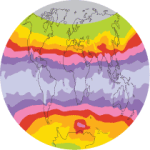
Solar UV at surface taken from a satellite:

View attachment solar UV.bmp


Solar UV zones
map:

the-global-solar-uv-index_thumbnail.png

The same map with text about solar UV index - very good:
http://maps.grida.no/go/graphic/the-global-solar-uv-index

.
 
Re: Cytokine Storm & Vitamin D relationship?

For adults, the 5-?g (200 IU) vitamin D recommended dietary allowance may prevent osteomalacia in the absence of sunlight, but more is needed to help prevent osteoporosis and secondary hyperparathyroidism. Other benefits of vitamin D supplementation are implicated epidemiologically: prevention of some cancers, osteoarthritis progression, multiple sclerosis, and hypertension. Total-body sun exposure easily provides the equivalent of 250 ?g (10000 IU) vitamin D/d, suggesting that this is a physiologic limit. Sailors in US submarines are deprived of environmentally acquired vitamin D equivalent to 20?50 ?g (800?2000 IU)/d. The assembled data from many vitamin D supplementation studies reveal a curve for vitamin D dose versus serum 25-hydroxyvitamin D [25(OH)D] response that is surprisingly flat up to 250 ?g (10000 IU) vitamin D/d. To ensure that serum 25(OH)D concentrations exceed 100 nmol/L, a total vitamin D supply of 100 ?g (4000 IU)/d is required. Except in those with conditions causing hypersensitivity, there is no evidence of adverse effects with serum 25(OH)D concentrations <140 nmol/L, which require a total vitamin D supply of 250 ?g (10000 IU)/d to attain. Published cases of vitamin D toxicity with hypercalcemia, for which the 25(OH)D concentration and vitamin D dose are known, all involve intake of >=1000 ?g (40000 IU)/d. Because vitamin D is potentially toxic, intake of >25 ?g (1000 IU)/d has been avoided even though the weight of evidence shows that the currently accepted, no observed adverse effect limit of 50 ?g (2000 IU)/d is too low by at least 5-fold.....
http://www.ajcn.org/cgi/content/full/69/5/842

But what processes are involved to empty the tank?

In other words, what depletes the reserve of vit D faster than the normal half-life rate?

Latitidue explains the slow increase in levels, or the chronic deficiency. But for the equatorial places, that doesn't work. Smog may be an answer, but is there another reason? Could a medical treatment, drugs or another intervention, cause a chronic or rapid depletion despite the high sunlight exposure? Could an illicit drug do the same?

J.
 
Re: Cytokine Storm & Vitamin D relationship?

On-line sources for vitamin D.

Vitamin D3
http://www.abcvitaminslife.com/Main/Catalog.aspx?pattern=vitamin+d

http://www.puritan.com/d-vitamins-534?afid=28&safid=nav

I am having trouble finding good sources of Vitamin D2 which contain more than 400iu. But, I did find one Canadian source.

http://www.foryourhealth.co.uk/store.asp?pid=132&catID=10

Here is one containing 800 iu.

http://store.nexternal.com/shared/S...=873023629&ProductID=2382&Target=products.asp


This site offers several choices. One of the manufacturers does make a tablet which contains 2,000 IU of vitamin D2.

http://www.nextag.com/vitamin-d2/search-html
 
Re: Cytokine Storm & Vitamin D relationship?

Living in a South American big city, as for those who lives in NY, Mexico or Buenos Aires I can tell great part of people lives and/or work inside buildings, or inside cars which means that you rarely got a chance to have sunlight, unless you go to roof which is unusual for most people.

When I lived in an apartment I very rarely would have opportunity to be exposed to sunlight, even walking in the streets because the buildings projects shadows so you would be on sun just in a few hours (11am - 13 or 14 am), not a good time to be exposed anyways. As I live in a house now , even being in downtown, I do have a terrace where I can have some sun in mornings or afternoon, including winter... but I do know that it's not an option to most people in here, if you go out early in morning and go back at night, you would have to get sun during your work shift - not an option for many. So I would guess, the smog thing plus the shadows provided by buildings = lack of sunny areas, this could really be a issue. Maybe a idea is to compare how's going the rate of D vitamin and Flu on those cities (like Rio de Janeiro) where people do love to be exposed to sun compared to others cities without these exposure culture... to be discovered... :D
 
Re: Cytokine Storm & Vitamin D relationship?

I just received a catalog from Swanson Vitamins a few days ago.
I've not ordered from them in the past, but may place an order soon.
They have a promotion going through 8/31/09

The promo code stated on the back of the catalog is MKFP.

Vitamin D3 is one of the 2-for-1 items listed.
250 caps of 1,000 IU Vitamin D-3 - with promo, it's 2 bottles for $5.99 with a limit of 3 plus 3.

Just checked the website - http://www.swansonvitamins.com/
Shipping is $4.99 and there's a spot to enter the promo code in the upper right hand corner of the front page.
 
Re: Cytokine Storm & Vitamin D relationship?

This NEJM article is excellent info:

http://content.nejm.org/cgi/content/full/NEJMoa0904252

Look at the people - all likely spent most, if not all, of their days indoors:

Among the 14 patients whose occupation was recorded, 6 were students, 2 were taxi drivers, 3 were housekeepers, 1 was a locksmith, 1 was an employee of a billiards parlor, and 1 was a physician who did not have clinical duties and was not an INER employee.

And the antibiotics - are we sure there's no relationship to severity?

Twelve patients sought medical care at other institutions as outpatients before hospitalization at INER and were treated with one or more antibiotics: ceftriaxone (five patients), amikacin (three), azithromycin (one), amoxicillin?clavulanate (two) or other macrolides (three), or another agent (two). Except for two patients transferred from other health centers, the reported hospitalization was the first hospitalization related to the disease.

After admission, 17 patients received ceftriaxone and 10 received clarithromycin. Additional antibiotics were prescribed in several patients, on the basis of their clinical course: three were given levofloxacin; seven, vancomycin; five, cefepime; five, imipenem; and two, dicloxacillin.

J.
 
Re: Cytokine Storm & Vitamin D relationship?

But what processes are involved to empty the tank?

In other words, what depletes the reserve of vit D faster than the normal half-life rate?

Latitidue explains the slow increase in levels, or the chronic deficiency. But for the equatorial places, that doesn't work. Smog may be an answer, but is there another reason? Could a medical treatment, drugs or another intervention, cause a chronic or rapid depletion despite the high sunlight exposure? Could an illicit drug do the same?

J.

(snipped from Merck)

Rarely, hereditary disorders cause impaired metabolism of vitamin D (dependency).

Vitamin D deficiency is a common cause of rickets and osteomalacia, but these disorders may also result from other conditions, such as various renal tubular disorders, familial hypophosphatemic (vitamin D–resistant) rickets (see Renal Transport Abnormalities: Hypophosphatemic Rickets), chronic metabolic acidosis, hypoparathyroidism (which reduces vitamin D absorption), inadequate dietary Ca, and disorders or drugs that impair the mineralization of bone matrix.

http://www.merck.com/mmpe/sec01/ch004/ch004k.html#sec01-ch004-ch004k-BABBBEAE
 
Last edited:
Re: Cytokine Storm & Vitamin D relationship?

Now that I know that Vitamin D is a hormone and that aromatase inhibitors interact with hormones, I found this speculative, but important relationship...
-------------------------------------------------

Vitamin D intake may be a predictor of response to aromatase inhibitors in postmenopausal women with hormone receptor positive breast cancer
Omer Dizdar1, Nilufer Bulut1 and Kadri Altundag1

(1) Department of Medical Oncology, Hacettepe University Institute of Oncology, Sihhiye, Ankara, 06100, Turkey


Kadri Altundag
Email: altundag66@yahoo.com

Received: 1 June 2007 Accepted: 7 June 2007 Published online: 11 July 2007


--------------------------------------------------------------------------------

Without Abstract

--------------------------------------------------------------------------------

To the Editor,

The importance of estrogen in the development and progression of breast cancer has been recognized for some time. Main estrogen biosynthesis in postmenopausal women is catalyzed by P450 aromatase, encoded by the CYP19 gene. Aromatase inhibitors (AI) were designed to inhibit estrogen synthesis in the postmenopausal women. Based on the results of large trials with AI in advanced, adjuvant, and neoadjuvant settings, third generation AI are widely accepted as a part of treatment for postmenopausal women with hormone-receptor positive breast cancer [1]. There are no standard biologic predictors of response to AI. Vitamin D intake is a part of treatment of postmenopausal osteoporosis. In addition, AI itself leads to osteoporosis by decreasing circulating estrogen levels in postmenopausal women necessitating osteoporosis treatment including vitamin D. Interestingly, it has been demonstrated that the vitamin D is a potent stimulator of CYP19 (P450 aromatase gene) transcription [2]. Therefore, concomitant use of vitamin D and AI may lead to resistance to AI in postmenopausal women with hormone-receptor positive breast cancer. Further prospective studies are needed to confirm this proposal.


--------------------------------------------------------------------------------

References
1. Briest S, Davidson NE (2007) Aromatase inhibitors for breast cancer. Rev Endocr Metab Disord (2007 May 8) [Epub ahead of print]

2. Enjuanes A, Garcia-Giralt N, Supervia A, Nogues X, Ruiz-Gaspa S, Bustamante M, Mellibovsky L, Grinberg D, Balcells S, Diez-Perez A (2005) Functional analysis of the I.3, I.6, pII and I.4 promoters of CYP19 (aromatase) gene in human osteoblasts and their role in vitamin D and dexamethasone stimulation. Eur J Endocrinol 153:981?988

http://www.springerlink.com/content/hxx23183nlq378r9/fulltext.html
 
Re: Cytokine Storm & Vitamin D relationship?

It would seem there is some interaction between vitamin D, hormones; and osteoporosis & cancer risks.

It's interesting that there is a current clinical trial to study if Vitamin D can lessen the pain of aromatase inhibitors. After reading the above paper, I can help but wonder if the pain is lessened by the Vitamin D because it's undermining the actions of the aromatase inhibitors on the VDR.

The primary purpose is to determine if high dose vitamin D3 reduces the incidence of musculoskeletal symptoms associated with the aromatase inhibitor letrozole in women with early stage breast cancer and low serum vitamin D levels. The primary hypothesis is that high dose vitamin D3 prevents the worsening of musculoskeletal symptoms when compared to a standard dose vitamin D3 treatment.
http://clinicaltrials.gov/ct2/show/study/NCT00867217

If vitamin D plays such an important role in the production of estrogen, as proposed in the previous post, can you imagine all the processes it impacts?

.
 
Re: Cytokine Storm & Vitamin D relationship?

Recently I wrote Robert Heaney, MD and asked him look over a list of questions that we had been contemplating on this thread. Dr. Heaney is a recognized authority on bone and mineral metabolism who about a decade ago switched his focus to vitamin D. He is one of my teachers and granted me a great kindness for agreeing to seriously consider my rather simple questions and give me permission to share his responses with FT.

Grattan Woodson, MD


RH:
Grattan

Here are some tentative answers to your very interesting questions:

GW:
We are also debating what vitamin D replete means. Is there a serum level of 25 OH vit D3 that you think is "healthy"? What is the lower limit of serum 25 OH D3 that we clinicians should tolerate in our patients? (please express these answers in ng/ml. I am an ignorant country doctor and have trouble with mmol/l units)

RH:
The threshold is likely to be different for different systems/endpoints. For Ca absorption, the threshold is reached at about 32 ng/mL. Certainly the threshold for rickets is very low. In the Lappe et al cancer study, the median serum 25D was 31 ng/mL; those above that figure had a 60% lower risk of incident cancer than those below, suggesting a higher threshold for that outcome. On the other hand, John Aloia has just repeated his influenza trial, with negative results; it is likely ?though uncertain - that his controls were already relatively replete, making it difficult to see an effect of treatment. (See also below.)

GW:
We are also unsure what dose of vitamin D one should take as a supplement daily for optimal health meaning inclusive of bone health and immune system health.

RH:
At a recent workshop convened by CDC and AGS, the mean personal daily intake of the participating Vit D scientists was over 5000 IU. We find for our osteoporosis patients that 2000 IU/d suffices to get their 25D values up to 30 or higher. But we don?t have data on immune health. One RCT of TB treatment, published 3 years ago (Nursyam et al. 2006), used 10,000 IU/d (or placebo) in addition to standard anti-tubercular therapy. Sputum conversion for the placebo group was 77%, & 100% for the vitamin D group.

GW:
We are also uncertain whether one should supplement with vitamin D2 or D3

RH:
D3 by all means. It has about 4X the potency of D2 and is cheaper (not a Rx).

GW:
What is the fate of supplemental vitamin D3 given in excess of metabolic requirements? Is it stored in fat? Is it converted irrespective of needs to 25 OH vit D3?

RH:
Rapid conversion of D to 25D remains true, and probably occurs at serum D levels below the detection limit of the (D3) assay. However, several recent studies looking at tissue content indicate that about two-thirds of the body load of D at prevailing inputs is in the form of native D itself, and about one-third as 25D. The D is stored in both fat and muscle, while most of the 25D is in serum and liver. Serum levels of both rise as D inputs rise, but, above about 100 nmol/L, the rate of rise of D is twice as great as the rate of rise of 25D, suggesting saturation of the hepatic 25-hydroxylase. Most of the extra D is stored in fat at this point.

GW:
Is it safe to supplement with high dose vitamin D3? By high dose I mean 5,000iu to 10,000iu daily?

RH:
Yes. Hathcock et al (AJCN 2007) showed that 10,000 IU/d is the safe upper level. There are no reported cases of vit D intoxication at known daily intakes less than 30,000 IU, and no cases at serum 25D values below 200 ng/mL. (See also below.)

GW:
Is it safe to supplement with high dose vitamin D2? By high dose I mean 5,000iu to 10,000iu daily?

RH:
See above. We don?t use D2 at all.

GW:
We are also uncertain what a healthy level of 25 OH vit D3 is and what level will result in "optimal health".

RH:
This is a variant of the first question (about ?replete?). I think most working vit D scientists favor a value of 40 ng/mL or above. Bear in mind that average values of early Homo sp. in equatorial E. Africa would have been 60 or above, and values like that are common in fair-skinned outdoor workers at end of summer in Europe and N. America. A single, whole body MED dose of UV-B radiation gives a fair-skinned recipient about 15,000 IU. There has never been a case of vit D intoxication from sun exposure. Thus values in the range of 40 to 80 ng.mL have to be considered physiologic, and the oral doses required to achieve them (in lieu of sun exposure) should not be considered ?pharmacologic?.

GW:
What is the relationship between vitamin D and non-osseous disease, especially those within the auto-immune sphere?

RH:
The fully accurate answer is: we don?t know. But we do have pieces of an answer. The response to vit D supplementation in anti-TB Rx, cited above, is rapid and clinically meaningful. On the other hand, the action of vit D repletion in autoimmune disease seems to take place very early in life (in utero or in infancy). The famous Finnish experiment (2000 IU/d for all infants from birth to one year) (Hypponen et al. Lancet 2001), resulted in an astounding 88% reduction in type I diabetes by age 31. Congruent results have been reported for maternal 25D levels during pregnancy and adult onset diabetes and multiple sclerosis.

Hope this helps.
Regards,
Bob

Robert P. Heaney, M.D.
Interim Vice-President, Health Sciences
Creighton University, Omaha NE, 68178
 
Back
Top