• FluTrackers.com Inc. does not provide medical advice. Information on this web site is collected from various internet resources, and the FluTrackers board of directors makes no warranty to the safety, efficacy, correctness or completeness of the information posted on this site by any author or poster. The information collated here is for instructional and/or discussion purposes only and is NOT intended to diagnose or treat any disease, illness, or other medical condition. Every individual reader or poster should seek advice from their personal physician/healthcare practitioner before considering or using any interventions that are discussed on this website. By continuing to access this website you agree to consult your personal physican before using any interventions posted on this website, and you agree to hold harmless FluTrackers.com Inc., the board of directors, the members, and all authors and posters for any effects from use of any medication, supplement, vitamin or other substance, device, intervention, etc. mentioned in posts on this website, or other internet venues referenced in posts on this website.
  • We are not asking for any donations. Do not donate to any entity who says they are raising funds for us.

Cote d’Ivoire (Ivory Coast) declares first Ebola outbreak in more than 25 years: W.H.O. statement - August 14, 2021 - patient did not have Ebola, fur

Mary Wilson

Well-known member
Date 14.08.2021

wd/wmr (AFP, Reuters)

The World Health Organization has expressed "immense concern" about an Ebola outbreak in the country's largest city, Abidjan.

The Ivory Coast on Friday declared its first confirmed case of Ebola virus since 1994.

The infected patient with the virus was hospitalized in Abidjan, the country's largest city. The 18-year-old woman had arrived in Abidjan after traveling to the Ivory Coast from neighboring Guinea.

https://www.dw.com/en/ivory-coast-reports-first-ebola-case-in-decades/a-58867955
 
Cote d’Ivoire declares first Ebola outbreak in more than 25 years

14 August 2021

Abidjan/Brazzaville – The Ministry of Health of Cote d’Ivoire today confirmed the country’s first case of Ebola since 1994. This came after the Institut Pasteur in Cote d’Ivoire confirmed the Ebola Virus Disease in samples collected from a patient, who was hospitalized in the commercial capital of Abidjan, after arriving from Guinea.

Initial investigations found that the patient had travelled to Cote d’Ivoire by road and arrived in Abidjan on 12 August. The patient was admitted to a hospital after experiencing a fever and is currently receiving treatment.

Guinea experienced a four-month long Ebola outbreak, which was declared over on the 19 June 2021. There is no indication that the current case in Cote d’Ivoire is linked to the earlier outbreak in Guinea. Further investigation and genomic sequencing will identify the strain and determine if there is a connection between the two outbreaks.

This year Ebola outbreaks have been declared in the Democratic Republic of the Congo and Guinea, but it is the first time an outbreak has occurred in a large capital city such as Abidjan since the 2014–2016 West Ebola outbreak.

“It is of immense concern that this outbreak has been declared in Abidjan, a metropolis of more than 4 million people,” said Dr Matshidiso Moeti, World Health Organization (WHO) Regional Director for Africa. “However, much of the world’s expertise in tackling Ebola is here on the continent and Cote d’Ivoire can tap into this experience and bring the response to full speed. The country is one of the six that WHO has supported recently to beef up their Ebola readiness and this quick diagnosis shows preparedness is paying off.”

WHO is helping to coordinate cross-border Ebola response activities and 5000 Ebola vaccines doses which the organization helped secure to fight the outbreak in Guinea are now being transferred to Cote d’Ivoire, following an agreement between the ministries of health of Cote d’Ivoire and Guinea. An aircraft is departing Abidjan soon to collect the vaccines which will be used to vaccinate people at high risk, including health workers, first responders and contacts of confirmed cases.

WHO staff based in Cote d’Ivoire are supporting the investigation into the case. In addition, a multidisciplinary team of WHO experts covering all key response areas will be deployed rapidly to the field. They will help with ramping up infection prevention and control of health facilities, diagnostics, contact tracing, treatment and reaching out to communities to ensure they take a key role in the response.

Cote d’Ivoire declared the outbreak in line with International Health Regulations and WHO does not advise any travel restrictions to and from the country.

While countries are focused on the COVID-19 response, they should strengthen their preparedness for potential Ebola cases.

While Cote d’Ivoire borders Guinea and Liberia which were struck hard by the 2014–2016 West Africa Ebola outbreak, the country has had no confirmed cases reported since 1994, when an outbreak among chimpanzees infected a scientist.

Ebola is a severe, often fatal illness affecting humans and other primates. Case fatality rates have varied from 25% to 90% in past outbreaks. There is now effective treatment available and if patients receive treatment early, as well as supportive care, their chances of survival improve significantly.

https://www.afro.who.int/news/cote-divoire-declares-first-ebola-outbreak-more-25-years
 
Ivory Coast starts Ebola jabs after first case in decades

Mon, August 16, 2021, 8:43 AM

Ivory Coast began a roll-out of vaccinations against Ebola on Monday, after the country recorded its first known case of the disease since 1994, the health ministry said.

"Health workers, close relatives and contacts of the victim" were the first to be vaccinated, getting jabs from 5,000 doses sent from Guinea, spokesman Germain Mahan Sehi said.

https://news.yahoo.com/ivory-coast-starts-ebola-jabs-134346006.html?fr=sycsrp_catchall
 
Personal note: this report has an error as the case fatality rate (CFR) is not 100% (0 deaths)

WEEKLY BULLETIN ON OUTBREAKS
AND OTHER EMERGENCIES


Week 33: 9 - 15 August 2021
Data as reported by: 17:00; 15 August 2021


Ebola virus disease Cote d’Ivoire

1 Cases
0 Deaths
100% CFR


EVENT DESCRIPTION

On 14 August 2021, the Ministry of Health and Public Hygiene
(MSHP) of Cote d’Ivoire confirmed a case of Ebola Virus Disease
(EVD) at Abidjan Hospital on 12 August 2021, with signs and
symptoms of fever, headache, and bleeding from her gums and
genitals which led attending clinicians to suspect viral hemorrhagic
fever infection.

On 13 August 2021, the National Institute of Hygiene of Cote d’Ivoire
was alerted, and a blood sample was collected and subsequently
sent to Institut Pasteur de Côte d’Ivoire (IPCI) for testing. Preliminary
laboratory test results on 14 August 2021 indicated Ebola virus
disease but confirmation of by IPCI is still pending. As of 15 August
2021, the patient was admitted to the Cocody university hospital in
Abidjan and undergoing supportive treatment.

Initial investigation revealed that the suspected case commenced
travel from Labé, Guinea on 8 August 2021 and arrived in Abidjan,
Cote d’Ivoire on 12 August 2021 by public transport. She reportedly
transited through Nzérékoré in Guinea, a region recently affected
by an outbreak of Ebola virus disease, where she boarded another
public transport headed for Ouaninou, Cote d’Ivoire. She arrived at
Ouaninou bus station on 12 August 2021, where she changed the
bus again and headed to her final destination in Abidjan on the same
day.

She reportedly developed signs and symptoms of fever while on
route and self-medicated with paracetamol. The patient initially
sought treatment at one local clinic on 12 August 2021, however
her condition worsened, and she was transferred to the Cocody
university hospital hospital in Abijan on the same day. A total of nine
contacts have so far been identified among family members and
hospital staff in Abidjan.

Efforts are underway to identify additional contacts including about
70 co-passengers that travelled on the same vehicle.

Currently, a second suspected case is being investigated, though
confirmatory details are still pending. Preliminary information
suggests it is a family member of the first case and a known contact.
National infection prevention and control teams were also deployed
to disinfect health care facilities attended by the patient as well as
provide advice and instruction to health care workers on use of
personal protective equipment.

Confirmation of this EVD case marks the first in Cote d’Ivoire since
1994 when a single, and thus far only human case was reported of
the especially rare Tai Forest strain of EVD which was contracted by
a scientist. Since that initial case, no other case of EVD had been
reported in Cote d’Ivoire until now despite various outbreaks in
surrounding countries throughout the years.

PUBLIC HEALTH ACTIONS

Multidisciplinary rapid response teams have been deployed to
key areas and will focus on infection prevention and control
measures, laboratory diagnostics, surveillance interventions,
and risk communication among others.

Contact tracing has been conducted with the patient’s close
contacts including health care workers and identification of
additional contacts is ongoing following further epidemiological
investigation.

National infection prevention and control teams have
disinfected health facilities visited by the patient.

Health care workers have been oriented on safety precautions
to take including the systematic use of personal protective
equipment and hygiene.

Epidemiological surveillance has been enhanced at health
structures and the border points.

Ebola vaccines (5 000 doses) are being secured to vaccinate
those at high risk of infection to include health care workers,
first responders, and contacts.

SITUATION INTERPRETATION

Cote d’Ivoire reacted swiftly to the outbreak with the necessary public
health measures such as isolation, detection, and containment for
the first EVD case in the country after more than 25 years. Detailed
investigations of the second suspect case are also underway.
While this demonstrates commendable surveillance capacity,
cross-border threats still remain a problem especially given the
recent outbreak of Marburg virus disease in Guinea. The frequent
international movement of people needs to be monitored with even
higher vigilance and especially while there are active outbreaks of
viral haemorrhagic febrile illnesses in bordering regions. Given that
the case was detected in a densely populated capital city (one of
largest metropolises on the African continent) and had recently
travelled, there are likely to be very many contacts across both
Guinea and Cote d’Ivoire. Since the patient experienced symptoms
during her journey this could also suggest that infection occurred
prior to the case’s departure or during her trip which was in an area
currently unknown to be affected by EVD. Thus, it is possible that
undetected transmission chains remain in these areas.

PROPOSED ACTIONS

The response team should fully implement plans of the EVD epidemic and
trigger partner involvement where indicated. Immediate capacity and logistical
needs should be met as rapidly as possible. Surveillance should be further
strengthened for viral haemorrhagic fever symptoms especially in bordering
regions of affected areas. Health workers and communities should be trained
and retrained on the early detection, isolation, and treatment of EVD patients as
well as practices for safe and dignified burials of the deceased. Additional
epidemiological investigations need to be improved and further efforts need to be
taken to find contacts considering the length of the journey of a symptomatic patient
with multiple transit points. Bilateral efforts need to be strengthened among countries
to have more collaborative vigilance and information exchange. Continue to conduct
risk communication about EVD among the general population, but
also specialize precautions for health workers.

https://apps.who.int/iris/bitstream/handle/10665/344261/OEW33-0915082021.pdf

 
Translation Google

Ebola in Guinea and Côte d'Ivoire: what we know about the route of the virus


Published on : 08/19/2021 - 14:52

From Labé in Guinea to Abidjan in Côte d'Ivoire, the patient with Ebola virus disease traveled 1,500 km in several public transport vehicles. The details of the journey however still differ according to the sources.

Claire Fages, with our special correspondent in Abidjan, Jean-Luc Aplogan

August 8: departure from Labé

The young woman leaves the locality of Labé, in northern Guinea (Middle Guinea), on August 8 at 7 p.m., aboard a minibus carrying 25 passengers, reports Dr Mamadou Hady Diallo, prefectural director of health of Labé . The health manager was able to question the driver - who returned to Labé on Tuesday August 17 for his quarantine -, as well as the conveyor, owner of the minibus, and the transport union.

August 9: stops in Kissidougou, Macenta and Nzérékoré

According to Dr. Diallo, the passengers spend the night in the minibus. They made a meal stop in Kissidougou on August 9, then a break in Macenta, before arriving in Nzérékoré in the south-east of the country around 10 p.m.

The testimony of the Guinean patient diverges on the first of these points. She told the spokesperson of the watch committee, Professor Eholie - who treats her at the Abidjan hospital - that she slept in a mosque in Marela during the night of August 8 to 9, to leave for 6 hours aboard the minibus.

Still according to Professor Eholie, the Guinean traveler feels the first symptoms - vomiting and diffuse pain - when she arrives in Nzérékoré. The scientist adds that, for this reason, she does not remember what time she left this forest town in Guinea which borders the Ivorian border.
...
August 10: change of vehicle in Waninou and trip to Abidjan

The driver then buys paracetamol to give it to her, specify the health authorities of Labé, then the same 25 passengers leave Nzérékoré on August 10 at 1 a.m. The journey resumes, still according to the Guinean authorities, aboard another minibus, belonging to the same conveyor but driven by a new driver, to cross the border. This change of vehicle is not confirmed by other sources. Direction Waninou in Ivory Coast.

In Waninou, passengers from Guinea are taken care of by a new vehicle, a coach, says Professor Eholie. The Ivorian bus now carries 70 people, and makes at least one stopover in Man, where the young woman's symptoms are worsening: vomiting, fever and headaches. 37 passengers descend en route between Waninou and Abidjan and then disperse throughout the country.

August 12: arrival in Abidjan and hospitalization of the patient

The 33 other passengers, including the Guinean, continue to the terminus, Adjamé bus station in Abidjan.

This is where the husband of the Guinean traveler comes to pick her up. He calls the Guinean transporter when she is diagnosed with Ebola virus. The driver of the first minibus returned empty to do his quarantine at the point of departure, in Labé, according to the health authorities of this prefecture.

As for the driver of the second minibus, which left Nzérékoré, he also joined Labé to be quarantined, according to the same sources.

Complicated contact case search

The Abidjan hospital watch committee for its part begins the search for the 70 passengers to isolate them and have them vaccinated. They were identified by name and telephone with the carrier but half of them having dispersed throughout Ivorian territory, it is more difficult to find their trace.

Including nursing staff, 2,000 vaccinations are planned in Côte d'Ivoire and Guinea has sent him doses.

Lack of food and caregivers in Labé

In Guinea, 58 contact cases were identified, including members of the traveller's family. In Labé they are kept in home quarantine. This containment strategy had already been adopted during the previous Guinean Ebola epidemic, explains the prefectural director of health, Mamadou Hady Diallo. To provide them with food, local authorities, traders and NGOs are mobilizing, says Dr Diallo, while waiting for the World Food Program (WFP), alerted, to be ready to intervene.

The prefecture of Labé has requested reinforcement in medical personnel to ensure the follow-up of these contact cases, he continues, because health centers are already very busy with Covid-19 cases.

In Ivory Coast, the authorities have announced the establishment of a toll-free number, 143

https://www.rfi.fr/fr/afrique/20210...ire-ce-que-l-on-sait-de-l-itinéraire-du-virus
 
Translation Google

August 19, 2021 At 17 05 46 08 468 Posted By Guineematin MAIN FOCUS , News , Health , Society

Ebola in Abidjan: "the Guinean community is in danger", warns a doctor

Almost a week after the notification in Abidjan of a positive case of Ebola from Guinea, concern is great within the Guinean community living in Côte d'Ivoire. Indeed, 68 Guineans who traveled in the same bus as the patient have so far been untraceable.

Contact subjects who can spread the disease not only in Côte d'Ivoire but also in Guinea, where some of them are said to be currently. A dangerous situation for both countries, according to Dr Ibrahima Diallo, a Guinean doctor living in Abidjan. He gave the alert in an interview he gave to Guineematin.com this Thursday, August 19, 2021.

“The girl who tested positive traveled with 70 people on the bus. If we remove the apprentice and the driver who are Ivorians, the 68 others are Guinean compatriots. Among them, there are the four conveyors and their passengers whom they have grouped together in the same bus. It turns out that the girl began to develop the disease from the border. And when they arrived at the Abidjan station, the disease got worse. Her husband went to pick her up to take her home.

After testing positive for Ebola, she was isolated and is on treatment. Until yesterday, she was fine. Her husband was also isolated as well as all contacts in Côte d'Ivoire, including health workers, doctors who were isolated and vaccinated. But the problem is that we can't find the people who were with her on the bus. As soon as the couriers realized that she had been diagnosed with Ebola, they fled back to Guinea.

Normally, these couriers were supposed to help us find all those who traveled with the girl, because they often have a list of their passengers and their contacts. But they disappeared to return to Guinea. Today, not only the Guinean community here, but also those who are with us there (in Guinea) are in danger. Because we do not know if some of them (those who have not been found) have not contracted the disease, ”he said.

According to him, since this Ebola case was diagnosed, an awareness campaign has been underway within the Guinean community in Côte d'Ivoire. "We use imams, transporters and we are on the ground to tell people to go and identify themselves in the discretion," said this doctor on duty in the Ivorian capital. He calls for concrete and urgent actions to find the four couriers who returned to Guinea, so that they help the authorities to locate the passengers who traveled with the patient.

“We have to be helped at the Labé bus station, because the conveyors left there. They have their contacts and they know who they are, because they started from there. At one point, one of them was in contact with the health ministry, he had cooperated. But today, we don't know where he is, his phone number is no longer reachable. And therefore, they are contact persons who can infect others. We have to be able to locate them because only they can tell us who their passengers are and where they are going, ”said Dr Ibrahima Diallo.

Alpha Assia Baldé for Guineematin.com
...
https://guineematin.com/ebola-a-abidjan-la-communaute-guineenne-est-en-danger-alerte-un-medecin/

---------------------------------------------------------------------------------------

Ivory Coast: Ebola, 6 contact cases found in Duekoué and San-Pédro among the 70 travelers on the bus of the patient detected

Koaci.com - Friday August 20, 2021 - 09:49

Merck's Ebola vaccine has been administered to some 828 people in Côte d'Ivoire, 65% of whom are healthcare workers, or about 532 people as of August 19, Professor said Thursday.

Serge Eholié, spokesperson for the Health Watch Committee, during a joint press conference with the Minister of Health and Public Hygiene, Pierre Dimba .

Regarding the patient, the professor noted that “her condition is stable. Which doesn't mean she's healed. She is in a slightly altered state of consciousness. She's tired. Clinically she has a number of symptoms directly related to this disease. She doesn't have a severe bleeding. There is some skin bleeding, but not severe. We continue to take charge of her. We had no other case ”

“To date, there is a suspected case that is not. This is a patient who was vaccinated and who after his vaccination presented with fever, joint pain. But given this fever, he has never been in contact with the patient in his professional practice. We considered it prudent to keep him in isolation by testing him. We will have the results in the evening or tomorrow Friday, ”he said.

Regarding contact cases , the speaker said that the follow-up continued.

“We have 33 cases that we must follow in Abidjan. To date, on hospital contact cases , follow-up is done daily, they have all been vaccinated. We are still looking for contact cases from Abidjan. We work on community mobilization, we work with community leaders, religious leaders. This follow-up of contact cases using this strategy, by the Ministry of Health and Public Hygiene, enabled us to find 6 of the 70 travelers who were directly with the patient in the bus. Three in Duekoué and three in San-Pedro. Of the six contact cases , in particular those of Duekoué and San-Pedro, there are 33 contacts of these three contacts . They will be vaccinated, ”he said.

Minister Pierre Dimba said for his part that to date, 49 contact cases have been identified in Guinea at the level of the patient's family.
...
Wassimagnon

https://www.koaci.com/article/2021/...rs-du-car-de-la-patiente-detectee_153332.html
 
Translation Google

Ebola, a case between Guinea and Côte d'Ivoire

Through Alioune Diop -August 21, 2021

While Côte d'Ivoire has announced that its first case of Ebola virus disease has been imported, including a patient from Guinea, Guinean health authorities have serious doubts as to the veracity of this thesis. 'support.

It was on August 14, 2021 that the health authorities of Côte d'Ivoire announced the presence on their soil of a first case of the Ebola virus disease. It had been indicated that she was a Guinean from Labé, on average Guinea. After retracing the victim's route, the Ivorian health authorities had launched the search for at least 70 people, likely to be contacts of the patient or findings of people who have been in contact with the patient.

Côte d'Ivoire has thus launched the hunt for potential vectors of the Ebola virus disease, on the basis of patient zero that is the Guinean. Only, on the side of Guinea, the questions fuse. It is even doubts that are expressed as to the veracity of the declarations of the Ivorian health authorities on the origin of this case imported from Guinea. At least this is what emerges from a press release from the general management of the NSS (National Agency for Health Security) of Guinea.

“The prefecture of Labé, which was the place of departure of the young girl, has never recorded a case of Ebola during the three epidemics that occurred in Guinea. In addition, no contact has developed the disease so far. In her family in Labé, there were no suspected cases. The team which left to assist our Ivorian colleagues in the care in Ivory Coast who arrived since August 16, could not have access to our sister who was isolated. The refusal of access to this patient increased the level of reserve of the Guinean health authorities ”, pointed out the ANSS.

Better still, in Labé, where the patient is supposed to come from, the authorities are clear: “for more than 12 days, none of the contacts has developed a sign. This is why we are wondering about the veracity of this case, because the way in which we experienced Ebola in the past, that is not how it is developing. Before, direct contacts were always sick ... If after 21 days, no contact develops the disease including the attendant who remained with her up to the level of the hospital, where the lady was received, perhaps we will review again what form of Ebola the lady is suffering from.”

https://www.afrik.com/ebola-un-cas-entre-la-guinee-et-la-cote-d-ivoire

---------------------------------------------------------------------------------

Ebola case in Ivory Coast: controversy between Abidjan and Conakry on the diagnosis

Through Guinea7.com -August 21, 2021

Guinea questioned Thursday August 19 the diagnosis established by Côte d'Ivoire on a young Guinean recently declared positive for the Ebola virus in Abidjan, the Ivorian authorities affirming they have no "doubts".

Last week, an 18-year-old Guinean arrived by road in Abidjan from the town of Labé in Guinea, 1,500 km away. Sick, she was hospitalized in the Ivorian economic capital: samples analyzed by the Pasteur Institute in Abidjan revealed that she was positive for the Ebola virus. During her trip, she notably crossed Forest Guinea, where the 2021 epidemic was triggered, but also the one that hit West Africa between the end of 2013 and 2016, killing thousands.

Guinean Minister of Health, Rémy Lamah, caused a stir Thursday by asking Côte d'Ivoire to carry out a new analysis, while the collaboration between the two countries was working perfectly, the World Organization (WHO) even welcoming “Remarkable solidarity” on this issue. "The improvement of the symptoms of the disease and the improvement of the clinical picture in 48 hours raise questions, knowing the classic course of the disease", wrote Rémy Lamah, in an official letter consulted by AFP. He also underlined, in this letter, that the Guinean medical team sent to Abidjan had not been able to have access to the patient.

The city of Labé, where the young Guinean is from, "did not record any cases of Ebola virus disease during the national episodes of 2014-2016 and 2021", he also stressed. "Considering all of the above, Guinea is requesting from the Ivorian authorities, through the WHO, a reconfirmation of this case through the Pasteur Institute in Dakar and if possible another accredited laboratory", wrote the Minister. In response, the Ivorian health ministry said it had no "doubts" about the diagnosis.

"The Guinean authorities doubt the clinical diagnosis, I have no doubts about my analysis, I am an infectious disease specialist and clinician, we cannot be wrong in the clinical presentation," Serge Eholié, spokesperson for the ministry, told AFP. of Health and head of the infectious and tropical diseases department of the Treichville CHU in Abidjan, which took in the patient. "When we speak of Ebola virus disease, there are several forms", he added, stressing that the patient "has all the symptoms" detected during the epidemic which struck Guinea, Liberia and Serra Leone from 2013 to 2016. According to Serge Eholié, "she has the symptoms found in the Ebola virus, fever, diarrhea, she is vomiting, she is tired"

He also declared that the Pasteur Institute in Abidjan, which analyzed the samples, "has been accredited for hemorrhagic events by the WHO, so it is able to do an analysis of Ebola virus fevers". Regarding access to the patient, Serge Eholié estimated that the Guinean team "did not come to Côte d'Ivoire to have access to the patient", but "to deliver drugs to us".

Two days after the Ebola case was announced in Abidjan, Côte d'Ivoire received 5,000 doses of vaccines from Guinea and a Guinean medical team was sent to Abidjan. Vaccinations began on Monday.

Source: AGP

https://www.guinee7.com/cas-debola-...e-entre-abidjan-et-conakry-sur-le-diagnostic/
 
Translation Google

Ivory Coast: the only positive case of the Ebola virus declared "cured"

Aug 24, 2021 at 23:08
APA Abidjan (Ivory Coast)

The young Guinean lady, declared positive for the Ebola virus on Ivorian soil on August 14, 2021, is "cured" following biological tests, Professor Serge Eholié reported on Tuesday in Abidjan during a press briefing.

"We did the two 48-hour virological checks which turned out to be negative," said Professor Serge Eholié, spokesperson for the Health Watch Committee, assuring that "we can consider virologically that it is cured".

Professor Eholié said that as of today, after discussion with the technical partners, the WHO in particular, there will be a "count for 42 days" from which we can say that Côte d'Ivoire is free from Ebola virus if there is no new case.

"Today, we are going to lift the isolation of this patient since she is no longer contagious, but keep her in a hospital environment because she is very tired", in order to be able to reassemble her physically and psychologically, a- he added.

The point of the last 48 hours shows that the state of health of the patient is "stable", he continued, announcing that "the biological products of confirmation of virological test left Thursday at the laboratory of Lyon, in France ".

Regarding contact tracing, the Health Watch Committee is "very active" in finding the patient's contacts, noted Professor Serge Eholié, mentioning that "an early warning system has been put in place and based on community approaches ".

In terms of vaccination, "we are at 1,420 people vaccinated and 60% of these people are first level and second level contacts", he continued, stressing that it should extend across the country. .

The Ivorian Minister of Health, Public Hygiene and Universal Health Coverage, Pierre Dimba, officially announced that after virological tests which turned out to be negative, the country is initiating the counting phase for the 42 days.

"During this period, what will characterize our response strategy is really to activate our health monitoring committee, therefore work with great rigor and consistency and make the necessary alerts" to find the remaining contact cases, a he said.

"Apart from this patient, there is not another case that is in our country", reassured the Ivorian Minister of Health, who admitted that his department was "unable to identify all the cases contacts ".

The Ministry of Health declared on August 14, 2021 this first positive case for the Ebola virus in the country since 1994. The announcement was made after the Pasteur Institute of Côte d'Ivoire confirmed the presence of the Ebola virus in samples taken from a patient from Guinea.

http://apanews.net/news/cote-divoire-lunique-cas-positif-au-virus-ebola-declare-gueri
 
Translation Google

25-08-2021

HEALTH / SPORT

EBOLA VIRUS DISEASE: COTE D'IVOIRE IN THE COUNTING PHASE TO BE DECLARED FREE FROM THE EPIDEMIC


1629868592AH6I1649.JPG


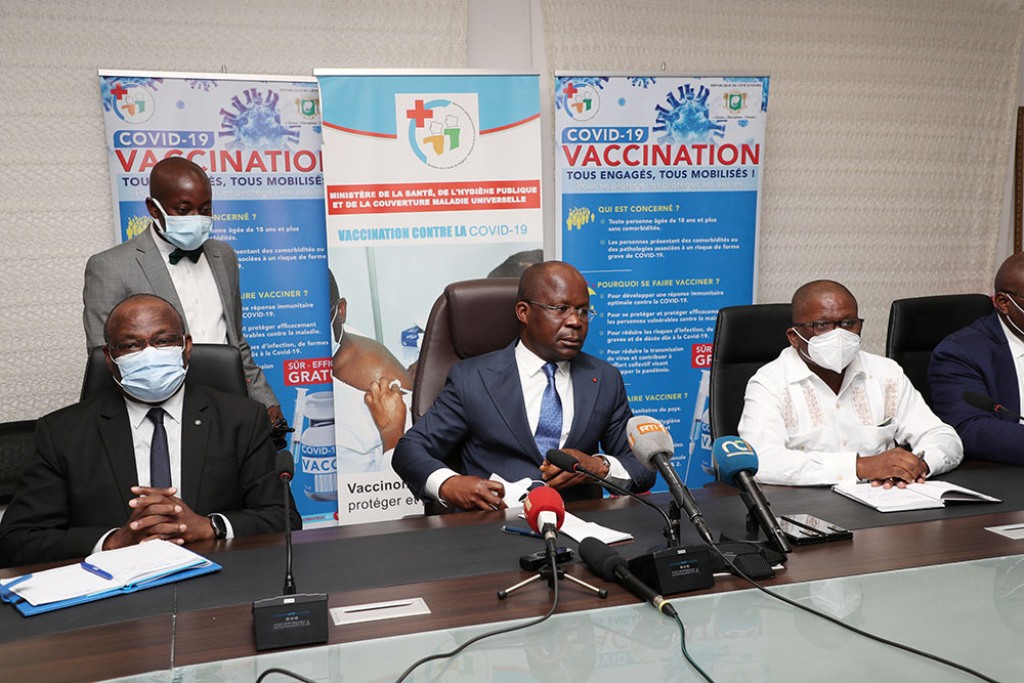
Abidjan, August 25, 2021 - Côte d'Ivoire has started the 42-day counting phase to be declared free from Ebola virus disease, the Minister of Health and Public Hygiene announced on August 24, 2021. and Universal Health Coverage, Pierre Dimba.

"After the patient's two negative biological tests, we are entering the 42-day countdown phase to be declared free from Ebola virus disease, if there are no new cases," said Pierre Dimba, during a press briefing.

Pierre Dimba however recommended that, during this period, the watch committees work with great rigor and consistency so that there is no diagnosis of new cases. He therefore called for everyone's collaboration to identify any alerts.

"Everyone at their own level must play their part. It is the quality of this monitoring strategy that will lead us at the end of the 42 days to declare the end of the epidemic", concluded Pierre Dimba.

The health authorities announced that the virologically cured patient is no longer in isolation. While contact cases are the subject of active research for effective management.


https://www.gouv.ci/_actualite-artic...ID=12532&d=1#p
 
New test finds no evidence of Ebola virus in Cote d’Ivoire case

31 August 2021

Brazzaville, 31 August 2021 – The government of Cote d’Ivoire has informed the World Health Organization (WHO) that a second laboratory has tested samples from a patient suspected of having Ebola and has found no evidence of the virus.

The tests by the Institut Pasteur in Lyon, France follow tests conducted by the Institut Pasteur of Cote d’Ivoire, which led health authorities to announce their first Ebola case since 1994. With the new results from the laboratory in Lyon WHO considers that the patient did not have Ebola virus disease and further analysis on the cause of her illness is ongoing.

The suspected case was a young woman who travelled from Guinea to Cote d’Ivoire. Since Cote d’Ivoire announced the case more than 140 contacts have been listed in the two countries. No-one else has shown symptoms for the disease or tested positive for Ebola.

Ebola is a severe, often fatal illness affecting humans and other primates. Case fatality rates have varied from 25% to 90% in past outbreaks. To prevent the spread of Ebola it is important to act urgently. Cote d’Ivoire health authorities alerted WHO of the case as required by the International Health Regulations 2005 and rapidly launched all key public health measures.

After Cote d’Ivoire announced the Ebola case, in line with the no-regrets policy followed by WHO, immediate actions were implemented in both Cote d’Ivoire and Guinea. Around a dozen WHO experts were mobilized to support the country’s efforts and 5000 Ebola vaccine doses which WHO had helped Guinea procure were sent from Guinea to Cote d’Ivoire. In addition, WHO released US$ 500 000 from its Contingency Fund for Emergencies to support the country initiate a quick response.

The no-regrets policy encourages adopting measures immediately before all the dimensions and consequences of an emergency or outbreak are known with the aim of saving as many lives as possible.

WHO is now downgrading its actions in Cote d’Ivoire from response to readiness mode.

In support of the government’s response efforts, WHO worked with other development and health partners.


https://www.afro.who.int/news/new-te...e-divoire-case
 
Translation Google

Ebola Fake from the Ivory Coast: "I admit that we were very annoyed ourselves" (Pierre Dimba)

by AFRIKSOIR.NET Fri 17 Sep. 2021 747

The Minister of Health, Public Hygiene and Health Coverage, Pierre Dimba, was in front of the senators, members of the Social and Cultural Affairs Commission, on Tuesday, September 14, 2021, to present the bill on the organization and functioning of the national order of doctors of Côte d'Ivoire.
...
The vote on the said bill was preceded by exchanges during which the No. 1 of the Ministry of Health was taken to pronounce on what constituted a failure in the case of the analysis of the case of 'Ebola which hit the headlines. “In fact we had a suspected case of Ebola hemorrhagic fever and we asked a local laboratory to do clinical analyzes; so the first results that came were borderline.

The lab did two more analyzes with the same ranges and there was some uncertainty. And according to WHO rules, we could not take risks to go and do more in-depth analyzes elsewhere without taking precautionary measures for the protection of the population. So according to the rules of the WHO, we had to act as if the disease was there, installed and we take precautions. After a second analysis, if this is not the case, we take the time to downgrade and return to normalcy. This is what has been done. "

"WE TAKEN EVERYBODY'S ATTACHMENT BEFORE MAKING THE DECLARATION ..."

Still providing explanations on this affair, Pierre Dimba will give important details which contributed to the declaration of the Ebola case in Côte d'Ivoire “I admit that we were very annoyed ourselves; when they asked us we had to take everyone's brace before making this statement. () In reality, when we do the analyzes there is a range, doctors and pharmacists know; after that it is the interpretation which one makes, if it is good or not. There is the experience or the knowledge of the patient which can make it possible to say good according to his lifestyle, his way of living, it cannot be such and such a disease. But when you come from a country where this epidemic has just lived, the decision was taken in the presence of representatives of the WHO who advised us, in this case,

Before closing on this question, he said this: “But what must be said is that we have been congratulated by the international institutions because generally what happens in our countries is that diseases dangerous like this are neglected and then afterwards it spreads in the population. In our case, we had the time very early on to identify all those who were involved. We did thorough reviews of them and it let us know that in fact our country's response system can really cope with an epidemic. So I would really like to stop on this point… ”

https://afriksoir.net/societe/ebola...uon-etait-bien-embete-nous-memes-pierre-dimba
 
Back
Top