
• FluTrackers.com Inc. does not provide medical advice. Information on this web site is collected from various internet resources, and the FluTrackers board of directors makes no warranty to the safety, efficacy, correctness or completeness of the information posted on this site by any author or poster. The information collated here is for instructional and/or discussion purposes only and is NOT intended to diagnose or treat any disease, illness, or other medical condition. Every individual reader or poster should seek advice from their personal physician/healthcare practitioner before considering or using any interventions that are discussed on this website. By continuing to access this website you agree to consult your personal physican before using any interventions posted on this website, and you agree to hold harmless FluTrackers.com Inc., the board of directors, the members, and all authors and posters for any effects from use of any medication, supplement, vitamin or other substance, device, intervention, etc. mentioned in posts on this website, or other internet venues referenced in posts on this website.
  • We are not asking for any donations. Do not donate to any entity who says they are raising funds for us.

Colorado Influenza 2018-19; 3 pediatric fatalities

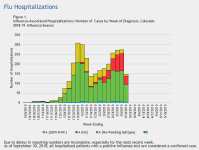
Summary for the Week Ending March 16, 2019


The geographic spread of influenza activity in the state of Colorado is at the widespread level.
148 additional influenza-associated hospitalizations were reported during the week ending March 16, 2019. The total number of hospitalizations since the beginning of the 2018-19 season is now 3,083.
The highest hospitalization rates are among 0-4 year olds and individuals 65 and older.
The predominating strain during the 2018-19 season has been influenza A, H1N1, but as of the week ending February 16, H3N2 viruses are predominating over H1N1. Influenza B viruses are also co-circulating.
Influenza-like illness patient visits reported by outpatient clinics decreased from 8.2% to 7.4%. This is above the baseline level of 5.05%. This includes data from Kaiser Permanente and Primary Care Partners clinics located in the North Central, Northeast, Northwest, South and South Central regions of the state.
Syndromic surveillance of influenza-like illness patient visits in emergency departments in the Denver-metro area decreased from 5.2% to 4.7%. This is above the seasonal baseline level of 1.78%.
Sentinel hospital labs (19 of 23 reporting) tested 2,535 specimens and 555 (21.9%) were positive for influenza.
There have been 56 outbreaks associated with influenza reported for the 2018-19 influenza season.
Mortality due to pneumonia and influenza in Colorado for the week ending March 2nd was at 4.9%. This is lower the national level of 7.2%.
Two pediatric death associated with influenza have been reported for the 2018-19 influenza season. Both cases were associated with influenza A, H1N1. This occurred during the week ending January 12, 2019 and the week ending February 16, 2019.
Colorado.png
...
https://docs.google.com/document/d/...cSEe7dq-B6OcAGsJ_JY2CrobdS2VVbcKUbnCNgb68/pub
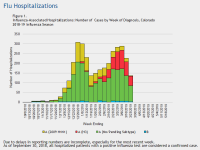
 
Summary for the Week Ending March 23, 2019


The geographic spread of influenza activity in the state of Colorado is at the regional level.
137 additional influenza-associated hospitalizations were reported during the week ending March 23, 2019. The total number of hospitalizations since the beginning of the 2018-19 season is now 3,330.
The highest hospitalization rates are among 0-4 year olds and individuals 65 and older.
The predominating strain during the 2018-19 season has been influenza A, H1N1, but as of the week ending February 16, H3N2 viruses are predominating over H1N1. Influenza B viruses are also co-circulating.
Influenza-like illness patient visits reported by outpatient clinics decreased from 7.4% to 5.8%. This is above the baseline level of 5.05%. This includes data from Kaiser Permanente and Primary Care Partners clinics located in the North Central, Northeast, Northwest, South and South Central regions of the state.
Syndromic surveillance of influenza-like illness patient visits in emergency departments in the Denver-metro area decreased from 4.7% to 3.4%. This is above the seasonal baseline level of 1.78%.
Sentinel hospital labs (21 of 23 reporting) tested 2,356 specimens and 385 (16.3%) were positive for influenza.
There have been 68 outbreaks associated with influenza reported for the 2018-19 influenza season.
Mortality due to pneumonia and influenza in Colorado for the week ending March 9th was at 5.8%. This is lower the national level of 7.1%.
Three pediatric death associated with influenza have been reported for the 2018-19 influenza season. Two cases were associated with influenza A, H1N1; and one case was associated with influenza A, H3N2. This occurred during the weeks ending January 12, 2019, February 16, 2019, and March 16, 2019.
Colorado.png
...
https://docs.google.com/document/d/...cSEe7dq-B6OcAGsJ_JY2CrobdS2VVbcKUbnCNgb68/pub
3rd child flu death reported in Colorado this season
Posted: 4:20 PM, Mar 26, 2019 Updated: 56 minutes ago
By: Robert Garrison

DENVER ? State health officials reported Tuesday that another Colorado child has died from influenza, making this the third pediatric flu death in Colorado during the 2018-2019 season.

The school-aged child was from the Denver-metro area and died the week ending March 16, according to a report from the Colorado Department of Public Health and Environment.

The report states that the third case was associated with influenza A, H3N2. The two previous pediatric cases in Colorado were associated with influenza A, H1N1 ? the predominating strain this season.
...

https://www.thedenverchannel.com/ne...ld-flu-death-reported-in-colorado-this-season
 
Summary for the Week Ending March 30, 2019


The geographic spread of influenza activity in the state of Colorado is at the regional level.
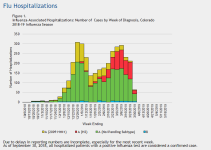
64 additional influenza-associated hospitalizations were reported during the week ending March 30, 2019. The total number of hospitalizations since the beginning of the 2018-19 season is now 3,480.
The highest hospitalization rates are among 0-4 year olds and individuals 65 and older.
The predominating strain during the 2018-19 season has been influenza A, H1N1, but as of the week ending February 16, H3N2 viruses are predominating over H1N1. Influenza B viruses are also co-circulating.
Influenza vaccine effectiveness is generally lower against influenza A, H3N2 viruses than against A, H1N1 or B viruses.
One genetic clade of A, H3N2 viruses, the 3C.3a clade, has recently become predominant among circulating A, H3N2 viruses. This virus is circulating in Colorado.
According to laboratory testing, these viruses are antigenically distinct from the A, H3N2 virus included in this season?s vaccine.
CDC recommends antiviral medications for treatment of influenza, regardless of a patient?s influenza vaccination status
Early empiric treatment with influenza antiviral medications is recommended for hospitalized and high-risk patients, especially those 65 years and older. Antiviral treatment should be started as soon as possible after illness onset and should not wait for laboratory confirmation.
More information about antiviral guidance can be found at https://www.cdc.gov/flu/professionals/antivirals/summary-clinicians.htm
Influenza-like illness patient visits reported by outpatient clinics decreased from 5.8% to 4.6%. This is below the baseline level of 5.05%. This includes data from Kaiser Permanente and Primary Care Partners clinics located in the North Central, Northeast, Northwest, South and South Central regions of the state.
Syndromic surveillance of influenza-like illness patient visits in emergency departments in the Denver-metro area decreased from 3.4% to 2.3%. This is above the seasonal baseline level of 1.78%.
Sentinel hospital labs (20 of 23 reporting) tested 1,860 specimens and 225 (12.1%) were positive for influenza.
There have been 72 outbreaks associated with influenza reported for the 2018-19 influenza season.
Mortality due to pneumonia and influenza in Colorado for the week ending March 16th was at 6.4%. This is lower the national level of 7.4%.
Three pediatric death associated with influenza have been reported for the 2018-19 influenza season. Two cases were associated with influenza A, H1N1; and one case was associated with influenza A, H3N2. This occurred during the weeks ending January 12, 2019, February 16, 2019, and March 16, 2019.
...
Colorado.png
...
https://docs.google.com/document/d/...cSEe7dq-B6OcAGsJ_JY2CrobdS2VVbcKUbnCNgb68/pub
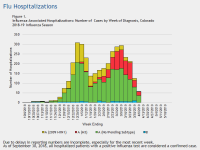
 
Summary for the Week Ending April 6, 2019


The geographic spread of influenza activity in the state of Colorado is at the regional level.
57 additional influenza-associated hospitalizations were reported during the week ending April 6, 2019. The total number of hospitalizations since the beginning of the 2018-19 season is now 3,608.
The highest hospitalization rates are among 0-4 year olds and individuals 65 and older.
The predominating strain during the 2018-19 season has been influenza A, H1N1, but as of the week ending February 16, H3N2 viruses are predominating over H1N1. Influenza B viruses are also co-circulating.
Influenza vaccine effectiveness is generally lower against influenza A, H3N2 viruses than against A, H1N1 or B viruses.
One genetic clade of A, H3N2 viruses, the 3C.3a clade, has recently become predominant among circulating A, H3N2 viruses. This virus is circulating in Colorado.
According to laboratory testing, these viruses are antigenically distinct from the A, H3N2 virus included in this season?s vaccine.
CDC recommends antiviral medications for treatment of influenza, regardless of a patient?s influenza vaccination status
Early empiric treatment with influenza antiviral medications is recommended for hospitalized and high-risk patients, especially those 65 years and older. Antiviral treatment should be started as soon as possible after illness onset and should not wait for laboratory confirmation.
More information about antiviral guidance can be found at https://www.cdc.gov/flu/professionals/antivirals/summary-clinicians.htm
Influenza-like illness patient visits reported by outpatient clinics decreased from 4.6% to 4.4%. This is below the baseline level of 5.05%. This includes data from Kaiser Permanente and Primary Care Partners clinics located in the North Central, Northeast, Northwest, South and South Central regions of the state.
Syndromic surveillance of influenza-like illness patient visits in emergency departments in the Denver-metro area decreased from 2.3% to 2.0%. This is above the seasonal baseline level of 1.78%.
Sentinel hospital labs (20 of 23 reporting) tested 1,413 specimens and 121 (8.6%) were positive for influenza.
There have been 78 outbreaks associated with influenza reported for the 2018-19 influenza season.
Mortality due to pneumonia and influenza in Colorado for the week ending March 23rd was at 6.1%. This is lower the national level of 7.2%.
Three pediatric death associated with influenza have been reported for the 2018-19 influenza season. Two cases were associated with influenza A, H1N1; and one case was associated with influenza A, H3N2. This occurred during the weeks ending January 12, 2019, February 16, 2019, and March 16, 2019.
...
Colorado.png
...
https://docs.google.com/document/d/...cSEe7dq-B6OcAGsJ_JY2CrobdS2VVbcKUbnCNgb68/pub
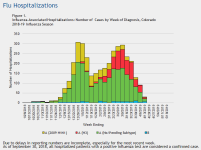
 
Summary for the Week Ending April 13, 2019


The geographic spread of influenza activity in the state of Colorado is at the local level.
30 additional influenza-associated hospitalizations were reported during the week ending April 13, 2019. The total number of hospitalizations since the beginning of the 2018-19 season is now 3,677.
The highest hospitalization rates are among 0-4 year olds and individuals 65 and older.
The predominating strain during the 2018-19 season has been influenza A, H1N1, but as of the week ending February 16, H3N2 viruses are predominating over H1N1. Influenza B viruses are also co-circulating.
Influenza vaccine effectiveness is generally lower against influenza A, H3N2 viruses than against A, H1N1 or B viruses.
One genetic clade of A, H3N2 viruses, the 3C.3a clade, has recently become predominant among circulating A, H3N2 viruses. This virus is circulating in Colorado.
According to laboratory testing, these viruses are antigenically distinct from the A, H3N2 virus included in this season?s vaccine.
CDC recommends antiviral medications for treatment of influenza, regardless of a patient?s influenza vaccination status
Early empiric treatment with influenza antiviral medications is recommended for hospitalized and high-risk patients, especially those 65 years and older. Antiviral treatment should be started as soon as possible after illness onset and should not wait for laboratory confirmation.
More information about antiviral guidance can be found at https://www.cdc.gov/flu/professionals/antivirals/summary-clinicians.htm
Influenza-like illness patient visits reported by outpatient clinics decreased from 4.4% to 4.2%. This is below the baseline level of 5.05%. This includes data from Kaiser Permanente and Primary Care Partners clinics located in the North Central, Northeast, Northwest, South and South Central regions of the state.
Syndromic surveillance of influenza-like illness patient visits in emergency departments in the Denver-metro area decreased from 2.0% to 1.6%. This is below the seasonal baseline level of 1.78%.
Sentinel hospital labs (20 of 23 reporting) tested 1,215 specimens and 60 (4.9%) were positive for influenza.
There have been 79 outbreaks associated with influenza reported for the 2018-19 influenza season.
Mortality due to pneumonia and influenza in Colorado for the week ending March 30th was at 6.3%. This is lower the national level of 7.0%.
Three pediatric death associated with influenza have been reported for the 2018-19 influenza season. Two cases were associated with influenza A, H1N1; and one case was associated with influenza A, H3N2. This occurred during the weeks ending January 12, 2019, February 16, 2019, and March 16, 2019.

Colorado.png
...
https://docs.google.com/document/d/...cSEe7dq-B6OcAGsJ_JY2CrobdS2VVbcKUbnCNgb68/pub
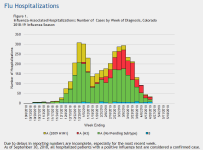
 
Summary for the Week Ending April 20, 2019


The geographic spread of influenza activity in the state of Colorado is at the local level.
34 additional influenza-associated hospitalizations were reported during the week ending April 20, 2019. The total number of hospitalizations since the beginning of the 2018-19 season is now 3,732.
The highest hospitalization rates are among 0-4 year olds and individuals 65 and older.
The predominating strain during the 2018-19 season has been influenza A, H1N1, but as of the week ending February 16, H3N2 viruses are predominating over H1N1. Influenza B viruses are also co-circulating.
Influenza vaccine effectiveness is generally lower against influenza A, H3N2 viruses than against A, H1N1 or B viruses.
One genetic clade of A, H3N2 viruses, the 3C.3a clade, has recently become predominant among circulating A, H3N2 viruses. This virus is circulating in Colorado.
According to laboratory testing, these viruses are antigenically distinct from the A, H3N2 virus included in this season?s vaccine.
CDC recommends antiviral medications for treatment of influenza, regardless of a patient?s influenza vaccination status
Early empiric treatment with influenza antiviral medications is recommended for hospitalized and high-risk patients, especially those 65 years and older. Antiviral treatment should be started as soon as possible after illness onset and should not wait for laboratory confirmation.
More information about antiviral guidance can be found at https://www.cdc.gov/flu/professionals/antivirals/summary-clinicians.htm
Influenza-like illness patient visits reported by outpatient clinics decreased from 4.2 to 3.8%. This is below the baseline level of 5.05%. This includes data from Kaiser Permanente and Primary Care Partners clinics located in the North Central, Northeast, Northwest, South and South Central regions of the state.
Syndromic surveillance of influenza-like illness patient visits in emergency departments in the Denver-metro area decreased from 1.6% to 1.5%. This is below the seasonal baseline level of 1.78%.
Sentinel hospital labs (18 of 23 reporting) tested 992 specimens and 55 (5.5%) were positive for influenza.
There have been 80 outbreaks associated with influenza reported for the 2018-19 influenza season.
Mortality due to pneumonia and influenza in Colorado for the week ending April 6th was at 5.3%. This is lower the national level of 6.6%.
Three pediatric deaths associated with influenza have been reported for the 2018-19 influenza season. Two cases were associated with influenza A, H1N1; and one case was associated with influenza A, H3N2. This occurred during the weeks ending January 12, 2019, February 16, 2019, and March 16, 2019.

Colorado.png
...
https://docs.google.com/document/d/...cSEe7dq-B6OcAGsJ_JY2CrobdS2VVbcKUbnCNgb68/pub
 
Back
Top