
www.cidrap.umn.edu/influenza-general/us-flu-activity-declines-3rd-straight-week-remains-elevated
US flu activity declines for 3rd straight week but remains elevated
Laine Bergeson
46 minutes ago.
Influenza, General
Influenza Variants
Respiratory Syncytial Virus (RSV)
COVID-19
The CDC’s FluView report for the week ending January 17 (week 2) shows that several flu indicators are declining. Data from clinical laboratories across the country show the percentage of positive flu tests at 17.7%, which is down from 18.6% the previous week, while data from the National Center for Health Statistics show the percentage of flu-related deaths fell from 2.1% to 1.8%.
The number of US jurisdictions reporting high or very high flu activity fell from 36 the previous week to 31, and the number of flu-related child deaths dropped from 15 to 12, bringing the total number of flu-related pediatric deaths this year to 44.
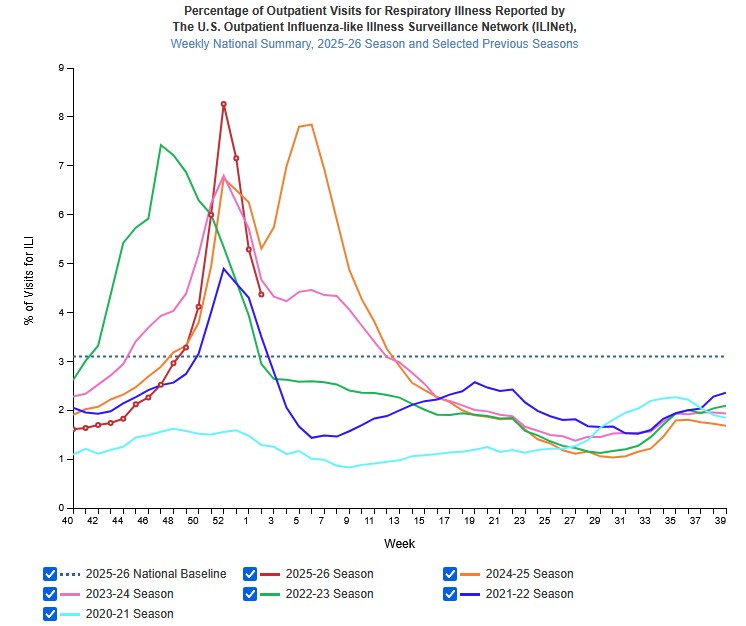
Data from the US Outpatient Influenza-like Illness Surveillance Network reveal that 4.4% of patient visits in week 2 were for respiratory symptoms that included fever, cough, or sore throat. That number is down slightly from the previous week (5.3%) but remained above the national baseline for the seventh week in a row (see CDC graph below).
Some areas across the country, including the Midwest and central and West Coast regions, are reporting stable or increasing flu activity after declines over the previous two weeks.
The 2025-26 flu season has been dominated by influenza A(H3N2) viruses, more than 90% of which belong to subclade K, a variant with mutations that have allowed it to evade immunity conferred by the current flu vaccine.
The CDC estimates at least 19,000,000 illnesses, 250,000 hospitalizations, and 10,000 deaths have been due to flu this season.
COVID, RSV activity low to moderate
As of today (January 23, 2026), the overall amount of respiratory illness causing people to seek health care is at a low level nationally, according to the CDC’s weekly respiratory virus update.
At the same time, RSV activity is moderate and decreasing, but it is elevated in some parts of the country, including emergency department visits among children age 4 years and younger and hospitalizations among infants younger than 12 months.
The CDC also reports that COVID activity is elevated in some regions but is low and decreasing nationwide.
US flu activity declines for 3rd straight week but remains elevated
Laine Bergeson
46 minutes ago.
Influenza, General
Influenza Variants
Respiratory Syncytial Virus (RSV)
COVID-19
While seasonal flu activity in the United States has decreased for three consecutive weeks and hospitalizations among school-aged children are stable, flu activity remains elevated nationally and influenza-related emergency department visits for school-aged children are increasing, according to the most recent update today from the Centers for Disease Control and Prevention (CDC).The CDC’s FluView report for the week ending January 17 (week 2) shows that several flu indicators are declining. Data from clinical laboratories across the country show the percentage of positive flu tests at 17.7%, which is down from 18.6% the previous week, while data from the National Center for Health Statistics show the percentage of flu-related deaths fell from 2.1% to 1.8%.
The number of US jurisdictions reporting high or very high flu activity fell from 36 the previous week to 31, and the number of flu-related child deaths dropped from 15 to 12, bringing the total number of flu-related pediatric deaths this year to 44.
Data from the US Outpatient Influenza-like Illness Surveillance Network reveal that 4.4% of patient visits in week 2 were for respiratory symptoms that included fever, cough, or sore throat. That number is down slightly from the previous week (5.3%) but remained above the national baseline for the seventh week in a row (see CDC graph below).
Some areas across the country, including the Midwest and central and West Coast regions, are reporting stable or increasing flu activity after declines over the previous two weeks.
The 2025-26 flu season has been dominated by influenza A(H3N2) viruses, more than 90% of which belong to subclade K, a variant with mutations that have allowed it to evade immunity conferred by the current flu vaccine.
The CDC estimates at least 19,000,000 illnesses, 250,000 hospitalizations, and 10,000 deaths have been due to flu this season.
COVID, RSV activity low to moderate
As of today (January 23, 2026), the overall amount of respiratory illness causing people to seek health care is at a low level nationally, according to the CDC’s weekly respiratory virus update.
At the same time, RSV activity is moderate and decreasing, but it is elevated in some parts of the country, including emergency department visits among children age 4 years and younger and hospitalizations among infants younger than 12 months.
The CDC also reports that COVID activity is elevated in some regions but is low and decreasing nationwide.