Shiloh
Editor, Senior Moderator
Source: http://www.cidrap.umn.edu/cidrap/content/influenza/swineflu/news/jun2509tamiflu-brjw.html
CDC updates advice on antiviral treatment for flu
Lisa Schnirring * Staff Writer
Jun 25, 2009 (CIDRAP News) ? The US Centers for Disease Control and Prevention (CDC) today at the Advisory Committee on Immunization Practices meeting in Atlanta issued updated guidelines for treatment of influenza, including novel H1N1, suggesting basing antiviral selection on laboratory test results when possible.
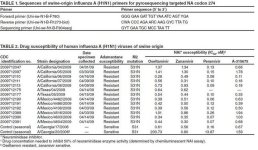
The new guidance appears to be aimed at preventing the inadvertent prescription of oseltamivir (Tamiflu) for seasonal H1N1 infections, which have shown extensive resistance to oseltamivir in the United States and other parts of the world. The update was provided by CDC spokesman Tom Skinner.
According to the CDC update, only patients who test positive for influenza A/H3N2, pandemic H1N1, or B should receive oseltamivir. Zanamivir (Relenza) is preferred for patients who test positive for seasonal H1N1 influenza.
If a laboratory test is not performed or the test is negative but clinical suspicion remains, the preferred treatment is zanamivir or a combination of oseltamivir and rimantadine, which is an older drug of the adamantine class of antivirals. If testing indicates influenza A or unspecified influenza, the preferred treatment is also zanamivir or a combination of oseltamivir and rimantadine.
As with its earlier recommendation for novel H1N1 treatment, the CDC emphasized in today's updated guidance that treatment should be started as soon as possible after illness onset.
The CDC added a few more specifics to the list of people for whom antiviral treatment should be considered to include those who are hospitalized with influenza, have influenza with viral or bacterial pneumonia, or have influenza with a higher risk for complications, regardless or illness severity.
Seasonal flu strains, which typically wane this time of year, account for only a small fraction of currently circulating strains, the CDC said on Jun 19 in its surveillance update for the week ending Jun 13. More than 98% of subtyped influenza A viruses reported to the CDC were pandemic H1N1 strains. Seasonal H1N1 and H3N2 each accounted for only 0.8% of the viruses.
Last December the CDC changed its guidance about flu treatment after noting increased resistance to oseltamivir, the leading influenza drug. The new guidance added adamantanes back into the recommendations, suggesting zanamivir or oseltamivir plus rimantadine for patients suspected of having seasonal influenza A infections.
See also:
May 6 CDC interim antiviral recommendations for patients with novel H1N1 infections and their contacts
Dec 19, 2008, CIDRAP News story "With H1N1 resistance, CDC changes advice on flu drugs"
CDC weekly influenza update
CDC updates advice on antiviral treatment for flu
Lisa Schnirring * Staff Writer
Jun 25, 2009 (CIDRAP News) ? The US Centers for Disease Control and Prevention (CDC) today at the Advisory Committee on Immunization Practices meeting in Atlanta issued updated guidelines for treatment of influenza, including novel H1N1, suggesting basing antiviral selection on laboratory test results when possible.
The new guidance appears to be aimed at preventing the inadvertent prescription of oseltamivir (Tamiflu) for seasonal H1N1 infections, which have shown extensive resistance to oseltamivir in the United States and other parts of the world. The update was provided by CDC spokesman Tom Skinner.
According to the CDC update, only patients who test positive for influenza A/H3N2, pandemic H1N1, or B should receive oseltamivir. Zanamivir (Relenza) is preferred for patients who test positive for seasonal H1N1 influenza.
If a laboratory test is not performed or the test is negative but clinical suspicion remains, the preferred treatment is zanamivir or a combination of oseltamivir and rimantadine, which is an older drug of the adamantine class of antivirals. If testing indicates influenza A or unspecified influenza, the preferred treatment is also zanamivir or a combination of oseltamivir and rimantadine.
As with its earlier recommendation for novel H1N1 treatment, the CDC emphasized in today's updated guidance that treatment should be started as soon as possible after illness onset.
The CDC added a few more specifics to the list of people for whom antiviral treatment should be considered to include those who are hospitalized with influenza, have influenza with viral or bacterial pneumonia, or have influenza with a higher risk for complications, regardless or illness severity.
Seasonal flu strains, which typically wane this time of year, account for only a small fraction of currently circulating strains, the CDC said on Jun 19 in its surveillance update for the week ending Jun 13. More than 98% of subtyped influenza A viruses reported to the CDC were pandemic H1N1 strains. Seasonal H1N1 and H3N2 each accounted for only 0.8% of the viruses.
Last December the CDC changed its guidance about flu treatment after noting increased resistance to oseltamivir, the leading influenza drug. The new guidance added adamantanes back into the recommendations, suggesting zanamivir or oseltamivir plus rimantadine for patients suspected of having seasonal influenza A infections.
See also:
May 6 CDC interim antiviral recommendations for patients with novel H1N1 infections and their contacts
Dec 19, 2008, CIDRAP News story "With H1N1 resistance, CDC changes advice on flu drugs"
CDC weekly influenza update