Giuseppe
Emeritus
[Source: Ifeng, full page in Chinese: (LINK). Automatic translation.]
China, NHFPC H7N9 information and guidelines, 2014
At 22:45 on January 26, 2014 / Source: International Online
International online news: According to the National Health and Family Planning Commission website news, to further improve the human infection of H7N9 avian influenza medical treatment, better guidance to various medical institutions at all levels to carry out human infection with H7N9 avian flu clinics standardization work, National Health and Family Planning Commission formulated the "human infection with H7N9 avian flu (2014 edition)." Reads as follows:
Original title: National Health and Family Planning Commission announced people infected with H7N9 avian flu
People infected with H7N9 avian flu (2014 edition)
-
------
China, NHFPC H7N9 information and guidelines, 2014
At 22:45 on January 26, 2014 / Source: International Online
International online news: According to the National Health and Family Planning Commission website news, to further improve the human infection of H7N9 avian influenza medical treatment, better guidance to various medical institutions at all levels to carry out human infection with H7N9 avian flu clinics standardization work, National Health and Family Planning Commission formulated the "human infection with H7N9 avian flu (2014 edition)." Reads as follows:
Original title: National Health and Family Planning Commission announced people infected with H7N9 avian flu
People infected with H7N9 avian flu (2014 edition)
- People infected with H7N9 avian influenza is caused by the H7N9 avian influenza virus, acute respiratory infections, which often can be combined cases of severe pneumonia with acute respiratory distress syndrome, septic shock, multiple organ failure and even.
- Early discovery, early reporting, early diagnosis, early treatment, strengthening treatment of severe cases, attention both Chinese and Western medicine is an effective prevention and control, improve the cure rate, the key to reducing mortality.
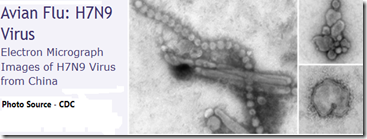
- Avian influenza virus, Orthomyxoviridae Influenza A virus genus. Influenza virus particles were pleomorphic, including spherical diameter 80 ~ 120nm, with envelope. Genome is segmented negative-strand single-stranded RNA.
- Outer membrane based hemagglutinin (H) and neuraminidase (N) protein antigen type are currently divided into 16 H subtypes (H1 ~ H16) and 9 N subtypes (N1 ~ N9).
- In addition to poultry infected with avian influenza viruses, can also infect humans, pigs, horses, mink and marine mammals.
- Can infect human avian influenza virus subtypes H5N1, H9N2, H7N7, H7N2, H7N3, etc., this is H7N9 avian influenza virus.
- The virus is a novel reassortant virus, a gene encoding HA from H7N3, NA is derived from the gene encoding H7N9, the 6 internal genes from H9N2 avian influenza virus.
- Avian influenza viruses in general are sensitive to heat, low temperature resistant to heat 65 ℃ 30 minutes or boiling (100 ℃) 2 minutes inactivated. The virus can survive at a lower temperature for 1 week at 4 ℃ for the presence of water or in case of glycerol remains active over 1 year.
- (A) the source of infection.
- Now its secretions or excreta in poultry and live bird markets in environmental samples to detect and separate the H7N9 avian influenza virus, and people infected with H7N9 avian influenza virus is highly homologous.
- Source of infection may carry H7N9 avian influenza virus in poultry.
- Currently, the majority of sporadic cases, the incidence of individual family aggregation phenomenon, but there is no evidence of sustained human-to-human transmission between the.
- (B) transmission.
- Specific ways to spread through the respiratory tract or close contact with infected poultry infected secretions or excretions obtained;
- or spread to humans exposed to the virus through environmental contamination;
- does not exclude limited non-sustained person to person.
- (C) high-risk groups.
- 1 week before the onset of contact with birds or those who have been to live poultry markets, especially the elderly.
- H7N9 bird flu virus can be combined with sialic acid α-2, 3 receptor (avian influenza virus receptors) and sialic acid α-2, 6 receptor (human influenza virus receptors), more than the H5N1 avian influenza virus and the human respiratory epithelial cells (sialic acid α-2, 6 receptors mainly) binding relative to the seasonal influenza virus infection more easily the human respiratory epithelial cells (sialic acid α-2, 3 receptor-based) .
- H7N9 avian influenza virus after infection the human body, can induce cytokine storm, leading to systemic inflammation, may appear ARDS, shock and multiple organ failure. Severe respiratory viruses in individual cases to sustainable positive over the course of three weeks.
- According to the incubation period of influenza and human infection with H7N9 avian influenza existing case findings, the incubation period is generally 3 to 4 days.
- (A) symptoms, signs and clinical characteristics.
- Patients generally showed flu-like symptoms such as fever, cough, sputum less, may be associated with headache, muscle aches, diarrhea and other symptoms.
- The rapid development of the disease in patients with severe, mostly in 3 to 7 days of onset of severe pneumonia occurred, mostly sustained temperature above 39 ℃, difficulty in breathing, may be associated with hemoptysis sputum.
- Often rapidly progress to acute respiratory distress syndrome, sepsis, septic shock, multiple organ dysfunction and even, in some patients, there may be other symptoms of pleural effusion.
- (B) laboratory tests.
- 1 blood.
- WBC is generally not high or lower. Many patients with severe leukocytes and lymphocytes decreased, may have thrombocytopenia.
- 2 blood biochemistry.
- More than a creatine kinase, lactate dehydrogenase, aspartate aminotransferase, alanine aminotransferase, C reactive protein, myoglobin can be increased.
- 3. Etiology and related testing.
- Must collect respiratory specimens sent (eg nasopharyngeal secretions, mouth gargle, respiratory secretions, tracheal aspirate) before antiviral therapy, deep endotracheal sputum or tracheal aspirate positive rate detected in the upper respiratory tract specimens.
- There pathogen detection conditions of medical institutions to detect as soon as possible, no pathogen detection conditions specimens were sent to medical institutions should be designated agencies to detect as soon as possible.
- 1 blood.
- (A) a nucleic acid is detected.
- Patients with suspected respiratory specimens using real-time PCR (or ordinary RT-PCR) to detect H7N9 avian influenza virus nucleic acid in the human H7N9 avian influenza virus infection early identification of nucleic acid detection should be preferred.
- Severe cases should be conducted regularly in respiratory secretions nucleic acid detection until overcast. Artificial airway preferred collection airway aspirate (ETA).
- (2) influenza virus antigen detection.
- Respiratory specimens for rapid detection of influenza virus antigen positive. No nucleic acid testing applies only to the conditions of medical institutions as screening experiments.
- (3) virus isolation. H7N9 avian influenza virus isolated from the patient's respiratory specimens.
- Paired serum H7N9 avian influenza virus-specific antibody levels (4) dynamic detection of acute and convalescent was increased 4-fold or more.
- (C) chest radiograph.
- Pneumonia in patients with pulmonary appears patchy shadows.
- Patients with severe disease progresses rapidly, often multiple lung and pulmonary consolidation shadow image of glass grinding, can be combined with a small amount of pleural effusion.
- The event of ARDS, widespread distribution of lesions.
- (D) the prognosis.
- People infected with H7N9 avian influenza in critically ill patients with poor prognosis.
- Prognostic factors may include patient age, underlying diseases and complications.
- (A) diagnosis.
- According to epidemiological contact history, clinical and laboratory findings, the diagnosis of human infection with H7N9 avian influenza is made.
- In the case of epidemiological history is unknown, according to the clinical manifestations, laboratory examinations and laboratory test results, especially in patients with respiratory secretions isolated from specimens of H7N9 avian influenza virus, or H7N9 avian influenza virus nucleic acid testing positive, or motion detection paired serum H7N9 avian influenza virus-specific antibody levels were elevated 4-fold or more, diagnosis of human infection with H7N9 avian influenza may be made.
- 1. Epidemiological history.
- 1 week before the onset of contact with poultry and their secretions, excretions or been to live poultry markets, or with people infected with H7N9 avian influenza has an epidemiological link.
- 2 diagnostic criteria.
- (1) suspected cases:
- compliance with the clinical manifestations, influenza virus antigen positive, or epidemiological history.
- (1) suspected cases:
- (2) confirmed cases:
- compliance with the clinical manifestations, epidemiology or history of exposure, and respiratory secretions were isolated H7N9 avian influenza virus H7N9 avian influenza virus, or nucleic acid testing or dynamic testing positive paired serum H7N9 avian influenza virus-specific antibody levels were elevated 4-fold or more.
- (3) severe cases:
- Any one of the following criteria, namely diagnosed as severe cases:
- 1.X-ray showed multiple lobe lesions within 48 hours or disease progression> 50%;
- 2 dyspnea, respiratory rate> 24 beats / min;
- 3 severe hypoxemia, oxygen flow at 3 to 5 liters / min Condition patient SpO2 ≤ 92%;
- 4 shock, ARDS or MODS (multiple organ dysfunction syndrome).
- Prone to develop severe risk factors include: 1 Age> 60 years;
- 2 patients with severe underlying diseases or special clinical situations, such as heart or lung disease foundation, hypertension, diabetes, obesity, cancer, immunosuppression, pregnant women;
- (3) after the onset of sustained fever (T> 39 ℃) over three days and three days;
- 4 lymphocyte counts continue to decrease;
- 5.CRP, LDH and CK continued to increase;
- 6 Tips chest radiographic pneumonia.
- Patients with more than one in any case, it may progress to severe cases or deaths occurred, should be highly valued.
- Any one of the following criteria, namely diagnosed as severe cases:
- (B) the differential diagnosis.
- Should be noted that people infected with the highly pathogenic H5N1 avian influenza and other avian influenza, seasonal influenza (including H1N1 influenza), bacterial pneumonia, severe acute respiratory syndrome (SARS), the Middle East respiratory syndrome (MERS), glandular disease virus pneumonia, Chlamydia pneumoniae, Mycoplasma pneumonia differential diagnosis. Differential diagnosis mainly depends on pathologic examination.
- (A) treated in isolation.
- Suspected cases and confirmed cases should be treated in isolation as soon as possible.
- (B) symptomatic treatment.
- Available oxygen, nasal cannula can be used according to the degree of hypoxia, open face mask masks and oxygen storage oxygen.
- Fever may be physical cooling, or application antipyretic drugs.
- Severe cough and sputum may be given compound liquorice tablets, ambroxol, acetylcysteine, codeine cough expectorant drugs.
- (C) the anti-viral therapy.
- Application as soon as possible anti-influenza virus drugs.
- 1 antiviral guidelines.
- (1) Before using specimens from respiratory specimens should antivirals.
- (2) antiviral drugs should be used within 48 hours of onset.
- Focus on the use of the following groups:
- ① cases of human infection with H7N9 avian influenza;
- ② 甲型 流感 病毒 抗原 快速 检测 阳性 的 流感 样 病例;
- ③ rapid detection of influenza virus antigen negative or unconditional detection ILI, with the following circumstances, should the use of antiviral drugs:
- A. With suspected or confirmed cases have a history of close contact (including health care) flu-like symptoms;
- B. Clusters of influenza-like illness;
- C.1 weeks ILI contact with poultry;
- D. With chronic heart and lung disease, old age, pregnancy, etc. ILI;
- E. Rapid progress in the clinical condition and considers it necessary to use antivirals ILI;
- F. Other unexplained pneumonia cases.
- (3) considered necessary for the clinical use of antiviral drugs cases, even if the incidence of more than 48 hours should be used.
- Focus on the use of the following groups:
- 2 neuraminidase inhibitors:
- (1) oseltamivir (Oseltamivir):
- adult dose of 75mg twice daily, 5 to 7 days of treatment, the dose may be doubled in severe cases, treatment may be extended more than doubled.
- 1 year of age and older pediatric patients should be administered according to body weight: 15Kg underweight who I 30mg twice daily; weighing 15 ~ 23Kg who I 45mg twice daily; weighing less than 23 ~ 40Kg who I 60mg daily 2; weighing more than 40Kg who I 75mg twice daily. For children have difficulty swallowing capsules, the choice of oseltamivir suspension.
- (2) peramivir (Peramivir):
- severe cases or those unable to take oral peramivir available Sodium Chloride Injection, adult dosage is 300 ~ 600mg, intravenous infusion, 1 day, 1 to 5 days, severe cases treatment may be extended. Current clinical application of limited data, should be closely observed adverse reactions.
- (3) zanamivir (Zanamivir):
- Adults and adolescents over the age of 7 Usage: 2 times a day, 12 hours apart; each 10mg (twice inhalation).
- (1) oseltamivir (Oseltamivir):
- 3 M2 ion channel blockers:
- current monitoring data show that all H7N9 avian influenza virus to amantadine (Amantadine) and rimantadine (Rimantadine) drug is not recommended.
- 1 antiviral guidelines.
- Application as soon as possible anti-influenza virus drugs.
- (D) TCM diagnosis and treatment.
- 1 Immunotoxin Fanfei, lung failure declared down syndrome (suspected or confirmed cases of the mild cases).
- Symptoms: fever, cough, sputum less, headache, muscle and joint pain. Red tongue, thin, slippery pulse. Red tongue, thin, slippery pulse.
- Governing Law: detoxification, Xuanfei cough.
- Reference prescription and dosage: Yin Qiao San BHT.
- Honeysuckle 30g, forsythia 15g, fried almonds 15g, 30g Gypsum
- Anemarrhena 10g, mulberry 15g, reed rhizome 30g, 15g Artemisia annua
- Scutellaria 15g, licorice 6g
- Decoction, 1 or 2, every 4 to 6 hours orally once.
- Modified: cough worse plus leaves, Fritillaria.
- Chinese medicine: choose Shufeng detoxification capsules Lianhuaqingwen capsules, effervescent tablets and other drugs Jinlianqingre with detoxification, Xuanfei cough efficacy.
- Chinese medicine injection: Tanreqing, Xiyanping injection, injection Reduning Xuebijing injection, Shen Mai Injection.
- 2 Immunotoxin obstruct the lung, outside the closed off the card (the clinical manifestations of high fever, acute respiratory distress syndrome, septic shock patients).
- Symptoms: fever, cough, sputum slightly less difficult, suffocation, breathlessness, hemoptysis, or see slightly spit pink frothy sputum, with four end not warm extremities Jueni, manic scrambling anxiety, and even then coma and delirium. Dark red tongue, pulse breakdown or pulse micro-stricken.
- Governing Law: detoxification Xiefei, Qi solid off.
- Reference prescription and dosage: Xuanbai Cheng Qi Tang with the Senate dogwood soup.
- Rhubarb 10g, Trichosanthes 30g, fried almonds 10g, 30g fried Tinglizi
- Gypsum 30g, raw Gardenia 10g, knotweed 15g, 15g Radish
- Cornus 15g, 15g ginseng
- Decoction, 1 or 2, every 4 to 6 hours of oral or nasal once.
- Modified:
- Fever, trance, and even coma and delirium who Angongniuhuang top delivery service;
- Cold extremities, sweating profusely plus guns aconite, calcined keel, calcined oyster;
- Chinese medicine: choose injection, Shenfu, Tanreqing, blood will intravenous injection, Xiyanping injection, Reduning injection.
- 3. Above decoction, medicine and preventive medicine injections are not as used to be the early use of combination therapy.
- 1 Immunotoxin Fanfei, lung failure declared down syndrome (suspected or confirmed cases of the mild cases).
- (V) strengthen support for treatment and prevention of complications. Attention to rest, drink plenty of water, increase nutrition, give digestible diet, maintain water and electrolyte balance. If significant hyponatremia, should actively replenish sodium chloride. For hypokalemia, should be given potassium chloride, potassium aspartate potassium treatment. Required close observation, monitoring and prevention of complications. Antimicrobial drugs should be clearly secondary bacterial infection or when there is sufficient evidence to suggest that the use of secondary bacterial infection.
- (Vi) the treatment of severe cases. Specific reference to "human H7N9 avian influenza infection in medical treatment expert consensus" treatment of severe cases section.
- Admitted to the hospital strictly regulate human infection of bird flu H7N9 infection prevention and control measures of medical institutions. Follow the standard precautionary principle, according to the spread of disease prevention and control measures taken way. Specific measures based on "human H7N9 avian influenza infection in hospital infection prevention and control techniques guidelines (2013 version)," the relevant regulations.
- Eight, transfer or discharge criteria Branch
- After (a) due to severe underlying diseases or complications, patients need longer hospitalization, treat infection H7N9 avian influenza virus nucleic acid detection 2 consecutive negative, may turn out isolation ward for further treatment.
- (B) the temperature is normal, the clinical symptoms disappeared, H7N9 avian influenza virus nucleic acid detection of human infection with respiratory specimens 2 consecutive negative, can be discharged.
-
------