• FluTrackers.com Inc. does not provide medical advice. Information on this web site is collected from various internet resources, and the FluTrackers board of directors makes no warranty to the safety, efficacy, correctness or completeness of the information posted on this site by any author or poster. The information collated here is for instructional and/or discussion purposes only and is NOT intended to diagnose or treat any disease, illness, or other medical condition. Every individual reader or poster should seek advice from their personal physician/healthcare practitioner before considering or using any interventions that are discussed on this website. By continuing to access this website you agree to consult your personal physican before using any interventions posted on this website, and you agree to hold harmless FluTrackers.com Inc., the board of directors, the members, and all authors and posters for any effects from use of any medication, supplement, vitamin or other substance, device, intervention, etc. mentioned in posts on this website, or other internet venues referenced in posts on this website.
  • We are not asking for any donations. Do not donate to any entity who says they are raising funds for us.

China - H5N1 death in Alberta, Canada upon return from China trip - died from meningoencephalitis

Re: China - H5N1 death in Alberta, Canada upon return from China trip - died from meningoencephalitis

[Source: European Centre for Disease Prevention and Control (ECDC), full PDF document: (LINK). Extract.]


COMMUNICABLE DISEASE THREATS REPORT

Week 2, 5-11 January 2014

(...)


Influenza A(H5N1) - Multistate (world) - Monitoring human cases

Opening date: 15 June 2005 Latest update: 9 January 2014


Epidemiological summary

A fatal case of A(H5N1) was reported on 8 January 2014 in Canada.

The case had onset of symptoms on 27 December 2013 during a return flight from Beijing to Edmonton via Vancouver. The patient developed symptoms while flying that worsened during travel.

The patient was admitted to hospital on arrival in Edmonton and passed away on 3 January 2014.

The clinical presentation, fever, malaise and headache, was consistent with meningo-encephalitis and did not involve the respiratory system which is unusual for A(H5N1) infection.

Tests at a reference laboratory confirmed influenza A(H5N1) infection on 7 January.

The case had not been outside of Beijing during the trip to China and had not visited live bird markets or farms.

Thirty-nine human cases with influenza A(H5N1) virus infection have been laboratory-confirmed worldwide since the beginning of 2013 and as of 9 January 2014. The countries affected during this period are Cambodia (26), Egypt (4), Indonesia (3), China (2), Vietnam (2), Bangladesh (1) Canada ex China (1). Among these cases, 25 were fatal, most of them in Cambodia (14). The last case of A(H5N1) in China was reported in February 2013.

From 2003 through to 9 January 2014, 649 laboratory-confirmed human cases with avian influenza A(H5N1) virus infection have been officially reported from 15 countries. Of these cases, 385 have died.

In Cambodia, the reported incidence of human cases has increased in 2013 compared to previous years (26 cases in 2013 compared with 21 cases from 2005 through to December 2012). However, the case-fatality ratio among reported cases has decreased (54% in 2013 compared with 90% over all previous years).

(?)


ECDC assessment

The risk of secondary cases and co-primary cases among the close contacts of the Canadian case is considered to be very low since more than 10 days have passed since the onset of disease, transmission of A(H5N1) on board aircraft has never been documented, and there is no evidence of sustained human-to-human transmission of A(H5N1) ever occurring.

The risk of healthcare-associated transmission in Canada is considered to be very low.

The evidence points to an isolated case who was infected following exposure in China, although the source and mode of transmission has not yet been established. A(H5N1) is a strain of avian influenza that occasionally crosses the species barrier and infects humans.

Sporadic cases originating in areas where A(H5N1) transmission has been documented in the recent past are therefore not unexpected.

Although the case reported from Canada had an atypical clinical presentation and exposure to potentially infected birds has not been established, these circumstances do not change the conclusions in the latest ECDC Risk Assessment of 12 January 2012.

ECDC concurs with the recommendations made by the Canadian Public Health Agency which are in line with the ECDC recommendations that:

  • Europeans travelling to China and South-East Asia should avoid live poultry markets and any contact with chickens, ducks, wild birds, and their droppings. This reduces the risk of exposure not only to A(H5N1) but also to A(H7N9).
  • Poultry meat and eggs should be well cooked.
Hong Kong reported the world's first outbreak of bird flu among humans in 1997, when six people died. Most human infections are the result of direct contact with infected birds, and countries with large poultry populations in close contact with humans are considered to be most at risk of bird flu outbreaks. There are currently no indications of a significant change in the epidemiology associated with any clade or strain of the A(H5N1) virus from a human health perspective.

This assessment is based on the absence of sustained human-to-human transmission, and on the observation that there is no apparent change in the size of clusters or reports of chains of infection. However, vigilance for avian influenza in domestic poultry and wild birds in Europe remains important.


Actions

ECDC follows the worldwide A(H5N1) situation through epidemic intelligence activities in order to identify significant changes in the epidemiology of the virus. ECDC re-assesses the potential of a changing risk for A(H5N1) to humans on a regular basis. WHO is now reporting H5N1 cases on a monthly basis. ECDC will continue monthly reporting in the CDTR to coincide with WHO reporting.

(?)


-
-------
 
Re: China - H5N1 death in Alberta, Canada upon return from China trip - died from meningoencephalitis

Source: http://metronews.ca/news/canada/909128/national-lab-to-study-virus-from-h5n1-case/

Updated: January 14, 2014 | 4:50 pm
National lab to study virus from H5N1 case
By Helen Branswell The Canadian Press

TORONTO ? Canada?s National Microbiology Laboratory has isolated live H5N1 virus from respiratory specimens taken from an Alberta woman who died recently from infection with that bird flu virus.

The Winnipeg-based lab is working in collaboration with Alberta?s provincial laboratory to sequence the entire genome of the virus,
which the woman is believed to have contracted during a three-week trip to China in December...

...In an emailed response to questions, officials at the Winnipeg lab say copies of the virus will be shared with the U.S. Centers for Disease Control, which is part of the World Health Organization?s network of influenza reference laboratories.

They also say the full genetic blueprint of the virus will be entered into GISAID, an online influenza database accessible to flu researchers from around the globe...
 
Re: China - H5N1 death in Alberta, Canada upon return from China trip - died from meningoencephalitis

Source: http://www.cbc.ca/news/health/h5n1-strain-from-alberta-nurse-resembles-chinese-strain-1.2498128


H5N1 strain from Alberta nurse resembles Chinese strain
Complete genome sequence of H5N1 virus a research priority for national lab

CBC News Posted: Jan 15, 2014 6:24 PM ET Last Updated: Jan 15, 2014 6:24 PM ET

..."Based on the genome sequence data collected to date, researchers at the [National Microbiology Laboratory] have found it to be consistent with a previously circulating H5N1 strain from China," a spokesperson said in an email Wednesday."

"The first research priority for the NML is to complete the whole genome sequence of the virus, and then analyze the data to learn more about the specific traits and characteristics of the virus. The genome analysis will help inform and guide all future research priorities..."
 
China - H5N1 death in Alberta, Canada upon return from China trip - died from meningoencephalitis

Volume 20, Number 5?May 2014

Dispatch

Full-Genome Analysis of Avian Influenza A(H5N1) Virus from a Human, North America, 2013

Article Contents


Kanti Pabbaraju, Raymond Tellier, Sallene Wong, Yan Li, Nathalie Bastien, Julian W. Tang, Steven J. Drews, Yunho Jang, C. Todd Davis, Kevin Fonseca , and Graham A. Tipples
Author affiliations: Provincial Laboratory for Public Health, Calgary, Alberta, Canada (K. Pabbaraju, R. Tellier, S. Wong, J.W. Tang, S.J. Drews, K. Fonseca, G.A. Tipples); Public Health Agency of Canada, Winnipeg, Manitoba, Canada (Y. Li, N. Bastien); Centers for Disease Control and Prevention, Atlanta, Georgia, USA (Y. Jang, C.T. Davis); University of Calgary, Calgary (R. Tellier, K. Fonseca, S.J. Drews); University of Manitoba, Winnipeg (Y. Li); and University of Alberta, Edmonton, Alberta, Canada (J.W. Tang, G.A. Tipples)
Suggested citation for this article
Abstract

Full-genome analysis was conducted on the first isolate of highly pathogenic avian influenza A(H5N1) virus from a human in North America. The virus has a hemagglutinin gene of clade 2.3.2.1c and is a reassortant with an H9N2 subtype lineage polymerase basic 2 gene. No mutations conferring resistance to adamantanes or neuraminidase inhibitors were found.

Since the 1997 emergence of highly pathogenic avian influenza (HPAI) A(H5N1) virus in Hong Kong, China, 648 HPAI A(H5N1) infections and 384 associated deaths in humans have been reported. During 2013, Cambodia reported the most human infections, followed by Egypt, Indonesia, China, and Vietnam (www.who.int/influenza/human_animal_interface/H5N1_cumulative_table_archives/en/, December 10, 2013, report). In December 2013, an HPAI A(H5N1) infection was reported in a Canadian resident who recently returned from China. No human or poultry HPAI A(H5N1) infections had been previously reported in North America.
Case Report and Laboratory Investigations


Preliminary details of this case have been reported (1) (Technical Appendix 1 [PDF - 57 KB - 4 pages]). The patient initially sought care for respiratory symptoms; however, the probable cause of death was listed as meningoencephalitis, an unusual outcome for HPAI A(H5N1) infections in humans. Detailed interviews with close contacts have not identified exposure to infected avian sources or environmental contamination, although these investigations are continuing. Because symptom onset occurred during a return flight from China, it is probable that the patient was exposed to the virus while in China.
Nasopharyngeal swab (NP) samples, bronchoalveolar lavage (BAL), and cerebrospinal fluid (CSF) samples tested positive for influenza A(H5N1) virus by various molecular testing methods, including sequencing, at the Provincial Laboratory for Public Health and the National Microbiology Laboratory, Public Health Agency of Canada (1). An isolate cultured from BAL (A/Alberta/01/2014) underwent full-genome sequencing (methods available in online Technical Appendix 1); analysis results are presented here.
Partial sequences of virus from the primary specimens (shown in parentheses) included 1,378 bp of the hemagglutinin (HA) gene (CSF, BAL, NP), 1,350 bp of the neuraminidase gene (BAL), 810 bp of the matrix gene (NP), and 687 bp of the polymerase basic 2 (PB2) gene (NP). These sequences were identical to corresponding sequences obtained from the isolate, suggesting the absence of cell culture?induced changes.
Figure 1
14-0164-F1-tn.jpg
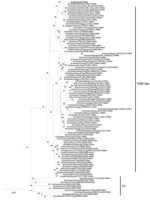
Figure 1. . Neighbor-joining phylogenetic tree of the polymerase basic 2 (PB2) genes of H9N2 subtype lineage avian influenza A viruses with A/Alberta/01/2014 (GISAID accession no. EPI500778). The avian influenza A(H5N1) virus detected...


Figure 2
14-0164-F2-tn.jpg
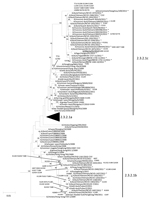
Figure 2. . Neighbor-joining phylogenetic tree of the hemagglutinin (HA) genes of clade 2.3.2.1 highly pathogenic avian influenza A(H5N1) viruses with A/Alberta/01/2014 (GISAID accession no. EPI500771). The avian influenza A(H5N1) virus detected in...


BLAST (http://blast.ncbi.nlm.nih.gov/Blast.cgi) analysis of each gene of A/Alberta/01/2014 showed that 7 of 8 genes shared ≥99% identity at the nucleotide and protein levels with HPAI A(H5N1) viruses of avian origin. However, the PB2 gene showed 98% nt similarity and 99% aa identity to avian influenza A(H9N2) viruses collected in China. Phylogenetic analysis of each gene (Technical Appendix 2 [PDF - 57 KB - 4 pages]) with sequences from related viruses confirmed that only the PB2 gene resulted from reassortment with an avian influenza A virus containing an H9N2 subtype lineage PB2 gene (Figure 1). Phylogenetic analysis of the HA gene demonstrated that the virus belongs to clade 2.3.2.1c (2) (Figure 2), which has been detected in many countries and has recently been reported in China, Vietnam, and Indonesia (2). The HA gene of A/Alberta/01/2014 (H5N1) was most closely related to the sequence for an HPAI A(H5N1) virus from a tiger that died in 2013 at a zoo in Jiangsu, China. This combination of clade 2.3.2.1c lineage HA, neuraminidase, and internal gene segments derived from other influenza A(H5N1) viruses and an H9N2 subtype lineage PB2 gene indicated that this virus is a previously undescribed genotype of HPAI A(H5N1).
To assess the virus for molecular markers of pandemic risk, we reviewed all protein sequences for mutations listed in the H5N1 Genetic Changes Inventory (3).The HA protein possessed a multibasic amino acid cleavage site motif (PQRERRRKR*G) similar to other clade 2.3.2.1 viruses (4). The sequence of the 220-loop receptor binding site (RBS) contained the typical avian amino acids, Q222/G224, predictive of a preference for the avian α2,3 rather than the human α2,6 sialic acid (SA) host cell receptor (5); all HA gene numbering is based on H5 viruses unless otherwise indicated. The RBS sequence was identical in the NP and BAL samples, suggesting the absence of adaptive changes in the cultured isolate. The G221R substitution, uncommon in HPAI A(H5N1) virus, was detected in the RBS. Previously reported in a clade 2 HPAI A(H5N1) virus (GenBank accession no. ABR13964), R221 has been shown in influenza A/H3 (R225 by H3 numbering) to slightly increase binding to human erythrocytes (6). Other mutations of interest in A/Alberta/01/2014 were D94N, S133A, S155N, and T156A. D94N decreased binding to α2,3 SA and increased it to α2,6 SA in a pseudotyping assay (7). S133A, together with T188I (not present in A/Alberta/01/2014), increased binding to α2,6 SA by pseudotyping and glycan array assays (8). When together, S155N and T156A also increased binding to α2,6 SA (assayed with resialated erythrocytes). T156A abrogates a N-glycosylation site and, when together with S223N (not found in A/Alberta/01/2014), may improve virus replication in the upper respiratory tract of ferrets (9); T156A is consistently found in ferret-adapted mutants capable of airborne transmission (5). The collective effects of all these mutations and their phenotypic manifestations are unclear.
Comparison of the HA amino acid sequence of A/Alberta/01/2014 with that of the nearest H5N1 clade 2.3.2.1c World Health Organization candidate vaccine virus (A/duck/Vietnam/NCVD-1584/2012) identified only 2 aa substitutions in the HA1 region, R189K and G221R. Although position 189 was within the putative antigenic site B, the overall conservation of sequence suggests that A/Alberta/01/2014 is a close antigenic match to the candidate vaccine virus.
In agreement with Xu et al. (4), no mutations conferring reduced susceptibility to neuraminidase inhibitors were identified for another clade 2.3.2.1 virus. The predicted amino acid sequence of the M2 protein did not reveal any changes associated with reduced susceptibility to adamantanes (10). Mutation V27I was found, but its significance is uncertain. Mutations N30D and T215A found in the M1 gene of A/Alberta/01/2014 were associated with increased virulence in mice. The cumulative effect of these changes may result in increased lethality (11).
The PB2 sequence showed the presence of E627 in both the primary specimen and isolate, establishing the lack of a well-known mammalian adaptation motif (5,12). Amino acid changes L89V, G309D, T339K, R477G, I495V, and K627E and a change to Met at the predicted position A676T (13) were noted in the A/Alberta/01/2014 isolate. These PB2 substitutions in conjunction with changes in the M1 and HA proteins (only some of which were identified) have been described to enhance polymerase activity and virulence in mice. Experiments in mice also demonstrated that compensatory amino acid substitutions in PB2 can rescue polymerase activity in K627E mutants (13). Lethal HPAI A(H5N1) isolates, such as A/quail/Vietnam/36/04, show the presence of E627, suggesting that compensatory mutations are possible in PB2 and other genes (14). The PB1 protein showed the P598L mutation reported to enhance polymerase activity in mammalian cells and mice (3). This change has been reported to enhance the polymerase activity of an attenuated human virus carrying the PB2 K627E mutation (15). Of the polymerase mutations hypothesized to increase the RNA polymerase activity of HPAI A(H5N1) viruses, namely P149S, R226H, K357I, and T515S, only two, 149S and 357T, were present in the A/Alberta/01/2014 isolate (3).
Mutations in the nucleoprotein gene reported to enhance replication efficiency, virulence, and transmission (3) were absent in the isolate. Several NS1 mutations reported to increase virulence in mice were present in A/Alberta/01/2014: P42S, D87E, L98F, and I101M; a 4-bp deletion from nt 80?84, along with the D92E shift; and the PDZ ligand domain (ESEV) at the C terminus (3). The multifunctional NS1 protein is a recognized virulence determinant that counters the cellular innate immune response, and the P42S change has been shown to antagonize interferon induction and prevent activation of the nuclear factor?κB and interferon regulatory factor?3 pathways (16).

Conclusion


Analysis of the whole genome of HPAI A(H5N1) virus provides valuable insight into the presence of mutations that may reflect adaptive changes, altered virulence, and/or transmission phenotype. Because of the unique manifestation of neurologic symptoms and encephalitis reported in this patient, additional studies are needed to understand the broader aspects of virus heterogeneity and its role in this fatal case.

Ms Pabbaraju is a senior laboratory scientist at the Provincial Laboratory for Public Health. Her research focuses on the development of diagnostic tests for viral and bacterial pathogens as well as studies on the epidemiology of viruses.

Acknowledgment

We gratefully acknowledge the tremendous work of the clinical and public health teams in Alberta involved in the management and follow-up of this case and deeply appreciate the cooperation of the family during the investigation of this tragic event. We thank the technical laboratory staff for their work and contributions to the confirmation and analysis of this influenza strain. We greatly appreciate and acknowledge the generous discussions and expert input of Nancy Cox and her team at the US Centers for Disease Control and Prevention.

References


  1. ProMED-mail. Fatal avian influenza A(H5N1) infection in a Canadian traveler. 2014 Jan 12 [cited 2014 Jan 24]. http://www.promedmail.org, archive no. 20140112.2167282
  2. World Health Organization/World Organization for Animal Health/Food and Agriculture Organization (WHO/OIE/FAO) H5N1 Evolution Working Group, 2013. Revised and updated nomenclature for highly pathogenic avian influenza A (H5N1) viruses. Influenza Other Respir Viruses. 2014. Epub 2014 Jan 31. PubMed
  3. Centers for Disease Control and Prevention. H5N1 Genetic Changes Inventory: a tool for influenza surveillance and preparedness [cited 2014 Jan 24]. http://www.cdc.gov/flu/avianflu/h5n1-genetic-changes.htm
  4. Xu L, Bao L, Yuan J, Li F, Lv Q, Deng W, Antigenicity and transmissibility of a novel clade 2.3.2.1 avian influenza H5N1 virus. J Gen Virol. 2013;94:2616?26. DOIPubMed
  5. Herfst S, Schrauwen EJ, Linster M, Chutinimitkul S, de Wit E, Munster VJ, Airborne transmission of influenza A/H5N1 virus between ferrets. Science. 2012;336:1534?41. DOIPubMed
  6. Mart?n J, Wharton SA, Lin YP, Takemoto DK, Skehel JJ, Wiley DC, Studies of the binding properties of influenza hemagglutinin receptor-site mutants. Virology. 1998;241:101?11. DOIPubMed
  7. Su Y, Yang HY, Zhang BJ, Jia HL, Tien P. Analysis of a point mutation in H5N1 avian influenza virus hemagglutinin in relation to virus entry into live mammalian cells. Arch Virol. 2008;153:2253?61. DOIPubMed
  8. Yang ZY, Wei CJ, Kong WP, Wu L, Xu L, Smith DF, Immunization by avian H5 influenza hemagglutinin mutants with altered receptor binding specificity. Science. 2007;317:825?8. DOIPubMed
  9. Wang W, Lu B, Zhou H, Suguitan AL Jr, Cheng X, Subbarao K, Glycosylation at 158N of the hemagglutinin protein and receptor binding specificity synergistically affect the antigenicity and immunogenicity of a live attenuated H5N1 A/Vietnam/1203/2004 vaccine virus in ferrets. J Virol. 2010;84:6570?7. DOIPubMed
  10. Govorkova EA, Baranovich T, Seiler P, Armstrong J, Burnham A, Guan Y, Antiviral resistance among highly pathogenic influenza A (H5N1) viruses isolated worldwide in 2002?2012 shows need for continued monitoring. Antiviral Res. 2013;98:297?304. DOIPubMed
  11. Fan S, Deng G, Song J, Tian G, Suo Y, Jiang Y, Two amino acid residues in the matrix protein M1 contribute to the virulence difference of H5N1 avian influenza viruses in mice. Virology. 2009;384:28?32. DOIPubMed
  12. Long JS, Howard WA, N??ez A, Moncorg? O, Lycett S, Banks J, The effect of the PB2 mutation 627K on highly pathogenic H5N1 avian influenza virus is dependent on the virus lineage. J Virol. 2013;87:9983?96. DOIPubMed
  13. Li J, Ishaq M, Prudence M, Xi X, Hu T, Liu Q, Single mutation at the amino acid position 627 of PB2 that leads to increased virulence of an H5N1 avian influenza virus during adaptation in mice can be compensated by multiple mutations at other sites of PB2. Virus Res. 2009;144:123?9. DOIPubMed
  14. Salomon R, Franks J, Govorkova EA, Ilyushina NA, Yen HL, Hulse-Post DJ, The polymerase complex genes contribute to the high virulence of the human H5N1 influenza virus isolate A/Vietnam/1203/04. J Exp Med. 2006;203:689?97. DOIPubMed
  15. Xu C, Hu WB, Xu K, He YX, Wang TY, Chen Z, Amino acids 473V and 598P of PB1 from an avian-origin influenza A virus contribute to polymerase activity, especially in mammalian cells. J Gen Virol. 2012;93:531?40. DOIPubMed
  16. Jiao P, Tian G, Li Y, Deng G, Jiang Y, Liu C, A single-amino-acid substitution in the NS1 protein changes the pathogenicity of H5N1 avian influenza viruses in mice. J Virol. 2008;82:1146?54. DOIPubMed


Figures


Technical Appendices


Suggested citation for this article: Pabbaraju K, Tellier R, Wong S, Li Y, Bastien N, Tang JW, et al. Full-genome analysis of avian influenza A(H5N1) virus from human, North America, 2013. Emerg Infect Dis. 2014 May [date cited]. http://dx.doi.org/10.3201/eid2005.140164

DOI: 10.3201/eid2005.140164
 
Re: Full-Genome Analysis of Avian Influenza A(H5N1) Virus from a Human, North America, 2013 - ex-China

Re: Full-Genome Analysis of Avian Influenza A(H5N1) Virus from a Human, North America, 2013 - ex-China

Again, condolences to the Canadian who traveled to China and then died as a result of this illness. Thank you to her family and the governments of Alberta and Canada for sharing this information with the world. It was widely reported that she had no contact with poultry.


"analysis of each gene of A/Alberta/01/2014 showed that 7 of 8 genes shared ≥99% identity at the nucleotide and protein levels with HPAI A(H5N1) viruses of avian origin. However, the PB2 gene showed 98% nt similarity and 99% aa identity to avian influenza A(H9N2) viruses collected in China."

"No mutations conferring resistance to adamantanes or neuraminidase inhibitors were found."

"Other mutations of interest in A/Alberta/01/2014 were D94N, S133A, S155N, and T156A.....T156A is consistently found in ferret-adapted mutants capable of airborne transmission (5). The collective effects of all these mutations and their phenotypic manifestations are unclear."
 
Re: Full-Genome Analysis of Avian Influenza A(H5N1) Virus from a Human, North America, 2013 - ex-China

Re: Full-Genome Analysis of Avian Influenza A(H5N1) Virus from a Human, North America, 2013 - ex-China

Again condolences to the Canadian who traveled to China and then died as a result of this illness. Thank you to her family and the governments of Alberta and Canada for sharing this information with the world.


"analysis of each gene of A/Alberta/01/2014 showed that 7 of 8 genes shared ≥99% identity at the nucleotide and protein levels with HPAI A(H5N1) viruses of avian origin. However, the PB2 gene showed 98% nt similarity and 99% aa identity to avian influenza A(H9N2) viruses collected in China."

"No mutations conferring resistance to adamantanes or neuraminidase inhibitors were found."

"Other mutations of interest in A/Alberta/01/2014 were D94N, S133A, S155N, and T156A.....T156A is consistently found in ferret-adapted mutants capable of airborne transmission (5). The collective effects of all these mutations and their phenotypic manifestations are unclear."

The H9N2 genes may not be of recent acquisition since the virus remains susceptible to adamantanes (through lack of mutation conferring resistance on M2). All recent H7N9 viruses (that have all internal genes from H9N2 are resistant to amantadine.)
 
Re: China - H5N1 death in Alberta, Canada upon return from China trip - died from meningoencephalitis

It seems that a similar H5N1 virus was isolated from a tiger died from infection in a China's zoo last year (see the paper for details).

This strain seems also to belong to a sub-lineage little known so far, but with avian-like signatures and little evidence of mammalian host adaptation.

It is sensitive to neuraminidase inhibitors oseltamivir and zanamivir and to the older adamantanes, since it has not showed the mutations in the NA & M gene segments known to confer resistance to these drugs.

The H5N1 isolated has a polybasic cleavage site in HA and a NS1 aminoacids residues known to increase pathogenicity in humans.

Neurologic complications seen in the infected patient suggested that this virus may behave different and needs further characterization and analysis, concluded the authors.

gm
 
Re: China - H5N1 death in Alberta, Canada upon return from China trip - died from meningoencephalitis

Canadian who died from H5N1 flu may have caught it in illegal bird market

Helen Branswell, The Canadian Press
Published Tuesday, February 11, 2014 1:05PM EST
Last Updated Tuesday, February 11, 2014 1:07PM EST .
...
In a letter to the Journal of Infection, they say that even though Beijing banned live poultry markets in 2005, an illegal trade in live poultry continues in the city. They say it is possible the woman was infected while passing market stalls that surreptitiously sell live poultry.

It is the custom in China to eat chicken when it has been freshly killed, and the sale of live poultry remains common in many parts of the country.

The scientists point to a previous H5N1 case in Beijing, a woman who died in early January 2009. She had bought a live duck at a market in Hebei province, near Beijing, and prepared it for cooking by defeathering it and gutting it.
...

Read more:
http://www.ctvnews.ca/health/health...n-illegal-bird-market-1.1680939#ixzz2t2YjUYKB
 
Back
Top Bottom