• FluTrackers.com Inc. does not provide medical advice. Information on this web site is collected from various internet resources, and the FluTrackers board of directors makes no warranty to the safety, efficacy, correctness or completeness of the information posted on this site by any author or poster. The information collated here is for instructional and/or discussion purposes only and is NOT intended to diagnose or treat any disease, illness, or other medical condition. Every individual reader or poster should seek advice from their personal physician/healthcare practitioner before considering or using any interventions that are discussed on this website. By continuing to access this website you agree to consult your personal physican before using any interventions posted on this website, and you agree to hold harmless FluTrackers.com Inc., the board of directors, the members, and all authors and posters for any effects from use of any medication, supplement, vitamin or other substance, device, intervention, etc. mentioned in posts on this website, or other internet venues referenced in posts on this website.
  • We are not asking for any donations. Do not donate to any entity who says they are raising funds for us.

China - Expert: "this wave of respiratory infections, in addition to flu, also incl. HMPV, RSV, COVID-19, mycoplasma & pneumococcus, etc." - Dec. 30,

sharon sanders

Editor-in-Chief & President
Xinmin·The First Medical Line|The recent increase in influenza is not a “new strain” but this type!

2024-12-30 23:04
Source: Shangguan News Author: Xinmin Evening News Zuo Yan


Recently, many influenza patients have been tested positive for the H1N1 type, which is not the "new strain" circulated on the Internet.

Recently, the proportion of patients with respiratory tract infections visiting the respiratory departments of major hospitals has increased sharply. "There are many people with respiratory symptoms, and the relevant clinical symptoms are also different. Most of the patients have taken medication on their own before coming to the hospital, and some come to the hospital for treatment because of poor results." Zhou Jianping, deputy chief physician of the respiratory department of Shanghai Ruijin Hospital, told reporters that in the late winter season, the temperature fluctuates, coupled with the influence of smog from time to time, and the flu virus infection, which is showing an increasing trend, respiratory tract infections are "rather annoying."

snip

"In fact, this wave of respiratory infections, in addition to influenza viruses, also includes human metapneumovirus (HMPV), respiratory syncytial virus (RSV), new coronavirus, mycoplasma and pneumococcus, etc." Zhou Jianping told reporters that this round of respiratory infections may involve mixed infections of multiple pathogens, and severe coughing often occurs after infection. People can self-test at home or come to the hospital for professional testing and judgment. In terms of treatment, antiviral or antibacterial treatment should be used as early as possible. If combined with severe cough or sputum, it is recommended to use symptomatic drugs to relieve symptoms as appropriate.

more....
 
Translation Google

China Influenza Surveillance Weekly Report No. 837, Week 52, 2024

Date: 2025-01-02

  Summary of influenza epidemic situation in China (as of December 29, 2024 )

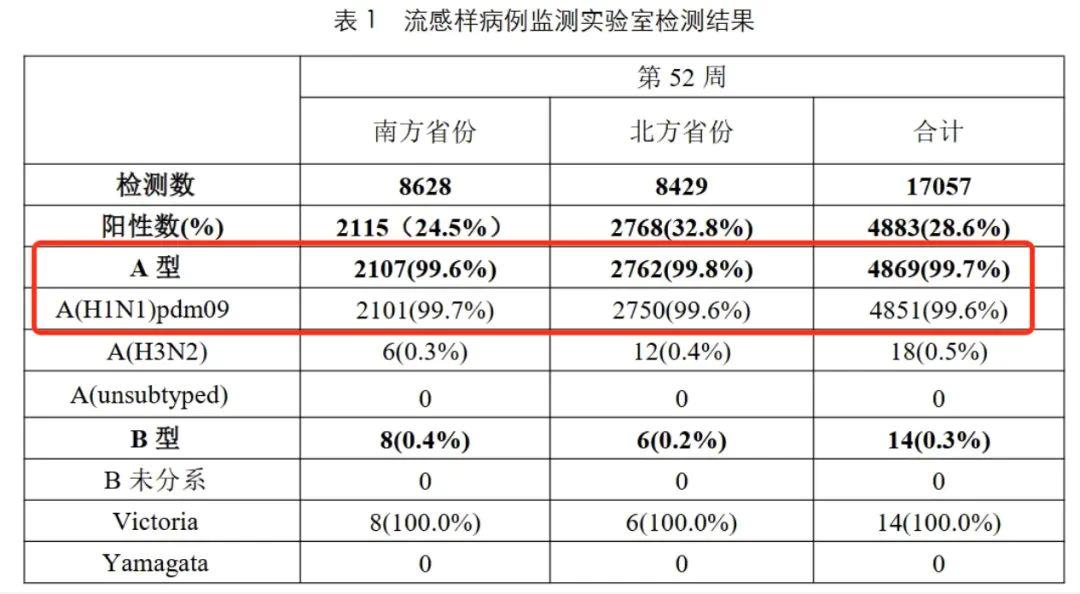
  Monitoring data showed that the positive rate of influenza virus testing in southern and northern provinces continued to rise this week. The A(H1N1)pdm09 subtype was the main one. A total of 171 influenza-like cases were reported nationwide .  

  From April 1 , 2024 to December 29 , 2024 ( based on experimental date statistics), 1844 strains ( 97.0% ) of A(H1N1)pdm09 subtype influenza virus were similar to A/Victoria/4897/2022 ; 392 strains ( 56.0 % ) of A(H3N2) subtype influenza virus were similar to A/Thailand/8/2022 (chicken embryo strain); 453 strains ( 64.7% ) were similar to A/Thailand/8/2022 (cell strain) ; 997 strains ( 99.1% ) of B(Victoria) were similar to B / Austria /1359417/2021 .

  Since April 1 , 2024 , drug resistance monitoring has shown that, except for 48 strains of influenza A(H1N1)pdm09 with reduced or highly reduced sensitivity to neuraminidase inhibitors, the remaining influenza A(H1N1)pdm09 strains are sensitive to neuraminidase inhibitors; all influenza A(H3N2) and B strains are sensitive to neuraminidase inhibitors, and all influenza A(H1N1)pdm09 , A(H3N2) and B strains are sensitive to polymerase inhibitors .

File attachments:
China Influenza Surveillance Weekly Report No. 837, Week 52, 2024.pdf

https://www.chinacdc.cn/jksj/jksj04_14249/202501/t20250102_303653.html

 
Translation Google

More than 99% of cases are influenza A! Urgent reminder →


Source: CCTV News | January 05, 2025 17:58:41

  Recently, influenza has been prevalent. According to the latest data from the China Center for Disease Control and Prevention, the influenza virus positive rate continues to rise, of which more than 99% are influenza A. Disease control centers in many parts of the country have urgently reminded people to take good personal protection and pay attention to preventing respiratory and intestinal infectious diseases.
2025010517562860161.jpg

  The national influenza virus positive rate is rising rapidly
  
According to data released by the Chinese Center for Disease Control and Prevention:

  
The pathogens that were positive for testing in outpatient and emergency departments of sentinel hospitals were mainly influenza virus, human metapneumovirus, and rhinovirus;

  
The main pathogens detected positive in hospitalized severe acute respiratory infection cases were influenza virus, Mycoplasma pneumoniae, and human metapneumovirus.


It can be seen that influenza is one of the most important pathogens in both outpatient and emergency cases and serious hospitalized cases .


​...
https://news.cctv.com/2025/01/05/ARTI0vFQvZMdtH5k3mTpCZKi250105.shtml
 
Translation Google

Vietnam Ministry of Health: Closely monitor the pneumonia outbreak caused by human metapneumovirus in China

The Department of Preventive Medicine of the Ministry of Health of Vietnam said on the 5th that it had just made a brief report on the cases of Chinese people infected with the parapneumonia virus. According to the report, the Department of Preventive Medicine will closely monitor the epidemic situation and provide sufficient and accurate relevant information in a timely manner.

January 5, 2025 05:21:14

Hanoi (VNA) - The Department of Preventive Medicine of the Ministry of Health of Vietnam said on the 5th that it had just made a brief report on the cases of Chinese people infected with the parapneumonia virus. According to the report, the Department of Preventive Medicine will closely monitor the epidemic situation and provide sufficient and accurate relevant information in a timely manner.

According to the Bureau of Preventive Medicine, on January 2, 2025, many foreign media reported an outbreak of multiple cases of Human Metapneumovirus (HMPV) infection in China, emphasizing that the virus is spreading rapidly and has symptoms similar to influenza and COVID-19, expressing concern about another medical crisis after COVID-19.

The Bureau of Preventive Medicine immediately contacted the World Health Organization's regional offices in Vietnam and Asia Pacific and the China Center for Disease Control and Prevention's International Health Regulations (IHR) representative office. It was learned that, as of now, the World Health Organization has not received official information about the epidemic in China, and the reliability and legitimacy of the above media reports and social network information have not been verified.

It is reported that China is currently in winter and respiratory diseases are prevalent.

The Bureau of Preventive Medicine will proactively monitor the progress of the epidemic, work closely with the WHO and relevant Chinese departments, update information in a timely manner, avoid tension and confusion, and at the same time raise vigilance and keep abreast of the progress of the epidemic. (End)

https://zh.vietnamplus.vn/越南卫生部密切关注中国人类偏肺病毒引发的肺炎疫情-post233784.vnp
 
What to know about the HMPV outbreak in China

Matthew Ward Agius
2 hours ago
...
The current HMPV situation in China is a new outbreak of a known and relatively well-understood virus that has likely circulated among humans for hundreds of years.

HMPV cases have reportedly surged among young people in northern parts of China in recent weeks. Cases of rhinoviruses, a major cause of common colds, have also risen.
...
"The increased prevalence is likely the normal seasonal increase seen in winter. The reported high prevalence amongst children also reflects what we know about this virus: It is a common cause of childhood respiratory illness," said Jacqueline Stephens, an epidemiologist at Flinders University in Australia.
...
Like RSV, HMPV is a seasonal infection occurring in the colder months with the potential to reach epidemic levels, when a high rate of infection occurs at a particular point in time.

Until a Dutch-led research group first identified HMPV in 28 Dutch children in 2001, cases were often misdiagnosed as RSV because of their very similar symptoms.

"What we found is that all the children over about 5 years of age had antibodies against this [HMPV] virus," Albert Osterhaus, who led that first study as a member of the Department of Virology at the Erasmus Medical University in Rotterdam, told DW.
...

https://www.dw.com/en/what-to-know-about-the-hmpv-outbreak-in-china/a-71230553
 
Translation Google

Respiratory virus in China A “mysterious epidemic” that worries Internet users

Known for causing cold-like symptoms, human metapneumovirus (hMPV) has sparked concern online after videos surfaced showing overcrowded hospitals in China. However, doctors say the virus has been around the world for decades and should not be cause for alarm. In fact, you may have already contracted it without knowing it.

Posted at 5:00 a.m.
Alice Girard-Bossé
La Presse

What's happening in China?

Five years into the COVID-19 pandemic, images shared on social media in recent days show hospitals in China filled with patients wearing masks. These posts, which quickly went viral, speak of a “mysterious epidemic” of HPVD in China, which is “overwhelming hospitals.” Others mention a mix of viruses circulating, including HPVD, Mycoplasma pneumoniae and COVID-19. Information circulating online was quickly denied. Some images were taken in December 2022, during the COVID-19 pandemic, reported French channel TF1 Info.

Is there really an increase in MPVh virus in China?

Yes, China has seen an increase in HPV cases, says Caroline Quach-Thanh, an infectious disease specialist at CHU Sainte-Justine. However, this coincides with the winter period, when respiratory viruses circulate more. “[The Chinese] are no different from us. Every winter, we see an increase in respiratory viruses and traffic in our emergency rooms. They must be the same,” says Dr. Quach -Thanh. This increase could also be explained by the establishment of a more effective infection surveillance system, which allows them to detect more cases, adds the specialist.

Is the MPVh virus new?

Not at all. It was first detected in 2001 by researchers in the Netherlands. However, studies have shown that it has been around for at least 60 years and is widespread throughout the world, says Dr. Judith Fafard, director of the Laboratoire de santé publique du Québec. And you have probably already contracted it, without even knowing it, since most people are infected with this virus before the age of 5. “And it is common to reinfect yourself with this virus in your life,” adds Dr. Fafard .

What are the symptoms caused by MPVh?

Symptoms often resemble those of the common cold, including fever, cough, runny or stuffy nose, shortness of breath, and sore throat. In some cases, the virus can cause more serious infections such as pneumonia or asthma attacks. These more severe symptoms are more common in children 5 and under, adults over 65, and people with breathing problems or weakened immune systems.

Is this a virus that is circulating a lot in Quebec?

About 11% of respiratory illnesses in children in Quebec are caused by hMPV, says Dr. Fafard . Most cases are mild and do not require hospitalization. There are no medications to treat human metapneumovirus, but most patients recover at home within a few days. Right now, in the province, “we are dealing more with influenza, RSV [respiratory syncytial virus] and a little bit of COVID-19,” says Dr. Quach -Thanh.

How to protect yourself?

Like other colds, HPV is transmitted through direct contact with an infected person or by touching objects contaminated by the virus. For example, you can become infected "if you put your hand on an object that has been contaminated by a person, such as a doorknob, a light switch or a telephone," explains Dr. Fafard , hence the importance of washing your hands often. It is also recommended to cover your nose and mouth with your elbow, rather than your hands, when sneezing or coughing, and to avoid contact when you are sick. If this is not possible, wearing a mask may be an option to consider.

https://www.lapresse.ca/actualites/...use-epidemie-qui-inquiete-les-internautes.php
 
Excerpt from the article above:

"Information circulating online was quickly denied. Some images were taken in December 2022, during the COVID-19 pandemic, reported French channel TF1 Info."

The TF1 Info article mentioned in this excerpt was published on January 3, 2024:

Translation Google


VERIFY' - Did China really declare a state of emergency due to the spread of several viruses?

by Caroline QUEVRAIN(new window)
Published on January 3, 2025 at 5:45 p.m.
...
On December 31, 2019, a "viral pneumonia" in Wuhan was brought to the attention of the World Health Organization office in China. A pneumonia since renamed Covid-19, which paralyzed the planet for months. Five years later, are Chinese hospitals preparing to face a new epidemic? At least that's what a rumor that has gone viral online claims.


Images of queues at the hospital

These contents, on X, all date back to the Christmas period, or even a few days before: the oldest post that we found date of December 15, 2024. However, they are not based on any tangible element. Some of the images used are far from recent, like this one taken in December 2022 and then concerning the Covid-19 epidemic.

The sources cited should also be considered with caution: several links refer to the site The Epoch Times , in a Chinese version. titled: "China's New Year's outbreak rages, hospitals see huge crowds seeking treatment." Now, this site is known to spread conspiracy theories and false information about the pandemic.


Images that cannot be dated.

According to posts on X, Instagram or TikTok, some of which have been seen more than six million times, the Chinese health situation is worrying because of an "epidemic of several viruses, including HMPV, Mycoplasma pneumoniae and COVID-19" and has even led to the establishment of a state of emergency in the country.

In viral posts on these platforms, it is claimed that Beijing has taken exceptional measures to curb the circulation of several respiratory viruses. On Instagram, there is talk of the presence of only one "new virus in China" and on X, "hospitals and crematoriums overwhelmed" by the number of sick and dead. The images shared online are actually three different scenes, all showing queues of masked people, appearing to be waiting at the hospital.

What can we say now about the images that are circulating? The last video was published on December 24, by a TikTok account located in Taipei (Taiwan). "This is not the Spring Festival trip (Chinese New Year, editor's note), this is the children's hospital now," reads the caption. When contacted, this Internet user has not yet responded to our questions.

As for the rest of the images, they cannot be precisely located or dated. To add to the confusion, they are strongly similar to shared content in November 2023, when a respiratory infection was circulating in northern China. At the time, hospitals were overwhelmed by the number of cases affecting mostly children. This is what is happening at the moment.

But according to our research, there is no official announcement of the establishment of a state of emergency. There is no trace of it on the site either. of the Chinese Center for Disease Control and Prevention, nor on that of the World Health Organization (WHO). Unlike November 2023, when the health situation was the subject of an inventory by Beijing and the WHO.

At the time, the organization said it was monitoring "data from the Chinese surveillance system since mid-October 2023, which show an increase in respiratory diseases among children in northern China." Our correspondent in China, Louise Malnoy, confirms the absence of a state of emergency and mentions "a recurring situation every winter, during seasonal peaks of influenza and respiratory viruses."

So far, the only recent communication from the WHO to China concerns Covid-19., on the occasion of the fifth anniversary."We continue to call on China to share data and access to this data so that we can understand the origins of COVID-19 ," its local office shared on December 30, according to which "without transparency, sharing and cooperation between countries, the world cannot adequately prevent and prepare for future epidemics and pandemics."

https://www.tf1info.fr/internationa...a-propagation-de-plusieurs-virus-2342800.html
 
United Nations Geneva

@UNGeneva
·
1h
"Human metapneumovirus #hMPV is NOT a new virus. First identified in 2001, it has been in the human population for a long time. It is a common virus that circulates in winter and spring. It usually causes respiratory symptoms similar to the common cold." -
@who

(Video)​


9:00 AM · Jan 7, 2025

--------------------------------------------

UN GENEVA PRESS BRIEFING

07 January 2025 UN Geneva Press Briefing

Alessandra Vellucci, Director of the United Nations Information Service in Geneva, chaired a hybrid press briefing, which was attended by spokespersons of the Office of the High Commissioner for Human Rights, the World Health Organization, the International Labour Organization, and the World Meteorological Organization.
...
Update on respiratory viruses currently circulating in the northern hemisphere

Margaret Harris, for the World Health Organization (WHO), said that, based on what was reported by the Chinese Center for Disease Control and Prevention on 2 January 2025, and shared in meetings between the WHO and Chinese authorities, there had been a rise of common respiratory infections in the country. The pathogens causing these infections were known ones and included seasonal influenza virus, RSV (respiratory syncytial virus), hMPV (human metapneumovirus), and SARS-CoV-2 (the virus that causes COVID-19). The seasonal influenza was by far the most common and increasing; the test positivity rate was over 30 percent. China’s reported levels of respiratory infections were along usual and expected rates, said Ms. Harris. There had been no emergency declarations and no emergency responses triggered.

WHO’s global influenza surveillance system had observed a rise in influenza across the northern hemisphere, where it was currently winter, so this was expected. Regarding human metapneumovirus (HMPV) , she stressed that this was not a new virus, as it had first been identified in 2001. It was one of the many viruses that caused the common cold and usually did not cause a serious illness in humans. In some cases, it could lead to a more serious disease in those with weak immunity, such as newborns, very old persons or people undergoing a cancer treatment. Simple measures could prevent spread: if they had symptoms, people should stay at home; wearing a mask in crowded space would be recommended; covering one’s face when coughing and sneezing was a sensible thing to do; regular handwashing would help; and getting the vaccines recommended by one’s doctor.

Responding to questions from the media, Ms. Harris explained that the Chinese Center for Disease Control and Prevention had shared its data with the WHO, and its latest report had been published on 2 January. Pregnant women were a vulnerable category and should discuss possible vaccinations with their doctors. Regarding COVID-19, Ms. Harris stressed that the primary concern remained investigating the origins of the virus. The case mortality rate for HMPV was very low, she responded to another question. WHO was aware of reports that a man over 65 with an underlying illness had died of H5N1 (bird flu). The United States was doing a comprehensive surveillance on animals, while the risk assessment for the general population remained low, she explained. The risk was always there, which was why working together with animal health organizations and experts was critical. Whenever there were seasonal influenza and animal influenza circulating at the same time, it was extremely important to keep the global surveillance system fully running. Data sharing was as critical as ever.

Answering further questions, Ms. Harris said that most people had by now been exposed to COVID-19 one way or another, and our immune systems were much better prepared than before. The newborns, the very elderly, or the immunocompromised people were still vulnerable, though, stressed Ms. Harris. WHO was still monitoring the situation around the world and was not seeing much sicker populations or overwhelmed hospitals.
​...

https://www.ungeneva.org/en/news-media/press-briefing/2025/01/un-geneva-press-briefing
​​
 
hat tip Michael Coston for the link

Disease Outbreak News

Trends of acute respiratory infection, including human metapneumovirus, in the Northern Hemisphere

7 January 2025


Situation at a glance

In many countries of the Northern Hemisphere, trends in acute respiratory infections increase at this time of year. These increases are typically caused by seasonal epidemics of respiratory pathogens such as seasonal influenza, respiratory syncytial virus (RSV), and other common respiratory viruses, including human metapneumovirus (hMPV), as well as mycoplasma pneumoniae. Many countries conduct routine surveillance for acute respiratory infections and common respiratory pathogens. Currently, in some countries in the temperate Northern hemisphere, influenza-like illness (ILI) and/or acute respiratory infection (ARI) rates have increased in recent weeks and are above baseline levels, following usual seasonal trends. Seasonal influenza activity is elevated in many countries in the Northern hemisphere. Where surveillance data is available, trends in RSV detections currently vary by region with decreases reported in most regions except in North America. Recently, there has been interest in hMPV cases in China including suggestions of hospitals being overwhelmed. hMPV is a common respiratory virus found to circulate in many countries in winter through to spring, although not all countries routinely test and publish data on trends in hMPV . While some cases can be hospitalized with bronchitis or pneumonia, most people infected with hMPV have mild upper respiratory symptoms similar to the common cold and recover after a few days. Based on data published by China, covering the period up to 29 December 2024, acute respiratory infections have increased during recent weeks and detections of seasonal influenza, rhinovirus, RSV, and hMPV, particularly in northern provinces of China have also increased. The observed increase in respiratory pathogen detections is within the range expected for this time of year during the Northern hemisphere winter. In China, influenza is the most commonly detected respiratory pathogen currently affecting people with acute respiratory infections. WHO is in contact with Chinese health officials and has not received any reports of unusual outbreak patterns. Chinese authorities report that the health care system is not overwhelmed and there have been no emergency declarations or responses triggered. WHO continues to monitor respiratory illnesses at global, regional and country levels through collaborative surveillance systems, and provides updates as needed.


Description of the situation


In many countries of the Northern Hemisphere, trends in acute respiratory infections increase at this time of year. These increases are typically caused by seasonal epidemics of respiratory pathogens such as seasonal influenza, RSV, and other common respiratory viruses, including hMPV, as well as mycoplasma pneumoniae. The co-circulation of multiple respiratory pathogens during the winter season can sometimes cause an increased burden on health care systems treating sick persons.

Currently, in some countries in the temperate Northern hemisphere, influenza-like illness (ILI) and/or acute respiratory infection (ARI) rates have increased in recent weeks and are above baseline levels, following usual seasonal trends. Influenza activity is elevated in many countries in Europe, Central America and the Caribbean, Western Africa, Middle Africa, and many countries across Asia, with the predominant seasonal influenza type and subtype varying by location, typical for this time of year, except during most of 2020 and 2021, when there was little influenza activity during the COVID-19 pandemic (Figure 1). SARS-CoV-2 activity as detected in sentinel surveillance and reported to Global Influenza Surveillance and Response System (GISRS), along with wastewater monitoring from the reporting countries, is currently low in countries in the Northern hemisphere following prolonged high level activity during summer months in the Northern hemisphere. Where surveillance data is available, trends in RSV activity are variable by region with downward trends observed in most subregions of the Americas, except in North America where RSV activity has increased, and decreases have been observed in the European region in recent weeks. Some countries conduct routine surveillance and report trends for other commonly circulating respiratory pathogens, such as hMPV, and report such information on a routine basis. Some countries in the Northern hemisphere have reported increased trends, varying by virus, in recent weeks, typical for this time of year.

Figure 1. Virus detections by subtype reported to FluNet, 01 October 2017 to 30 December 2024 from countries in the Northern hemisphere, as of 07 January 2025

DON  for influenza and COVID-19


Source: (https://worldhealthorg.shinyapps.io/flunetchart/).

There has been international interest in a potential increase of respiratory virus transmission in China, particularly hMPV, including suggestions of hospitals being overwhelmed. China has an established sentinel surveillance system for ILI and severe acute respiratory infections (SARI), including hMPV, and conducts routine virological surveillance for common respiratory pathogens with detailed reports published weekly on the China Center for Disease Control and Prevention (CDC) website.[SUP][1][/SUP] Surveillance and laboratory data for hMPV is not available routinely from all countries.

According to the most recent surveillance data on acute respiratory infections shared by the China CDC with data up to 29 December 2024, there has been an upward trend of common acute respiratory infections, including those due to seasonal influenza viruses, RSV and hMPV – as expected for this time of year during the Northern Hemisphere winter. Influenza is currently the most reported cause of respiratory disease, with the highest positivity rate among all monitored pathogens for all age groups except children aged 5-14 years for whom mycoplasma pneumoniae had the highest positivity rate. SARS-CoV-2 activity remains low however with an increase in reported severe COVID-19 cases. The predominant circulating SARS-CoV-2 variant in the country is XDV and its sublineages accounting for 59.1% detection among sequenced samples. ILI activity in China’s northern and southern provinces have been increasing since late 2024, following the previous year’s trends. Current ILI activity in the southern provinces remains below that of the previous two years, while current ILI activity in the northern provinces is similar to levels seen at this time in the previous two years.

China’s reported levels of acute respiratory infections, including hMPV, are within the expected range for the winter season with no unusual outbreak patterns reported. Chinese authorities confirmed that the health care system is not overwhelmed, hospital utilization is currently lower than this time last year, and there have been no emergency declarations or responses triggered. Since the expected seasonal increase was observed, health messages have been provided to the public on how to prevent the spread of respiratory infections and reduce the impact of these diseases.


Public health response


Based on the expected increase in respiratory infections during the winter season, countries, including China, have been providing health messages to the public on how to prevent the spread of respiratory infections and reduce the impact of disease.


WHO risk assessment


In temperate climates, seasonal epidemics of common respiratory pathogens, including influenza, occur often during winter periods. The observed increases in acute respiratory infections and associated pathogen detections in many countries in the Northern hemisphere in recent weeks is expected at this time of year and is not unusual. The co-circulation of respiratory pathogens may pose a burden to health facilities.


WHO advice


WHO recommends that individuals in areas where it is winter take normal precautions to prevent the spread and reduce risks posed by respiratory pathogens, especially to the most vulnerable. People with mild symptoms should stay home to avoid infecting other people and rest. People at high risk or with complicated or severe symptoms should seek medical care as soon as possible. Individuals should also consider wearing a mask in crowded or poorly ventilated spaces, cover coughs and sneezes with a tissue or bent elbow, practice regular handwashing, and get recommended vaccines as per physician and local public health authorities’ advice.[SUP][2][/SUP]

WHO advises Member States to maintain surveillance for respiratory pathogens through an integrated approach, considering country context, priorities, resources and capacities. WHO has published guidance on integrated surveillance here. WHO has also updated guidance on assessing influenza epidemic and pandemic severity, including the impact on healthcare facilities, here.

Based on the current risk assessment, WHO advises against any travel or trade restrictions related to current trends in acute respiratory infections.


Further information
[SUP][1][/SUP] China CDC Weekly Influenza Surveillance Report. Available at: https://www.chinacdc.cn/jksj/jksj04_14249/

[SUP][2][/SUP] WHO Clinical practice guidelines for influenza. Available at: https://www.who.int/publications/i/item/9789240097759


Citable reference: World Health Organization (7 January 2025). Disease Outbreak News; Trends of acute respiratory infection, including human metapneumovirus, in the Northern Hemisphere. Available at: https://www.who.int/emergencies/disease-outbreak-news/item/2024-DON550

 
Back
Top