
Mary Wilson
Well-known member
Western Equine Encephalitis Virus in South America
Level 4 - Avoid All Travel
Level 3 - Reconsider Nonessential Travel
Level 2 - Practice Enhanced Precautions
Level 1 - Practice Usual Precautions
Key points
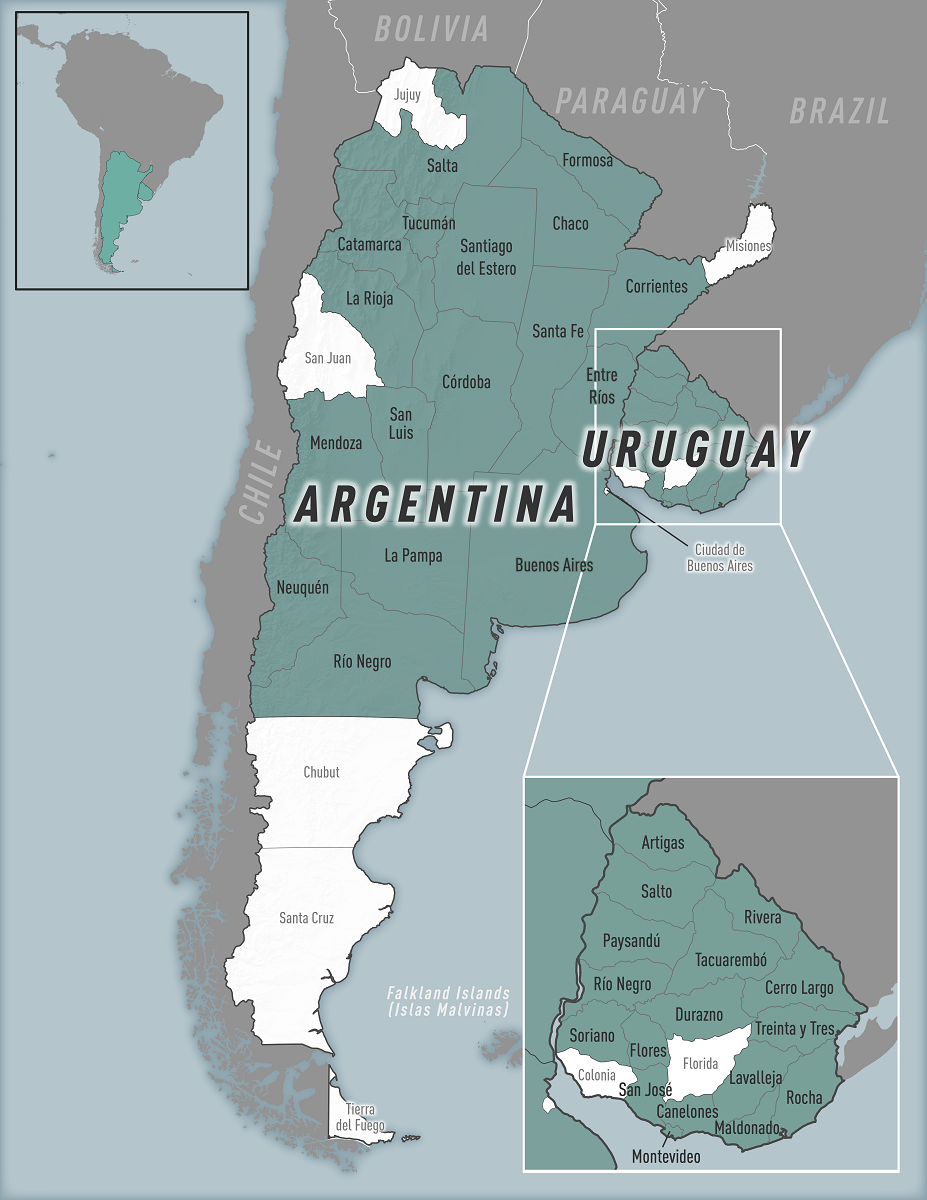
Green indicates areas where WEEV infections have been reported in horses, humans or both
Traveler Information
Clinician Information
Content source: National Center for Emerging and Zoonotic Infectious Diseases (NCEZID)
Division of Global Migration Health (DGMH)
https://wwwnc.cdc.gov/travel/notices/level1/western-equine-encephalitis-virus-south-america
Level 4 - Avoid All Travel
Level 3 - Reconsider Nonessential Travel
Level 2 - Practice Enhanced Precautions
Level 1 - Practice Usual Precautions
Key points
- There are reports of Western equine encephalitis virus (WEEV) infections in horses, humans or both, in parts of Argentina and Uruguay (see map).
- WEEV is spread mostly by the bite of an infected mosquito and can cause severe disease.
- Severe illness can occur in people of any age; however, young children, particularly infants and children aged <2 years, and older adults are at greater risk for severe illness.
- Travelers to these areas should take steps to prevent mosquito bites.
- Seek medical care immediately if you develop fever, headache, neck stiffness, photophobia (sensitivity to light), or confusion during or after travel and tell your healthcare professional you have been to an area with WEEV transmission.
Green indicates areas where WEEV infections have been reported in horses, humans or both
Traveler Information
Clinician Information
- WHO Disease Outbreak News: Western equine encephalitis-Argentina
- PAHO: Epidemiological Alert-Risk to Human Health Associated with Western Equine Encephalitis Virus Infection in Horses – January 10, 2024
- PAHO: Laboratory Guidelines for the Detection and Diagnosis of Western Equine Encephalitis Virus Human Infection
- Argentina Ministry of Health Epidemiologic Bulletins (most recent data on the outbreak) (Spanish)
- Uruguay Ministry of Health News Release (Spanish)
Content source: National Center for Emerging and Zoonotic Infectious Diseases (NCEZID)
Division of Global Migration Health (DGMH)
https://wwwnc.cdc.gov/travel/notices/level1/western-equine-encephalitis-virus-south-america