

sharon sanders
Editor-in-Chief & President
May 2, 2024
Safer Food Choices
At a glance
Learn which foods are more often associated with food poisoning and what are safer choices.
Why it's important
To prevent food poisoning, some foods are safer choices than others. That's because some foods—such as undercooked meat and eggs, unwashed fruits and vegetables, and unpasteurized milk—are more often associated with foodborne illnesses.
High risk groups
Some people are more likely to get sick and have a more serious illness from food poisoning. See specific recommendations if you are in one of these groups:
Safer food choices for general public
Use the table below as a guide to safer food choices.
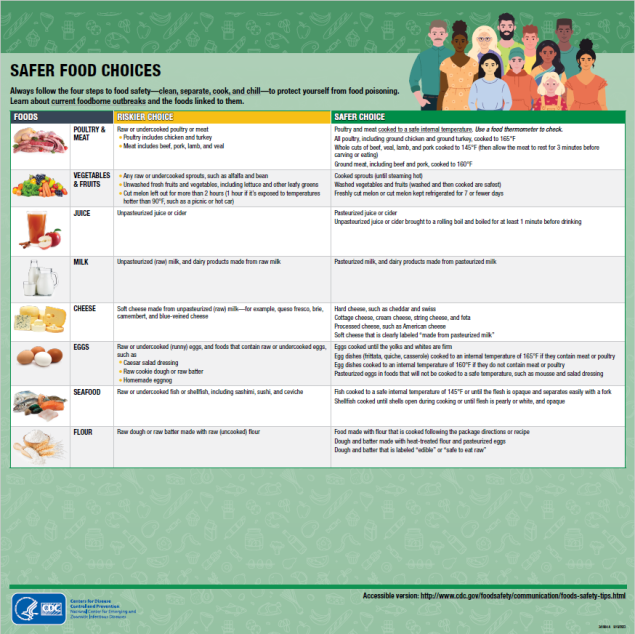
Safer Food Choices for General Consumers
Information on which foods are safer to consume and which are more likely to cause food poisoning fo...
May 2, 2024
Prevent food poisoning
Always follow the four steps to food safety—clean, separate, cook, and chill—to protect yourself from food poisoning.
Learn about current foodborne outbreaks and the foods linked to them.
Resources
Higher Risk for Food Poisoning
Four Steps to Food Safety
Food Poisoning Symptoms
FoodSafety.gov: Safe Minimum Internal Temperature
https://www.cdc.gov/food-safety/foods/safer-food-choices.html
Safer Food Choices
At a glance
Learn which foods are more often associated with food poisoning and what are safer choices.
Why it's important
To prevent food poisoning, some foods are safer choices than others. That's because some foods—such as undercooked meat and eggs, unwashed fruits and vegetables, and unpasteurized milk—are more often associated with foodborne illnesses.
High risk groups
Some people are more likely to get sick and have a more serious illness from food poisoning. See specific recommendations if you are in one of these groups:
Safer food choices for general public
Use the table below as a guide to safer food choices.
Raw or undercooked poultry or meat
| Poultry and meat cooked to a safe internal temperature. Use a food thermometer to check.
|
|
|
| Unpasteurized juice or cider |
|
| Unpasteurized (raw) milk and dairy products made from raw milk | Pasteurized milk and dairy products made from pasteurized milk |
| Soft cheese made from unpasteurized (raw) milk — for example, queso fresco, brie, camembert, and blue-veined cheese |
|
Raw or undercooked (runny) eggs, and foods that contain raw or undercooked eggs, such as
|
|
| Raw or undercooked fish or shellfish, including sashimi, sushi, and ceviche |
|
| Raw dough or raw batter made with raw (uncooked) flour |
|
Safer Food Choices for General Consumers
Information on which foods are safer to consume and which are more likely to cause food poisoning fo...
May 2, 2024
Prevent food poisoning
Always follow the four steps to food safety—clean, separate, cook, and chill—to protect yourself from food poisoning.
Learn about current foodborne outbreaks and the foods linked to them.
Resources
Higher Risk for Food Poisoning
Four Steps to Food Safety
Food Poisoning Symptoms
FoodSafety.gov: Safe Minimum Internal Temperature
https://www.cdc.gov/food-safety/foods/safer-food-choices.html