sharon sanders
Editor-in-Chief & President
Outbreak Notice
Cholera in Zimbabwe and Neighboring Countries
This information is current as of today, January 09, 2009 at 18:57
Updated: January 09, 2009
An outbreak of cholera has been reported by health officials in Zimbabwe. According to the United Nations Office of the Coordination of Humanitarian Affairs, from August 26 through January 8, 2009, 35,330 suspected cases and 1,753 deaths have been reported in the country. The worst-affected areas are the capital city of Harare (11,500 cases and 382 deaths), Mashonaland West (8,184 cases and 377 deaths), Matabeleland South (4,191 cases and 128 deaths). Cases of cholera have been reported in all of Zimbabwe?s provinces. Cases have also been confirmed in the neighboring countries of Botswana, Mozambique, South Africa, and Zambia. Additional sources have reported cases in Angola, Burundi, Democratic Republic of Congo, Kenya, Malawi, Namibia, Nigeria, Guinea-Bissau and Togo.
Cholera is a potentially fatal bacterial infection that causes severe diarrhea and dehydration. The disease is spread through untreated sewage and contaminated drinking water. There is no cholera vaccine available in the United States.
Advice for People Traveling to Zimbabwe
Most travelers are not at high risk for getting cholera, but travelers should be aware of the outbreak and make sure they are taking steps to prevent getting sick. Although no cholera vaccine is available in the United States, U.S. travelers can greatly reduce their risk for cholera by following CDC?s safe food and water advice:
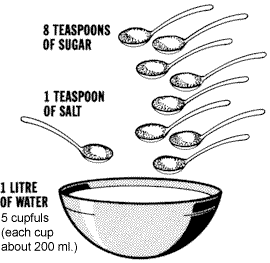
If you are traveling in Zimbabwe or neighboring countries and have severe watery diarrhea seek medical care right away. It is important to remember to drink fluids and use oral rehydration solution (ORS) to prevent dehydration.
More Information
The United Nations Office for the Coordination of Humanitarian Affairs in Zimbabwe has reported that new cases and deaths due to cholera are increasing. Although Zimbabwe has reported several smaller cholera outbreaks in recent years, this outbreak is more severe and may worsen with the onset of the rainy season. On December 3, the government of Zimbabwe declared a national emergency and appealed for international assistance. The humanitarian community has already been responding to this outbreak with water, sanitation, and hygiene initiatives in outbreak areas. WHO and its Health Cluster partners are finalizing a "Cholera Response Operational Plan" to evaluate and control the current outbreak.
For more information about the cholera outbreak in Zimbabwe, including maps:
Cholera in Zimbabwe and Neighboring Countries
This information is current as of today, January 09, 2009 at 18:57
Updated: January 09, 2009
An outbreak of cholera has been reported by health officials in Zimbabwe. According to the United Nations Office of the Coordination of Humanitarian Affairs, from August 26 through January 8, 2009, 35,330 suspected cases and 1,753 deaths have been reported in the country. The worst-affected areas are the capital city of Harare (11,500 cases and 382 deaths), Mashonaland West (8,184 cases and 377 deaths), Matabeleland South (4,191 cases and 128 deaths). Cases of cholera have been reported in all of Zimbabwe?s provinces. Cases have also been confirmed in the neighboring countries of Botswana, Mozambique, South Africa, and Zambia. Additional sources have reported cases in Angola, Burundi, Democratic Republic of Congo, Kenya, Malawi, Namibia, Nigeria, Guinea-Bissau and Togo.
Cholera is a potentially fatal bacterial infection that causes severe diarrhea and dehydration. The disease is spread through untreated sewage and contaminated drinking water. There is no cholera vaccine available in the United States.
Advice for People Traveling to Zimbabwe
Most travelers are not at high risk for getting cholera, but travelers should be aware of the outbreak and make sure they are taking steps to prevent getting sick. Although no cholera vaccine is available in the United States, U.S. travelers can greatly reduce their risk for cholera by following CDC?s safe food and water advice:
- Before departing for Zimbabwe, talk to your doctor about getting a prescription for an antibiotic to treat traveler?s diarrhea.
- Drink water that you have boiled for at least one minute or treated with chlorine or iodine. Other safe beverages include tea and coffee made with boiled or treated water, as well as drinks that have been bottled and sealed (such as bottled water, carbonated drinks, and sports drinks).
- Do not put ice in drinks, unless the ice is made from boiled or treated water.
- Eat only foods that have been thoroughly cooked and are still hot, or fruit that you have peeled yourself.
- Do not eat undercooked or raw fish or shellfish, including ceviche.
- Make sure all vegetables are cooked. Do not eat salads or other raw vegetables.
- Do not eat foods and drink beverages from street vendors.
- Do not bring perishable seafood back to the United States.
If you are traveling in Zimbabwe or neighboring countries and have severe watery diarrhea seek medical care right away. It is important to remember to drink fluids and use oral rehydration solution (ORS) to prevent dehydration.
More Information
The United Nations Office for the Coordination of Humanitarian Affairs in Zimbabwe has reported that new cases and deaths due to cholera are increasing. Although Zimbabwe has reported several smaller cholera outbreaks in recent years, this outbreak is more severe and may worsen with the onset of the rainy season. On December 3, the government of Zimbabwe declared a national emergency and appealed for international assistance. The humanitarian community has already been responding to this outbreak with water, sanitation, and hygiene initiatives in outbreak areas. WHO and its Health Cluster partners are finalizing a "Cholera Response Operational Plan" to evaluate and control the current outbreak.
For more information about the cholera outbreak in Zimbabwe, including maps:
- Weekly Situation Report?United Nations Office for the Coordination of Humanitarian Affairs (January 8, 2009)
- Cholera in Zimbabwe?World Health Organization (December 2, 2008)
- Relief Web, Zimbabwe?United Nations, Office of the Coordination of Humanitarian Affairs, (January 8, 2009)
- Warden message about cholera, November 26, 2008?American Embassy in Harare, Zimbabwe Warden messages
- Cholera (from CDC Health Information for International Travel 2008)
- Safe food and water (CDC Travelers? Health website)
- Cholera (from CDC, Division of Foodborne, Bacterial, and Mycotic Diseases)
- Cholera (from CDC Health Information for International Travel 2008)
- On the web: List of local medical specialists (Embassy of the United States, Harare, Zimbabwe)
- By phone: 263-4-250593/4 Consular section of the United States Embassy, Harare, Zimbabwe: American Citizen Services