

sharon sanders
Editor-in-Chief & President
Must-Haves for Your First-Aid Kit
Posted on May 13, 2021 by Blog Administrator
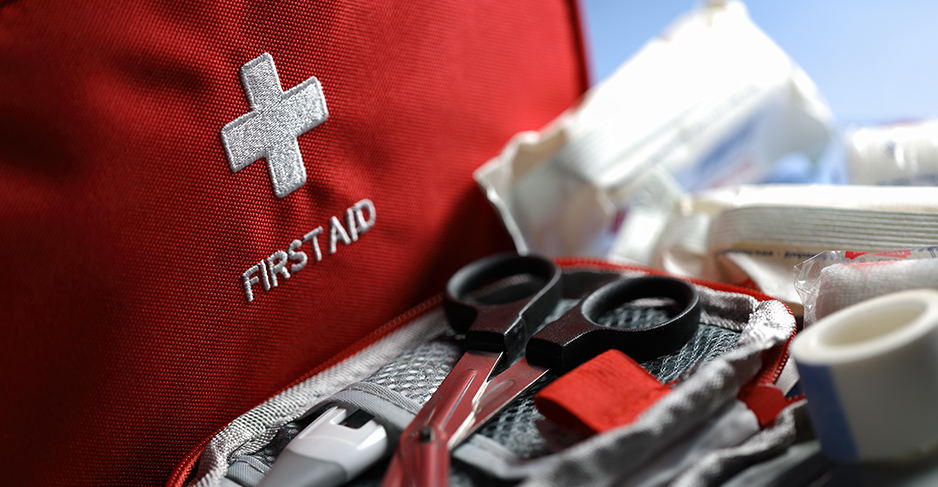
First-aid kits are nothing new. They go back over 100 years to when, as the story goes, Robert Wood Johnson debuted the first-aid cabinet in 1888.(1)
First-aid kits have changed over the years, but they are as useful as ever. They make it possible for ordinary people to be the help until professional help arrives. You don’t need a special certification to provide first aid, but you do need the right supplies and education.
First-aid kit checklist
Kate Elkins is an Emergency Medical Services (EMS) and 911 specialist in the Office of EMS and the National 911 Program. An active paramedic, Elkins also responds to 911 calls and serves as a medical specialist with Maryland Task Force 1, a FEMA urban search and rescue team.
First-hand experience has shown her how important having a well-stocked and maintained first-aid kit can be. “There are certain things you need to have at hand in the moment. In a crisis, you’re not going to have time to go to the store to get what you need,” Elkins points out.
The American Red Cross suggests that a first-aid kit for a family of four include the following items:
Remove, throw away, or use and replace any supplies before they expire. Set a calendar reminder on your smartphone to update the supplies in your kit every six months and/or as the healthcare needs of your family change.
Customize your kit
Think about the healthcare needs of your family when putting together a first-aid kit. For example:
A person who is using a first-aid kit in an emergency might need to call 911 for assistance. Having the home or office address written on the outside of the kit itself can give users a handy location reference for 911 operators.
First aid as practical skill
A first-aid kit is a tool, but any tool is only as good as the person using it.
First-aid kits are one place where personal needs and practical skills come together. There are ways to prepare for emergencies that have nothing to do with collecting supplies. This includes learning practical skills that you can use to protect yourself and others.
Many practical skills are easy to learn. Some require special certification or formal training. Others just education. Practical skills include learning how to:
You can take action today. “You Are the Help Until Help Arrives” and “Stop the Bleed” are examples of training that teach you how to provide first care. A good first-aid kit and the practical skill to use it can help you save someone’s life.
Learn more ways to prepare your health for emergencies on the CDC website.
Resources
Page last reviewed: May 13, 2021
https://blogs.cdc.gov/publichealthmatters/2021/05/first-aid-kits/
Posted on May 13, 2021 by Blog Administrator
First-aid kits are nothing new. They go back over 100 years to when, as the story goes, Robert Wood Johnson debuted the first-aid cabinet in 1888.(1)
First-aid kits have changed over the years, but they are as useful as ever. They make it possible for ordinary people to be the help until professional help arrives. You don’t need a special certification to provide first aid, but you do need the right supplies and education.
First-aid kit checklist
Kate Elkins is an Emergency Medical Services (EMS) and 911 specialist in the Office of EMS and the National 911 Program. An active paramedic, Elkins also responds to 911 calls and serves as a medical specialist with Maryland Task Force 1, a FEMA urban search and rescue team.
First-hand experience has shown her how important having a well-stocked and maintained first-aid kit can be. “There are certain things you need to have at hand in the moment. In a crisis, you’re not going to have time to go to the store to get what you need,” Elkins points out.
The American Red Cross suggests that a first-aid kit for a family of four include the following items:
- A first-aid guide
- 2 absorbent compress dressings (5 x 9 inches)
- 25 adhesive bandages (assorted sizes)
- 1 adhesive cloth tape (10 yards x 1 inch)
- 5 antibiotic ointment packets
- 5 antiseptic wipe packets
- 2 packets of aspirin (81 mg each)
- 1 emergency blanket
- 1 breathing barrier (with one-way valve)
- 1 instant cold compress
- 2 pair of nonlatex gloves (size: large)
- 2 hydrocortisone ointment packets
- 1 3-inch gauze roll (roller) bandage
- 1 roller bandage (4 inches wide)
- 5 3 x 3-inch sterile gauze pads
- 5 sterile gauze pads (4 x 4 inches)
- A thermometer (non-mercury/non-glass)
- 2 triangular bandages
- Tweezers
Remove, throw away, or use and replace any supplies before they expire. Set a calendar reminder on your smartphone to update the supplies in your kit every six months and/or as the healthcare needs of your family change.
Customize your kit
Think about the healthcare needs of your family when putting together a first-aid kit. For example:
- If you have a family member with a severe allergy, include antihistamine medicine and an epinephrine injector.
- If you have elderly family members with fragile skin, including a roll of paper tape can be useful for protecting delicate skin.
- If you or a family member lives with diabetes, include a juice box, glucose tablets and gels, and an emergency glucagon injection kit.
- Chewable, baby aspirin might help someone who has coronary artery disease, provided the person is not allergic to aspirin.
A person who is using a first-aid kit in an emergency might need to call 911 for assistance. Having the home or office address written on the outside of the kit itself can give users a handy location reference for 911 operators.
First aid as practical skill
A first-aid kit is a tool, but any tool is only as good as the person using it.
First-aid kits are one place where personal needs and practical skills come together. There are ways to prepare for emergencies that have nothing to do with collecting supplies. This includes learning practical skills that you can use to protect yourself and others.
Many practical skills are easy to learn. Some require special certification or formal training. Others just education. Practical skills include learning how to:
- Perform hands-only cardiopulmonary resuscitation (CPR)
- Operate an automated external defibrillator (AED)
- Apply a tourniquet and control bleeding
- Administer seizure first aid
- Use the contents of a first-aid kit
You can take action today. “You Are the Help Until Help Arrives” and “Stop the Bleed” are examples of training that teach you how to provide first care. A good first-aid kit and the practical skill to use it can help you save someone’s life.
Learn more ways to prepare your health for emergencies on the CDC website.
Resources
- #PrepYourHealth: Personal needs
- #PrepYourHealth: Practical Skills
- American Red Cross First Aid
- Stop the Bleed
- Until Help Arrives
- Learn Hands-Only CPR
- Spanish Hands-Only CPR
- How to Use an AED
Page last reviewed: May 13, 2021
https://blogs.cdc.gov/publichealthmatters/2021/05/first-aid-kits/