

Pathfinder
Editor, Senior Moderator
March 31, 2025
Español
Current Situation: Bird Flu in Dairy Cows
What to know
A multistate outbreak of HPAI A(H5N1) bird flu in dairy cows was first reported on March 25, 2024. This is the first time that these bird flu viruses had been found in cows. In the United States, since 2022, USDA APHIS has reported HPAI A(H5N1) virus detections in more than 200 mammals.
Domestic Summary
On April 1, CDC confirmed one human HPAI A(H5N1) infection in a person with exposure to dairy cows in Texas that were presumed to be infected with the virus. This is thought to be the first instance of likely mammal to human spread of HPAI A(H5N1) virus. In May 2024, CDC began reporting additional, sporadic human cases in people who had exposure to infected dairy cows. That latest human case counts are available at H5N1 Bird Flu: Current Situation Summary.
Data
States with Outbreaks in Dairy Cows
17
as of 3/31/2025 | Full Report >
Dairy Herds Affected
995
as of 3/31/2025 Full Report >
Data on outbreaks in dairy cows are retrieved from USDA: HPAI Confirmed Cases in Livestock | Animal and Plant Health Inspection Service (usda.gov).
Monitoring for H5 in People
CDC systems that monitor national, state, and local level influenza data are being used during the current avian influenza A(H5N1) situation. These systems show no indicators of unusual influenza activity in people, including avian influenza A(H5N1).
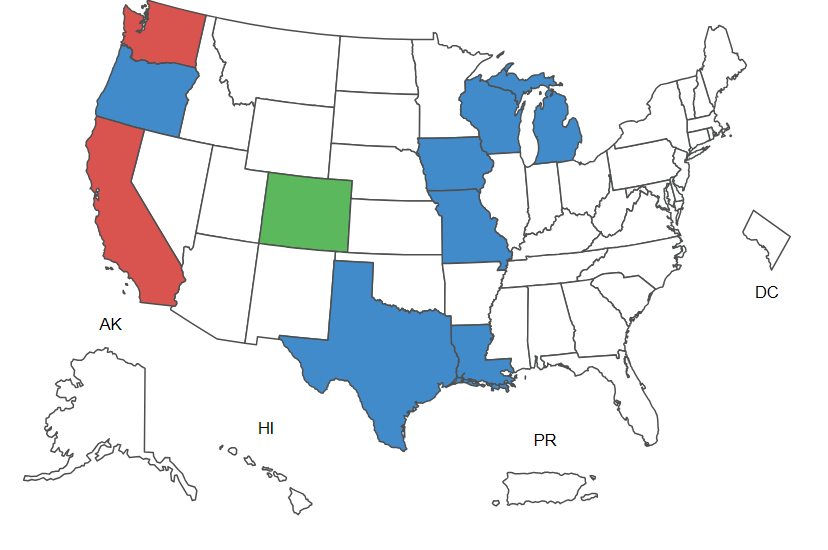
U.S. states that have reported human case(s) of influenza A(H5) virus infection.
Background
While rare, mammals can be infected with highly pathogenic avian influenza (HPAI) A(H5N1) ("H5N1 bird flu") viruses. Reports of these sporadic infections in mammals have occurred globally amid widespread outbreaks of bird flu infections in wild birds and poultry.
Mammals can be infected with H5N1 bird flu viruses when they eat infected birds, poultry, or other animals and/or if they are exposed to environments contaminated with virus. Spread of H5N1 bird flu viruses from mammal to mammal is thought to be rare, but possible.
Global Summary
Globally, sporadic HPAI A(H5N1) virus infections in mammals have been reported across the continents of Asia, North America, South America, and Europe. More information about the global impact of avian influenza can be found here: Avian Influenza - WOAH - World Organisation for Animal Health.
Specifically, recent HPAI A(H5N1) infections in mammals have been detected in sea lions in Peru and Chile, sea elephants in Argentina, and foxes in Canada, France, and other countries.
Keep Reading:Highlights in the History of Avian Influenza (Bird Flu)
Risk to Humans
The wide geographic spread of HPAI A(H5N1) viruses in wild birds, poultry, and some other mammals, including in cows, could create additional opportunities for people to be exposed to these viruses. Therefore, there could be an increase in sporadic human infections resulting from bird and animal exposures, even if the risk of these viruses spreading from birds to people has not increased. CDC believes the current risk to the general public from bird flu viruses is low. People who have job-related or recreational exposure to infected birds or animals, including cows, are at greater risk of contracting HPAI A(H5N1) virus. CDC has recommendations related to testing, treatment of HPAI A(H5N1) infection and prevention of exposure to these viruses: Highly Pathogenic Avian Influenza A(H5N1) Virus in Animals: Interim Recommendations for Prevention, Monitoring, and Public Health Investigations.
Vaccination
Getting a seasonal flu vaccine will not protect against H5N1 bird flu
While getting a seasonal flu vaccine only prevents seasonal flu and will not protect against H5N1 bird flu, it is important that people who may have frequent exposure to infected or potentially infected birds or other animals get a seasonal flu vaccine, ideally 2 weeks before their potential exposure. This is because it can reduce the prevalence and severity of seasonal flu and might reduce the very rare risk of coinfection with a human seasonal virus and an avian virus at the same time, and the theoretical risk that reassortment between the two could result in a new virus. Such dual infections, while very rare, could theoretically result in genetic reassortment of the two different influenza A viruses and lead to a new influenza A virus that has a different combination of genes, and which could pose a significant public health concern.
...
https://www.cdc.gov/bird-flu/situation-summary/mammals.html
Español
Current Situation: Bird Flu in Dairy Cows
What to know
A multistate outbreak of HPAI A(H5N1) bird flu in dairy cows was first reported on March 25, 2024. This is the first time that these bird flu viruses had been found in cows. In the United States, since 2022, USDA APHIS has reported HPAI A(H5N1) virus detections in more than 200 mammals.
Domestic Summary
On April 1, CDC confirmed one human HPAI A(H5N1) infection in a person with exposure to dairy cows in Texas that were presumed to be infected with the virus. This is thought to be the first instance of likely mammal to human spread of HPAI A(H5N1) virus. In May 2024, CDC began reporting additional, sporadic human cases in people who had exposure to infected dairy cows. That latest human case counts are available at H5N1 Bird Flu: Current Situation Summary.
Data
States with Outbreaks in Dairy Cows
17
as of 3/31/2025 | Full Report >
Dairy Herds Affected
995
as of 3/31/2025 Full Report >
Data on outbreaks in dairy cows are retrieved from USDA: HPAI Confirmed Cases in Livestock | Animal and Plant Health Inspection Service (usda.gov).
Monitoring for H5 in People
CDC systems that monitor national, state, and local level influenza data are being used during the current avian influenza A(H5N1) situation. These systems show no indicators of unusual influenza activity in people, including avian influenza A(H5N1).
U.S. states that have reported human case(s) of influenza A(H5) virus infection.
Background
While rare, mammals can be infected with highly pathogenic avian influenza (HPAI) A(H5N1) ("H5N1 bird flu") viruses. Reports of these sporadic infections in mammals have occurred globally amid widespread outbreaks of bird flu infections in wild birds and poultry.
Mammals can be infected with H5N1 bird flu viruses when they eat infected birds, poultry, or other animals and/or if they are exposed to environments contaminated with virus. Spread of H5N1 bird flu viruses from mammal to mammal is thought to be rare, but possible.
Global Summary
Globally, sporadic HPAI A(H5N1) virus infections in mammals have been reported across the continents of Asia, North America, South America, and Europe. More information about the global impact of avian influenza can be found here: Avian Influenza - WOAH - World Organisation for Animal Health.
Specifically, recent HPAI A(H5N1) infections in mammals have been detected in sea lions in Peru and Chile, sea elephants in Argentina, and foxes in Canada, France, and other countries.
Keep Reading:Highlights in the History of Avian Influenza (Bird Flu)
Risk to Humans
The wide geographic spread of HPAI A(H5N1) viruses in wild birds, poultry, and some other mammals, including in cows, could create additional opportunities for people to be exposed to these viruses. Therefore, there could be an increase in sporadic human infections resulting from bird and animal exposures, even if the risk of these viruses spreading from birds to people has not increased. CDC believes the current risk to the general public from bird flu viruses is low. People who have job-related or recreational exposure to infected birds or animals, including cows, are at greater risk of contracting HPAI A(H5N1) virus. CDC has recommendations related to testing, treatment of HPAI A(H5N1) infection and prevention of exposure to these viruses: Highly Pathogenic Avian Influenza A(H5N1) Virus in Animals: Interim Recommendations for Prevention, Monitoring, and Public Health Investigations.
Vaccination
Getting a seasonal flu vaccine will not protect against H5N1 bird flu
While getting a seasonal flu vaccine only prevents seasonal flu and will not protect against H5N1 bird flu, it is important that people who may have frequent exposure to infected or potentially infected birds or other animals get a seasonal flu vaccine, ideally 2 weeks before their potential exposure. This is because it can reduce the prevalence and severity of seasonal flu and might reduce the very rare risk of coinfection with a human seasonal virus and an avian virus at the same time, and the theoretical risk that reassortment between the two could result in a new virus. Such dual infections, while very rare, could theoretically result in genetic reassortment of the two different influenza A viruses and lead to a new influenza A virus that has a different combination of genes, and which could pose a significant public health concern.
...
https://www.cdc.gov/bird-flu/situation-summary/mammals.html
