

sharon sanders
Editor-in-Chief & President
Be Prepared: Staying Safe and Healthy in Winter Weather

Winter storms and cold temperatures can be hazardous, but if you plan ahead, you can stay safe and healthy. Prepare your home and cars. Keep emergency kits stocked. Be ready for power outages. Wear appropriate clothing. Check on children, the elderly and pets.

Although winter comes as no surprise, many of us are not ready for its arrival. If you are prepared for the hazards of winter, you will be more likely to stay safe and healthy when temperatures start to fall.
Many people prefer to remain indoors in the winter, but staying inside is no guarantee of safety. Take these steps to keep your home safe and warm during the winter months:
No one can stop the onset of winter. However, if you follow these suggestions, you will be ready for it when it comes.
More Information
http://www.cdc.gov/Features/WinterWeather/?s_cid=3ni7d2TW1002070346
Winter storms and cold temperatures can be hazardous, but if you plan ahead, you can stay safe and healthy. Prepare your home and cars. Keep emergency kits stocked. Be ready for power outages. Wear appropriate clothing. Check on children, the elderly and pets.
Although winter comes as no surprise, many of us are not ready for its arrival. If you are prepared for the hazards of winter, you will be more likely to stay safe and healthy when temperatures start to fall.
Many people prefer to remain indoors in the winter, but staying inside is no guarantee of safety. Take these steps to keep your home safe and warm during the winter months:
- Winterize your home.
- Install weather stripping, insulation, and storm windows.
- Insulate water lines that run along exterior walls.
- Clean out gutters and repair roof leaks.
- Check your heating systems.
- Make sure that your heating system is clean, working properly, and ventilated to the outside.
- Inspect and clean fireplaces and chimneys.
- Install a smoke detector. Test batteries monthly.
- Have a safe alternate heating source and alternate fuels available.
- Prevent carbon monoxide (CO) emergencies.
- Always "warm up" your car or truck outside of your garage. Attached garages can leak CO fumes into your house, even if you leave the door open
- Install a CO detector to alert you of the presence of the deadly, odorless, colorless gas.
- Learn symptoms of CO poisoning: headaches, nausea, and disorientation.
- Keep grills and generators out of the house and garage. Position generators at least 25 feet from the house.
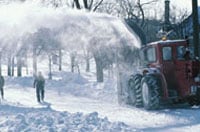
- Be prepared for weather-related emergencies, including power outages.
- Stock food that needs no cooking or refrigeration and water stored in clean containers.
- Keep an up-to-date emergency kit, including:
- battery-operated devices, such as a flashlight, a National Oceanic and Atmospheric Administration (NOAA) Weather Radio, and lamps;
- extra batteries;
- first-aid kit and extra medicine;
- baby items; and
- cat litter or sand for icy walkways.
- Wear appropriate outdoor clothing: layers of light, warm clothing; mittens; hats; scarves; and waterproof boots.
- Sprinkle cat litter or sand on icy patches.
- Learn safety precautions to follow when outdoors.
- Be aware of the wind chill factor.
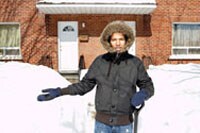
- Work slowly when doing outside chores.
- Take a buddy and an emergency kit when you are participating in outdoor recreation.
- Avoid traveling when the weather service has issued advisories.
- If you must travel, inform a friend or relative of your proposed route and expected time of arrival.
- Carry a cell phone.
- Prepare your car for winter.
- Service the radiator and maintain antifreeze level; check tire tread or, if necessary, replace tires with all-weather or snow tires
- Keep gas tank full to avoid ice in the tank and fuel lines.
- Use a wintertime formula in your windshield washer.

- Keep a winter emergency kit in your car in case you become stranded. Include
- blankets;
- food and water;
- booster cables, flares, tire pump, and a bag of sand or cat litter (for traction);
- compass and maps;
- flashlight, battery-powered radio, and extra batteries;
- first-aid kit; and
- plastic bags (for sanitation).
- Learn safety rules to follow in case you become stranded in your car.
- Stay with your car unless safety is no more than 100 yards away, but continue to move arms and legs.
- Stay visible by putting bright cloth on the antenna, turning on the inside overhead light (when engine is running), and raising the hood when snow stops falling.
- Run the engine and heater only 10 minutes every hour.
- Keep a downwind window open.
- Make sure the tailpipe is not blocked.
No one can stop the onset of winter. However, if you follow these suggestions, you will be ready for it when it comes.
More Information
- Learn more about preventive measures to stay healthy and safe in winter weather.
- Download a PDF file for easy access to all CDC winter weather information.
- Protect yourself from CO poisoning.
- Learn about cold weather stress and winter health problems.
- Learn more about winter weather from the National Weather Service.
- Learn how to protect yourself from the health effects of extreme cold and winter storms.
http://www.cdc.gov/Features/WinterWeather/?s_cid=3ni7d2TW1002070346