

Michael Coston
Editor, Senior Moderator
British Columbia Press Release: Government Reports 8 Skunks Infected With HPAI H5N1
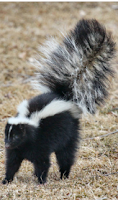
Credit USDA
#17,345
Over the past two days we've looked at two separate studies on the spillover of HPAI H5N1 to mammals - one from Canada on Friday, and one today from the U.S. - that between them reported on more than 100 infected terrestrial mammals.
Although the number of mammals (terrestrial & marine) confirmed to have been infected globally is somewhere in the neighborhood of 4,000, it is highly likely we are only seeing the tip of the iceberg.
Today the B.C. government announced the identification of 8 more peridomestic mammals - in this case skunks from residential areas of Richmond and Vancouver - infected with HPAI H5.
First the announcement, after which I'll have a bit more on protecting pets.
Information Bulletin
Victoria
Monday, March 13, 2023 1:00 PM
The skunks were found in residential areas in both cities and were taken to B.C.’s Animal Health Centre due to concerns they may have been deliberately poisoned. Testing revealed the skunks were infected with the same strain of H5N1 avian influenza that caused the deaths of wildlife and domestic poultry in the province since the April 2022 outbreak began. The skunks may have contracted influenza by scavenging infected wild birds.
While influenza in skunks is considered to be a low risk to human health, there are always risks when people and pets come into contact with sick or dead wild animals, including skunks and birds. People who encounter a dead skunk in Richmond or Vancouver should leave the animal where it is and contact the B.C. Wildlife Health Program at 250 751-7246.
The cases of H5N1 avian influenza in B.C. are part of a larger national and international outbreak.
While the biggest risk of exposure is for those who raise chickens or who work in the poultry industry, the level of H5N1 is increasing in the environment, even in the residential areas of large cities. And that increases the chances that humans - and especially their pets - could come in contact with the virus.
We've seen numerous instances of cats and dogs infected with HPAI H5 (and other novel flu viruses) over the years (see 2015's HPAI H5: Catch As Cats Can and 2010's Study: Dogs And H5N1).
While the risks are still probably low, they are not zero. The CDC has some advice on keeping your pets, and yourself, safe from the virus. With the spring return migration now underway, and millions of birds headed north, a little extra caution is probably warranted.
Pet Owners
If your domestic animals (e.g., cats or dogs) go outside and could potentially eat or be exposed to sick or dead birds infected with bird flu viruses, or an environment contaminated with bird flu virus, they could become infected with bird flu. While it’s unlikely that you would get sick with bird flu through direct contact with your infected pet, it is possible. For example, in 2016, the spread of bird flu from a cat to a person was reported in NYC. The person who was infected [2.29 MB, 4 pages] was a veterinarian who had mild flu symptoms after prolonged exposure to sick cats without using personal protective equipment.
If your pet is showing signs of illness compatible with bird flu virus infection and has been exposed to infected (sick or dead) wild birds/poultry, you should monitor your health for signs of fever or infection.
Take precautions to prevent the spread of bird flu.
As a general precaution, people should avoid direct contact with wild birds and observe wild birds only from a distance, whenever possible. People should also avoid contact between their pets (e.g., pet birds, dogs and cats) with wild birds. Don’t touch sick or dead birds, their feces or litter, or any surface or water source (e.g., ponds, waterers, buckets, pans, troughs) that might be contaminated with their saliva, feces, or any other bodily fluids without wearing personal protective equipment (PPE). More information about specific precautions to take for preventing the spread of bird flu viruses between animals and people is available at Prevention and Antiviral Treatment of Bird Flu Viruses in People. Additional information about the appropriate PPE to wear is available at Backyard Flock Owners: Take Steps to Protect Yourself from Avian Influenza.
https://afludiary.blogspot.com/2023/03/british-columbia-press-release.html
Credit USDA
#17,345
Over the past two days we've looked at two separate studies on the spillover of HPAI H5N1 to mammals - one from Canada on Friday, and one today from the U.S. - that between them reported on more than 100 infected terrestrial mammals.
Although the number of mammals (terrestrial & marine) confirmed to have been infected globally is somewhere in the neighborhood of 4,000, it is highly likely we are only seeing the tip of the iceberg.
Today the B.C. government announced the identification of 8 more peridomestic mammals - in this case skunks from residential areas of Richmond and Vancouver - infected with HPAI H5.
First the announcement, after which I'll have a bit more on protecting pets.
Information Bulletin
Victoria
Monday, March 13, 2023 1:00 PM
Testing has confirmed eight skunks found dead in late February in Richmond and Vancouver are positive for avian influenza.
The skunks were found in residential areas in both cities and were taken to B.C.’s Animal Health Centre due to concerns they may have been deliberately poisoned. Testing revealed the skunks were infected with the same strain of H5N1 avian influenza that caused the deaths of wildlife and domestic poultry in the province since the April 2022 outbreak began. The skunks may have contracted influenza by scavenging infected wild birds.
While influenza in skunks is considered to be a low risk to human health, there are always risks when people and pets come into contact with sick or dead wild animals, including skunks and birds. People who encounter a dead skunk in Richmond or Vancouver should leave the animal where it is and contact the B.C. Wildlife Health Program at 250 751-7246.
Since April 2022, wildlife infected by avian influenza in B.C. have included more than 20 species of wild birds, as well as two skunks and one fox found in rural areas of the
province.
province.
The cases of H5N1 avian influenza in B.C. are part of a larger national and international outbreak.
While the biggest risk of exposure is for those who raise chickens or who work in the poultry industry, the level of H5N1 is increasing in the environment, even in the residential areas of large cities. And that increases the chances that humans - and especially their pets - could come in contact with the virus.
We've seen numerous instances of cats and dogs infected with HPAI H5 (and other novel flu viruses) over the years (see 2015's HPAI H5: Catch As Cats Can and 2010's Study: Dogs And H5N1).
While the risks are still probably low, they are not zero. The CDC has some advice on keeping your pets, and yourself, safe from the virus. With the spring return migration now underway, and millions of birds headed north, a little extra caution is probably warranted.
Pet Owners
If your domestic animals (e.g., cats or dogs) go outside and could potentially eat or be exposed to sick or dead birds infected with bird flu viruses, or an environment contaminated with bird flu virus, they could become infected with bird flu. While it’s unlikely that you would get sick with bird flu through direct contact with your infected pet, it is possible. For example, in 2016, the spread of bird flu from a cat to a person was reported in NYC. The person who was infected [2.29 MB, 4 pages] was a veterinarian who had mild flu symptoms after prolonged exposure to sick cats without using personal protective equipment.
If your pet is showing signs of illness compatible with bird flu virus infection and has been exposed to infected (sick or dead) wild birds/poultry, you should monitor your health for signs of fever or infection.
Take precautions to prevent the spread of bird flu.
As a general precaution, people should avoid direct contact with wild birds and observe wild birds only from a distance, whenever possible. People should also avoid contact between their pets (e.g., pet birds, dogs and cats) with wild birds. Don’t touch sick or dead birds, their feces or litter, or any surface or water source (e.g., ponds, waterers, buckets, pans, troughs) that might be contaminated with their saliva, feces, or any other bodily fluids without wearing personal protective equipment (PPE). More information about specific precautions to take for preventing the spread of bird flu viruses between animals and people is available at Prevention and Antiviral Treatment of Bird Flu Viruses in People. Additional information about the appropriate PPE to wear is available at Backyard Flock Owners: Take Steps to Protect Yourself from Avian Influenza.
https://afludiary.blogspot.com/2023/03/british-columbia-press-release.html

