

Install the app
How to install the app on iOS
Follow along with the video below to see how to install our site as a web app on your home screen.
Note: This feature may not be available in some browsers.
-
FluTrackers.com Inc. does not provide medical advice. Information on this web site is collected from various internet resources, and the FluTrackers board of directors makes no warranty to the safety, efficacy, correctness or completeness of the information posted on this site by any author or poster. The information collated here is for instructional and/or discussion purposes only and is NOT intended to diagnose or treat any disease, illness, or other medical condition. Every individual reader or poster should seek advice from their personal physician/healthcare practitioner before considering or using any interventions that are discussed on this website. By continuing to access this website you agree to consult your personal physican before using any interventions posted on this website, and you agree to hold harmless FluTrackers.com Inc., the board of directors, the members, and all authors and posters for any effects from use of any medication, supplement, vitamin or other substance, device, intervention, etc. mentioned in posts on this website, or other internet venues referenced in posts on this website.
-
We are not asking for any donations. Do not donate to any entity who says they are raising funds for us.
You are using an out of date browser. It may not display this or other websites correctly.
You should upgrade or use an alternative browser.
You should upgrade or use an alternative browser.
California - Avian influenza in poultry 2024-2026
- Thread starter Pathfinder
- Start date

Commonground
Senior Moderator
Large Sonoma County duck farm hit with first avian flu outbreak of 2025-26 winter
California’s first bird flu outbreak of the 2025-26 winter season has hit close to home. The owner of Reichardt Duck Farm, which sits in the rolling hills between Petaluma and the Two Rock area, confirmed that his facility recently recorded positive cases of the dreaded virus.
-snip-
The latest outbreak was detected after Reichardt Duck Farm staff noticed “a modest increase in mortality” — eight dead birds — in one of the barns last week, Phil Reichardt said. The next morning, there were a few more than that. They took a sample of birds to UC Davis for analysis, and received confirmation of Highly Pathogenic Avian Flu, or HPAI, on Oct. 24.
-snip-
The strain of bird flu detected in recent tests at Reichardt Duck Farm is the same as the one that swept Sonoma County two years ago, resulting in the destruction of 1.2 million birds
...https://www.pressdemocrat.com/2025/...h-first-avian-flu-outbreak-of-2025-26-winter/
California’s first bird flu outbreak of the 2025-26 winter season has hit close to home. The owner of Reichardt Duck Farm, which sits in the rolling hills between Petaluma and the Two Rock area, confirmed that his facility recently recorded positive cases of the dreaded virus.
-snip-
The latest outbreak was detected after Reichardt Duck Farm staff noticed “a modest increase in mortality” — eight dead birds — in one of the barns last week, Phil Reichardt said. The next morning, there were a few more than that. They took a sample of birds to UC Davis for analysis, and received confirmation of Highly Pathogenic Avian Flu, or HPAI, on Oct. 24.
-snip-
The strain of bird flu detected in recent tests at Reichardt Duck Farm is the same as the one that swept Sonoma County two years ago, resulting in the destruction of 1.2 million birds
...https://www.pressdemocrat.com/2025/...h-first-avian-flu-outbreak-of-2025-26-winter/
Pathfinder
Editor, Senior Moderator
October 29, 2025: Highly Pathogenic Avian Influenza (Bird Flu) Detected in a Second Commercial Flock in Sonoma County
Sacramento, CA – Following an investigation by the California Department of Food and Agriculture (CDFA) and rapid disease detection by California Animal Health and Food Safety Laboratory System (CAHFS), the U.S. Department of Agriculture's National Veterinary Services Laboratories (NVSL) has confirmed highly pathogenic avian influenza (HPAI) in a second commercial flock in Sonoma County. Animal Disease Emergency Responders are working with the commercial owner to quickly respond, and movement restrictions have been placed in Sonoma County as part of rapidly containing the spread. This nationwide outbreak of HPAI began in 2022 and all US detections in poultry can be found here: 2022–2024 Detections of Highly Pathogenic Avian Influenza (usda.gov). Note that the website is updated at noon Eastern Standard Time.
For public inquiries regarding HPAI in California, please call 916-217-7517 or send an e-mail to cdfa.HPAIinfo@cdfa.ca.gov. For media inquiries, please call 916-654-0462 or send an e-mail to OfficeOfPublicAffairs@cdfa.ca.gov.
__________________________________________________ ________________________________________________
October 28, 2025: Highly Pathogenic Avian Influenza (Bird Flu) Detected in a Commercial Flock in Sonoma County
Sacramento, CA – Following an investigation by the California Department of Food and Agriculture (CDFA) and rapid disease detection by California Animal Health and Food Safety Laboratory System (CAHFS), the U.S. Department of Agriculture's National Veterinary Services Laboratories (NVSL) has confirmed highly pathogenic avian influenza (HPAI) in a commercial flock in Sonoma County. Animal Disease Emergency Responders are working with the commercial owner to quickly respond and movement restrictions have been placed in Sonoma County as part of rapidly containing the spread. This nationwide outbreak of HPAI began in 2022 and all US detections in poultry can be found here: 2022–2024 Detections of Highly Pathogenic Avian Influenza (usda.gov). Note that the website is updated at noon Eastern Standard Time.
For Poultry Owners
The Bird Flu virus is mainly spread by wild birds, especially in wild waterfowl such as ducks and geese. Any wild bird species can also become a source. Bird Flu is widespread in California and may be present in counties that are not listed. This can be due to no lab submissions from those counties. We strongly urge all poultry owners in California to protect their flocks by increasing their biosecurity practices. Recommended biosecurity practices can be found on the CDFA and USDA websites.
Avian influenza is a highly contagious and often fatal disease in birds. The disease is spread through movement of infected or exposed birds, direct or indirect contact with infected wild and domestic birds or contact with virus on fomites (surfaces) such as hands, shoes, clothing, or feet and fur of rodents and other animals.
Clinical signs of HPAI include sudden death, trouble breathing, clear runny discharge (from nose, mouth, and eyes), lethargy, decreased food and water intake, swelling (eyes, head, wattles, or combs), discolored or bruised comb, wattles, or legs, stumbling/falling or twisted neck.
Poultry owners with flocks that have experienced any unusual/suspicious illness or deaths should call our CDFA Sick Bird Hotline at 866-922-BIRD (2473).
Wild Birds
Avoid touching and handling injured, sick, or dead, wild birds. Contact your local animal control for further instruction and report any unusual or suspicious deaths in wild birds to the California Department of Fish and Wildlife online. If you have questions about wildlife rehabilitation, please contact the California Department of Fish and Wildlife directly: Wildlife Health Lab - Avian Investigations (ca.gov).
Stay Informed: For the latest updates in California domestic poultry, subscribe and follow us on social media. You can find us on Facebook (Animal Health Branch – CDFA) and Instagram (AnimalHealthBranch_CDFA).
For more information and updates on wild bird detections in California, visit the California Department of Fish and Wildlife website.
For public inquiries regarding HPAI in California, please call 916-217-7517 or send an e-mail to cdfa.HPAIinfo@cdfa.ca.gov. For media inquiries, please call 916-654-0462 or send an e-mail to OfficeOfPublicAffairs@cdfa.ca.gov.
...
https://www.cdfa.ca.gov/ahfss/animal_health/Avian_Influenza.html
Sacramento, CA – Following an investigation by the California Department of Food and Agriculture (CDFA) and rapid disease detection by California Animal Health and Food Safety Laboratory System (CAHFS), the U.S. Department of Agriculture's National Veterinary Services Laboratories (NVSL) has confirmed highly pathogenic avian influenza (HPAI) in a second commercial flock in Sonoma County. Animal Disease Emergency Responders are working with the commercial owner to quickly respond, and movement restrictions have been placed in Sonoma County as part of rapidly containing the spread. This nationwide outbreak of HPAI began in 2022 and all US detections in poultry can be found here: 2022–2024 Detections of Highly Pathogenic Avian Influenza (usda.gov). Note that the website is updated at noon Eastern Standard Time.
For public inquiries regarding HPAI in California, please call 916-217-7517 or send an e-mail to cdfa.HPAIinfo@cdfa.ca.gov. For media inquiries, please call 916-654-0462 or send an e-mail to OfficeOfPublicAffairs@cdfa.ca.gov.
__________________________________________________ ________________________________________________
October 28, 2025: Highly Pathogenic Avian Influenza (Bird Flu) Detected in a Commercial Flock in Sonoma County
Sacramento, CA – Following an investigation by the California Department of Food and Agriculture (CDFA) and rapid disease detection by California Animal Health and Food Safety Laboratory System (CAHFS), the U.S. Department of Agriculture's National Veterinary Services Laboratories (NVSL) has confirmed highly pathogenic avian influenza (HPAI) in a commercial flock in Sonoma County. Animal Disease Emergency Responders are working with the commercial owner to quickly respond and movement restrictions have been placed in Sonoma County as part of rapidly containing the spread. This nationwide outbreak of HPAI began in 2022 and all US detections in poultry can be found here: 2022–2024 Detections of Highly Pathogenic Avian Influenza (usda.gov). Note that the website is updated at noon Eastern Standard Time.
For Poultry Owners
The Bird Flu virus is mainly spread by wild birds, especially in wild waterfowl such as ducks and geese. Any wild bird species can also become a source. Bird Flu is widespread in California and may be present in counties that are not listed. This can be due to no lab submissions from those counties. We strongly urge all poultry owners in California to protect their flocks by increasing their biosecurity practices. Recommended biosecurity practices can be found on the CDFA and USDA websites.
Avian influenza is a highly contagious and often fatal disease in birds. The disease is spread through movement of infected or exposed birds, direct or indirect contact with infected wild and domestic birds or contact with virus on fomites (surfaces) such as hands, shoes, clothing, or feet and fur of rodents and other animals.
Clinical signs of HPAI include sudden death, trouble breathing, clear runny discharge (from nose, mouth, and eyes), lethargy, decreased food and water intake, swelling (eyes, head, wattles, or combs), discolored or bruised comb, wattles, or legs, stumbling/falling or twisted neck.
Poultry owners with flocks that have experienced any unusual/suspicious illness or deaths should call our CDFA Sick Bird Hotline at 866-922-BIRD (2473).
Wild Birds
Avoid touching and handling injured, sick, or dead, wild birds. Contact your local animal control for further instruction and report any unusual or suspicious deaths in wild birds to the California Department of Fish and Wildlife online. If you have questions about wildlife rehabilitation, please contact the California Department of Fish and Wildlife directly: Wildlife Health Lab - Avian Investigations (ca.gov).
Stay Informed: For the latest updates in California domestic poultry, subscribe and follow us on social media. You can find us on Facebook (Animal Health Branch – CDFA) and Instagram (AnimalHealthBranch_CDFA).
For more information and updates on wild bird detections in California, visit the California Department of Fish and Wildlife website.
For public inquiries regarding HPAI in California, please call 916-217-7517 or send an e-mail to cdfa.HPAIinfo@cdfa.ca.gov. For media inquiries, please call 916-654-0462 or send an e-mail to OfficeOfPublicAffairs@cdfa.ca.gov.
...
https://www.cdfa.ca.gov/ahfss/animal_health/Avian_Influenza.html
Pathfinder
Editor, Senior Moderator
Pathfinder
Editor, Senior Moderator
Pathfinder
Editor, Senior Moderator
Avian Influenza Alert
November 10, 2025: Highly Pathogenic Avian Influenza (Bird Flu) Detected in a Backyard Flock in El Dorado County
Sacramento, CA – Following an investigation by the California Department of Food and Agriculture (CDFA) and rapid disease detection by California Animal Health and Food Safety Laboratory System (CAHFS), the U.S. Department of Agriculture's National Veterinary Services Laboratories (NVSL) has confirmed highly pathogenic avian influenza (HPAI) in a backyard flock in El Dorado County. Animal Disease Emergency Responders are working with the commercial owner to quickly respond. Due to the investigator’s assessment, no movement restrictions will be placed in El Dorado County however, movement restrictions are still place in Sonoma County. This nationwide outbreak of HPAI began in 2022 and all US detections in poultry can be found here: 2022–2024 Detections of Highly Pathogenic Avian Influenza (usda.gov). Note that the website is updated at noon Eastern Standard Time.
For public inquiries regarding HPAI in California, please call 916-217-7517 or send an e-mail to cdfa.HPAIinfo@cdfa.ca.gov. For media inquiries, please call 916-654-0462 or send an e-mail to OfficeOfPublicAffairs@cdfa.ca.gov.
...
https://www.cdfa.ca.gov/ahfss/animal_health/Avian_Influenza.html
---------------------------------------------------------------------------------------------

...

...
https://www.aphis.usda.gov/livestoc...za/hpai-detections/commercial-backyard-flocks
November 10, 2025: Highly Pathogenic Avian Influenza (Bird Flu) Detected in a Backyard Flock in El Dorado County
Sacramento, CA – Following an investigation by the California Department of Food and Agriculture (CDFA) and rapid disease detection by California Animal Health and Food Safety Laboratory System (CAHFS), the U.S. Department of Agriculture's National Veterinary Services Laboratories (NVSL) has confirmed highly pathogenic avian influenza (HPAI) in a backyard flock in El Dorado County. Animal Disease Emergency Responders are working with the commercial owner to quickly respond. Due to the investigator’s assessment, no movement restrictions will be placed in El Dorado County however, movement restrictions are still place in Sonoma County. This nationwide outbreak of HPAI began in 2022 and all US detections in poultry can be found here: 2022–2024 Detections of Highly Pathogenic Avian Influenza (usda.gov). Note that the website is updated at noon Eastern Standard Time.
For public inquiries regarding HPAI in California, please call 916-217-7517 or send an e-mail to cdfa.HPAIinfo@cdfa.ca.gov. For media inquiries, please call 916-654-0462 or send an e-mail to OfficeOfPublicAffairs@cdfa.ca.gov.
...
https://www.cdfa.ca.gov/ahfss/animal_health/Avian_Influenza.html
---------------------------------------------------------------------------------------------
...
...
https://www.aphis.usda.gov/livestoc...za/hpai-detections/commercial-backyard-flocks
Commonground
Senior Moderator
[I don't see a date on the letter. This is a screenshot from the website]

CDFA Lifts Statewide Ban on California Poultry and Dairy Cattle
Exhibitions at Fairs and Shows
Dear Poultry and Dairy Cattle Exhibition Organizers and Managers:
The California Department of Food and Agriculture (CDFA) has closely monitored the status of
H5N1 Highly Pathogenic Avian Influenza (HPAI) in both poultry and dairy cattle throughout
California. Since the implementation of the statewide exhibition ban, CDFA has conducted
ongoing surveillance, reviewed viral trend data, and consulted with epidemiologists and animal
health partners at both the state and federal levels.
Based on a comprehensive review of current H5N1 infection trends, improved understanding of
transmission dynamics, and enhanced mitigation measures now in place, CDFA has determined
that the risk associated with poultry and dairy cattle exhibitions has sufficiently
decreased. Effective immediately, the statewide ban on poultry and dairy cattle
exhibitions at fairs and shows is hereby lifted.
This decision was not made lightly. CDFA recognizes the importance of protecting animal
health, public health, and California’s agricultural industries while also supporting youth
programs, educational opportunities, and agricultural traditions across the state.
While exhibitions may resume, CDFA strongly encourages all fairgrounds, exhibition organizers,
and exhibitors to continue implementing enhanced biosecurity practices and disease-prevention
measures. Animals exhibiting signs of illness should not be transported or exhibited, and
veterinarians should be contacted promptly if disease is suspected.
If H5N1 is suspected in either poultry or cattle, contact CDFA Sick Bird Hotline at: 866-922-
2473
CDFA will continue close monitoring of H5N1 activity statewide and will work collaboratively with
fair organizers and animal owners to ensure appropriate safeguards remain in place. Additional
guidance and recommendations for exhibitions will be available on the CDFA website.
If you have questions regarding this action, please contact CDFA’s H5N1 Public Information
Officer at cdfa.HPAIinfo@cdfa.ca.gov.
Thank you for your continued support and commitment to protecting California’s animals and
agricultural communities.
Sincerely,
Dr. Annette Jones
State Veterinarian
https://www.cdfa.ca.gov/AHFSS/Animal_Health/HPAI.html
CDFA Lifts Statewide Ban on California Poultry and Dairy Cattle
Exhibitions at Fairs and Shows
Dear Poultry and Dairy Cattle Exhibition Organizers and Managers:
The California Department of Food and Agriculture (CDFA) has closely monitored the status of
H5N1 Highly Pathogenic Avian Influenza (HPAI) in both poultry and dairy cattle throughout
California. Since the implementation of the statewide exhibition ban, CDFA has conducted
ongoing surveillance, reviewed viral trend data, and consulted with epidemiologists and animal
health partners at both the state and federal levels.
Based on a comprehensive review of current H5N1 infection trends, improved understanding of
transmission dynamics, and enhanced mitigation measures now in place, CDFA has determined
that the risk associated with poultry and dairy cattle exhibitions has sufficiently
decreased. Effective immediately, the statewide ban on poultry and dairy cattle
exhibitions at fairs and shows is hereby lifted.
This decision was not made lightly. CDFA recognizes the importance of protecting animal
health, public health, and California’s agricultural industries while also supporting youth
programs, educational opportunities, and agricultural traditions across the state.
While exhibitions may resume, CDFA strongly encourages all fairgrounds, exhibition organizers,
and exhibitors to continue implementing enhanced biosecurity practices and disease-prevention
measures. Animals exhibiting signs of illness should not be transported or exhibited, and
veterinarians should be contacted promptly if disease is suspected.
If H5N1 is suspected in either poultry or cattle, contact CDFA Sick Bird Hotline at: 866-922-
2473
CDFA will continue close monitoring of H5N1 activity statewide and will work collaboratively with
fair organizers and animal owners to ensure appropriate safeguards remain in place. Additional
guidance and recommendations for exhibitions will be available on the CDFA website.
If you have questions regarding this action, please contact CDFA’s H5N1 Public Information
Officer at cdfa.HPAIinfo@cdfa.ca.gov.
Thank you for your continued support and commitment to protecting California’s animals and
agricultural communities.
Sincerely,
Dr. Annette Jones
State Veterinarian
https://www.cdfa.ca.gov/AHFSS/Animal_Health/HPAI.html
Attachments

Pathfinder
Editor, Senior Moderator
Pathfinder
Editor, Senior Moderator
Pathfinder
Editor, Senior Moderator
Pathfinder
Editor, Senior Moderator
Pathfinder
Editor, Senior Moderator
Pathfinder
Editor, Senior Moderator
...
Backyard poultry at risk for bird flu as virus lingers in environment
- February 17, 2026
- By Pamela S Kan-Rice
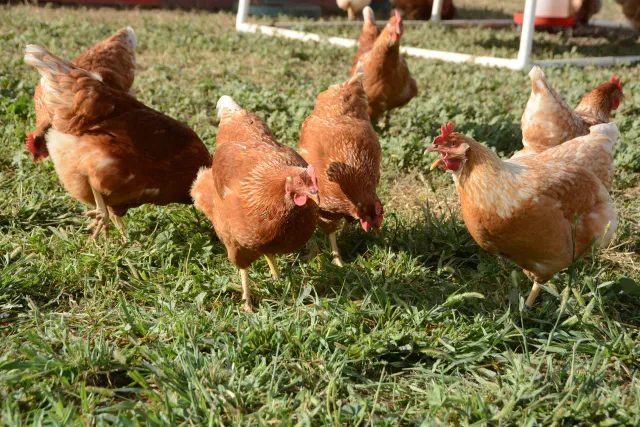
Poultry owners should take precautions to protect their birds against the deadly avian influenza virus. Photo by Trina Wood
UC expert offers tips, reminders after recent HPAI detections in Sutter, Sonoma counties
Poultry owners should remain vigilant about protecting their birds because the risk of avian influenza can change as quickly as the weather, says a University of California Cooperative Extension poultry specialist.
Detections in recent weeks of the highly pathogenic avian influenza virus in Sutter and Sonoma counties serve as a reminder that bird flu remains a threat. Animal disease emergency responders are working with the flock owners in both cases to mitigate the spread of disease.
“Disease risk is dynamic, influenced by weather, wildlife movement and human activity,” said Maurice Pitesky, UC Cooperative Extension poultry specialist in the School of Veterinary Medicine at UC Davis.
A drop in temperature in one part of California can drive wild waterfowl carrying HPAI influenza virus to migrate to a warmer part of the state. While migratory birds may bring the HPAI virus and move on, resident waterfowl may continue to spread it because the virus lingers in the environment.
Many poultry farms and homes with backyard chickens are located near bodies of water used by migratory birds and even when waterfowl are not present, virus can remain in the water, air and soil, according to Pitesky.
“Plus, climate – precipitation, moisture on the ground, temperature, state of crop development on fields, etc. – dictates waterfowl activity. It’s just a dynamic situation,” Pitesky said.
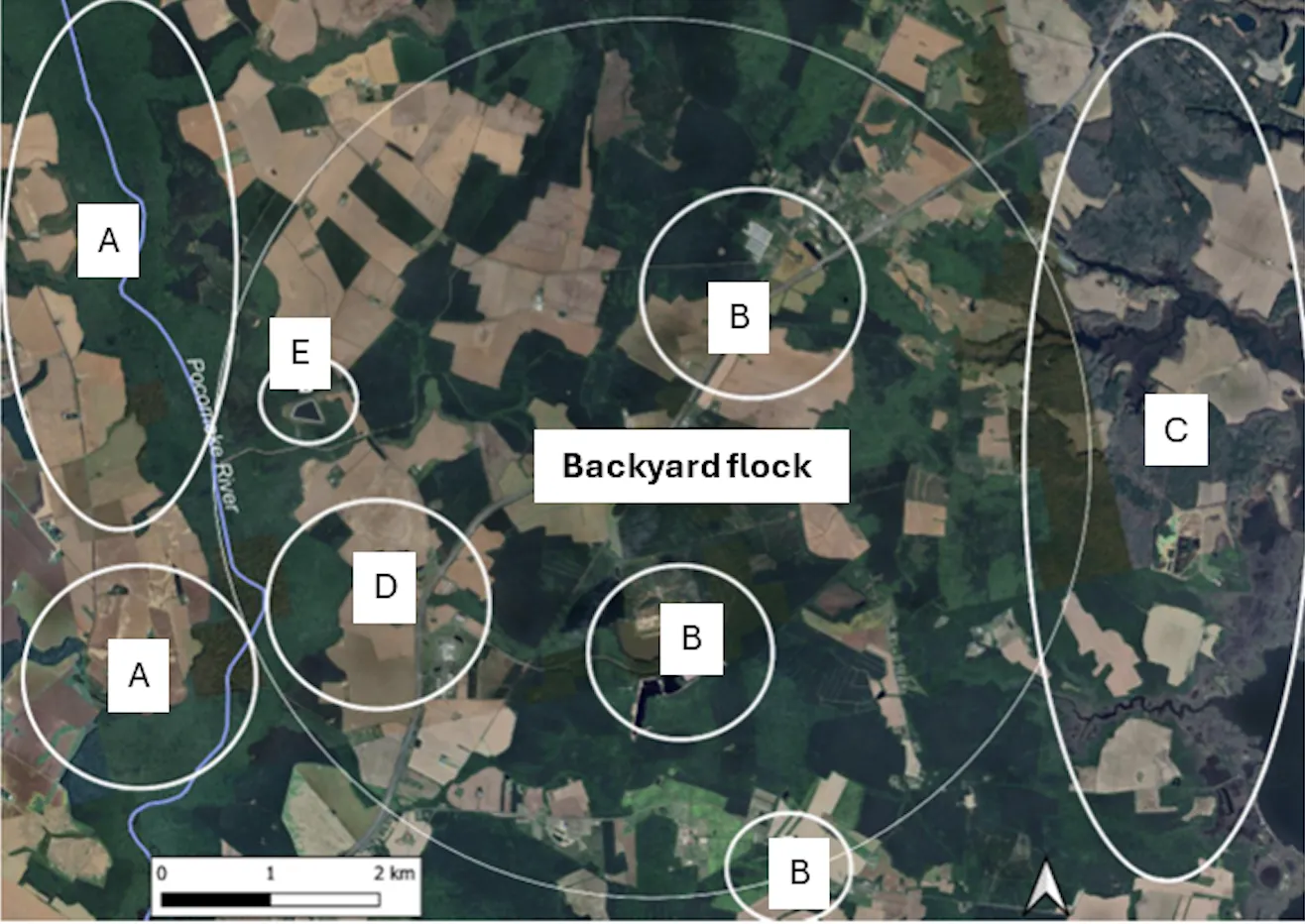
Bird flu outbreaks often occur three to 10 days after spikes of waterfowl abundance within 2.5 miles of affected farms, so he recommends poultry owners examine conditions outside their property.
“When thinking about protecting our backyard flocks from infectious diseases carried by wildlife, we have a tendency to focus solely on the biosecurity of the coop and the immediate area around the coop,” Pitesky said.
“However, because of diseases like highly pathogenic avian influenza, which are primarily carried by wildlife, we need to also think about understanding potential habitat in our neighborhoods,” Pitesky urged. “For example, if you have a pond that is a couple of blocks from your house, migratory waterfowl such as ducks and geese are likely to roost on the pond and fly over while looking for feeding areas such as lawns and golf courses.”
Pitesky offers some recommendations on the basics of biosecurity for backyard coops on your property and the basics of risk assessment off your property.

Biosecurity tips for backyard poultry: Coop, run and immediate property

Raise feeders to minimize contamination from feces and attraction of rodents and wildlife. Photo from My Pet Chicken Blog
- Establish barriers (coop walls, doors, wire mesh) to separate poultry from the outside environment at all times.
- Consider using fully enclosed coops with solid roofs to prevent contact with wild birds, droppings, feathers and airborne contaminants.
- If the backyard chickens have outdoor access, design runs covered by netting or roofing.
- Install hardware cloth (¼–½ inch mesh) on all openings to exclude small birds, rodents and mammals.
- Prevent poultry access to open water sources such as puddles, ditches, ponds or seasonal water accumulation.
- Provide municipal or well water only; do not use untreated surface water for drinking or cleaning.
- Elevate feeders and waterers to reduce contamination from feces and minimize attraction of rodents and wildlife.
- Store feed in sealed, wildlife-proof containers; never leave feed exposed overnight.
- Clean up spilled feed promptly to avoid attracting rodents, raccoons, skunks or wild birds.
- Implement routine cleaning and disinfection of footwear, tools, feeders and waterers.
- Limit human traffic into the coop area; visitors should not enter poultry areas without clean footwear and clothing.
- Avoid sharing equipment (crates, tools) with other poultry owners unless thoroughly cleaned and disinfected.
- Do not introduce new birds without a quarantine period (minimum 2–4 weeks).
- Immediately isolate sick or dead birds and consult local veterinary or extension services.
- Dispose of carcasses using approved methods that do not expose wildlife.
- Manage waste, manure and bedding so they are inaccessible to wildlife and runoff.
Think beyond the coop: Risk assessment of waterfowl and wildlife outside your property

Store feed in sealed, wildlife-proof containers.
- Evaluate whether backyard poultry are located along major flyways or near stopover habitats.
- Understand that the wildlife-livestock interface (WLI) includes indirect contact through contaminated soil, water, or even air, not just direct contact
- Identify nearby wetlands, ponds, lakes, drainage basins and irrigated fields that attract wild waterfowl and avoid locating poultry coops downhill from wetlands or drainage areas.
- Recognize wild ducks and geese as bridge hosts for avian influenza viruses.
- Identify wildlife species commonly visiting the property perimeter (songbirds, pigeons, rodents, raccoons).
- Note that small wild birds can act as mechanical vectors even if they do not show signs of disease.
- Understand human behaviors that increase risk:
- Visiting parks, wetlands or hunting areas before tending poultry
- Sharing tools or footwear between outdoor activities and poultry care
- Avoid locating poultry coops downhill from wetlands or drainage areas.
- Use simple risk scoring concepts:
- High risk: Nearby open water and frequent waterfowl presence
- Moderate risk: Seasonal wildlife presence without direct access
- Lower risk: Dry environments with minimal wildlife overlap
- Communicate risk clearly to household members and neighbors to ensure consistent behavior.
- Accept that eliminating all wildlife risk is impossible; the goal is risk reduction, not zero risk.
- Using government and other trusted resources to identify HPAI detections in your county
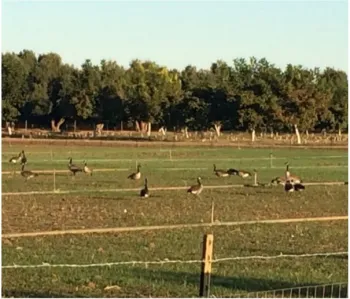
Knowing where wildlife are in the area surrounding a poultry flock is important to understanding risk of disease exposure.
“In the big picture, in a world of HPAI, biosecurity and risk assessments are more complicated and dynamic than the coop,” Pitesky said.
Sick backyard birds can contribute to regional disease so ultimately everything chicken owners do affects not just their own flock but also neighbors’ flocks, livestock, pets, commercial poultry locks, dairy cows and all wildlife in the area.
For more information about keeping poultry safe from disease, visit https://ucanr.edu/site/uc-cooperative-extension-poultry.
https://ucanr.edu/blog/food-blog/article/backyard-poultry-risk-bird-flu-virus-lingers-environment