

Pathfinder
Editor, Senior Moderator
Translation Google
20/11/2026
Bundibugyo virus can cause asymptomatic infections in pigs, raising new questions in the context of the Ebola outbreak
Bertrand Neveux
Bundibugyo virus can cause asymptomatic infections in pigs, raising new questions in the context of the Ebola outbreak
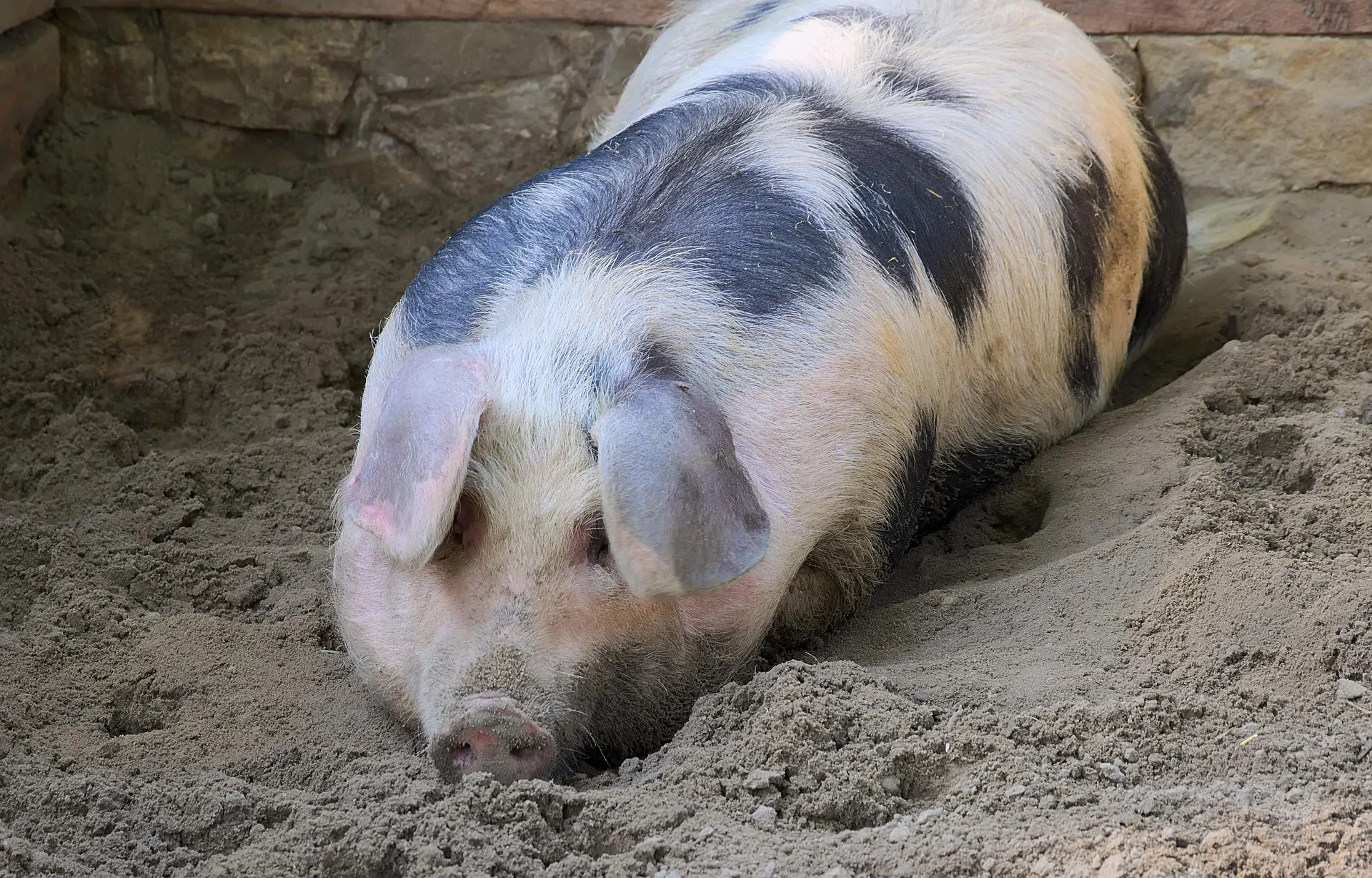
Domesticated pigs can be infected with the Bundibugyo virus, shedding the infectious virus while showing few or no clinical signs, and can transmit the infection to other pigs. A new study argues that pigs should now be included in "One Health" surveillance, although their role in natural transmission to humans remains to be proven.
Bundibugyo virus (BDBV)—an *Orthoebolavirus* first identified in Uganda in 2007—causes Ebola virus disease, with reported case fatality rates ranging from 25% to 51%. This issue gained particular significance during the severe 2026 outbreak that affected the Democratic Republic of the Congo and Uganda.
Pigs can harbor asymptomatic infections
Experimental studies show that pigs inoculated with BDBV via the oronasal route developed a productive infection, with the virus detected in respiratory and lymphoid tissues.
More importantly, sentinel pigs housed alongside them tested positive via PCR and showed seroconversion, demonstrating pig-to-pig transmission under experimental conditions. Yet, the disease remained generally mild, or even entirely absent. Most of the animals remained clinically normal, with the exception of occasional transient fever and limited respiratory and lymph node lesions.
This combination of "infection, viral shedding, and limited clinical signs" is of epidemiological importance, as infected animals could go unnoticed.
Viral shedding can persist for several days.
BDBV RNA was detected in upper respiratory tract samples from day 1 to day 10 post-infection, while saliva samples from the group remained positive until day 8. A secondary peak of nasal viral RNA reached approximately 1.4 × 10⁶ copies/mL on day 5, confirming active viral replication.
This presents a potential occupational risk for livestock farmers, transporters, and slaughterhouse workers exposed to oral or nasal secretions, blood, or tissues. However, experimental susceptibility does not prove that pigs currently serve as a reservoir or a source of human infection in the field.
Serology suggests broader exposure to filoviruses.
This review also cites a study of 888 pigs in Guinea, in which antibodies reactive to the ebolavirus nucleoprotein were detected in 48.7% to 50% of the animals across two outbreak sites.
Because these antibodies showed cross-reactivity with several *Orthoebolavirus* species, these findings cannot be attributed specifically to BDBV. Nevertheless, they suggest that certain pig populations in West Africa may be naturally exposed to filoviruses or related viruses.
The natural reservoir remains uncertain. Bats remain significant candidates in the ecology of filoviruses, yet no species has been definitively identified as the natural reservoir for BDBV. Experimental infection studies conducted on Egyptian fruit bats have shown limited viral replication, with no detectable viremia. This uncertainty makes the investigation of intermediate or amplifying hosts particularly important.
A key, unanswered question is whether natural infection in pigs occurs frequently enough to be of epidemiological significance. Current data indicate that pigs are susceptible, can shed the virus, and are capable of transmitting BDBV in experimental settings. However, it has not yet been demonstrated that they maintain the virus in the wild or that they transmit it to humans.
The logical next step, therefore, is to implement targeted surveillance of pigs in areas surrounding affected communities.
 vetitude.org
--------------------------------------------------------------------------------------
The research paper from the link above:
Review article
Open access
Under a Creative Commons license
Get rights and content
Yubo Yang a, Zongzhao Yang b
Show more
Cite
Add to Mendeley
Share
10.1016/j.azn.2026.08.004
...
20/11/2026
Bundibugyo virus can cause asymptomatic infections in pigs, raising new questions in the context of the Ebola outbreak
Bertrand Neveux
Bundibugyo virus can cause asymptomatic infections in pigs, raising new questions in the context of the Ebola outbreak
Domesticated pigs can be infected with the Bundibugyo virus, shedding the infectious virus while showing few or no clinical signs, and can transmit the infection to other pigs. A new study argues that pigs should now be included in "One Health" surveillance, although their role in natural transmission to humans remains to be proven.
Bundibugyo virus (BDBV)—an *Orthoebolavirus* first identified in Uganda in 2007—causes Ebola virus disease, with reported case fatality rates ranging from 25% to 51%. This issue gained particular significance during the severe 2026 outbreak that affected the Democratic Republic of the Congo and Uganda.
Pigs can harbor asymptomatic infections
Experimental studies show that pigs inoculated with BDBV via the oronasal route developed a productive infection, with the virus detected in respiratory and lymphoid tissues.
More importantly, sentinel pigs housed alongside them tested positive via PCR and showed seroconversion, demonstrating pig-to-pig transmission under experimental conditions. Yet, the disease remained generally mild, or even entirely absent. Most of the animals remained clinically normal, with the exception of occasional transient fever and limited respiratory and lymph node lesions.
This combination of "infection, viral shedding, and limited clinical signs" is of epidemiological importance, as infected animals could go unnoticed.
Viral shedding can persist for several days.
BDBV RNA was detected in upper respiratory tract samples from day 1 to day 10 post-infection, while saliva samples from the group remained positive until day 8. A secondary peak of nasal viral RNA reached approximately 1.4 × 10⁶ copies/mL on day 5, confirming active viral replication.
This presents a potential occupational risk for livestock farmers, transporters, and slaughterhouse workers exposed to oral or nasal secretions, blood, or tissues. However, experimental susceptibility does not prove that pigs currently serve as a reservoir or a source of human infection in the field.
Serology suggests broader exposure to filoviruses.
This review also cites a study of 888 pigs in Guinea, in which antibodies reactive to the ebolavirus nucleoprotein were detected in 48.7% to 50% of the animals across two outbreak sites.
Because these antibodies showed cross-reactivity with several *Orthoebolavirus* species, these findings cannot be attributed specifically to BDBV. Nevertheless, they suggest that certain pig populations in West Africa may be naturally exposed to filoviruses or related viruses.
The natural reservoir remains uncertain. Bats remain significant candidates in the ecology of filoviruses, yet no species has been definitively identified as the natural reservoir for BDBV. Experimental infection studies conducted on Egyptian fruit bats have shown limited viral replication, with no detectable viremia. This uncertainty makes the investigation of intermediate or amplifying hosts particularly important.
A key, unanswered question is whether natural infection in pigs occurs frequently enough to be of epidemiological significance. Current data indicate that pigs are susceptible, can shed the virus, and are capable of transmitting BDBV in experimental settings. However, it has not yet been demonstrated that they maintain the virus in the wild or that they transmit it to humans.
The logical next step, therefore, is to implement targeted surveillance of pigs in areas surrounding affected communities.
Le virus de Bundibugyo peut infecter les porcs de manière asymptomatique, ce qui soulève de nouvelles questions dans le contexte de l'épidémie d'Ebola
Les porcs d'élevage peuvent être infectés par le virus de Bundibugyo, excréter le virus infectieux tout en ne présentant que peu ou pas de signes cliniques, et transmettre l'infection à d'autres porcs. Une nouvelle étude soutient que les porcs devraient désormais être pris en compte dans la...
The research paper from the link above:
Animals and Zoonoses
Date: Available online 12 August 2026Review article
Open access
Under a Creative Commons license
Get rights and content
Research progress in animal infection and zoonotic aspects of Bundibugyo virus
Yubo Yang a, Zongzhao Yang b
Show more
Cite
Add to Mendeley
Share
10.1016/j.azn.2026.08.004
Abstract
Bundibugyo virus (BDBV) causes hemorrhagic fever in humans with a case fatality rate of 25%–51%. In recent years, breakthrough progress has been made in animal infection studies. This review focuses on domestic swine as a newly identified susceptible host and its public health significance, and summarizes animal models including ferrets, nonhuman primates, and bats. Domestic swine are highly susceptible to BDBV, can shed the virus asymptomatically, and exhibit intraspecies transmission. Antibody positivity rates against filovirus nucleoprotein in West African pig populations reach 48.7%–50.0%, suggesting widespread natural exposure to filoviruses (potentially including BDBV or antigenically related viruses). The ferret is the only small animal model that can be lethally infected with BDBV without viral adaptation, and nonhuman primates provide a reliable platform for vaccine evaluation. Regarding pathogenic mechanisms, BDBV exhibits significant differences from Zaire Ebola virus that appear to contribute to its lower virulence; however, the underlying mechanisms require further investigation. Domestic swine, as a potential amplifying host, pose a threat to pig farming and public health. It is recommended to strengthen surveillance of domestic swine within the international “One Health” framework. The ferret model represents an ideal platform for vaccine and drug evaluation, and the long-term sequelae in BDBV survivors require continued medical attention. This review aims to provide a scientific reference for ecological research on BDBV and the development of relevant prevention and control strategies....