
• FluTrackers.com Inc. does not provide medical advice. Information on this web site is collected from various internet resources, and the FluTrackers board of directors makes no warranty to the safety, efficacy, correctness or completeness of the information posted on this site by any author or poster. The information collated here is for instructional and/or discussion purposes only and is NOT intended to diagnose or treat any disease, illness, or other medical condition. Every individual reader or poster should seek advice from their personal physician/healthcare practitioner before considering or using any interventions that are discussed on this website. By continuing to access this website you agree to consult your personal physican before using any interventions posted on this website, and you agree to hold harmless FluTrackers.com Inc., the board of directors, the members, and all authors and posters for any effects from use of any medication, supplement, vitamin or other substance, device, intervention, etc. mentioned in posts on this website, or other internet venues referenced in posts on this website.
  • We are not asking for any donations. Do not donate to any entity who says they are raising funds for us.

BENIN: Highly Pathogenic Avian Influenza subtype A/H5 in poultry, OIE Imm. Notification Report

Giuseppe

Emeritus
Highly pathogenic avian influenza, Benin

Information received on 25/08/2008 from Dr Christophe B. MONSIA, Directeur de l'?levage, Direction de l'?levage, Minist?re de l?Agriculture, de l?Elevage et de la P?che, COTONOU, Benin

? Summary
Report type Immediate notification
Start date 29/07/2008
Date of first confirmation of the event 13/08/2008
Report date 25/08/2008
Date submitted to OIE 25/08/2008
Reason for notification Reoccurrence of a listed disease
Date of previous occurrence 05/2008
Causal agent Highly pathogenic avian influenza virus Serotype H5
Nature of diagnosis Laboratory (advanced)
This event pertains to the whole country

? New outbreaks
* Outbreak 1 - Lokossa market, Lokossa, LOKOSSA
Date of start of the outbreak 29/07/2008
Outbreak status Continuing (or date resolved not provided)
Epidemiological unit Not applicable
Affected animals: Species - Susceptible - Cases - Deaths - Destroyed - Slaughtered
* Birds - 2 - 2 - 0 - 0

Affected population
Live chickens purchased at the market in Lokossa as part of the routine surveillance and of the training of managers and other laboratory officials on biomolecular techniques at the Veterinary Laboratory of Parakou.

? Summary of outbreaks
Total outbreaks: 1
Outbreak statistics: Species - Apparent morbidity rate - Apparent mortality rate - Apparent case fatality rate - Proportion susceptible animals lost*
* Birds - 100.00% - 0.00% - 0.00% - **
* Removed from the susceptible population through death, destruction and/or slaughter
** Not calculated because of missing information

? Epidemiology
Source of the outbreak(s) or origin of infection Unknown or inconclusive

? Control measures
Measures applied Disinfection of infected premises/establishment(s)
Vaccination prohibited
No treatment of affected animals

Measures to be applied Movement control inside the country

? Diagnostic test results
Laboratory name and type Laboratoire V?t?rinaire de Parakou (National laboratory)
Tests and results: Species - Test - Test date - Result
* Birds - reverse transcription ? polymerase chain reaction (RT-PCR) - 13/08/2008 - Positive

? Future Reporting
The event is continuing. Weekly follow-up reports will be submitted.

? Map of outbreak locations
Location of current outbreaks


-
http://www.oie.int/wahid-prod/public.php?page=single_report&pop=1&reportid=7299
--------
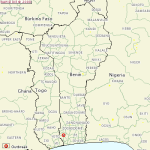
 

Attachments

  • OB.png
    OB.png
    26.3 KB · Views: 0
Re: BENIN: Highly Pathogenic Avian Influenza subtype A/H5 in poultry, OIE Imm. Notification Report

Immediate notification report​
Report reference: , Ref OIE: 7299, Report Date: 25/08/2008 , Country: Benin​
Report Summary​
Disease​
Highly pathogenic avian influenza Animal type Terrestrial

Causal Agent​
Highly pathogenic avian influenza virus Serotype(s) H5

Clinical Signs​
No Reason Reoccurrence of a listed disease

Date of first confirmation of the event​
13/08/2008 Date of Start of Event 29/07/2008

Date of report​
25/08/2008 Date Submitted To OIE 25/08/2008

Diagnosis​
Laboratory (advanced) Date Of Last Occurrence 05/2008

Number Of Reported Outbreaks​
Submitted= 1, Draft= 0 Name of Sender of the report Dr Christophe B. MONSIA

Address​
BP 2041
COTONOU

Position​
Directeur de l'?levage

Telephone​
(229) 21-33-02-85

Fax
Email​
delevage@intnet.bj

Entered by​
Mme Margarita Alonso

Outbreak (this report - submitted)​
LOKOSSA Lokossa Unit Type Location Latitude Longitude Start End​
LOKOSSA Lokossa Not applicable Lokossa market 6,7077 1,7867 29/07/2008​
Species Measuring units Susceptible Cases Deaths Destroyed Slaughtered​
Birds Animals 2 2 0 ... 0​
Affected Population​
Live chickens purchased at the market in Lokossa as part of the routine surveillance and of the training of managers and other laboratory officials on biomolecular techniques at the Veterinary Laboratory of Parakou.​
Outbreak summary: Total outbreaks = 1 (Submitted)​
Species Susceptible Cases Deaths Destroyed Slaughtered​
Birds 2 2 0 0​
Epidemiology​
Epidemiological comments Source of the outbreak(s) or origin of infection​
? Unknown or inconclusive

Control Measures​
Applied​
? Disinfection of infected premises/establishment(s) To be applied ? Movement control inside the country

Animals treated​
No Vaccination Prohibited Yes
Printed on: Tue Aug 26 18:20:53 Paris, Madrid (heure d'?t?) 2008 Page 1/3

Country / Zone​
Country or zone​
the whole country

Diagnostic test results​
Laboratory Type Name of Laboratory Species Test Type Date Results Provided Result​
National laboratory Laboratoire V?t?rinaire de Parakou Birds reverse transcription ? polymerase chain reaction (RT-PCR) 13/08/2008 Positive​
Future Reporting​
What further reports will be submitted in relation to this event?​
There are 1outbreaks that are still recorded as unresolved. It is not possible to declare this event resolved until these individual outbreaks are resolved.
The event is continuing. Weekly follow-up reports will be submitted.​
Immediate

http://www.oie.int/downld/Infos_San_Archives/oie_imm_20080826_182053[1].pdf
 
Re: BENIN: Highly Pathogenic Avian Influenza subtype A/H5 in poultry, OIE Imm. Notification Report

Ghana calls for urgent meeting to control avian flu
afrol News, 14 August - Ghana is seeking a meeting with its western African neighbours to discuss a common measure to prevent incursions of Avian Influenza. A call follows reports on an outbreak of bird flu in Nigeria's remote states of Katsina and Kano last month.
Acting Director of Veterinary Directorate, Dr Enoch Koney said he has called on Togo and Benin, further saying a similar meeting is also planned for Cote d'Ivoire and Burkina Faso.

He said having realised dangers of bird flu the Directorate had notified all regional directors of agriculture as well as veterinary officers about the new cases in Nigeria.

Dr Koney urged stakeholders to have constant check at all live bird markets and monitor staging posts of migratory wild birds at wetlands while they strictly enforced import permits for poultry and poultry products.

Douglas Akrofi Asiedu, co-ordinator, National Disaster Management Organisation (NADMO), said the outbreak of the avian influenza was a real threat to the whole world, especially their region.

He stressed the need for the nation to commit resources to educate and sensitise public on its prevention and how to manage it if it does occur.

United Nations Food and Agriculture Organisation (FAO) said strain of avian influenza recently found in Nigeria was genetically different from strains in previous African outbreaks in Nigeria in 2006 and 2007.

It pointed to other avenues for the virus to have emerged in Nigeria, such as international trade or illegal and unreported movement of poultry. "This increases the risk of an avian influenza spread to other countries in Western Africa," said FAO in a statement.

The virus which is said to rarely infect people, has killed 243 out of 385 known to have been infected since 2003, according to World Health Organisation, while it has also killed or forced slaughter of 300 million birds.
By staff writer

http://www.afrol.com/articles/30295
 
Re: BENIN: Highly Pathogenic Avian Influenza subtype A/H5 in poultry, OIE Imm. Notification Report

AVIAN INFLUENZA (92): BENIN (LOKOSSA)
*************************************
A ProMED-mail post
<http://www.promedmail.org>
ProMED-mail is a program of the
International Society for Infectious Diseases
<http://www.isid.org>

Date: 27 Aug 2008
Source: OIE WAHID Disease Information 2008; 21(35) [edited]
<http://www.oie.int/wahid-prod/public.php?page=weekly_report_index&admin=0>


Highly pathogenic avian influenza, Benin
----------------------------------------
Information received on (and dated) 25 Aug 2008 from Dr Christophe B
Monsia, Directeur de l'elevage, Direction de l'elevage, Ministere de
l'Agriculture, de l'Elevage et de la Peche, Cotonou, Benin

Summary
Report type: immediate notification
Start date: 29 Jul 2008
Date of 1st confirmation of the event: 13 Aug 2008
Date submitted to OIE: 25 Aug 2008
Reason for notification: reoccurrence of a listed disease
Date of previous occurrence: May 2008
Causal agent: highly pathogenic avian influenza virus
Serotype: H5
Nature of diagnosis: laboratory (advanced)
This event pertains to the whole country

New outbreaks
Outbreak 1 Lokossa market, Lokossa, Lokossa
Date of start of the outbreak: 29 Jul 2008
Outbreak status: continuing (or date resolved not provided)
Epidemiological unit: not applicable
Species: birds
Susceptible 2
Cases 2
Deaths 0
Destroyed -
Slaughtered 0
Affected population: live chickens purchased at the market in Lokossa as
part of the routine surveillance and of the training of managers and other
laboratory officials on bio-molecular techniques at the Veterinary
Laboratory of Parakou.

Summary of outbreaks: total outbreaks: 1
Species: birds
Apparent morbidity rate 100 per cent
Apparent mortality rate 0.00 per cent
Apparent case fatality rate 0.00 per cent
Proportion susceptible animals lost**
* Removed from the susceptible population through death, destruction and/or
slaughter
** Not calculated because of missing information

Epidemiology
Source of the outbreak(s) or origin of infection: unknown or inconclusive
Laboratory name and type: Laboratoire Veterinaire de Parakou (national
laboratory)
Species: birds
Test: reverse transcription-polymerase chain reaction (RT-PCR)
Test date: 13 Aug 2008
Result: positive

--
communicated by:
ProMED-mail <promed@promedmail.org>

[In many ways, it is useful epidemiologically to look at parts of West
Africa, particularly the stretch along the coast from Ghana to Nigeria, as
being a quasi catchment area for certain animal diseases. Avian influenza
certainly falls into this category because of the traffic in people and
animals crossing the border between Ghana and Togo or Nigeria and Benin.

In fact, there were 4 recent outbreaks in Nigeria (Gombe, Kebbe, Kano,
Katsina), and it is important to intensively follow up this Benin outbreak
in a comparative fashion to see whether there is a common risk factor for
the reintroduction of avian influenza after months of no disease reports.
It is important to establish whether there is new virus circulation, since
the disease was reported on 4 farms last year in November and December 2007.

In Togo, there was one outbreak in June 2007, and there were 2 in July
2007. In Ghana, there were 2 outbreaks in April, 3 in May and one in June
2007. Of course, there were several outbreak farms in Nigeria in the summer
of 2007. Given that now we have cases in both Nigeria and Benin in July and
August 2008, it will be interesting if sampling in Ghana and Togo turn any
positives up during this period, if indeed such important and needed
surveillance is currently being conducted.

For a map showing the outbreak location, see
<http://maps.google.com/maps?f=s&utm_campaign=en&utm_source=en-ha-na-us-sk-gm&utm_medium=ha&utm_term=map>.

- Mod.PC]

[see also:
Avian influenza (91): Nigeria, FAO 20080811.2483
Avian influenza (89): S Korea, Nigeria OIE, UK 2007 20080729.2314
2007
---
Avian influenza (191): Benin, H5N1 conf 20071220.4091
Avian influenza (183): Benin, Poland, OIE, Saudi Arabia 20071206.3934
Avian influenza (110): Togo, Ghana, OIE 20070626.2054
Avian influenza (107): Togo, confirmed 20070623.2029
Avian influenza (54): Egypt, Nigeria, China (Jiang... 20070317.0938
Avian influenza (55): Nigeria, VietNam, Myanmar, J... 20070320.0986
Avian influenza (75): Ghana, suspected, RFI 20070501.1416
Avian influenza (76): Ghana, conf. 20070502.1426
Avian influenza (78): Ghana (Accra), conf., OIE 20070503.1441
Avian influenza (85): Viet Nam, Ghana, Pakistan, OIE 20070523.1651]

.....................pc/msp/sh
-
http://apex.oracle.com/pls/otn/f?p=..._BACK_PAGE,F2400_P1001_PUB_MAIL_ID:1000,73730
------
 
Re: BENIN: Highly Pathogenic Avian Influenza subtype A/H5 in poultry, OIE Imm. Notification Report

Commentary

H5 Spread to Benin
Recombinomics Commentary 12:47
August 27, 2008

Live chickens purchased at the market in Lokossa as part of the routine surveillance and of the training of managers and other laboratory officials on biomolecular techniques at the Veterinary Laboratory of Parakou.

Causal agent Highly pathogenic avian influenza virus Serotype H5

The above comments from the Benin OIE report describe two chickens that are H5 PCR positive. It is likely that the birds were infected with H5N1 clade 2.2.3 Uvs Lake strain recently reported at multiple locations in northern Nigeria (see satellite map). These outbreaks have a striking parallel with outbreaks in Europe a year earlier.

In June of 2007, a presentation at the Options VI meeting on influenza declared wild birds in Europe to be H5N1 free, based on live bird surveys by various bird conservation groups. These assays, especially when screening fecal samples or cloacal swabs have a notoriously poor record, beginning with testing of wild birds at Erhel Lake in Mongolia in 2005 by these same groups. In the summer of 2005 dead wild birds at the lake were positive for H5N1 clade 2.2, but the testing of live birds at the lake failed to find any H5N1 positives. H5N1 subsequently migrated to the south and west, spreading clade 2.2 into over 50 countries west of China.

Included in this spread were multiple countries throughout Europe, which were H5N1 positive in early 2006. However, the frequency of positives markedly decline in late 2006 and early 2007, which led to the announcement at the talk. However, within minutes of the conclusion of the talk, the Czech Republic reported H5N1 at a poultry farm, which was quickly followed by reports of H5N1 in dead wild birds at multiple locations in Germany, as well as neighboring countries of the Czech Republic and France. The H5N1 was the Uvs Lake strain of clade 2.2.3, which had not been previously reported in Europe. The strain was initially found at Uvs Lake in Mongolia and adjacent locations in Tyva, Russia in the summer of 2006. In the fall of 2006, the strain was found in South Korea and Japan, followed by outbreaks in early 2007 in Kuwait. After the reports of Uvs Lake clade 2.2.3 in the summer of 2007 in Europe, it then became the dominant strain throughout Europe in late 2007 and early 2008.

Last month the Uvs Lake was reported for the first time in Africa, when H5N1 was detected at multiple locations in northern Nigeria. It is likely that the H5 positive poultry in southern Benin is also the Uvs Lake strain of clade 2.2.3.


.
 
Back
Top