• FluTrackers.com Inc. does not provide medical advice. Information on this web site is collected from various internet resources, and the FluTrackers board of directors makes no warranty to the safety, efficacy, correctness or completeness of the information posted on this site by any author or poster. The information collated here is for instructional and/or discussion purposes only and is NOT intended to diagnose or treat any disease, illness, or other medical condition. Every individual reader or poster should seek advice from their personal physician/healthcare practitioner before considering or using any interventions that are discussed on this website. By continuing to access this website you agree to consult your personal physican before using any interventions posted on this website, and you agree to hold harmless FluTrackers.com Inc., the board of directors, the members, and all authors and posters for any effects from use of any medication, supplement, vitamin or other substance, device, intervention, etc. mentioned in posts on this website, or other internet venues referenced in posts on this website.
  • We are not asking for any donations. Do not donate to any entity who says they are raising funds for us.

Bangladesh - H5N1 Spread Poultry Apr 21+

Status
Not open for further replies.

sharon sanders

Editor-in-Chief & President
Bangladesh says bird flu spread to more farms <!-- END HEADLINE -->
<!-- BEGIN STORY BODY -->50 minutes ago


Bangladesh said on Saturday bird flu has spread to six more farms despite efforts to tackle the virus by veterinary and health officials and the United Nations Food and Agriculture Organization.
"The infection was detected at a farm in western Magura district 200 km (125 miles) west of the capital Dhaka and five farms at Savar in the Dhaka district," a spokesman at the fisheries and livestock ministry said.
The H5N1 bird flu virus has been spreading in poultry flocks in Bangladesh ever since it was first detected on six of the country's farms on March 22 and despite culling and banning of the movement of chickens in areas with confirmed outbreaks.
Magura district is adjacent to India's West Bengal state of India, where bird flu was detected earlier.
Bangladesh also shares a border with Myanmar, which is fighting the disease. But no one knows for sure how the disease jumped to Bangladesh this March.
A 10-member FAO team arrived in Dhaka last week and has visited a number of affected farms and laboratories.
Since the detection of the H5N1 virus on March 22, some 98,000 chickens have been culled on 38 farms in nine districts.
No humans have tested positive for the disease.
The virus is known to have infected nearly 300 people in 12 countries since 2003, killing more than half of them.
Human cases of bird flu have generally been linked to contact with infected poultry. Health experts fear the virus may mutate into a form that passes easily from human to human, causing a pandemic that could affect millions.
The country has 125,000 small and large poultry firms producing 250 million broilers and six billion eggs annually. About four million Bangladeshis are directly or indirectly associated with poultry farming.

http://news.yahoo.com/s/nm/20070421...c&printer=1;_ylt=AiLVo3.trLkvq75oTlx6Q.AR.3QA


Link to previous threads:
http://www.flutrackers.com/forum/showthread.php?t=21967&highlight=bangladesh
http://www.flutrackers.com/forum/showthread.php?t=22385
 
Last edited by a moderator:
Re: Bangladesh - H5N1 Spread Poultry Apr 21+

Caution against migratory birds exhorted
PIB, UNICEF held workshop on Bird flu, its consequences and possible measures
From Our Correspondent
LAKSHMIPUR, Apr 23:?The bird flu that spread in various countries including some of our neighbours in recent periods is most agonising incident for our country. This disease not only affects the domestic birds but causes death to thousands of human beings.
Hence it needs to be checked and comprehensive measures should be taken in their regards.
This was viewed by the speakers and experts at a workshop held at Noakhali sponsored by the Press Institute of Bangladesh (PIB) assisted by the UNICEF.
The speakers here elaborately discussed about the bird flu that is Avian Influenza and Pandemic Influenza since their eruption, spreading and awareness and preparedness for checking this diseases as well will special reference on its effects in the past.
A documentary film was also displayed on the screen on this disease.
There it was found that the bird flue through talked much and spreading largely in the recent days, is not a new disease. Its first infusion was detected in 1918 in Spain known as Spanish flue and it spreads by the H5NI virus.
The disease was first known as "Fowl plague" which is now-a-day is called as bird flu. But it does not concentrate itself within the birds rather it affects human beings as well and it took about four to six crore human lives during 1918 in Europe, Asia and north American continents.
In 1957-58 this disease remainfested in Asia and took about 10-20 lakh lives. In 1968-69 its out break in Hong Kong known as Hong Kong Flu took about 7 lakh lives.
The disease reappeared in 2003 in China, Vietnam, Loas, Indonesia, Thailand, Turkey and Azarbizan in epedemic form and took several lakhs of chicken lives.
The disease was once found at Turkey farm of UK in 2007 and in recent days it was found at various chicken farms in various countries in Asia including Bangladesh.
The last discovery of the disease in Bangladesh was on April 15, this year in Magura district where at least 900 chicken, ducks and pigeon were killed and engraved by the district administration as a measure to check spreading of the disease.
Causes of country's concern
The speakers at the workshop also sorted out the clues of agony for the country on the disease. They opined that Bangladesh is a country of moderate climate and as such the stray ducks especially be migratory birds as well come from Syberia and other cold hit areas of Europe and visit the Bangladesh land and stay here from September to March every year.
Being the birds of cold areas, they mostly carry various virus of bird flue to these land and as the local ducks moves in various water bodies with the migratory birds especially the ducks, the local and home tamed ducks are affected by the bird flu viruses carried by the migratory ones.
And the home-tamed ducks which are generally kept in the same rooms or pen by the home tames families in the rural areas of the country, the bird flu virus case spread out in the cocks and hens in the pens.
The affected local birds move freely from house to house and in this way bird flu can spreads out quickly.
The spreading of the disease in this country is also apparent due to the fact that it has already spread out in our neighbouring countries like India, Thailand and Myanmar.
And in recent days, more than hens were killed in various farms like that of Bangladesh Biman which were suspected as attacked by bird flu.
The speakers also produced data indicating that upto these days more than 25 crore of chicken died in the world and in last four years several crores of hens worth Taka several thousands crores were killed due to this disease in Japan, Turkey, Korea, Egipt, UK and in our neighbouring country India.
Economic losses
The experts here in the workshop opined that if the disease can not be checked it may cost the livelyhood of about 1.60 crores woman folks in rural areas of the country. Because these women take care of chicken and ducks and supplies not less than 70% of the hen flesh and eggs in the country.
More over a large number of workers employed in 122 broilar, 80 layer breeders and 64 feed mills may lose their jobs.
There are 1,24,000 farmer families also engaged inproducing Maize, fish and other related things used in those mills and farms.
The government loan and cash money of about Taka 12,000 crore was invested in those mills and farms which are considered as the source of income of about 30,000,00 families.
With the spread of the bird flu all these families may be rendered jobless and crores of Taka invested might be lost in to, the experts added.
Hence appropriate measures for checking the bird flu in the country permit no delay.
Measures
The speakers opined that the following measures may be taken to check bird flu.
(a) Import of broiler and layer breeded chicks should be controlled and a definite principles should be sorted out for compulsory measures.
(b) A management policy for about 5-10 thousand mitric tons of garbages produced in the farms must be chalked out.
(c ) The house-tamed farms of hens, ducks and pigeons which supply about 70% to 80% bird flesh of the country's demands must be looked after carefully and.
(d) Lastly, the home tamed birds should be restricted to meet migratory birds.:tiphat: http://www.bangladeshobserveronline.com/District News.html
 
Re: Bangladesh - H5N1 Spread Poultry Apr 21+

Livestock officers unresponsive to diagnosis of poultry disease
?Unknown? disease empties poultry farms
Obaidul Ghani . Back from Gazipur and Savar
Abdus Samad, owner of Suman poultry farm at Bhabanipur village in Gazipur, failed to get any help from the government for disposal of his 1,200 hens died of unknown disease from March 22-24.
Even he is yet to know about the disease a month after the death of the poultry birds.
Despite repeated requests, the district livestock officials did not collect the samples of dead birds, the farmer claimed, saying that he could not know from them about how to dispose of the dead birds.
?I first informed them of the death of two birds on March 22, but they took no heed of it,? Samad said, adding that more than 800 birds died within next 24 hours. He later dumped the dead birds into a place behind his house on his own efforts.
The farmer contacted the livestock officials again on March 24 when an official asked him to collect the sample and sent it to the Central Disease Investigation Laboratory in Dhaka for confirming the contamination of avian influenza. The remaining birds died on that day, he told New Age on Sunday.
The CDIL in an investigation report on March 25 said that the case of avian influenza contamination would be confirmed after conducting subtype test by the Bangladesh Livestock Research Institute.
While contacted, CDIL principal scientific officer MA Baki said, ?Usually it would not take more than one day to get the subtype report from the institute.?
Mohammad Al-Amin, owner of Anika poultry farm, has about 2,000 birds in his farm at Sardaganj under Kashimpur union in Gazipur. ?I did not get any advice from the local livestock officials,? he said.
The livestock officials hardly visit the area to monitor the situation and make diagnosis of the disease, said Alauddin who have 1,000 red layer birds at the same village.
?No livestock official had visited the area more than a month after the detection of the disease at the Biman poultry complex,? he said. There are at least 14,000 poultry birds in ten farms in the area.
When contacted, Mirza Abdul Bari, sadar upazila livestock officer, said that despite shortages of manpower, they were regularly monitoring the bird flu situation in the affected area.
They were disinfecting the poultry farms located within ten kilometres surrounding the affected areas, the official added.
The negligence of the government to follow international guidelines to check the spread of avian influenza may cause human pandemic in the country, a health expert told New Age.:(
The guidelines, prepared by World Organisation for Animal Health and Food and Agriculture Organisation, stress on regular monitoring in the poultry farms, said Dr ASM Alamgir, officer on special duty at the department of virology under Institute of Epidemiology, Disease Control and Research.
The virus is known to have infected nearly 300 people in 12 countries since 2003, killing more than half of them. Human cases of avian flu have generally been linked to contact with infected poultry and the virus may mutate into a form that passes easily from one to another, said the official. :tiphat: http://www.newagebd.com/nat.html
 
Re: Bangladesh - H5N1 Spread Poultry Apr 21+

<TABLE style="BORDER-COLLAPSE: collapse" borderColor=#111111 cellSpacing=0 cellPadding=0 width="100%" border=0><TBODY><TR><TD width="100%">Bird Flu outbreak </TD></TR><TR><TD width="100%">Price fall, panic make Tk 100b poultry business shaky </TD></TR><TR><TD width="100%"></TD></TR><TR><TD width="100%">4/24/2007 </TD></TR><TR><TD width="100%"> </TD></TR><TR><TD width="100%"> SAVAR, April 23 (UNB): Fate of the investors of the Tk 100 billion (10,000 crore) in the country's poultry industry has become uncertain after detection of Avian Influenza here.
All the hopes of 0.2 million (two lakh) poultry farm owners have been shattered as selling price has come down lower than the production cost due to the bird flu panic.
Sources said that over 500 farm owners have already sold their chickens at throwaway prices in Savar and Gazipur fearing outbreak of the bird flu on massive scale.
Different loan distributing organisations including banks and NGOs are also facing uncertainty in the realisation of their loans.
Farm owners and the businessmen said the poultry industry is going through a critical phase after the detection of bird flu. The farm owners have been incurring huge losses since last one month as prices of chickens and eggs have come down sharply, they said.
The production cost of per 100 eggs is Tk 320 but they are selling it between Tk 250 and Tk 260 in the wholesale market against its previous price of Tk 350 to Tk 360.
The price of per kg chicken has also decreased by Tk 20 to Tk 25.
Moreover, the export of eggs and dressed chickens abroad has been halted after the detection of Avian Influenza in the country.
Meanwhile, Ranikhet disease is affecting the poultry birds alongside the bird flu killing a huge number of chickens in Gazipur and Savar.
The poultry industry has developed in the country, particularly, in Savar and Gazipur, on a massive scale in the last one decade.
Twenty-five per cent of the total poultry farms have been set up in Savar and Gazipur during the period, the sources said.
About 5.0 million (50 lakh) people are involved in the industry directly or indirectly.
Factories of equipment, feed mill, veterinary, and hatchery, and transport business have been established in the country depending on the poultry farms.
Maize cultivation increased in the country to meet the increasing demand of poultry feed. Different banks and NGOs have also distributed loans among the poultry farm owners and maize cultivators to boost up the industry.
While contacted, President of Bangladesh Egg Producers' Association Taher Ahmed said most of the farm owners are now burdened with huge debt as the industry is running mostly on loans.:tiphat: http://www.financialexpress-bd.com/index3.asp?cnd=4/24/2007&section_id=3&newsid=59214&spcl=no

</TD></TR></TBODY></TABLE>
 
Re: Bangladesh - H5N1 Spread Poultry Apr 21+

3 held with dead chickens in Old Dhaka
Staff Correspondent
The police arrested three people at Kaptan Bazar in Old Dhaka early Monday and seized three sacks of dead chickens from their possession.
The police said Nur Islam kept the dead birds at his shop allegedly to supply those to certain restaurants in the old part of the city.:oops:
Besides Nur, the law enforcers also arrested two of his associates, Faruk and Wahidur Rahman, in this connection.:tiphat: http://www.newagebd.com/nat.html
 

Attachments

  • 117804039644721.png
    117804039644721.png
    22.4 KB · Views: 0
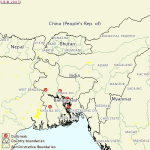
Bangladesh says bird flu spreads to more farms

Bangladesh says bird flu spreads to more farms

Bangladesh says bird flu spreads to more farms
03 May 2007 08:52:17 GMT

DHAKA, May 3 (Reuters) - Bird flu has spread to six more farms in western Bangladesh, forcing authorities to cull thousands of fowl and destroy eggs, government officials said on Thursday.

The latest cases were uncovered on farms in Jessore district, 300 km (190 miles) west of the capital Dhaka, said a senior official at the Fisheries and Livestock Ministry.

Some 9,000 birds were culled at the farms, where thousands of eggs were also buried, officials said.

The H5N1 virus was first detected at six farms at Savar near Dhaka on March 22 and the virus has since spread across the country, they said.

There have been no cases of human infection.

Jessore district is adjacent to the West Bengal state of India, where bird flu was detected. Bangladesh also shares a border with Myanmar, which is fighting the disease.

So far, nearly 107,000 chickens have been culled in nine districts. Authorities have pledged to pay 70 taka (nearly US$1) for each culled bird.
 
Re: Bangladesh - H5N1 Spread Poultry Apr 21+


Fresh bird flu outbreaks in Bangladesh poultry farms

Bangladesh, May 03, 2007

A senior official from Bangladesh's Fisheries and Livestock Ministry reported Thursday (May 3) that the H5N1 subtype of the bird flu virus has spread to six more poultry farms in the country's Jessore district, 300 km (190 miles) west of the capital Dhaka. Officials culled some 9,000 birds at the farms, in addition to burying thousands of eggs in an effort to stem the spread of the disease. Jessore district is adjacent to India's West Bengal state, where the H5N1 virus has also been identified. Since the bird flu virus was first detected on six farms at Savar on March 22, the virus has spread to an estimated 38 farms in nine districts across the country, resulting in the culling of some 107,000 poultry. To help mitigate the financial impact on farmers due to the loss of their birds, authorities have pledged to pay 70 taka (nearly US$1) for each culled bird. With Bangladesh home to thousands of poultry farms employing more than a million people, a large-scale H5N1 outbreak could have significant consequences. Meanwhile, in India, bird flu detection and awareness efforts are being increased after a recent spate of outbreaks in neighboring Bangladesh and Myanmar over the last two months. Special attention is being given to the porous 4,000-km (2,500-mile) border with Bangladesh. Border security forces have been ordered to eliminate informal trade, and to stop people carrying poultry or meat products from Bangladesh. Informal trade between the two countries is common with hundreds of people crossing the border daily. Additionally, India's animal husbandry department has stepped up poultry testing in recent weeks, especially in areas near Bangladesh and Myanmar. Officials are also distributing leaflets in border regions, asking people to remain alert for bird flu and increasing the number of TV spots on the virus. In other South Asian bird flu news, the United States has donated over US$65,000 worth of protective equipment, along with decontamination and laboratory specimen collection kits, to Pakistan's Ministry of Food, Agriculture and Livestock, and the National Institute of Health to prepare to tackle an outbreak of bird flu. Since Pakistan first detected the H5N1 subtype of the bird flu virus in February 2006, there have been 23 reported outbreaks throughout the country. Although it predominantly affects poultry, the H5N1 virus has killed at least 172 people worldwide since it began ravaging Asian poultry stocks in late 2003.

f the disease. Jessore district is adjacent to India's West Bengal state, where the H5N1 virus has also been identified. Since the bird flu virus was first detected on six farms at Savar on March 22, the virus has spread to an estimated 38 farms in nine districts across the country, resulting in the culling of some 107,000 poultry. To help mitigate the financial impact on farmers due to the loss of their birds, authorities have pledged to pay 70 taka (nearly US$1) for each culled bird. With Bangladesh home to thousands of poultry farms employing more than a million people, a large-scale H5N1 outbreak could have significant consequences. Meanwhile, in India, bird flu detection and awareness efforts are being increased after a recent spate of outbreaks in neighboring Bangladesh and Myanmar over the last two months. Special attention is being given to the porous 4,000-km (2,500-mile) border with Bangladesh. Border security forces have been ordered to eliminate informal trade, and to stop people carrying poultry or meat products from Bangladesh. Informal trade between the two countries is common with hundreds of people crossing the border daily. Additionally, India's animal husbandry department has stepped up poultry testing in recent weeks, especially in areas near Bangladesh and Myanmar. Officials are also distributing leaflets in border regions, asking people to remain alert for bird flu and increasing the number of TV spots on the virus. In other South Asian bird flu news, the United States has donated over US$65,000 worth of protective equipment, along with decontamination and laboratory specimen collection kits, to Pakistan's Ministry of Food, Agriculture and Livestock, and the National Institute of Health to prepare to tackle an outbreak of bird flu. Since Pakistan first detected the H5N1 subtype of the bird flu virus in February 2006, there have been 23 reported outbreaks throughout the country. Although it predominantly affects poultry, the H5N1 virus has killed at least 172 people worldwide since it began ravaging Asian poultry stocks in late 2003. :tiphat: http://pdmin.coe-dmha.org/apdr/inde...D=18&news=22159&pubDate=2007-05-03 00:00:00.0
 
Re: Bangladesh - H5N1 Spread Poultry Apr 21+

8,500 chickens culled in 3 Savar farms
Unb, Savar

Some 8,500 chickens were culled in three poultry farms here Friday evening following detection of bird flu in a nearby farm.


Joint forces and livestock officials culled 4,000 chickens in Masum Poultry Farm of Abdul Karim, 2,500 chickens in Lamia Poultry Farm of Anwar Hossain and 2,000 chickens in Patuakhali Poultry Farm-2 of Joynal Abedin.

On Thursday, 1,500 chickens were culled in Patuakhali Poultry Farm in Rajason area following detection of bird flu.

After that, the government took decision to cull the chickens of the farms within one-kilometre area of the affected farm and informed it to the farm owners through a notification.

It also imposed a ban of transportation of poultry products in the affected area.

On Thursday night, 2,000 of chickens of Khulna Poultry Farm of Maulana Alamgir Hossain at Rajason were also culled.
The farm owners, however, claimed the disease as "Ranikhet".:tiphat: http://www.thedailystar.net/2007/05/06/d70506012616.htm
 
Re: Bangladesh - H5N1 Spread Poultry Apr 21+

<TABLE cellSpacing=0 cellPadding=0 width="100%" border=0><TBODY><TR><TD class=arttext>2000 chickens culled in Rajbari, owners panicked
By UNB, Chuadanga
Mon, 7 May 2007, 13:25:00

</TD><TD class=arttext vAlign=top align=right></TD></TR></TBODY></TABLE>More than 500 chickens of a poultry farm at Jibannagar died of bird flu Sunday night creating panic among the farm owners who are selling chickens at distressed price. Veterinary officer Dr Zillur Rahman on Monday visited the bird flue affected poultry farms in Jibannagar upazila.

Four goats died at Chuadanga Goat Farm today. The farm official Ansar Ali claimed that the goats died in heat wave.

Another report from Rajbari said about 2,000 poultry birds of a farm affected by the bird flue and domestic birds within 1km radius of Dhunchi Atash Collony in sadar upazil were culled on Sunday night. Some 1,040 chickens of the poultry farm and 712 domestic chickens, 180 ducks, 36 pigeons and their eggs were all destroyed at 9 pm. Deputy director of Livestock Department Phani Bhushan Mondal said they launched the drive with the help of joint forces.:tiphat:
http://nation.ittefaq.com/artman/publish/article_35889.shtml
 
Re: Bangladesh - H5N1 Spread Poultry Apr 21+

Numerous deer dying from heat
and lack of water and food

Our Correspondent . Barisal
A huge number of wild deer are dying in the southern areas of Monpura upazila in Bhola district because of the abnormal heat and for want of food and water.
Flocks of deer from Nijhum Dwip of Hatiya, Dhalchar, Char Jamir Shah, Char Jamshed and Badnarchar of Monpura in the Meghna River?s estuary are jumping into Meghna River in spite of its fierce current to bathe and quench their thirst.
A few of them have been carried away by the current to nearby areas but most have been swept away to the sea. Two dead deer were also found floating on a canal.
Faridul Islam, beat officer of Monpura forest office, and Manmoth Kumar Saha, Bhola district livestock officer, told New Age that no arrangement for supplying drinking water to the forest?s animals have been, or could be, made, so the heat has became almost intolerable to the unlucky beasts.
The hapless deer, to avoid the heat, are jumping into the fast current of the estuary or are rushing to other places in search of water and food. Immediate arrangements are needed to save the deer from thirst, otherwise Monpura forest may lose all its deer.
Forest guards of Monpura rescued 35 deer on Tuesday, Wednesday and Thursday and released them again in the forest. But most of the deer who ventured outside the forest out of sheer desperation are being harassed by men and dogs or killed without mercy.
The local officials of the forest department have buried five deer in Char Faijuddin. It is alleged that some people are slaughtering deer and feasting on their meat.
In the forests there is almost no grass or leaves that deer can live upon, according to reports received from the remotes areas. The leaves of the trees are either out of reach of the deer or inedible.
On the 1st of May about 35 deer entered some areas in Char Faijuddin, Sakuchia, Hazirhaat, Char Goalia in search of food and grass along with cattle and buffaloes, but they were chased away by dogs and cowboys.
On Tuesday and Wednesday about 20 deer were recovered in ailing condition from those areas. Eight of them died but fortunately others could be released in forest by the guards.
Staffers of the forest department also recovered the deer meat from the houses of Ripon, Nur Nabi, Salauddin, Maulvi Nasir, Delwar Hossain of Char Faijuddin and Sakuchia and lodged cases against them for slaughtering deer. :tiphat:
PPR disease spreads fast among goats

Our Correspondent . Nilphamari
The deadly peste des petits ruminants disease has taken an epidemic form among goats in Dimla upazila of the district.
About 100 of several hundred infected goats have already died of the viral disease in the past one week, spreading panic among the goat-rearing farmers.
According to the Centre National de la Recherche Scientifique of France, PPR virus causes an acute febrile illness in small ruminant species, mostly sheep and goats. PPRV is a member of the Morbillivirus genus which includes measles, rinderpest or cattle plague, canine distemper, phocine distemper, and the morbilliviruses found in whales, porpoises and dolphins.
PPR, first detected in 1942 in West Africa, recently has been found in India, Pakistan, and Bangladesh.
Goat-rearing farmers Rokon-ddin and Azizul Islam of Babur Haat village and Sirajul Islam and Majidul of Gayabari village of the upazila said they had lost seven goats to the disease in the past three days.
They said they did not get any medication for their infected goats from the upazila livestock office. A large number of other farmers confirmed the lack of medication.
Sekendar Ali, district livestock officer, admitted the recent spread of the disease in some villages under Dimla upazila.
He alleged that a non-governmental organisation named Bangladesh Rural Improvement Foundation based at Goaldihi village of Dinajpur working in Nilphamari distributed a number of PPRV-infected goats among the distressed people as a part of a poverty reduction project. The disease has spread from those infected goats, Sekendar added.
Shuhan Hossain, Nilphamari district BRIF team leader, admitted the distribution of goats among the poor of some areas of Dimla upazila as a part of their Monga Mitigation Project.
He, however, claimed that before distribution the goats were vaccinated with PPR vaccine, though those vaccines might not have been effective for some reasons.
The disease has been prevailing in the upazila for more than a month, said the upazila veterinary surgeon, Abdus Sobhan.
The spread of the disease can be prevented by vaccination, he said, adding that they were trying to do exactly that, but the supply of the vaccine was inadequate. :tiphat: http://www.newagebd.com/2007/may/06/nat.html
 
Re: Bangladesh - H5N1 Spread Poultry Apr 21+

At the other side of the border in India, Bengal province; BF NOT confirmed:

Bird flu scare in Siliguri

Statesman News Service

SILIGURI, May 7: The death of over 2,500 chickens in the last four days at a Siliguri poultry farm has created a bird flu scare in the town. The officials are also not taking the death of the chickens lightly, especially because a bird flu alert has been sounded at the Indo-Bangla border areas in the region.

The Raj Aziz Poultry Farm at Patharghata village in Matigara on the outskirts of Siliguri town, has been witnessing death of chickens in bulk since last Thursday. The matter came to light this afternoon when exhausted with the stinking smell emanating out of the carcasses, locals brought the matter to the notice of the local administration.

After getting information, the Matigara BDO and officials of the animal husbandry department, Siliguri, reached the spot. “A large number of dead chickens have been kept at the farm and although we are yet to figure out the exact number, it should be over 2,500,” the BDO, Mr Sushanta Mondal, said.

He said that immediately after the outbreak of the “epidemic”, the owner of the poultry farm left it abandoned, posting a lone chowkidar behind.

Administrative sources confirmed that the chicks were supplied to the farm from Malda and thus run the suspicion that those might had been imported from Bangladesh, where confirmed cases of bird flu were reported recently.

The animal husbandry officials, however, have refused to comment on the nature of the disease that led to the death of a large number of chickens. “We have collected samples from the dead chickens and the same is being sent to Kolkata for laboratory tests,” said Mr Bidyut Baran Roy, deputy director in-charge, animal husbandry department, Siliguri.

With the help of local administration, officials of the animal husbandry department are now busy in burying the carcasses. However, they have not yet decided about what to do with a few fowls which are still alive.

http://www.thestatesman.net/page.news.php?clid=10&theme=&usrsess=1&id=155748
 
Last edited:
Re: Bangladesh - H5N1 Spread Poultry Apr 21+

Tk 75 lakh sanctioned for
bird flu compensation

Obaidul Ghani
The government has sanctioned Tk 75 lakh in compensation for some 1.20 lakh farm birds culled during the recent outbreak of avian flu that jolted the country?s booming poultry sector.
Sources in the Ministry of Fisheries and Livestock said the government in the first week of May issued the clearance order for the amount to the deputy commissioners of nine bird flu-affected districts?Dhaka, Gazipur, Narayanganj, Jamalpur, Tangail, Noakhali, Gaibandha, Jessore and Magura.
The amount is to be distributed among the affected farmers scrutinized by eight-member district level committees.
According to the decision of the government, farmers will get a compensation of Tk 80 for per piece of backyard poultry birds, Tk 70 for per piece of broiler and layer birds, Tk 60 for a duck, Tk 15 for a day-old chick, Tk 50 for per piece of pigeon and Tk 3 for a piece of eggs.
Besides this, according to the agreement between the government and the hatchery owners, the affected farmers would be given free of cost one-day chicks equivalent of the poultry birds culled.
The government will also provide the affected farmers with necessary feed and medicine free of cost for a month.
?It is expected that the compensation amount would be distributed among the farmers within a week,?
said a ministry high official, adding that it would help them to restart their businesses and offset the losses.
The government so far culled 1,19,716 poultry birds of 49 farms, while some 77,356 poultry farms of the country have been inspected so far.
Of the affected farms, 19 are in Dhaka, 4 in Gazipur, 5 in Jamalpur, 7 in Jamalpur, 10 in Jessore, and one each in Noakhali, Gaibandha, Tangail and Magura.
Bangladesh officially confirmed the first case of bird flu on March 22, after samples from Biman poultry complex were sent to the National Institute of Animal Health in Bangkok and tested positive for the deadly H5N1 strain of the virus.
Bangladesh is home to some 1.50 lakh poultry farms which employ more than two million people. The industry?s annual turnover is estimated at Tk 3,000 crore and total investment Tk 8,000 crore.:tiphat: http://www.newagebd.com/busi.html#5
 
Re: Bangladesh - H5N1 Spread Poultry Apr 21+

Bangladesh culls more chickens as bird flu spreads

Tue 8 May 2007, 8:58 GMT

DHAKA, May 8 (Reuters) - Bangladesh has culled about 25,000 more chickens over the past four days as bird flu spread to eight additional farms, officials said on Tuesday.
One of the newly infected farms is in the Mirpur area of the capital Dhaka, while six were in Dhaka district, which surrounds the capital more than 10 million people.
The eighth affected farm is in Magura district, 200 km (125 miles) southwest of the capital.
"So far, nearly 132,000 chickens have been culled in 52 farms in 10 districts," a statement from the fisheries and livestock ministry said.
More than 200,000 eggs have also been destroyed in the past four days and more than 1.3 million since March 22.
The H5N1 virus was first detected at six farms at Savar near Dhaka on March 22 and the virus has continued to spread across the country.
There have been no cases of human infection.
"We are struggling day and night to contain the disease, but it has continued to spread," a senior ministry official said.
He said efforts by veterinary and health officials had prevented bird flu spreading through all of the country's 64 districts.
Authorities have pledged to pay 70 taka (nearly US$1) for each culled bird.
C.S. Karim, adviser to the interim government and head of the fisheries and livestock ministry said on Monday all affected farms would be given money to restart their businesses.
Indian authorities were testing dead poultry for bird flu in an eastern state after more than 3,000 birds were found dead, officials said on Tuesday.
The dead chickens were found over the past two days at poultry farms in remote Matigara village in West Bengal, close to the border with Bangladesh.:tiphat: http://africa.reuters.com/commodities/news/usnDHA219057.html

? Reuters
 
Status
Not open for further replies.
Back
Top