• FluTrackers.com Inc. does not provide medical advice. Information on this web site is collected from various internet resources, and the FluTrackers board of directors makes no warranty to the safety, efficacy, correctness or completeness of the information posted on this site by any author or poster. The information collated here is for instructional and/or discussion purposes only and is NOT intended to diagnose or treat any disease, illness, or other medical condition. Every individual reader or poster should seek advice from their personal physician/healthcare practitioner before considering or using any interventions that are discussed on this website. By continuing to access this website you agree to consult your personal physican before using any interventions posted on this website, and you agree to hold harmless FluTrackers.com Inc., the board of directors, the members, and all authors and posters for any effects from use of any medication, supplement, vitamin or other substance, device, intervention, etc. mentioned in posts on this website, or other internet venues referenced in posts on this website.
  • We are not asking for any donations. Do not donate to any entity who says they are raising funds for us.

Argentina: Equine encephalitis

Shiloh

Editor, Senior Moderator
Source: https://en.mercopress.com/2023/12/21/first-human-case-of-equine-encephalitis-reported-in-argentina

First human case of equine encephalitis reported in Argentina
Thursday, December 21st 2023 - 10:38 UTC

Argentine authorities confirmed Wednesday the first case of Equine Encephalitis in a human patient who was hospitalized in Reconquista, in the province of Santa Fe. The last records of humans affected by this disease in the country date back to 1983 and 1996. No vaccines are effective in humans.

The man was diagnosed from samples sent by the “Olga Stucky de Rizzi” Hospital, in Reconquista, to the National Institute of Human Viral Diseases given the patient's symptoms.

The Government of Santa Fe explained that ”the Provincial and National Ministries of Health confirmed the positive result for Western Equine Encephalitis (WEE) in samples from a patient who resides in the department of General Obligado.” The patient was said to be hospitalized and recovering favorably.

So far, 920 cases of WEE have been reported in horses in the provinces of Buenos Aires, Santa Fe, Córdoba, Entre Ríos, Corrientes, Chaco, La Pampa, Santiago del Estero, Formosa, and Río Negro...


Western equine encephalitis - Argentina

28 December 2023

Situation at a Glance

On 20 December, the International Health Regulations National Focal Point (IHR NFP) of Argentina notified the World Health Organization (WHO) of a human case of Western Equine Encephalitis (WEE) infection. This is the first confirmed human case reported after more than two decades, since the last reported human cases in Argentina occurred in 1982/1983 and 1996. WEE is a rare mosquito-borne viral disease that affects equines and humans. Most human cases are associated with epidemics in birds or horses. The virus has the potential to spread to other areas through the migration of infected birds or the movement of people and animals carrying the virus. Given that birds act as a reservoir, they can act as amplifying hosts for viral dissemination to other countries. At-risk groups include people who live, work, or participate in outdoor activities in endemic areas or where there are declared active disease outbreaks in animals.

Description of the Situation

On 20 December, the IHR NFP of Argentina notified the WHO of a human case of WEE infection. The patient is an adult from the province of Santa Fe. This is the first human case of WEE reported after more than two decades, since the last cases reported in humans in Argentina occurred in 1982/1983 (associated with an outbreak in equines) and 1996 (an isolated case based on clinical and serological findings but with no equine cases detected).[SUP]1[/SUP]

The patient developed symptoms including headache, myalgia, dizziness, disorientation, and sudden-onset fever on 19 November 2023. On 24 November 2023, the patient received medical attention and was hospitalized in a health facility in the province, where he required intensive care and mechanical ventilation for 12 days. The patient was discharged on 20 December and is undergoing outpatient monitoring.[SUP]1[/SUP] Regarding the exposure history, according to information from the epidemiological investigation, the patient is a rural worker in an area where equines that tested positive for WEE infection had previously been identified.[SUP]1[/SUP]

Patient samples were collected on 24 November 2023, at a hospital in the province, and, on 4 December 2023, were sent to the Reference Laboratory of the National Institute of Human Viral Diseases "Dr. Julio I. Maiztegui" (INEVH per its acronym in Spanish), which is part of the National Institute of Infectious Diseases (ANLIS Malbrán). The samples tested positive on 19 December 2023 for the detection of specific neutralizing antibodies for the WEE virus. The samples also tested negative for other alphaviruses: Eastern Equine Encephalitis (EEE) virus, Venezuelan Equine Encephalitis (VEE) virus, Una virus, Mayaro virus, and Chikungunya virus.

Epidemiology


WEE is a rare mosquito-borne disease caused by a virus of the same name, which belongs to the genus Alphavirus of the Togaviridae family, to which the EEE and VEE viruses also belong. The main reservoir hosts of EEE and WEE viruses are passerine birds.[SUP]2[/SUP] In humans, the WEE virus can cause disease ranging from subclinical or moderate symptoms to severe forms of aseptic meningitis and encephalitis.

The virus has the potential to spread to other areas through the migration of infected birds or even through the movement of people and animals carrying the virus. Given that birds act as a reservoir, they can act as amplifying hosts for viral dissemination to other countries. At-risk groups include people who live, work, or participate in outdoor activities in endemic areas or where there are declared active disease outbreaks in animals.

In Argentina, between 25 November and 27 December of 2023, a total of 1182 outbreaks of WEE disease have been identified in equines in 12 provinces of the country: Buenos Aires (n = 717), Santa Fe (n = 149), Córdoba (n = 141), Entre Ríos (n = 69), Corrientes (n = 41), Chaco (n = 19), La Pampa (n = 18), Río Negro (n = 11), Formosa (n = 8), Santiago del Estero (n = 6), San Luis (n = 2), and Salta (n = 1).[SUP]3[/SUP]

Public Health Response


Following the detection of the WEE virus in equines, the Ministry of Health activated a nationwide epidemiological alert, on 28 November 2023, to provide further information on the disease outbreaks in equines and to strengthen epidemiological surveillance of possible human cases. The epidemiological surveillance includes both passive and active case finding, the latter in areas with active disease outbreaks in animals, according to the case definitions established in the Circular for the epidemiological and laboratory surveillance, prevention and control of Western Equine Encephalitis in Argentina.[SUP]4[/SUP]

Argentina's national Ministry of Health is also working together with the National Food Safety and Quality Service (SENASA per its acronym in Spanish) and the Ministries of Health of the Province of Santa Fe and of other affected provinces, on the implementation of preventive measures, epidemiological surveillance and outbreak control actions.[SUP]1[/SUP]

WHO Risk Assessment


The primary mode of WEE virus transmission is through the bites of infected mosquitoes, which act as vectors. The principal vector is Culex tarsalis; however, there are multiple vectors that contribute to transmission, including Aedes melanimon, Aedes dorsalis, and Aedes campestris. These vectors maintain the circulation of the virus in wild enzootic cycles where birds act as reservoirs of the virus. Humans and equines act as the final reservoirs of the virus, incapable of transmitting the virus to mosquitoes.[SUP]5[/SUP] People engaged in outside work or activities are at greater risk because of exposure to mosquitoes.


Outbreaks of WEE in humans generally present as isolated cases with moderate symptoms and most infections are asymptomatic. Neurological manifestations include meningitis, encephalitis, or myelitis. Similar to other arboviral encephalitis, the encephalitis caused by WEE is characterized by fever accompanied by altered mental status, seizures, or focal neurological signs including movement disorders.[SUP]6[/SUP] There is no specific antiviral treatment and patient management primarily involves supportive care measures.

WHO Advice


Below is a summary of the main recommendations for laboratory diagnosis in humans, surveillance, and prevention measures.

Laboratory diagnosis of WEE in humans

The diagnosis of WEE infection requires confirmation through laboratory techniques since the clinical presentation is not specific. These laboratory methods include virological (direct) diagnostic methods by nucleic acid amplification or potentially cell culture and serological (indirect) methods, aiming to detect antibodies produced against the virus. Generally, samples for diagnosis include serum and cerebrospinal fluid (CSF). CSF should only be collected in cases with neurological symptoms and by clinical indication. The diagnostic methods are described in more detail in the Laboratory Guidelines for the Detection and Diagnosis of Western Equine Encephalitis Virus Human Infection.[SUP]7[/SUP]

Surveillance

In at-risk areas with reported active outbreaks in animals, strengthening surveillance is recommended with active human case finding for compatible neurological syndromes without any other defined diagnosis, taking into account the incubation period, geographic area, and environmental conditions.

Prevention Measures

Preventive actions, listed below, must be organized within the framework of One Health, considering the inter-institutional and comprehensive action between animal health, human health, and the environment.

Managing the environment

Considering the ecology and biology of the main vectors of the WEE virus, the main prevention measures recommended are modifying the environment and environmental management to reduce the number of mosquitoes and their contact with equines and humans. These measures include:
  • Filling or draining water collections, ponds, or temporary flooding sites that may serve as sites of female oviposition and breeding sites for mosquito larvae.
  • Elimination of weeds around premises to reduce mosquito resting and shelter sites.
  • Protecting equines by sheltering them in stables with mosquito nets, particularly at times when mosquitoes are most active.
  • Although the main vectors do not have indoor habits, it is advisable to protect homes with mosquito nets on doors and windows; in this way, other arboviruses are also prevented.
Vector Control

Vector control measures for the WEE virus should be considered within the Integrated Vector Management (IVM) framework. It is important to consider that the decision to carry out vector control activities with insecticides depends on entomological surveillance data and the variables that may increase in the risk of transmission, including insecticide resistance data. Insecticide spraying may be considered as an additional measure, where technically feasible, in areas of transmission where high mosquito populations are detected. The methodology should be established based on the ecology and behavior of local vectors.

Vaccination in equines

Vaccines are available for equines. It is advisable to seek high vaccination coverage among susceptible equines in areas considered at risk and to carry out annual vaccination boosters.

Personal Protective Measures
  • Use of clothing that covers the legs and arms, especially in households where someone is ill.
  • Use of repellents containing DEET, IR3535 or Icaridin, which may be applied to exposed skin or clothing, in strict accordance with the instructions on the product label.
  • Use wire mesh/mosquito nets on doors and windows.
  • Use of insecticide-treated or non-insecticide nets for daytime sleepers (e.g. pregnant women, infants, bedridden people, the elderly, and night shift workers).
  • In outbreak situations, outdoor activities should be avoided during the period of greatest mosquito activity (dawn and dusk).
Further Information
References:
  1. Argentina International Health Regulations (IHR) National Focal Point (NFP). Buenos Aires; 27 December 2023.Unpublished
  2. World Organization for Animal Health. Health Standards. Chapter 3.6.5. Equine encephalomyelitis (eastern, western, or Venezuelan). Paris: WOAH; 2021. Available from: https://www.woah.org/fileadmin/Home/fr/Health_standards/tahm/3.06.05_EEE_WEE_VEE.pdf
  3. National Food Safety and Quality Service of Argentina. National Directorate of Animal Health. DNSA Dashboard Western Equine Encephalomyelitis. Buenos Aires: SENASA; 2023 (accessed 27 December 2023). Available in Spanish from: https://www.argentina.gob.ar/senasa/encefalomielitis-equinas/tableros-dinamicos-informativos
  4. Ministry of Health of Argentina. Western Equine Encephalitis: Circular for epidemiological and laboratory surveillance, prevention and control. Buenos Aires: MSAL; 2023 Available in Spanish from: https://bancos.salud.gob.ar/sites/default/files/2023-12/circular-eeo_2023-12-08.pdf
  5. Pan American Health Organization/World Health Organization. Guidance for Surveillance, Detection and Response for Equine Encephalitis 2014; 17. ISSN0101-6970. Washington, D.C.: PAHO/WHO; 2014. Available in Spanish from: https://iris.paho.org/handle/10665.2/58684
  6. Pan American Health Organization/World Health Organization. American Public Health Association. Control of communicable diseases. An official report from the American Public Health Association ed. 21a. Page 34-39. ISBN-13: 978 0875533230.Washington, D.C.: PAHO/WHO; 2022
  7. Pan American Health Organization/World Health Organization. Laboratory Guidelines for the Detection and Diagnosis of Western Equine Encephalitis Virus Human Infection. 20 December 2023. Washington, D.C.: PAHO/WHO; 2023. Available from: https://www.paho.org/en/documents/l...nosis-western-equine-encephalitis-virus-human
​...

https://www.who.int/emergencies/disease-outbreak-news/item/2023-DON499
 
Source: https://en.mercopress.com/2024/01/12/second-victim-dies-of-equine-encephalitis-in-argentina

Second victim dies of equine encephalitis in Argentina
Friday, January 12th 2024 - 10:29 UTC

Health authorities in the Argentine province of Buenos Aires Thursday confirmed the first death due to Western equine encephalitis in the territory which was also the second nationwide. The victim was a 74-year-old woman with comorbidities from a semi-rural area. All 10 cases in the province -in General Viamonte, Junín, Leandro N. Alem, Arrecifes, Baradero, La Plata, Ramallo, Campana, and Bragado- required hospitalization, with only four of them discharged so far.

The patient began experiencing symptoms in mid-December when she was admitted to the hospital. Due to her underlying condition, her overall health suddenly deteriorated and she was transferred to the intensive care unit with mechanical support.​..
 
Translation Google

Equine Encephalomyelitis

51280035909_9ec0efe0fd_k.jpg

Buenos Aires, January 16, 2024 - The National Agri-Food Health and Quality Service (Senasa) reports that today new positive cases for alphavirus - western equine encephalomyelitis - in horses were obtained due to symptoms and epidemiological link.

So far, a total of 1,292 positive outbreaks have been confirmed, accounting for 40 by laboratory diagnosis and 1,252 by clinical diagnosis (due to symptoms and epidemiological link). Likewise, the provinces where the outbreaks were recorded, to date, are Buenos Aires, Catamarca, Chaco, Corrientes, Córdoba, Santa Fe, San Luis, La Pampa, Entre Ríos, Formosa, Santiago del Estero, Río Negro, Salta, La Rioja and Mendoza.

The information on ongoing outbreaks can be viewed on the statistical dashboards, which are determined from two modalities: positive results by laboratory diagnosis (communicated at the same time it is confirmed) and results of the presence of viruses by clinical diagnosis. (compatible symptoms and epidemiological link), necessary to analyze the viral behavior of the disease.


...
https://www.argentina.gob.ar/senasa/encefalomielitis-equinas
 
Argentina confirms 5 human deaths from equine encephalitis

Source: Xinhua Editor: huaxia 2024-01-29 08:54:00

BUENOS AIRES, Jan. 28 (Xinhua) -- Argentina's Health Ministry on Sunday reported five people have died from Western Equine Encephalitis virus amid 39 cases of infection registered in five of the South American country's 24 provinces.

Cases have been concentrated mainly in the central region of the country, with 38 of the 39 infections registered in the provinces of Buenos Aires, Santa Fe, Entre Rios and Cordoba, and one case in the northern province of Santiago del Estero.

All of the cases required hospitalization and patients were on average 55 years old, with the oldest aged 81 and the youngest aged nine months, the ministry said.
...
https://english.news.cn/20240129/1d9f82999b4044fd8fdb4001f623cd60/c.html
 
Translation Google

Equine encephalitis: Two new cases were confirmed in Entre Ríos in patients treated in December

Monday, January 29, 2024

The Ministry of Health confirmed two new cases of Western Equine Encephalitis, which correspond to patients who were treated in December. In this way, there are three people residing in the province who have experienced the disease since the 2023 health emergency was established.

Equine encephalitis: Two new cases were confirmed in Entre Ríos in patients treated in December
This was made known by the province's Health Ministry, after receiving in recent days the confirmation of the two new cases of Western Equine Encephalitis (WEE) by the National Institute of Human Viral Diseases Dr. Julio I. Maiztegui of the province of Buenos Aires.

After more than two decades without a record of Equine Encephalitis, the Ministry of Health of Entre Ríos reported two new cases in the province. The first was reported in the last days of December 2023. In the same month, two other patients with symptoms compatible with the disease had been treated, one in Gualeguay and the other in Victoria. One of them was a fatal victim, given that he had underlying complications in his health. The confirmation came after exhaustive analysis of samples.

Through the General Directorate of Epidemiology, the authorities indicated that there are two other suspected cases under study, for which the corresponding studies are being carried out at the Maiztegui Institute, where the samples taken in a timely manner must be subjected to multiple examinations.

The last detections of the disease had been in 1983 and 1996, but since November 2023, the National Agri-Food Health and Quality Service (Senasa) and the national health portfolio - among other intervening areas - have declared a health emergency throughout the territory. national due to the confirmation of cases in horses, and for which surveillance in humans was launched -Resolution 1219/2023-.

In addition, national organizations, together with the provinces and municipalities, articulate prevention, epidemiological surveillance and control actions.

The cases
In the case of the deceased woman, who lived in the rural area of ​​Gualeguay, she was over 65 years old, and she was a patient with chronic diseases.

The second case corresponds to a teenager from Victoria, who resides in an area where there were sick horses, and was referred to the San Roque de Paraná Hospital. It is worth mentioning that he has already been discharged.

While the third registered case, which was the first to obtain the diagnosis in December, also evolved favorably and corresponds to a man from the Santa Elena area.

Prevention measures
Western Equine Encephalitis is a disease caused by a virus that is transmitted through the bite of infected mosquitoes that act as vectors, mainly in rural areas. Hence, health authorities recommend:

-Maintain environmental sanitation of the properties where horses and people associated with said activity are housed.
-Drain or fill spaces where water can be retained that can serve as a place where the mosquito reproduces.
-Weed the area near homes and green fields to reduce the presence of adult mosquitoes.
-Personal protection of those who work or live in places conducive to the development of mosquitoes and where horses are housed, including: the use of light-colored, long-sleeved work clothes and the use of coils on the outside and tablets or sprays on the inside. of buildings, and the periodic application of repellents.

Secretary of Agriculture and Livestock

https://portal.entrerios.gov.ar/desarrolloeconomico/agriculturayganaderia/noticias/5166

----------------------------------------------------------

image.png


3 human cases of western equine encephalitis were confirmed

01/29/2024 9:45

They correspond to people residing in the Unión (2) and Tercero Arriba (1) departments, all of which evolved favorably.

Since the beginning of the national emergency due to western equine encephalitis, 11 clinically compatible human cases have been recorded in the province.

The population is recommended to consult early in the event of symptoms compatible with this disease.

The Ministry of Health of Córdoba reported on the confirmation of three cases of western equine encephalitis (WEE), corresponding to people residing in the Unión (2) and Tercero Arriba (1) departments. All of them consulted private health centers in Villa María and progressed favorably.

It is worth mentioning that, after the national emergency from the veterinary sector due to the occurrence of WEE outbreaks in different jurisdictions of Argentina, the national health portfolio, together with the affected provinces, established the surveillance and control circuit to support this situation. .

In this regard, Laura López, Undersecretary of Health Strategies and Access to Health, stated: " Since the detection of the first animal case, we worked together with the Ministry of Health of the Nation, SENASA and the competent areas of the province such as the Ministry of Livestock and the Central Laboratory, in order to establish surveillance and control protocols in the event of suspected cases. In addition, training was carried out for the health team from the Córdoba Infectious Diseases Network, as part of the preparation to respond to this event.”

“All these actions aimed to strengthen the timely detection, treatment and adequate follow-up of patients with symptoms compatible with this disease,” the official concluded.

In the province of Córdoba, from November 25, 2023 to January 26, 2024, the veterinary sector reported a total of 191 outbreaks distributed in 107 locations in 20 departments.

In relation to human health surveillance, during said period, 11 clinically compatible cases were recorded , of which three were confirmed last Friday, 7 remain under study and one case was ruled out. Of this total, nine evolved favorably and two died. These two deceased cases with compatible symptoms are under study with pending results for EEO and other differential diagnoses.

About western equine encephalitis

WEE is a disease caused by a virus that is transmitted through the bite of infected mosquitoes that act as vectors, mainly in rural areas.

The incubation period varies from 2 to 10 days, and most cases are asymptomatic or present as mild symptoms with fever, sudden headache, chills, fatigue, muscle aches and general malaise that resolve spontaneously in 7 to 10 days. days.

This disease can worsen and present neurological symptoms, which is why it is essential to consult your nearest health center in a timely manner, in the presence of these symptoms.
...
https://prensa.cba.gov.ar/salud-2/se-confirmaron-3-casos-humanos-de-encefalitis-equina-del-oeste/
 
Translation Google

Equine Encephalomyelitis

Buenos Aires, January 31, 2024 - The National Agri-Food Health and Quality Service (Senasa) reports that today new positive cases for alphavirus - western equine encephalomyelitis - in horses were obtained due to symptoms and epidemiological link.

So far, a total of 1,419 positive outbreaks have been confirmed, accounting for 45 by laboratory diagnosis and 1,374 by clinical diagnosis (symptomatology and epidemiological link). Likewise, Senasa reported that 881 outbreaks are active , since the closure of 442 events was issued , which represent 36% of the total recorded.

The provinces where the outbreaks have been recorded, to date, are Buenos Aires, Catamarca, Chaco, Corrientes, Córdoba, Santa Fe, San Luis, La Pampa, Entre Ríos, Formosa, Santiago del Estero, Río Negro, Salta, La Rioja, Mendoza and Neuquén.

The information on the ongoing and closed outbreaks can be viewed on the statistical dashboards, which are determined from two modalities: positive results by laboratory diagnosis (communicated at the same time it is confirmed) and results of the presence of viruses. by clinical diagnosis (compatible symptoms and epidemiological link), necessary to analyze the viral behavior of the disease.

Communication routes
If there are changes in behavior or unusual behavior in horses, notify Senasa by going to the nearest office ; sending a Whatsapp to 11 5700 5704 ; through the “Senasa Notifications” App for mobile devices , available in the Play Store; by writing an email to: notifications@senasa.gob.ar or through the Notify Senasa section of the Agency's website.

https://www.argentina.gob.ar/senasa/encefalomielitis-equinas
 
Translation Google


42 cases of Equine Encephalitis in humans are confirmed in 30 municipalities of the province of Buenos Aires

NATIONAL

As specified, of the confirmed cases, 17 are currently hospitalized, 3 died and the rest were discharged.

February 16, 2024

The Ministry of Health of the province of Buenos Aires confirmed in its latest epidemiological bulletin 42 positive cases of Western Equine Encephalitis (WEE) distributed in 30 Buenos Aires municipalities.

In the publication, corresponding to the week of January 28 to February 3, it is indicated that in the provincial territory - between the end of November and the beginning of the current month - 176 suspected cases of the viral disease were reported.
...

https://www.lanoticiaweb.com.ar/con...n-30-municipios-de-provincia-de-buenos-aires/

--------------------------------------------------------------

Ex: 02/16/2024
  • IMG-20240209-WA0019.jpg


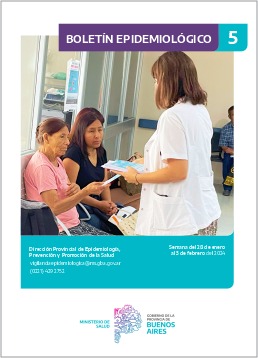
    Week 5 | 01/28/2024 to 02/03/2024

    Epidemiological situation, surveillance of COVID-19 and other acute respiratory infections; surveillance of acute diarrhea; surveillance of dengue and other arboviruses; surveillance of

    Discharg
------------------


Excerpt from pages 14 to 16:
...
Epidemiological situation of national BSE

On November 28, the Ministry of Health issued an Epidemiological Alert from the confirmation of the diagnosis of Western Equine Encephalopathy in horses in the provinces of Santa Fe and Entre Ríos and with suspicions in different provinces. From according to data reported by the National Health and Quality Service Agroalimentaria (SENASA), a total of 1,419 positive outbreaks. The provinces where the outbreaks were recorded to date are Buenos Aires, Catamarca, Chaco, Corrientes, Córdoba, Santa Fe, San Luis, La Pampa, Entre Rivers, Formosa, Santiago del Estero, Río Negro, Salta, La Rioja, Mendoza and Neuquén.

Epidemiological surveillance of BSE in humans

From the start of surveillance at SE48/2023 until 2/2/2024 (SE 5) were notified 279 suspected cases in 15 provinces and 89 were positive. The positive cases (confirmed and probable) to date were distributed in Buenos Aires (57)*, CABA (2), Entre Ríos (5), Córdoba (5), Santa Fe (19) and Santiago del Estero (1). All confirmed cases required hospitalization and recorded 7 deaths, in Buenos Aires (3), Córdoba (1), Entre Ríos (1) and Santa Fe (2). Of which, in 6 of the 7 cases, indicate having lived, worked or visited a rural area or semi rural and have a history of previous disease or risk condition (diabetes, oncological disease, high blood pressure, among others).

Deaths occurred in persons aged 36 to 74 years, 5 males and 2 female.

Case definitions and instructions for surveillance are available at Western Equine Encephalitis Surveillance Circular.

Epidemiological situation of EEO in the Province of Buenos Aires6

Until February 5, 2024, 802 positive outbreaks of equine encephalitis were reported. west in horses in the PBA, of which 789 outbreaks were confirmed by criteria clinical and 13 by laboratory.

Epidemiological surveillance of WEE in humans

In PBA from SE 48/2023 to SE 6/2024 (7-02) 176 suspected cases were reported of EEO, of which 42 cases were confirmed and 15 were probable. The positive cases (confirmed and probable) belong to the municipalities:
...
Of these positive cases, 51 required hospitalization: 17 are hospitalized currently, 3 cases died and the rest were discharged. The deceased cases correspond to the municipalities of La Plata (RS XI), Exaltación de la Cruz (RS V) and General Viamonte (RS III), symptoms began in EW 51 (12/18), EW 1 (1/1) and EW 2 (8/1), all lived in a rural area and two of them had comorbidities. (Figure 1 )...

 
Source: https://www.breakinglatest.news/entertainment/a-man-is-hospitalized-in-viedma/

a man is hospitalized in Viedma
March 12, 2024​

A few days ago, Health provided a series of recommendations to the population to reinforce prevention measures on Equine Encephalitis. For several days a man has been admitted to the Zatti hospital in Viedma, who had symptoms compatible with that disease. and today that diagnosis was confirmed by laboratory.

After RÍO NEGRO newspaper’s consultations with Health authorities, They confirmed that “this is a 67-year-old man” and that the laboratory results confirmed that he is suffering from the disease Equine Encephalitis, which affects humans since the disease is transmitted by mosquitoes.

Regarding their health, they stated that The man who works on a farm in the Idevi area is still hospitalized in the Zatti hospital from the Rio Negro capital with a “reserved prognosis.”

They also detailed that “The patient’s family is asymptomatic and was monitored by the health team.”

At the end of January, the first cases of this disease in humans in the provinces of Córdoba and Entre Ríos. Now it has begun to spread to several provinces, there are even cases with compatible symptoms in the Patagones District.​..
 
Argentina - Equine encephalomyelitis (Western)(2006-) - Follow up report 4 [FINAL]

GENERAL INFORMATION
COUNTRY/TERRITORY OR ZONE
COUNTRY/TERRITORY

ANIMAL TYPE
TERRESTRIAL

DISEASE CATEGORY
Listed disease

EVENT ID
5358

DISEASE
Equine encephalomyelitis (Western)(2006-)

CAUSAL AGENT
Western equine encephalomyelitis virus

GENOTYPE / SEROTYPE / SUBTYPE
-

START DATE
2023/11/22

REASON FOR NOTIFICATION
Recurrence of an eradicated disease

DATE OF LAST OCCURRENCE
1988/12/30

CONFIRMATION DATE
2023/11/27

EVENT STATUS
Resolved

END DATE
2024/05/13

SELF-DECLARATION
NO

REPORT INFORMATION
REPORT NUMBER
Follow-up report 4

REPORT ID
FUR_167455

REPORT REFERENCE
-

REPORT DATE
2024/05/29

REPORT STATUS
Validated

NO EVOLUTION REPORT
-

EPIDEMIOLOGY
SOURCE OF EVENT OR ORIGIN OF INFECTION
Unknown or inconclusive

EPIDEMIOLOGICAL COMMENTS
Equines with neurological signs are detected (weakness, incoordination, drooping head, among others). Samples are taken and sent for diagnosis, confirming the presence of alphavirus. After specific laboratory tests, it is confirmed to be equine encephalomyelitis (Western).


QUANTITATIVE DATA SUMMARY
MEASURING UNIT
Animal

SpeciesSusceptibleCasesDeathsKilled and Disposed ofSlaughtered/ Killed for commercial useVaccinated
Equidae (DOMESTIC)
NEW 259
47 20 - - -
TOTAL 27749 2144 587 - - -
...
NEW OUTBREAKS

OB_134955 - EEO -89008- RAWSON- CHUBUT - RAWSON
OB_134954 - EEO -88690- GAIMAN- CHUBUT - GAIMAN
OB_134953 - EEO -88743- RAWSON- CHUBUT - RAWSON
OB_134952 - EEO -88732- RAWSON- CHUBUT - RAWSON
OB_134951 - EEO -88724- RAWSON- CHUBUT - RAWSON
OB_134950 - EEO -88760- RAWSON- CHUBUT - RAWSON
OB_134949 - EEO -88763- RAWSON- CHUBUT - RAWSON
OB_134948 - EEO -88748- RAWSON- CHUBUT - RAWSON
OB_134942 - EEO -21344- RAWSON- CHUBUT - RAWSON
OB_134941 - EEO -68749- PILAGAS- FORMOSA - PILCOMAYO
OB_134940 - EEO -67796- PILCOMAYO- FORMOSA - PILAGÁS
OB_134939 - EEO -66783- PILCOMAYO- FORMOSA - PILCOMAYO
OB_134938 - EEO -66266- PILCOMAYO- FORMOSA - PILCOMAYO
OB_134928 - EEO -66008- PATIÑO- FORMOSA - PATIÑO
OB_134910 - EEO -65699- PILCOMAYO- FORMOSA - PILCOMAYO
OB_134907 - EEO -64213- PILAGAS- FORMOSA - ILAGÁS
OB_134881 - EEO -21167- PATIÑO- FORMOSA - LAISHI
OB_134880 - EEO -74471- PATIÑO- FORMOSA - PATIÑO
OB_134879 - EEO -20911- PATIÑO- FORMOSA - PATIÑO
OB_134878 - EEO -64988- PATIÑO- FORMOSA - PATIÑO
OB_134877 - EEO -20684- PATIÑO- FORMOSA - PATIÑO
OB_134876 - EEO -20823- PIRANE- FORMOSA - PIRANÉ
OB_134875 - EEO -20522- PATIÑO- FORMOSA - PATIÑO
OB_134874 - EEO -20876- FRAY JUSTO MARÍA DE ORO- CHACO - FRAY JUSTO SANTA MARÍA DE ORO
OB_134828 - EEO -20880- FRAY JUSTO MARÍA DE ORO- CHACO - FRAY JUSTO SANTA MARÍA DE ORO
OB_134873 - EEO -20884- 2 DE ABRIL- CHACO - FRAY JUSTO SANTA MARÍA DE ORO
OB_134827 - EEO -20839 - PRIMERO DE MAYO - CHACO - PRIMERO DE MAYO
OB_134826 - EEO -20791 - SARGENTO CABRAL - CHACO - SARGENTO CABRAL
OB_134825 - EEO -20783 - COMANDANTE FERNANDEZ- CHACO - COMANDANTE FERNÁNDEZ
OB_134824 - EEO -20894 - FRAY JUSTO MARIA DE ORO - CHACO - FRAY JUSTO SANTA MARÍA DE ORO
OB_134823 - EEO -20794 - 25 DE MAYO - CHACO - VEINTICINCO DE MAYO
OB_134822 - EEO -20502 - FRAY JUSTO SANTA MARIA DE ORO - CHACO - FRAY JUSTO SANTA MARÍA DE ORO
OB_134821 - EEO -21143 - FRAY JUSTO SANTA MARIA DE ORO - CHACO - FRAY JUSTO SANTA MARÍA DE ORO
OB_134820 - EEO -20892 - FRAY JUSTO SANTA MARIA DE ORO - CHACO - FRAY JUSTO SANTA MARÍA DE ORO
OB_134819 - EEO -20864 - LIBERTADOR GENERAL SAN MARTIN - CHACO - LIBERTADOR GENERAL SAN MARTÍN
OB_134818 - EEO -20860 -FRAY JUSTO SANTA MARIA DE ORO- CHACO - FRAY JUSTO SANTA MARÍA DE ORO
OB_134817 - EEO -20341-LIBERTADOR GENERAL SAN MARTIN- CHACO - LIBERTADOR GENERAL SAN MARTÍN
OB_134816 - EEO -20412 -12 DE OCTUBRE- CHACO - CHACABUCO
OB_134815 - EEO - 20318 -MAIPU - CHACO - MAIPÚ
OB_134813 - EEO - 21140 -FRAY JUSTO SANTA MARIA DE ORO - CHACO - FRAY JUSTO SANTA MARÍA DE ORO
OB_134812 - EEO - 21146 -FRAY JUSTO SANTA MARIA DE ORO - CHACO - FRAY JUSTO SANTA MARÍA DE ORO
OB_134811 - EEO - 20871 -FRAY JUSTO SANTA MARIA DE ORO - CHACO - FRAY JUSTO SANTA MARÍA DE ORO
OB_134810 - EEO - 65683 -12 DE OCTUBRE - CHACO - CHACABUCO

PREVIOUSLY REPORTED OUTBREAKS

OB_134720 - EEO -74994-TUPUNGATO-MENDOZA - TUPUNGATO
OB_134719 - EEO -69567-LA PAZ-MENDOZA - LA PAZ
OB_134718 - EEO -75814-SENILLOSA-NEUQUEN - SENILLOSA
OB_134717 - EEO -74532-GRAL. PEDERNERA- SAN LUIS - GENERAL PEDERNERA
OB_134716 - EEO -67830- SILIPICA- SANTIAGO DEL ESTERO - SILÍPICA
OB_134715 - EEO -21260- GRAL. PEDERNERA- SAN LUIS - GENERAL PEDERNERA
OB_134714 - EEO -64431- VILLA MERCEDES - SAN LUIS - VILLA MERCEDES
OB_134713 - EEO -62895- JUSTO DARACT - SAN LUIS - GENERAL PEDERNERA
OB_134712 - EEO -20879- RIVADAVIA - SANTIAGO DEL ESTERO - RIVADAVIA
OB_134711 - EEO -20872- RIVADAVIA - SANTIAGO DEL ESTERO - AGUIRRE
OB_134710 - EEO -61920 - RIVADAVIA - SANTIAGO DEL ESTERO - AGUIRRE
OB_134672 - EEO - 20379 - JIMENEZ - SANTIAGO DEL ESTERO - RIÓ HONDO
OB_134671 - EEO - 20335 - AGUIRRE - SANTIAGO DEL ESTERO - AGUIRRE
OB_134670 - EEO - 20377 - SAN MARTIN - SANTIAGO DEL ESTERO - SAN MARTÍN
OB_134669 - EEO - 20380 - LA BANDA - SANTIAGO DEL ESTERO - BANDA
OB_134668 - EEO - 66104 - JOAQUÍN V. GONZALES - SALTA - JOAQUÍN V. GONZALES
OB_134667 - EEO - 66325 - EL QUEBRANCHAL - SALTA - EL QUEBRANCHAL
OB_132642 - EEO-AGRUPADO006- LA PAMPA - CENTROIDE LA PAMPA
OB_129283 - EEO-AGRUPADO005-CORRIENTES - CORRIENTES (CENTROIDE)
OB_129725 - EEO - 21255 - LOBERIA- BUENOS AIRES - LOBERIA
OB_129769 - EEO - 21218 - REALICO- LA PAMPA - REALICÓ
OB_129442 - EEO - 21247 - GRAL.PEDERNERA - SAN LUIS - PEDERNERA
OB_129443 - EEO - 20841 - ROSARIO DE LA FRONTERA - SALTA - ROSARIO DE LA FRONTERA
OB_132127 - EEO - 21312 - CONFLUENCIA-NEUQUEN - CONFLUENCIA
OB_132045 - EEO - 67663.21291 - SAN RAFAEL- MENDOZA - SAN RAFAEL
OB_129976 - EEO - 21276 - SAN MARTIN- MENDOZA - SAN MARTÍN
OB_129770 - EEO - 21268 - SANTA ROSA- MENDOZA - SANTA ROSA
OB_129616 - EEO - 21257 - SANTA ROSA - MENDOZA - SANTA ROSA
OB_132645 - EEO-AGRUPADO007-RÍO NEGRO - RIO NEGRO (CENTROIDE)
OB_134422 - EEO - 74856 - CHILECITO - LA RIOJA - CHILECITO
OB_129722 - EEO - 21265 - GRAL. JUAN FACUNDO QUIROGA - LA RIOJA - GENERAL JUAN FACUNDO QUIROGA
OB_129718 - EEO - 21264 - GRAL. OCAMPO - LA RIOJA - GENARAL OCAMPO
OB_129280 - EEO-AGRUPADO002-SANTA FE - SANTA FE (CENTROIDE)
OB_128091 - EEO - 20223 - SAN CRISTOBAL - SANTA FE - SAN CRISTOBAL
OB_128092 - EEO - 20304 - SAN CRISTOBAL II - SANTA FE - SAN CRISTOBAL
OB_129101 - EEO - 20385 - SAN CRISTOBAL III - SANTA FE - SAN CRITOBAL
OB_129282 - EEO-AGRUPADO004-ENTRE RÍOS - ENTRE RIOS (CENTROIDE)
OB_129281 - EEO-AGRUPADO003-CORDOBA - CORDOBA (CENTROIDE)
OB_129274 - EEO - 20337 - FRAY JUSTO SANTA MARIA DE ORO - CHACO - FRAY JUSTO SANTA MARÍA DE ORO
OB_129518 - EEO - 21251 - LA PAZ - CATAMARCA - ESQUIU
OB_129100 - EEO-AGRUPADO001-BUENOS AIRES - BUENOS AIRES (CENTROIDE)
OB_129438 - EEO - 21110 - QUEMU QUEMU - LA PAMPA - QUEMU QUEMU
OB_129279 - EEO - 20789 - ADOLFO ALSINA- RIO NEGRO - ADOLFO ALSINA
OB_129090 - EEO - 20788 - GENARAL LAVALLE - BUENOS AIRES - GERNARAL LAVELLE
OB_129069 - EEO - 20776 - SAN ANTONIO DE ARECO - BUENOS AIRES - SAN ANTONIO DE ARECO
OB_129048 - EEO - 20688 - EZEIZA - BUENOS AIRES - EZEIZA
OB_132086 - EEO - 20579 - JUAREZ CELMAN - CORDOBA - JUÁREZ CELMAN
OB_129043 - EEO - 20439 - BERAZATEGUI - BUENOS AIRES - BERAZATEGUI
OB_129041 - EEO - 20312 - CHACABUCO - BUENOS AIRES - CHACABUCO
OB_129766 - EEO - 20808 - AVELLANEDA- RIO NEGRO - CHOELE CHOEL
OB_129276 - EEO - 20621 - AVELLANEDA - SANTIAGO DEL ESTERO - AVELLANEDA
OB_129723 - EEO - 20250 - EXALTACION DE LA CRUZ - BUENOS AIRES - CAPILLA DEL SEÑOR
OB_129001 - EEO - 20219 - CAPILLA DEL SEÑOR - BUENOS AIRES - CAPILLA DEL SEÑOR
OB_129617 - EEO - 21263 - GRAL. SAN MARTIN - LA RIOJA - SAN MARTIN
OB_130001 - EEO - 21250 - GENERAL VIAMONTE- BUENOS AIRES - GENERAL VIAMONTE
OB_129724 - EEO - 21066 - EZEIZA- BUENOS AIRES - EZEIZA
OB_129102 - EEO - 20297 - SAN JUSTO - CÓRDOBA - SAN JUSTO
OB_129103 - EEO - 20257 - ESQUINA - CORRIENTES - ESQUINA
OB_132044 - EEO - 21014 - SAN PEDRO- BUENOS AIRES - SAN PEDRO
OB_129767 - EEO - 21131 - UTRACAN- LA PAMPA - UTRACAN
OB_129096 - EEO - 20793 - GENARAL MADARIAGA - BUENOS AIRES - MADARIAGA
OB_129045 - EEO - 20557 - CAMPANA - BUENOS AIRES - CAMPANA
OB_130011 - EEO - 20407 - LA PAZ - ENTRE RIOS - LA PAZ
OB_129977 - EEO - 20402 - LA PAZ- ENTRE RIOS - LA PAZ
OB_129272 - EEO - 20333 - PIRANE - FORMOSA - PIRANE
OB_129106 - EEO - 20313 - ISLAS DEL IBICUY - ENTRE RÍOS - ISLAS DEL IBICUY
OB_129104 - EEO - 20241 - MERCEDES - CORRIENTES - MERCEDES
OB_129105 - EEO - 20319 - FEDERACION - ENTRE RÍOS - FEDERACION
OB_128090 - EEO - 20310 - SANTA LUCIA - CORRIENTES - SANTA LUCIA

https://wahis.woah.org/#/in-review/5358

--------------------------------------------------

Argentina - Equine encephalomyelitis (Western)(2006-) - Follow up report 1 [FINAL]

GENERAL INFORMATION
COUNTRY/TERRITORY OR ZONE
COUNTRY/TERRITORY

ANIMAL TYPE
TERRESTRIAL

DISEASE CATEGORY
Listed disease

EVENT ID
5509

DISEASE
Equine encephalomyelitis (Western)(2006-)

CAUSAL AGENT
Western equine encephalomyelitis virus

GENOTYPE / SEROTYPE / SUBTYPE
-

START DATE
2023/12/05

REASON FOR NOTIFICATION
Unusual host species

DATE OF LAST OCCURRENCE
-

CONFIRMATION DATE
2024/01/08

EVENT STATUS
Resolved

END DATE
2024/01/02

SELF-DECLARATION
NO

REPORT INFORMATION
REPORT NUMBER
Follow-up report 1

REPORT ID
FUR_167538

REPORT REFERENCE
-

REPORT DATE
2024/05/29

REPORT STATUS
Validated

NO EVOLUTION REPORT
-

EPIDEMIOLOGY
SOURCE OF EVENT OR ORIGIN OF INFECTION
Unknown or inconclusive

EPIDEMIOLOGICAL COMMENTS
The case in sheep reported in this event occurs in the context of an outbreak of Western equine encephalomyelitis in equines. Vaccination as a control measure, as well as movement restrictions, only apply to equines. Specific epidemiological comments are included in the outbreak (ob_130464).


QUANTITATIVE DATA SUMMARY
MEASURING UNIT
Animal

SpeciesSusceptibleCasesDeathsKilled and Disposed ofSlaughtered/ Killed for commercial useVaccinated
Sheep (DOMESTIC)
NEW - - - - - -
TOTAL 27 1 1 - - -
...

UPDATED OUTBREAKS

OB_130464 - EEO - HOSPEDADOR INUSUAL - 20854 - BARADERO, BUENOS AIRES - BARADERO
OUTBREAK REFERENCE
EEO - hospedador inusual - 20854 - Baradero, Buenos Aires

START DATE
2023/12/05

END DATE
2024/01/02

DETAILED CHARACTERISATION
-

FIRST ADMINISTRATIVE DIVISION
Buenos Aires

SECOND ADMINISTRATIVE DIVISION
Baradero

THIRD ADMINISTRATIVE DIVISION
-

EPIDEMIOLOGICAL UNIT
Farm

LOCATION
Baradero

Latitude, Longitude
-34.06982 , -59.56596

OUTBREAKS IN CLUSTER
-

MEASURING UNIT
Animal

AFFECTED POPULATION DESCRIPTION
Farm housing sheep and horses. An equine of the premises was previously diagnosed with Western equine encephalomyelitis. The disease in the equine was diagnosed by the official veterinary services based on clinical signs and local epidemiology. The outbreak was reported in a timely manner to WOAH under event 5358. Upon the occurrence of neurological signs in a sheep, samples were taken from the affected animal for PCR and sequencing. The sheep tested positive for Western equine encephalomyelitis.

SpeciesSusceptibleCasesDeathsKilled and Disposed ofSlaughtered/ Killed for commercial useVaccinated
Sheep (DOMESTIC)
NEW - - - - - -
TOTAL 27 1 1 - - -
...
https://wahis.woah.org/#/in-review/5509​
 
Back
Top