Translation Google
Disturbing finding by the Malbrán mission investigating the hantavirus from the cruise ship in Tierra del Fuego
They reported that they have not yet found any long-tailed mice, but they have found others that can carry the virus.
However, it is not known whether these mice can transmit the disease.
Emilia Vexler
21/05/2026 04:01
On the second day of collecting what was captured in the traps placed in two sectors of the Tierra del Fuego National Park, the scientist who leads the Malbrán health mission to find the hantavirus outbreak on the MV Hondius cruise ship, confirmed to Clarín that "for now" they did not find a single long-tailed mouse (Oligoryzomys longicaudatus), the reservoir in which the Andes virus can multiply and be transmitted.
But they did find two "related species" that they categorized as "positive," meaning that they may have the "hanta" virus, although they do not know if they are capable of transmitting the virus.
There is still no link connecting Ushuaia, where the ship departed from, with the Dutch bird-loving couple who were the first to die.
One more day of mouse collection is needed, in an operation that began on Monday to gather information about the start of a chain of infections that left three passengers dead, a total of 11 people infected and dozens more in quarantine.
Of the 200 traps, rodents were caught in between 5% and 10% . This is not insignificant, but rather typical for this type of operation.
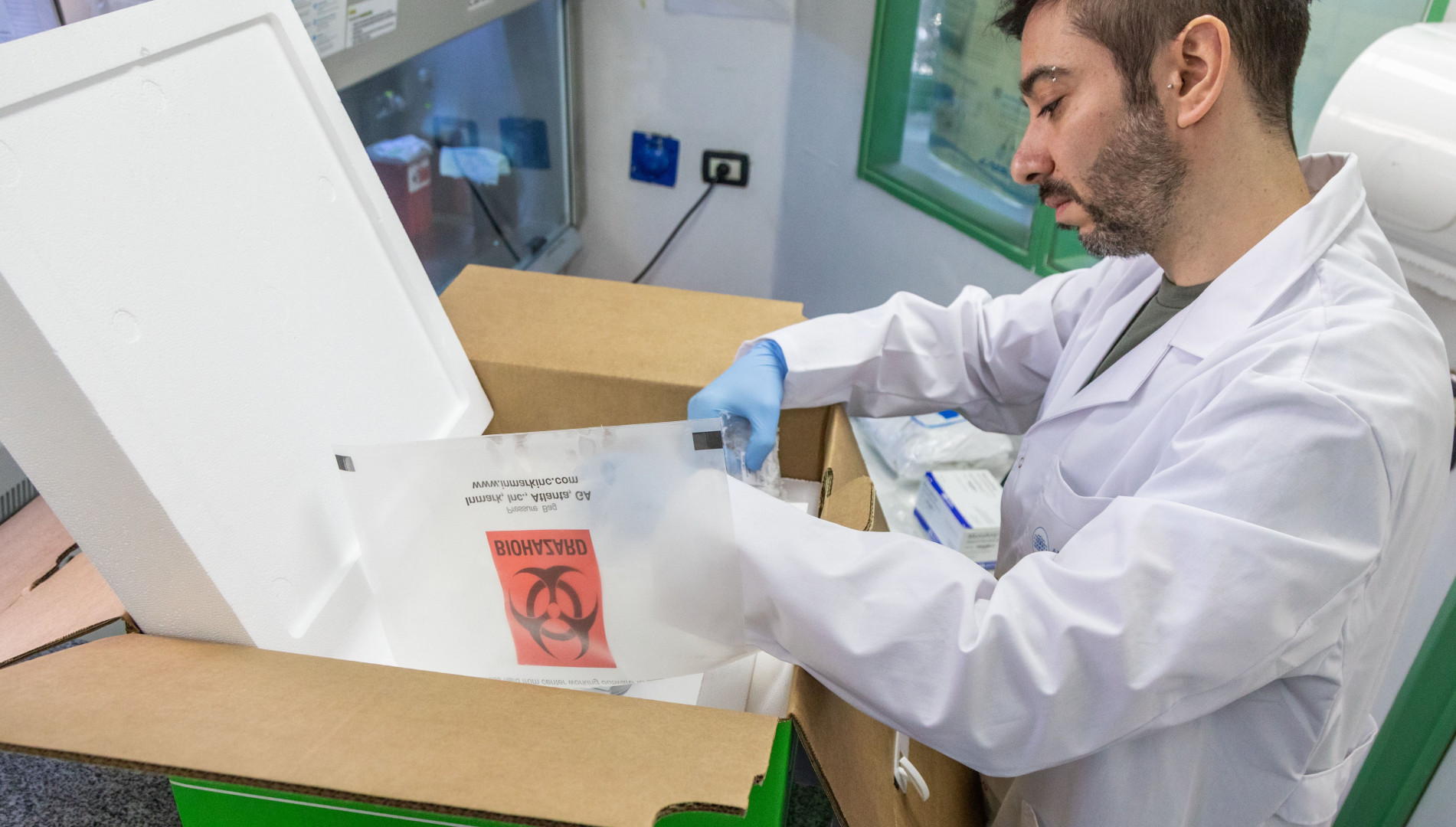
In the field laboratory set up literally in the forest, blood is drawn from the mice to then test for an initial immune response, which reveals whether each rodent was or is infected.
“It’s very generic; it doesn’t directly detect the virus, but rather evidence that the virus is or was present. We take the sample, keep it refrigerated, and store it under maximum biosafety conditions. At the end of the three-day collection period, all the samples are sent together to Buenos Aires, where they are analyzed to determine if they are positive for hantavirus or not,” explains Carla Bellomo, a researcher at the Hantavirus Laboratory of the National Institute of Infectious Diseases (INEI) of the Malbrán Institute, to Clarín , just before the collection began.
While awaiting those final results—between 24 and 48 hours for the first immune response test, conducted in a more complex laboratory, and several more days for confirmation of the hantavirus type—the key finding today is that there was no trace of the long-tailed pygmy rice rat, a reservoir for the Andes virus and also identified in other studies conducted in Tierra del Fuego. However, the other two “suspected” mouse species were found. This finding, for now, leads to open conclusions.
“We don’t know if these two positive species act as reservoirs or not. We don’t know if they have an accidental infection with the virus, but are unable to transmit it,” Bellomo points out. These species are Abrothrix hirta and Abrothrix olivacea, the olive and long-haired mice, respectively. “The presence of these types of mice is one thing, but their infection is another,” he emphasizes.
Based on her expertise, the biologist points out that “these species live in the exact same place, they have constant contact, so it’s very likely that if there is, for example, an infected long-tailed mouse, it will transmit the virus to these other mice, but those two mice aren’t necessarily capable of transmitting it , so the chain of infection would be broken. That’s what hasn’t been proven yet.” The two species found are only “associated” with hantavirus.
Rodents are nocturnal, so the traps are left overnight and checked in the morning to see if any mice have been caught. Although they are Sherman-style traps, meaning live capture, these mice are not released back into the wild. In addition to blood, samples are taken from all their organs, because otherwise the genomic sequencing of the virus would not be possible.
She, along with two other biologists from the Malbrán Institute, Sebastián Kehl and Julián Pighin, traveled to Tierra del Fuego following the route taken by Dutch tourists who were documenting birds. They may have visited various locations to photograph scavengers, such as the city's landfill, which had been the focus of international media attention as a potential source of infection.
But the specialists actually traveled there only because that province had never had hantavirus, nor any record of human-to-human transmission of the Andes virus, the only one that is transmitted between people, which meant the health system lacked the expertise to treat it. The Patagonian provinces that are endemic, such as Neuquén, where the couple also visited, send samples to Buenos Aires with their own trained teams.
Being outdoors, in a completely open space, such as a forest trail or even the garbage dump itself, is it possible for an infected rodent to have transmitted the virus to a cruise ship passenger? “In the case of the Andes virus, it has to be that a person was infected in a wild area and then, through very close contact, infected another person. That person who was infected in a wild area has to have had relatively close contact with the virus ; it's not something you catch just by walking on a trail. There has to have been some other action that brought them close to the infected mouse or its urine, feces, or saliva. The probability is very low,” he clarifies.
Regarding the landfill itself, Bellomo considers it an “unusual place” for the mice they are looking for. “There are usually rats and mice of a different species than the one that transmits the Andes virus. But we are going to sample in all the places where necessary, to find out if hantavirus is present.”
The first "sensitive" test to determine if the captured mice are infected takes between 24 and 48 hours from the time the samples arrive in Buenos Aires. This depends on the workload of the Malbrán Institute laboratory. If any mice test positive, the virus analysis, he says, "is much more complex and takes longer."
It is crucial that the sample has been preserved in good conditions, "and that it has a sufficient quantity of virus to be able to detect the sequence and compare it with the genomic sequence of the virus that was extracted from the patient in the index case, and in that case you will be able to see the link, let's say, of the contagion on the cruise ship," he concludes.
https://www.clarin.com/sociedad/hal...avirus-crucero-tierra-fuego_0_ntEyY8v4oP.html