• FluTrackers.com Inc. does not provide medical advice. Information on this web site is collected from various internet resources, and the FluTrackers board of directors makes no warranty to the safety, efficacy, correctness or completeness of the information posted on this site by any author or poster. The information collated here is for instructional and/or discussion purposes only and is NOT intended to diagnose or treat any disease, illness, or other medical condition. Every individual reader or poster should seek advice from their personal physician/healthcare practitioner before considering or using any interventions that are discussed on this website. By continuing to access this website you agree to consult your personal physican before using any interventions posted on this website, and you agree to hold harmless FluTrackers.com Inc., the board of directors, the members, and all authors and posters for any effects from use of any medication, supplement, vitamin or other substance, device, intervention, etc. mentioned in posts on this website, or other internet venues referenced in posts on this website.
  • We are not asking for any donations. Do not donate to any entity who says they are raising funds for us.

Archive. EuroFlu.org, Weekly Epidemiological Report (2010)

EuroFlu - Weekly Electronic Bulletin - Week 44 : 01/11/2010-07/11/2010 - 12 November 2010, Issue N? 375 (edited)

EuroFlu - Weekly Electronic Bulletin - Week 44 : 01/11/2010-07/11/2010 - 12 November 2010, Issue N? 375 (edited)

EuroFlu - Weekly Electronic Bulletin - Week 44 : 01/11/2010-07/11/2010 - 12 November 2010, Issue N? 375 (edited)


[Source: EuroFlu, full page: <cite cite="http://www.euroflu.org/cgi-files/bulletin_v2.cgi">EuroFlu - Bulletin Review</cite>. Extract, edited.]

EuroFlu - Weekly Electronic Bulletin - Week 44 : 01/11/2010-07/11/2010 - 12 November 2010, Issue N? 375

Low levels of influenza activity in Europe

  • This issue is based on data reported in week 44/2010 by 39 Member States in the WHO European Region.
  • Influenza activity levels in Europe are currently low.
  • 18 out of 435 sentinel specimens (4.1%) tested positive for influenza.
  • Sporadic detections of pandemic influenza A(H1N1), influenza A (H3N2) and influenza B were reported during the week.

Current situation - week 44/2010

Influenza-like illness (ILI) and acute respiratory infection (ARI) consultation rates continue to be low throughout the WHO European Region.

Of the 37 countries reporting clinical data for week 44, increases in consultation rates during each of the previous 2 weeks were observed in 7: Albania (ARI), Bulgaria (ARI), Israel (ILI), Luxembourg (ILI), the Netherlands (ILI), Norway (ILI) and the United Kingdom (Northern Ireland) (ILI).

Although clinical consultation rates were highest for the group aged 0-4 in most countries, the group aged 65 and over had the highest rates in Belgium, Ireland, the Netherlands, Portugal and the United Kingdom (England and Northern Ireland).

Azerbaijan, Belarus, Cyprus, the Czech Republic, France, Israel, Norway, the Russian Federation and the United Kingdom (England, Northern Ireland and Scotland) reported sporadic geographic spread of influenza, while Armenia reported local spread.

The impact of influenza on health care systems was low in all countries reporting on this indicator.


Virological situation - week 44/2010

Sentinel physicians collected 435 respiratory specimens, of which 18 (4.1%) were positive for influenza virus: 10 were influenza A and 8 were influenza B. All influenza A viruses were subtyped as pandemic A(H1).

For the 5 countries testing 20 or more sentinel specimens, influenza-positive rates ranged from 0% (Georgia, the Russian Federation) to 8.3% (United Kingdom - England), with a mean of 3.9%.

Among the specimens tested from non-sentinel sources, 28 were positive for influenza: 18 influenza A and 10 influenza B.

Of the influenza A viruses, 6 were subtyped as pandemic A(H1), 4 were influenza A(H3) and 8 were not subtyped.


Cumulative virological update - weeks 40-44/2010

A total of 161 influenza virus detections were reported: 97 were influenza A (60.2%) and 64 (39.8%) influenza B. Of the influenza A viruses, 39 were subtyped as pandemic influenza A(H1), 1 as influenza A(H1), 26 as influenza A(H3) and 31 were not subtyped.


Comment

Influenza activity continues to be low in the European Region. Pandemic influenza A(H1), influenza A(H3) and influenza B viruses are currently circulating in the Region.

(...)
-
-------
 
EuroFlu - Weekly Electronic Bulletin - Week 45 : 08/11/2010-14/11/2010 - 19 November 2010, Issue N? 376 (Extract, edited)

EuroFlu - Weekly Electronic Bulletin - Week 45 : 08/11/2010-14/11/2010 - 19 November 2010, Issue N? 376 (Extract, edited)

EuroFlu - Weekly Electronic Bulletin - Week 45 : 08/11/2010-14/11/2010 - 19 November 2010, Issue N? 376 (Extract, edited)


[Source: EuroFlu, full page: <cite cite="http://www.euroflu.org/cgi-files/bulletin_v2.cgi">EuroFlu - Bulletin Review</cite>. Extract, edited.]

EuroFlu - Weekly Electronic Bulletin - Week 45 : 08/11/2010-14/11/2010 - 19 November 2010, Issue N? 376

Low levels of influenza with focal activity in Europe

  • This issue is based on data reported in week 45/2010 by 39 Member States in the WHO European Region.
  • Influenza activity is currently low in most countries in the European Region.
  • 32 out of 523 (6%) sentinel specimens tested positive for influenza.
  • Pandemic influenza A(H1N1) 2009, influenza A (H3N2) and influenza B detections were reported during the week.

Current situation - week 45/2010

In the 33 countries reporting clinical data for week 45, influenza-like illness (ILI) and acute respiratory infection (ARI) consultation rates were generally low.

Increasing consultation rates during the last 2 weeks were reported from 6 countries: Austria (ARI), Bulgaria (ARI), Czech Republic (ARI), Ireland (ILI), Norway (ILI) and Uzbekistan (ARI).

Most of the 36 countries reporting on geographic distribution of influenza activity (27) reported no spread of influenza, while 8 reported sporadic spread and 1 country local spread.

The impact of influenza on health care systems was low in all 23 countries reporting on this indicator.


Virological situation - week 45/2010

Sentinel physicians collected 523 respiratory specimens, of which 32 (6%) were positive for influenza virus: 19 (4%) were influenza A and 13 (3%) were influenza B.

Among the influenza A viruses, 14 were subtyped as pandemic A(H1), 4 as influenza A(H3) and 1 was unsubtyped.

In the 6 countries testing 20 or more sentinel specimens, influenza positivity ranged from 0% (Georgia, Germany, the Russian Federation) to 20% (Israel), with a mean of 6%.

Among specimens tested from non-sentinel sources, 28 were positive for influenza: 16 influenza A and 12 influenza B.

Of the influenza A viruses, 7 were subtyped as pandemic A(H1), 1 were influenza A(H3) and 8 were unsubtyped.

Since week 40/2010, based on the reported antigenic characterization of 29 influenza viruses, 17 were A(H1) pandemic A/California/7/2009 (H1N1)-like, 4 were A(H3) A/Perth/16/2009 (H3N2)-like, 1 was B/Florida/4/2006-like (B/Yamagata/16/88 lineage) and 7 were B/Brisbane/60/2008-like (B/Victoria/2/87 lineage).

Based on the genetic characterization of 3 influenza viruses, 2 belonged to the A/California/7/2009 A(H1N1) pandemic group and 1 to the B/Florida/4/2006 (Yamagata) lineage.


Cumulative virological update - weeks 40-45/2010

A total of 230 influenza virus detections have been reported of which 140 were influenza A (61%) and 90 (39%) influenza B.

Of the influenza A viruses, 63 (45%) were subtyped as pandemic influenza A(H1) 2009, 1 (1%) as influenza A(H1), 31 (22%) as influenza A(H3) and 45 (32%) were not subtyped.


Comment

Influenza activity remains low in the European Region, although there are areas of focal activity. Pandemic influenza A(H1) 2009, influenza A(H3) and influenza B viruses are circulating in the Region.


Further information

The EuroFlu bulletin describes and comments on influenza activity in the 53 countries in the WHO European Region. Further information can be obtained from the web sites of WHO/Europe, WHO headquarters and the European Centre for Disease Prevention and Control.

(...)
-
------
 
EuroFlu - Weekly Electronic Bulletin - Week 46 : 15/11/2010-21/11/2010 - 26 November 2010, Issue N? 377 (Extract, edited)

EuroFlu - Weekly Electronic Bulletin - Week 46 : 15/11/2010-21/11/2010 - 26 November 2010, Issue N? 377 (Extract, edited)

EuroFlu - Weekly Electronic Bulletin - Week 46 : 15/11/2010-21/11/2010 - 26 November 2010, Issue N? 377 (Extract, edited)


[Source: EuroFlu, full page: <cite cite="http://www.euroflu.org/cgi-files/bulletin_v2.cgi">EuroFlu - Bulletin Review</cite>. Extract, edited.]

EuroFlu - Weekly Electronic Bulletin - Week 46 : 15/11/2010-21/11/2010 - 26 November 2010, Issue N? 377

Continued low level influenza activity in the European Region

  • This issue is based on data reported in week 46/2010 by 43 Member States in the WHO European Region.
  • Overall there is a low level of influenza activity in the Region.
  • 3% of sentinel specimens tested positive for influenza.
  • 9 countries reported influenza B detections; 4 countries, pandemic influenza A(H1N1) detections; and 3 countries, influenza A(H3N2) detections.

Current situation ? week 46/2010

None of the 33 countries reporting clinical data for week 46 observed noteworthy increases or decreases in clinical consultation rates for influenza-like illness (ILI) or acute respiratory infection (ARI).

Of the 11 countries presenting calculated baseline thresholds, none reported clinical consultation rates above the thresholds.

The intensity of respiratory disease activity was reported as low in 35 countries and medium in 2 countries (Bulgaria and the Russian Federation).

Of the 37 countries that reported on the geographic distribution of influenza activity, 22 reported no spread of influenza; 14 reported sporadic spread, and 1 country reported local spread.

The impact of influenza on health care systems was low in all 25 countries reporting on this indicator.

Respiratory syncytial virus (RSV) also continues to circulate in the European Region, with 13 countries reporting RSV detections during week 46.


Virological situation ? week 46/2010

Sentinel physicians collected 562 respiratory specimens, of which 17 (3%) were positive for influenza virus: 6 were influenza A and 11 were influenza B. All 6 influenza A viruses were subtyped as pandemic A(H1).

For the 10 countries testing 20 or more sentinel specimens, influenza positivity ranged from 0% (Finland, France, Germany, Hungary, Romania, the Russian Federation, Sweden) to 12.5% (Israel).

Among specimens tested from non-sentinel sources, 30 were positive for influenza: 13 influenza A and 17 influenza B. Of the influenza A viruses, 5 were subtyped as pandemic A(H1), 5 were influenza A(H3) and 3 were unsubtyped.

Since week 40/2010, the reported antigenic characterization of 29 influenza viruses has indicated that 17 were A(H1) pandemic A/California/7/2009 (H1N1)-like; 4 were A(H3) A/Perth/16/2009 (H3N2)-like; 1 was B/Florida/4/2006-like (B/Yamagata/16/88 lineage) and 7 were B/Brisbane/60/2008-like (B/Victoria/2/87 lineage).

Based on the genetic characterization of 3 influenza viruses, 2 belonged to the A/California/7/2009 A(H1N1) pandemic group and 1 to the B/Florida/4/2006 (Yamagata) lineage.


Cumulative virological update ? weeks 40?46/2010

A total of 286 influenza virus detections has been reported, of which 161 (56%) were influenza A and 125 (44%) influenza B. Of the influenza A viruses, 110 were subtyped, 73 (66%) as pandemic influenza A(H1), 1 (1%) as influenza A(H1) and 36 (33%) as influenza A(H3).


Comment

Influenza activity remains low in the European Region, and there have not been any notable increases in clinical consultation rates for ILI or ARI. Influenza type B, pandemic influenza A(H1) and influenza A(H3) all continue to be detected. Also, several countries report RSV detections.


Further information

The EuroFlu bulletin describes and comments on influenza activity in the 53 countries in the WHO European Region. Further information can be obtained from the web sites of WHO/Europe, WHO headquarters and the European Centre for Disease Prevention and Control.

(...)
-
------
 
EuroFlu - Weekly Electronic Bulletin - Week 47 : 22/11/2010-28/11/2010 - 03 December 2010, Issue N? 378 (Extract, edited)

EuroFlu - Weekly Electronic Bulletin - Week 47 : 22/11/2010-28/11/2010 - 03 December 2010, Issue N? 378 (Extract, edited)

EuroFlu - Weekly Electronic Bulletin - Week 47 : 22/11/2010-28/11/2010 - 03 December 2010, Issue N? 378 (Extract, edited)


[Source: EuroFlu, full page: <cite cite="http://www.euroflu.org/cgi-files/bulletin_v2.cgi">EuroFlu - Bulletin Review</cite>. Extract, edited.]

EuroFlu - Weekly Electronic Bulletin - Week 47 : 22/11/2010-28/11/2010 - 03 December 2010, Issue N? 378

Spreading low level influenza activity in the European Region

  • This issue is based on data reported in week 47/2010 by 43 Member States in the WHO European Region.
  • Overall, influenza activity is at a low level in the Region.
  • Only 5.9% of sentinel specimens tested positive for influenza.
  • Fourteen countries reported influenza B detections; nine countries, pandemic influenza A(H1N1) detections; and seven countries, influenza A(H3N2) detections.

Current situation ? week 47/2010

Of the 37 countries reporting clinical data, 18 reported small increases in clinical consultation rates for influenza-like illness (ILI) or acute respiratory infection (ARI). These increases were more pronounced in trends for ARI than for ILI, and largely the result of recent increases in consultations for the groups aged 0?4 and 5?14 years. However, of the 10 countries presenting calculated baseline thresholds, none reported clinical consultation rates above their thresholds.

The intensity of respiratory disease activity was reported as low in 37 countries and medium in the Russian Federation.

Of the 38 countries that reported on the geographic distribution of influenza activity, 18 reported no spread of influenza; 18 reported sporadic spread, and two countries reported local spread.

The impact of influenza on health care systems was low in all 24 countries reporting on this indicator.

Respiratory syncytial virus (RSV) also continues to circulate in the European Region, with 15 countries reporting RSV detections during week 47.


Virological situation ? week 47/2010

Sentinel physicians collected 729 respiratory specimens, of which 43 (5.9%) were positive for influenza virus: 16 (37%) were influenza A and 27 (63%) were influenza B.

Of the 16 influenza A viruses, 14 were subtyped as pandemic A(H1), and two as influenza A(H3). For the 10 countries testing 20 or more sentinel specimens, influenza positivity ranged from 0% (Hungary, Kazakhstan, Romania, the Russian Federation) to 27.8% (Israel) with a median of 3.4%.

Among specimens tested from non-sentinel sources, 122 were positive for influenza: 66 (54%) influenza A and 56 (46%) influenza B.

Of the influenza A viruses, 15 were subtyped as pandemic A(H1), 11 as A(H3) and 40 were unsubtyped.

Since week 40/2010, 39 influenza viruses have been characterized antigenically: 21 were A(H1) pandemic A/California/7/2009 (H1N1)-like; seven were A(H3) A/Perth/16/2009 (H3N2)-like; one was B/Florida/4/2006-like (B/Yamagata/16/88 lineage) and 10 were B/Brisbane/60/2008-like (B/Victoria/2/87 lineage).

Based on the genetic characterization of eight influenza viruses, four belonged to the pandemic A/California/7/2009 A(H1N1) clade; two belonged to the A(H3) clade represented by A/Perth/16/2009; one belonged to the A(H3) clade represented by the A/Victoria/208/2009 ? A/Hong Kong/2121/2010 subgroup, and one to the B/Florida/4/2006 (Yamagata) lineage.


Cumulative virological update ? weeks 40?47/2010

A total of 499 influenza virus detections have been reported, of which 272 (55%) were influenza A and 227 (45%) influenza B.

Of the influenza A viruses, 168 were subtyped: 108 (64%) as pandemic influenza A(H1), two (1%) as influenza A(H1) and 58 (35%) as influenza A(H3).


Comment

Influenza activity remains low in the European Region but the number of countries reporting influenza detections is increasing. Influenza type B, pandemic influenza A(H1) and influenza A(H3) all continue to be detected. Many countries are also reporting RSV detections.


Further information

The EuroFlu bulletin describes and comments on influenza activity in the 53 countries in the WHO European Region. Further information can be obtained from the web sites of WHO/Europe, WHO headquarters and the European Centre for Disease Prevention and Control.

(...)
-
------
 
EuroFlu - Weekly Electronic Bulletin - Week 48 : 29/11/2010-05/12/2010 - 10 December 2010, Issue N? 379

EuroFlu - Weekly Electronic Bulletin - Week 48 : 29/11/2010-05/12/2010 - 10 December 2010, Issue N? 379

EuroFlu - Weekly Electronic Bulletin - Week 48 : 29/11/2010-05/12/2010 - 10 December 2010, Issue N? 379 (Extract, edited)


[Source. EuroFlu, full page: <cite cite="http://www.euroflu.org/cgi-files/bulletin_v2.cgi">EuroFlu - Bulletin Review</cite>. Extract, edited.]

EuroFlu - Weekly Electronic Bulletin - Week 48 : 29/11/2010-05/12/2010 - 10 December 2010, Issue N? 379

Low levels but increasing influenza activity in the European Region

  • This issue is based on data reported in week 48/2010 by 40 Member States in the WHO European Region.
  • Overall, influenza activity is at a low level in the Region.
  • 9.8% of sentinel specimens tested positive for influenza.
  • Influenza B, pandemic influenza A(H1N1) and influenza A(H3N2) viruses are circulating in the Region.

Current situation - week 48/2010

Of the 32 countries reporting clinical data, 13 reported small increases in clinical consultation rates for influenza-like illness (ILI) or acute respiratory infection (ARI). These increases were most pronounced in consultations for the groups aged 0-4 and 5-14 years.

Of the 11 countries presenting calculated baseline thresholds, the Russian Federation and Ukraine reported clinical consultation rates above their thresholds.

The intensity of respiratory disease activity was reported as low in 32 countries and medium in the Russian Federation.

Of the 34 countries that reported on the geographic distribution of influenza activity, 13 reported no spread of influenza, 16 reported sporadic spread, and five countries reported local spread.

The impact of influenza on health care systems was low in all 22 countries reporting on this indicator.

Respiratory syncytial virus (RSV) also continues to circulate in the European Region, with 16 countries reporting RSV detections during week 48.


Virological situation - week 48/2010

Sentinel physicians collected 674 respiratory specimens, of which 66 (9.8%) were positive for influenza virus: 32 (48%) were influenza A and 34 (52%) were influenza B.

Of the 32 influenza A viruses 30 were subtyped, 27 as pandemic A(H1), and three as A(H3).

For the 10 countries testing 20 or more sentinel specimens, influenza positivity ranged from 0% to 36.7% with a median of 3.8%. Of these countries the United Kingdom (England) (22%) and Georgia (36.7%) reported that over 20% of sentinel specimens tested positive for influenza.

Among specimens tested from non-sentinel sources, 236 were positive for influenza: 126 (53%) influenza A and 110 (47%) influenza B.

Sixty-eight of the influenza A viruses were subtyped, 49 as pandemic A(H1) and 19 as A(H3).

Since week 40/2010, 56 influenza viruses have been characterized antigenically: 27 were A(H1) pandemic A/California/7/2009 (H1N1)-like; eight were A(H3) A/Perth/16/2009 (H3N2)-like; one was B/Florida/4/2006-like (B/Yamagata/16/88 lineage); and 20 were B/Brisbane/60/2008-like (B/Victoria/2/87 lineage).

Based on the genetic characterization of 12 influenza viruses, six belonged to the pandemic A/California/7/2009 A(H1N1) clade; two belonged to the A(H3) clade represented by A/Perth/16/2009; one belonged to the A(H3) clade represented by the A/Victoria/208/2009 - A/Hong Kong/2121/2010 subgroup; two belonged to the B/Bangladesh/333/2007 (Yamagata) lineage; and one to the B/Florida/4/2006 (Yamagata) lineage.


Cumulative virological update - weeks 40-48/2010

A total of 753 influenza virus detections have been reported, of which 411 (55%) were influenza A and 342 (45%) influenza B.

Of the influenza A viruses, 251 were subtyped: 167 (67%) as pandemic influenza A(H1), one (<1%) as influenza A(H1) and 83 (33%) as influenza A(H3).


Comment

Influenza activity remains low in the European Region but the number of countries reporting influenza detections is increasing. This is also reflected in the percentage positive samples: in the current week 9.8% of samples tested positive compared to 5.9% last week. Influenza type B, pandemic influenza A(H1) and influenza A(H3) viruses have been detected. RSV is also circulating and the pattern is similar to the 2009/2010 season at this time of the year.


Further information

The EuroFlu bulletin describes and comments on influenza activity in the 53 countries in the WHO European Region. Further information can be obtained from the web sites of WHO/Europe, WHO headquarters and the European Centre for Disease Prevention and Control.

(...)
-
------
 
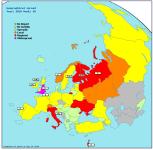
EuroFlu - Influenza-like Illness Activity - Geographical Spread Indicator - Snapshot, December 14 2010

EuroFlu - Influenza-like Illness Activity - Geographical Spread Indicator - Snapshot, December 14 2010

From EuroFlu Interactive Maps page: http://www.euroflu.org/html/maps.html

Influenza-like Illness Activity - Geographical Spread Indicator - Snapshot, December 14 2010


Most of European Region countries are reporting sporadic ILI activity.

England, Norway, Armenia, Georgia and some Russian Federation Regions are reporting Local activity.

Kaliningrad and another Russian region report Regional activity.

To date, dominating type/subtypes are:

-- Influenza B is the dominant strain in: Portugal, Belgium, Israel, Italy, Georgia, Norway, Sweden and in one Russian Federation region.

-- Influenza A is the dominant type in: Spain (H1N1 (2009)), England, Finland (H1N1 (2009)) and co-circulate with B in Sweden.

attachment.php

-
------
 

Attachments

  • eurofludec1410.png
    eurofludec1410.png
    50.5 KB · Views: 1
EuroFlu - Weekly Electronic Bulletin - Week 49 : 06/12/2010-12/12/2010 - 17 December 2010, Issue N? 380 (Extract, edited)

EuroFlu - Weekly Electronic Bulletin - Week 49 : 06/12/2010-12/12/2010 - 17 December 2010, Issue N? 380 (Extract, edited)

EuroFlu - Weekly Electronic Bulletin - Week 49 : 06/12/2010-12/12/2010 - 17 December 2010, Issue N? 380 (Extract, edited)


[Source: EuroFlu, full page: <cite cite="http://www.euroflu.org/cgi-files/bulletin_v2.cgi">EuroFlu - Bulletin Review</cite>. Extract, edited.]

EuroFlu - Weekly Electronic Bulletin - Week 49 : 06/12/2010-12/12/2010 - 17 December 2010, Issue N? 380

Overall low levels but slowly increasing influenza activity in some countries in the European Region

  • This issue is based on data reported in week 49/2010 by 41 Member States in the WHO European Region.
  • Influenza activity remains low in most countries but influenza virus detections are increasing.
  • 20.4% of sentinel specimens tested positive for influenza.
  • Pandemic influenza A(H1N1) 2009, influenza B, and influenza A(H3N2) viruses are circulating in the Region.

Current situation - week 49/2010

Of the 34 countries submitting data on influenza-like illness (ILI) or acute respiratory infection (ARI), increasing consultation rates were reported by 11 countries, mostly in children aged 0-14.

The increases were generally small, except in the United Kingdom (England) which observed more pronounced increases in both ILI and ARI consultation rates for most age groups.

Of the 36 countries reporting on the geographical spread of influenza, most reported either no (13) or sporadic (16) distribution, while 3 reported local activity, 3 regional activity and 1 widespread activity.

The impact of influenza on health care systems was low in all but one (Ireland) of the 22 countries reporting on this indicator.

Respiratory syncytial virus (RSV) is also circulating and 19 countries reported detections during week 49.


Virological situation ? week 49/2010

Sentinel physicians collected 828 respiratory specimens, of which 169 (20%) were positive for influenza virus: 101 (60%) were influenza A and 68 (40%) were influenza B.

Of the influenza A viruses, 86 were subtyped: 81 as pandemic A(H1) and 5 as A(H3).

For the 13 countries testing 20 or more sentinel specimens, influenza positivity ranged from 0% to 42% with a median of 6%. Influenza positivity was highest in the UK (England, 42%), Finland (38%) and Israel (37%).

Among specimens tested from non-sentinel sources, 251 were positive for influenza: 153 (61%) influenza A and 98 (39%) influenza B.

Fifty-four of the non-sentinal influenza A viruses were subtyped: 44 were pandemic A(H1) and 10 A(H3).

Since week 40/2010, 79 influenza viruses have been characterized antigenically: 38 were A(H1) pandemic A/California/7/2009 (H1N1)-like; 13 were A(H3) A/Perth/16/2009 (H3N2)-like; 1 was B/Florida/4/2006-like (B/Yamagata/16/88 lineage); 1 was B/Bangladesh/3333/2007-like (B/Yamagata/16/88 lineage) and 26 were B/Brisbane/60/2008-like (B/Victoria/2/87 lineage).

Based on the genetic characterization of 22 influenza viruses, 12 belonged to the pandemic A/California/7/2009 A(H1N1) clade; 3 belonged to the A(H3) clade represented by A/Perth/16/2009; 2 belonged to the A(H3) clade represented by the A/Victoria/208/2009 - A/Hong Kong/2121/2010 subgroup, 4 belonged to the B/Bangladesh/3333/2007 (Yamagata) lineage and 1 to the B/Florida/4/2006 (Yamagata) lineage.


Cumulative virological update - weeks 40?49/2010

A total of 1 251 influenza virus detections have been reported, of which 734 (59%) were influenza A and 517 (41%) influenza B.

Of the influenza A viruses, 447 have been subtyped: 339 (76%) as pandemic influenza A(H1), one (<1%) as influenza A(H1) and 107 (24%) as influenza A(H3).


Comment

Overall influenza activity remains low in most countries of the European Region. However, the number of countries reporting influenza detections and the positivity of sentinel samples are increasing. In week 49/2010, 20% of sentinel samples tested positive for influenza compared with 10% in the previous week. Pandemic A(H1N1) 2009, influenza type B, and influenza A(H3) viruses have all been detected and RSV continues to circulate.


Further information

The EuroFlu bulletin describes and comments on influenza activity in the 53 countries in the WHO European Region. Further information can be obtained from the web sites of WHO/Europe, WHO headquarters and the European Centre for Disease Prevention and Control.

(...)
-
------
 
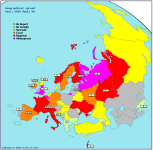
EuroFlu - Influenza-like Illness Activity - Geographical Spread Indicator - Snapshot, December 20 2010

EuroFlu - Influenza-like Illness Activity - Geographical Spread Indicator - Snapshot, December 20 2010

Source: EuroFlu.org, interactive maps page: http://www.euroflu.org/html/maps.html

attachment.php


Influenza Activity - Geographical Spread Indicator, as for December 20 2010


  • Sporadic Activity: (Dominant Type/Subtype)
    • Portugal (B)
    • Spain
    • France
    • Belgium (B)
    • Luxembourg
    • Germany
    • Poland
    • Slovenia
    • Slovakia
    • Belarus
    • Lettonia
    • Estonia
    • Turkey
    • Azerbaijan
    • Sweden (A+B)
    • Ireland (H1N1 (2009))
    • UK - Wales
    • UK - Scotland
  • Local Activity:
    • Norway (B)
    • Switzerland
  • Regional Activity:
    • Italy (H1N1 (2009))
    • Israel (B)
    • Ukraine
    • Finland (H1N1 (2009))
  • Widespread Activity:
    • UK - England (A)
Russian Federation reports westward regional to local activity and far-east sporadic activity.

-
-----
 

Attachments

  • euroflu122010.png
    euroflu122010.png
    51.4 KB · Views: 0
EuroFlu - Weekly Electronic Bulletin - Week 50 : 13/12/2010-19/12/2010 - 23 December 2010, Issue N? 381 (Extract, edited)

EuroFlu - Weekly Electronic Bulletin - Week 50 : 13/12/2010-19/12/2010 - 23 December 2010, Issue N? 381 (Extract, edited)

EuroFlu - Weekly Electronic Bulletin - Week 50 : 13/12/2010-19/12/2010 - 23 December 2010, Issue N? 381 (Extract, edited)


[Source: EuroFlu.org, full page: <cite cite="http://www.euroflu.org/cgi-files/bulletin_v2.cgi">EuroFlu - Bulletin Review</cite>. Extract, edited.]

EuroFlu - Weekly Electronic Bulletin - Week 50 : 13/12/2010-19/12/2010 - 23 December 2010, Issue N? 381

Overall low levels of influenza activity in the WHO European Region but some countries reporting increased activity

  • This issue is based on data reported in week 50/2010 by 42 Member States in the WHO European Region.
  • Influenza activity remains low in most countries but influenza virus detections are increasing.
  • 39% of sentinel specimens tested positive for influenza.
  • Pandemic influenza A(H1N1) 2009, influenza B, and influenza A(H3N2) viruses are circulating in the Region.

Current situation - week 50/2010

Of the 32 countries submitting data on influenza-like illness (ILI) or acute respiratory infection (ARI), increasing consultation rates were reported by 8 countries, mostly in children aged 0-14.

The increases were generally small, except in the United Kingdom (England) where ILI and ARI consultation rates continued to increase steeply.

Of the 13 countries presenting calculated baseline thresholds, France, Ireland, the Russian Federation and Ukraine reported clinical consultation rates above their thresholds.

Of the 33 countries reporting on the geographical spread of influenza, most reported either no (6) or sporadic (12) distribution, while 7 reported local activity, 6 regional activity and 2 widespread activity.

The impact of influenza on health care systems was low in 17 of the 20 countries reporting on this indicator, with 3 countries reporting moderate impact (Finland, Ireland, Israel).

Respiratory syncytial virus (RSV) is also circulating and 14 countries reported detections during week 50.


Virological situation - week 50/2010

Sentinel physicians collected 1188 respiratory specimens, of which 465 (39%) were positive for influenza virus: 318 (68%) were influenza A and 147 (32%) were influenza B.

Of the influenza A viruses 291 were subtyped, 274 (94%) as pandemic A(H1) and 17 (6%) as A(H3).

For the 11 countries testing 20 or more sentinel specimens, influenza positivity ranged from 0% to 60% with a median of 28% (mean: 26%). Influenza positivity was highest in Finland (60%), the United Kingdom (56%), and Israel (46%).

Among specimens tested from non-sentinel sources, 907 were positive for influenza: 647 (71%) influenza A and 260 (29%) influenza B.

Of the influenza A viruses 181 were subtyped, 161 (89%) as pandemic A(H1) and 20 (11%) as A(H3).

Since week 40/2010, 161 influenza viruses have been characterized antigenically: 90 were A(H1) pandemic A/California/7/2009 (H1N1)-like; 15 were A(H3) A/Perth/16/2009 (H3N2)-like; 5 were B/Florida/4/2006-like (B/Yamagata/16/88 lineage); and 51 were B/Brisbane/60/2008-like (B/Victoria/2/87 lineage).

Based on the genetic characterization of 30 influenza viruses: 18 belonged to the pandemic A/California/7/2009 A(H1N1) clade; 3 belonged to the A(H3) clade represented by A/Perth/16/2009; 4 belonged to the A(H3) clade represented by the A/Victoria/208/2009 - A/Hong Kong/2121/2010 subgroup; 4 belonged to the B/Bangladesh/3333/2007 clade (Yamagata) lineage; and 1 to the B/Florida/4/2006 clade (Yamagata) lineage.


Cumulative virological update - weeks 40-50/2010

A total of 2 744 influenza virus detections have been reported, of which 1 794 (65%) were influenza A and 950 (35%) influenza B. Of the influenza A viruses, 1012 have been subtyped: 853 (84%) as pandemic influenza A(H1); one (<1%) as influenza A(H1); and 158 (16%) as influenza A(H3).


Comment

Overall, influenza activity remains low in most countries of the WHO European Region. However, the number of countries reporting influenza detections and the rates of positivity in sentinel samples are increasing. Overall in week 50/2010, 39% of sentinel samples tested positive for influenza compared with 10% in the previous week. Pandemic A(H1N1) 2009, influenza type B, and influenza A(H3) viruses have all been detected and RSV continues to circulate.


Further information

The EuroFlu bulletin describes and comments on influenza activity in the 53 countries in the WHO European Region. Further information can be obtained from the web sites of WHO/Europe, WHO headquarters and the European Centre for Disease Prevention and Control.

(...)
-
------
 
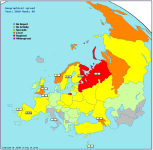
EuroFlu - Influenza-like Illness Activity - Geographical Spread Indicator - Snapshot, December 27 2010

EuroFlu - Influenza-like Illness Activity - Geographical Spread Indicator - Snapshot, December 27 2010

Source: EuroFlu.org, Interactive Maps Page: http://www.euroflu.org/html/maps.html

EuroFlu - Influenza-like Illness Activity - Geographical Spread Indicator - Snapshot, December 27 2010

EuroFlu reports for the geographical spread indicator of the influenza-like illness activity across European Region the situation depicted in the below map:

attachment.php


Influenza-like illness activity is geographically


  • WIDESPREAD in
    • United Kingdom (England)
    • Belgium
    • Luxembourg
    • One of the Russian Federation Region and
    • Kaliningrad (RF).
Influenza-like illness activity is geographically

  • REGIONAL in
    • France
    • Italy
    • Norway
    • Ukraine
    • Israel
    • Some of the Russian Federation Regions
ILI is also geographically LOCALLY active in:

  • Spain
  • Republic of Ireland
  • Switzerland
  • Germany
  • Sweden
  • One of the Russian Federation regions
The IMPACT on the health care system is reported as MODERATE in the Republic of Ireland, Finland and Israel.

Virologically, the dominant strains are:

Former pandemic H1N1 (2009) virus in Spain, Italy, Republic of Ireland, UK Northern Ireland, and Finland.

Influenza B is the dominant strain in Portugal, Switzerland, UK Scotland, Norway, Sweden, Russian Federation and Israel.
 

Attachments

  • euroflu27dec10.png
    euroflu27dec10.png
    53.2 KB · Views: 1
Back
Top