Giuseppe
Emeritus
EuroFlu - Weekly Electronic Bulletin - Week 44 : 01/11/2010-07/11/2010 - 12 November 2010, Issue N? 375 (edited)
EuroFlu - Weekly Electronic Bulletin - Week 44 : 01/11/2010-07/11/2010 - 12 November 2010, Issue N? 375 (edited)
EuroFlu - Weekly Electronic Bulletin - Week 44 : 01/11/2010-07/11/2010 - 12 November 2010, Issue N? 375 (edited)
[Source: EuroFlu, full page: <cite cite="http://www.euroflu.org/cgi-files/bulletin_v2.cgi">EuroFlu - Bulletin Review</cite>. Extract, edited.]
EuroFlu - Weekly Electronic Bulletin - Week 44 : 01/11/2010-07/11/2010 - 12 November 2010, Issue N? 375
Low levels of influenza activity in Europe
Current situation - week 44/2010
Influenza-like illness (ILI) and acute respiratory infection (ARI) consultation rates continue to be low throughout the WHO European Region.
Of the 37 countries reporting clinical data for week 44, increases in consultation rates during each of the previous 2 weeks were observed in 7: Albania (ARI), Bulgaria (ARI), Israel (ILI), Luxembourg (ILI), the Netherlands (ILI), Norway (ILI) and the United Kingdom (Northern Ireland) (ILI).
Although clinical consultation rates were highest for the group aged 0-4 in most countries, the group aged 65 and over had the highest rates in Belgium, Ireland, the Netherlands, Portugal and the United Kingdom (England and Northern Ireland).
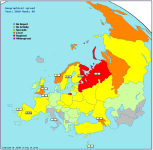
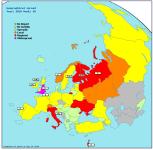
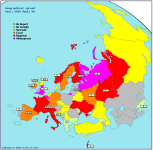
Azerbaijan, Belarus, Cyprus, the Czech Republic, France, Israel, Norway, the Russian Federation and the United Kingdom (England, Northern Ireland and Scotland) reported sporadic geographic spread of influenza, while Armenia reported local spread.
The impact of influenza on health care systems was low in all countries reporting on this indicator.
Virological situation - week 44/2010
Sentinel physicians collected 435 respiratory specimens, of which 18 (4.1%) were positive for influenza virus: 10 were influenza A and 8 were influenza B. All influenza A viruses were subtyped as pandemic A(H1).
For the 5 countries testing 20 or more sentinel specimens, influenza-positive rates ranged from 0% (Georgia, the Russian Federation) to 8.3% (United Kingdom - England), with a mean of 3.9%.
Among the specimens tested from non-sentinel sources, 28 were positive for influenza: 18 influenza A and 10 influenza B.
Of the influenza A viruses, 6 were subtyped as pandemic A(H1), 4 were influenza A(H3) and 8 were not subtyped.
Cumulative virological update - weeks 40-44/2010
A total of 161 influenza virus detections were reported: 97 were influenza A (60.2%) and 64 (39.8%) influenza B. Of the influenza A viruses, 39 were subtyped as pandemic influenza A(H1), 1 as influenza A(H1), 26 as influenza A(H3) and 31 were not subtyped.
Comment
Influenza activity continues to be low in the European Region. Pandemic influenza A(H1), influenza A(H3) and influenza B viruses are currently circulating in the Region.
(...)
-
-------
EuroFlu - Weekly Electronic Bulletin - Week 44 : 01/11/2010-07/11/2010 - 12 November 2010, Issue N? 375 (edited)
EuroFlu - Weekly Electronic Bulletin - Week 44 : 01/11/2010-07/11/2010 - 12 November 2010, Issue N? 375 (edited)
[Source: EuroFlu, full page: <cite cite="http://www.euroflu.org/cgi-files/bulletin_v2.cgi">EuroFlu - Bulletin Review</cite>. Extract, edited.]
EuroFlu - Weekly Electronic Bulletin - Week 44 : 01/11/2010-07/11/2010 - 12 November 2010, Issue N? 375
Low levels of influenza activity in Europe
- This issue is based on data reported in week 44/2010 by 39 Member States in the WHO European Region.
- Influenza activity levels in Europe are currently low.
- 18 out of 435 sentinel specimens (4.1%) tested positive for influenza.
- Sporadic detections of pandemic influenza A(H1N1), influenza A (H3N2) and influenza B were reported during the week.
Current situation - week 44/2010
Influenza-like illness (ILI) and acute respiratory infection (ARI) consultation rates continue to be low throughout the WHO European Region.
Of the 37 countries reporting clinical data for week 44, increases in consultation rates during each of the previous 2 weeks were observed in 7: Albania (ARI), Bulgaria (ARI), Israel (ILI), Luxembourg (ILI), the Netherlands (ILI), Norway (ILI) and the United Kingdom (Northern Ireland) (ILI).
Although clinical consultation rates were highest for the group aged 0-4 in most countries, the group aged 65 and over had the highest rates in Belgium, Ireland, the Netherlands, Portugal and the United Kingdom (England and Northern Ireland).
Azerbaijan, Belarus, Cyprus, the Czech Republic, France, Israel, Norway, the Russian Federation and the United Kingdom (England, Northern Ireland and Scotland) reported sporadic geographic spread of influenza, while Armenia reported local spread.
The impact of influenza on health care systems was low in all countries reporting on this indicator.
Virological situation - week 44/2010
Sentinel physicians collected 435 respiratory specimens, of which 18 (4.1%) were positive for influenza virus: 10 were influenza A and 8 were influenza B. All influenza A viruses were subtyped as pandemic A(H1).
For the 5 countries testing 20 or more sentinel specimens, influenza-positive rates ranged from 0% (Georgia, the Russian Federation) to 8.3% (United Kingdom - England), with a mean of 3.9%.
Among the specimens tested from non-sentinel sources, 28 were positive for influenza: 18 influenza A and 10 influenza B.
Of the influenza A viruses, 6 were subtyped as pandemic A(H1), 4 were influenza A(H3) and 8 were not subtyped.
Cumulative virological update - weeks 40-44/2010
A total of 161 influenza virus detections were reported: 97 were influenza A (60.2%) and 64 (39.8%) influenza B. Of the influenza A viruses, 39 were subtyped as pandemic influenza A(H1), 1 as influenza A(H1), 26 as influenza A(H3) and 31 were not subtyped.
Comment
Influenza activity continues to be low in the European Region. Pandemic influenza A(H1), influenza A(H3) and influenza B viruses are currently circulating in the Region.
(...)
-
-------