• FluTrackers.com Inc. does not provide medical advice. Information on this web site is collected from various internet resources, and the FluTrackers board of directors makes no warranty to the safety, efficacy, correctness or completeness of the information posted on this site by any author or poster. The information collated here is for instructional and/or discussion purposes only and is NOT intended to diagnose or treat any disease, illness, or other medical condition. Every individual reader or poster should seek advice from their personal physician/healthcare practitioner before considering or using any interventions that are discussed on this website. By continuing to access this website you agree to consult your personal physican before using any interventions posted on this website, and you agree to hold harmless FluTrackers.com Inc., the board of directors, the members, and all authors and posters for any effects from use of any medication, supplement, vitamin or other substance, device, intervention, etc. mentioned in posts on this website, or other internet venues referenced in posts on this website.
  • We are not asking for any donations. Do not donate to any entity who says they are raising funds for us.

Alaska - Avian flu in mammals, 2023-2026

Shiloh

Editor, Senior Moderator
Source: https://alaskabeacon.com/2023/12/30...al-first-and-a-sign-of-the-virus-persistence/

Avian influenza death of Alaska polar bear is a global first and a sign of the virus’ persistence
The highly pathogenic influenza that has already killed vast numbers of birds and numerous mammals continues to circulate in the world’s wild populations
By: Yereth Rosen - December 30, 2023 6:00 am

​A polar bear found dead on Alaska’s North Slope is the first of the species known to have been killed by the highly pathogenic avian influenza that is circulating among animal populations around the world.

The polar bear was found dead in October near Utqiagvik, the nation’s northernmost community, the Alaska Department of Environmental Conservation reported.

The discovery of the virus in the animal’s body tissue, a process that required sampling and study by the North Slope Borough Department of Wildlife Management and other agencies, confirmed earlier this month that highly pathogenic avian influenza was the cause of death, said Dr. Bob Gerlach, Alaska’s state veterinarian.

“This is the first polar bear case reported, for anywhere,” Gerlach said. As such, it was reported to the World Organisation for Animal Health and has gotten attention in other Arctic nations that have polar bears, he said.

This was also the first Endangered Species Act-listed animal in Alaska known to fall victim to the disease. Polar bears, dependent on sea ice that is diminishing because of climate change, were listed as threatened in 2008.

While polar bears normally eat seals they hunt from the sea ice, it appears likely that this bear was scavenging on dead birds and ingested the influenza virus that way, Gerlach said. Numerous birds on the North Slope of various species have died from this avian influenza, according to the Department of Environmental Conservation.

However, the bear need not have directly eaten an infected bird to have become sick, Gerlach said.,,
 
Avian flu detected in polar bear in Alaska
...
CBC News · Posted: Jan 04, 2024 4:59 PM CST | Last Updated: January 4
...
Dr. Robert Gerlach, Alaska's state veterinarian, said the young bear's carcass was recently found by a biologist working in the state's remote North Slope region. Swab samples from the dead animal confirmed that it had been infected with the highly pathenogenic H5N1 strain.

"We have had birds detected with the avian influenza virus in that area. So we're making the assumption that the bear had come up onto land and had probably scavenged one of the dead or dying birds, and gotten exposed that way," Gerlach said.
...
Gerlach said Alaska is trying to monitor the presence and spread of H5N1 in the state, but it can be difficult in such a vast territory.

"If an animal dies, especially in the wild up here, it can be scavenged rather quickly by other animals. And so it really is a challenge, trying to find these cases," he said.

Gerlach said some bird species in Alaska have been "severely" affected by the outbreak, including eagles and magpies, as well as waterfowl.

He said this outbreak seems much different to the last global outbreak of avian flu nearly a decade ago. The previous one "seemed to dissipate rather quickly," Gerlach said.

"In this case, we are seeing it really hang on and being adaptive to stay very influential in wild birds, as well as impacting you know, our domestic poultry."
...
https://www.cbc.ca/news/canada/north/alaska-polar-bear-h5n1-infection-1.7074528
 
  1. EID Journal
  2. Volume 30
  3. Early Release
  4. Main Article
Disclaimer: Early release articles are not considered as final versions. Any changes will be reflected in the online version in the month the article is officially released.

Volume 30, Number 8—August 2024

Dispatch

Highly Pathogenic Avian Influenza Virus A(H5N1) Clade 2.3.4.4b Infection in Free-Ranging Polar Bear, Alaska, USA

Raphaela Stimmelmayr[SUP]1[/SUP]Comments to Author , David Rotstein[SUP]1[/SUP], Mia Kim Torchetti, and Robert Gerlach
Author affiliations: North Slope Borough, Utqiagvik, Alaska, USA (R. Stimmelmayr); University of Alaska, Fairbanks, Alaska, USA (R. Stimmelmayr); Marine Mammal Pathology Services, Olney, Maryland, USA (D. Rotstein); US Department of Agriculture Animal and Plant Health Inspection Service, Ames, Iowa, USA (M.K. Torchetti); Alaska Department of Environmental Conservation, Anchorage, Alaska, USA (R. Gerlach)

Abstract


We report a natural infection with a Eurasian highly pathogenic avian influenza A(H5N1) clade 2.3.4.4b virus in a free-ranging juvenile polar bear (Ursus maritimus) found dead in North Slope Borough, Alaska, USA. Continued community and hunter-based participation in wildlife health surveillance is key to detecting emerging pathogens in the Arctic.

Since its emergence in Europe during October 2020, highly pathogenic avian influenza (HPAI) A(H5N1) clade 2.3.4.4b virus has frequently spilled over into diverse mammal hosts globally. In North America, natural H5N1 infections have occurred in several bear species, including American black bears (Ursus americanus), Asiatic black bears (U. thibetanus), grizzly bears (U. arctos horribilis), and Kodiak brown bears (U. a. middendorffi) (1). Infections with influenza A(H1N1) viruses have been reported in captive sloth bears (Melursus ursinus) and Asiatic black bears (2,3) and in giant pandas (Ailuropoda melanoleuca) (4). Detection of hemagglutination inhibition antibodies against H3 and H6 subtype influenza viruses also suggested previous natural exposure to influenza viruses of avian origin (4). Seroconversion after natural exposure to bird influenza viruses has been documented in the Barent Sea polar bear subpopulation (2010–2011) (5) and brown bears in Alaska (2013–2016) (6) but not in the southern Beaufort Sea polar bear subpopulation (2013–2016) (7). Polar bears are a threatened species under the US Endangered Species Act. We report and describe an infection by HPAI H5N1 virus in a free-ranging polar bear found dead in Alaska, USA, during 2023.

The Study


24-0481-F1-tn.jpg

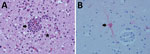
Figure. Histologic analysis of brain tissue from a dead free-ranging polar bear infected with highly pathogenic avian influenza virus A(H5N1) clade 2.3.4.4b, Alaska, USA. A) Hematoxylin and eosin staining of brain...

The North Slope Borough Department of Wildlife Management (NSB DWM) in Alaska conducts wildlife health research and maintains community-based harvest monitoring programs for marine mammals, including polar bears. The Alaska Office of the State Veterinarian conducts surveillance for notifiable infectious diseases in wildlife. After detecting HPAI H5N1 in birds of prey and a red fox (Vulpes vulpes) in April 2022, the Office of the State Veterinarian initiated collaborative surveillance testing with NSB DWM for avian influenza in birds and other wildlife. In August 2023, community members reported a dead polar bear without obvious external injuries near Point Barrow, Alaska (71°23′N, 156°28′W). At the NSB DWM laboratory in Utqiagvik, Alaska, we conducted a postmortem examination of the bear. The bear was young and male, 120 cm in body length, and in moderate to advanced decomposition. Body condition was fair to poor, with no back or visceral fat. Gross findings were multiple 1–3-cm ulcerative skin lesions around the left eye and oral commissure, liver and lung congestion, moderate sanguinal pericardial and cavitary effusion, cerebral swelling and congestion, and empty stomach. We collected postmortem tissue samples of the heart, lung, trachea, spleen, liver, kidney, adrenal gland, skin, skeletal muscle, mesenteric lymph node, pancreas, tongue, esophagus, stomach, small intestines, and brain (cerebrum) and fixed them in 10% neutral buffered formalin for 2 weeks. Histology Consultation Services (https://histocs.comExternal Link) processed the tissue for routine histopathologic examination by staining with hematoxylin and eosin. We also collected oral, nasal, rectal, and brain swab samples and placed them in 2-mL cryovials, which we stored for 2 weeks at −50°C and shipped to the Alaska Environmental Health Laboratory in Anchorage, Alaska. Their personnel placed pooled swab specimens into brain–heart infusion broth. The primary histopathologic finding was a granulocytic and mononuclear meningoencephalitis with microgliosis, neuronal necrosis, neuronophagia, vasculitis, and parenchymal rarefaction (Figure, panel A). Other findings were pulmonary edema, focal lipid pneumonia, and multifocal ulcerative dermatitis.

Pooled swab specimens tested negative for the influenza virus matrix gene by PCR at the Washington Animal Disease Diagnostic Laboratory (Pullmans, WA, USA), which is a National Animal Health Laboratory Network facility. The root cause of negative PCR results is unclear because subsequent sequence analysis did not indicate assay failure. However, because of the cerebral lesions, we sent scrolls of formalin-fixed paraffin-embedded cerebral tissue to the Athens Disease Diagnostic Laboratory, University of Georgia (Athens, GA, USA), for immunohistochemistry to detect influenza A by using an influenza A virus polyclonal antibody (Abcam, https://www.abcam.comExternal Link). Influenza A virus antigen was detected in cytoplasm of neurons and nuclei of microglial cells (Figure, panel B). We also sent scrolls of formalin-fixed paraffin-embedded cerebral tissue to the National Veterinary Services Laboratories (Ames, IA, USA), for molecular confirmation and virus genome characterization. HPAI virus genotype A3, a fully Eurasian influenza virus, was identified; this genotype was initially detected in Alaska in April 2022 and was the most frequently detected genotype in Alaska during August–December 2023. Reported markers for mammal adaptation were not identified. We deposited full genome sequences for the polar bear virus (A/polar bear/Alaska/23–0381234/2023) in GenBank (accession nos. PP820319–26) and GISAID (https://www.gisaid.orgExternal Link; accession no. EPI_ISL_18976667).

This detection of HPAI virus was in the southern Beaufort Sea subpopulation, 1 of 19 circumpolar polar bear subpopulations. During July–August 2023, three short-tailed shearwater seabirds (Ardenna tenuirostris) that tested positive for HPAI H5N1 clade 2.3.4.4b were found dead near Point Barrow, where the polar bear in this study was found. The shearwaters’ virus genotype shared 9 common single-nucleotide polymorphisms (SNPs) with the polar bear virus and was representative of the virus circulating in that area at the time rather than a direct source of the polar bear infection. In addition, in August 2023, a small mortality event from avian influenza occurred among common murre seabirds (Uria aalge) in Dillingham Census Area in Alaska; that virus genotype also shared 8–9 common SNPs, further supporting regional virus circulation. Polar bears are primarily dependent on seals as a food source but will prey on birds and eggs; thus, virus exposure from consumption of infected birds is possible, but infection via an olfactory route cannot be excluded (8).

Support does not exist for ongoing HPAI virus–associated illness and death in free-ranging polar bears in Alaska’s North Slope Borough; in 2023, swab specimens from 3 other dead polar bears tested negative for influenza virus by PCR (Appendix). As for black bears with HPAI H5N1 virus infections (9), brain lesions were the major histopathologic findings in this case. It is not unexpected for clade 2.3.4.4b virus–infected mammals with neurologic signs to have respiratory samples test negative (10), possibly because of different exposure routes, such as digestive, olfactory, or respiratory routes (8). The HPAI H5 goose/Guangdong lineage has been shown to be more neuropathogenic than other influenza A viruses in mammals (8), including the H5N1 clade 2.3.4.4b virus (11,12).

Other notable findings in this case were pulmonary edema, lipid pneumonia, and ulcerative skin lesions. Pulmonary edema as a gross lesion and on histologic analysis was a consistent finding in 3 domestic cats with H5N1 clade 2.3.4.4b infections (13) but has been infrequently reported in wild mesocarnivores (10). Lipid pneumonia was documented in subsistence-harvested polar bears in the southern Beaufort Sea and is considered unrelated (D. Rotstein, unpub. data). Ulcerative skin lesions not caused by trauma are rarely documented in subsistence-harvested southern Beaufort Sea polar bears (R. Stimmelmayr, unpub. data); those lesions have not been reported in terrestrial mammals infected with the H5 clade 2.3.4.4b lineage (10) but have been reported in pinnipeds infected with H3N8 virus (14).

Top

Conclusions


Genome analysis of influenza viruses originating from wildlife in Alaska has shown both unreassorted and reassorted viruses. HPAI virus genotype A3 was likely introduced into Alaska via the East Asia–Australia Flyway as early as November 2021 (15) and has been detected in a few backyard premises; in many wild birds, including California condors (Gymnogyps californianus) in Arizona; and several mammals (red fox, fishers, martens, racoons, and brown bears) along the Pacific Flyway.

In the Arctic, wildlife and other wild subsistence foods play a pivotal role in the health, well-being, and food security of northern indigenous communities. Therefore, subsistence harvesting of animals infected with HPAI viruses, including polar bears, poses a zoonotic risk and affects traditional food safety and food security. Continued community and hunter-based participation in wildlife health surveillance is key to detecting emerging pathogens and other One Health issues in the Arctic.

Top

Dr. Stimmelmayr is a wildlife veterinarian and research biologist with the North Slope Borough Department of Wildlife Management in Utqiagvik, Alaska. Her research interests focus on marine and terrestrial wildlife health and diseases within a One Health context of indigenous circumpolar hunting societies.​

...
https://wwwnc.cdc.gov/eid/article/30/8/24-0481_article

 
Detections of Highly Pathogenic Avian Influenza in Mammals

Last Modified: October 22, 2024
...
state county date_collected date_detected hpai_strain species

Alaska North Slope 9/27/2024 10/7/2024 EA H5 Red fox
Alaska North Slope 9/23/2024 10/3/2024 EA H5N1 Red fox
Alaska North Slope 10/1/2023 12/6/2023 EA H5N1 Polar bear
Alaska Matanuska-Sustina 3/17/2023 3/21/2023 EA H5N1 Red fox
Alaska Kodiak Island 11/29/2022 12/6/2022 EA H5N1 Kodiak bear
Alaska Hoonah-Angoon 10/20/2022 11/16/2022 EA/AM H5N1 American black bear
Alaska Nome Census Area 6/13/2022 7/7/2022 EA/AM H5N1 Red fox
Alaska Aleutians West 5/10/2022 5/25/2022 EA H5N1 Red fox


https://www.aphis.usda.gov/livestock-poultry-disease/avian/avian-influenza/hpai-detections/mammals

 
EID Journal - Exposure of Wild Mammals to Influenza A(H5N1) Virus, Alaska, USA, 2020–2023


Volume 31, Number 4—April 2025

Dispatch

Exposure of Wild Mammals to Influenza A(H5N1) Virus, Alaska, USA, 2020–2023
...
Andrew M. RameyComments to Author , Kimberlee B. Beckmen, David T. Saalfeld, Kerry Nicholson, Buck A. Mangipane, Laura C. Scott, David E. Stallknecht, and Rebecca L. Poulson
Author affiliation: US Geological Survey Alaska Science Center, Anchorage, Alaska, USA (A.M. Ramey, L.C. Scott); Alaska Department of Fish and Game, Fairbanks, Alaska, USA (K.B. Beckmen, K. Nicholson); Alaska Department of Fish and Game, Anchorage (D.T. Saalfeld); National Park Service, Lake Clark National Park and Preserve, Port Alsworth, Alaska, USA (B.A. Mangipane); Southeastern Cooperative Wildlife Disease Study, University of Georgia, Athens, Georgia, USA (D.E. Stallknecht, R.L. Poulson).

Abstract


Serum samples from wild mammals inhabiting Alaska, USA, showed that 4 species, including Ursus arctos bears and Vulpes vulpes foxes, were exposed to influenza A(H5N1) viruses. Results indicated some mammals in Alaska survived H5N1 virus infection. Surveillance efforts may be improved by incorporating information on susceptibility and detectable immune responses among wild mammals.

The panzootic of goose/Guangdong lineage highly pathogenic avian influenza (HPAI) A(H5N1) clade 2.3.4.4b has resulted in unprecedented impact to animal health. Numerous reports have described the geographic scope of disease, identified affected species, and reconstructed spatiotemporal dissemination patterns (17). Infection patterns remain cryptic, particularly among wildlife. For example, little or no quantitative information on the number and species composition of wild animals susceptible to and infected with HPAI H5N1 clade 2.3.4.4b viruses is available for most global regions. Even less information is available regarding prior exposure of wildlife and recovery from infection. Such information is critical for clarifying the evolutionary pressures, epidemiologic patterns, and risks associated with those viruses. We aimed to fill data gaps pertaining to the exposure of wildlife to HPAI H5N1 clade 2.3.4.4b viruses by using serum samples opportunistically collected from diverse wild mammals inhabiting Alaska, USA.


The Study


24-1002-F1-tn.jpg

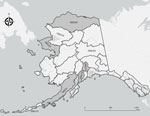
Figure 1. Originating GMUs for 169 serum samples from wild mammals tested for reactivity to influenza A(H5N1) virus, Alaska, USA, 2020–2023. No serum samples were collected from unlabeled GMUs. Gray shading indicates...

As part of previously planned biological operations during January 3, 2020–September 2, 2023, we collected 169 serum samples from American mink (Neovison vison; n = 2), bearded seals (Erignathus barbatus; n = 11), black bears (Ursus americanus; n = 9), brown bears (Ursus arctos; n = 45), Canada lynx (Lynx canadensis; n = 21), coyotes (Canis latrans; n = 1), red foxes (Vulpes vulpes; n = 41), spotted seals (Phoca largha; n = 1), wolves (Canis lupus; n = 33), and wolverines (Gulo gulo; n = 5) in Alaska (Figure 1). Several agencies collaborated on wildlife surveillance activities, including the Alaska Department of Fish and Game (Institutional Animal Care and Use Committee [IACUC] approval nos. 0062-2019-28, 0005-2020-0028, 0095-2020-0037, 0021-2023-0032, and 0109-2023-0036; https://olaw.nih.gov/resources/tutorial/iacuc.htmExternal Link), National Oceanic and Atmospheric Administration (National Marine Fisheries Service research permit no. 26254 and IACUC approval no. 0027-2023-0025), and National Park Service (Alaska Department of Fish and Game scientific permit nos. 22-042 and 23-022; IACUC approval no. AK_LACL_Mangipane_Bears_2021.A).

We tested the serum samples for antibodies to the influenza A virus nucleoprotein by using a commercially available blocking ELISA (bELISA), AI MultiS-Screen Ab test, (IDEXX Laboratories, https://www.idexx.comExternal Link) at the US Geological Survey Alaska Science Center (ASC; Anchorage, Alaska, USA) and the University of Georgia Southeastern Cooperative Wildlife Disease Study (SCWDS; Athens, Georgia, USA). We determined positivity by using the manufacturer’s recommendation of serum/negative (S/N) optical density ratio for poultry (<0.5) and the threshold evidenced to be both sensitive and specific for wild birds (S/N <0.7) (8,9). We tested all samples with sufficient serum remaining by using hemagglutination inhibition (HI) and virus microneutralization (VN) for antibodies to HPAI H5 clade 2.3.4.4b virus and North American lineage low pathogenicity avian influenza (LPAI) H5 viruses at SCWDS by using previously described procedures (10,11). We also tested serum samples for reactivity to N1 subtype influenza A viruses by using an enzyme-linked lectin assay (ELLA) at SCWDS, as previously reported (11). We determined seropositivity on the basis of HI (>8), VN (>20), and ELLA (>80) titers.

Results for bELISA testing were comparable using the S/N ratios of <0.5 (ASC 13/169 [8% seropositive] vs. SCWDS 17/169 [10% seropositive]) and <0.7 (ASC 33/169 [20% seropositive] vs. SCWDS 29/169 [17% seropositive]) (Table) (12). Concordance of inferred serostatus (i.e., positive/negative) of wild mammals was 95% (161/169) between laboratories when using the <0.5 S/N threshold and 89% (151/169) when using <0.7 (12). Twelve bELISA-negative samples were excluded from HI, VN, and ELLA assays or summary because of insufficient sample volume and sample integrity issues (12). When comparing HI and VN results for the remaining samples, we found comparable percentages of seropositive samples to both the HPAI H5 clade 2.3.4.4b (HI 25/157 [16%] vs. VN 36/157 [23%]) and North American lineage LPAI H5 (HI 15/157 [10%] vs. VN 26/157 [17%]) virus antigens (Table) (12). Inferred serostatus (positive/negative) agreed for 93% (146/157) of wild mammal serum samples tested using HI and VN for the HPAI H5 clade 2.3.4.4b virus antigen and 90% (142/157) of samples for the North American lineage LPAI H5 virus antigen (12). None of the serum samples collected from 33 individual mammals in Alaska before the first confirmed occurrence of HPAI H5N1 clade 2.3.4.4b in North America (November 2021) (13) tested positive for antibodies to H5 (HPAI or LPAI) or N1 antigens (Table) (12).
24-1002-F2-tn.jpg

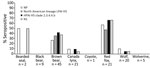
Figure 2. Inferred seropositivity among 124 samples collected from wild mammals, Alaska, USA, December 2021–September 2023, after detection of HPAI H5 clade 2.3.4.4b in North America, to influenza A antigens. Seropositivity to...

Antibodies to H5 and N1 subtype antigens were detected among 4 species, brown bear, Canada lynx, red fox, and wolf, by using 124 samples collected from wild mammals inhabiting Alaska after detection of HPAI H5N1 clade 2.3.4.4b in North America (Figure 2) (12). Samples from 33 mammals were seropositive for both the HPAI H5 clade 2.3.4.4b (using VN) and N1 antigens, including 1 sample from each Canada lynx (1/21 [5%]) and wolf (1/20 [5%]) (Figure 2) (12). In contrast, 38% (17/45) of brown bear and 67% (14/21) of red fox serum samples were reactive to both the HPAI H5 clade 2.3.4.4b (using VN) and N1 antigens (Figure 2) (12). Titers of antibodies reactive to the HPAI H5 clade 2.3.4.4b antigen were higher than the LPAI H5 antigen for most of those samples using VN (28/33 [85%]) (12). The geometric mean titer of H5 and N1 seropositive brown bear samples for the HPAI H5 clade 2.3.4.4b antigen (using VN) was 154 and for the N1 antigen was 694 (12). The geometric mean titer of seropositive red fox samples was 1,159 for the HPAI H5 clade 2.3.4.4b antigen and 706 for the N1 antigen (12). Brown bears inferred to be seropositive for HPAI H5 clade 2.3.4.4b (using VN) and N1 antigens were sampled along the Arctic North Slope of Alaska (n = 15) and Lake Clark National Park and Preserve (n = 2), whereas all HPAI H5 clade 2.3.4.4b and N1 seropositive red foxes were sampled in the Northwest Arctic (Figure 1) (12).

Top

Conclusions


Serologic data from diverse opportunistically sampled wild mammals inhabiting Alaska provide insights into the exposure of nonreservoir wildlife species to HPAI H5N1 clade 2.3.4.4b viruses, immune responses, and possible outcomes of infection. For example, for some wild mammal species, such as brown bears and red foxes, a relatively large proportion of animals in Alaska might have been exposed to H5N1 viruses within specific regions and contexts. Most H5 and N1 seropositive bear and fox samples originated from regions with extensive wetland complexes and where wild aquatic birds had been confirmed to be infected with HPAI H5N1 clade 2.3.4.4b viruses (14). Those serologic data also provide evidence that HPAI H5N1 clade 2.3.4.4b infections may not always result in fatal outcomes among wild mammals; some animals apparently mount sufficient immune responses to overcome infection. Verification that H5 and N1 antibodies were acquired from infections with HPAI H5N1 clade 2.3.4.4b viruses is not possible because cross-reactivity with other antigens might have occurred. Nonetheless, the combination of high titers to the HPAI H5 clade 2.3.4.4b and N1 antigens among seropositive samples (suggestive of close antigenic match), comparably lower titers to the North American LPAI H5 antigen (suggestive of more distant antigenic match), and spatiotemporal context of seropositive samples (12) supports probable exposure to HPAI H5N1 clade 2.3.4.4b viruses.

Additional research is needed to identify factors affecting individual and species-specific susceptibility to infection, manifestation of clinical disease, role of preexisting immunity, and duration of detectable immune response among wild mammals. In the absence of more comprehensive assessments of exposure of wild mammals to HPAI H5N1 clade 2.3.4.4b viruses, caution might be prudent in any extrapolation of information we present to other geographic areas or other species without careful consideration of epidemiologic context. Future surveillance efforts may be improved by incorporating information on susceptibility and detectable immune responses among wild mammals.

Top

Dr. Ramey is a research scientist at the US Geological Survey Alaska Science Center in Anchorage, Alaska, where he serves as the director for the Molecular Ecology Laboratory. His research interests include wildlife health and disease, population genetics, and environmental DNA.

...
Page created: February 18, 2025
Page updated: March 13, 2025
Page reviewed: March 13, 2025​

https://wwwnc.cdc.gov/eid/article/3... mammals,Alaska survived H5N1 virus infection.
 

Attachments

  • image.png
    image.png
    27.3 KB · Views: 1
Related to post #12 above:

Nome red fox tests positive for avian flu

Thu, 04/09/2026 - 2:15am admin
By Ariana Crockett O’Harra

A red fox hit by a car in Nome last month tested positive for a variant of Highly Pathogenic Avian Influenza, or HPAI.

Sara Henslee, Area Biologist at the Alaska Department of Fish and Game, said that the fox was brought in after someone hit it with their car driving west of the harbor late at night.

Dr. Kimberlee Beckmen, Lead Veterinarian for ADF&G, said that the fox tested positive for the H5N1 variant of avian flu and negative for rabies.

Beckmen said that there have been avian flu cases detected throughout the state all winter, but this is the first one detected on the Seward Peninsula in the last six months. “I know there are more, because the fox had to have eaten something,” she said. “It’s probably inevitable, so just be cautious, and it’s probable there will be more [cases].”
...
“I had cases in ravens on the Haul Road last fall. I know of three polar bears that were detected that were positive. There were ravens in southeast Alaska that were positive. I had eagles here in the Interior,” she said.

“We collect the sample of the brain and we send it to a diagnostic lab. In our case, we send it to the animal Health Diagnostic Laboratory at Cornell in New York,” Beckmen said. If samples test positive there, they are sent to the National Veterinary Services Laboratory in Ames, Iowa, where that lab confirms what kind of avian influenza is present. If it is HPAI, then it goes up on the USDA dashboard. “They prioritize, dairy cases and chicken cases and things like that,” said Beckmen. “That’s why it takes a long time for the wildlife cases to get confirmed and posted.”

Beckmen said that for the past 30 years, Low Pathogenic Avian Influenza was detected in waterfowl in the winter and that it is unusual to have cases of High Pathogenic Avian Influenza.

But she also emphasized that the red fox case is not a cause for heightened levels of worry. “This was not completely unexpected. It was just a little bit different than we’ve normally seen,” she said.
...

https://www.nomenugget.com/news/nome-red-fox-tests-positive-avian-flu
 
Back
Top