

sharon sanders
Editor-in-Chief & President
hat tip Michael Coston
Unreasonable Expectations

Breezy Point and Rockaway, NY - Credit FEMA
# 6692
A couple of headlines from the local/regional section of the New York Times tell the tale.
These are difficult times for many victims of Sandy, and millions are cold, hungry, and miserable. With a winter storm forecast for the middle of next week and millions still without power, patience is understandably in short supply.
But so few follow the advice to prepare for 72 hours, asking for more is thought to be unlikely to do much good.
Since I?m not on the ground in New York or New Jersey, I can?t speak to the criticisms being lodged against relief workers there. Some of these complaints may be valid.
Many of these relief worker?s homes and families have been impacted by this storm, and yet they are devoting their time and energy to helping others.
To expect that to happen, and to expect it will all to go flawlessly in a chaotic environment, is more than just unreasonable. It?s a fantasy. Some problems can?t be fixed immediately, no matter how much money, and how many resources, you throw at it.
Knowing that, and knowing ? despite the best efforts of the combined agencies responding ? that it may be 3, 5, or even 7 days before emergency aid can get fully deployed, the best option is to be ready to deal with the first week after a disaster.
Last year in When 72 Hours Isn?t Enough, I highlighted a colorful, easy-to-follow, 100 page `survival guide? released by Los Angeles County, that covers everything from earthquake and tsunami preparedness, to getting ready for a pandemic.
The guide may be downloaded here (6.5 Mbyte PDF).
While designed specifically for the nearly 10 million residents of Los Angeles County, this guide would be a valuable asset for anyone interested in preparing for a variety of hazards.
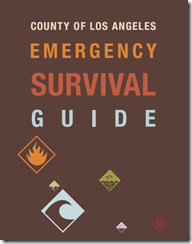
And in Los Angeles, the advice is to have emergency supplies (food, water, etc) to last up to 10 days. In my humble opinion, 2-weeks in an earthquake zone isn?t overkill.
True, help will begin to arrive within 48 to 72 hours of most disasters, but as we saw with Hurricane Katrina, and now Sandy, relief efforts can take time. Having extra supplies means you are in a better position to offer help to a friend, a neighbor, a relative, or your community.
For you, your family, and your community.
Posted by Michael Coston at <a class="timestamp-link" href="http://afludiary.blogspot.ca/2012/11/unreasonable-expectations.html" rel="bookmark" title="permanent link"><abbr class="published" title="2012-11-03T10:00:00-04:00">10:00 AM</abbr>
Unreasonable Expectations
Breezy Point and Rockaway, NY - Credit FEMA
# 6692
A couple of headlines from the local/regional section of the New York Times tell the tale.
Hardship Strains Emotions in New York
By JAMES BARRON and KEN BELSON
The region approached a breaking point on Friday as the collective spirit that prevailed in the first few days after Hurricane Sandy gave way to angry complaints of neglect and unequal treatment.
Anger Grows at Response by Red Cross
By DAVID M. HALBFINGER
The American Red Cross struggled on Friday to reassure beleaguered New York City residents that its disaster-relief efforts were at last getting up to speed.
By JAMES BARRON and KEN BELSON
The region approached a breaking point on Friday as the collective spirit that prevailed in the first few days after Hurricane Sandy gave way to angry complaints of neglect and unequal treatment.
Anger Grows at Response by Red Cross
By DAVID M. HALBFINGER
The American Red Cross struggled on Friday to reassure beleaguered New York City residents that its disaster-relief efforts were at last getting up to speed.
These are difficult times for many victims of Sandy, and millions are cold, hungry, and miserable. With a winter storm forecast for the middle of next week and millions still without power, patience is understandably in short supply.
Despite years of warnings, I?m sure many never really believed this could happen in New York City.
But it can, and it will again. If not in New York, in another major American city. it?s really only a matter of time.
For years the American Red Cross, FEMA, Ready.gov, and just about everyone else in emergency services has urged that individuals and families be prepared to deal for at least 72 hours after a major disaster. But it can, and it will again. If not in New York, in another major American city. it?s really only a matter of time.
The operative words being, `at least?. And with good reason.
The logistics of delivering emergency assistance to millions of people - while hampered by bad weather, crippled communications, damaged infrastructure, and stressed supply chains - all within the first three days of a major disaster, are daunting, and in some cases impossible.
With hurricanes and storms, agencies usually know several days in advance and are able to pre-position equipment, personnel, and supplies.
Some disasters, like earthquakes, come without warning. And so response times may be even longer.
Federal officials know that it would be better if every individual and family had 5 days - or even a week?s worth - of food & water and other essentials in their home. Some disasters, like earthquakes, come without warning. And so response times may be even longer.
But so few follow the advice to prepare for 72 hours, asking for more is thought to be unlikely to do much good.
I suspect some stem from the public?s unreasonable expectations of what can actually be done in the hours and days immediately following a disaster.
Having worked in emergency services, I?m confident that the vast majority of responders are doing the best they can, under extraordinarily stressful circumstances, with the resources they have available.
Many of these relief worker?s homes and families have been impacted by this storm, and yet they are devoting their time and energy to helping others.
It?s their job, I?m sure some will argue. And that?s true. But many of these people are volunteers.
The lesson here is that large scale disasters are messy, complicated affairs. The government possesses no magic wand that can erase the damage and eliminate the suffering overnight.
To expect that to happen, and to expect it will all to go flawlessly in a chaotic environment, is more than just unreasonable. It?s a fantasy. Some problems can?t be fixed immediately, no matter how much money, and how many resources, you throw at it.
Knowing that, and knowing ? despite the best efforts of the combined agencies responding ? that it may be 3, 5, or even 7 days before emergency aid can get fully deployed, the best option is to be ready to deal with the first week after a disaster.
The guide may be downloaded here (6.5 Mbyte PDF).
While designed specifically for the nearly 10 million residents of Los Angeles County, this guide would be a valuable asset for anyone interested in preparing for a variety of hazards.
True, help will begin to arrive within 48 to 72 hours of most disasters, but as we saw with Hurricane Katrina, and now Sandy, relief efforts can take time. Having extra supplies means you are in a better position to offer help to a friend, a neighbor, a relative, or your community.
And in the wake of a major disaster, you?ll find there are better things to be doing with your time than queuing up for hours waiting for water and food distributions.
While the standard advice to prepare for 3 days is a good start, if you are capable of doing more (and not everyone is), you really should.
During a crisis, relief agencies will have their hands full trying to help those who were unable to prepare, or who lost their preps due to the disaster.While the standard advice to prepare for 3 days is a good start, if you are capable of doing more (and not everyone is), you really should.
By being better prepared, you take some of the burden off relief agencies, which will allow them to concentrate their efforts on helping those less able to help themselves.
And by being prepared, you are in a better position to help others.
And that?s a win-win situation.And by being prepared, you are in a better position to help others.
For you, your family, and your community.
Posted by Michael Coston at <a class="timestamp-link" href="http://afludiary.blogspot.ca/2012/11/unreasonable-expectations.html" rel="bookmark" title="permanent link"><abbr class="published" title="2012-11-03T10:00:00-04:00">10:00 AM</abbr>