sharon sanders
Editor-in-Chief & President
Synthetic Cannabinoids Associated With Severe Illness, Stroke & Psychosis
# 8001
In the 1970s, when I was a paramedic in Phoenix, AZ and in Florida, the street drug of choice was Heroin, and Naloxone (a narcotic antagonist used for treating opiate overdoses) was one of our most utilized meds. There were a lot of pot smokers as well, but the weed available back then was comparatively mild, and unlikely to put a user in the back of my ambulance.
Three reports today, one from yesterday?s MMWR, another on a recent study from the University of South Florida that links smoking synthetic marijuana to a risk of stroke in young people, and lastly an older report linking `spice? and psychosis.
A second `Spice? story comes this week from researches at USF, who studied a pair of siblings who both suffered ischemic strokes after smoking synthetic pot.
And finally, a trend that has been confirmed to me by mental health professionals, is they are increasingly seeing a link between synthetic marijuana use and the admission of patients for psychotic behavior. This from Medscape in 2011.
# 8001
In the 1970s, when I was a paramedic in Phoenix, AZ and in Florida, the street drug of choice was Heroin, and Naloxone (a narcotic antagonist used for treating opiate overdoses) was one of our most utilized meds. There were a lot of pot smokers as well, but the weed available back then was comparatively mild, and unlikely to put a user in the back of my ambulance.
Today, the drug scene is much different. Powder Cocaine arrived in the 1980s with a vengeance, and largely supplanted heroin, particularly among upscale users. Crack cocaine was the option on the street. Home brew crystal meth took off in the 1990s, and continues today. And Heroin is back as well, and unlike the `black tar? of the old days, is pure enough to snort.
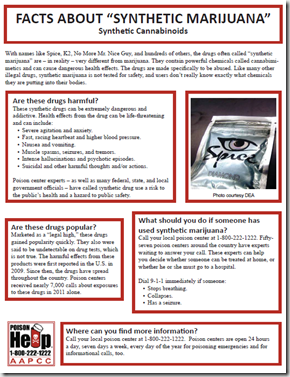
Bad stuff, all. But in recent years another drug has emerged, one that plays on people?s perception that marijuana is relatively harmless (and indeed, legal in some states); synthetic pot.
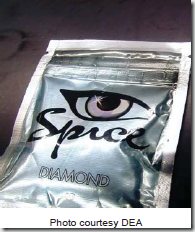
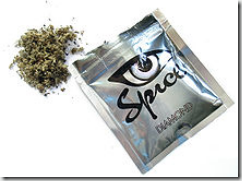
Cheap, and often readily available ? usually sold as "herbal incense" or sometimes as "herbal smoking blends" with names like `Spice?, `K2?, or `Aroma? ? these synthetics have a growing reputation among ER doctors, and mental health professionals, as extremely dangerous drugs.
Over the summer, authorities in Denver reported at least 75 people treated in local emergency rooms due to bad reactions to `spice?, as reported in this CNN article 3 deaths may be tied to synthetic marijuana in Colorado.
Three reports today, one from yesterday?s MMWR, another on a recent study from the University of South Florida that links smoking synthetic marijuana to a risk of stroke in young people, and lastly an older report linking `spice? and psychosis.
Notes from the Field: Severe Illness Associated with Synthetic Cannabinoid Use ? Brunswick, Georgia, 2013
Weekly
November 22, 2013 / 62(46);939-939 On August 23, 2013, the Georgia Poison Center was notified of eight persons examined in an emergency department in Brunswick, Georgia, after smoking or inhaling fumes from synthetic cannabinoids. The Georgia Poison Center notified the Georgia Drug and Narcotics Agency, which informed the Georgia Department of Public Health (DPH). The Brunswick emergency department was asked to report any additional patients who reported use of synthetic cannabinoid to the Coastal District Health Department. DPH investigators reviewed recent medical records of patients who had gone to the emergency department and found that 22 patients had been examined after using synthetic cannabinoids during August 22?September 9, 2013.
The 22 patients were aged 16?57 years (median: 25 years); 18 (82%) were male. Patients experienced hyperglycemia (13 [59%]), hypokalemia (nine [41%]), acidosis (seven [32%]), tachycardia (13 [59%]), nausea/vomiting (eight [36%]), confusion/disorientation (seven [32%]), aggression (seven [32%]), somnolence/unresponsiveness (seven [32%]), and seizures (three [14%]). Complications included pneumonia (two patients), rhabdomyolysis (one), and myocardial infarction (one). Six (27%) patients were admitted to the intensive care unit; five (23%) required assisted ventilation; none died. Serum from seven of the initial eight patients was tested for synthetic cannabinoid by the Clinical and Environmental Toxicology Laboratory at the University of California, San Francisco. Five tested positive for ADB-PINACA (N-(1-amino-3,3-dimethy-1-oxobutan-2-yl)-1-pentyl-1H-indazole-3-carboxamide), a previously unrecognized synthetic cannabinoid related to indole compounds recently identified in Europe and Japan (1).
Law enforcement authorities removed the synthetic cannabinoid from the implicated Brunswick smoke shop,* which sold all types of tobacco products and smoking paraphernalia. The product, "Crazy Clown," was tested by the Georgia Bureau of Investigation Crime Laboratory, which identified ADB-PINACA, an indazole classified under Georgia law as Schedule 1 on the basis of its close relationship to Schedule 1 compounds already specified. The smoke shop owners were charged on September 10, 2013, with possession of a Schedule 1 controlled substance with intent to distribute; no additional patients who used synthetic cannabinoids have been reported by the ED.
Synthetic cannabinoids are designer drugs often smoked as a marijuana alternative. Despite laws prohibiting synthetic cannabinoid sales, they are still widely available, and recent increases in reports of synthetic cannabinoid use and adverse health effects have occurred (2,3). Common adverse effects include altered mental status and tachycardia. Clinicians examining patients with suspected drug abuse and these symptoms should consider synthetic cannabinoid intoxication (4). Public health authorities can raise awareness of adverse events associated with synthetic cannabinoids and establish mechanisms for surveillance by partnering with poison centers, health-care providers, and law enforcement.
Weekly
November 22, 2013 / 62(46);939-939 On August 23, 2013, the Georgia Poison Center was notified of eight persons examined in an emergency department in Brunswick, Georgia, after smoking or inhaling fumes from synthetic cannabinoids. The Georgia Poison Center notified the Georgia Drug and Narcotics Agency, which informed the Georgia Department of Public Health (DPH). The Brunswick emergency department was asked to report any additional patients who reported use of synthetic cannabinoid to the Coastal District Health Department. DPH investigators reviewed recent medical records of patients who had gone to the emergency department and found that 22 patients had been examined after using synthetic cannabinoids during August 22?September 9, 2013.
The 22 patients were aged 16?57 years (median: 25 years); 18 (82%) were male. Patients experienced hyperglycemia (13 [59%]), hypokalemia (nine [41%]), acidosis (seven [32%]), tachycardia (13 [59%]), nausea/vomiting (eight [36%]), confusion/disorientation (seven [32%]), aggression (seven [32%]), somnolence/unresponsiveness (seven [32%]), and seizures (three [14%]). Complications included pneumonia (two patients), rhabdomyolysis (one), and myocardial infarction (one). Six (27%) patients were admitted to the intensive care unit; five (23%) required assisted ventilation; none died. Serum from seven of the initial eight patients was tested for synthetic cannabinoid by the Clinical and Environmental Toxicology Laboratory at the University of California, San Francisco. Five tested positive for ADB-PINACA (N-(1-amino-3,3-dimethy-1-oxobutan-2-yl)-1-pentyl-1H-indazole-3-carboxamide), a previously unrecognized synthetic cannabinoid related to indole compounds recently identified in Europe and Japan (1).
Law enforcement authorities removed the synthetic cannabinoid from the implicated Brunswick smoke shop,* which sold all types of tobacco products and smoking paraphernalia. The product, "Crazy Clown," was tested by the Georgia Bureau of Investigation Crime Laboratory, which identified ADB-PINACA, an indazole classified under Georgia law as Schedule 1 on the basis of its close relationship to Schedule 1 compounds already specified. The smoke shop owners were charged on September 10, 2013, with possession of a Schedule 1 controlled substance with intent to distribute; no additional patients who used synthetic cannabinoids have been reported by the ED.
Synthetic cannabinoids are designer drugs often smoked as a marijuana alternative. Despite laws prohibiting synthetic cannabinoid sales, they are still widely available, and recent increases in reports of synthetic cannabinoid use and adverse health effects have occurred (2,3). Common adverse effects include altered mental status and tachycardia. Clinicians examining patients with suspected drug abuse and these symptoms should consider synthetic cannabinoid intoxication (4). Public health authorities can raise awareness of adverse events associated with synthetic cannabinoids and establish mechanisms for surveillance by partnering with poison centers, health-care providers, and law enforcement.
A second `Spice? story comes this week from researches at USF, who studied a pair of siblings who both suffered ischemic strokes after smoking synthetic pot.
Case studies by USF Health neurologists link smoking ?spice? with stroke in healthy, young adults
Written by Anne DeLotto Baier ? November 19, 2013 @ 10:33 am ? Filed under Hot News, Morsani College of Medicine, Neurosciences & Brain Repair, News Releases, Research
Tampa, FL (Nov. 19, 2013) ? Add stroke to the list of severe health hazards that may be associated with smoking synthetic marijuana, popularly known as spice or K2, a University of South Florida neurology team reports.
An advance online article in the journal Neurology details case studies by the USF neurologists of two healthy, young siblings who experienced acute ischemic strokes soon after smoking the street drug spice. Ischemic strokes occur when an artery to the brain is blocked.
Seizures, abnormal heart rhythms, heart attacks, psychosis, hallucinations and other serious adverse effects have been associated with smoking synthetic pot. Medical journals have also begun to report a growing number of strokes potentially related to the use of natural (non-synthetic) marijuana.
?Since the two patients were siblings, we wondered whether they might have any undiagnosed genetic conditions that predisposed them to strokes at a young age. We rigorously looked for those and didn?t come up with anything,? said senior author W. Scott Burgin, MD, professor of neurology at the USF Health Morsani College of Medicine and director of the Comprehensive Stroke Center at Tampa General Hospital.
?To the best of our knowledge, what appeared to be heart-derived strokes occurred in two people with otherwise healthy hearts. So more study is needed.?
(Continue . . . )
Citation:
Ischemic stroke after use of the synthetic marijuana ?spice,? Melissa J. Freeman, MD; David Z. Rose, MD; Martin A. Myers, MD; Clifton L. Gooch, MD; Andrea C. Bozeman, MS, ARNP-C; and W. Scott Burgin, MD; Neurology; published online before print November 8, 2013, doi: 10.1212/01.wnl.0000437297.05570.a2
Written by Anne DeLotto Baier ? November 19, 2013 @ 10:33 am ? Filed under Hot News, Morsani College of Medicine, Neurosciences & Brain Repair, News Releases, Research
Tampa, FL (Nov. 19, 2013) ? Add stroke to the list of severe health hazards that may be associated with smoking synthetic marijuana, popularly known as spice or K2, a University of South Florida neurology team reports.
An advance online article in the journal Neurology details case studies by the USF neurologists of two healthy, young siblings who experienced acute ischemic strokes soon after smoking the street drug spice. Ischemic strokes occur when an artery to the brain is blocked.
Seizures, abnormal heart rhythms, heart attacks, psychosis, hallucinations and other serious adverse effects have been associated with smoking synthetic pot. Medical journals have also begun to report a growing number of strokes potentially related to the use of natural (non-synthetic) marijuana.
?Since the two patients were siblings, we wondered whether they might have any undiagnosed genetic conditions that predisposed them to strokes at a young age. We rigorously looked for those and didn?t come up with anything,? said senior author W. Scott Burgin, MD, professor of neurology at the USF Health Morsani College of Medicine and director of the Comprehensive Stroke Center at Tampa General Hospital.
?To the best of our knowledge, what appeared to be heart-derived strokes occurred in two people with otherwise healthy hearts. So more study is needed.?
(Continue . . . )
Citation:
Ischemic stroke after use of the synthetic marijuana ?spice,? Melissa J. Freeman, MD; David Z. Rose, MD; Martin A. Myers, MD; Clifton L. Gooch, MD; Andrea C. Bozeman, MS, ARNP-C; and W. Scott Burgin, MD; Neurology; published online before print November 8, 2013, doi: 10.1212/01.wnl.0000437297.05570.a2
And finally, a trend that has been confirmed to me by mental health professionals, is they are increasingly seeing a link between synthetic marijuana use and the admission of patients for psychotic behavior. This from Medscape in 2011.
Synthetic Cannabis May Pose an Even Greater Psychosis Risk
'Spice' Packs a Bigger Punch than Natural Cannabis
Deborah Brauser
December 13, 2011
December 13, 2011 (Scottsdale, Arizona) ? The synthetic cannabis product known as Spice may pose a risk for psychosis in users, including those with no prior history of a psychiatric disorder, new research suggests.
A literature review, Internet sites, and even blogs spanning the past decade suggest that because it lacks the antipsychotic protective agents found in natural cannabis, Spice may pose an even greater risk of psychosis when compared with the natural product.
The results were presented here at the American Academy of Addiction Psychiatry (AAAP) 22nd Annual Meeting & Symposium.
"I would tell clinicians that when there are unexplained causes of psychosis and urine tests are coming back negative, to keep in mind that it could be caused by synthetic cannabis such as Spice," lead author Carlos Alverio, MD, a 4-year psychiatry resident from Boston University School of Medicine, Massachusetts, told Medscape Medical News.
(Continue . . . )
Posted by Michael Coston at <a class="timestamp-link" href="http://afludiary.blogspot.com/2013/11/synthetic-cannabinoids-associated-with.html" rel="bookmark" title="permanent link"><abbr class="published" itemprop="datePublished" title="2013-11-22T09:05:00-05:00">9:05 AM</abbr> 'Spice' Packs a Bigger Punch than Natural Cannabis
Deborah Brauser
December 13, 2011
December 13, 2011 (Scottsdale, Arizona) ? The synthetic cannabis product known as Spice may pose a risk for psychosis in users, including those with no prior history of a psychiatric disorder, new research suggests.
A literature review, Internet sites, and even blogs spanning the past decade suggest that because it lacks the antipsychotic protective agents found in natural cannabis, Spice may pose an even greater risk of psychosis when compared with the natural product.
The results were presented here at the American Academy of Addiction Psychiatry (AAAP) 22nd Annual Meeting & Symposium.
"I would tell clinicians that when there are unexplained causes of psychosis and urine tests are coming back negative, to keep in mind that it could be caused by synthetic cannabis such as Spice," lead author Carlos Alverio, MD, a 4-year psychiatry resident from Boston University School of Medicine, Massachusetts, told Medscape Medical News.
(Continue . . . )