

sharon sanders
Editor-in-Chief & President
hat tip to Michael Coston
H3N2v: CDC Offers Advice To Fair Goers
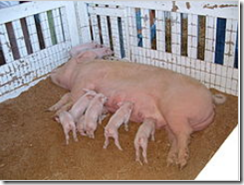
Credit Wikipedia
# 6555
In the wake of this week’s announcement of another fair-related outbreak of H3N2v influenza (see MMWR On The H3N2v Outbreak In LaPorte, Indiana), the CDC has put together a summary of the event and some advice to the fair-going public (and those who raise or come in contact with pigs).
I’ve only excerpted portions of this lengthy `Flu News’ report, follow the link to read it in its entirety.
H3N2v: CDC Offers Advice To Fair Goers
Credit Wikipedia
# 6555
In the wake of this week’s announcement of another fair-related outbreak of H3N2v influenza (see MMWR On The H3N2v Outbreak In LaPorte, Indiana), the CDC has put together a summary of the event and some advice to the fair-going public (and those who raise or come in contact with pigs).
I’ve only excerpted portions of this lengthy `Flu News’ report, follow the link to read it in its entirety.
CDC Reports Cases 14-17 of H3N2v Infection; Shares Advice for Safe Fair-Going
July 27, 2012 -- The state of Indiana this week reported the first novel influenza virus outbreak associated with a fair this season. Following reports of ill swine and humans during a fair in Indiana from July 8-14, samples were taken from swine and humans. Twelve swine were randomly sampled by Indiana state animal health officials, tested at Indiana and federal animal diagnostic laboratories, and found to be infected with swine influenza A (H3N2) viruses. Four people tested positive for influenza A (H3N2) variant virus.* Genetic testing confirmed that the viruses found in humans and those found in swine are nearly identical and both have the M gene from the pandemic H1N1 virus. These cases bring the total number of detected infections with the H3N2v virus containing the pandemic M gene in the United States since 2011 to 17.
<snip></snip>
Take Action to Prevent the Spread of Flu Viruses Between People and Pigs**
Certain People at Higher Risk
“For influenza, certain people may be at higher risk of getting infected, or may be at higher risk for more severe outcomes,” says Jernigan. Studies conducted by CDC have indicated that children younger than 10 would have little to no immunity against H3N2v, whereas adults may have some cross-protective immunity. Most cases of H3N2v have occurred in children at this time. Other people who are at higher risk for seasonal flu-related complications include people with asthma, diabetes, heart disease or neurological disorders. “Prevention is especially important for these people,” says Jernigan.
(Continue . . .)
Posted by Michael Coston at 2012-07-27T10:33:00-04:00July 27, 2012 -- The state of Indiana this week reported the first novel influenza virus outbreak
associated with a fair this season. Following reports of ill swine and humans during a fair in Indiana from July 8-14, samples were taken from swine and humans. Twelve swine were randomly sampled by Indiana state animal health officials, tested at Indiana and federal animal diagnostic laboratories, and found to be infected with swine influenza A (H3N2) viruses. Four people tested positive for influenza A (H3N2) variant virus.* Genetic testing confirmed that the viruses found in humans and those found in swine are nearly identical and both have the M gene from the pandemic H1N1 virus. These cases bring the total number of detected infections with the H3N2v virus containing the pandemic M gene in the United States since 2011 to 17.<snip></snip>
Take Action to Prevent the Spread of Flu Viruses Between People and Pigs**
- Wash your hands frequently with soap and running water before and after exposure to animals.
- Never eat, drink or put things in your mouth in animal areas and don’t take food or drink into animal areas.
- Young children, pregnant women, people 65 and older and people with weakened immune systems should be extra careful around animals.
- If you have animals – including swine – watch them for signs of illness and call a veterinarian if you suspect they might be sick.
- Avoid close contact with animals that look or act ill, when possible.
- Avoid contact with pigs if you are experiencing flu-like symptoms.
Certain People at Higher Risk
“For influenza, certain people may be at higher risk of getting infected, or may be at higher risk for more severe outcomes,” says Jernigan. Studies conducted by CDC have indicated that children younger than 10 would have little to no immunity against H3N2v, whereas adults may have some cross-protective immunity. Most cases of H3N2v have occurred in children at this time. Other people who are at higher risk for seasonal flu-related complications include people with asthma, diabetes, heart disease or neurological disorders. “Prevention is especially important for these people,” says Jernigan.
(Continue . . .)