
Mary Wilson
Well-known member
New CDC data on protection posted today
Eric Topol
6 hr ago
With unprecedented speed during the pandemic for CDC, we now have vaccine effectiveness data for the bivalent booster (first administered September 4) through November 30th via 2 new reports today here (age 65+ vs hospitalizations) and here (all ages, vs ED and urgent care visits, hospitalizations).
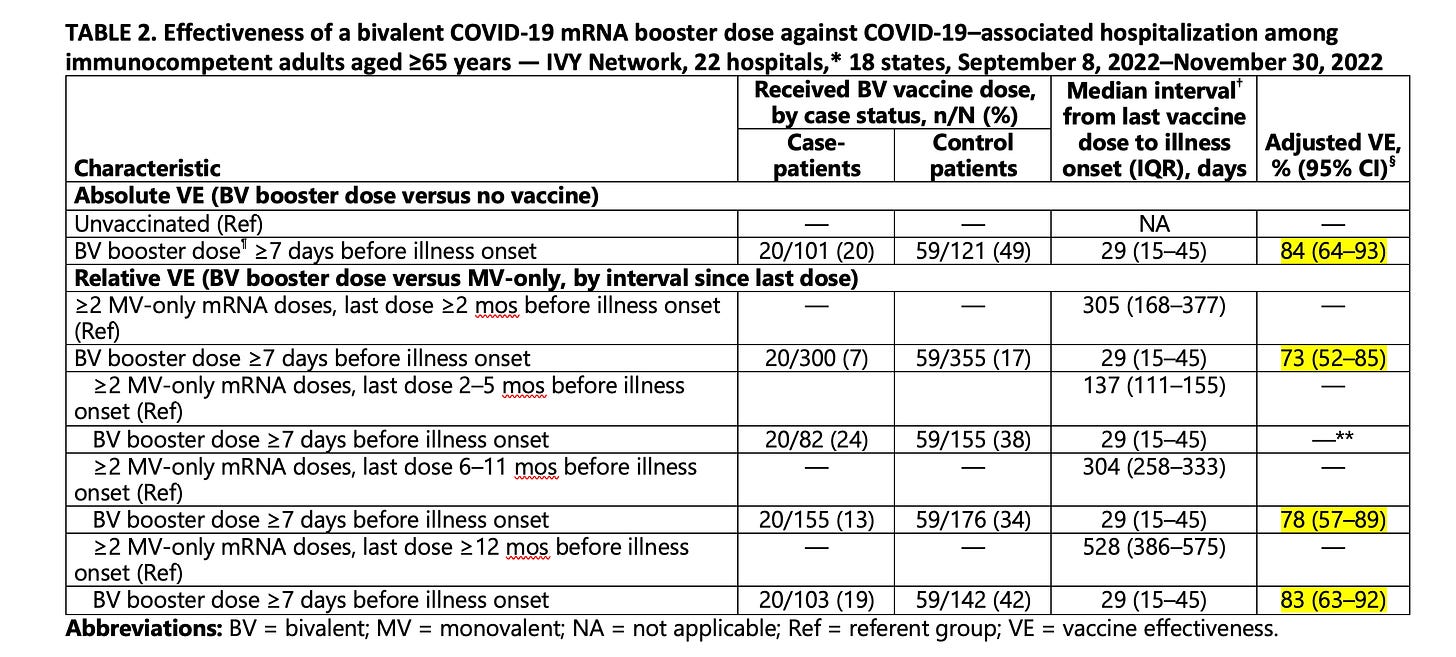
The first Table summarizes the data for age 65+ protection against hospitalization. It shows very high level of vaccine effectiveness compared with either no vaccination or the original booster (monovalent), irrespective of time (2 to more than 12 months elapsed). The is welcome, great news providing reassurance for such strong protection (post estimates range from 73-84%) in people of advanced age. And remember that a significant part of the time assessed for protection was during the rise of the BQ.1 variants to dominance. The BA.5 variant has been fading for weeks, which started just as the bivalent data was released. So these new data also provide a window into protection against BQ.1/BQ.1.1 which is notable. That correlates with the broadening of immunity (neutralizing antibodies) seen in lab studies for the bivalent vs BQ.1.1, as I previously reviewed. Good stuff.
The other report contained data for all ages for protection vs emergency room and urgent care visits, and vs hospitalizations. ...
https://erictopol.substack.com/p/a-quick-update-on-the-bivalent-boosters
Eric Topol
6 hr ago
With unprecedented speed during the pandemic for CDC, we now have vaccine effectiveness data for the bivalent booster (first administered September 4) through November 30th via 2 new reports today here (age 65+ vs hospitalizations) and here (all ages, vs ED and urgent care visits, hospitalizations).
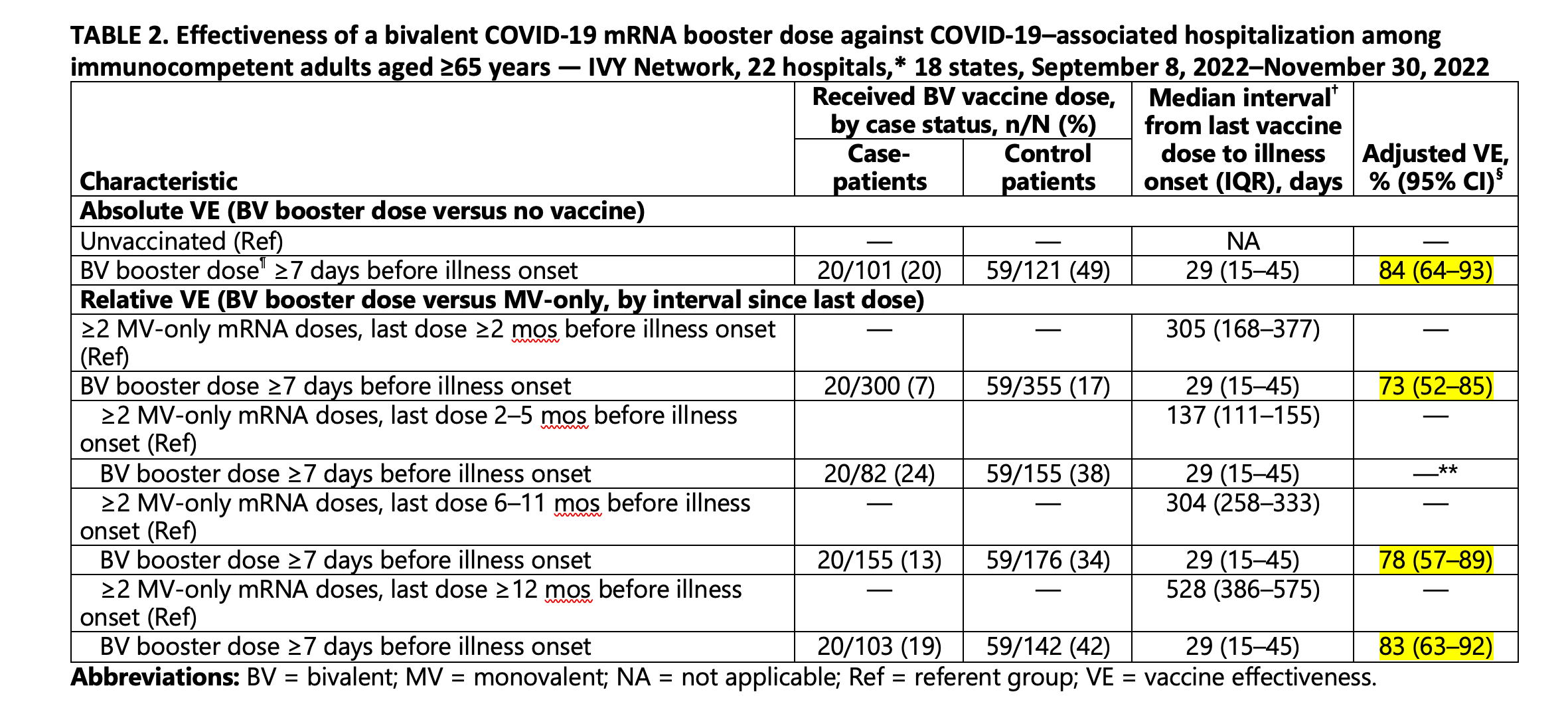
The first Table summarizes the data for age 65+ protection against hospitalization. It shows very high level of vaccine effectiveness compared with either no vaccination or the original booster (monovalent), irrespective of time (2 to more than 12 months elapsed). The is welcome, great news providing reassurance for such strong protection (post estimates range from 73-84%) in people of advanced age. And remember that a significant part of the time assessed for protection was during the rise of the BQ.1 variants to dominance. The BA.5 variant has been fading for weeks, which started just as the bivalent data was released. So these new data also provide a window into protection against BQ.1/BQ.1.1 which is notable. That correlates with the broadening of immunity (neutralizing antibodies) seen in lab studies for the bivalent vs BQ.1.1, as I previously reviewed. Good stuff.
The other report contained data for all ages for protection vs emergency room and urgent care visits, and vs hospitalizations. ...
https://erictopol.substack.com/p/a-quick-update-on-the-bivalent-boosters